The Treasure Hidden in Plain Sight

Homily – Seventeenth Sunday in Ordinary Time (Year A)

1 Kings 3:5, 7–12 • Romans 8:28–30 • Matthew 13:44–52

26 July 2026

Fr. Ricky Cañet Montañez, AA

My college schoolmates in Iloilo are preparing for our Jade Jubilee next year. One of them has been posting old class photos on Facebook, asking us to correctly identify classmates and share stories. Most of the photos have been enhanced using Artificial Intelligence (AI), making faded faces and blurred details much clearer.

Back then, we easily fit into uniforms labelled… extra small!!! Someone commented, “We were so thin then!” Another replied, “Let’s just say we were slimmer.” Someone joked, “No, we were simply malnourished! We were out of budget!” A few proudly pointed out that they still had a full head of hair—including me! One classmate even commented that the AI version had given her a better nose than the one she remembered having! Reading through the comments was rather entertaining, and everyone laughed at all the details we had never noticed before.

As I continued scrolling through those restored photos, one realisation slowly dawned on me. The faces had always been there. The smiles had always been there. The friendship had always been there. AI did not create them. The photos were not telling a different story. We were simply seeing them with new eyes. I think that is one of the deepest insights of today’s gospel passage. Sometimes, we are oblivious to what is valuable right under our very noses! Maybe we are distracted. Maybe we are not looking closely. Maybe we do not know what we are looking for.

Jesus tells us about a man who discovers a treasure hidden in a field (Matthew 13:44). The treasure had always been there. Others had probably crossed the same field countless times without noticing anything unusual. The same is true of the merchant searching for fine pearls (Matthew 13:45–46). He had spent his life looking at pearls, yet one day he recognised one of incomparable value. Nothing changed about the treasure. Nothing changed about the pearl. The change happened in the people who finally recognised their worth.

This sheds new light on Solomon’s prayer in the First Reading. When God says, “Ask something of me, and I will give it to you!” (1 Kings 3:5), Solomon does not ask for wealth, power, or a long life. He asks for “an understanding heart” (1 Kings 3:9). In Hebrew, it literally means “a listening heart.” In essence, Solomon asks God for the ability to see life the way God sees it. Perhaps that is the Bible’s definition of wisdom? We usually think wisdom means knowing more. The Scriptures, however, suggest something deeper. Wisdom is actually seeing differently. It is seeing value in what has been in front of us all along.

That is not as easy as it sounds. We often discover the value of our parents only after they are gone. We appreciate good health only after we have contracted an illness. We treasure faithful friends only after distance has made it difficult to reconnect or death has put us beyond reconciliation. Even our faith can become so familiar that we stop noticing its value. We come to the same church, hear the same Scriptures, receive the same Eucharist, and, little by little, what is extraordinary begins to feel ordinary.

St. Paul speaks of that same wisdom when he says, “We know that all things work for good for those who love God.” (Romans 8:28) He is not saying that every experience is pleasant or pleasurable. There are experiences none of us would ever choose—a serious illness, the loss of someone we love, a broken relationship, a failed plan, or losing a job. We would never call those things “good”. Yet years later, we sometimes recognise that God was quietly shaping us through them. Perhaps He was strengthening us or preparing us for something else down the road. Looking back, we see His providence where we once saw only pain.

Instead of asking God to “give us more,” let our prayer be, “Lord, give me a listening heart. Give me new eyes. Do not allow me to discover the value of Your gifts only after I have lost them. Do not let me discover the gift of my parents only after they are gone. Do not let me discover the blessing of good health only after I fall sick. Do not let me discover the beauty of Sunday Mass only when I can no longer come. Instead, teach me to recognise Your treasures while they are still before me and within my reach.”

Those restored class photos did not change the past. They simply reminded us of what had always been there. Artificial Intelligence can sharpen blurry photographs, but only God’s grace can sharpen our vision of what truly matters. May God grant us the wisdom Solomon prayed for—a listening heart, a heart that finally sees. After all, the miracle in the Gospel is not that there was a treasure hidden in the field. The miracle was that someone finally recognised it.
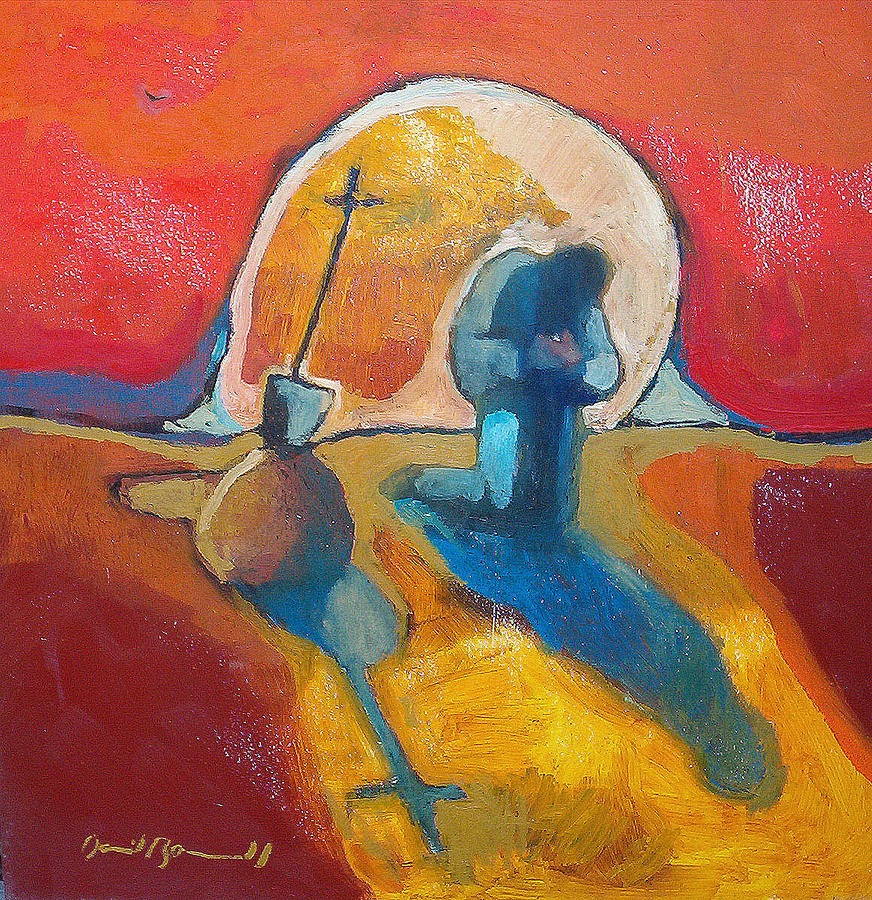
The Pearl of Great Price is a painting by Daniel Bonnell 

Still Under Construction

Homily: Sixteenth Sunday in Ordinary Time (Year A)

Wisdom 12:13, 16-19 • Romans 8:26-27 • Matthew 13:24-43

19 July 2026

Fr. Ricky Cañet Montañez, AA 

Have we ever noticed how, despite the challenges of our economy, construction seems to be everywhere? Walk through almost any neighbourhood and we will find a building going up—a condominium, an office, or a new home. We see exposed steel bars, unfinished walls, piles of hollow blocks, and workers going about their tasks. It does not look beautiful at all. In fact, all we really see is mess. But anyone who might go up to the architect and say, “This building is rather ugly,” would be reminded that he/she were judging too soon because the building is not finished yet. The building is not the problem. The problem is that we are judging it before it is finished. 

I think we sometimes do the same thing with people—and even with ourselves. Sometimes we are quick to say, “There is no hope for that person anymore. He will never change. A parent says, “My son has not been to Mass in years. I don’t think he will ever come back.” A husband or wife says, “We have been trying to fix our marriage, but nothing seems to change.” Someone who keeps struggling with the same weakness says, “I have confessed this sin so many times. I will never overcome it.” Sometimes the harshest judge we face is not another person but ourselves. We sigh in exasperation and tell ourselves, “This is just who I am. I will never be better.” 

Today’s readings invite us to see as God sees. In the Gospel, the servants discover weeds growing among the wheat. Their reaction is immediate: “Do you want us to go and pull them up?” (Matthew 13:28). Honestly, that is probably what most of us would do. If there is a problem, we want an immediate fix. If there are weeds, we pull them out. Sounds logical, right? Nevertheless, the master answers, “No… let them grow together until harvest” (Matthew 13:29-30). He explains that pulling out the weeds too soon could also uproot the wheat. Jesus is speaking about the mystery of good and evil existing side by side until the final judgment. However, the same wisdom also applies to our own lives. God gives us time, not because He tolerates evil, but because His mercy always leaves room for repentance. The servants see the weeds. The master sees the wheat. The servants see the present. The master sees the harvest. We tend to see what is wrong; God sees what can still become right. 

The First Reading helps us understand why. In the Book of Wisdom, we hear these words about God: “Though you are master of might, you judge with clemency” (Wisdom 12:18). What a beautiful insight into the heart of God. We often think that power means acting quickly, demanding immediate results, or punishing without delay. Moreover, God’s greatness is shown in His patience. Patience is not weakness. It is confidence that goodness can still grow. Because God is almighty, He can afford to be patient. Because He sees the whole picture, He can give people another chance. As the reading says, He gives His people “good ground for hope” because He allows time for repentance (Wisdom 12:19). 

Then St. Paul gives us another comforting truth. He writes, “We do not know how to pray as we ought, but the Spirit himself intercedes with inexpressible groanings” (Romans 8:26). Have we ever been so tired, so worried, or so heartbroken that we could not even find the words to pray? Perhaps all we could do was sigh… or cry… or simply sit in silence. St. Paul reminds us that even then, God is not absent. The Holy Spirit is already praying within us. Even when we think nothing is happening, God is quietly at work. 

Therefore the challenge today is not simply to be patient. It is to trust God’s timing. It is to trust that He is still building what seems unfinished. It is to trust that He is still growing the wheat, even when the weeds seem more obvious. Thus, if you have been praying for a son or daughter who has drifted away from the faith, don’t stop praying. If you are trying to rebuild trust in your family, don’t give up too soon. If we are struggling to overcome a habit or a sin and feel discouraged because progress is slow, we should not lose hope. God’s work is often quiet before it becomes visible. Just because we cannot yet see the harvest does not mean nothing is growing. Just because the building looks unfinished does not mean the architect has abandoned it. 

My dear brothers and sisters, are we not all  works-in-progress? The building is still under construction. The wheat is still growing. The Holy Spirit is still praying. We do not pass final judgment on a life that God has not yet finished shaping. We should not give up on the people God has not given up on. And we should not lose hope in ourselves, because God certainly has not lost hope in us. While we worry about the weeds, God is quietly growing the wheat. And while we think the building is unfinished, the Divine Architect is still at work!

How Is the Weather of Your Heart?

Homily: Fifteenth Sunday in Ordinary Time (Year A)

Isaiah 55:10–11; Romans 8:18–23; Matthew 13:1–23

12 July 2026

Fr. Ricky Cañet Montañez, AA 

As the rainy season begins, many of us find ourselves paying closer attention to the weather.  We are fortunate that the recent typhoon changed course, staying offshore and sparing us from a potentially devastating direct landfall. Over the years, we have become weather watchers. In the past, we relied on Pagasa’s weather forecast. However, today, we have so many sources of information because of the internet. With the increasing occurrence of flash floods, it is always wise to ask, “Uulan ba ngayon?” (“Is it going to rain?”) before leaving home.Apart from looking up at the sky, we also check our phones for the latest news or the weather forecast.

Today’s Gospel presents the Parable of the Sower. We are often asked to reflect on what type of soil we are and whether we can sustain the growth of the seed, which is God’s Word. However, today I invite you to pay attention to another element that determines how well a seed or a plant can grow—the weather. Today we must also look at the weather inside US to see whether it will help God’s Word take root in our hearts. 

Usually, when we hear the Parable of the Sower, we ask, “Which kind of soil am I? Dry? Rocky? Thorny?” Hopefully, we already know the answer to that. However, I believe the better question is, “How is the weather of my heart right now?”The reason is simple: even the best soil struggles when the weather is harsh. Even rich, fertile land can suffer from drought or flooding.

Some days our hearts are bright and open. We wake up grateful, we are patient with others, and God’s Word seems to speak directly to us. But there are other days, after a sleepless night, an argument at home, disappointing news, or worries about our family, our health, or our finances, the weather changes. We come to Mass and hear the same readings, but nothing seems to sink in—not because God has stopped speaking, but because there is a storm inside us. 

Notice that Jesus never labels people; He describes conditions. Sometimes our hearts become like the hardened path because we have been hurt and have built walls around ourselves. Sometimes they are rocky—we are inspired for a while, but our enthusiasm fades when life becomes difficult. Sometimes they are full of thorns—not because we are bad people, but because our lives have become crowded with worries and responsibilities. The good news is that the soil can change. Hearts can change. The weather can change. 

The First Reading is very consoling to us. Isaiah says that just as the rain and snow come down from heaven and water the earth, so God’s Word never returns without accomplishing its purpose (Is 55:10–11). Rain does not argue with dry ground or complain that the soil is hard. It simply keeps falling. That is how God’s grace works. Every Sunday, every Mass, every prayer, and every page of Scripture, God keeps sending His Word. He does not wait until the weather of our hearts is perfect before He comes to us. 

Then St. Paul reminds us that all creation is groaning in labour pains (Rom 8:22–23). Labour pains are painful, but they are also a sign that new life is on the way. Brothers and sisters, maybe the storms in our lives are not meant to destroy us, but to shape us. They may be difficult and overwhelming, but if we stand our ground and persevere, we will emerge stronger and wiser. Often, God does His deepest work not after the storm, but in the midst of it.

So, before we leave this church, let us ask ourselves a gentler and more honest question: “Lord, what is the weather of my heart today?” Let us pray: When my heart feels parched, send the rain of Your grace. When life is stormy, give me the faith to believe that You are still leading me. The climate of our lives may change, but God’s love remains constant, quietly nourishing us day after day, allowing the Word He has planted to grow slowly but steadily, and bringing forth fruit in its own time.

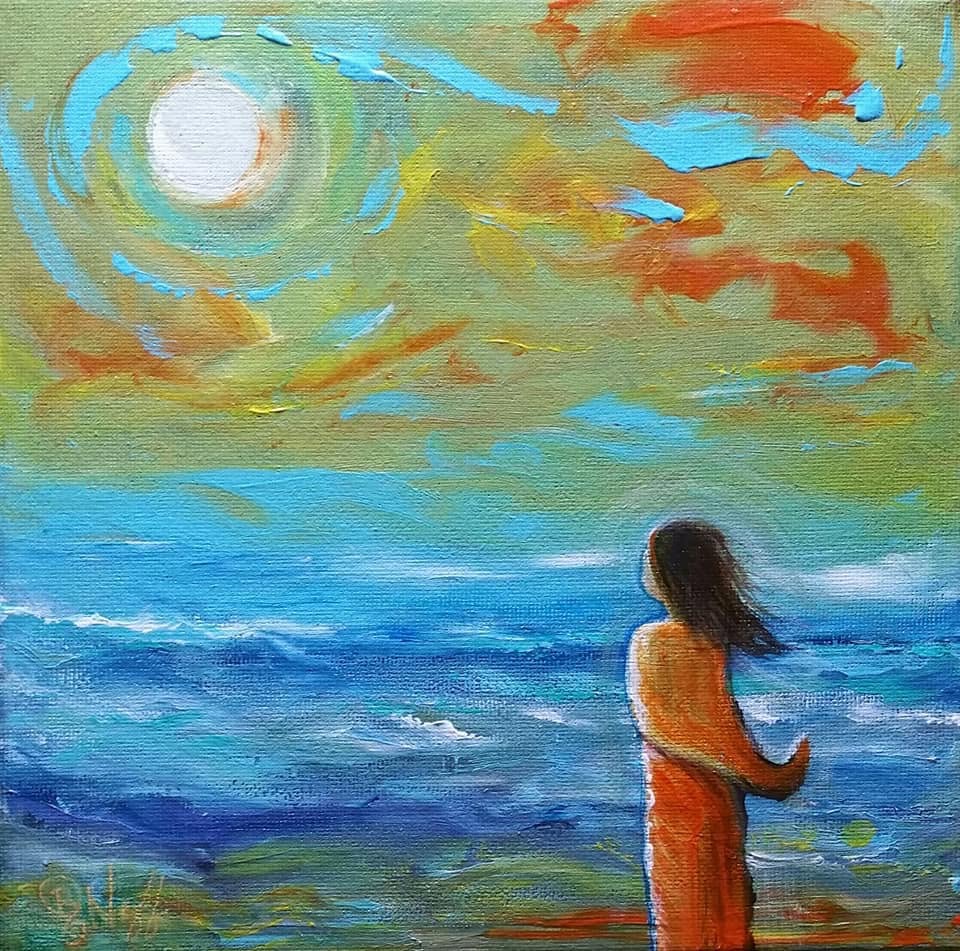
Beckie J. Neff, Artist

We’re Not Carrying It Alone

Homily: Fourteenth Sunday in Ordinary Time (Year A)

Zechariah 9:9–10; Romans 8:9, 11–13; Matthew 11:25–30

5 July 2026

Fr. Ricky Cañet Montañez, AA

When someone asks us, “Kumusta ka?” (How are you?), we often hear the same answers: “Busy.” “Pagod” (Tired). Or perhaps the most common response: “I’m okay.” But sometimes, “I’m okay” simply means, “I don’t want to talk about it.” We smile, go to work, meet our deadlines, take care of our families, and fulfill our responsibilities. On the outside, we appear normal, but inside, we carry burdens that no one else can see. It’s not just our bodies that grow weary; at times, our souls grow weary as well.

That is why Jesus’ invitation in today’s Gospel is so deeply consoling: “Come to me, all you who labour and are burdened, and I will give you rest” (Matthew 11:28). Jesus offers not an instant resolution to our problems but the grace of respite—the strength and peace to keep going. He does not promise that all our problems will disappear or that life will suddenly become easy. The deadlines remain daunting. The bills need to be paid. Unresolved family concerns continue to fester. The cross is not taken away. What Jesus promises is rest that refreshes, enabling us to bear our burdens. It is the kind of peace that the world cannot give because it comes from knowing that we do not suffer alone.

The First Reading helps us understand why. The prophet Zechariah proclaims, “Behold: your king shall come to you; a just saviour is he, humble, and riding on a donkey” (Zechariah 9:9). Notice that the promised King does not arrive on a horse but on a humble donkey. Kings normally entered cities on powerful war horses as symbols of conquest. Jesus deliberately chooses a humble donkey, revealing that His kingdom is built not on domination but on humility and peace. The donkey bears ordinary people—even the poor—and is capable of carrying heavy loads over long distances. It may be small, but it is mighty in its own way. The world admires people who exude strength—who seem to have everything under control, who never show weakness, and who never ask for help. Jesus reveals a different kind of strength. He is telling us that we do not always have to appear as though we have everything together. Weariness is normal. It is not a sign of failure or a reason to give up. Christ shows us that true strength is found in humility, and humility means learning to trust in God, especially when life is difficult and the crushing weight of our problems feels suffocating.

St. Paul echoes the same truth when he reminds us that we are called to live not according to the flesh but according to the Spirit (Romans 8:9, 11–13). When we rely only on ourselves, we begin to live as though everything depends on our own strength. We tell ourselves, “Everything depends on me. I have to solve every problem. I have to keep everything together.” But a life in the Spirit humbly acknowledges our dependence on God as we pray, “Lord, I can’t carry this by myself anymore.”

That is why Jesus says, “Take my yoke upon you” (Matthew 11:29). A yoke was ordinarily used to join two animals so they could carry a load side by side. It is an image of shared labour, not solitary struggle. So even if Jesus does not promise to remove the burden, we can be assured that He carries it with us. The heaviest burden we likely carry is actually not our work or our responsibilities but the feeling that we carry the weight of the world by ourselves. We feel like everything depends on us. But it doesn’t. We have a God who walks beside us. Christ does not simply stand at a distance telling us to keep going. He steps beside us and helps us bear the heavier end of the load.

There is a beautiful saying I chanced upon on Facebook: “When you leave everything in God’s hands, you will start seeing God’s hand in everything.” Isn’t that what today’s Gospel is teaching us? Rest begins when we finally entrust our concerns to the Lord. We may still answer, “I’m tired,” or even, “I’m not okay yet.” But we can also say with conviction, “I’m not alone. Christ is with me.” It is when we stop trying to force our own outcomes that we open our eyes to see how perfectly things are already being orchestrated for us. We begin to see that nothing is random; the blessings, the protection, and even the detours and delays are God’s purposeful hand working for our good.

When Christ walks beside us, our circumstances may not change overnight, but our hearts surely do. Our burdens may remain, but they no longer define us, because Christ walks beside us. Peace is not the absence of burdens; it is the certainty that we never carry them alone. And when we surrender everything to Him, His promise remains true: “You will find rest for yourselves” (Matthew 11:29).

Finding Life by Losing It

Homily: Thirteenth Sunday in Ordinary Time (Year A)

2 Kings 4:8-11, 14-16a; Romans 6:3-4, 8-11; Matthew 10:37-42

28 June 2026 

Fr. Ricky Cañet Montañez, AA

You who are parents know what it is like to sacrifice sleep just to care for a sick child. Many mothers and fathers willingly set aside their own preferences because what matters most is the happiness and well-being of their families. A true friend patiently listens to someone going through a difficult time or quietly serves without expecting recognition.

From the outside, these people seem to be giving something away—time, comfort, energy, even themselves. Yet somehow, they end up richer, more fulfilled, and more alive. Isn’t it true that some of the happiest people are not those who have the most, but those who give the most?

That is the paradox at the heart of today’s readings. Jesus says, “Whoever finds his life will lose it, and whoever loses his life for my sake will find it” (Matthew 10:39).  At first, those words sound contradictory. How can losing our life lead to finding it? Yet the Scriptures today show us that this is exactly how God’s grace works.  

In the First Reading, the Shunammite woman notices that Elisha is a holy man of God and decides to welcome him into her home. More than that, she prepares a room for him so that he will always have a place to stay (cf. 2 Kings 4:8-10). She was not looking for recognition or reward. She simply made room for another person.  And yet, through that generosity, she received a blessing she never expected. Elisha promised that she would embrace a son within a year. (2 Kings 4:16)

There is a lesson here for all of us. We often think that happiness comes from accumulating more—more possessions, more success, more control. But God’s way is different. We discover life when we make room for others. A heart occupied only with itself eventually becomes cramped and lonely. A heart open to others becomes a place where God can work wonders. 

The same pattern appears in the Second Reading. St. Paul reminds us that through baptism we were united with Christ in His death and resurrection. He writes, “We were indeed buried with him through baptism into death, so that, just as Christ was raised from the dead… we too might live in newness of life.” (Romans 6:4) This burial with Christ is not a passive ending, but an active clearing away of our old, broken selves to make room for something greater. By stepping out of that spiritual grave, we are empowered to walk through the world with a restored purpose, radiating the hope and grace of His eternal life. 

In other words, the Christian life always involves letting something die. We cannot experience the new life of Christ while holding tightly to the old self. Pride, selfishness, bitterness, resentment, and sin must gradually give way to grace. Anyone who has tried to forgive a deep hurt knows this struggle. Part of us wants to cling to the wound. But when we finally let go, we often discover a freedom we did not have before. Something dies, but something better is born. We find life when we let go of the old self. 

This brings us to the challenging words of Jesus in the Gospel. “Whoever loves father or mother more than me is not worthy of me.” (Matthew 10:37) Jesus is not telling us to love our families less. Rather, He is asking us to place Him first.  Every important love involves sacrifice. Parents know this. Married couples know this. Priests and religious know this. If something truly matters, it demands something from us. That is why Jesus continues, “Whoever does not take up his cross and follow after me is not worthy of me.” (Matthew 10:38) To follow Christ means allowing Him to shape our decisions, our priorities, and our way of living. It means trusting that His way leads to life even when it asks something difficult of us. 

The three readings point to the same truth. We find life when we make room for others. We find life when we let go of the old self. We find life when we put Christ first. The world tells us that fulfillment comes from protecting ourselves, promoting ourselves, and holding tightly to what we have. Jesus teaches the opposite. Life grows when it is shared. Love deepens when it is given away. Faith becomes real when it costs something. 

Our Gospel paradox remains true: “Whoever loses his life for my sake will find it” (Matthew 10:39). In God’s kingdom, the life we cling to is often the life we lose. But the life we offer to God in love, trust, and service is the life we truly find!

Whose Voice Will We Trust?

Homily: Twelfth Sunday in Ordinary Time (A)

Jeremiah 20:10-13; Romans 5:12-15; Matthew 10:26-33

21 June 2026

Fr. Ricky Cañet Montañez, AA

Whenever I had to make major decisions in life, Mama always gave me sound advice. Even though she has already passed away, I still seem to hear her voice whenever I face difficulties or important choices. Her words continue to guide me.

Can you relate to that? Who is the voice of reason in your life? Whose voice do you trust when life becomes confusing or difficult?

Today, many voices influence our thoughts and feelings, some more than others. The voice of fear is often loud. It says, “What if you fail?” “What if people reject you?” “What if things do not work out?” The voice of criticism can be just as loud:  “You are simply not enough.”  “You are not very good.” The voice of bad news and self-doubt can also be similarly loud.  Many of us are surrounded by these voices. We hear them in conversations, on social media, in the news, and sometimes even in our own minds.

In the First Reading, Jeremiah hears people whispering against him. They are waiting for him to make a mistake. They are hoping to see him fall. He describes it as “terror on every side” (Jeremiah 20:10).  In those moments he was deafened by the voice of fear.  Thankfully, Jeremiah also hears another voice. In the midst of all the accusations and threats, he declares: “The Lord is with me, like a mighty champion” (Jeremiah 20:11).  His enemies were still there. His problems had not disappeared. What changed was the voice he chose to trust.

In the Gospel, Jesus repeatedly tells His disciples, “Do not be afraid” (Matthew 10:26, 28, 31). He knows that they will face opposition and rejection. Yet He wants them to remember that fear does not tell the whole story—

FEAR says, “You are alone.”

FAITH says, “The Lord is with you.”

FEAR says, “You are not enough.”

FAITH says, “Even the hairs of your head have all been counted” (Matthew 10:30).

FEAR says, “You do not matter.”

FAITH says, “You are worth more than many sparrows” (Matthew 10:31).

Jesus knew that the world would meet His disciples with such opposition that any ordinary person would easily give in to fear and doubt. However, He assures them that they need to have faith that God will carry them through.  

Moreover, in the Second Reading, St. Paul reminds us that while sin entered the world through Adam, God’s grace entered the world through Jesus Christ and is even greater (Romans 5:15). In other words, God’s grace is always bigger than our failures, our weaknesses, and our fears. Our worst mistakes do not have the power to defeat God’s love for us. While sin is a reality we all face, Christ’s love and mercy completely cancel the power of sin over our lives. We no longer have to live as captives to our past or our shortcomings. With God’s grace, our failures will never have the final say.

Perhaps the message we need to hear today is that not every voice deserves our trust; not every voice deserves a place in our hearts.  The voice of fear is often the loudest voice, but the loudest voice is not always the truest voice. The truest voice is God’s voice. 

God’s voice is often quieter. It comes through prayer, through Scripture, through the encouragement of good people, through the gentle assurance of the Holy Spirit. It is only God’s voice that speaks the truth. It is God’s voice that reminds us of who we really are.

Thus, whenever fear tells us that we are alone, unwanted, or incapable, let us remember the words of Jesus: “Do not be afraid. You are worth more than many sparrows.” (Matthew 10:31) 

We will hear many voices every day. The real question is: Which voice will we believe? May we choose the voice of faith. May we choose the voice of Christ. And may that voice be the one that guides our lives!

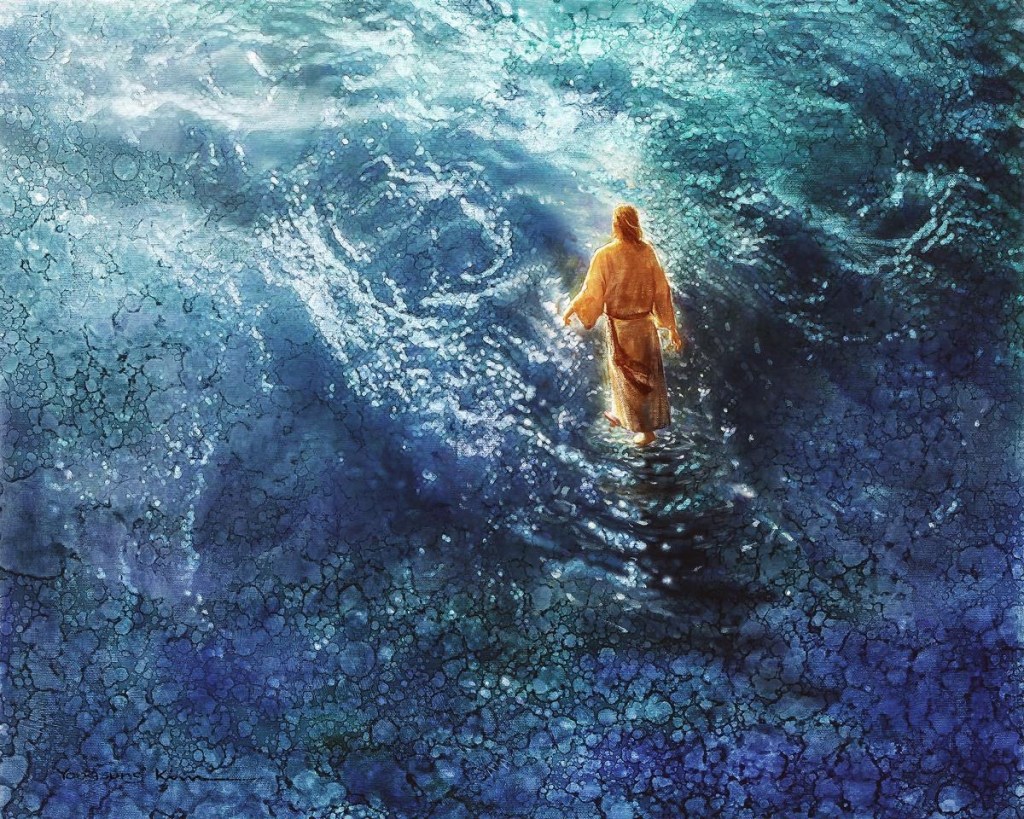
Walking on Water,
Painting by Yongsung Kim,
Painted in 1883, Oil on canvas
© Yongsung Kim artist

Loved Before We Are Sent

Homily: Eleventh Sunday in Ordinary Time (A)

Exodus 19:2-6a; Romans 5:6-11; Matthew 9:36–10:8

14 June 2026

Fr. Ricky Cañet Montañez, AA 

Some call it aura, some call it charisma but whatever it is, certain people have the power to change the energy of a room just by walking into it. There are occasions when a group of friends, co-workers, or maybe even members of a family are gathered and collectively experiencing exhaustion, tension,  or disappointment. Maybe they lost a game,  or maybe their project failed, or maybe everything is going wrong with their plans. And yet, the depression lifts when someone walks in with a kind smile and positivity that is absolutely infectious! They may not be the smartest or most talented, but their manner always reminds us that things will get better and that we are not alone. 

In today’s Gospel, Jesus looks upon the crowd and sees people who are “troubled and abandoned, like sheep without a shepherd” (Matthew 9:36). But what is remarkable is what happens next. It is true that His heart is “moved with pity” (Matthew 9:36), but He does not simply feel sorry for them. He responds with compassion. He sees not only their struggles but also their potential. He calls His disciples and sends them out to make a difference (Matthew 10:1, 5-8). In other words, Jesus sees a hurting world—and He believes His followers can help bring healing to it. 

The Gospel is not only about the needs of the crowd. It is also about the confidence Jesus places in ordinary people. Fishermen, tax collectors, and simple disciples are entrusted with an extraordinary mission: “Cure the sick, raise the dead, cleanse lepers, drive out demons” (Matthew 10:8), and proclaim that “the Kingdom of heaven is at hand” (Matthew 10:7). We often tend to associate skill and aptitude with the jobs we give people, but Jesus picked the unqualified and unlikely to carry out such important tasks. 

The same is true for us. Sometimes we underestimate the impact we can have on others. We often think we need to do something extraordinary, so tasks always feel too great to accomplish, and we become aware of our inadequacy to fulfill them. Yet we forget that when it comes to Jesus, He often works through simple acts of kindness, patience, generosity, and presence. A word of encouragement can renew someone’s hope. A listening ear can lighten a burden. A small act of generosity can restore faith in human goodness. 

Jesus often saw people as the best that they could be. Our unworthiness was of no consequence to Him. In the Second Reading, St. Paul reminds us that “while we were still weak, Christ died for the ungodly” (Romans 5:6). Indeed, “God proves His love for us in that while we were still sinners, Christ died for us” (Romans 5:8). Long before we sought Him, He was already reaching out to us. Even when we were unlovable, Christ loved us first. And the wonder of it is that when we know that we are loved, it becomes easier to love others. 

The First Reading expresses this beautifully as well. God tells Israel through Moses: “You shall be my treasured possession among all peoples” (Exodus 19:5). Before God even gives His people a mission, He first reminds them of who they are and of their dignity as His favoured ones. He also tells them, “You shall be to me a kingdom of priests, a holy nation” (Exodus 19:6). He affirms the distinctiveness of their identity before He gives them a mission. He reassures them that they will always belong to Him before He sets them to task. The same is true for us. We do not serve God in order to earn His love. We serve because we are already convinced that we are loved. 

This changes everything. The Christian life is not simply about avoiding sin or fulfilling obligations. It is about becoming people through whom others can experience God’s goodness. Perhaps that is why Jesus says, “The harvest is abundant, but the labourers are few” (Matthew 9:37). Even today, there are countless opportunities to bring hope, kindness, healing, and encouragement to others. The world still needs people whose hearts reflect the compassion of Christ. We should not wait for others to step in and work out something awesome. We can always do our part, make a start, no matter how small. 

As we begin a new week, the Lord is asking us to be a source of light for one person; to encourage someone who is struggling; to be present to someone who feels forgotten; to bring hope where there is discouragement. Let us believe that we can accomplish more than we can imagine when we do even the smallest acts with great love. Especially today, when so much in the world seems to be falling apart, let us remember that the Lord continues to look upon the earth with compassion (Matthew 9:36). In His time, God sets right what is wrong with the world through ordinary and flawed disciples like you and me, reminding us that we are seen, loved, and never alone.

The Bread for our Journey

Homily: Solemnity of the Most Holy Body and Blood of Christ (Corpus Christi)

Deuteronomy 8:2-3, 14b-16a / 1 Corinthians 10:16-17 / John 6:51-58

7 June 2026

Fr. Ricky Cañet Montañez, AA 

Have you ever been so stressed over something that you cannot seem to eat? Others stress-eat when they have problems. They keep eating and eating to help them forget their problems. “Kumain na lang tayo.” (“Let us just eat.”) “Ikakain ko na lang ito.” (I will just eat.”) They do this knowing that food does not really solve the problem. Not all hunger is physical. Many today are weary from the burden of responsibilities, others are weighed down by grief and disappointment, immobilised by uncertainty, and simply pressured to hold everything together. Often, these struggles remain hidden behind ordinary smiles and daily routines, creating a hunger for relief, consolation, and resolution. 

The Feast of Corpus Christi celebrates a beautiful, consoling truth: God never stops feeding His people. When the Israelites were lost in the wilderness, their own strength failed them. In that vulnerability, God showed them the extent of His providence. Moses says that God “fed you with manna” and taught you that “not by bread alone does one live, but by every word that comes forth from the mouth of the Lord” (Deuteronomy 8:3). The desert was not just a place of hardship; it was where they discovered absolute dependence, radical trust, and the quiet faithfulness of a God who provides daily sustenance and never abandons His own. 

Many of us are walking through a wilderness right now—emotionally drained, financially strained, quietly grieving, or anxious about the future. Into this hunger, Jesus does not just offer advice; He offers Himself. “I am the living bread that came down from heaven” (John 6:51). The Eucharist is not a symbol of God’s love; it is God transforming Himself into nourishment for His people. He says, “My flesh is true food, and my blood is true drink” (John 6:55). Usually, we try to satisfy our deepest longings with success, entertainment, and distraction, but the heart can only rest in what is eternal. Jesus is the peace, hope, and meaning we crave, and He gives Himself to us as Bread for the journey. 

Sometimes we can fall into the habit of seeing Holy Communion only as an obligation or routine—failing to observe the one-hour fast or the proper spiritual disposition to receive the consecrated host with reverence. Corpus Christi reminds us that Communion is not just about lining up for a thin, tasteless wafer but rather opening ourselves to a deeply personal experience of a God who knows us in our weakness and accepts us. He knows our fears, our exhaustion, our hidden struggles, and the burdens we carry silently. He knows what we hunger for in the deepest part of our soul, and He feeds us with His own presence so that He can sustain us and ensure that we never journey alone. 

Jesus does not wait for us to be perfect before inviting us to His table. We come to the Eucharist hungry, tired, and wounded—and still He says, “Whoever eats my flesh and drinks my blood remains in me and I in him” (John 6:56). The Eucharist is not a celebratory meal for winners or a reward for the strong. It is food for pilgrims and sustenance for the struggling. Even when our faith falters and showing up is hard, Christ nourishes us quietly and faithfully. Like a well-balanced diet, Communion builds our spiritual strength little by little, compounding our patience, hope, and courage for the daily journey. 

Moreover, Saint Paul reminds us in the Second Reading that “because the loaf of bread is one, we, though many, are one body” (1 Corinthians 10:17). The Eucharist is never just about “me and Jesus”—it is a call to become nourishment for others. Once we receive Christ, we are sent to be His compassion, patience, and mercy to a world deeply hungry for love and healing. Ultimately, the truest witness to the Eucharist is not just what we receive at the altar, but who we become after we leave it. As we receive Jesus at the altar, we are asked to be Christ in the world. 

My dear brothers and sisters, perhaps today we came to Mass carrying burdens no one else sees. Perhaps we ourselves are tired or searching for strength. And today, on this Feast of Corpus Christi, Jesus gives us this enduring assurance: God has not abandoned His people. He still walks with us. He still feeds us, and He still gives us the Bread from heaven—the bread that sustains us on our journey and brings life to the world.

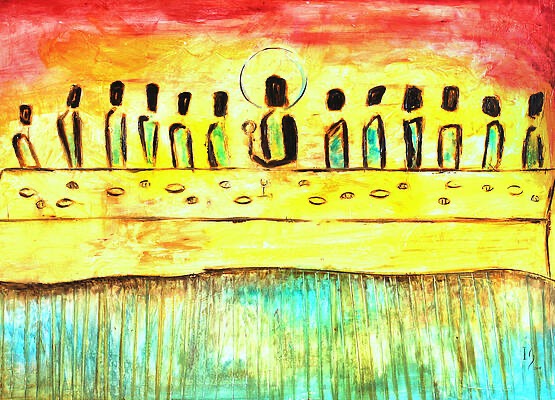
The Last Supper by Ivan Guaderrama

Enough in the Eyes of God

Homily: Solemnity of the Most Holy Trinity

Exodus 34:4b-6, 8-9 | 2 Corinthians 13:11-13 | John 3:16-18

31 May 2026

Fr. Ricky Cañet Montañez, AA 

Many people spend their lives trying to prove their worth, afraid that without success or achievement, they may no longer be valued. Workers feel appreciated only when they produce results. Even in families and relationships, some begin to wonder if they are loved only when they are useful, strong, or successful. They exhaust themselves hoping to be, at the very least, deemed enough. Sadly, some bring that same mindset into their relationship with God, thinking: “Maybe God will love me more if I become better first, if I am worthy.”

Today, on the Solemnity of the Most Holy Trinity, our Gospel gives us a completely different image of God. When Jesus says, “For God so loved the world that he gave His only Son” (John 3:16), take note that God loved first—before humanity became holy, before people fixed themselves, before the world deserved it. God loved first. That is the mystery of the Trinity. At the heart of God is not cold power, but relationship and love. The Father gives, the Son is given, and the Holy Spirit remains with us. In the First Reading, when God reveals Himself to Moses, He describes Himself as “a merciful and gracious God, slow to anger and rich in kindness and fidelity” (Exodus 34:6). That is how God introduces Himself—not harsh, impatient, or condemning, but merciful and compassionate. Jesus repeats this beautiful truth in the Gospel when He says, “God did not send his Son into the world to condemn the world, but that the world might be saved through Him” (John 3:17).

I once heard a professor say that there are some of us who are harder on ourselves than God is. Some carry guilt from the past. Some quietly believe they are failures because life did not turn out the way they hoped. Others are spent from trying to please everyone, trying to achieve more, trying to be enough. But the Trinity reminds us today that our worth begins not in our performance, but in God’s love. Before we succeed, we are loved. Before we recover, we are loved. Before we become better, holier, or stronger, we are already loved by God.

Saint Paul tells the Corinthians, “Live in peace, and the God of love and peace will be with you” (2 Corinthians 13:11). This tells us that Christian life does not begin with fear; it begins with receiving love. When one truly believes he or she is loved by God, this person slowly changes—not because he or she is terrified, but because love transforms from within. It is the experience of being loved that inspires us to be better for the one who loves us. God the Father has created us in love and all the wonderful things around us. In return, we show our love by living a life that glorifies our Creator and by being good stewards of the blessings we receive. God the Son gave His life that we may be saved. In return, we show our love by honouring His sacrifice, especially during the Mass. Lastly, God the Holy Spirit inspires us and grants us the sevenfold gifts. In return, we allow ourselves to be led by the Paraclete, and we share these gifts for the good of others.

The Trinity, therefore, may be a difficult doctrine to explain, but it is actually a beautiful revelation that we are living in a universe held together by divine love. Every time we make the Sign of the Cross, we remember who we belong to: the Father who created us, the Son who saved us, and the Holy Spirit who remains with us. We do not have to earn the right to be loved by God. We simply embrace this reality of being God’s beloved.

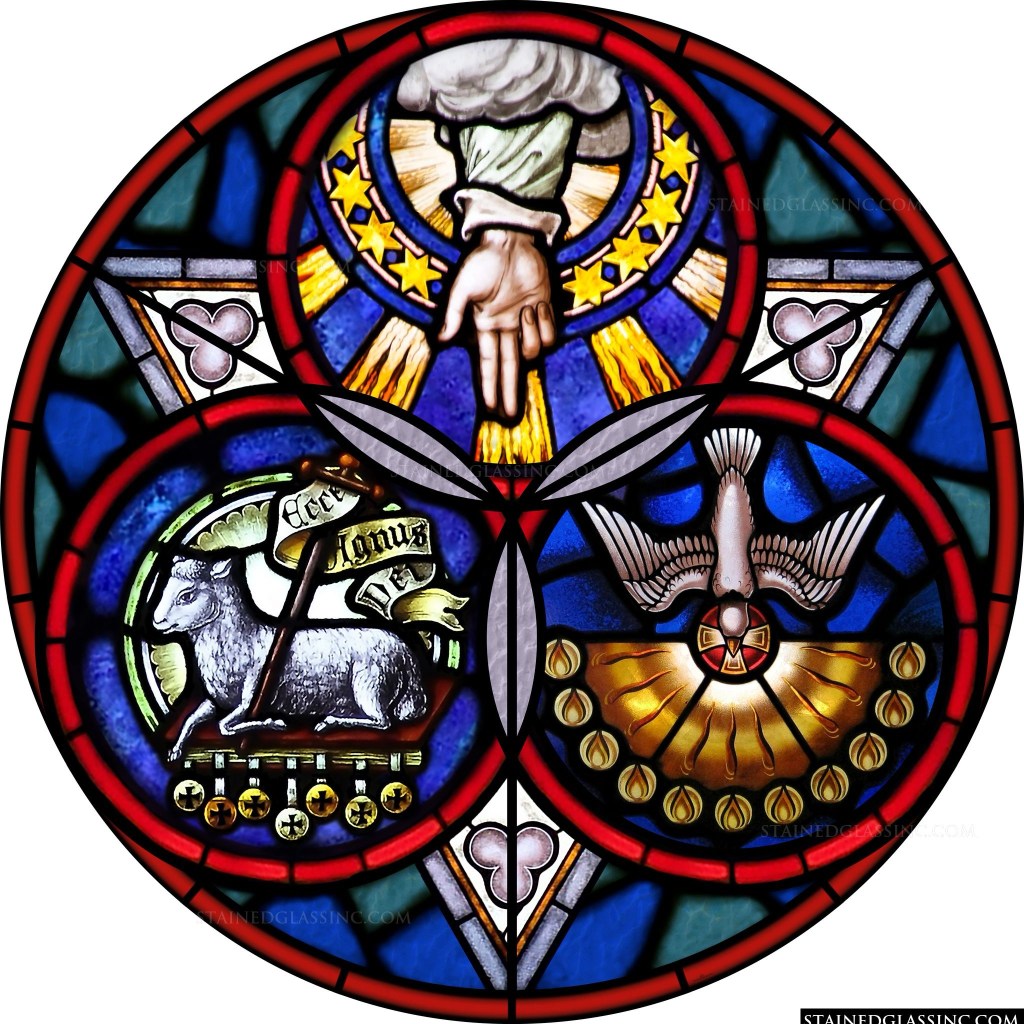
From STAINEDGLASSINC.COM

Pentecost in the Locked Rooms

Homily: Solemnity of Pentecost (A)

Acts 2:1-11 | 1 Corinthians 12:3b-7, 12-13 | John 20:19-23

24 May 2026

Fr. Ricky Cañet Montañez, AA 

Heartbreak is brutal—and not just the sting of a messy breakup or a cheating partner but also the heavy, crushing kind of heartbreak—the devastating loss of someone you love, the blow of a massive failure, or the quiet ache of being let down by the very people you trusted most. When we get hurt that deeply, our instinct is not to reach out; it is to pull back. We retreat from our friends, we distance ourselves from our colleagues, and we shut out the world. Anyone who has ever walked through that kind of pain knows exactly what it feels like to live behind locked doors. 

That is exactly where we find the disciples in today’s Gospel. St. John tells us that “the doors were locked, where the disciples were, for fear…” (John 20:19). They were afraid and confused at what had transpired. They were ashamed of how they had abandoned their friend, and dreaded that they might suffer the same fate as their leader, their teacher and master. Amidst this turmoil behind closed doors, Jesus enters anyway. He does not wait for them to become brave first. He does not shame them for abandoning Him. He does not begin with anger or disappointment. Instead, the first words He says are: “Peace be with you” (John 20:19). 

Then Jesus does something deeply symbolic and beautiful. The Gospel says that He breathed on them and said, “Receive the Holy Spirit” (John 20:22). The Holy Spirit is God entering the locked rooms of our lives—not to condemn us, but to breathe life, peace, and courage into us again. Many people today are emotionally and spiritually exhausted. Some are carrying wounds nobody sees. Some are quietly struggling with fear, anxiety, grief, loneliness, or hopelessness. Pentecost reminds us that God does not abandon people hiding behind locked doors. 

In the First Reading, the same disciples who were once afraid are suddenly transformed by the Holy Spirit. They begin proclaiming the mighty works of God to people from many nations (Acts 2:1-11). The same men who once hid in fear bravely face the public and speak with courage. What changed them was not self-confidence or human strength. It was the power and presence of the Holy Spirit. 

The Holy Spirit who transformed the fearful disciples at Pentecost continues to work in the Church today. In the Second Reading, St. Paul reminds us: “There are different kinds of spiritual gifts but the same Spirit” (1 Corinthians 12:4). Not everyone is called to do extraordinary things, but everyone can bring the Holy Spirit into the lives of others—through kindness, patience, forgiveness, encouragement, faithful service, and love. Everyone receives these gifts in different proportions, which determine our individual giftedness. Sometimes the greatest gift of the Spirit is simply becoming a source of peace and hope for another person. 

Pentecost is not only about tongues of fire long ago. Pentecost happens whenever God enters a fearful heart and gives it peace again. Whenever a wounded person learns to trust again. Whenever a tired soul finds strength to continue again. 

Today, Jesus comes to us as He came to the disciples behind locked doors, and He still says to us: “Peace be with you” (John 20:21). “Receive the Holy Spirit” (John 20:22).