Homily – Seventeenth Sunday in Ordinary Time (Year A)
1 Kings 3:5, 7–12 • Romans 8:28–30 • Matthew 13:44–52
26 July 2026
Fr. Ricky Cañet Montañez, AA
My college schoolmates in Iloilo are preparing for our Jade Jubilee next year. One of them has been posting old class photos on Facebook, asking us to correctly identify classmates and share stories. Most of the photos have been enhanced using Artificial Intelligence (AI), making faded faces and blurred details much clearer.
Back then, we easily fit into uniforms labelled… extra small!!! Someone commented, “We were so thin then!” Another replied, “Let’s just say we were slimmer.” Someone joked, “No, we were simply malnourished! We were out of budget!” A few proudly pointed out that they still had a full head of hair—including me! One classmate even commented that the AI version had given her a better nose than the one she remembered having! Reading through the comments was rather entertaining, and everyone laughed at all the details we had never noticed before.
As I continued scrolling through those restored photos, one realisation slowly dawned on me. The faces had always been there. The smiles had always been there. The friendship had always been there. AI did not create them. The photos were not telling a different story. We were simply seeing them with new eyes. I think that is one of the deepest insights of today’s gospel passage. Sometimes, we are oblivious to what is valuable right under our very noses! Maybe we are distracted. Maybe we are not looking closely. Maybe we do not know what we are looking for.
Jesus tells us about a man who discovers a treasure hidden in a field (Matthew 13:44). The treasure had always been there. Others had probably crossed the same field countless times without noticing anything unusual. The same is true of the merchant searching for fine pearls (Matthew 13:45–46). He had spent his life looking at pearls, yet one day he recognised one of incomparable value. Nothing changed about the treasure. Nothing changed about the pearl. The change happened in the people who finally recognised their worth.
This sheds new light on Solomon’s prayer in the First Reading. When God says, “Ask something of me, and I will give it to you!” (1 Kings 3:5), Solomon does not ask for wealth, power, or a long life. He asks for “an understanding heart” (1 Kings 3:9). In Hebrew, it literally means “a listening heart.” In essence, Solomon asks God for the ability to see life the way God sees it. Perhaps that is the Bible’s definition of wisdom? We usually think wisdom means knowing more. The Scriptures, however, suggest something deeper. Wisdom is actually seeing differently. It is seeing value in what has been in front of us all along.
That is not as easy as it sounds. We often discover the value of our parents only after they are gone. We appreciate good health only after we have contracted an illness. We treasure faithful friends only after distance has made it difficult to reconnect or death has put us beyond reconciliation. Even our faith can become so familiar that we stop noticing its value. We come to the same church, hear the same Scriptures, receive the same Eucharist, and, little by little, what is extraordinary begins to feel ordinary.
St. Paul speaks of that same wisdom when he says, “We know that all things work for good for those who love God.” (Romans 8:28) He is not saying that every experience is pleasant or pleasurable. There are experiences none of us would ever choose—a serious illness, the loss of someone we love, a broken relationship, a failed plan, or losing a job. We would never call those things “good”. Yet years later, we sometimes recognise that God was quietly shaping us through them. Perhaps He was strengthening us or preparing us for something else down the road. Looking back, we see His providence where we once saw only pain.
Instead of asking God to “give us more,” let our prayer be, “Lord, give me a listening heart. Give me new eyes. Do not allow me to discover the value of Your gifts only after I have lost them. Do not let me discover the gift of my parents only after they are gone. Do not let me discover the blessing of good health only after I fall sick. Do not let me discover the beauty of Sunday Mass only when I can no longer come. Instead, teach me to recognise Your treasures while they are still before me and within my reach.”
Those restored class photos did not change the past. They simply reminded us of what had always been there. Artificial Intelligence can sharpen blurry photographs, but only God’s grace can sharpen our vision of what truly matters. May God grant us the wisdom Solomon prayed for—a listening heart, a heart that finally sees. After all, the miracle in the Gospel is not that there was a treasure hidden in the field. The miracle was that someone finally recognised it.
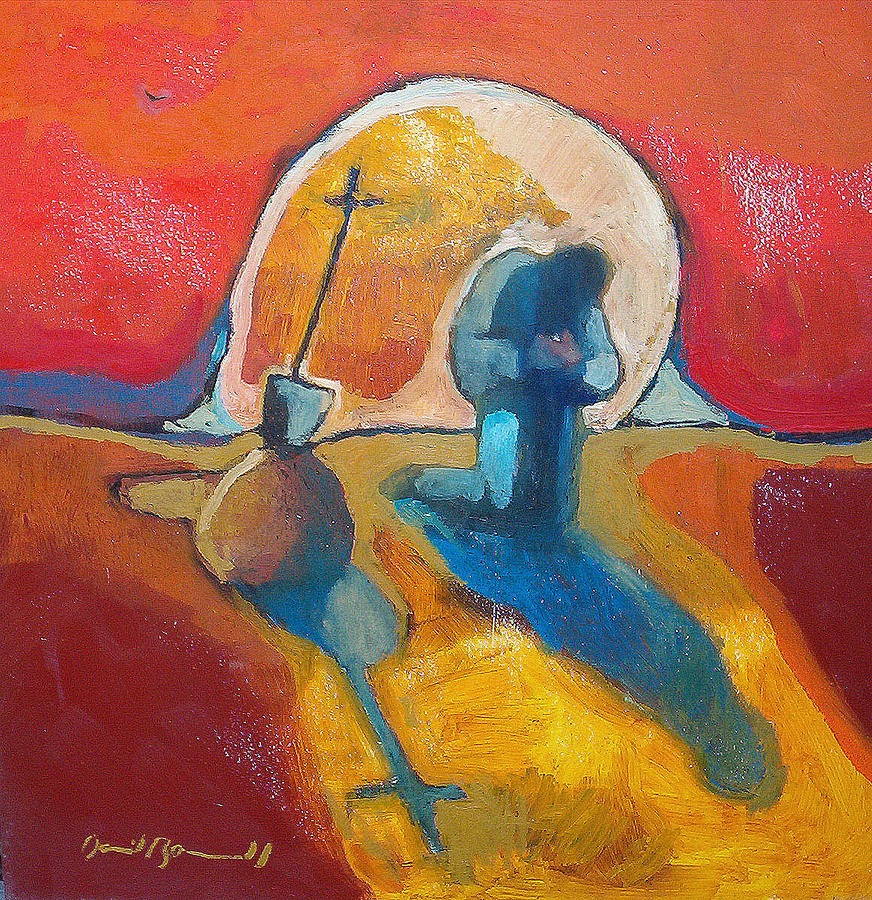
The Pearl of Great Price is a painting by Daniel Bonnell
 Sunday Gospel Reflections