Choosing GOD at All Times

Homily: Twenty-First Sunday in Ordinary Time (B)

John 6:60-69

25 August 2024

Fr. Ricky Cañet Montañez

Some years back a news article said that as a society, Pinoys have such short-term memories especially when it comes to our government officials. Politicians whose names are linked with scandals, graft and corruption still end up being re-elected. Of course, they go through a period of public persecution, but after a while, they are back in power again. Lately there was a post on Reddit that showed the life cycle of Pinoy communities during the rainy season. When there is devastation caused by a storm or a flood, people wail and complain but they rise to the occasion and help one another. Yet they are quick to identify the gaps in governance and cry out for change in leadership. After a while, they forget. Come election time, they vote for the same people who failed to address the climate and flood control issues.  We ask for change and yet we choose the very same people who cannot effect the change we need. Why do we continue to make such poor choices?

Today’s readings remind us of the power of our choices. As the prophet Joshua asks the assembled tribes of Israel, “If it does not please you to serve the LORD, decide today whom you will serve.”  (Joshua 24:15) He says, he and his family choose to serve God but the rest of the people have to make their choice, too.  Similarly, in the gospel, some of Jesus’ disciples choose to leave Him and go back to their old way of life.  Jesus is then prompted to give His apostles the option to stay or leave. He asks, “Do you also want to leave?” (John 6:67) Thankfully, none of His apostles do. Peter speaks for the group and says: “Master, to whom shall we go? You have the words of eternal life.”  (John 6:68)

We all face important decisions in life. Why is making a choice important? It is because it is what will direct our life; it is where our future depends on. The most important decision we face is whether we will follow Jesus or not. If one chooses to follow Christ, there are things we need to do to honour Him.  Our second reading (Ephesians 5:21-32) identifies a way of life for Christians — wives must submit to husbands, but husbands must love their wives as they love themselves, willing to offer their lives for the sanctification of their wives. At a wedding, the groom shared with the guests why he married his bride. He said, “She is my best chance to reach the Kingdom of Heaven and I promise to be the best chance for her to reach heaven, too. “

Perhaps many of us might say, “Oh, that is an easy decision. Of course, I will follow Jesus,” but Jesus warned that it is not always easy to follow Him. Faith in Jesus does not come easily. Take note that the disbelief on the claims of Jesus did not come from His Jewish opponents but from some of His very own disciples. And what did they do? They just left Him! Now what does it mean for us today? Will we choose to follow Him if it means giving up friends who are influencing us to make bad choices in life? Will we choose to follow Him if it means standing up to a bully who happens to be our boss and lose the promotion at work we so worked hard for? Will we choose to follow Him if it means we will never live in a big house nor drive a fancy car because we refuse to engage in shady business deals? Hence, it is always a matter of choice!

The sad truth is that some of us take for granted the fact that we have the power to make important choices — ones that can determine or influence the future.  We end up making the wrong choices because of ignorance, selfishness and fear.  When we feel so helpless, we delude ourselves into thinking we cannot effect change so we just never tap into that power. Other times, we are so complacent in how things are going for us that we shy away from choices that we fear would cause us discomfort even if they will benefit more people. Making a choice can be tough. To choose one option is to relinquish the others. There is always a price to pay. We have to take responsibility for our choices and be willing to make the necessary sacrifices. Going back to our story at the start of the homily. The streets flood because of garbage that clogs our drainage systems. Are we willing to sacrifice the convenience of buying plastic packaging and make smarter shopping choices to promote sustainability and protect the environment? If we don’t, flooding will persist and the future generations will suffer the consequences. Similarly, when we choose leaders who throw us a bone today and yet rob the country blind tomorrow, we are depriving our nation of a true chance at progress. 

Brothers and sisters, today we are challenged to make wise choices; to bravely ask questions that allow us to make informed decisions. We really ought to stop being self-serving and choosing what provides us with a temporary sense of security. Let us choose rather to serenely entrust ourselves and our future to God’s providence and benevolence. May we choose God and His ways at all times!
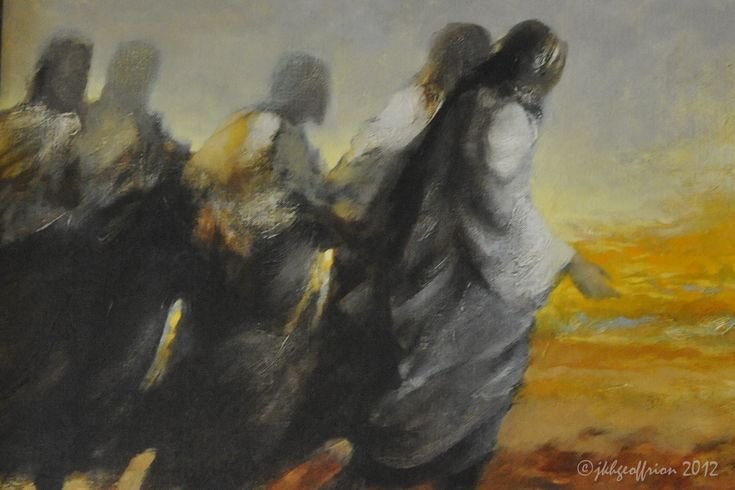
Art work by: Jill K. H. Geoffrion
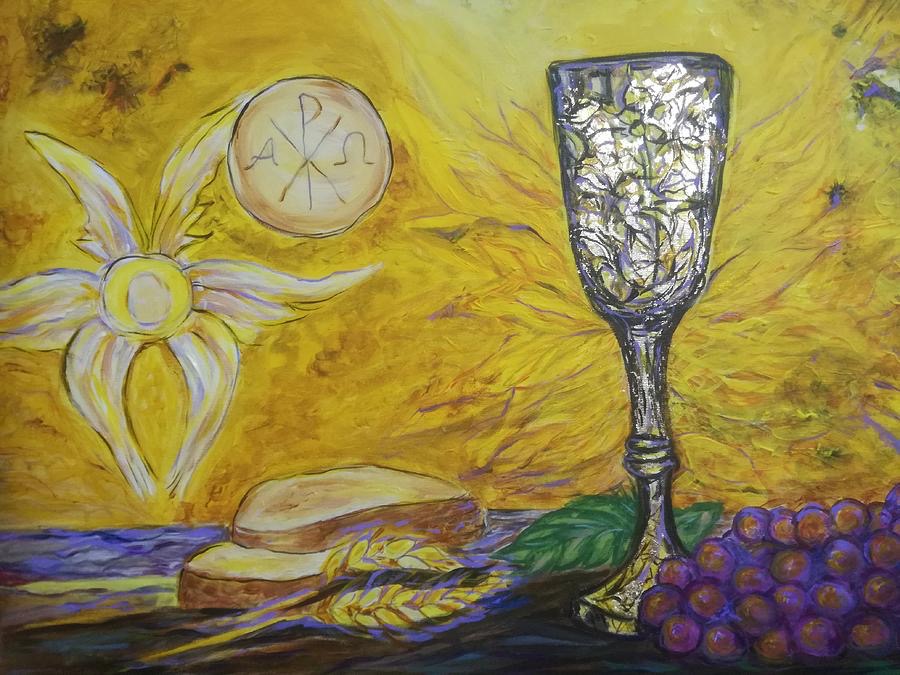

Christ in the Eucharist

Homily: Twentieth Sunday in Ordinary Time (B)

John 6:51-58

18 August 2024

Fr. Ricky Cañet Montañez

There are so many good restaurants in the vicinity of PLDM that I did not know about. Over the past several weeks I have been checking out the treats of each, as I get acquainted with the different ministries serving in this parish. Lately I have had breakfast at this nice place five times already but with different groups! Food really is the perfect way to bond with any Filipino. Don’t you agree? Notice that families gather most frequently over a table with shared food, whether it be for a simple fare or for a feast. Filipinos are always eating and they eat with those they like and love.

In our First and Second Readings we have somewhat different perspectives with regard to food and wine (wine being the drink of choice over water. Besides, soda and milk tea were not a thing back then.)  In the passage from the Book of Proverbs, food and drink are a means to satisfy and fill a need. It says “to the simple, to those lacking understanding: come eat my food and drink my wine! Forsake foolishness that you may live.” (Proverbs 9:5-6) We are all encouraged to partake of this meal that wisdom has laid out for us. And in the Second Reading we are told not to take too much to the point of getting drunk on the wine. The reason is that we must not be fooled into thinking that food (and other luxuries) is the goal of life. The goal is still to lead God-fearing lives, and to glorify the Lord at all times.

For us Christians today, we continue to gather and grow closer to God and one another through the special meal of the Eucharist.  It is a meal that nourishes our souls and our spirituality, strengthening our resolve to choose God and the good at all times. Especially in these days where evil and temptations are all around disguised as the most harmless and enchanting things, we need that strength of spirit and the help of our brothers and sisters to help us recognise dangers and to fight them off. We should not be foolish to think that we can succeed without the Eucharist. This is a gift we should not reject. We need to receive the sacred host as often as we can! Why? Because it is not simply a symbol of Christ, but it is Jesus, Himself! He is the “living bread” — His flesh is real food and His blood is real drink.

In the gospel passage, Jesus tells the crowd that He is the Bread of Life, the true nourishment that our souls need. In Jesus, no one will ever go hungry nor thirsty if that person would come to Him and believe in Him. Jesus says: “Whoever eats my flesh and drinks my blood has eternal life, and I will raise them up at the last day.” (John 6:54) As Catholic Christians, we believe that these words of Jesus refer to the Eucharist and we demonstrate this belief each time we receive the Body and Blood of Christ in Holy Communion. When the priest says: “The Body of Christ”, our response is…? (Thank you? Okay?) AMEN! And when we say AMEN, we are saying “Yes, I agree” or “Yes, I believe!” that the host is Jesus!  He makes of Himself an everlasting gift to us, especially to those of us who have not had the opportunity to meet Him while He lived and walked this earth. It is not enough for Him that we hear stories about Him, His teachings and all the wonderful miracles He made. He loves us so much that He wants to be so close to us and united to us so He can take care of our souls. He is here at every mass, making Himself available to us through His sacred Body and Blood on the altar.

Through the Eucharist, Jesus continues to sustain, nourish and strengthen us to be true to what we all have become through Him — God’s beloved children. St Augustine once said: “If we receive the Eucharist worthily, we become what we receive.” Even nutritionists today tell us we are what we eat. So, we have to come to mass as frequently as we can and receive Jesus with as much love as we can muster in our heart. The more we receive Jesus in the eucharistic celebration, the more we become like Him and gain more strength to resist temptations in life.  He is also food for our souls that we may have strength to make the right choices. In fact, when people feel sad, afraid or really tired because of their problems, many choose to go to mass to draw strength from Jesus — they listen to His Word and receive Him in the Eucharist. 

To receive Jesus is truly a gift but receiving Him in the Eucharist is also a challenge to be eucharistic persons, ourselves. What does this mean?  It means that as we are nourished by Jesus we are challenged to manifest Jesus to others. Other people should see Jesus working in us. To receive Him is to be united with Him. This union with Jesus helps us to order all our thoughts and actions around what is important to Jesus — being there for other people.

Finally, let us remember that in Holy Communion, we are joined to Jesus in a special way each time we receive His Body and Blood. Moreover, this will give us the strength to inspire others by our good behaviour and good works and prove that Jesus is the living bread that came down from heaven who continues to live through each and every one of us.

By And Gheorghiu

Secure in God’s Love

Homily: Nineteenth Sunday in Ordinary Time (B)

John 6:41-51

11 August 2024

Fr. Ricky Cañet Montañez

We are all irritated when the cost of gasoline increases. But for car owners, we don’t really have a choice, do we? Without gas, our cars will not run!  I recall this analogy when I think of Church volunteers who work so hard and over-exert themselves that they experience burnout.  Sometimes, it is frustration from lack of parish support or lukewarmness of the community that causes church workers to lose interest in their mission. If you keep your car running even when it signals that the tank is almost empty, it can be a dangerous situation for you.

What we go through when we experience misfortunes in life can be likened to the frustration of Elijah in the passage from the First Book of Kings. He has lost his appetite for doing God’s work. Elijah is frustrated to the point of death. He has not been successful in calling the people away from their sinful lives. He has had enough. So, he calls on God to take his life instead. He says “Enough Lord! Take my life! I am a failure.” (1 Kings 19:4) Instead of obliging him, God reaches out to him through an angel, offering him cake and water, providing sustenance and encouragement so he may live and continue on his journey.

On this Sunday’s gospel something similar is happening. Jesus is also having a hard time convincing people that He is who He claims Himself to be. “How can he say, I have come down from heaven?” (John 6:38) The objection centres on the fact that they feel they know Him and are familiar with his parentage. How can He claim to have a heavenly origin when they are certain of His human origins? Assured of the love of the Father, Jesus perseveres in His mission and continues to be a source of nourishment for others. When we lose our appetite for life, we should imitate Jesus. That like our Lord Jesus, we should be secured in God the Father’s love for us and we should carry on with what we are supposed to do. In so doing, we can become ourselves a source of nourishment for our brothers and sisters in need. I believe that all of us at some point in our lives had to deal with toxic persons. This can be very frustrating as well. What someone posted on his Facebook wall can be a good reminder. “When a toxic person can no longer control you, he/she will try to control how others see you. The misinformation will feel unfair, but stay above it, trusting that other people will eventually see the truth, just like you did.”

It is not unusual for many of us to experience frustration. Some wonder why they were ever born. Some wish God would take them and save them from their suffering. Others lose faith in God altogether. However, this should not be the case. In fact, as brothers and sisters in Christ, we should support one another and help those who are losing hope. St. Paul reminds us to “Be kind to one another, compassionate and forgiving as God has forgiven us in Christ.” (Ephesians 4:32) Those of us who are fond of watching K-Dramas, must have noticed that the South Koreans often say: “Fighting!” to assure the person in difficult situations not to give up for he/she is not alone.  In Filipino we say: “Laban lang! Habang may buhay, may pag-asa!” 

Despite the fact that we are often discouraged, our journey through life is always blessed. We are assured that God loves us and provides us with what we need for our life’s journey. For us Catholic Christians, we see this divine assistance through our spiritual nourishment in the very Body and Blood of Jesus offered to us in the eucharistic feast we celebrate.  He also sends us help and encouragement through our friends, families, and other people who become sources of guidance and inspiration. Let us trust that God is with us at all times! Let us taste and see the goodness of the Lord! (Psalm 34:8)

A Tremendous and Irreplaceable Gift

HOMILY: Eighteenth Sunday in Ordinary Time (B)

John 6:24-35

4 August 2024

Fr. Ricky C. Montanez

A friend’s family always eats out on Sundays. Instead of going to the same place each time, she chooses to take her family to new restaurants. Normally, the whole family is happy to enjoy the new experience and culinary adventure, but their mom always finds something unpleasant about the food and repeatedly makes mention of it over the meal, dragging down the mood of those at the table. On one occasion my frustrated friend jokingly told her mom that next time they eat out, they would just buy her favourite Jollibee Palabok for her to eat at the restaurant so they can all be happy with their meal.  Sometimes, we can be such complainers that we miss out on the good things happening to us.

In today’s passage from Exodus the Israelites are said to have expressed their discontent against Moses and God. Although they were consistently reassured of God’s presence, provision and guidance on their journey through the wilderness; still, they grumbled. They complained. They seemed to have forgotten all the good God had done for them. Despite the fact that God provided more than enough food, for them to eat their fill, they still weren’t satisfied. They were so focused on their craving for their typical meals in Egypt that they forgot that the price they paid for that convenience was actually the loss of their freedom!  “Would that we had died at the Lord’s hand in the land of Egypt, as we sat by our fleshpots and ate our fill of bread. But you had to lead us into this desert to make the whole community die of famine!” (Ex 16:3). For them to choose slavery over their freedom is proof of their ingratitude and ignorance.

Like the wandering Hebrews in the desert, and the mom in my opening story, we, also find ourselves whining at times. We tend to be discontent with so many things in life that we fail to see the grace God has been sending us. When the sun is shining, we complain it is too hot and pray for rain.  When it rains continuously, we complain because all the surroundings are wet, we cannot dry our laundry in the sun, etc.  Just recently, I have been hearing many complaints about the Church as well such as… “These Bishops are too strict and demanding especially when in comes to issues on Christian faith and morals.” or “Our priest never stops asking us for donations.” (And yet they find no issue with the strict regular tithing policies of other faith groups.) We should be grateful that we still have priests to administer the sacraments. In Europe, churches are closed, turned into museums or sold and converted into pubs and congregations have vanished due to lack of priests. It is so much easier for us to be complainers, whiners, and grumblers instead of looking on the bright side of things and counting our blessings.

In today’s gospel Jesus acknowledges the people’s hunger and offers them bread that will satisfy them forever. Yet, they are not convinced and ask for a supernatural sign just like the manna that came down from heaven to feed their ancestors. Jesus tells them, “My Father gives you the true bread…. (John 6:32) which comes down from heaven and gives life to the world.” (John 6:33) They are impressed and want to have this for themselves. “Give us this Bread of Life.” (John 6: 34) Jesus says “I am the Bread of Life, whoever comes to Me will never hunger and whoever believes in Me will never thirst.” (John 6:35) This is in reference to Himself, His mission of salvation and the sacrifice that He is prepared to make for humanity which is by far a tremendous and irreplaceable gift!  If we continue to read the story, we find out that the people are horrified that they must eat Christ’s flesh and drink His blood. They once more grumble at what they do not understand and keep their preference for what is convenient. This keeps them from recognising and accepting this foretelling of the Holy Eucharist, which we all benefit from now. The story ends with many of the disciples leaving Jesus and going back to their old ways. Simply put, they missed out on an opportunity of a lifetime.

People who truly believe in Jesus are always open to the stirrings of the Spirit. The faithful recognise that God works in mysterious ways and although things don’t always go according to their expectations, every moment is a grace. Every moment is something to be grateful for because God knows the big picture and He is working tirelessly that we may all have eternal life in His presence.  Now there is a couple that is very close to me. Pre-pandemic, they frequently invited me to share a good meal. The wife became blind because of Diabetes. I saw how this became a moment of grace for both of them. The husband did practically everything for her without complaint even to the extent of learning to put make-up on his wife to make her feel pretty and confident. On his part, he is a model of patience and true love. On her part, she learned to be trusting of her husband and accepting of life’s surprises. Despite the difficulty of guiding his wife in public, they are always present at Sunday Mass and receiving communion regularly. It is a testament to their faith in God and His providence.

In Jesus, God feeds us with “food that lasts for eternal life.” (John 6:27) St. John Mary Vianney says this happens out of God’s infinite love. There should be no reason for us to complain because the very hand of the Lord feeds us and He answers all our needs. Every celebration of the Eucharist, must therefore be a reminder of how tremendously loved we are!

Sharing Our Loaves and Fish

Homily: Seventeenth Sunday in Ordinary Time (B)

John 6: 1-15

28 July 2024

Fr. Ricky Cañet Montañez 

Before anything else, I wanted to say thank you again to all those who donated funds, goods, and their time and effort to the relief operations of the church. Sa pinagsama-sama ninyong donasyon, marami po tayong natulungan sa mga naapektuhan ng bagyong Carina. We may not have been able to help the thousands affected all over Metro Manila but to the hundreds who received hot meals and emergency supplies, it meant the world to them. 

The feeding of the crowd of five thousand with five loaves and two fish has a lot to teach us about feeding those who are less fortunate among us, both in the physical and in the spiritual senses. It is very difficult for someone to believe in the good news of Jesus Christ when they do not concretely feel the love and mercy that is being preached. They can reject it as empty words and promises. When we translate into good works, our belief in Christ’s teaching, it proves to others that the gospel is real. When I was a youth volunteer of the Institucion Teresiana, we used to teach children in Sitio Mintapod in Impasug-ong, Bukidnon.  Some of the children would walk for hours every day just to get to the learning centre. As soon as they arrived, they were first fed and given some toiletries for their basic personal hygiene training. Once their physical hunger was addressed, they were ready for the lessons that would feed their intellectual and spiritual hunger. 

Let us go back to the concerns of Jesus’ disciples in the gospel. 

When Jesus asks: “Where can we buy enough food for them to eat?” (John 6:5)

Philip responds: “ Two hundred days’ wages worth of food would not be enough for each of them to have a little.” (John 6:7)

Andrew, on the other hand is quick to point out what the other has, not what he has. “There is a boy here who has five barley loaves and two fish; but what good are these for so many?” (John 6:9) 

These are legitimate problems if we look at the situation from a logical standpoint. The best option would really have been to send the people home to eat but Jesus did not want them to simply dismiss the crowds. He wanted to feed them. This was the perfect moment for Jesus to teach the disciples to trust in God’s providence and to help them realise their role in continuing His saving mission. They are tasked to look after the people entrusted to them, not only to feel sorry for their plight, but more so to show them God’s compassionate love by attending to their concerns and by providing for their needs. 

Tomorrow will be the opening of classes in public schools.  So many of our children will go to school in a less than perfect situation. I was talking to a family in the evacuation centre and the mother was telling me that they lost everything in the flood including the school supplies of the children for the opening of classes tomorrow. Children who go to private schools will start the year with new shoes, a new school bag filled with new school supplies and their lunch boxes will be filled with their favourite snacks for recess.  It is not the same for public school children. Individuals who want to help can sometimes be overwhelmed by the reality of how much is needed to address the needs of these children.  Often like the disciples, we, too would rather defer our assistance once we find ourselves thinking that five loaves and two fish are nothing much to the numerous needs of our brothers and sisters; it will not be enough to share with thousands of others. Like Jesus’ disciples we also find ourselves thinking: “We have so little, we have nothing for so many people.” “I have nothing to give because I am a nobody myself.” (“Ano maiaambag ko eh kung ano ang meron ako, kulang pa nga sa pang araw-araw namin.”) The Feeding of the Multitude teaches us that God sees our efforts and He will supply what is needed. All we need to do is to be generous with the graces we have received and believe in God’s providence. 

Today’s gospel calls us to witness to the love of God for His people by sharing our loaves and fish to feed those in need. The little that we have when shared in love will go a long way in assuring our less fortunate brothers and sisters of God’s presence in their struggles. This brings to mind what St. Pedro Poveda once said: “One does not need to be rich in order to give, one only needs to be good; when one is good he/she will always find something to give.” We are not looking to make an earth-shattering impact or resolving major problems in society. Let us simply be sensitive to the needs of those around us and be ready to share what we have to help relieve the suffering of others.   

Brothers and sisters, in whatever we do, regardless of how menial or negligible the task may seem to us, we have to do this out of love. We would be surprised that the little we have shared was actually the blessing that others needed to assure them of God’s love and compassion for them.

The Loaves and Fish by Janice Cook

A Heart to Serve

Homily: Sixteenth Sunday in Ordinary Time (B)

Mark 6:30-34

21 July 2024

Fr. Ricky Cañet Montañez

Lately, I have been consulting a gastroenterologist for my discomfort. My last conversation with him revealed a lot of traits I find admirable. He was sharing with me how his colleagues often call him “crazy” for having clinic hours from 9:00 am to 5:00 pm from Monday to Saturday. This on top of the numerous procedures and hospital rounds he has to do every day. He is so good at what he does that a lot of patients go to him for treatment of their digestive disorders and diseases. He is also a very religious person and draws inspiration from his faith in fulfilling his duties. He said that he teases his fellow doctors that he would only stop treating and helping people when he drops dead.

In the gospel passage this Sunday, Jesus also has a packed schedule!  There is not a single dull moment in His day. Jesus was very much occupied in giving Himself at the service of people — bringing healing and wholeness into their lives, that He hardly had time for Himself. Despite this, Jesus never seems to complain and groan about the task at hand; at times He is even choosing to forego His own temporal needs for the sake of others.  The gospel recounts “they did not even have time to eat” (Mark 6:31) so Jesus instructed His disciples to “[go] away by yourselves to a deserted place and rest a while.” (Mark 6:31) They had gone off on a boat so they could be by themselves yet the people found out where they had gone and followed. Though Jesus also needed to rest, His heart was moved with pity when He saw the vast crowd desperately seeking Him. He chose instead to attend to others who are in need. This is how Jesus lived every day of His life — an emptying of Himself for others.

There are two things we need to learn from Jesus from His actions in today’s gospel.  First, let us be sensitive to the needs of the people who are close to us. Sometimes, we take for granted the needs and feelings of our family, our friends and those who work closest to us. We think they will always understand us and our passion to achieve our goals. Stay at home moms are often the casualties of this. They make sure all the needs of their husband and children are met to the point that they do not have time to rest, have a haircut, or spend time with their own friends. Sometimes we assume our mom is okay doing all these things for us without knowing her mental health is affected or she has been ignoring the symptoms of a developing illness. To some of us who are the heads or team leaders at work, we also have to be compassionate with our subordinates. We have to make sure that they have time to eat and rest and maintain a good work-life balance. We have to remember that we as workers are not machines and what we are tasked to do is only part of the many things that make up our life as human beings.

Second, we must always make ourselves available to our brothers and sisters who need us. Sometimes, we are too focused on achieving our goals or looking after ourselves and our loved ones that we choose to ignore those needing our help.  I guess many of us here share my pain of seeing families having a grand time eating out together oblivious of the street children looking longingly at their leftovers through the restaurant window. Yes, these kids should be taken care of by their parents but in these moments, can we not have a heart? We do not become less of a person if we share the blessings we have received from the Lord.  I remember the daily prayer of a good friend, a nun who died two years ago. She used to pray: “Lord, you may take me back to you once you think I have already used up all my energy and have given enough of myself for others.” That was precisely how she died. She only got sick a week or two before she passed on.

We draw inspiration from Jesus as we look beyond ourselves, our own needs and our own goals and how unreservedly we have attended to the needs of others. In the end, our service of love for others is what makes our life meaningful and worth living for. Let our prayers, provisions and presence be healing and consoling to those in need; may they be strangers or very close to us.

By Stella Levi

Together in Mission

HOMILY: Fifteenth Sunday in Ordinary Time (B)

Mark 6:7-13

14 July 2024

Fr. Ricky Cañet Montañez

There is a quote that says: “If you want to go fast, go alone, but if you want to go far, go together.” There is wisdom in working in a team. To work alone, we may get things done faster because we have no one to contradict us. On the other hand, it also means we could burn out faster. In a team, everyone’s strengths come into play to help achieve the goal. The journey may take longer but it is more enjoyable and the difficulties are easier to bear.  We, Filipinos know that it is more enjoyable to work with others for something worthwhile.

In the gospel passage from Mark, Jesus gives the disciples very specific instructions for their missionary task.  He sends them out into the world where they preach repentance, heal the sick and drive out demons. However, what I find most interesting among Jesus’ instructions is the act of sending out his disciples in pairs. The Gospel of Mark states: “Jesus summoned the Twelve and began to send them out two by two and gave them authority over unclean spirits.” (Mark 6:7) Moreover, we ask: “Why”?  Wouldn’t it be more efficient; wouldn’t they be able to cover more ground if they were sent out individually? Now after some reflection, may I suggest three (3) reasons for this particular instruction — the task was difficult, the task required teamwork and there was a need for witnessing and accountability.

First, Jesus has given the disciples a daunting task; hence, they are not sent alone but with partners (“two by two”). Let us accept that work becomes a lot easier when we have a helper, but it is also important to have someone to support us when we feel weak or discouraged. It is quite easy to be discouraged if we find ourselves alone to bear psychological and emotional burdens. The encouragement and support that another can give is a gift that can sustain anyone especially those tasked with proclaiming the Good News.

Second, the work of spreading the Good News is always collaborative. If one is out healing people by himself/herself, it would be very easy to start taking all the credit. Ministers/missionaries/pastors ought to be cautious since he/she could develop false claims about himself/herself. It is so easy to get drunk on the adulation and praise from others.  On the other hand, we also must caution ourselves not to be mindless blind followers to these self-proclaimed messiahs, and anointed ones.

My third and last point is:  we need to have someone to hold another accountable. This is important! We have the duty to give an account of our stewardship. We are to be responsible for our given time, talent and treasure not only for ourselves but for others as well. Having someone in the work with us is also important so that we can hold each other accountable.

In my previous parish, I had to do a lot of pep talks to the different parish groups to remind them of the importance of working together in the fulfilment of the parish mission. It is important to remind ourselves that it is not a “we against them” scenario nor it is a competition. Almost always, a more collaborative approach produces better results. Besides, we always have to remember that this is God’s work, not our own. The Gospel primarily teaches us to look to the One whom we are serving and to depend on Him rather than on our own strengths.

Let us pray that God will equip us with everything and everyone we need for a fruitful mission! We are assured that we will never be alone. Let us take heed of Jesus’ instructions. Let us count on Jesus’ word and rely on His promise to be with us every step of the way! 

Advocates of Truth

Homily: Fourteenth Sunday in Ordinary Time (B)

Mark 6:1-6

7 July 2024

Fr. Ricky Cañet Montañez

Last Saturday I was received in what they call a very-PLDM festive fashion with matching street dancing, waving of flags, billboard sized welcome tarps and a fun-filled program after the welcome rite. I am deeply honoured but at the same time challenged to live up to everyone’s expectations. Jesus, on the other hand, did not get a similar kind of welcome from his “kababayans” (townmates) in the gospel passage.

Indeed, Jesus receives a hostile reception from those who are supposed to be more supportive and understanding of Him. “Yeah, we know him, that’s just Jesus!” “There’s nothing special about that local boy.” “What makes him think he can preach in the synagogue and tell us how to live our lives?” They think they know Jesus well enough because they observed Him grow up in their town. They are unable to believe that Jesus could be anything more than the carpenter’s son, much less, the Messiah.  “Isn’t this [man] the carpenter’s son? Isn’t his mother’s name Mary… his brothers James, Joseph, Simon and Judas? [and] aren’t all his sisters with us?” (Mark 6:3) Having witnessed Jesus as He was growing up prevented them from believing He could amount to something more, especially not the Messiah they were expecting. Thus, Jesus could only respond: “A prophet is not without honour except in his native place and in his own house.” (Mark 6:4) Their prejudice prevented them from recognising the truth about Him. The saddest part for me is that Jesus was unable to do mighty works in his hometown because of their lack of faith in Him. (Mark 6:5) The people’s initial appreciation of His wisdom and miraculous deeds turned out to be shallow because it quickly turned to hostility and their blatant rejection of Him.

In our First Reading, Ezekiel was warned that he would also be experiencing rejection by God’s people. The Lord clearly warned him to brace himself for opposition as He worked to relay God’s message to the people. Ezekiel was warned that he was being sent to people who are rebellious. “Son of man, I am sending you to the Israelites, rebels who have rebelled against me; they and their ancestors have revolted against me to this very day. Hard of face and obstinate of heart are they whom I am sending you.” (Ezekiel 2:3-4) To speak the truth has never been easy. This is the sad reality of being a prophet. A prophetic message will always be met with hostility and often the messenger pays a very high price. 

These days, there are a good number of brother-priests who are among the most bashed persons in social media simply because they voice out their political views and opinions or call people out for their inconsistency of beliefs. I have a priest-friend who is quite active on social media and very vocal about his political views. The trolls always have a field day with his posts. They harass him online and even “teach” him what he  should be doing as a priest. Some of these people are not even Catholics! At one time he responded to these keyboard warriors saying — “And why should we base our priesthood on what trolls like you say about how we should live out our priestly vocation? You don’t read Church documents on priesthood, you don’t even want the truth. It’s permissible for you to kill, to steal, to lie (those that are against God’s commandment according to the Bible). Where do you draw the audacity and arrogance to tell me how to become a priest? LOL!” 

Throughout human history this tragic story of Ezekiel and Jesus, and all the other prophets who were rejected, maligned, and killed thereafter, continues to happen over and over again among the messengers of truth and justice in our time. Even Jesus, Himself, had to preach to some pretty tough crowds. Nevertheless, we should not be discouraged. We should still opt to stand for what is right, true and just despite the challenges we encounter. God assures us, as He assured Ezekiel and all the prophets after him that He would bless them with the necessary strength to carry out His message. In our Second Reading, the Lord encourages St. Paul to be zealous in his missionary work in spite of his limitations. “My grace is sufficient for you, for power is made perfect in weakness.” (2 Corinthians 12:9) Eventually, St. Paul would say: “Therefore, I am content with weakness, insults, hardships, persecutions, and constraints, for the sake of the Christ; for when I am weak, then I am strong.” (2 Corinthians 12:10)

Brothers and sisters, God cares so much for His people that He sends messengers to call out His people for their wrongdoing and to set them straight. Sometimes, the Lord uses the most unlikely people to serve as His prophets. Sometimes, He might even use you! Let us pray today for discernment to recognise His prophets, and the courage to speak the truth and advocate for what is right in God’s eyes.

Coming to Jesus for Healing

Homily: Thirteenth Sunday in Ordinary Time (B)

Mark 5:21-42

30 June 2024

Fr. Ricky Cañet Montañez

Parish Priest, The Parish of the Lord of Divine Mercy

My friend had an aunt who migrated to the US and became a doctor. She was very successful and she became active in many Filipino-American organisations and an avid volunteer at her Church. She had the perfect life for a single woman but she was so insistent on getting married, that she dove into a string of doomed relationships. At fifty (50), she finally married a much younger unemployed man from the province (probinsyano) who did not love her but saw her as his ticket to a better life in the US. He struggled so much with English that he was unemployable. He became fully dependent on her. Nonetheless, she supported him and spoiled him with a full designer wardrobe and lavish trips around the world. She couldn’t retire comfortably since she felt she had to sustain the life her husband had grown accustomed to. Sadly, when she got sick in her old age, he abandoned her.  She suffered throughout her married life but refused to admit it to friends and family out of shame. After all, she went all out to find a husband; she could not fail her marriage.

All of us at different moments of our lives must have struggled with a weakness or we have borne a cross that we are afraid to acknowledge to God, let alone to other people. Maybe, we have a secret addiction to alcohol or gambling or pornography or gaming, or even online shopping. Or perhaps, we struggle with a character flaw such as being gullible, or easily angered or being irresponsible. Maybe, we can’t find the words to express our shame, guilt and pain to God even in the silence of our hearts in prayer. We are much less hesitant to share it with others for fear of being judged, misunderstood and ostracised. We are afraid to be cut off from the Lord and separated from family and friends. 

If this is the case, we can relate with the woman healed of her bleeding problem by Jesus in today’s gospel. By Jewish law, she had to live apart from society because her bleeding made her unclean and unfit to associate with others.  In the passage, we are told that Jesus was on his way to bring life back to the daughter of Jairus, a synagogue leader, an important man, but Jesus stopped to engage with a woman considered an outcast; someone from completely the opposite end of the social order. He is not in a hurry. He gives her his time. He gives His full attention.  Nothing is as important to Jesus as that moment that He is connecting with those in need.  He wants to hear their whole story.  Jesus wants to bring healing to their souls, to their very being —  restoring them to wholeness, calling them as God’s “daughters”, calling them as God’s “sons”.

The woman in our gospel was sick for twelve (12) years. She most likely went to every doctor available to find a cure. Sometimes, we try to solve our problems ourselves and fail. Sometimes we think we are making progress but fall right back into our self-destructive behaviours.  Whatever it is that we struggle with, we should follow this woman’s example. She acknowledged that Jesus was the answer. He was the key to healing and wholeness. She took a risk to reach Jesus but only managed to touch the hem of His garment but she believed that would be enough!  We too must reach out to Christ for mercy, healing, strength, and forgiveness as best we can. Jesus will not embarrass us or send us away. Instead, He will respond graciously, as He always did to humble, sincere people who came to Him with faith, love, and repentance.  

 Brothers and sisters, whatever our story, whatever our journey through life has been up to this point, let us reach out and touch Jesus in faith, and let Him minister to us — to bring healing to us, to restore us, to welcome us into God’s family. We have a brother who is always waiting for us to come home to God, our Father.

Howard Lyon/A thread of faith

Unto Safer Shores with Jesus

Homily: Twelfth Sunday in Ordinary Time

Mark 4:35-41

23 June 2024

Fr. Ricky Cañet Montañez

For the past two months, the discomfort I have been feeling in my stomach has been giving me sleepless nights.  I was so scared as we have a family history of colon cancer. Regular colonoscopies would have ensured early detection of any growths but my last colonoscopy was ten (10) years ago and I feared the worst. I had two procedures yesterday. I was moved to the recovery room at exactly three (3) PM — the Hour of Great Mercy!  I feel it was providential. The results of my colonoscopy and EGD revealed I had no serious health issues. You cannot imagine the relief I felt after! At the same time, I was ashamed to have considered that God may have fallen asleep and did not have His eye on me while I had been busy serving Him.

In the Gospel from Mark, we are told that Jesus and His disciples were at sea. At some point Jesus has fallen asleep so he was unaware when their boat suddenly encountered a violent storm. Imagine the waves tossing and turning their ship, crashing against it and filling it with water! While the others around Him were losing their heads from fear that their boat may not be strong enough and they would all drown, Jesus was sleeping peacefully. The disciples wake Him in their distress “Teacher, do you not care that we are perishing? (Mark 4:38) Jesus is roused from slumber and responds to his disciples’ desperate cries, “Why are you terrified? Do you not yet have faith?” (Mark 4:40)

Jesus remained sound asleep despite the mounting chaos of the storm. It is almost unbelievable, right? Human instinct would be to panic!  And that is precisely what the apostles did. They were so overwhelmed by the threat to their lives that they forgot that the Son of God was with them!  The Lord is not upset though that they woke Him up from sleep. He is more concerned by their obvious lack of faith and trust in God. To accuse Jesus that He does not care about His men when they are in a difficult situation is quite the insult, but He does not even scold them. The image of Jesus asleep amidst a storm is rather paradoxical but it successfully exemplifies what is trust, what is faith!

Honestly, can we sleep well if our hearts and minds are filled with worry and doubt? How can we be reassured if we are filled with so much fear and problems? How can we have peace of mind in the midst of the storms of life? I am sure everyone here has had his/her share of seemingly insurmountable problems. What is a problem for Pedro, may not necessarily be a problem for Juan. But Juan has his own problems that are also weighing him down. We all have problems because that’s just how life is, only the dead have no problems. Sometimes we are tempted to think that God doesn’t care about us anymore, right?

There are some of us who are admittedly fast sleepers — they just lean back, and then they sleep right away. That amazes me. Someone will take the bus and then sleep without worrying that he might get robbed or he may miss his stop. He is still sound asleep even though someone is preaching in the bus, or there seems to be a concert of the blowing of horns of cars outside. (May ilan sa atin na aminadong “masa” — masandal lang, tulog na. That amazes me. May sasakay ng bus tapos matutulog. Walang alinlangan na madukutan o malampasan ang bababaan. Mahimbing pa rin ang tulog kahit may nangangaral ng Bibliya sa bus, o nagkokonsiyerto na ng busina sa labas.) 

To sleep is to manifest faith. It is an acknowledgment that we don’t have to be in control of everything. It is letting God take care of us and every concern we may have while we close our eyes to rest for a moment. Jesus sleeps soundly in a storm because His soft pillow is His steadfast faith in His Father. In the quiet of His sleep, Jesus shows us how we can stay calm, composed and most trusting especially in the trying moments of our lives. Last May, Fr. Mike Schmitz gave a very inspiring commencement address for the graduating class of 2024 at the Ave Maria University concerning faith. He said: “Your faith doesn’t grow if you feel good,” Father Mike repeats. “Your faith doesn’t grow when you’re in your living room. Your faith doesn’t grow when you’re in a place where there’s no opposition. Your faith grows when you’re in the wilderness. Your faith actually has the opportunity to grow when you’re stumbling.”

Our strong faith in God is our refuge. This is where we draw confidence from when we have great challenges in life. We just have to believe that the Lord will never leave us.

He’s always got our backs. No matter how violent our storms may be. In our First Reading God reminds Job of this. God is the Creator and Lord of the universe. Nothing can be greater or more powerful. In Biblical terms, the wind and sea represent the forces of evil deemed at work in creation. The fact that Jesus calms the storm is an exercise of divine power. When God commands, nature has no choice but to obey.

Brothers and sisters, we are reminded through today’s mass readings that we need to persevere in faith and trust that God is in control. Our faith assures us that Jesus is ever-present and ever-living. We need to trust Him more. We must walk toward Him at all times. We must allow Jesus to take us to safer shores.