When God Speaks in Silence

Homily: Solemnity of Our Lady of the Rosary of La Naval de Manila (Diocese of Cubao)

Zechariah 2:14–17; Acts 1:12–14; Luke 1:26–38

12 October 2025

Fr. Ricky Cañet Montañez, AA 

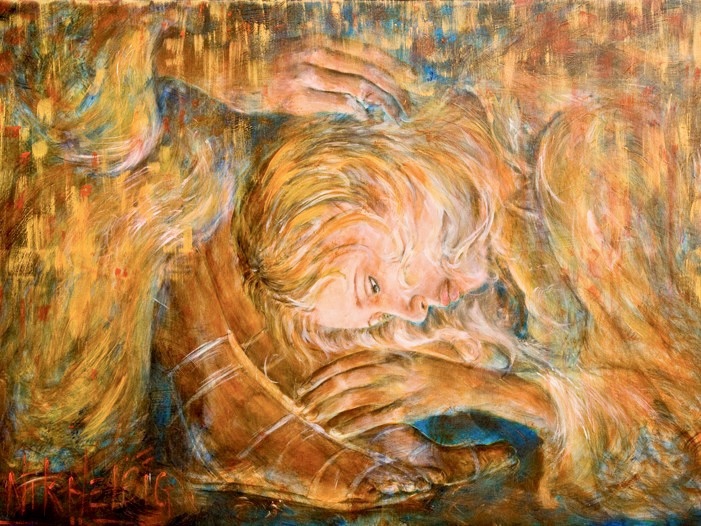
The past few weeks have been difficult for our brothers and sisters in Masbate, Cebu and the Davao Provinces. Social media is loaded with videos of these areas being battered by storms and shaken by earthquakes. We see first-hand footage of people fearfully muttering “Lord, Lord” or solemnly repeating, “Jesus, Jesus”!  In the chaos around them, what centres them and gives them courage is a prayer said almost quietly — no yelling, no big gestures but an appeal to a God who listens but communicates in silence. 

Have we ever noticed that God’s greatest miracles rarely begin with noise? They don’t start with thunder or applause. They begin… in silence.  In Nazareth, a young woman was simply going about her day. There was no spotlight, no thundering noise — just the typical quiet sounds of an ordinary home. It was in that silence that an angel spoke and Mary listened. That’s when the impossible began: “The Word became flesh.” (John 1:14) Not with an awesome display of power, but in listening… in stillness. In the same spirit, after Jesus returned to the Father, the disciples did not rush out to the world to preach or to prove themselves. They went back to the Upper Room and they prayed — with Mary.  They had not yet experienced the fire or wind of Pentecost.  There was just silence. In that silence their faith grew and the Church was born. 

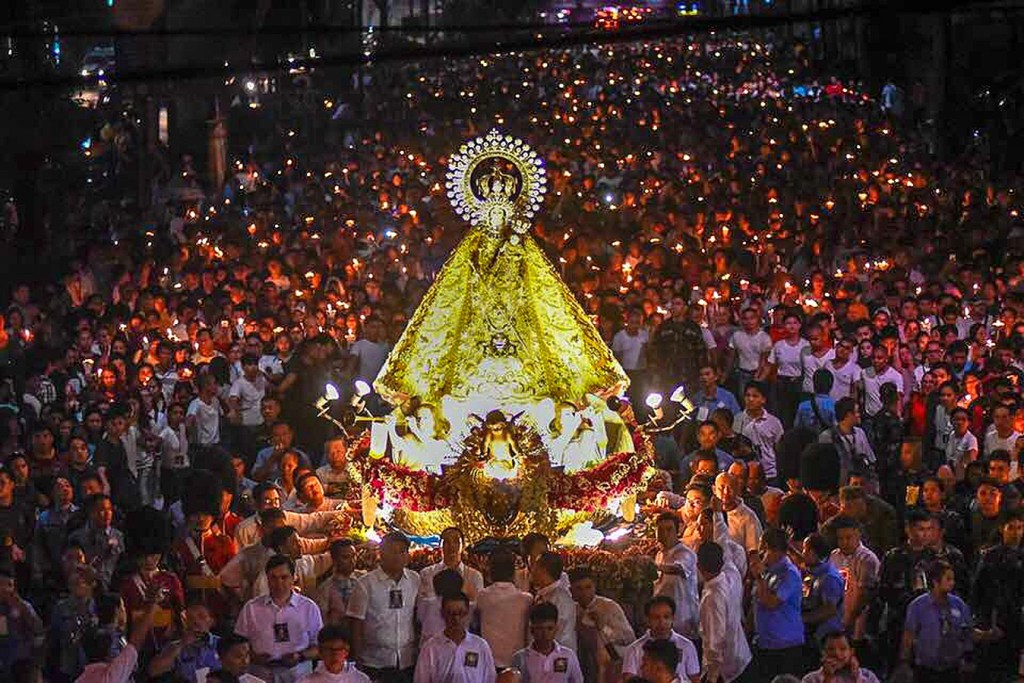
Today, we honour Our Lady of the Rosary of La Naval because she was declared patroness of Quezon City in 1973. Even in the story of La Naval, the real victory did not begin with ships or swords. It began when frightened people fell on their knees and prayed the Rosary. The miracle at sea started with hearts on land that trusted in God’s saving power. If we have a chance to visit the image of our Lady enshrined at Sto. Domingo Church, we will notice that she looks so calm. She is not panicked. She is not shouting. She is praying. And in her prayer, she reminds us: silence is not the absence of action but the beginning of transformation. 

When our lives become loud — when fear, anger, and endless noise surround us — God often whispers. That overwhelming feeling brought by the constant hum of anxiety, the sharp sting of anger, the endless chatter of the world — can make  us feel confused and utterly lost and alone. But even in that deafening chaos, when we are sure we have been forgotten by the world, isn’t it a comfort to know God never leaves us? He does not join the clamour; instead, He waits with an infinite, quiet patience, offering a love so deep it can only be conveyed in a gentle whisper. Only the listening heart can hear Him.  

Imagine the relief when we finally pause, take a breath, and realise the very presence we were desperately searching for has been right there all along, waiting for our attention. In that moment of stillness, His gentle voice reminds us of His constant love and grace. Let us not let the noise steal our peace! Let us quiet our soul just enough to hear the voice of God present, calming and ready to meet us. 

Thus, when we find ourselves surrounded by noise — by worries, by pressure, by things beyond our control — let us go to our own Nazareth, our own Upper Room. Let us pray. Let us listen. Let us wait. Because God speaks most clearly to hearts that are calm, trusting, and open to His grace. Yes, in the silence of prayer, something new begins — God’s grace, alive once more in us.
Unprofitable Servants, Unshakable Faith

Homily: Twenty-Seventh Sunday in Ordinary Time (C)

Habakkuk 1:2-3; 2:2-4 / 2 Timothy 1:6-8, 13-14 / Luke 17:5-10 

5 October 2025

Fr. Ricky Cañet Montañez, AA 

Do you find it easy to work with a team? Or do you prefer to work alone?  A friend of mine found himself working with a group of backward thinkers, whose lack of passion matched their outdated skills. He wanted to quit multiple times but he felt God wanted him to stay. So instead, he prayed desperately for divine intervention. Six (6) years later a new leader took over, boosted morale and improved efficiency.  His prayers were answered. Although six (6) years seems a long time, it was still God’s perfect time. 

It is not easy dealing with different personalities. There are hard-workers but there are also slackers. There are big whiners and there are silent workers. There are those who revel in the spotlight and those who choose to work behind the scenes. This is very evident even among church volunteers, isn’t it right?  However, if we focus too much on personalities, nothing will get done. We will just keep  getting annoyed with each other. In the First Reading, we have the prophet Habakkuk complaining in frustration over God’s delayed help. He prays and prays for divine intervention and yet God does not seem to hear or answer. God finally answers and assures him that fulfilment will come and he just needs to wait.  Whenever it comes, it will never be late, because it is in God’s perfect time. 

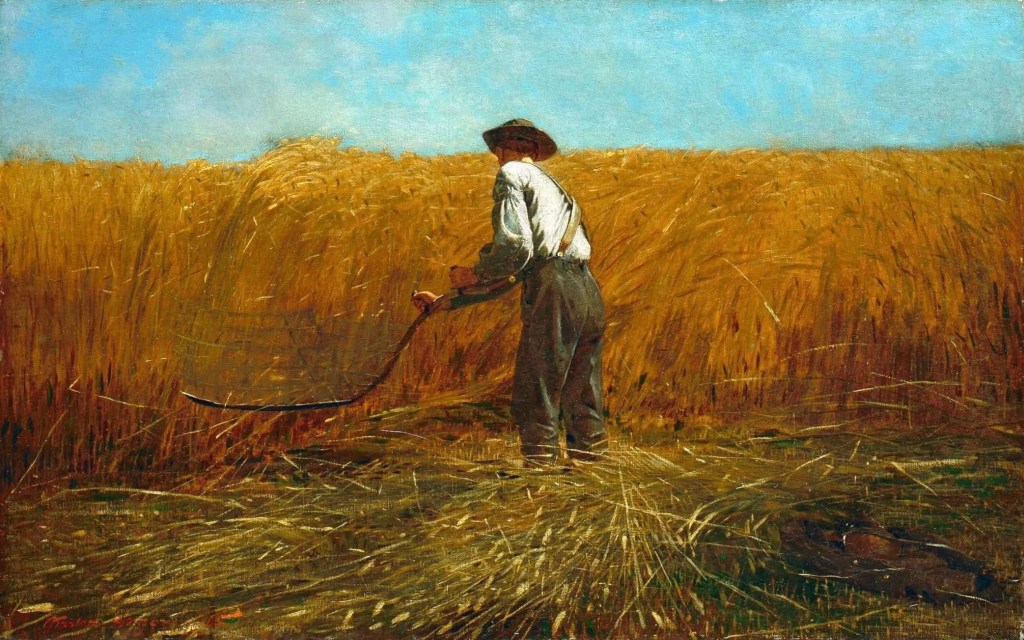
While waiting, what are we to do? We need to continue on and keep our focus. What is important is that we accomplish the task God has given us. Recently, the Philippines hosted the International Volleyball World Championships (FIVB). If we have watched any of the games we would have observed that when a player gets tired, injured, they immediately pull him out and send in a substitute. No matter how good that player is — even if he is the star — another player enters, the team adjusts, and the tournament moves on. The game does not stop. At first, it feels harsh to think that no one is truly irreplaceable. But this is the reality: the team is bigger than any single player.  This is exactly what today’s Gospel is also about. Jesus reminds, “When you have done all you have been commanded, say, ‘We are unprofitable servants; we have done what we were obliged to do.’” (Luke 17:10) 

Some of us might even comment, that sounds pretty discouraging.  Doesn’t God value our work?  Of course He does! Jesus is not telling us  we are useless, but He is clarifying that the mission of God’s Kingdom is not dependent on our achievements. The Church, the Gospel, the faith — they do not rise or fall because of one person’s success or failure. Even St. Paul, as zealous as he was, told Timothy to guard the treasure of faith and pass it on, because the mission must continue beyond him. 

Here is the best part: even if the Kingdom does not rely on us, God still chooses to involve us. Just like a coach who can always find another player but still puts one on the court, God delights in giving us a chance to play our part. He trusts us with His mission, not because He needs us, but because He loves us and wants us to share in His work.  This is the reason Jesus warns against pride or self-adulation in ministry. The moment we start thinking, “The Church cannot go on without me,” we have missed the point. Our value is not measured by how irreplaceable we are. Our value lies in being chosen, loved, and sent.  

As workers in God’s vineyard it should be our delight to serve at the pleasure of our God! Perhaps this is the real challenge: to serve faithfully without counting the cost, to do our duties without expecting applause, to give our best for the Kingdom knowing that, yes, the game will go on even without us — but how wonderful that right now, God still sends us onto the court, still places the ball in our hands.  No matter how unskilled we are or how poorly we play, He still lets us play. 

At the end of the day, saying “We are unprofitable servants” is not self-pity. It is humility. It is recognising that we do not serve to become heroes or stars, but rather we serve because God, in His mercy, allows us to be part of His winning team.

Who is the Lazarus at Your Gate?

Homily: Twenty-Sixth Sunday in Ordinary Time (C)

Amos 6:1a,4-7; Psalm 146; 1 Timothy 6:11-16; and Luke 16:19-31 

28 September 2025

Fr. Ricky Cañet Montañez, AA

Is it a sin to be rich? Raise your hand if your answer is “no”! As for those of you who did not raise their hand, do I assume your answer is “yes”?  If you won one hundred (100) million in the lotto, would you give it away? Let us be real. Nobody prays for poverty, right?  We even  consider rags to riches stories inspiring.  We work to be successful and prosperous. We all strive to improve our lives because to be rich is not a bad thing. 

The rich man in today’s Gospel is not described as cruel.  He is not a deplorable human, despised by the people around him. In fact, the story suggests that Lazarus gladly fed off the scraps from the rich man’s table. He did not insult Lazarus. He did not throw him away. Actually, he knew him by name, recognising him immediately in the after-life and asking for him by name. “Father Abraham, have pity on me. Send Lazarus to dip the tip of his finger in water and cool my tongue…”  (Luke 16:24) Why then does the rich man end up in a place of torment while Lazarus revels in comfort? The answer lies in the rich man’s indifference. Day after day, he dressed in the finest clothes and dined sumptuously while Lazarus, covered in sores, remained at his door, waiting for scraps. Only a man with a heart so full of himself could be so blind to the plight of others. 

That is the danger of being comfortable and complacent. Comfort itself is not bad. However, when it makes us forget others, when it dulls our compassion, it becomes deadly for the soul.  We hear a stern warning in our First Reading from the prophet Amos: “Woe to the complacent in Zion! Lying upon beds of ivory, stretched comfortably on their couches, they eat lambs taken from the flock, and calves from the stall…they will be the first to go into exile and their wanton revelry shall be done away with.” (Amos 6:4-7) They entertained themselves, drank wine, and pampered themselves with fine oils but were unmoved by the injustice and moral decay of Israel. 

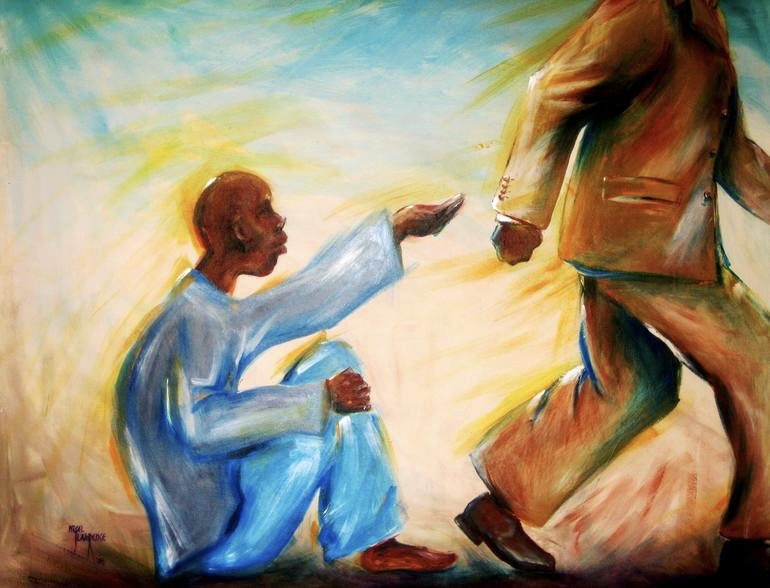
Sometimes, we spend too much time enjoying the fruits of our labour that we forget we are mere stewards of the blessings God has blessed us with. We think, we are not sinning when we buy forty (40) luxury vehicles or eighty (80) million peso chandeliers because we are not hurting anyone.  The question is, are these wants or needs? If we have the capacity to help other people survive, why are we not helping? More often than not, we do not have to look far to find Lazarus. He is the child knocking on car windows at a stoplight, selling Sampaguita or wiping windshields. She is the grandmother waiting long hours in a health centre with no money for medicine. He is the farmer working the fields, yet still unable to afford rice for his own family. She is the overseas worker who sacrifices comfort, dignity, even family presence, just so her children in the Philippines can go to school and eat three (3) times a day. 

Psalm 146 says: “The Lord secures justice for the oppressed, gives food to the hungry.” (Psalm 146:7) God never forgets the poor — even when society does. He does not come down from heaven to hand a plate of food to the starving. That is not how He works. He blesses people with resources so they can do the work required to uplift the lives of the needy.  Each one of us helps according to one’s own capacity. No matter what our status in life is, we have the capacity to give and to help. The question is: do we?  If God has given us a good home, a good job, and a good family, do we close ourselves off to the suffering around us? If our home is not affected by floods during rainy season, do we sit comfortably in our air-conditioned home and remain mum when those affected have taken to the streets to clamour for justice? Do we choose to be unmoved? 

Who is the Lazarus at our gate? Maybe it is not a beggar on the street, but a parish volunteer who quietly needs support; a young person in our family longing for time and attention; a co-worker struggling with debt but too embarrassed to say. The Gospel today warns us: if we let our comfort blind us, we are digging a chasm between ourselves and others — and perhaps, between ourselves and God. Nevertheless, if we open our eyes now, if we choose compassion today, then we are already building bridges toward eternity. 

Finally, if God has allowed us to prosper and  be wealthy, let us be grateful. We are blessed! On the other hand,, if we keep ignoring the Lazarus at our gate, then one day we may find ourselves on the wrong side of the great divide.

Lazarus and the Rich Man by Nigel Lawrence

When God Calls Us to Account

Homily: Twenty-Fifth Sunday in Ordinary Time (C)

Amos 8:4-7 / 1 Timothy 2:1-8 / Luke 16:1-13

21 September 2025

Fr. Ricky Cañet Montañez, AA 

Are you upset by the news of corruption in the government? You should be! A government post is a public trust. Whatever resources are given to government officials and authorities do not belong to them. They are mere stewards entrusted with a responsibility to see to it that the needs of the people are met. Any misuse of public funds and abuse of their power is atrocius and they must be held responsible. 

This is exactly what Jesus is talking about in today’s Gospel — the story of the steward who squandered his master’s property. He was not faithful, but when he realised he was about to lose everything, he became clever. Jesus is not praising his dishonesty. He is praising the fact that the man thought ahead, that he realised he had to act decisively. It, by no means, exonerates him, in fact, Jesus makes a strong point: “You cannot serve both God and money.” (Luke 16:13) 

We do not need to look far to see how this plays out. Lately, corruption scandals and ostentatious lifestyles involving obscene amounts of money have been brought to light in various countries. In the Philippines alone, money intended to solve the problem of flooding, the improvement of education and healthcare and seeing to the plight of the poor, has been ending up in private pockets, funding excessive lifestyles at the expense of the nation. Often we feel helpless and silently shake our fists, wondering if justice shall be served. The prophet Amos, in the First Reading (Amos 8:4-7), gives us hope as he assures us that God sees this — every injustice, every abuse of power. He will not forget their misdeeds. They will get what is coming to them, if not in this life, then in the next. 

But before we point fingers too quickly, we also need to look at ourselves. How do we use what God has entrusted to us? Our time, our relationships, our talents, our resources — do we spend them wisely, or do we waste them on things that do not last?  We all have to deal with things that are not ours — a company car, people we manage, or even businesses we oversee. For parents, do you realise that your children are entrusted into your care by God? You will answer for them when the time comes.  In all things, do we take our duty as stewards seriously? Or do we take the opportunity for granted and lay it to waste, misuse it, or worse — be so presumptuous as to believe we own anything? 

I am very much inspired by the young Carlo Acutis who was recently canonised. He died at only 15 but at such a young age, he possessed a wisdom beyond his years. He said: “I die serene because I have not wasted even a minute of my life in things God does not like.”  This is actually the heart of today’s Gospel. Life is short, time is precious, and everything we have is only borrowed from God. We are stewards, not owners. The question is: when God calls us to give an account, can we say, like Carlo, that we did not waste our life? 

Finally, let us recognise what has been entrusted to us — our time, our talents, our very lives — and not squander them on things that fade away. Maybe, the challenge for us is simple but powerful. We must use our time well. We must use our money responsibly. We must use our influence for good.  Above all, let us use everything we have in the service of God and others, not for our own personal gain. In the end, we discover that only God is worth serving.

Exalting the Cross, Embracing New Life

Homily: Feast of the Exaltation of the Cross

Number 21:4-9 / Philippians 2:6-11 / John 3:13-17

14 September 2025

Fr. Ricky Cañet Montañez, AA

Do you remember a time when you felt really sick? Maybe it was a horrible stomach upset or a terrible migraine, or maybe just a simple toothache? Did you tell yourself, “Itutulog ko na lang!” or “I will just sleep it off!”?  Of course not! We look for some kind of relief — immediately, if possible. We resort to traditional home remedies or seek a doctor to prescribe medicines. We do not just sit and suffer; we long to be healed!

In our First Reading, the Israelites were whining with ingratitude, such that God had sent serpents as punishment for their sins and disobedience. Many had died from the bites of these poisonous serpents before they realised their mistake. Repenting of their ways, they asked Moses to pray to God to take the serpents away.  God relented and gave a rather strange solution — He asked Moses to make a bronze serpent and lift it up on a pole so that the afflicted who looked up at it would live. They did not have to do anything extraordinary — just look, and healing would come.

In the Gospel, Jesus connects this story to Himself: “Just as Moses lifted up the serpent in the desert, so must the Son of Man be lifted up, so that everyone who believes in Him may have eternal life.” (John 3:14-15) This is a prefiguring of His own crucifixion where His battered body would be lifted up on a cross for all to see.  It is by gazing upon the cross and believing in the crucified Christ who rose from the dead that we gain salvation. The Cross, then, becomes our place of healing, not only for the wounds of the body, but more deeply for the wounds of the soul. St. Paul, in the Second Reading, tells us that Jesus humbled Himself, accepting death on the Cross. (Philippians 2:8) That very act of humility is what brought Him glory, and through it, He brought us healing.

In truth, we carry many kinds of brokenness. Sometimes we cannot break away from a cycle of  sin.  We have addictions to unforgiveness and regretful behaviors that create division in our families.  At times, by no fault of ours we are subjected to sickness, poverty, injustice and all kinds of suffering that not only harm us physically, but also, financially, emotionally and psychologically.  Sometimes, like the Israelites bitten by seraphs, we are poisoned by the corruption in society, by lies we hear daily, by hatred and indifference.  All afflict us and break us, and push us to find relief and healing. 

Jesus invites us to look to Him lifted up on the Cross. The Cross reminds us that no wound is too deep for God’s mercy, no suffering too heavy for His love. For the Catholic Church,  the 14th September is the Feast of the Exaltation of the Cross. We exalt the Cross because it is no longer a symbol of shame and death for us.  When we gaze at the Cross, more than being reminded of a gruesome historic event that saved us, we are reminded that with eyes of faith we continue to receive healing in the present. Every Mass, when the Cross is lifted up, we are invited to bring our brokenness there — all our sins, our hurts, our fears, trusting that our Lord who stretched out His arms on it for love of us, sees our affliction and brings healing — for our own lives, for our families, and for our world.

Brothers and sisters, the promise is sure: “For God so loved the world that He gave His only Son, so that everyone who believes in Him may not perish but may have eternal life.” (John 3:16) The Cross is not just a story of suffering. It is the greatest sign of God’s love, where our wounds meet His mercy, and our brokenness is transformed into life.

When Human Wisdom Falls Short

Homily: Twenty-Third Sunday in Ordinary Time (C)

Wisdom 9:13–18b | Philemon 9–10, 12–17 | Luke 14:25–33

7 September 2025

Fr. Ricky Cañet Montañez, AA

How rich does one need to be to spend seven hundred sixty thousand pesos (P760,000.00) on a dinner for four (4)? Let us not even talk about where one’s wealth has come from. Even if one considers that amount “barya-barya lang” or spare change, where is the wisdom in spending that much on a meal? Where is the wisdom in flaunting it in a society where hunger is prevalent and majority are financially struggling?  When a rich man says, “It is my money and I can spend it any way I like!”, to an extent it is true. But it makes us wonder… “Has that person ever considered that perhaps God blessed him/her not for a life of luxury, but to uplift others?” It is a classic example of how wealth and worldly wisdom can so easily distort our judgment. 

The Book of Wisdom today is very honest with us. It tells us that human wisdom is flawed. Many times, our plans fail, our reasoning can be weak, and we easily get lost. We think we are smart; we think we know all the answers; until things go wrong because we have made the wrong assumptions or were unaware of all the circumstances.  How true that is for us Filipinos —we put our hopes in politicians who make grand promises, only to be shocked after by blatant corruption and disappointing performance. We follow trends and popular voices, but they often leave us more divided than united. It shows us clearly: human wisdom will always fall short — only God’s wisdom is enough. 

God, however, does not leave us in the dark. The passage from the Book of Wisdom tells us that God gives wisdom through His Spirit. It is a gift that helps us cut through the noise of the world, the deception of false treasures, and the sound of empty promises. It is not just about intelligence or clever strategies, but wisdom that comes from above. God’s wisdom teaches us to recognise what is true, and to choose what is right and what is eternal. This kind of wisdom is not about being the loudest or the smartest. It is about discernment. It is about courage. It is about choosing love over hate, justice over corruption, truth over lies, service over selfishness.

It is this wisdom that allows us to recognise the true cost of discipleship, yet still choose it as the better way. Following Jesus is not easy. The gospel passage says we must be able to do three (3) things:  First, “Love God above everything and everyone.” It means letting go of attachments, even relationships, if they lead us away from God. It is to consciously choose Christ all the time, above all our favourite things, our most beloved people, our most cherished achievements. Second, “Carry our cross.” It means more than simply enduring a difficult burden. Let us remember that the cross was an instrument of execution so this is a call to self-denial and a willingness to suffer for the sake of following Jesus, even to the point of death. It implies a total surrender of one’s own will, desires, and self-interest to follow His path.  Sometimes that cross is standing up for truth even when it is unpopular. It means making choices that may hurt in the short term but save us in the long run. Lastly, “One must be prepared to give up everything — possessions, status, and even life itself — to follow Jesus.” A true disciple cannot have divided loyalties. Clearly, it is not a command to sell everything we own, but rather to hold all possessions loosely and to willingly give them up for the sake of the Kingdom. A follower’s identity and security must be found in Jesus, not in wealth or belongings.  We need to know that following Jesus requires a radical and all-encompassing commitment. To make a half-baked commitment is making no commitment at all.  Wisdom from above helps us to see that discipleship is costly, but it is the only way to life. 

Let us imagine if we as a people would make our decisions guided not by fear or pride, but by God’s Spirit. Let us imagine if families, communities, even our leaders, prayed first before acting, asking: “Lord, what is your will?” Wouldn’t our nation look very different? Instead of being pulled apart by division, we would be drawn together by truth. Instead of being lost in confusion, we would walk a clearer path. Our Second Reading is a clear example how the wisdom in following Christ gives Paul the confidence to write to Philemon, asking him to welcome his runaway slave Onesimus with forgiveness and to treat him as brother instead of as a slave. The cost of discipleship may be high but it changes our capacity for relationships for the better, it sets our priorities straight, and it enables us to perceive what is truly of value.

It does not take much to realise that what our society needs is more wisdom — God’s wisdom, especially for those in positions of influence and authority who have the capacity to uplift the poor and build God’s Kingdom in our land. So today, we pray for one thing above all: that the Lord may fill us with wisdom. Not the noisy wisdom of the world, but the quiet wisdom of the Spirit that will guide our families, heal our communities, and lead our nation closer to God’s plan.

“Divine Wisdom” a painting by Inese Eglite

The Joy of Walking Humbly with God

Homily: Twenty-Second Sunday in Ordinary Time (C)

Sirach 3:17-18, 20, 28-29 | Hebrews 12:18-19, 22-24a | Luke 14:1, 7-14

31 August 2025

Fr. Ricky Cañet Montañez, AA 

One of the hardest lessons in life is to admit weakness and vulnerability. Many of our lolos (grandfathers) and lolas (grandmothers) know this very well. All their lives they worked hard, provided for their families, and achieved much through their sacrifices. However, when old age comes — when the body grows weak or sickness comes — it is not easy to subject themselves to the care of others, even if they are close family members.  For someone who is always  strong and independent, this can be very humbling. 

However, it is not only the elderly who has trouble with humility. When the younger ones among us… and maybe most of us who have been through tough times discover that life has limits, we would come to realise that not every problem can be solved alone or solely by ourselves in isolation. Yes, by ourselves, we can barely carry our burdens. Yet, we do not wish to ask help, thinking it is shameful to dump this load on others. It is when we finally admit, “I need help! I am not equipped to deal with this problem! I cannot do this by myself!”, that God’s grace manifests most powerfully. 

The Book of Sirach tells us today: “My child, conduct your affairs with humility, and you will be loved more than the giver of gifts. Humble yourself the more, the greater you are, and you will find favour with God” (Sirach 3:17-18). In other words, the closer we come to God, the more we must learn humility — not pride, not self-reliance, but a heart open to receive. Sirach also uses the example of a sage — a very wise person, that still appreciates proverbs or advice. They may already be knowledgeable, but they do not close themselves to learning and being corrected. He also says that “an attentive ear is the joy of the wise” (Sirach 3:29), meaning there is wisdom in being a humble person who listens, receives, and depends on God’s mercy. 

This same lesson is carried into the Gospel.  Jesus makes an example of the dinner guests scrambling to choose places of honour at the table. He reminds us not to think too highly of ourselves because there are always others who will exceed us in status, wealth, and achievement.  He cautions us against the embarassment should the host relieve us of the honour we claimed for ourselves. It is better to conduct ourselves with humility before the Lord. It is up to Him to elevate us to a place of honour saying, “Friend, move up higher.” (Luke 14:10) In the same way, that we recently spoke of heaven as not something to earn, neither is it a reward we achieve by our own effort; it has and always will be a gift given by God to those who walk in humility and trust. 

The Letter to the Hebrews is a reassurance that the God we bow before is no longer the vengeful and fearsome God of the Old Testament whom the Israelites approached with trembling and fear. We now come to know the God of the New Testament symbolised by Mount Zion — the spiritual and eternal City of God where He welcomes and gathers all to Himself.  Despite our unworthiness, we can approach God, with a sense of belonging and in a spirit of grace and peace, because of Jesus. The sprinkling of blood that “speaks better than Abel’s” (Hebrews 12:24) is a reference to Christ’s sacrifice on the cross, whereas Abel’s blood cries out for vengeance and justice, Christ’s blood merits for us cleansing, forgiveness, and reconciliation with the Father.  

Thus, brothers and sisters, let us walk each day with humble trust, mindful that despite all our strength, power and possessions, we are eternally dependent on the Lord. As a reminder especially to those already serving in the Church:  no matter how much of ourselves we offer for Christ’s Church, let us strive to remain humble. We serve with hearts full of hope, awaiting the day when the Lord Himself will look upon us and say: ‘My friend, come higher. Come, and take your place at the banquet of everlasting life.’

Humility – Etsy

Salvation: Gift, Not Guarantee

Homily: Twenty-First Sunday in Ordinary Time (C)

Isaiah 66:18–21 / Hebrews 12:5–7, 11–13 / Luke 13:22–30

24 August 2025 

Fr. Ricky Cañet Montañez, AA

Who among us here is sure that he/she is going to heaven?  Please raise your hand. There was a lady in another parish who raised her hand high when asked this question. She was in her sixties then. She strongly believed that her consistent presence at mass, her service in the church and her large donations guaranteed her a place in heaven.  Today she is in her nineties. She is bedridden and has Alzheimer’s disease. She probably thought she was heaven-bound already, but heaven said, ‘Stay a bit longer, we are not done with you down there.’ (Joke lang po.) 

The truth is, no one, not even I would know for sure if we will end up in heaven.  Some religious groups foolishly claim: “As long as you accept Jesus as your Lord and Personal Saviour, you are already saved!” Others go as far as to say: “Membership in our group guarantees salvation — outside of us, there is no hope.”  (Wow, e di sila na!)  There is a real danger to being smugly convinced of our own salvation because when we do, we remove God from the equation and fool ourselves into thinking that human measures can guarantee us heaven. 

Today’s gospel passage is a strong warning against such false security. Jesus does not say: “Follow me and you are safe.” He says: “Strive to enter through the narrow gate.” (Luke 13:24) Why? Because salvation is not an automatic guarantee. It is not about a formula, nor about belonging to an exclusive group. It is about nurturing an ongoing, loving relationship with God — a relationship that calls for conversion, humility, and perseverance. Jesus uses the word “strive” because the work is not easy and it entails much effort, and even sacrifice, on our part. It is a persistent struggle we must overcome throughout life. 

Although, we must do our part to reach heaven, salvation is not within our control.  Salvation is God’s initiative — a gift, not an entitlement, not an achievement. In the First Reading, Isaiah shows us a merciful God whose love and generosity to His chosen ones is beyond measure.  He says, God will gather people from every nation and language, not because they followed a certain formula, but because He Himself chooses to welcome them. This reminds us that heaven is not guaranteed by belonging to a particular group. Some from other faiths may be welcomed in, while some Catholics and other Christians may sadly fall short. Even if we go to Mass, follow the commandments, give donations, and so on and so forth, it does not mean we are fine. God extends His hand to save us, but we must reach out, grab His hand and hang on so He can pull us up. 

The Letter to the Hebrews reminds us that when we go through difficulties, we must not perceive it as God punishing us for our weakness and shortcomings.  God is our Father, and we are His adopted children, so He disciplines us as a loving father would his own children. Discipline is not punishment, but training — it keeps us humble, keeps us from drifting into pride, keeps us dependent on God’s grace. Without it, we may believe ourselves better than others and start judging others as morally inferior or unworthy.  Jesus warns us against this self-righteous attitude saying some who thought they would be “inside” will find themselves outside, while those who are least expected — the poor, the humble, the sinners who relied on God’s mercy — will be welcomed in. We can never be too sure of ourselves because God sees beyond the exterior and looks into our hearts. 

Brothers and sisters, today we are invited to examine ourselves: “Where do I place my confidence — in my own effort, in belonging to a group, or in God’s mercy alone?  Let us find it in our hearts to tell the Lord: “I cannot save myself and rely completely on Your mercy.”  Let us be grateful for the free gift of salvation, and ready yourselves to tread the path of humility, surrender and trust that we may enter the “narrow gate”! 

The Price Tag of Following Jesus

Homily: Twentieth Sunday in Ordinary Time (C)

Jeremiah 38:4-6, 8-10 / Hebrews 12:1-4 / Luke 12:49-53

17 August 2025

Fr. Ricky Cañet Montañez, AA

We all know — anything worth having comes at a cost. If we want to graduate, we put in the late nights of study. If we want a strong marriage, we learn to be patient and to forgive. Even something as simple as growing a plant requires patience in nurturing it and giving it the proper care.  Following Jesus is no different. And to be honest, it is probably the most costly commitment we can make.

Jeremiah in our First Reading simply told the people what God wanted them to know — that they needed to change their ways or disaster would come. However, instead of thanking him, the leaders saw him as a threat and threw him into a muddy well.  He stood sinking in mud, cold, dark, alone just because he stayed faithful to his mission from God.  (Back then it seemed like such a terrible punishment, yet on stormy weeks, wading in muddy waters is just a regular thing for many of us.)

I am sure that many of us would have had an experience of doing the right thing and getting punished for it.  If we refuse to cheat on exams, do our classmates applaud us or do they roll their eyes, instead?  If we speak up against corruption in the workplace, are we rewarded or alienated by co-workers? If we caution our friends against drinking too much at a party, do they listen or label us as “the killjoy”? It is not comfortable to stand up for what is right, because more often than not, we will stand alone. Either others are too afraid to side with us or the others are complacent in doing what is wrong. 

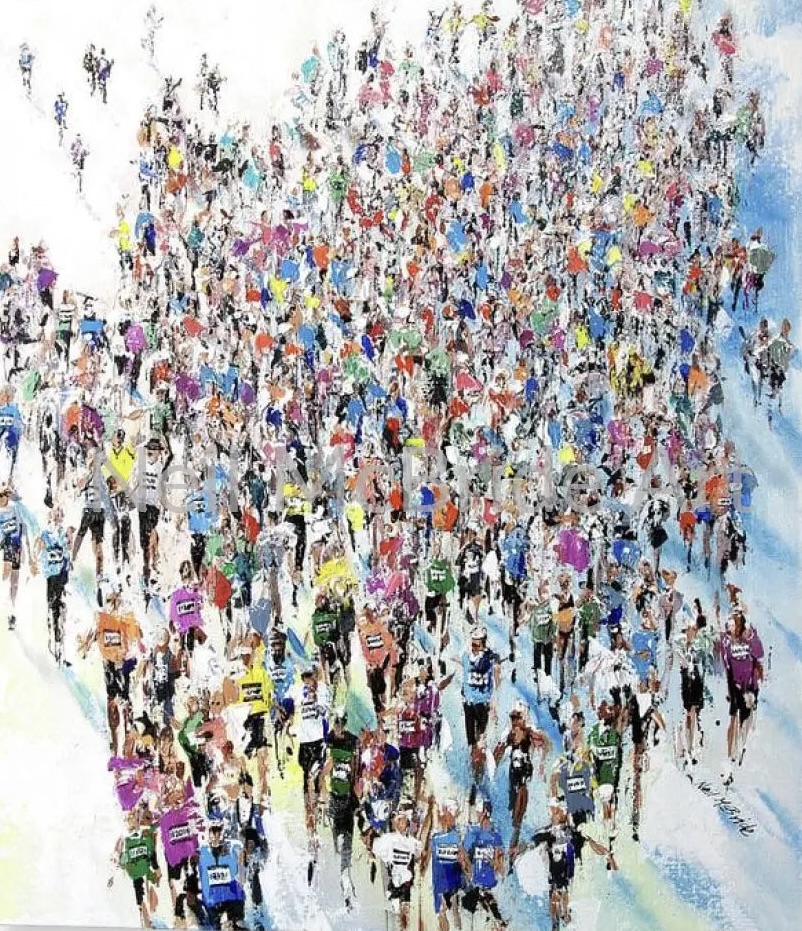
Life is full of situations that test our resolve for God and all that is good.  We need to pray for the courage and strength to persevere. In the Second Reading, the writer suggests that life is a race. It is not a sprint — but rather, a marathon. We will traverse long paths, hills, bumpy roads and if we are not prepared, we will tire easily. Sometimes we even question why we started running in the first place. Nevertheless, the Letter to the Hebrews reminds us — we are surrounded by a “cloud of witnesses” (Hebrews 12:1). Let us think of it as having people in the stands cheering us on like the saints and martyrs and even family and friends who have run this race before — all telling us, “Don’t give up. It is worth it.” (As in Konglish expression of encouragement, “Fighting!” or “Paiting!”)

In the Gospel, we hear Jesus say something that is difficult to comprehend: “Do you think I have come to bring peace on earth? No, but rather division.” (Luke 12:51) At first, one may think Jesus enjoys conflict but on the contrary, tension ensues because the righteous who wish to follow Jesus are met with opposition by those who wish to remain ungodly. The reality is, differences in opinion and convictions exist even within families. If we choose Gospel values over comfort, we will surely face moments where not everyone understands our choices.

This is where the hefty “price tag” comes in. Sometimes the cost is misunderstanding. Sometimes it is being left out. Sometimes it is the heartache of knowing people we love do not share our faith. It is a hard pill to swallow but a necessary one because the cost of not following Jesus is much higher. When we ignore God’s voice just to fit in… when we betray our deepest convictions to avoid discomfort… we lose something far more precious — our integrity, our peace, our true self, and eventually our chance at our heavenly inheritance. The Good News is that we do not pay the price alone. Jesus walks with us. And as one church, we have each other — the community of believers. We can rest assured that in times of struggles, we can rely on our brothers and sisters in the Catholic faith to encourage us, pray with us, or simply remind us that we are not alone. That is the Church being the “cloud of witnesses” for each other, walking alongside one another.

It is true that following Jesus has a price tag, but the reward is worth every sacrifice. Just as graduations, healthy relationships, and great harvests do not come cheap — eternal life does not either. The difference is, when we give our “yes” to Jesus, what we gain lasts forever. Moreover, on the day when we finally cross the finish line, we shall not be thinking about what it costs. Rather, we will be rejoicing that we paid the price, because nothing compares to the joy of being with Him forever.

Neil McBride Art (Marathon Run)

Choosing God, Again and Again

Homily: Nineteenth Sunday in Ordinary Time (C)

Wisdom 18:6-9 / Hebrews 11:1-2, 8-19 / Luke 12:32-48

10 August 2025

Fr. Ricky Cañet Montañez, AA

Online stores have certainly made purchasing easier, don’t we all agree? However, not all are trustworthy sellers. We reduce our chances of getting scammed by checking reviews and testimonials that the products are good and the sellers are legitimate. We only become regular customers when sellers are proven to keep their promise. 

Today’s readings tell us stories of kept promises. These are stories of the Israelites being led out of slavery from Egypt, of Abraham being led to the Promised Land, and receiving the gift of a son in his old age. Although the odds were stacked against any of these promises coming true, they did, because it was God who made these promises and fulfilled them. For this, there was no reason for the people of God to ever doubt the Lord. And yet so many grew weary and impatient waiting for the fulfilment of God’s promises and chose to become unfaithful to Him. 

The problem they experienced is what is highlighted in today’s liturgy — faith is not dependent on feelings. It is a decision.  Often, when we get what we pray for, when everything is going well, when we feel inspired and hopeful, it is so easy to be aware how close God is to us. Parang ang gaan magdasal, ang sarap magpasalamat.  (It seems like it is easy to pray; it feels good to be grateful.) But if we are honest, there are also days when we do not feel anything. We pray, but nothing happens. We go to Mass, but our mind keeps wandering. We try to do the right thing, but it feels like no one notices. No reward. No comfort. Just silence.

The challenge for us is to choose to trust God, even when we do not see the full picture. It is choosing to keep going, kahit di natin maintindihan kung bakit nangyayari ang mga bagay-bagay. (…even if we do not understand why things are happening.) Take Abraham in the Second Reading, God told him: “Leave everything — your home, your land, your comfort zone.” (Hebrews 11:8-12) However, God did not say where to go or what would happen next.  And still, Abraham obeyed. Why? Because he trusted the One who made the promise.

Faith is walking even when the path is not clear. The Israelites learned to trust in God because He proved His faithfulness to them by delivering them out of slavery.  Our First Reading from the Book of Wisdom (Wisdom 18:6-9) recounts how they blindly followed the instructions of God and how God followed through His promise during the First Passover. They were told to prepare: sacrifice a lamb, pack their things, and wait. They waited in silence and in the dark for God to move. That is not about feelings. That is pure trust. That is faith.

In the Gospel, Jesus tells us: “Do not be afraid, little flock… be ready.” (Luke 12:32, 35) He does not give a fixed timeline nor does He give a specific sign to lookout for. He is not saying, “Live in anticipation of an earth-shattering moment that will fill you with excitement.” He is saying, “Just live. Go on with your life, but live always prepared. Stay faithful.” Even when things feel quiet; even when life feels ordinary; even when nothing dramatic is happening, God is present, watching and waiting for the appointed time for Him to move. 

I know of someone who turned her back on the corporate world and devoted her time and talent to help the Church. She knows it is a noble cause and that good will come of her efforts but she is often discouraged by the poorly constructed systems that she must work with — other volunteers coast along and the leader tends to claim all the credit of accomplishments for himself. Despite her frustrations, she stays on because she believes God is still in the process of revealing why He brought her to that place. Yes, faith is choosing to believe even when we do not feel it, choosing to serve even when no one says “thank you”, and choosing to love even when it is hard. That is real faith. That is spiritual maturity.  We do not have to feel aligned with God all the time. We just have to keep showing up.  Keep choosing God.

If lately we feel like our faith is weak, that is okay. We are not alone. Even the saints went through long periods of spiritual dryness — doubting and wondering if God was near. Yet, they did not give up. They just kept choosing God, one day at a time.  So can we.  Faith is not a mood.  It is a choice — a decision we make — again and again — in love.