Grace in the Toughest Places

HOMILY: Second Sunday of Advent (A)

Isaiah 11:1-10 / Romans 15:4-9 / Matthew 3:1-12

7 December 2025

Fr. Ricky Cañet Montañez, AA

Have you ever noticed who sits beside whom at gatherings? In meetings, reunions, in school canteens, even simple parish meals, we naturally choose to be with people who make us comfortable. In the same way, there are people we quietly avoid. It is not because we are mad at them, but because being around them is just… draining. Their company can feel complicated, awkward, or just plain exhausting. Once in a while, you see two people who never hang out somehow end up next to each other and, surprisingly, get along really well!  They talk. They laugh. And we find ourselves thinking, “Sino’ng mag-aakala?” (Who would have thought?) “Parang imposible dati.” (It seemed impossible for this to happen!)

This surprising image — the impossible sitting together — is exactly what Isaiah describes today in the First Reading. The wolf with the lamb. The leopard with the goat. The calf with the lion. A child leading them all. This is more than the absence of conflict. It involves a transformation so deep that natural enemies can share the same space. Picture the lion — a natural predator, giving up meat to eat grass like a cow.  Isaiah is painting for us an image of God’s Kingdom: a holy place where there is “no harm or ruin”, where the incompatible become neighbours, the impossible co-exist, and grace makes possible a peace that defies logic.

If we are honest, each of us has our own “wolves and lambs” moments in life. There are people we avoid because of a difficult or painful past experience, or our personalities often clash with theirs, or because being with them often leads to some misunderstanding. Around them, we exert a lot of effort to hold our tongue and keep our emotions in check to keep the peace.  Sometimes we are the wolf in someone’s story — someone finds us difficult or hard to approach. Sometimes we are the lamb — wounded, cautious, preferring distance. Advent invites us to look gently at these places of tension. It is not to solve everything overnight, not to force reconciliation, but to allow God to plant even a small shoot of peace in the ground that has dried and hardened.

This slow, gentle work of God is echoed in John the Baptist’s call: “Prepare the way of the Lord, make straight his paths.” (Matthew 3:3) John  warns the wicked to repent and produce good fruit as proof of repentance because God is sending someone mighty, with the ability to “baptize with the Holy Spirit and fire”  (Matthew 3:11) who is meant to gather the grain and separate the chaff for burning. This refers to the Messiah’s definitive judgment that will result in the preservation of the faithful and the utter destruction of the unfaithful and the forces of evil. This time of justice is prophesied by Isaiah who describes a Messiah with the “spirit of wisdom and of understanding, counsel and of strength, … knowledge and of fear of the Lord” (Isaiah 11:2) who shall judge the poor with justice, and… strike the ruthless and slay the wicked with His mouth and His breath. (Isaiah 11:4) For those of us now, who look forward to the return of Christ who will usher a time when everyone —Jew and Gentile, will glorify the Lord together. St Paul tells us that all that is written about the coming of Christ is meant to give us hope. He says that as we wait patiently, we must already try to live in harmony with each other. 

This Advent, let us not only prepare a straight path for Christ into our hearts — let us also allow God to straighten the paths between and among hearts, especially where relationships have become crooked or blocked. They say some of the hardest roads to repair are emotional ones because there are the hurts we avoid and ignore. It is when we take even a tiny step toward the people we have kept at a distance that the Kingdom begins. Isaiah’s vision reminds us that God does not only change situations — He can change natures. Obviously, wolves and lambs cannot change what they are but grace can transform the way they relate. This means that even if personalities do not change, and even if painful history cannot be erased, God can soften what feels unchangeable. God can give us new instincts: a little more courage, a little more gentleness, a little more desire for peace so being around people who trigger us, does not feel like torture. 

And so we return to that simple image from the beginning: who do we sit beside, and who do we avoid? Advent is not about forcing ourselves into uncomfortable places, but about letting God stretch our hearts just enough to imagine the possibility of peace. God dreams of a world where the impossible can finally sit together. Our psalm today reminds us that in God’s time justice shall flourish and the fullness of peace will be felt forever. (Psalm 72:7)

Today, perhaps we can offer a simple prayer: “Lord, give me the grace to take one small step toward the person I never thought I could ever sit beside.”  In that humble space, the Kingdom quietly begins.
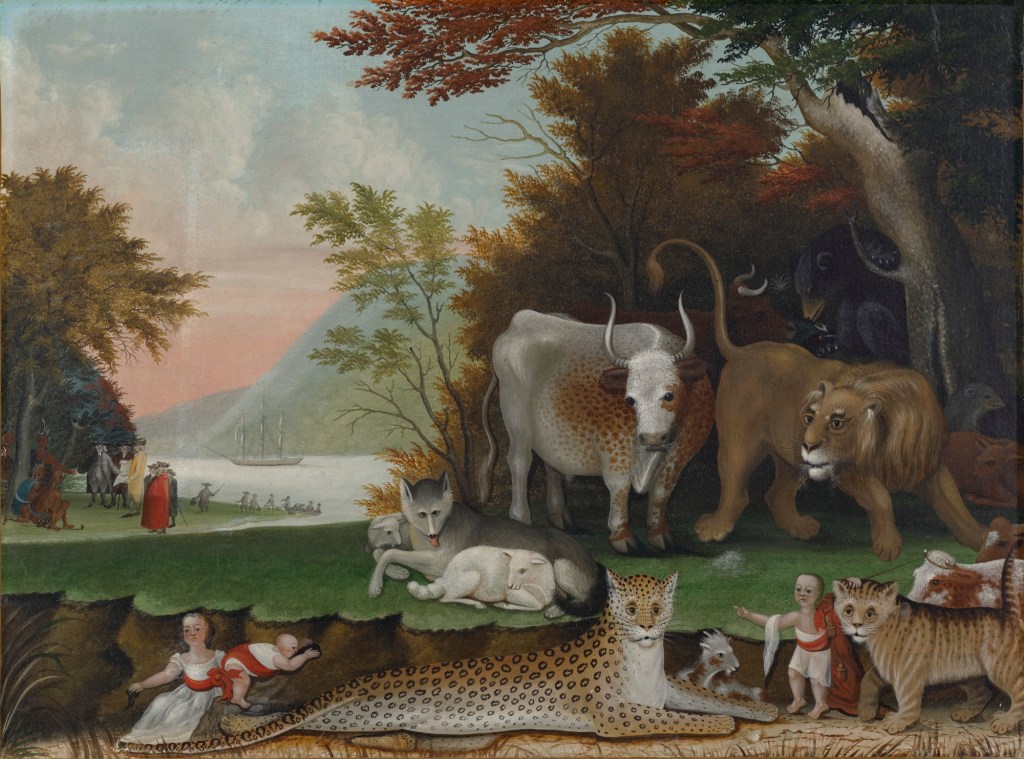
Peaceable Kingdom
Creator: Buffalo AKG Art Museum Photo Credit: Brenda Bieger

Turning Toward the Light

HOMILY: First Sunday of Advent (A)

Isaiah 2:1-5 / Psalm 122:1-9 / Romans 13:11-14 / Matthew 24:37-44

30 November 2025

Fr. Ricky Cañet Montañez, AA 

Are you good at taking selfies? Some people are such experts — alam na nila agad (they know right away) where the light is, how to angle their face, how to get the best shot. I do not quite get the hang of it myself. I end up making multiple attempts — adjusting and readjusting — moving to the side, lifting the phone a little higher, searching for that spot where the light finally hits my face right. The secret, I am told, is in angling your face towards the light. When the light is low, you will not get a great picture, but in the best light, everything becomes clearer, warmer, more alive. 

The observance of Advent is like that. It is a time of turning towards the light and lifting our eyes towards Christ, allowing His light to reveal our best selves — as God envisions us. In our First Reading, the Prophet Isaiah sees God raising His mountain for all to see, so His people will always know where to seek Him and how to seek His guidance. However, they will still have to climb to ascend the mountain to find the Lord. The Psalm shows pilgrims going uphill — ordinary people lifting their feet, one step at a time, trusting in God’s promise, seeking His peace and prosperity.  

In the Second Reading, St. Paul reminds us that we must live “as in the day,” — to act as though the day of the Lord was at hand. To turn towards the light, is to learn to live consistently in the light.  If we desire to be in God’s presence one day, each day we must move closer and closer towards the light — essentially ascending the mountain and overcoming challenges in our path. Advent is a time for us to pause and recognize what keeps us low; what deters us from the ascent, what keeps us in darkness. Sometimes, it is not even the big sins but the small habits and behaviors that keep us from focusing on Christ — the late-night scrolling that steals our peace, the small resentments we replay, the tone of voice that brings an atmosphere of tension into our home. In the Gospel, Jesus warns us not about dramatic sin but about spiritual sleepiness — that low, dull way of living where we stop noticing God and stop noticing one another. 

Lifting our life does not mean changing everything. It means choosing one small upward step at a time. Maybe we pause for five minutes of quiet before checking our mobile phones. Maybe we soften our tone when frustration rises. Maybe we give full attention when a child, a spouse, a friend, or a parent speaks. Maybe we stop ourselves mid-complaint because we can feel it lowering our spirit. These small lifts raise the whole picture of our lives.  So Advent asks us: Which part of our life needs to rise just one level higher? Not dramatically — just lifted a little toward God.  When we raise anything toward the Light, the Light does the rest. Just like those excellent selfie-takers who know where to stand — we only need the courage to move toward the Light. 

This Advent, may we yearn to turn our faces to the Light. May we patiently help each other in our ascent of God’s mountain, even if we are seemingly inching our way up. Let God’s radiance make everything clearer, kinder, and more alive, enabling us to see one another for who we are — Children of the Light!

From Stone and Gray

Where Love Reigns: In the Quiet Places of Sacrifice

HOMILY: Solemnity of our Lord Jesus Christ, King of the Universe (C)

2 Samuel 5:1–3 | Colossians 1:12–20 | Luke 23:35–43

23 November 2025

Fr. Ricky Cañet Montañez, AA 

We Filipinos admire winners. When we are strong, wealthy, or well-connected — we get respect. Many times, our idea of leadership is shaped by loudness and the influence of the crowd that endorses and rallies behind a person. We give them power over us, even if they are not qualified, even if they have pending cases, even if they live questionable lifestyles. 

It does not make sense that despite our nation being mostly Catholic, we Filipinos tend to choose leaders who are the exact opposite of Jesus Christ. On this last Sunday of the Church year, the Gospel confronts us with the shocking image of our true King — as one who hangs on a Cross (Luke 23:35–43). No throne. No golden crown. No machinery. No bloc of followers. Just wounds, insults, and two criminals beside Him. And we find ourselves asking: “Lord, why is Your kingship like this?” 

In the First Reading, Israel tells David, “You are our bone and flesh” (2 Samuel 5:1–3) — a king close to his people. Jesus fulfills this not by rising far above us, but by entering our deepest suffering. He is the only King who could triumph over everything… but chose not to. He could have come down from the Cross. He could have silenced His enemies. He could have proven His power. 

However, Jesus stays — not because He is weak, but because love refuses to abandon the beloved just to look strong. Here is the mystery: Christ wins by losing. He saves not by escaping the Cross, but by remaining on it — for us. 

Moreover, if we look closely, this kind of kingship is deeply familiar to the Filipino soul. Every day, we meet people who “lose” something out of love. Think of parents who give up their own dreams so their children can pursue theirs, Overseas Filipino Workers (OFWs) who sacrifice being present in their respective homes so their children can have a future, teachers who are stretched thinly yet still giving their best, jeepney drivers who endure long days just so they have something to bring home for dinner, and young people who choose honesty even when it makes their life harder. 

These hidden sacrifices — these quiet losses — are where Christ the King reigns the strongest. As St. Paul says, Christ reconciled all things “through the blood of His Cross” (Colossians 1:12–20) — not through wondrous works, not through displays of domination and power, but through the love revealed in His loss. Christ redefines what winning truly means. In God’s eyes, victory is not about rising higher, but loving deeper. Not about gaining more, but giving more. Not about applause, but compassion. Not about avoiding loss, but allowing love to cost us something. 

Which brings us to the question this feast asks us gently but firmly: “What do we need to lose so that love can win?” Do we need to let go of pride so reconciliation can begin? Do we let go of anger so peace can enter? Do we dare to let go of a secret sin so grace can flow freely once more? Do we let go of control so God can finally lead? Do we let go of fear so God can make our life’s purpose larger than our worries? His Kingship is not diminished by difficulty — rather, it is how He manifests His power. When He was on the cross, mocked from every side, seemingly defeated, He gave His royal promise to the repentant sinner who chose to stand with Him: “Today you will be with Me in Paradise” (Luke 23:43). 

At the end of the Church year, the message is both simple and stunning: Jesus lost everything so we could gain everything. He chose weakness so we could discover strength. He chose the Cross so we could find life. Christ is not the King who wins by winning. He is the King who wins by loving. And every time we “lose” something for love, He reigns in us all.

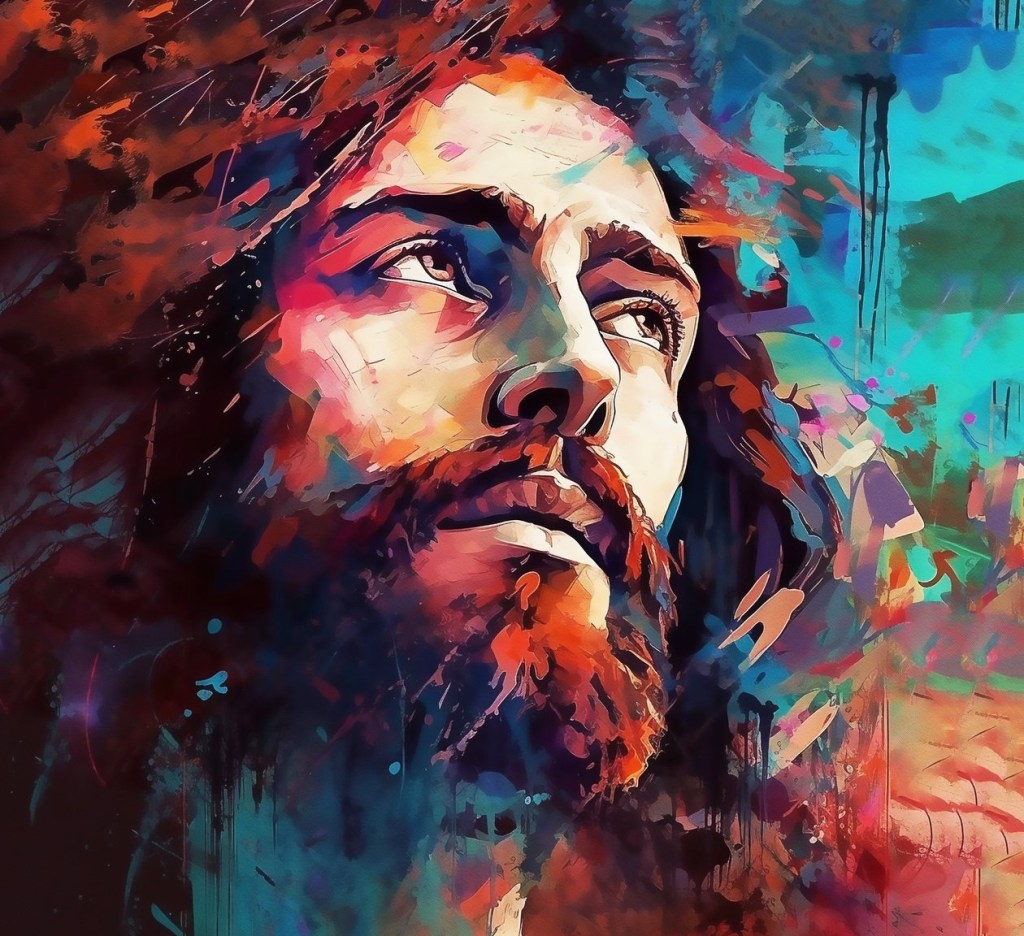
Religious Face of Jesus Christ, Spiritual Christian Canvas Painting by F. Abderrahim

When the World Shakes, God Stands Firm

Homily: Thirty-Third Sunday in Ordinary Time (C)

Malachi 3:19–20a; 2 Thessalonians 3:7–12; Luke 21:5–19

Fr. Ricky Cañet Montañez, AA

16 November 2025

Do you look forward to the Second Coming of Jesus? Are you excited to see Him? If we truly love Him, our instinct is to say, “Of course!” Yet every time we hear today’s Gospel, Jesus does not speak of angels, trumpets, or glory. Instead, He talks about wars, earthquakes, betrayal, and persecution. It is not quite the image we are expecting. It is unsettling. However, let us take notice because after this description, Jesus immediately says, “Do not be terrified.” (Luke 21:9) He promises strength, wisdom, and help to those who persevere.

Indeed, it feels like Jesus is speaking directly into our reality here in the Philippines. We live surrounded by noise: endless political debates online, videos predicting end-times, news of calamities, and group chats that somehow never sleep. Add to that the real persecution of Christians in places like China, Africa, and India — and we wonder if this storm could someday reach us too.

With all this noise, it is easy to get overwhelmed. It is easy to lose focus. It is tempting to grow cynical and say, “Ano bang magagawa ko? (What can I possibly do?) I am just one person.” And because many believe the world is too broken, they start living as if there is no tomorrow, no judgment, no life after death. They chase comfort at any cost — even if it hurts others, even if it wounds their own soul. Bakit pa ako magsisikap? Hindi ko naman mababago ang mga tao.  (Why bother making an effort when people will not change anyway?) On the other hand, this is where today’s Psalm interrupts us: “The Lord comes to rule the earth with justice.” (Psalm 98:9) God is not absent. God is not silent. God is not defeated.

Jesus then shifts the focus. Faith is not pretending everything is fine. Faith is being rooted, steady, and loving even when everything shakes around us. St. Paul reinforces this in the Second Reading. He reminds the Thessalonians that he and his companions worked “night and day,” not causing disorder, not burdening others.  (2 Thessalonians 3:8) This simply means that when life is chaotic, our response is not to panic… but to perseverance. Not to be noisy… but to be faifthful. Not to complain… but to be quietly doing what is right.

Moreover, this is where the Gospel becomes incredibly practical because for us, perseverance does not require doing anything extraordinary. It is found in the small, faithful choices we make each day. It is waking up and showing up — consistently. It is helping a neighbour clean up after a typhoon. It is the young volunteer bringing relief goods during a flood. It is the teacher who keeps teaching despite limited resources. It is the parishioner who attends Mass every Sunday, rain or shine. It is the mother who keeps praying for her children even when they reject her. These things seem small but they are exactly what Jesus is talking about. Our small, steady acts of faith cut through the noise of the world and they become signs of hope for others.

Thus, here are the questions the readings place before us today: Amid the political tension, the social unrest, the disasters, the pressures of daily life — can we remain faithful? Can we keep showing up, quietly, humbly, lovingly, even when it is inconvenient, tiring, or unpopular… Because that is what fidelity is. That is what witness is. This is the kind of faith Jesus promises to sustain.

And so, we return to His final words in the Gospel: “By your perseverance, you will secure your lives.” (Luke 21:19) Not by fear. Not by noise. Not by power. But by the simple, daily choice to trust Him. And when we do — Malachi tells us what awaits: “The sun of justice will rise… with healing in its rays.” (Malachi 4:2)

Hence, brothers and sisters, we keep going. We keep serving. We keep loving because even if the world trembles, God’s promise stands firm. His justice — steady, bright, healing — will rise upon those who persevere.

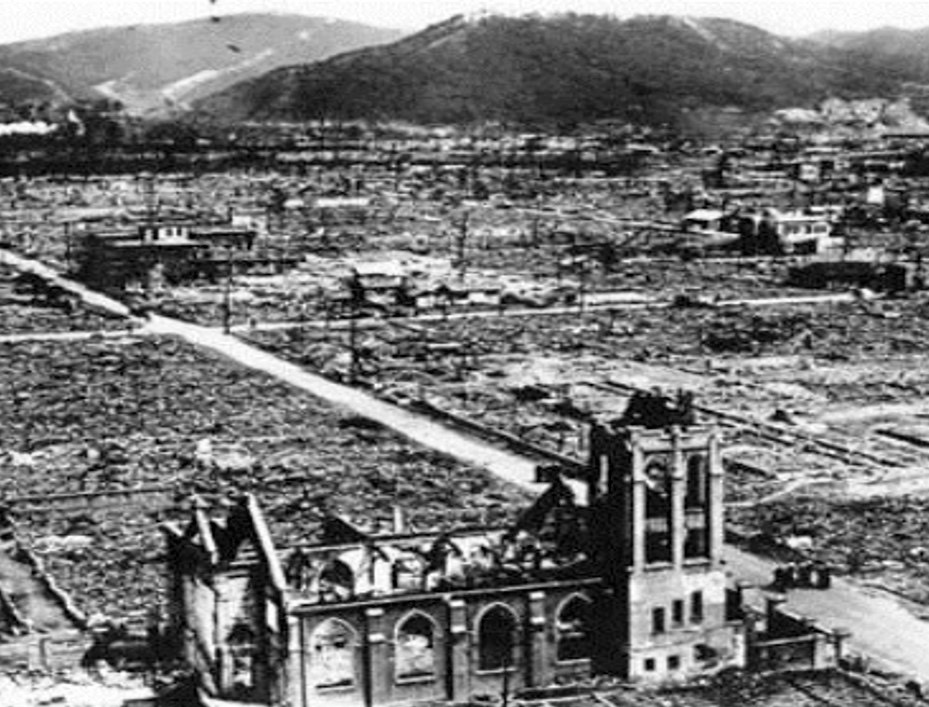
From the National Catholic Register: An aerial view of Our Lady of the Assumption Church after the Aug. 6, 1945, bombing. A small group of priests can be seen standing in the road in front of the church. 

Built Not on Marble, But on Mercy

Homily: Feast of the Dedication of the Lateran Basilica in Rome (C)

Ezekiel 47:1–2, 8–9, 12 / 1 Corinthians 3:9c–11, 16–17 / John 2:13–22

9 November 2025

Fr. Ricky Cañet Montañez, AA 

Whenever there is a typhoon, I am filled with dread over the flash floods that halt transportation, displace residents, and endanger lives. There are often scenes on social media of families on rooftops, homes swept away, and soaking children clutching plastic bags of clothes. However, there is another scene flooding feeds that warms my heart and fills me with hope — parishes opening their doors, neighbours sharing food, and strangers helping others with quiet generosity. Grace is truly at work when out of the muddy waters, compassion flows. 

Today, we celebrate the Dedication of the Lateran Basilica in Rome. Before the Vatican was built, this place is where the Pope held office for centuries. This feast reminds us of the centrality of church to our worship of God. Spelled with a small letter “c”, the church refers to the sacred structure where the faithful gather for the sacrifice of the mass. On the other hand, the Church with a capital “C” refers to all of us, the community of believers in Jesus Christ, who gather to worship God. Our readings today speak to us about the temple — both as a sacred building and as the people themselves — to remind us that the true temple of God is not just a monument, but a movement of love. God does not dwell in buildings that glitter; He dwells in hearts that give, in lives that overflow with mercy and compassion. 

In the gospel passage from St. John, we hear of the cleansing of the temple by an angry Jesus who is upset because money changers and vendors have dishonoured the place reserved for the dwelling of God. His anger reveals how sacred the temple has to be — a place where God’s presence dwells and gives life. That same truth is beautifully expressed in the First Reading, where the prophet Ezekiel speaks of a river flowing from the Temple, bringing life wherever it goes. The terrain of the Holy Land is mostly desert area where nothing grows so the image of life-giving water flowing from the temple allowing fruit trees to grow and fish to be abundant and living things to multiply, is proof that God, the Source of life, is present there. This image finds its fullness in Jesus, who reveals that He Himself is the new Temple — the living dwelling place of God among us — who will be torn down and raised up in three (3) days through His death and resurrection. From the Temple of His body, life and mercy flow out for the world when blood and water pour from His pierced side. 

In the Second Reading, St. Paul tells us that as believers, we have also become the temple of God because the spirit of God dwells in us!  If we are His Body, then the living water that is Jesus, must flow through us. The question is: do we allow Christ to flow from us or have we allowed this living water to be stagnant?  These days, there are mega-churches that seem to have taken on the look and feel of concert halls — glamorized by stage lights, state of the art facilities, vibrant applause — rather than places of worship. One cannot help but ask, “Did I come here to watch a concert, or did I come to worship?” They are impressive structures, but when the floods come, people do not run there for shelter. They are beautiful but distant. There are also groups who, though claiming to act in God’s name, become caught up in rallies and causes that, deep down, only serve the interests of those already powerful — the very people who exploit, deceive, and neglect the poor. 

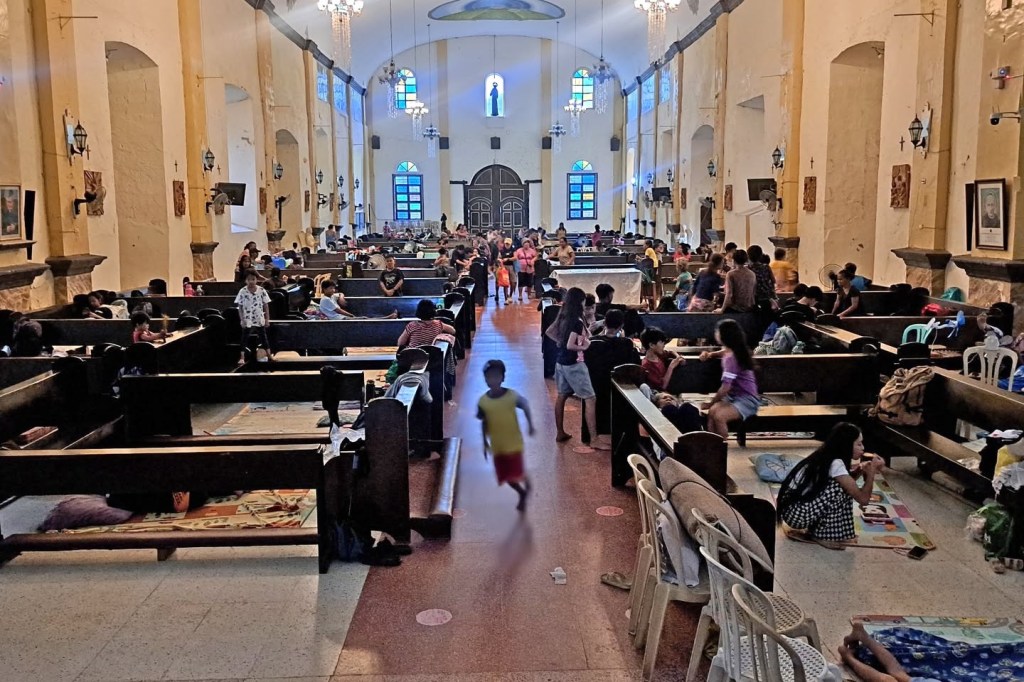
The real Church of Christ — the one founded on compassion, not convenience — is found where the poor are. In chapels that double as evacuation centres… In parishes that smell not of perfume but of “baha (flood) and “lugaw” (hot porridge). In priests, sisters, and lay volunteers who choose to stay with the people when the waters rise. It is not built on marble — it is rather built on mercy.  Pope Leo XIV, in Dilexi Te, writes: “In the poor we see the suffering of the innocent, and therefore the suffering of Christ Himself.” He also says that true faith must bring a change of mentality that affects culture itself.  Ang ibig sabihin, hindi lang ito tungkol sa pamimigay ng tulong. (It means this is not just about giving help or material aid.) It is about reshaping how we see the world — standing with the powerless instead of flattering the powerful.  When we see Christ in the jeepney driver whose route is flooded, in the teacher still showing up despite delayed pay, or in the child sleeping on a pew in an evacuation centre — that is when we become a Church that smells like “tubig ng buhay” (water of life) not perfume. 

So, let us be that kind of Church: humble, open, courageous. A Church that does not stand with the powerful, but with the powerless.  A Church that, when the next storm comes, people can run to — not for a show, but for shelter because the Church of Christ does not stand above the storm — it steps into it. It kneels with the wounded and prays with the soaked. It carries not the scent of luxury, but of life — the smell of water, of mercy, of hope.

From Publiko’s Post

Alive in God’s Heart

Homily: Commemoration of the Faithful Departed

Wisdom 3:1–9 / Romans 6:3–4, 8–9 / John 6:37–40

2 November 2025

Fr. Ricky Cañet Montañez, AA

When someone we love dies, it feels like a part of our heart goes missing — that space reserved exclusively for them. Over the years, it gets easier to manage the longing, but there are days we wake up and remember, and that quiet ache returns. It is a pain words cannot really fix. I have heard some say that such pain is proof of something beautiful: it means we still love.

Today, some if not all may have noticed that instead of the liturgy for the Thirty-First Sunday in Ordinary Time, the Mass Commemorating our Faithful Departed has taken precedence. The change in mass focus reflects the Church’s profound theological emphasis on praying for the dead, as an act of charity and faith in the Communion of Saints.  The emphasis today is more than death itself, but it is really about love — a love that does not stop, even when the person we love is no longer here.

Just the other week, I was talking to a dear friend from a parish where I previously served. She suffered the tragedy of suddenly losing her daughter a few months ago. Every month since their family’s loss, she would post a photo of her daughter online — with a heartfelt message that would end with: “We miss you. We love you always.”  She told me, “Father, people assume it is a way of managing my pain, but for me, it is a way of remembering her with love. I cannot hold her anymore, but I can still love her.”  And that really touched me. Because that is what we do when we pray for our departed — we continue to love. We are not talking to just memories; we are speaking to souls who are alive in God.

The Book of Wisdom says, “The souls of the just are in the hand of GOD,” (Wisdom 3:1)and it offers such a comforting image. Our loved ones — parents, friends, even children who have passed — they are not gone. They are safe. God is holding them close with His gentle hands. Our loved ones are not lost. They have simply gone ahead to be with Jesus.  St. Paul tells us, “If we have died with Christ, we shall also live with Him.” Romans 6:8) That is not just poetry — it is a promise, and someday, by God’s mercy, we will see our departed loved ones again. This is echoed in our gospel when Jesus assures us, “Everyone who comes to me I will not reject… and I shall raise them up on the last day.” (John 6:37) Their names, their faces, their laughter — all are alive in God’s heart.

Our faith teaches us that no one we love is ever forgotten. When we pass from this life, we hope to all be reunited in Christ together with the Communion of the Saints, and until then, it is prayer that bridges the divide. While we who remain offer our prayers for them, those in heaven continue to pray for us and offer spiritual guidance so we can bear the burdens of life. As we try to make good use of our time on earth, we must strive to live and love that we may also be remembered with love. 

Today, as we light candles, visit graves, or whisper their names in prayer, we take time to mourn our dead but more importantly to remember them with gratitude because every tear we shed is a sign that love is still alive. Death may end a life, but it cannot end love.  Love is stronger than death — because love comes from God, and God never dies. Let us pray that when our own journey ends, our hope may be justified. May we see that those we have missed for so long were never really far away — but simply waiting on the other side of love.

Holiness Hidden in Ordinary Lives

Homily: Solemnity of All Saints

Revelation 7:2–4, 9–14 / 1 John 3:1–3 / Matthew 5:1–12

1 November 2025

Fr. Ricky Cañet Montañez, AA

A few years ago, I was at the wake of a quiet woman from our parish. She was not the type to stand in front or hold positions. She sat in the back pew, prayed quietly, and always smiled when you pass by. But during the eulogies, story after story came out — how she quietly paid part of a neighbour’s hospital bill, how she would bring cooked food to an old man who lived alone, how she prayed the rosary every night for those who were sick or struggling.  People said, “We did not know she was doing all that!”  And I thought to myself — ah, maybe that is the point! 

Today we celebrate holiness — not just the great, canonised saints with feast days and statues, but also the ones who walked among us in silence and kindness. In the First Reading, John sees “a great multitude that no one could count” (Revelation 7:9) — people from every nation, standing before God in white robes. These are the saints who went through life’s struggles and remained faithful.  Some of them are recognized by the church for their exceptional virtue or holy martyrdom and we know them by name — Augustine, Francis, Teresa, Faustina, Lorenzo Ruiz, Pedro Calungsod and many others. Many of them though go nameless in history but they are never nameless to God. Their holy lives and good works are always before the eyes of our Lord. 

St. John in the Second Reading, tells us something beautiful: “See what love the Father has bestowed on us, that we may be called children of God.” (1 John 3:1) In other words, sainthood begins not in heaven, after we die, but it starts with accepting that we are God’s children and that we are loved so very much, right here, right now.   This is something that should motivate us to nurture that gift, little by little, every day so that we grow in relationship with God and all those whom He loves. 

In our gospel Jesus gives us signposts for holiness in the Beatitudes: He says, “Blessed are the poor in spirit… the merciful… the peacemakers.” (Matthew 5:1–12)

            •          The poor in spirit — maybe that is the widow who prays every day for others or the doctor who willingly goes on mission to remote areas. 

            •          The merciful — maybe that is the nurse who stays late to comfort a patient or the neighbour who helps when our family is in crisis. 

            •          The peacemakers — maybe these are the parents who choose patience instead of anger… or the child who apologises first after a sibling squabble.

The Beatitudes is not a list of impossible goals for those with special powers. It is a portrait of “the saints next door” painted in the likeness of ordinary people.

The saints are not a distant group of superhuman people. They are the ones who chose love when it is easier to look away, who forgive when it hurts, who remain kind even when no one notices. And maybe we have met them — the grandmother who prays for everyone by name, the catechist who serves year after year without recognition, the tricycle driver who says a quiet “Thank You, Lord” before every trip. They are the ones who need not announce themselves as they work to build Christ’s kingdom. They just love quietly but tangibly. If we could see with God’s eyes, we would realise that the Church is full of these hidden saints — unsung, unnoticed, but radiant in His sight.

Thus today, as we honour all the saints, we are all invited:  Let us not only admire them, let them be our inspiration — proof that our human weakness is not a permanent block to becoming holy. Holiness, after all, is not about doing big things or strictly observing Church rules; it is about doing ordinary things with great love. This is the mark of Christ.  Yes, sisters and brothers, let us do our best, in our own ways, to bring holiness down to earth — to our kitchens, classrooms, offices, and communities, with the hope that one day, we may also join the saints in Heaven.

Maybe, years from now, when a few would remember us, they will tell small stories of kindness, patience, and prayer. And someone might whisper, “We did not know she was doing all that.” “We did not know he was doing that!” And God will smile and say, “Yes, I did!”

No Space, No Grace

Homily: Thirtieth Sunday in Ordinary Time (C)

Sirach 35:12-14, 16-18 / 2 Timothy 4:6-8, 16-18 / Luke 18:9-14

26 October 2025

Fr. Ricky Cañet Montañez, AA

Imagine someone coming up to you to give you a big box containing ten (10) million pesos in cash, legitimately and tax free (‘Di po galing sa ghost project!’)…. but you are holding your phone and a bag in one hand and your favourite snack in the other. Would you drop everything to receive that gift?  Sometimes we hold on to things we have too tightly and are unwilling to let go when we need to.  We fail to receive God’s grace because our hands — and our hearts — are overflowing with ourselves.

In today’s gospel, Jesus tells the story of two men who went up to the temple to pray. The first was a Pharisee, a man known for his religious discipline. He stood tall and prayed, but his prayer sounded more like a report card: “I fast twice a week. I give tithes of all I possess.” (Luke 18:12) Then he added, “I am not like that tax collector over there.” (Luke 18:11) His focus was not really on God but on himself and his righteousness as compared to others. The tax collector, meanwhile, stood at a distance. He did not even dare to raise his eyes to heaven. His prayer was short, almost painfully honest: “O God, be merciful to me, a sinner.” (Luke 18:13) And Jesus tells us that it was this man — the sinner, not the religious man — who went home right with God.

The difference is simple but profound. The tax collector came before God with empty hands. The Pharisee came with hands full — full of pride, full of self-righteousness. The tax collector asked God for mercy, and he received it. Sirach tells us that “the prayer of the lowly pierces the clouds.” (Sirach 35:21) God hears the cry of those who come before Him with nothing but their need. God does not listen because we impress Him with our good deeds, but because we open our hearts to Him. That is the power of empty hands — they leave room for grace. St. Paul understood this. Near the end of his life, he writes to Timothy, “I have fought the good fight, I have finished the race, I have kept the faith.” (2 Timothy 4:7) Those are not words of pride; they are words of surrender. Paul knows he has done his part, but he also knows that the crown of righteousness is pure gift. His hands are empty, but his heart is full of grace.

Sometimes, though, we forget this. Like the Pharisee, we can wear our faith like a badge of merit instead of a blessing. We might think, “I’m better than others because I go to Mass,” or “because I pray the rosary.”  There are other Christian denominations who even think themselves better than Catholics because they read the Bible more, or are more spiritual. But whenever faith becomes a contest of who is holier or who is more right, we lose sight of what is sacred. The moment we start comparing, we stop praying. The moment we start feeling superior, we stop being humble before God. Faith is not about proving ourselves. It is about letting God love us. It is not about showing how full we are or how great we have become, but about admitting how much we still need. God’s mercy flows downward — to those who bow low, to those who come empty.

Lastly, it is important to note that the Pharisee asked for nothing from God, and so he received nothing.  Sometimes, our obsession with our possessions and accomplishments keep us dissociated from our purpose and our mission in life that we fall complacent and are oblivious of what is needed around us.  This shows as disinterest, a lack of passion and even nonchalance.  You may recall someone having asked you what needs to be done and you dryly answer “Whatever!” or “I don’t care!”.  We do not know what to ask for because we are not as involved or do not feel the need to be.  When we are not mindful as workers, as parents, as children, as citizens of a nation we are unaware of what is needed to better our relationships and the impact we can achieve through our struggles.  Remember that even in these matters, God is willing to help because He wants us to involve Him in our lives. 

So today, maybe the Lord is inviting us to pray like the tax collector again — with the honesty that says, “Lord, have mercy on me, a sinner.” That short prayer, whispered with humility, is enough to open heaven. In the same way that we must not be afraid to ask, we must also be equally ready to receive.  When we come before God empty, He fills us. When we come before Him proud, He lets us hold on to our pride — and nothing more. In the end, it is only empty hands that can be filled with grace, and only a humble heart that can go home justified.

Holding the Line of Faith

Homily: Twenty-Ninth Sunday in Ordinary Time (Year C)

Exodus 17:8–13; 2 Timothy 3:14–4:2; Luke 18:1–8

19 October 2025 

Fr. Ricky Cañet Montañez, AA 

These days I have observed that many Filipinos are so tired. Tired of working for little pay. Tired of paying taxes that do not benefit the nation. Tired of injustice. Tired of the lack of accountability among some of our leaders. Tired of corruption that never seems to end. Tired of trying to do good when it feels like those who cheat get ahead. Even in the Church we feel like calling out, “Lord, how long?”  Sadly, some even go as far as getting tired of praying and waiting.  

This is exactly what our readings today are about — holding the line when faith feels heavy.  In the First Reading, Moses stands on the hill while the Israelites are fighting a battle below. As long as he keeps his hands raised, they win. However, when his hands start to drop, the enemy begins to take over. Remember Moses is an old man. It is expected that he will tire easily. Thus, his friends, Aaron and Hur, come beside him. They hold up his hands until the sun sets — until the people of God win the battle.  

This story is not just about Moses. It is also about us because sometimes, we are the ones on that hill — trying to keep our hands raised in faith while the battle rages below. We keep praying for peace in our world, for healing in our families, for justice in our country — but we get tired. Sometimes, it feels like the answer never comes. And naturally, like Moses, we rely on others to hold us up.  Maybe, that is our family, our friends, our prayer group? But lucky for us believers in Christ, we can also rely on other Christians and members of our Church to be our “Aarons and Hurs.”  Faith does not mean we never grow weary. It means that when we do, we let others help us keep believing.  

St. Paul tells Timothy in the Second Reading, “Be persistent, whether it is convenient or inconvenient.” (2 Timothy 4:2) In other words — hold the line. We should not give up when it is uncomfortable, or when our prayers seem unanswered.  Because faith is not tested in the easy times — it is proven when everything feels uncertain.  

In the Gospel, Jesus speaks to His followers about persistence in prayer. He tells us about the relentless widow — a woman with no power, no money, no connections, but refuses to stop asking for justice. She does not give up until the unjust judge finally gives in.  That widow is like every ordinary Filipino who keeps hoping, keeps praying, keeps standing for what is right, even when it seems like nothing changes. Her story is a reminder that faith is not just believing in God — it is believing with God, walking with Him day after day, even when the answers take time.  

To have faith is to acknowledge that we need not win quickly, but rather to remain faithful slowly. Hence, maybe today, Jesus is asking us:  Will we keep believing when things are hard? Will we keep praying when nothing happens yet? Will we keep doing good when others stop? Yes, my friends, when we feel tired — tired of the situation of our country, tired of life, tired of praying — let us remember Moses. Let us remember the persistent widow. Let us remember that we are not alone. Let us welcome others to hold up our hands, and let us be willing to hold up theirs too.  

Faith is not always spectacular. Sometimes it is just quietly saying, “Lord, I am still here.” And when we do that, we are actually holding the line — and God, who is always faithful, will never let us down!

When God’s Ways are Hidden in the Ordinary

Homily: Twenty-Eighth Sunday in Ordinary Time (C)

(2 Kings 5:14–17; 2 Timothy 2:8–13; Luke 17:11–19)

12 October 2025

Fr. Ricky Cañet Montañez, AA 

Have you ever noticed how often God surprises us — and not always in ways we like? How many of us are familiar with Oprah Winfrey? Yes, she trained for a career in journalism. She worked as a TV News co-anchor but she had the tendency to go off script and was too emotional when reporting so she was fired from her job.  She was later offered a different job — this time as co-host of a local low-rating talk show. She quickly transformed the show’s ratings and soon she was hosting her own talk show. The enormous success of the Oprah Winfrey Show allowed her to start her cable channel OWN, cementing her status as a media mogul. Getting fired must have seemed like the end of her TV career but God had better plans for her. Sometimes the hardest part of faith is not believing that God can work miracles, but accepting how He chooses to do them. 

Sometimes we tend to have our own ideas as to how God should operate or conduct His business of being God.  Do we presume to be better and wiser than God? In today’s First Reading, Naaman, the proud army general comes for healing to the prophet Elisha loaded with gifts, servants, and expectations. He is ready for a grand ritual, a dramatic prayer, something worthy of his status. However, what does Elisha tell him? “Go, wash seven times in the Jordan.” (2 Kings 5:10) That’s it. No ceremony, no special blessing. The Jordan was a muddy little river and I bet Naaman almost walked away. God’s grace felt too simple for someone like him. But when he finally humbled himself and obeyed, that is when healing came.  God’s power was hiding in something ordinary. 

The same thing happens in the Gospel.  Ten lepers yearning to be healed beg Jesus for mercy. And what does He say? “Go, show yourselves to the priests.” (Luke 17:14) He does not touch them nor does he pray over them. He just sends them to the priests — still sick, still waiting. In those times, lepers were ostracized and made to live separate from society and only the priests could declare them healed and fit to rejoin the community. Imagine what they must have been thinking as they made their way to the priests still covered with sores. I imagine they might have been grumbling and debating amongst themselves over Jesus’ credibility when one by one, they shockingly discover they were healed! Grace happened on the road when no one else was looking. 

This is the scandal of God’s simplicity.  We expect fireworks, but God works through small, quiet things — a word of forgiveness, a moment of patience, a prayer said with faith. His grace often offends our pride because it does not look “grand” enough.  St. Paul reminds us: “If we die with Him, we shall also live with Him.” (2 Timothy 2:11) And sometimes, what needs to die is our need for control —  our insistence that God must act the way we want.  If you have ever been to a charismatic gathering you would have observed that  the speaker greets the group with a hearty “God is good!” And everyone responds loudly “All the time.” The speaker echoes “All the time…”, and the members declare even louder “God is good.”  Many of them may be feeling lost while bearing heavy burdens in life but they still answer with such conviction. True faith means trusting that God is ever generous and merciful even when grace looks ordinary, even when we do not understand what is going on. 

Sometimes, the greatest miracles do not come with thunder — they begin in the muddy waters of trust. Today, we ask ourselves: Can we recognize God’s mercy when it comes in forms we do not choose? Can we let Him heal us through the simple, the quiet, the humble? When we finally humble ourselves, that is when grace surprises us most!

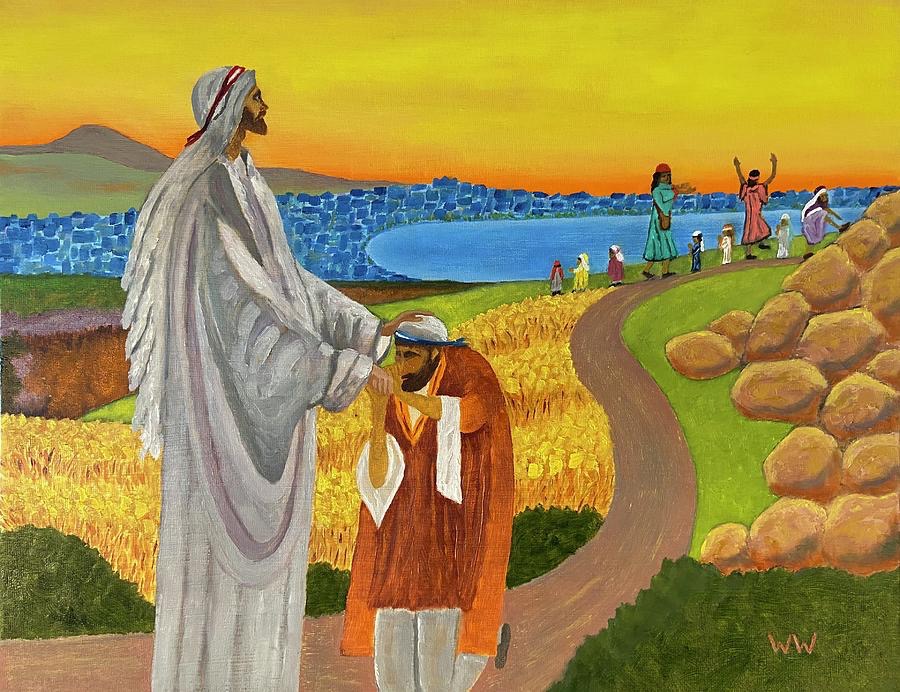
Ten Lepers Healed by William West