Epiphany: The Journey of Faith

Homily: Solemnity of the Lord’s Epiphany

Matthew 2:1-12

5 January 2025

Fr. Ricky Cañet Montañez, AA 

There is a video circulating that suggests that the Magi who visited Jesus at His birth were connected to the prophet Daniel who was among the exiles in Babylon. Daniel impressed King Nebuchadnezzar so much that he made him chief of the Magi in Babylon which is East of Israel. Naturally, they would have discussed the prophecies involving astrology and they would have studied Daniel’s writings particularly Chapter 9: 24-27 which speaks of the timeline for the birth of the Messiah. There is roughly 600 years between the time of Daniel and the birth of Jesus, and who is to say if the connection is genuine. It does bring to light however the mysteries of God’s work and how events can have a significant effect on the future without our knowing. It is only in retrospect or in looking back do we see such connections. 

Today, we celebrate the Epiphany of our Lord. An “Epiphany” is a discovery or an amazing insight that clarifies things or sheds light on matters. The feast today is about the revelation of the mystery of God’s love for us as revealed in the image of the child born for us — born to be one of us, and born in poverty and powerlessness, with us. In the Birth of Jesus, God desires to renew His relationship with humanity. The promise made to the people whom God called His “chosen people” is now made manifest to the rest of the world. 

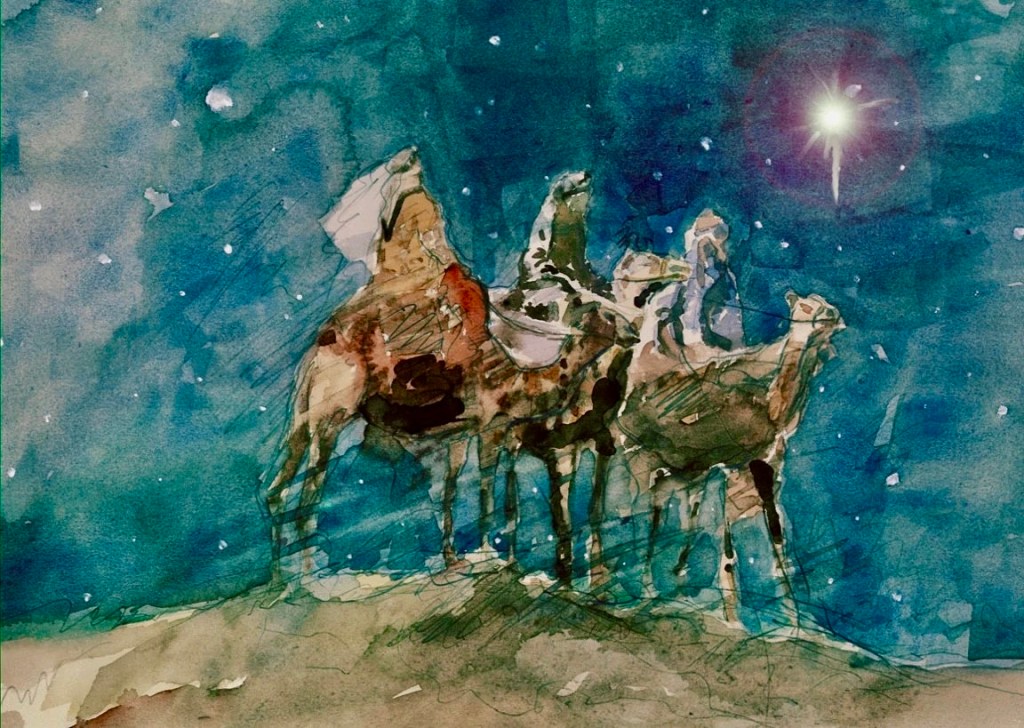
In the Gospel, we are told that “these wise men from the East” (Matthew 2:1) relentlessly followed the light of a star in their search of the Infant King. First of all, who were these Magi, sometimes referred to as kings? Most scholars agree that in ancient times, in what is known to us as the Middle East, the Magi — from which come the words “magician” and “magic”— were astrologers. Some say they were Babylonian astrologers which would play into our story of Daniel at the start. Others would say Arabian magicians or simply adventure-seekers. What cannot be contested is the fact that they were men who studied the skies, and found meaning in the movement of the stars and the planets. Since they were known to be wise men, they were quite influential and would have been very wealthy.  They were respected in all levels of society and held sway in determining the courses of action in people’s lives. 

Despite their brilliance and cognisance, these seekers who studied the stars for an understanding of “mysteries”, might not have fully understood the full meaning of the mystery of a child born in the stable. After all, the prophecy of a Messiah meant more for the people of Israel than to any foreigners. They could not have fully comprehended their discovery of God’s saving presence made available because they may not even have been believers in the God of Israel. Their understanding of the reality before them did not diminish nor did it take away the truth that God had just given a great gift not only for His Chosen People but also for all the nations — for everyone, including the Gentiles who are represented by the three Magi. 

The Magi’s epiphany journey is the pattern of our Christian living. We, too as Christians always attempt to open ourselves to God’s leading us to our ultimate destiny. This is why we read the Bible, receive the sacraments, and pray — we do our best to keep connected with God and be attuned to His plan for His people.  Like the Magi we seek God diligently on what seems to be a ‘fool’s errand’ for some people, especially those who believe more in themselves than in a higher power. Along the way, we are met with many obstacles that may discourage us from moving forward and may require us to change course and to take another way. A new route is not necessarily a bad thing — it could be a shortcut to a destination, or a safer route for us.  Oftentimes, it is when we are stubborn and impatient that we veer away by ourselves and get lost and distracted from our goal.  We simply have to trust that in God’s loving mercy He will lead us back to where we intend to go; where He intends us to be, in accordance with His grand plan for humanity. It is only in accepting the nature of our journey and surrendering to God’s guidance can we offer Him the greatest gift we can give — the treasure of our very selves. 

On this feast, I pray that we all come to discover God’s guiding voice speaking to us and leading us onto the right path. Let us take after the Magi that wisely heeded God’s warning in their dream to take another route on their way home.  May our life’s journey lead us down paths where we become wiser and better persons ready to offer the best of ourselves to our King who desires to be revealed in us and through us this year.

Blessed to Belong to God’s Family

Homily: Feast of the Holy Family (C)

Luke 2:41-52

29 December 2024

Fr. Ricky Cañet Montañez

Recently I read an article that says the population in Japan is declining. It is not unlike the problem in many European countries where there is a disproportion between the aging and the newborns. One of the reasons given for this phenomenon is the rapidly changing concept of family. Many young couples don’t choose to have children anymore. I did a bit of research and stumbled upon some responses to why this is so. 

One girl said, “My husband and I don’t want to have kids yet mainly due to the cost of living.  Work is tiring already and we just want to enjoy married life.” Another couple opted to be fur-parents instead: “We are almost forty (40) and life is good!  The money we saved by not having kids has afforded us a ton of opportunities. We do whatever we want, whenever we want. We also both prefer dogs, and the three (3) we have are “plenty” fulfilling.” I was most disturbed by the response of one young father who even regretted having a son! “To have a kid is to open Pandora’s box. I didn’t want kids and my wife did, so we had one child who is now two (2). I love him but I hate parenting. I’m just not built for it. I feel trapped because I love my son and want the best for him but I miss my old life so badly. There’s no going back and you just keep going because you love your kid. I’m also always anxious — terrified of all the things that could happen to him. I worry about so many things that would not bother me if I didn’t have someone who depends on me like my wife and child do.” Do any of you relate to the situations I just mentioned? 

The Holy Family we read about in today’s gospel presents a very different picture from the growing realities of today. Mary and Joseph were entrusted with a great responsibility. They were to raise the Son of God, no less. Just imagine what it must have been like to be Jesus’ parents. Contrary to what we were told as kids, Joseph wasn’t much older than Mary when they married. Hence, as a young couple, they would have felt totally inadequate for the task having never raised a child of their own. Like every parent, they learned on the job. They were not perfect. In fact, in the gospel passage we are told that they lost Jesus after bringing Him along to Jerusalem! Imagine their panic at the possibility of having lost the Son of God! They must have been relieved beyond measure upon finding Him in the Temple days after He went missing. 

Life was not perfect for them either. They were not a rich family. Joseph had to work as a carpenter to make a living for his family. He and Mary also prepared themselves for the eventuality of Jesus leaving their home when the time came for Him to fulfill His mission. Through it all, they were never known to grumble nor did they abandon Jesus when life became difficult. Despite the stress of their situation, we can picture them as holding onto each other even more closely. They did not rely on their limited capacity to raise Jesus but instead they trusted that since God chose them for this tremendous task, He would also help them to accomplish the task. They persisted in God’s grace and walked into the mystery of God’s plan for their son, Jesus. Despite their own reservations and personal questions, they united their hopes and dreams with God’s plan for the salvation of humanity. 

As Christians, we must still hold the image of the Holy Family as our ideal. The model they present is one that is grounded on love and a genuine concern for one another. They embraced necessary sacrifices and chose to overcome the uncertainties of life together, always seeking the well-being of one another. These days, people tend to prioritise themselves — their wants, their needs and their convenience. They will consider family life only if they can twist it into something that suits their lifestyle, instead of making adjustments to welcome this sacred situation. Our constitution acknowledges the family as the “basic unit of society” — basically, the building blocks of a nation. It is how populations are safeguarded and where one learns what is to be human and part of a society. The Church considers the family a “domestic church” where people learn about Jesus, share the same faith in Christ and grow together into the people God intends them to be. Family is not something to be shunned as an inconvenience and a hindrance to one’s dreams and ambitions. It is where you build new dreams, grounded on love, with the spouse you choose and the children you have. Each and every family, no matter how imperfect, is still blessed by the very fact that our Lord Jesus, Himself was part of a family throughout His entire human experience. 

On this feast day of the Holy Family, we thank God for our families. Just as God entrusted Mary and Joseph with His Son, He has entrusted us with a family to nurture and love. To those who are married and have children: treasure the gift of your spouse and your children; do not be discouraged when your family goes through struggles. Life is never perfect. We simply need to pray to God for guidance, patience and understanding. Let us make it a habit to always pray with one another and for one another as a family. Amen.

The GIFT of our PRESENCE

Homily: Fourth Sunday of Advent (C)

Luke 1:39-45

22 December 2024

Fr. Ricky Cañet Montañez, AA

Last Thursday, after Fr. Steve presided over the PLDM Misa de Gallo as one of its former parish priests, he and I visited an elderly lady who used to be a staunch supporter of the parish projects. She is quite frail already to go to church and so she stays at home all day. In our visit to her, a Visitation-like scene like that of the gospel unfolded. When she saw us, she immediately grabbed each of our hands and said… “Thank you for visiting me. You don’t know how much this means to me. I am joyful beyond measure.”  

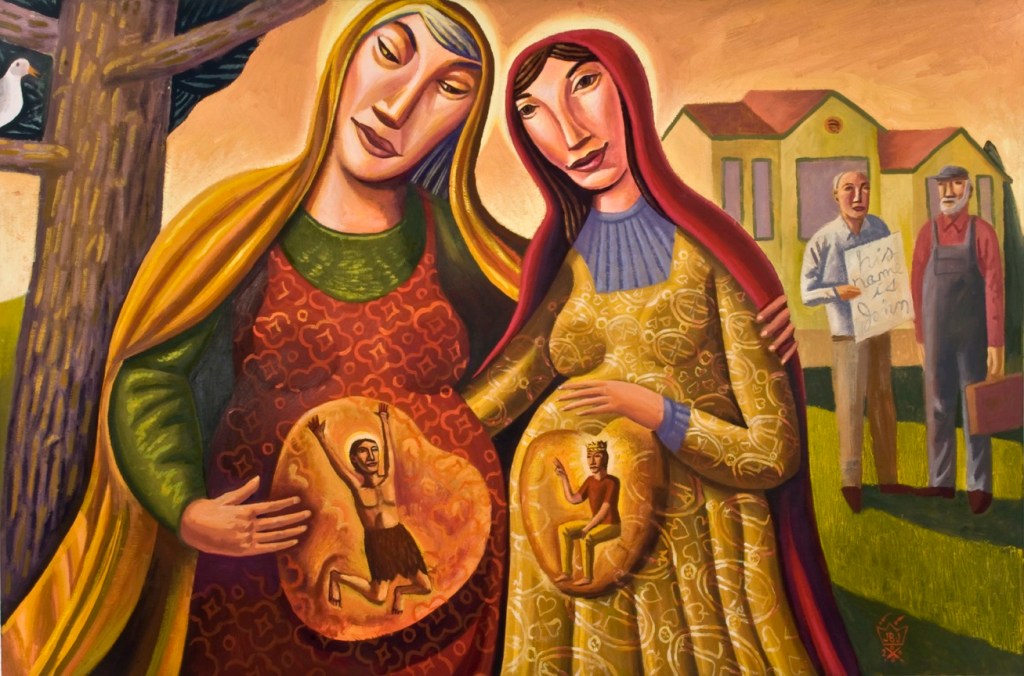
In the gospel reading, Elizabeth expresses the same words of gratitude and joy as she learns of Mary’s visit. “And how does this happen to me, that the mother of my Lord should come to me? For at the moment the sound of your greeting reached my ears, the infant in my womb leaped for joy.” (Luke 1:43-44) Mary sets out from Nazareth in Galilee into the hill country of Judah to visit Elizabeth. She sets out in response to the message of the angel Gabriel that Elizabeth was six months pregnant. Even though she herself was with child, Mary sets out on a journey of love to give support to her older relative.

In one way, it would make sense for Mary to visit Elizabeth, because the younger should visit the older. On the other hand, Elizabeth should be the one to visit, because Mary’s child was a person of such rank and dignity – God’s own Son. In Mary’s gesture of concern for Elizabeth, St. Luke presents some of the characteristics of Jesus’ future life. Here, it is the characteristic of service that he illustrates. Jesus later on will say: “The Son of Man came not to be served but to serve…” (Mark 10:45; Matthew 20:28) Hence, like His mother, He comes to visit His cousin, John, while they are both in their mother’s wombs, rather than wait at home to be visited. 

Being available for others like our Blessed Mother Mary, may sound quite simple enough. But we know it is not. These days, we always seem to be overwhelmed with the busyness of our own lives that scheduling time to visit loved ones and friends is never on our list of priorities. This is one of the biggest heartaches of elderly parents whose children already live away from them. This is also how old friends tend to lose touch. Our busyness really does make us less available to others. Even if people want to visit us, many have lost that openness to welcome people to their homes. Our older parishioners may remember a time when friends and family could simply drop by and be assured of a warm welcome and a quick snack. Now, you have to call first because everybody is usually out doing their own thing and only the “kasambahays” are at home. Sometimes we do the next best thing — use social media or technology to keep in touch. However even in this age of instant messaging and video calls, there is something special about making a journey to be physically present for another. It takes a lot of effort on our part these days to just be PRESENT to one other. Note that the other word we use for “gift” is “present”. The best gift we can give one another is our PRESENCE. 

Mary goes out of her way to be with Elizabeth whose need is greater than her own. In a very real, physical sense, Mary was bringing the Lord to Elizabeth, because she was carrying Him in her womb. As Christians, because we carry Christ in our hearts, we are all called to bring the Lord to each other by our caring and considerate presence to them. Anytime we set out on a journey towards someone whose need is greater than ours, as Mary did, we are bringing the Lord to them. We may not always know the needs of others, but rest assured, when we are present to and for them, it is the Christ within us who is manifest to them. We become the deliverer of God’s grace and blessing to them. 

Let us walk in the footsteps of Our Blessed Mother who lived for others and was always available for them. May God give us eyes to see those in need and courageous hearts to spend our lives in compassionate service to our brothers and sisters and bring the hope of Christ to them this Christmas and beyond.

By: James Janknegt

The Cause of our JOY

Homily: Third Sunday of Advent (C)

Zephaniah 3:14-18

Philippians 4:4-7

Luke 3:10-18

15 December 2024

Fr. Ricky Cañet Montañez

A priest friend once spoke of this lady who had gone to him for counselling. She sat quietly waiting for him, looking very serene. He wondered what could possibly be bothering her. When he entered the room, she looked up and smiled. To him, she looked like a person with no troubles. In the course of their conversation, she disclosed that she was suffering from a severe illness, her husband had left her, and that her children were diagnosed with psychiatric problems. Never in a million years would he have guessed that she was burdened with such grave problems. His heart went out to her but at the same time he was amazed at how positive she was. How could she smile and look so calm at a time like this?  If you were in her shoes, would you have the same attitude and outlook in life? 

On this Third Sunday of Advent, the word “Rejoice” is heard a number of times in the readings because today is also called Gaudete Sunday, and Gaudete is Latin for Rejoice. In the First Reading the prophet Zephaniah tells Zion, “Shout for joy, O daughter Zion! Sing joyfully, O Israel! Be glad and exult with all your heart, O daughter Jerusalem! (Zephaniah 3:14) In the Second Reading, we find Paul urging the Philippians: “Rejoice always!” “Rejoice in the Lord always, I shall say it again: rejoice!” (Philippians 4:4). Who wouldn’t want to be in such high spirits, happy and positive at all times? When things are going well in our life, when everything seems perfect and we feel like we are on top of the world, it is easy to be joyful. 

However, is it possible to rejoice always? Perhaps with the exception of those who live a seemingly charmed life…  How can we be joyful in the midst of the seemingly insurmountable troubles we have to contend with in life? There are troubles in government, at work, in school, and what is especially painful — troubles in the family. Societal pressures to be successful, rich, beautiful and perfect can also lead to discontent and depression.  Recently, the bar exam results were published and a UP Law graduate topped the Bar. That is one of the most difficult exams being given. Law students spend months preparing so if they don’t pass, it can be mentally and emotionally devastating.  There was a time in the past when some who failed even took their own life. How sad that a young person cannot perceive an alternative future that will prove equally successful or fulfilling. As Christians, we have reasons to be joyful even in the midst of life’s difficulties. Sayings such as “Behind every cloud is a silver lining!” or “When God closes a door, He opens a window!”— make a lot of sense to us because we hope and believe in God’s love and providence. 

Through our readings, we are given the reasons why we can rejoice at all times despite life’s challenges. In the First Reading, the prophet Zephaniah tells God’s people to shout for joy because they have been freed from their oppressors. They are to rejoice because God assures them of His presence among them. Though in chains, St. Paul exhorts the Philippians to rejoice always in the Lord because of their new-found closeness to God in Jesus Christ. “The Lord is near.”  (Philippians 4:5) St. Paul urges the Philippians to rejoice and recognise the presence of God through the many acts of kindness they either experience or extend to others. Furthermore, they are to be thankful as they learn to recognise and appreciate the everyday miracles of life which are reasons enough to rejoice, to give thanks and to be at peace. What St. Paul advocates is a joy that is grounded in faith and hope in Jesus Christ. 

Some of us may still not be inclined “to shout for joy” in life, so we shouldn’t miss the chance to remind one another that Advent is a time of joy, not only because we are preparing to commemorate the birth anniversary of our Lord Jesus Christ but more so because in Christ, we have been assured that God is always in our midst. He is Emmanuel! He is the cause of our joy! We can always rejoice over God’s saving acts in the here and now. Let us rejoice then, be kind, be thankful and pray that we find our way to the peace of Jesus Christ at all times.

Restored in Christ Jesus

Homily: Second Sunday of Advent (C)

Luke 3:1-6

8 December 2024

Fr. Ricky Cañet Montañez

We often hear the expression “To straighten things out…” or “To straighten someone out!” Why do we bother to do this? When we use this for objects perhaps the typical translation in Filipino will be ” ayosin” or “i-derecho” which suggests restoring something to order or to what was originally intended. For people and situations, it often means to correct or fix what seemingly is crooked; if not seriously deal with something that has become a mess.  

I think this is important for us to understand so we see the value of the images presented to us today both in the First Reading and in the Gospel… “levelling the mountains, filling in the gorges and straightening the paths…” (Baruch 5:7) All of it is done to allow a swifter, safer, and more certain journey back home. In Baruch, it is Jerusalem’s children who were led away by the enemy that will be swiftly returned to her. In the gospel passage it is about God coming to meet His people to save them. There is a presupposition of a painful separation and the promise of a joyful and much awaited reunion. Baruch writes: “Jerusalem, take off your robe of mourning and misery…” (Baruch 5: 1) He tells her to stand up and gaze in the distance to watch her beloved children being gathered by God to bring them back to her. And they come resplendent with God’s glory like royalty. What a beautiful image!  If we have ever lost a loved one to sickness, old age or tragedy, imagine being able to meet them again as healthy, whole, youthful and happy? This is actually what we look forward to when all of us, God’s children, are reunited with God our Father in heaven for eternity. 

Obviously, since we are all still here together at mass (listening to this homily that should not be more than 8 minutes according to Pope Francis, we are not there yet! We are merely looking forward to that day in faith. For now, we must go through this period of waiting and expectation — very similar to what the Church tries to emphasise each Advent Season — waiting for the Lord. However, the Second Reading (Philippians 1:4-6, 8-11) and the Gospel (Luke 3:1-6) this Second Sunday of Advent bring to light the element of HOW we must conduct ourselves as we wait. The gospel starts off enumerating the names and territories of the powers that be in the time of Jesus.  It is the same political and religious circumstance wherein John the Baptist began his mission. He preached a “baptism of repentance for the forgiveness of sins” crying out, “Prepare the way for the Lord and make straight His paths”. (Luke 3:4) John calls the people to straighten out their lives. He is telling them that the requisite for ultimate relief from their suffering and oppression was first and foremost, personal renewal by repenting of their sins and radically changing their perspective on their relationship with God and others. 

That message holds true for us today as well. We have to admit that the wrong choices we made have led us down dangerous and difficult paths that endangered our relationship with God and others. There are surely certain valleys in our lives that need to be filled in; a number of mountains and hills that need to be made low; a few rugged lands that shall be made plain and still some rough countries that need to become broad valleys. By our own initiative and by the grace of God, we can pave the way for God to meet His people and for others to find their way back to Christ. Perhaps we have been feeble, weak, or frightened? Perhaps we have allowed ourselves to be in a spiritual dryness long enough to get out of it?  Maybe we have been neglectful of how we have been treating our loved ones, or irresponsible of how we spend our time, or how we have maintained such a pessimistic attitude about life. Some of us are simply stonewalling our way through life. 

Advent is an opportune time to remind us to pray for the grace to acknowledge our personal sins and our contribution to social sins that we may repent and make amends for. Such a disposition of humility and openness, allows us to enjoy fully the promises of the Lord not only those from of old and those in the future but more so, ‘God’s adventing’ in the here and now. 

We all have a journey to make this Advent; we all have a journey to return home to the way of living and being that God desires for us. Whatever our story, whatever our journey through life has been up to this point, let us carry on and strive to make straight our relationship with God and others, strong in the hope of God’s promise of restoration in Him. We are “confident of this, that He who began a good work in us will carry it on to completion until the day of Christ Jesus.” (Philippians 1: 6)

Beware, Frequent-flyers!

Homily: First Sunday of Advent (C)

Luke 21:25-28, 34-36

1 December 2024

Fr. Ricky Cañet Montañez 

Do you remember the first time you rode an airplane? Were you excited? Anxious? Frightened? Perhaps all three? After all, all these are typical of a new experience. Air travel is much more common these days, than when I was a child. Back then, people dressed up for their flights. Today, I see people onboard planes in sando, shorts and slippers! Flying is now such a casual affair. More so,  afor frequent flyers! These people travel by air so much that they are rewarded with points they can exchange for discounts and special benefits. Despite all those perks, the actual experience of flying in a plane becomes more of a chore and a necessary inconvenience than a fun and thrilling ride. Gone is the eager anticipation of coming home to some place familiar or the promise of an adventure in a new destination! 

Ganun ba talaga? (Is this how things are?) Bored na kasi sanay na? (Have we become so used to it that we are bored?) Most of us have experienced a good number of Advents already in our lifetime. We have become so used to it that it does not hold any significance to us anymore. Because of our “frequent-flyer” attitude towards Advent, we have become bored, unmoved, uninspired that we tend to just go through the motions. The Season of Advent, which we begin today is oftentimes merely a “liturgical” word for us, with not much meaning in our lived experience, if we are not mindful. 

Advent, which in Latin is “adventus” translates in English as “arrival” or “coming”. For us Catholic Christians, it is a season comprised of four (4) Sundays after the Feast of Christ the King and just before the 25th of December, Christmas Day. It is an anticipation of Christ making Himself manifest to us. Just as we find ourselves preparing for the arrival of important guests in our home, the church deems it necessary to establish a period of preparation among the faithful that places them in the proper disposition to receive our God made flesh.  First, we celebrate the blessed day when our God, sent His Son to be born as one of us, to save us from the miserable consequence of sin. The first Christmas marks the start of thirty-three (33) blessed years of God literally walking among His people. We are also taught that Advent is intended to be a preparation for more than just Jesus’ coming to us as a baby. It is a foreshadowing of the Parousia or the Second Coming of our Lord, which He divulges to His disciples before His Ascension. It is Christ’s return in glory that we look forward to as Christians, filled with hope that we will be reunited with our King.  There have also been others who proposed that there is another instance of Jesus’ arrival that we must learn to anticipate. They refer to this as the Third Coming of Christ! This occurs in the day-to-day life of every believer when Christ makes Himself manifest through the ordinary experiences that reveal His love, providence and mercy to us. The Church’s invitation to observe a period of intense preparation is what characterises the Season of Advent. 

During this period of preparation, the church encourages us to cultivate an attitude of vigilance.  St. Paul is telling us today what he told the Thessalonians, “to prepare for the Second Coming of Christ — the great day of judgment, by living each day as God wants us to live it, namely by living in love and peace with God and our neighbour. (1 Thessalonians 4:1)  In the gospel passage from Luke, Jesus speaks of various cataclysmic and apocalyptic signs to indicate the end. The description is not a pleasant one… “There will be signs in the sun, the moon, and the stars, and on the earth, nations will be in dismay, perplexed by the roaring of the sea and the waves. People will die of fright in anticipation of what is coming upon the world…” (Luke 21:25-26) The fundamental exhortation of the readings is: “Beware! Take Heed! Be Alert! Don’t be caught by surprise!” We cannot remain unmoved by these warnings. The intention is not to paralyze us with fright but rather, the coming of the end-time should be an incentive to righteous living. As always, if we know what is coming, it is our responsibility to prepare so we are not taken by surprise. 

In the Gospel, we note a very different ending as Jesus enjoins His followers that “when these signs begin to happen, they are “to stand erect and raise their heads because their redemption is at hand.” (Luke 21:28) In other words, Jesus tells His disciples that even if it seems like the sky is falling, they are not to panic; even if all seems chaotic around them, they are to keep their heads and not cower in fear. The Gospel invites all of us followers of Christ to envision the coming of Christ as a time of expectation, rather than of fear and trembling. Let us remember that God cares for and protects His people. If we continue to cling to Jesus, we have nothing to fear! 

For all of us disciples of Jesus who have tried to live by the values of the Gospel, the end times is the time of our final liberation. It is a time when there will be no more sorrows, no more tears, no more hardships, no more disappointments. On this day, may each of us stand with courage and hope to face our end. Despite the difficulties in our effort to be faithful to our Christian life, may we stay the course! May we always perceive God’s bigger plan and dare to hope beyond the scope of our reality.

Living A Purposeful Life

Homily: Solemnity of Our Lord Jesus Christ, King of the Universe (B)

John 18:33-37

24 November 2024 

Fr. Ricky Cañet Montañez

When I was young and life was much simpler, I considered a man reclining on pillows on a sunny beach surrounded by beautiful girls feeding him with a bunch of grapes to be an image of what it was like to “live like a king.” Of course, these days, it is much different… The image is bound to include expensive suits, luxury cars, an army of bodyguards, unbridled influence and unimaginable wealth. Do you know anyone who lives like a king or a queen for that matter??

Today, is the Solemnity of Christ the King. The Church did not always celebrate this feast. It was after World War I, when Pope Pius XI declared this a feast through his encyclical “Quas primas” in response to the rise in nationalism and secularism observed in societies.  Perhaps for us, it is an image of Jesus that is the most difficult to identify with since we have only ever had Presidents and we don’t know what it is to be subjects of a king or a queen. Technically we were under the Spanish crown for 333 years, but it was only the Governor General who acted as the Chief Executive of our country. Hence, it cannot be easy for us to relate to a regal and powerful Jesus in a crown and kingly robes. 

What, indeed, does it mean for us to have a king like Our Lord Jesus?  Our readings reinterpret for us the concept of Jesus’ kingship.  In today’s gospel, Jesus says, “My kingdom does not belong to this world.”  (John 18:36) Jesus overturns the more common notion of a “king” as associated with honour and glory flowing from one’s position of power and authority.  We can deduce from Jesus’ words that to be “king”, is to be master of one’s own destiny, to know one’s purpose so as to live a meaningful life. In the gospel, Jesus speaks of His Kingship as one that is purposeful — “for this I was born and for this I came into the world, to testify to the truth” (John 18:37). In obedience to God the Father, His priority is to build up God’s Kingdom in the hearts and minds of the people by His ministry and the integrity of His life.  He does not boast of His might, His heavenly armies nor the riches He possesses. He is a King faithful to His mission to bear witness to the truth even at the cost of His own life. 

In recognising Christ as our King, we automatically acknowledge that “We are not the King of the Universe.” This is something we tend to forget when we think the world revolves around us.  Sometimes, by circumstance or our own hard work, we believe we have the power and authority to make things turn out as we want them to, regardless of how it happens or who gets hurt in the process. Let us just look around us. On our way to church, did we encountered the “kings of the road”? Sorry, SARAO, you are no longer the title-holder! Many of us act as though we are kings and queens of the road when we drive recklessly and without consideration for others. In offices, there are bosses who act high and mighty allowing their position to go to their heads. It is worse when those who act out are simply those who feel like they were bosses. Even in malls and restaurants, faux royals tend to look down on service and sales crew and treat them as if they were slaves. Perhaps in our own homes there are kings and queens as well? We are actually very small and very powerless compared to the grandeur and immensity of the universe and the One who created it.  If Jesus is our King, then He must be our model of authority and leadership that is characterised by gentleness and service.

Most of the useless worries and anxiety we experience in life spring from our desire to be considered great, to be number one, to be special. In the ‘Love Next Door’ series, there is a scene where Seok-ryu advises her younger brother Dong-jin so that he may take things in stride and enjoy life to the fullest. She tells her younger brother… “To be number one…. It’s all pointless. I’ve lived for 13 months longer than you, so I am speaking from experience. Not everyone can be special. Most people just live ordinary lives. And the same goes for me. So, don’t be too obsessed with becoming someone great. Just find what’s valuable to you in your life. That is more than enough.” 

In our lifetime, the Church has also become very sensitive to affording itself undeserved honours. For instance, the Vatican has recently updated the liturgical book regulating the funeral rite for popes, simplifying some of the rituals at Pope Francis’ request. The second edition of the Order of Funerals for Roman Pontiffs revised the version used for the funerals of Pope John Paul II in 2005 and Pope Benedict XVI in 2022. According to Archbishop Diego Ravelli, the master of papal ceremonies, Pope Francis noted the “need to simplify and adapt certain rites so that the celebration of the funeral of the Bishop of Rome may better express the faith of the Church in the risen Christ.”  Archbishop Ravelli added that, “the renewed rite emphasises that the funeral of a Pope is that of a pastor and disciple of Christ and not of a powerful person of this world.”

In the Book of Revelation, we are told that the Kingship of Jesus comes into fullness at the end of time. It is when He returns that He shall present Himself in His true glory to exercise His Kingship, conquer the final battle and save His people. It is something we look forward to in faith as Christians. As his subjects, we devote our lives to preparing ourselves for His return, by striving to live a purposeful life as Christians. If Jesus Christ is our King, we, as His subjects are also called to fidelity to the truth of His teachings. We are called upon to live it out with compelling conviction in the choices we make and how we relate with others. 

Brothers and sisters. as we celebrate the Solemnity of Christ the King, we are called not simply to pay homage to our Eternal King but to do as He did, devoting His life to others. May we pursue His self-giving way in our reaching out to others so that God’s reign may come among us.

Onward to the Kingdom!

HOMILY: Thirty-Third Sunday in Ordinary Time (B)

Mark 13:24-32

17 November 2024

Fr. Ricky Cañet Montañez

How do you feel when people talk about the Second Coming of Jesus Christ? Are you excited? Are you afraid? Are you anxious? Generally, people dread the day because of the extraordinary occurrences that surround it — absolute darkness, the stars falling from the sky, the heavens are shaken, Jesus ascends in His full dazzling glory and many angels rushing throughout the earth to gather the elect. If you had a choice, do you want to be alive at the time to witness this? Do you fear that you may not be among the elect? 

In the gospel Jesus speaks about the fig tree to show His disciples what it means to read signs. In Palestine, the fig tree is a prominent tree. It often symbolises blessings of the land.  When the fig tree is budding, everyone knows what is at hand as it happens regularly along with the cycle of the seasons. The example of the fig tree is a metaphor for the nearness of the “Kingdom of God.”  It was a subtle encouragement that they be aware and alert to the signs of the times; the signs of the presence of God!

Visible signs of the Kingdom are everywhere — signs that remind us that God’s Kingdom is at hand. How close is it to us? Will we only see it when Jesus returns? Actually, the Kingdom is already here in our present. Jesus Himself says that “the Kingdom of God is in our midst”!  (Luke 17:21) It’s right where we are. Maybe not in its fullness, but we can have a glimpse of it and experience it. We just need to open our eyes, our hearts and our minds to see, to feel the truth of God’s Kingdom. The Kingdom of God is where Jesus reigns as King and everything is subject to His will.  Thus, if Jesus is King in our homes, part of God’s Kingdom is inevitably there. If He reigns in our hearts, then we carry around a piece of the Kingdom. 

Our readings emphasise, that Jesus has already purchased a place for us in God’s Kingdom by the sacrifice of His body and blood. It is up to us if we want to be a part of it by subjecting ourselves to Christ’s Kingship. Jesus is merely waiting for the fulness of God the Father’s plan for His people. Since only the Father knows the day and the hour, we wait vigilantly with Jesus. The challenge for us is to watch out for the telling signs. What are they? The readings this Sunday speak of calamities and disasters as signs of the passing world and ushering forth of the new world where God will no longer be hidden but among us forever. This time is not something to be feared if we are faithful to Jesus and His teachings. The prophet Daniel speaks of the resurrection of the dead when he says those who are asleep shall awake and some will live forever and the wise shall shine with splendour and be like the stars forever. What a glorious future awaits those who choose to follow Jesus!

On the other hand, the prophet also warns that until that time, it shall be a time of great distress. If we are to look carefully at current events wrought with conflicts, wars and natural disasters, it certainly seems like a time of distress! We witness women and men mourning the loss of spouses, sons and daughters to wars, diseases and famine all over the world. We watch in horror as families are devastated by natural and man-made disasters. We are told that our oceans, air, forests, and lands are polluted, in danger of biological death. These scenes do not come to us simply as visions because we readily see them on television or online. Are these signs? Naturally! Do they tell us specifically how much time we have before then? Not really … But should these signs be simply ignored? Just ignore them?  We are in the homestretch. How long this will take place, we do not know. What is important is that we continue to live our lives as God’s people, subjects of His Kingdom. If we have not yet done this, now is the time to start. 

The Kingdom is made present wherever the values of the Gospel are being lived even though it will not be fully realised until the very end when all of us are gathered in Him. For the time being, we have to do our part in making God reign in our midst. Our fears of the end times should not paralyse us. We can overcome any fear of the end times by relying on and trusting in God’s fidelity to His promises. One who is prepared need not fear. One who is true and faithful need not worry. One who trusts in God need not fear.

The Lord invites us to respond to the signs around us by a change of heart, of behaviour and of attitude. Today, now… at this very time as we look forward to God’s reign in our midst, let us ask for the grace to respond to the call of belonging to the Lord and His Kingdom for all eternity.

Vasily Kandinsky, All Saints I, 1911, glass painting, 34.5 x 40.5 cm (Städtische Galerie im Lenbachhaus)

Unworthy Servants that We Are

Homily: Memorial of St. Josaphat, Bishop and Martyr (13th Sacerdotal Ordination Anniversary)

Luke 17:7-10 

12 November 2024 

 Fr. Ricky Cañet Montañez

I think all of us will agree that our initial impression of the master in our gospel passage is harsh and ungrateful for what his servant has done for him. However, I invite you to consider the deeper perspective. Sometimes, when we are quick to judge and are overcome by emotions, we tend to misinterpret the intentions of people. Thus, let us take some time today to unpack Jesus’ story. 

I believe that the lesson Jesus is trying to teach is found in the last verse of the passage: “So should it be with you. When you have done all you have been commanded, say, ‘We are unprofitable servants; we have done what we were obliged to do.’” (Luke 17:10) In other words, if we just meet our obligations and do the bare minimum, we aren’t doing enough. It can be tempting to pat ourselves on the back or even look for acknowledgement from others when we have met our obligations in the context of a very secular society. Just meeting our obligations is nothing extraordinary though; it is the extra-ordinary that we should strive for in our service to God and others. 

For those of us from the earlier generations (the boomers and gen-Xers) the Catholic obligations seemed more predominant as we were growing up. These obligations included abstinence from meat on Fridays, Mass on Sundays and holy days, fasting from midnight until the reception of the Eucharist, fasting during Lent, etc. Since the Second Vatican Council, the mandatory obligations have become fewer, with the expectation that each of us has to make our own personal choices for sacrifices and service that express our love for God. Superficially, it seems that things have become more lax, but in reality it has become more challenging because we have to take more personal responsibility. We each have to discern what it is that God is calling us to do to serve Him and those around us. It is not an easy task sometimes because things are not laid out for us in black and white. At other times, it could also be frightening because we may be asked to do something beyond our comfort zones. 

We may think, we have to go out of our way to do something impressive and large scale like head the PPC or organize donation drives for the victims of calamities. But really, there is much we can do in our immediate environments. An example of this is when we show respect for God’s creation; it is not enough that we refrain from throwing candy wrappers on the streets. Consider, a lifestyle change of avoiding the patronage of products packaged in single use plastics to lessen the volume of waste. We also do not need to look too far to serve God’s people. We are already living in the digital age and many senior citizens have difficulty navigating their way through all the computerized processes of banks and government offices. For the young — it is not enough that you… that we help our parents or our lolo and lola to figure out the TV remote control, perhaps prepare them a snack and sit with them for a bit and watch shows together. If they need help with the internet or their phone, instead of impatiently shouting out instructions to them; we need to sit with them and show them how to work around the app or the website.  It’s all about doing more than the minimum. Again, this is in imitation of our patient and generous God who has no limit on His kindness, generosity and mercy towards His people. 

As I commemorate on this day my 13th Sacerdotal Ordination Anniversary, my prayer is that I may always have the resolve to go beyond mere obligations of being a priest — of being a Christian. As a reminder, I always carry with me a dedication from one of the cards I received at my ordination — “You will be ordained many times over in the years to come by the very people you would be called to serve.” Pray with me that I may always seek to serve the Lord and others in all that I am called to do to the best of my abilities. So, help me God!

No Holding Back

Homily: Thirty-Second Sunday in Ordinary Time (B)

Mark 12:38-44

10 November 2024

Fr. Ricky Cañet Montañez

One Sunday morning mass when I was still in San Roque Parish, an elderly woman entered the church at offertory. At first, I thought she was going to sit on the front pew beside the lay ministers but she walked past them and went up the sanctuary! I was rather alarmed and I was tempted to stop what I was doing, but I simply continued. When she was just inches from the altar, she pulled out a plastic bag of coins from the pocket of her “duster”, made the sign of the cross, and then put down the offering of her day’s alms on the altar. Afterwards she just went down and quietly sat in an empty seat in the pews. I was relieved that she posed no threat, and at the same time I was happy I did not stop her.  It would have been a shame if I had prevented her from offering her gift. 

The giving of oneself totally in love for God and neighbour which was the focus of our readings last Sunday is best exemplified by the two widows in this Sunday’s readings. In the gospel, Jesus notices a poor widow and commends her generosity, her willingness to give out of her poverty… “her whole livelihood”. She only had  two (2) small coins but she gave all of it anyway, whereas the rich gave from the surplus of their wealth. Jesus commends her by saying that the  large sum of offerings by the rich pale in comparison to the widow’s paltry offering because she had given fully of herself and her resources. Similarly, the widow of Zarephath gives Elijah the last meal intended for her and her son. She had accepted that they were going to die of hunger soon after. Nevertheless, she did not hold back the little she and her son had when Elijah was in need of sustenance.  Although in dire straits, both widows sacrificed from their own need and gave without reservation. Their total self-giving shows absolute trust in God. By not holding back and having complete trust in God’s providence, they exemplify for us what it is to be radical followers of the Lord.  

I am sure we all have individual stories of unnatural generosity. Maybe some of us chose to give our jeepney fare to someone in need, even if it meant we had to walk home. How many parents have foregone their share of the family meal just so their kids could have a second serving or eat their favourite chicken part? What about the eldest child who works tirelessly to help support the family and send younger siblings to school? As human beings we are not incapable of giving of ourselves but we certainly have the tendency of hanging on to what gives us a sense of security. Do remember what Jesus said: “For whosoever will save his life shall lose it: and whosoever will lose his life for my sake shall find it. For what does a man profit, if he shall gain the whole world, and lose his own soul?” (Matthew 16: 25-28)

The extreme generosity of the widows in the readings is a foreshadowing of the sacrificial giving of Jesus of Himself on the cross. Remember that as the second person of the Trinity, Jesus is also God. He could have limited His sacrifice by choosing to continue His mission on earth until He was fifty, or perhaps, chosen a less humiliating way to die, but He didn’t. Jesus chose to be completely obedient to the will of His Father. He surrendered His mind, heart, will, and entire being to the plan of the Father. Can we leave our entire existence, past, present and future in the hands of the Father as Jesus did? We pray that we may be more and more like Jesus who even in the face of such torment on the cross could still say, “Father into your hands I commend my spirit.” (Luke 23:46)

We are challenged by the gospel not to shy away from discipleship, even if it comes at a great cost to us. Let us remember that regardless of who we are, where we are and what situation we are in, we can in our humble ways manage to address the needs of others. Every gift becomes impactful if done with love, in imitation of Jesus Christ.