Unexpected Paths to Glory

Homily: Second Sunday of Lent (C)

Luke 9:28-36

16 March 2025

Fr. Ricky Cañet Montañez, AA 

One time I presided over a golden wedding anniversary mass and renewal of wedding vows in my previous parish. The couple in their late 70’s chose to renew their vows in the parish church with a hundred of their friends and relatives in attendance. During the homily, I asked the husband how long their courtship lasted and he revealed that it took him a year before he could convince his wife to be his girlfriend. However, when he proposed two (2) months later, she did not hesitate to say “Yes”. The wife revealed that he had the reputation of being a ‘ladies’ man’ and it took many months before she saw in him the potential to be a good husband and family man. She said she did wait to be absolutely sure. That brief moment was so impactful that it convinced her that he was “The One”. 

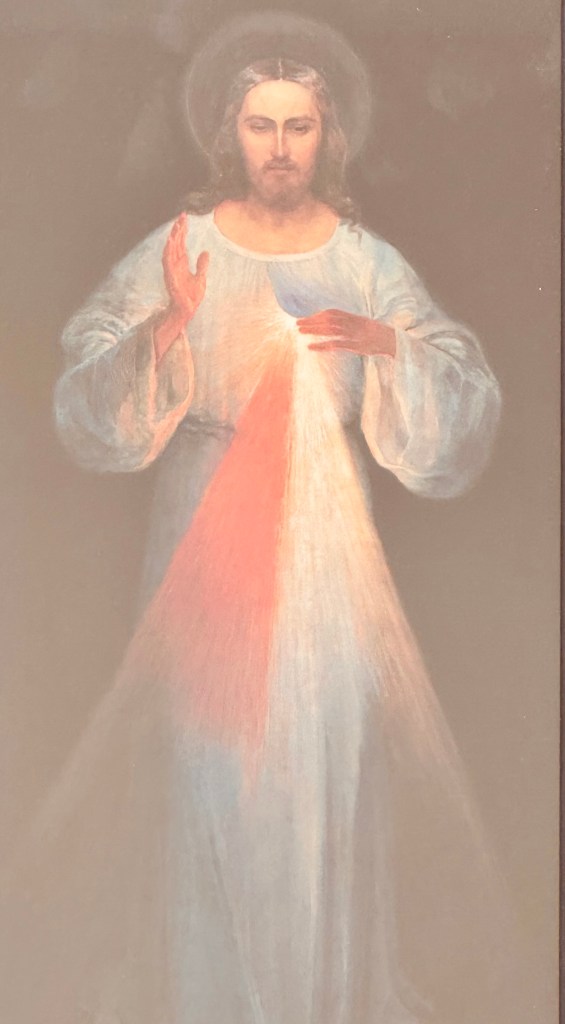
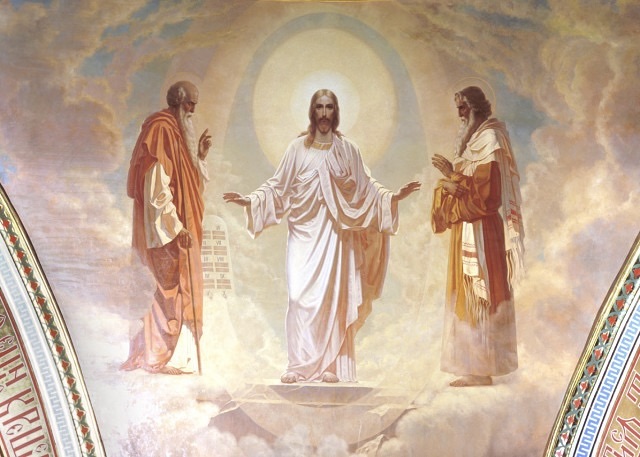
In today’s Gospel, we hear about the Transfiguration, where Jesus is revealed in His full glory to Peter, James, and John on the mountain. It was a privileged moment, offering them a glimpse of who Jesus truly is. While this experience is amazing, it is only a glimpse of something much greater that is yet to come. They did not understand completely what they had witnessed but it was enough to convince them that Christ was otherworldly. 

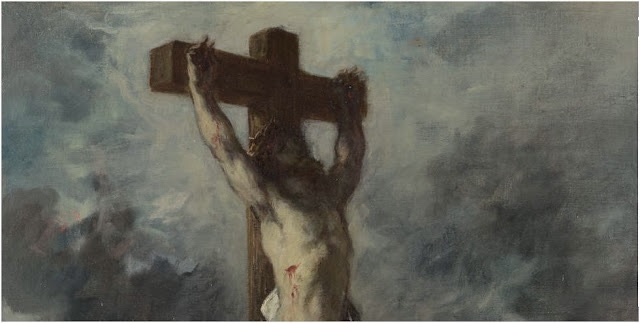
In the Transfiguration of Jesus, the disciples were shown Jesus’ glory, but it also points toward something very important: salvation does not always come the way we expect. We often think of salvation as our triumph over our problems, over our struggles. We tend to associate it with easy answers, quick fixes, or immediate results. However, Jesus’ glory, as revealed in the Transfiguration, will only be fully manifested through His suffering, death, and resurrection. Many times, when we find ourselves in tough situations, we complain why life has to be that challenging. But just like our Master’s story, our redemption often comes through the difficult moments of our lives. Actually, it is in these times when God is working in us the most, helping us grow in faith. 

The Transfiguration reminds us that while Jesus is revealed in His glory on the mountain, the path to the fullness of that glory is paved with challenges. The disciples saw His glory, but they also had to understand that the real victory would only come through the cross. Just like our Lord Jesus, we, too have to walk through some hard times to reach the glory God promises us. What are we challenged to constantly deal with these days? Yes, we are made to realise that when we face difficulties, we should not lose hope. We may not understand why we have to go through something beyond us, but we can trust that God is guiding us through it. Through our struggles, God is bringing us closer to the salvation He offers us. 

A few days ago, former President Rodrigo Duterte was arrested and flown overseas to face charges filed by the International Criminal Court (ICC). Many of his supporters are not only worried about him, but are also fearful for themselves, as members of the Die-Hard Duterte Supporters (DDS) brace for their own reckoning with the law. Regardless of our differing opinions and views about matters, we must remember that this is an important moment for all of us to reflect on and learn from. No matter which side we identify ourselves with and how uncomfortable this whole experience maybe for some of us, we all have important lessons to learn from this. Hence, instead of persecuting one another, we are all called to pray for one another. May we consider this as a crucial time for our redemption as a nation, a chance for God to purify and save us through conversion. Let us remember that God’s grace always finds a way to bring salvation to those who are willing to turn to Him. This could be God’s way of offering us an opportunity for true change as a people. 

As we continue our Lenten journey, let us keep in mind that salvation does not always come in the ways we expect. At times, it is in the most unexpected moments — when we are struggling, when we are suffering, when we are confused — that God is at work, shaping us, and leading us toward the glory He has promised. Lent is a time for us to be open to the ways through which God is bringing us to our salvation. May we recognise them when we come upon them.

Surrendering Control to God

HOMILY: First Sunday of Lent (C)

Luke 4:1-13

9 March 2025 

Fr. Ricky Cañet Montañez, AA

Do you know what is your greatest weakness?  Is it your temper? Is it your desire for wealth? Is it the pursuit of eternal youth?  Sometimes when we fail to control our instincts and leanings towards these things, we forget ourselves and others. Nothing else will matter. If we are not aware of what causes us to fall, we become an easy prey to the devil. He takes note of our weaknesses and lies in wait to exploit us and tempt us to sin. 

The temptations Jesus faced are very much like the ones we deal with every day. They may not be horrific events such as mass destruction or grand theft. Sometimes, it is in the small things — failing to pray in favor of  scrolling through your phone, responding with irritation to your parents when they ask for your help, letting your anger get the better of you when you try to discipline your children.  We become most vulnerable to temptation when we feel we are most in control of our life. We  let our guard down, thinking nothing can faze us. Sometimes we deceive ourselves into thinking we do not need God’s help anymore.  We often challenge God, trying to do things our way, instead of trusting in His unfolding will. We take matters in our hands and try to do everything ourselves. We project ourselves to be the perfect person, the perfect parent, the perfect worker, forgetting that we cannot do it on our own. This tendency highlights that the core of our struggles lies in our desire to overlook our limitations and attempt to control our lives as if we were God.

When Jesus responded to the devil, He always pointed back to God’s power: “Man shall not live by bread alone…” (Luke 4:4) “Worship only God…” (Luke 4:8) “Do not put the Lord your God to the test.” (Luke 4:12) These responses remind us that the real struggle is not about what we can do. Rather, it is about acknowledging  our limitations and trusting God to lead, instead of trying to take control.  It is about realising that we are truly limited as human beings and that God is the true power.  Instead of seeing Jesus’ temptations as isolated events, we can understand them as struggles He faced throughout His lifetime, constantly resisting the pull of worldly desires and staying true to His obedience to and reliance on God. 

St. Paul, in his Letter to the Romans, emphasizes that salvation is achieved solely through God’s grace. He teaches that it is by placing our faith in Jesus Christ and invoking His holy name that we are granted salvation. Lent serves as a reminder of this profound truth, encouraging us to recognize that our deliverance is not a result of our own efforts but a gift from God. By clinging to Him, we find protection from the evil forces that surround us.

As a privileged time, Lent invites us to stop pretending we have everything together. We have begun Lent by marking  our foreheads with ashes reminding ourselves of our limitations and our dependence on God for strength as we face spiritual battles. Let us recognise our weaknesses and allow God to be God in us.

Temptation by J. Kirk Richards

Integrity: The Fruit of a Christian Life

HOMILY: Eighth Sunday in Ordinary Time (C)

Luke 6:39-45 

2 March 2025

Fr. Ricky Cañet Montañez, AA 

Do you follow people on social media? Whether they be entertainers, politicians, critics or artists?  I find it quite difficult to take people at their word these days. It is not easy to believe people, even those who hold positions of trust, such as politicians, media personalities, lawyers, ministers, even parents. Social media has glamourised and glorified those who have successfully captured the attention of netizens, gaining for themselves ‘influencer status’.  Content creators claim they are simply being authentic. However, how many of them have resorted to following viral trends to spike their engagement and following?  On social media one is often rewarded for creating an image and content that sells, oftentimes at the cost of what is true.  

Now, we do not want to be “judgy”. Jesus, Himself cautions us against criticising others for their faults and mistakes without being aware of our own. He says, why notice the splinter in your brother’s eye without removing the bigger beam in your own eye? (Luke 6:41) This Sunday, let us take a moment to look into our hearts and quickly check if our words and actions of the week align with our identity as Christians.

In today’s Gospel, Jesus says, “A good tree does not bear rotten fruit, nor does a rotten tree bear good fruit. For every tree is known by its own fruit.” (Luke 6:43) Are you confused? We should not be! We have a similar saying in Tagalog — “Kung ano ang puno, siya ring bunga.”  (“As the tree is, so is the fruit.”) While we should not be too quick in judging others, we should keep in mind that there is no mask or pretence that can hide the truth of one’s heart and soul. It is always revealed by our words, actions and choices.  As men and women of Christ, there is a need to maintain integrity in the way we express ourselves and  in how we relate with one another. 

In today’s world, integrity seems to be in increasingly short supply. The election fever has already begun. In these days leading up to the election, quite a number of politicians shall be courting voters to consider them for public office. Many of them will pretend to be advocates of justice and truth. They will claim to be on the side of the people. They will dance, sing, shake our hand, hug us and take selfies with us. They will promise economic reform but, once elected, unfortunately, will use their position for personal gain or disregard the needs of the people they have vowed to serve. Their actions betray the very ideals they have claimed to uphold. Just like a rotten tree that does not bear good fruit, their actions reflect a lack of integrity, and their words are proven to be empty.

On the other hand, there are those running for public office who speak the truth no matter how unpleasant, nor difficult it is to hear, and who consistently work toward the welfare of the people. Even if it is challenging, they remain steadfast in yielding positive outcomes. Their sincerity and commitment to their promises are not mere words — they are reflected in what they do. These are the persons whose actions are  consistent with their values, and their integrity fosters trust with the people they committed themselves to serve.

Jesus’ words challenge us to look inwardly and look into our motives and our values. Let us be mindful that this will be made evident through our words, actions and choices. In our First Reading we are told: “The fruit of a tree shows the care it has had; so too does one’s speech disclose the bent of one’s mind. Praise no one before he speaks, for it is then that people are tested.” (Sirach 27:6-7)   Integrity is the bridge between what we say and what we do. As the Hebrew word DABAR suggests, “word” and “deed” are inseparable — our words must reflect our inner values, and our actions must be consistent with what we claim to believe in. It is easy to speak of righteousness and good intentions, but it is through our deeds that we ultimately demonstrate our true character.

In the end, what Jesus is teaching us is that our lives can be likened to trees, and the fruits we bear reveal the condition of our hearts. If we want to bear good fruits, we must instill and foster integrity within our hearts. Our actions should reflect the honesty, generosity, and righteousness that are consistent with our Christian values. In a world where trust can easily be compromised, integrity is the fruit that builds stronger relationships, nurtures flourishing communities, and promotes a more just society.

Brothers and sisters, let us pray for the grace to cultivate integrity in our lives, so that the fruit we bear will always be good, living out the truth and love of Christ in every aspect of  our relationship with others. 

Life Giver, A painting by Amy Giacomelli

Taking the High Road: The Path of Mercy

HOMILY: Seventh Sunday in Ordinary Time (C)

Luke 6:27-38

23 February 2025 

Fr. Ricky Cañet Montañez, AA

It is natural for people to get upset or angry when hurt, cheated or placed at a disadvantage. It is so instinctive that if you watch a toddler who can barely speak, swat another toddler with his hand, the automatic response of the other is to hit back. And it is when both have an experience of pain do they start crying loudly. Am I right, mothers?

The message of today’s Gospel is something difficult to accept and comprehend because it goes against what is natural for us as human beings. Jesus offers us one of His most challenging teachings: to love our enemies. He doesn’t simply ask us to love those who love us, or even those who are indifferent to us, but rather, He calls us to a higher standard, saying, “Love your enemies, do good to those who hate you, bless those who curse you, pray for those who mistreat you.” (Luke 6:27-31)  

It is a difficult concept, for sure. I have read this gospel quite a number of times and tried my best in my homilies to encourage the faithful that this is not impossible. Oftentimes, they only believe me until the mass is over and they step out of the church. A parishioner from a previous parish raised hell when a co-parishioner accidentally hit his car in the parking lot of the parish church. That started the heated argument.  Was it too much to ask that both parties would be in a forgiving mood since the mass just ended?  Sometimes siblings start boisterous play once they exit the church. As is expected, simple “kulitan” (playful banter; teasing) ends up in “sakitan” (causing pain; hurting). Do you think they would not want to get back at each other and retaliate? That is when the fight ensues. Jesus understands how hard this is, but He calls us to “take the higher road” — to do more than just respond with what feels natural or what others might expect.

Hence, what does it mean to “take the higher road”? How can we love those who hurt us? How can we wish well on those who curse us? How do we forgive when we are deeply wounded?  It is easy to meet hatred with hatred, to strike back when we have been wronged. It is easy to hold onto resentment and treat others the way they have treated us. However, Jesus is inviting us to break out of this cycle of revenge and bitterness. Instead of reacting in anger, He calls us to respond with love, forgiveness, and kindness. 

There is a girl who was very much consumed by anger after her boyfriend left her for someone else. She could not eat nor sleep because she kept stalking him on social media and devising plans to embarrass him or hurt him the way he hurt her. She was suffering while her ex-boyfriend, oblivious of what she was going through, kept posting happy pictures of his travels with his new girlfriend. Her family was concerned because she was falling into unhealthy habits.  In her attempt to hurt her ex, she was only hurting herself. How ironic, right? I think this is the logic behind loving one’s enemies. It is about freeing oneself from anger and hatred and leaving justice up to the Lord. It is about accepting that pain is a part of life, and no matter how we try to escape it, it will still find us. 

Loving our enemies doesn’t mean we are weak or passive. In fact, it takes great strength, will power and self-control. Remember that anger tends to cloud our judgment and causes us to do impulsive and potentially dangerous things which we may end up regretting. Often, retaliation becomes a deadly cycle. A case in point are clan wars that end up in violence and multiple senseless loss of life. Both sides find themselves at a losing end. If we choose to love, we break the chain of hate and violence. Even in the most difficult circumstances, we take a stand to reflect God’s grace and to find our peace in God’s mercy and justice. To love an enemy is a powerful statement that we will not let the actions of others control us. It is about refusing to have external forces destroy what God has made beautiful in us. Loving or hating is always a matter of choice. We can choose to always be a reflection of God’s love and mercy!  

David provides a powerful example of self-restraint in the passage from the First Book of Samuel. Despite being clearly favoured by God, David refrains from exploiting this favour. Saul sought to kill David, and from a human perspective, David could have easily justified taking Saul’s life to protect himself. No one would have blamed him. Yet, David chose to spare Saul’s life. He believed that judgment belonged to God alone, who rewards or punishes each according to their righteousness and faithfulness. David declares, “The Lord will reward each man for His justice and faithfulness.” (1 Samuel 26:23)

There is a reel on Facebook by Ninong A. He said, if a person were bitten by a snake, the immediate tendency is to chase after the snake and kill it, pulverise it, and punish the creature. Oddly enough, the first aid treatment for a snake bite is to lie down and relax so the poison that entered the bloodstream will not circulate fast enough to reach the heart. He says, we do not seek vengeance for ourselves. Let others around us deal with hunting down the snake. He says, it is the same thing in some situations in life. There are many “snakes” around us in the forms of people who do us harm. We should not waste our energy on vengeance. Let us pray for them. Let us pray for their conversion. Let us also pray for ourselves, that God will take away our anger and heal us. Let us take care of ourselves first and make sure we are all right. 

Jesus is not asking us to love only when it is easy or convenient. He is calling us to do something more — to rise above the norms of the world and love in a way that transforms. This love is not natural to us; it is something that comes from a God who empowers us. It is the kind of love that heals wounds, builds bridges, and changes lives.  Let us pray for the grace to love our enemies, to go beyond what’s expected, and to always choose the higher road— the road of mercy, forgiveness, and true transformation.

Loving Ones’ Enemies a painting byLester Yocum

Blessed in Poverty, Hunger, Sorrow and Persecution

HOMILY: Sixth Sunday in Ordinary Time (C)

Luke 6, 17, 20-26

16 February 2025

Fr. Ricky Cañet Montañez, AA 

Do you consider yourself blessed? When we think about blessings, we often imagine being wealthy, well-fed, joyful, and living comfortably as “blessed”. If we are deep in debt or mourning the sudden loss of a loved one or living a hand-to-mouth existence, can we confidently feel the grace of God in our life? In this Sunday’s gospel reading from Luke, Jesus challenges our idea of what it means to be truly blessed. He says the poor, the hungry, the sorrowful, and those who face persecution are the ones who are truly blessed. To us, it doesn’t seem to make sense, right? Wait… how can that be?

Why is it a blessing to be poor? Most of us dream of being wealthy. Who wouldn’t want to have more money, comfort, and security? But for Jesus, being blessed by God isn’t necessarily about having wealth or material possessions. True blessing comes to those who trust in God, who do not find their worth in money or social status. After all, material things are temporary. Jeremiah says, “Blessed is the one who trusts in the Lord, whose hope is the Lord.” (Jeremiah 17:7) Those who are poor in spirit recognise that their true inheritance can be found only in God. They are the ones who patiently bear the sufferings and imperfections of life as they look forward to inheriting God’s Kingdom!

Why is it a blessing to be hungry? We all have experienced how it is to be hungry — whether it be over a food craving or because our meals were delayed and maybe even missed altogether as we focus on our work.  Food however, is not the only thing people hunger for.  We can hunger for something deeper in life like affection, love, truth or justice. To hunger for a world that is more fair, more loving, more just, is essentially a longing for the presence of God in our life because in Him there is perfect love, justice, mercy and peace. The blessing comes when we are deeply aware of our need for God and for a world that reflects His love. When Jesus says that “those who hunger will be satisfied” He is not just speaking of heaven but even here on earth. There is an urgency in the experience of hunger that is almost primal and God the Father is not deaf to the needs of His children who ask of Him. Some victims of injustice find peace when they entrust their oppressors to God’s divine justice. To honestly declare, “Bahala na ang Diyos sa kanila!”, ultimately frees them from hatred and vindictiveness and they open their hearts to God’s peace.  They realise that only God can fulfill the deepest longings of their hearts. 

Can one be blessed while one is sorrowing? Recently, my friends Peter and Leila suddenly lost their only daughter Abby due to a ruptured aneurysm. They had just brought her to the office and less than three (3) hours later they got a call that she was rushed to the ER (Emergency Room).  She was pronounced DOA (Dead on Arrival) at only twenty-six (26) years old. How can we perceive laughter to come to a family that is harrowed by such a devastating loss?  We all face times of sadness, loss, and pain for different reasons and to varying degrees but the experience always leaves an empty void at the core of our being. When Jesus tells us that those who weep now will one day laugh, it seems almost imperceivable but it is the hope that every Christian holds on to. St. Paul tells us in the Second Reading (1 Corinthians 15:12, 16-20) that Christ’s resurrection is a guarantee that those who have died and all of us who will eventually die shall be raised up by God. The story of Jesus does not end with His passion and death but rather with a glorious resurrection that similarly awaits all who believe in Him.  This is proof, that pain is not permanent. Suffering will pass. The one constant is God whose love and mercy never change, whose promises are never broken. He is always there for His children.  Everyone expected Leila and Peter to temporarily retreat from the world in grief but they are ever present in the parish where they serve. They go out to Abby’s favourite places and celebrate the life she had with them.  They believe their faith in God has helped them cope with this unfathomable experience. They have entrusted their daughter to God’s loving embrace and surrendered their pain to Him, to whom they are grateful, for the gift of Abby in their family. They know in their hearts that one day they will see her again in heaven. In the same way, we should be confident that the tears we shed today are not wasted, for in God’s time, He will turn our mourning into dancing and our sorrow into joy. 

Lastly, Jesus praises those who are persecuted because of Him — those who face rejection or even hatred for standing up for what is true, good and just. Though it may seem unfair and painful now, Jesus promises them a huge reprieve and consolation: “their reward will be great in heaven” (Luke 6:23). When we stand for justice, truth, and love, even when it costs us in this life, we stand in the footsteps of none other than Jesus, Himself. God sees our struggles, and He is with us through it all.  Does this mean we should seek out pain or suffering and a difficult life? Of course not!  He is showing us that, in the struggles and challenges of life, we are never without blessings from God. The true blessing comes not in the easy, comfortable, or “perfect” life, but in the ways we depend on God and how we allow His love to transform us in our difficult moments. Therefore, we may not always feel blessed when we are hungry, hurting, or facing challenges, but Jesus assures us that God is near to us in these times. It is precisely in these moments that God’s deepest blessings are made manifest to us. 

Today, let us remember that no matter what difficulties we are going through — whether it is poverty, hunger, sadness, or persecution — we are blessed because God is with us, and He promises to fill our hearts with His love and peace. If we seek Him, He will not hide from us. In fact, He promises eternity with Him if we persevere despite the hardship.  May we open our eyes and our hearts to spot God’s blessings, even where we least expect them. May God help us to recognise and live in His blessings, today and always.

The painting above is James Tissot’s Jesus Teaches By the Sea. 

Uniquely Gifted and Called to Serve

HOMILY: Fifth Sunday in Ordinary Time (C)

Luke 5:1-11

9 February 2025

Fr. Ricky Cañet Montañez, AA

These days more than ever, I hear of people leaving the Catholic faith and joining other religions or simply ceasing the practice of the Christian faith.  Just recently someone complained to me that her son left the Catholic Church to become a Born Again Christian because he said many Catholics were such hypocrites.  Wow! If only perfect people could be part of the Catholic Church, all churches would be empty and there wouldn’t even be priests! All humans are flawed beings! I wonder where he will go next when he discovers the hypocrites in his new-found religious group. On the other hand, there are also those who feel extremely “sinful” and “unworthy” that they do not go to church anymore for fear of their imperfections being exposed. Could this also be the reason why people avoid sitting in the front pews? Or maybe you just don’t want to be caught dozing off or tinkering with your cellphones? (Just kidding.) 

Our readings this Sunday echo the same feelings of unworthiness in the presence of the divine. In our First Reading, Isaiah believes he is going to die because he had seen God. He says, “I am doomed! I am a man of unclean lips living among men of unclean lips.” (Isaiah 6:5) In the Second Reading, St. Paul confesses, “I am the least of the apostles, not fit to be called an apostle, because I persecuted the church of God.” (1 Corinthians 15:9). Then in the gospel passage, we hear that Simon shares a similar sentiment when Jesus performs a miracle for him.  He says to Jesus, “Depart from me, Lord, for I am a sinful man.” (Luke 5:8) Take note of Simon’s reaction to being chosen by Jesus to be His disciple. From his words, we see a man that appears to feel unworthy, self-conscious, and ill-equipped to accept Jesus’ invitation. 

I am sure many of us can easily relate with the humanity of Simon and his hesitation in following Jesus. Like him, we are bound to be grossly aware of our inadequacies when confronted with our flaws and shortcomings. How many times have we told ourselves: “I can’t do this because I’m not good enough.” Or perhaps, “I didn’t attend a prestigious school so how can I be considered for this job?”  Why do we shy away from an opportunity simply because it is new to us and we think ourselves unqualified?  Quite a few times I was turned down by parishioners I have tapped to lead certain ministries because they believed they were “not holy enough” for this parish ministry role. This is sad because one doesn’t realise it is not he/she who brings holiness to the work but rather it is the Lord who acknowledges the work one does for Him, that makes him/her holier. In the case of Isaiah, God’s seraphim touches an ember to the prophet’s lips and says: “Your sin is purged!” (Isaiah 6:7) This is proof that God makes worthy those whom He chooses! St. Paul recognises that it is God’s grace that empowered him to accomplish more than his fair share in spreading the Gospel. He declares: “But by the grace of God I am what I am, and His grace to me has not been ineffective.” (1 Corinthians 15: 10)

One of my favourite theologians is Henri Nouwen. He is a Dutch priest. In his book, “Life of the Beloved”, he discusses what it means to be chosen by God. He explains that, “whereas there is a competitive element to being “chosen” in human terms, no such element is present when God chooses. God does so in a way that touches each person uniquely. Notice, also, that Jesus does not make the conventional choice based upon those we may elevate with special importance in human terms.” In today’s gospel, we hear how Jesus chooses fishermen as His friends, helpers and trainees — not the most exceptional and outstanding individuals by human standards. He sees a worthwhile potential in them that is invisible to ordinary people. We recall the words of St. Paul: “For the wisdom of this world is foolishness in the eyes of God…” (1 Corinthians 3:19) 

When God calls, He often approaches us as we are caught in the busy-ness of our lives.  He calls us to use our very own skills, talents and gifts in new and different ways, right where we are. He calls us as we are with all our flaws and shortcomings. We are told in the gospel passage that Jesus called Simon and his brother Andrew and James and his brother John, while they were washing their nets which was part of their daily work as fishermen. Jesus calls them amid their boats and nets; He calls them to use their gifts for fishing to serve Him, to be His companions in responding to the call of the Father in establishing God’s Kingdom. They, who are good at casting out nets, will learn to cast out nets in a new and different way.  Just like the first disciples, Jesus calls each of us uniquely to follow Him, just as we are. When Christ calls us, He is not making a mistake. He knows exactly who we are and He is telling each one of us, “You are enough.” 

As Christians, we are all called, despite our flaws, unworthiness and sinfulness, to carry out His message of hope and love to all our brothers and sisters. We all have the potential to collaborate with God in His work of redemption. Let us pray that we can discern God’s voice when He calls. Let us pray that we will have the courage to respond in faith and draw strength from the promise that God’s grace will sustain and empower us. Let us allow God to use us to manifest how great and transformative His power can be. Let us not be afraid! Let us place ourselves in God’s hands and trust Him to do wondrous things in our lives!

By Paulo Medina

Ignited by Christ to be “light”

Homily: Feast of the Presentation of the Lord (C) 

Luke 2:22-32

2 February 2025

Fr. Ricky Cañet Montañez, AA

Candles today come in all shapes and sizes. They come scented like flowers or fruits, herbs, and even popular food and drink like cake and coffee. I am shocked to know that some candles can even cost up to ten thousand pesos (P10,000) per piece!  To me that is pretty excessive. There are varied reasons why people love candles — to create an atmosphere perhaps of romance or calmness, to use during brownouts, or in the case of votive candles, to light on the altars while we pray to God to grant our petitions. 

Today, we celebrate the Presentation of the Lord. The feast has also called “Candlemas” in early Christian history because it is the day when we bless all the candles used in the Church throughout the year.  In the past, when there was no electricity yet, candles used at church had a practical purpose of bringing light into the sacred space especially at night. Even though candles are no longer necessary for this purpose, the Church still requires their use in the liturgy. They not only help us dispose ourselves in prayer but it is also a reminder that God is present. 

From ancient times, the Church has always used candles in a symbolic way. A lighted candle is seen as a symbol of the light of Christ. In the early Church to become a Christian meant to have the darkness of despair scattered by Christ’s radiant light. Hence, the Christian conversion experience was referred to as “the enlightenment” and the newly baptised, who wore white robes for the entire week after Easter, were called “the enlightened ones.” To this day, the Easter Vigil Rite begins with a dark Church and the congregation waiting in anticipation. The Easter Candle is then lit from the new fire and, as the deacon proclaims, “Christ our Light!”, smaller candles held by the faithful are lit from the Paschal candle and the flame rapidly spreads from candle to candle. The formerly darkened church becomes ablaze with many hundred points of light. We must have noted as well that at some point in the Rite of Baptism, the father or mother lights his/her candle from the flame of the Paschal candle and passes it on to the godparents, reminding them that the light of faith has been entrusted to them and they must keep it burning brightly in the newly-baptised infant through their good example.

In the gospel passage, we are told that Simeon takes Jesus in his arms, and proclaims Him to be “a light of revelation to the Gentiles” (Luke 2:32). One Bible commentator points out that “it is rather strange to bring up the Gentiles, since the Holy Family was among the Jewish people fulfilling obligations of the Law of Moses, not applicable to Gentiles, but to Jews alone. Moreover, they were standing in the Temple precincts, probably the inner courtyard where Gentiles were forbidden to enter under punishment of death.”  As our First Reading narrates, “The Lord suddenly comes to the Temple.” (Malachi 3:1) The words of Simeon in the gospel excerpt indicate that the coming of the Saviour as the world’s Light is not only meant for His own people. Rather, He has come to illumine the whole world… to be “a light to all nations” — even to the Gentiles. As a grown man, Jesus would return to the same Temple to celebrate the Feast of Tabernacles. On that feast, while the Temple Plaza was ablaze with torches and full of Jews dancing in celebration of their special relationship with the Almighty, Jesus would echo the same words of Simeon and boldly proclaim: “I am the light of the world.” (John 8:12).

As we celebrate Jesus as our Light, we too are challenged to become “lights of Christ our Light”. Sometimes, I am asked “Father, how can I be a light to the world like our Lord, Jesus?” I usually say, we need to pray for the sensitivity to see where darkness lurks around us and to have the courage to bring Christ’s light to others. For instance, do we have friends and family who are depressed? Suffering from addictions or the devastating loss of a loved one? Are they lonely or confused about life? Let us be there for them. Sometimes, a genuine smile, a hug, a warm squeeze of the hand, a listening ear or even our quiet but unmistakable presence is enough. If we are a parent or a boss, let us be a model to our children and subordinates. Let us serve as their guide. Above all, let us be persons of integrity that they can emulate. Indeed, there are many ways we can bring Christ’s light to the world. We all have opportunities to illumine the world, even if it means lighting just one little candle at a time. 

Today’s feast reminds us that Christ is indeed our light, not just guiding us, but igniting us with the fire of His Spirit. Didn’t He call us “the light of the world”? (Matthew 5:14).  We carry His light within us. Just as Jesus boldly lived His life shining light into the darkness of this world, we, too are not meant to keep our light under the bushel basket of the home or our parish church. The light we have received is meant for an entire world still languishing in darkness. And so, the candles which we use in our liturgies and devotions are a reminder that we must not rest while there is even one left among us who has yet to know and experience Jesus as our Light! Let us be “lights” that ignite hope in people’s hearts!

Fulfilling the Word of God

Homily: Third Sunday in Ordinary Time (C)

(Sunday of the Word of God/National Bible Sunday)

Luke 1:1-4; 4:14-21

26 January 2025

“U.S. President Donald Trump took his oath of office on Monday with his right hand raised, but without placing his left hand on the two Bibles that his wife Melania held as she stood by his side. The apparent oversight has no practical impact, academics say, but it roused curiosity online. Despite the inauguration pomp and a bracing speech, the top thing Americans searched for on Google in relation to Trump on Monday afternoon was about him not placing his hand on the Bible.” (From Reuters) 

Today, we enthrone the Bible in all our masses to highlight how much we ought to value the written word of God.  Sadly, we cannot seem to be consistent in giving this Holy Book the importance it is due. We Catholics are often teased because our Bibles at home seem brand new and yet gather dust on our shelves. 

We have a very interesting reading from the prophet Nehemiah 8:2-4; 5-6; 8-10. In the passage, we are told that Ezra, the priest who acted as religious leader of the Jewish community recently returned from the Babylonian Exile is asked by the assembly to read from the Book of the Law. They listen for a long time and they are moved by what they hear from the Law. We take note that the people stood for five or six hours – from dawn until noon, listening with great attention to the reading and explanation of the Scriptures.  Imagine standing for five to six hours? Here, we can barely handle a 7–10-minute homily. I look around and some of you are already yawning! My Congolese colleagues in our community used to tell us that Sunday masses in their country can sometimes last up to two (2) hours. It seems like they have more patience and are perhaps more focused compared to many of us these days — when everything needs to be quick, instant and “to go”… and when even the homily, even the liturgy have to be cropped really short. 

We are also told that the people would weep at hearing the scripture read. We might ask why they would weep while listening to the Law of Moses? What could have moved them to tears? Obviously, it was not because they were physically tired standing for hours under a very hot sun nor because  they were really hungry. Bible commentators suggest three reasons: First, they might have been confronted with the Law’s demands which they had not obeyed and so they had gone into Babylon’s captivity as chastisement. Second, it could also come from sensing the great love that God has had for them in bringing them back and giving them a second chance. Finally, they may have experienced the sadness of their being told that they had responsibilities and had to make sacrifices for the sake of being faithful to God’s Law. They would have to surrender their individuality for the sake of the community. They will have to be accountable for their actions and be true to the covenant they have made with the Lord. Hence, the primary summons of the People of God has always been to “Hear, O Israel.” (Deuteronomy 6:4) “Hear” means to take into oneself God’s law and to allow it to penetrate the deepest parts of one’s being — mind, heart, soul and the whole of one’s being.

Similarly, the Word of God elicits various responses from those who hear it. Are we also moved by God’s Word in such a way that we are resolved to recommit ourselves to God’s ways?  Has hearing the Word of God proclaimed every Sunday made any kind of difference in our lives?  If we interview our lectors, we are bound to hear testimonies of how proclaiming the word can be affecting. Am I right? Some have been so overcome with emotion at the lectern that they have been moved to tears. Others say they feel the hair on their arms stand on end. God’s word has power, especially when proclaimed. “Your words, Lord, are Spirit and life!” proclaims the responsorial psalm (Psalm 19).  I am saddened when people misquote and misunderstand the Word of God and say it is depressing because on the contrary it brings “rejoicing” — offering us fullness of life! At the heart of God’s Word is His desire to share His very life with all of us, His people.  

I remember what Scott Hahn once posted which somewhat aligns with what a parishioner told me recently after mass… “Imagine if every single Catholic prioritised Sunday Mass, prayed every day, went to confession once a month, contributed time, talent and treasure to the mission of the Church, served the poor and sick and evangelised others. We would change the course of global history!” God’s word has that power to change us and embolden us so we do what is right. Let us start by listening well to the scriptures proclaimed at Church on Sunday and to read the psalms in the Bible a little each day, allowing it to take root in our lives. From here, we can draw inspiration, find enlightenment, and gain strength to live according to God’s will. 

On this Sunday of the Word of God / National Bible Sunday, may we take time to study the Word of God, be challenged by its message and live out its teachings vigorously, passionately in our lives. Like Jesus who boldly declares in the synagogue: “Today this scripture passage is fulfilled in your hearing!” (Luke 4:21), may God’s Word also find its fulfilment in our lives!

Walking with our Children in Faith

Homily: Feast of the Sto. Niño (Proper Feast in the Philippines)

19 January 2025

Luke 2:41-52

Fr. Ricky C. Montanez, AA

Today, we celebrate the Feast of the Santo Niño, a feast proper to the Philippines. The gospel for this feast relates the Finding of the Child Jesus in the Temple — the 5th Joyful Mystery of the Rosary. In the story, Mary and Joseph unknowingly lost Jesus on their way home from spending the Passover Feast in Jerusalem. They had been journeying for one whole day before they realised He was gone!  They went back to Jerusalem and frantically searched for Him and found Him on the third day, still in the temple discussing things of the Law with the “teachers.”  

Wow! What a story, right? This is the nightmare of any parent.  Have you ever lost sight of your child in a mall for 15 minutes?  Isn’t that enough to trigger a panic attack? It will make you question your capacity to be a responsible parent. I am sure once the child is found, the parents will be relieved, but they will also scold the child for having wandered off alone. Am I right? It is typical. And that is exactly what happened to Mary and Joseph! Imagine, having lost your child for three days during a fiesta where people from everywhere converged?  

On this feast, all those in positions of authority and influence — most especially parents — are reminded to look to Mary and Joseph on how to be good mothers and fathers, educators, formators and guardians. As parents, Mary and Joseph were very much present in the life of their son, Jesus. They were available to Him for guidance and protection. In today’s gospel passage, we are told how fully the Holy Family entered into the religious practices of ordinary Jews of that time. Like all Jewish families, Mary and Joseph brought their son to the Temple in observance of the religious practices of the Jews. In doing so, Mary and Joseph are fitting role models for parents and guardians today on how they need to be present for their children and accompany them in exercising our faith. There are very few details in the Bible about the childhood and teenage years of Jesus. It is by accounts of people’s encounters with Jesus in His adulthood that tells us Joseph and Mary had raised Him right. As one commentary puts it so beautifully, “The woman who could say, “I am the handmaid of the Lord, may it be done unto me according to your word,” (Luke 1:38) raised a Son who would say, “Father, may your will, not mine, be done.” (Luke 22:42) Similarly, Joseph, the silent, upright man, obedient to God, provided an excellent role model of obedience for Jesus such that He could say with confidence, “My food is to do the will of Him who sent Me and to accomplish His work.” (John 4:34)

Parents and guardians have to personally guide their children through all aspects of their faith formation, particularly in the often-neglected aspect of spiritual formation, which is the education and practice of the faith. Some words for all biological parents and all of us second parents… Let us come to mass with our children.  Let us not leave them at home when we come to church on Sundays. Yes, dear parents, please try to come as a family and present yourselves before the Lord. Let us help our children develop the habit of coming to mass with you, with everyone in the family on Sundays. Pray together. Teach them the basics of prayer. Make appointments for the family to receive the Sacrament of Reconciliation. Learn what and how it is to be Catholic together. Refresh your knowledge of our traditions and beliefs. Children these days are adamant that they not be forced into things they do not understand. My friend’s nephew asked her what is more factual — the biblical creation story of Adam and Eve or the Theory of Evolution that says man descended from the apes. Can you answer that question off the top of your head?  These are perfect opportunities to begin conversations about our faith.  If they have questions about the faith, do not dismiss them but search for answers together. Do not rely on their teachers in Catholic Schools or catechists in the public schools. It is more important that they learn first from you and that they observe you practicing our faith. There are plenty of children these days who do not go to church anymore because some parents do not see faith as an important aspect of the formation of a child. One child even told me, “I cannot go to church because no one will bring me to church.” This is heart-breaking!

Now on the other hand, let us look at the behaviour of Jesus.  In this Infancy Narrative of the gospel, we note that even as a child, Jesus seemed to already know quite well what His purpose in life was. His anxious mother reprimands Him for worrying them with His sudden disappearance “Son, why have you done this to us? Your father and I have been looking for you with great anxiety.” (Luke 2:48), to which Jesus responds “Why were you looking for me? Did you not know that I must be in my Father’s house?” (Luke2:49) Clearly, Jesus knew where He needed to be, what He needed to busy himself with. Yet the Gospel ends by telling us that although Jesus seemed really sure of Himself, He humbled Himself and respected the authority of His parents subjecting Himself to their care and guidance. “He went down with them and came to Nazareth, and was obedient to them.” (Luke 2:51)

To all children, please emulate Jesus in being receptive and obedient to your parents and guardians! Be open to their teaching and accompaniment especially concerning faith life. Moreover, to all of us, let us learn to obey people who truly care for us because they only want what is for our own good. Even Jesus, Son of God though He learned obedience, and because of this He was greatly favoured, “He grew in age, wisdom and favour of God and man.”  (Luke 2:52) 

Lastly, families, on this Feast of the Child Jesus, let us fully entrust our lives into God’s loving hands! Again, to many of us who are first and second parents, let us take on the responsibility of guiding our children in the faith. And to us all children, let us trust our parents and be obedient to them. Kini tanan aton gina-sam-PIT (gina-ampo) kay Señor Santo Niño!

Well-Pleasing to the Father

Homily: Feast of the Baptism of the Lord (C)

Luke 3:15-16, 21-23

12 January 2025

Fr. Ricky Cañet Montañez, AA

It is always heart-warming to witness parents publicly expressing joy and pride over their child’s achievements. Some parents zealously shout “Anak ko yan!” when their child graduates or has rendered a performance showcasing their talent.  It is something a child cherishes. It reinforces their sense of belonging, their identity, and their pride in their efforts. 

Affirmation is very important, especially for children. We all benefit from being reminded that goodness exists within us, that we are special because we are unique, and that we all have the potential to be exceptional. Children need to be shown how valuable they are in the eyes of their parents and in the eyes of God.  Don’t we all, at some level, no matter what age we are, still try to be “pleasing” in the eyes of the persons we love? Isn’t it reassuring to hear from those we love when they take pride in us; or how happy we have made them?  These words not only elicit joy, but also the needed affirmation that sustains us through the ups and downs of life. 

In today’s celebration of the Baptism of Jesus, culminating the Christmas Season, our readings speak of God the Father’s affirmation of His Son Jesus. The last words of the narration of Christ’s baptism are “And a voice came from heaven, “You are my beloved Son; with you I am well pleased.” (Luke 3:22) Recall that the Jews study scripture so very closely and they can even quote from the writings of the prophets. It should have been automatic for them to recognise that those words echo the text in Isaiah speaking of God’s “Chosen One” in whom He has put His spirit and in whom He is pleased.  At the moment that He begins His public ministry, Jesus receives a solid validation from His Father, that everyone present heard as a voice from the heavens. 

The identity and the affirmation which Jesus receives from the Father is the same identity and affirmation which we can claim for ourselves by virtue of our Baptism. By Jesus’ baptism “in the Holy Spirit and fire,” we, too are reborn and made children of God, receiving the same love and delight from the Father. By our Baptism, we become the beloved children of God — beautiful, unique, good, and worthy of love. When we forget this ourselves, or make people feel otherwise, we run the risk of prompting feelings of discontent and unhappiness with who we are, of who they are. To go a step further, persons who cannot see the good within themselves will most likely have a hard time seeing the good in others as well. Hence, we need to be conscious of the image of God within us and help others to discover the same within themselves.  

We must take care to remind ourselves to honour the image of God that we bear. Part of this exercise is being mindful of our words. Our words can be a powerful tool for good or they can be an equally powerful tool of destruction. When speaking to others, especially in the most annoying and irritating situations, we should avoid lashing out, saying things in anger, yelling, name-calling, demeaning, putting people down. Hurtful words can create wounds that are far slower to heal than physical wounds and they leave emotional scars that never quite go away.  

We should also be mindful of what we tell ourselves. Sometimes we find that we tend to be hard on ourselves. “Ang tanga-tanga ko!” (“I am so stupid!”) “Ang sama-sama ko.” (“I am very bad.”) “Wala talaga akong kuwentang tao.” (“I feel so useless.”) Such words diminish the power and beauty of our Christian identity. So, when we look in the mirror, choose to offer ourselves reassurance and kindness instead of harsh criticism and judgment. After all, no one is perfect. We are all works in progress. Psychologists even advise that repeating positive affirmations to ourselves really help increase our propensity for self-acceptance. 

Our baptismal identity, also allows us to share in the mission of Jesus. The challenge for us then is to be true to the call of our own baptism. As St. Paul exhorts Titus: “All we have to do is to give up everything that does not lead to God… with no other ambition except to do good.” (Titus 2:11-14) We too, are called to be the anointed of God, serving others quietly and kindly, accomplishing for Him the task He has for each one of us — tasks vital in establishing His Kingdom here on earth.  

On this last day of the Christmas Season, may we take pride in belonging to God’s family. Let us be equally ready and happy to declare our identity before others and to strive to delight our heavenly Father as Christ has done.  May God our Father be “well pleased” with us as we continue to be true to who we are and to what we are all called to be — God’s beloved children.

The Baptism of Christ II, a Painting by Daniel Bonnell