Seeing Beyond the Empty Tomb

Homily: Easter Sunday of the Lord’s Resurrection

John 20:1-9

4 April 2021 

Fr. Ricky C. Montanez, AA

It is Easter once again! This is a joyous occasion for the whole Church! Are you feeling the joy? 

This is our 2nd Easter Celebration without the Christ the King (CTK) congregation before us. I had hoped to see both new and familiar faces as we all celebrated the triumph of our Lord over sin and death. I was even looking forward to personally exchanging greetings with you after the mass.  But there you are in your homes and here I am in an empty chapel with a handful of people….and that makes me a little sad. 

When we look around us today, it almost seems there is very little to rejoice over. In fact, my friend avoids watching or reading the news these days. The stream of reports on the rising COVID cases and the discovery of more virulent variants is stressing her out, not to mention the many lies, fake news, conflicting reports, politicking and finger pointing. She no longer eats and sleeps as well as she used to. I can’t blame her for shielding herself from all the negativity that we contend with these days. I’ve also observed prayer requests pouring in from friends (even priests) when they or their loved ones test positive for the virus. I’ve even found myself recognising more names among the COVID casualties. (God rest their souls!) Nonetheless, Easter has come again amidst this difficult situation and with it, a reminder that goodness reigns supreme and that is much reason to rejoice! 

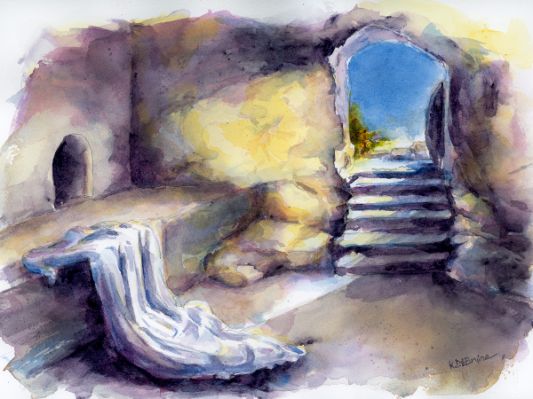
In the gospel passage, we are told that Mary of Magdala rushed to inform Peter and John that the stone that sealed the tomb had been removed, thinking instinctively that somebody must have stolen the body of Jesus. Peter reportedly ran with John towards the tomb but we are not told anything of his thoughts and feelings after seeing the burial cloths, the cloth that covered Jesus’ face and the empty tomb. Mary Magdalene, Peter and practically all the other disciples, except perhaps John, shared the same fear that their enemies had only added insult to injury by taking the remains of Jesus. To them, the empty tomb was an overwhelming proof of their loss and defeat. The prospect of the resurrection was far from their minds.  

Our reaction would have been no different from theirs, had we found ourselves in their shoes. We tend to have difficulties seeing anything good emerging from the most devastating situations (like these days of the pandemic). Our biases are like scales that cover our eyes. Our hurts and traumas, like a cloud that descends upon us. In both instances, our vision is obscured and we do not see beyond our pain or our judgments.  It is then that we pout, sulk, complain, get angry and despair. We sometimes even convince others to commiserate with us and we just drag them to the depths we have already sunk ourselves in. Is this truly life’s reality? Of course not!  Consider that beyond the hindrances to our vision, the world continues to thrive under the loving hand of God!  Babies are born, flowers bloom, children laugh, the sun is shining… so many beginnings, so much beauty, so much life exists, sustaining the basic goodness in the world. Contrary to the law of social media saying if there’s no pic (meaning photo, or visual proof) it didn’t happen. This doesn’t mean goodness doesn’t exist if we don’t see it. God’s presence fills the world independent of our perception. Even more because of Jesus who has blessed every human experience through the incarnation, conquered sin and death, through His passion and resurrection. Even if we find ourselves shying away from this truth God’s love will eventually find us and revitalise us. Romans 8:38-39 assures us, “… neither death nor life, neither angels nor demons, neither the present nor the future, nor any powers, neither height nor depth, nor anything else in all creation, will be able to separate us from the love of God that is in Christ Jesus our Lord.” 

It takes pure FAITH to sense God’s presence in difficult moments. In various post-resurrection accounts, the disciples had a hard time recognising the Risen Jesus. In most instances, Jesus is only recognisable by faith. In this Sunday’s gospel passage, we are told that upon entering the empty tomb, the Beloved Disciple “saw and believed” (John 20:8). Although he may have lacked the solid understanding of the significance of Jesus’ passion and death, the text suggests that with the eyes of faith and love the Beloved Disciple sees clearly beyond the void of the empty tomb. Peter, too, eventually receives the grace to see the truth. In the First Reading, Peter gives a bold testimony for Jesus, declaring not only His works before the passion but the truth of His resurrection and the marvels He continued to work among them. (Acts 10:34, 37-43)

Psalm 33:5 reminds us that “the earth is full of the goodness of the Lord.” As followers of Jesus, our mandate is to see and believe with all our hearts that our broken world is imbued by the presence of the Risen Lord. It may be a struggle but we must choose to fix our gaze on Jesus and the hope He brings us, especially these days when our lives are marked by so much loss and our compounding problems paint a seemingly bleak future. We are called to be ambassadors of the Good News in our suffering world… to be the agents of our Lord, making known His promise, spreading His love, channelling His mercy. 

Brothers and sisters, allow Jesus to open the eyes of our faith (and of love) so as to help us see through our fears, our pain and suffering. May the light of the Risen Jesus illumine the darkness of our lives so we can see God’s love and mercy at work all around us. May we always recognise the Risen Christ in our midst that we may genuinely share in the Easter joy. Rejoice! The Lord is risen! Happy Easter!

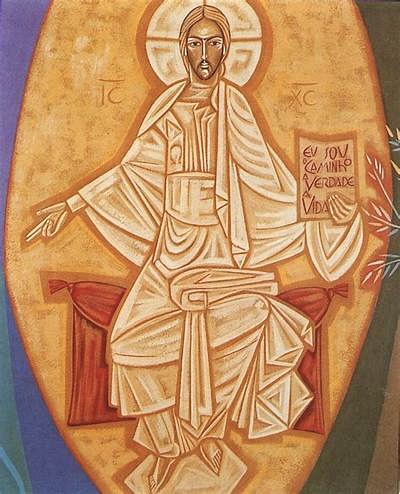
Artwork from krisdebruine.com

TGIGF: The Cross as God’s Gift of Self-giving Love

HOMILY: GOOD FRIDAY

John 18:1-19:42

2 April 2021 

Fr. Ricky C. Montanez, AA

What would break you? What would bring you to desperation? For some, severe physical torture is enough to make them lose their minds. For others emotional trauma like breaking up with a lover or the death of a loved one is enough to sink them into clinical depression. For others, mental stress due to overwhelming problems causes their body to break down and succumb to disease. How about you, how much suffering can you take? 

There is so much suffering in our world today. People are carrying all kinds of crosses these days — the crosses of job loss, sickness, hunger, uncertainty, death… On Twitter, I saw a tweet asking prayers for a boy whose older and younger siblings died within days of each other because they could not get medical attention. The surviving family is under quarantine and cannot attend to the remains of their loved ones. There was also a story of a young man who drove his ailing father to 11 hospitals from  Novaliches to Pampanga. They found a vacancy in Valenzuela but only received medical attention after a 12-hour wait. It would be no surprise if people asked, “Where is God in all this?” 

He is here suffering with us. This answer may be difficult to accept or comprehend when we too are undergoing fierce trials but it does not diminish this fundamental truth. Throughout His entire life and ministry, Jesus has shown an immense capacity for compassion towards all of humanity.  In its simplest definition, the word “compassion” means to ‘suffer with’. In His humanity, He knew what it was to feel hunger, thirst, and fatigue. Being the object of lies and hatred, He suffered mockery, betrayal, and loneliness.  He suffered more explicitly during the last hours of His life and yet love sustained Him through the ordeal. He was filled with so much love that there was more than enough for Him to give to those He encountered on the Via Dolorosa. Even with the weight of the cross on His shoulders, Jesus offers consolation to the women weeping at seeing His afflictions: “Daughters of Jerusalem, do not weep for me; weep for yourselves and for your children.” (Luke 23:28) Abandoned by friends, betrayed by one and denied by the other, mocked by soldiers, taunted and jeered at by the bystanders, Jesus still manages to extend forgiveness and care for others even in the darkest hours of His great agony on the cross. To those mocking and taunting Him, Jesus prays: “Forgive them Father they know not what they do.” (Luke 23:34). To the repentant thief, Jesus promises eternal life: “Today you will be with me in Paradise.” (Luke 23:43). To His beloved mother, feeling her pain, Jesus entrusts her to the care of a good friend: “Woman, behold, your son. Behold, your mother.” (John 19:26-27). Only when all things have been accomplished does He hand over His spirit to the Father. As the Suffering Servant of the Lord,  “[Jesus] was pierced for our offences, crushed for our sins; upon him was the chastisement that makes us whole, by his stripes we were healed.” (Isaiah 53:5)

The skeptics would say only God could have endured such suffering and mere mortals are incapable of looking beyond their ordeal. I beg to differ. Accompany me as I take you on the painful journey of this woman I came to know about. She came home on the evening of March 17 to find her child frantically assisting her husband who had vomited  fresh blood. They called the emergency hotline and in the course of the standard interview, was told by the operator “Ma’am, considered COVID case na yan. Find a hospital that will accept him and then we will send the ambulance.” She begged them to come and give first aid while her friend phoned hospitals looking for a vacancy. The medics came at midnight to give first aid but had to leave after. The whole night, the small family held hands and prayed through tears for a miracle. By morning a hospital agreed to take him so the ambulance returned at noon to transport him. When they got to the hospital, doctors were waiting at the ER entrance, not to accept them but to reject them on the premise that their COVID facility was already full. They brought him to another hospital that agreed to take him. He was given a broken wheelchair to sit on so the woman cradled her husband’s head and prayed.  Through the 5-hour wait, patients begun to pity them as doctors and nurses labeled as heroes of the pandemic, ignored her pleas for help. When they finally attended to him she was told to sign a waiver indemnifying the hospital for the outcome of the treatment. Desperate, she signed it against her better judgment. She embraced her husband tightly, asked him to be strong and to trust in the Lord. She told him she loved him and that she and their child would be waiting for him. As he disappeared from view she offered up all their suffering and entrusted him to God. She went home to attend to her child and packed some things. It had been 24 hours. She had not slept or eaten but she rushed back to the hospital. There was no word from the medical staff so she waited patiently, praying fervently for another 6 hours till she dozed off. An hour later she was roused by a doctor informing her that her husband’s heart had stopped and they were doing CPR. They sought permission to intubate him. But it was too late. On March 19, after their 33-hour ordeal, he died in the ER. She did not throw a fit or lose her mind but went home brokenhearted and defeated.  These days she asks people to pray for the Philippines and our hospitals because many people are suffering the same fate. 

Admit it, if we were in her shoes we would have moved heaven and earth, used all our connections to get immediate help. We would not have endured the long wait. We would have yelled and threatened the medical staff — no longer heroes in our eyes but villains. And when all our efforts would be in vain, we may even find ourselves denouncing God in our hurt and anger. How did she find the strength? Like Jesus, it was love that sustained her. Her faith in God’s mercy was so strong that she abandoned her life and her family to Him. Her story tells us that humanity is not lost. Evil and suffering will have no hold over us if we cling to Christ and bravely tread the path He leads us on, no matter how difficult. In Jesus we find hope and meaning in the cross.  We are invited to become fellow cross-bearers of Christ. We not only bear our own crosses but share in the suffering of others; united with the passion of Jesus (paschal mystery), our acts of compassion assure our brothers and sisters of God’s great love for them and the promise of redemption. This is what it means to be a follower of Christ. This is how we glorify God in our lives.

As Christians, we have the strength to say TGIGF! Thank God it’s “Good Friday”. We give thanks for this day we call ‘Good” in remembrance of God’s profound love for us through the passion of Jesus Christ. We reflect on how God in the person of Jesus has fully entered into our suffering, including death itself through the passion and crucifixion. As the Letter to the Hebrews boldly proclaims: “For we do not have a high priest who is unable to sympathise with our weaknesses, but one who has similarly been tested in every way, yet without sin.” (Hebrews 4:15) Jesus knows and understands our pain when we suffer. He suffered far more than what we can bear. He knows our fear and anxiety when faced with death but He does not condemn us for it but instead promises that if we endure, He will be with us to strengthen us. Today is a privileged moment.  TGIGF! On this day, Jesus our Lord, suffered and died for all of us in a perfect act of self-giving love. For that we must always be grateful. If we have the love of God, nothing can ever break us.

Our Christian Role on the Stage of Life

Homily: Palm Sunday of the Passion of the Lord  (B)

Mark 11:1-10 / Mark 14:1-15:47

28 March 2021 

Fr. Ricky C. Montanez, AA

In today’s liturgy, the story of the Passion of Jesus is read dramatically, with some people in the assembly taking on various roles: the narrator, Jesus, Pilate, the apostles, some minor characters and the crowd. Among these roles, I feel the most challenging is the part of the “CROWD” which is often assigned to the rest of the congregation. I have always found it awkward to have to say the lines and capture the irony in the crowd’s response towards Jesus as presented in the two gospels proclaimed in this Sunday’s liturgy. The crowd in the narratives that greet Jesus with joyful shouting: “Hosanna!” (meaning “Save us, we pray!”) “Blessed is He who comes in the name of the Lord!” (Psalm 118: 26), are the very same people who would later demand Jesus’ death, preferring to save a vicious thug and murderer over Jesus crying out: “Crucify him!” (Mark 15:13).

In the passion narrative, Jesus knew Judas was going to betray Him, maybe even before Judas did. “Amen I say to you, one of you will betray me, one who is eating with me.” (Mark 14:18) Remember that Judas had free will and it was his willful decision to conspire with the high priests but he could have also chosen to abort his plans. But he didn’t. The development of his character in the company of Jesus skewed his tendencies and veered him from the path Jesus was showing them. Perhaps, we can say, that Judas disagreed with Jesus’ plan and opted to take matters into his own hands.  Whether it was intended to save Jesus or deliberately eliminate Him, we do not know. Nonetheless, in John’s Gospel Jesus seems to imply that the betrayal was a necessary first step to His glorification. We read there that as soon as Judas leaves, Jesus says, “Now is the Son of Man glorified.” (John 13:31) Judas’ terrible act of betrayal sets into motion the events that led to the passion.  

Peter is another interesting character. Jesus knew that Peter’s faith would be shaken just like the rest of the Twelve and that eventually he would deny Him. “Amen, I say to you, this very night before the cock crows twice you will deny me three times.”  (Mark 14:30) Peter vehemently objects saying: “Even though I should die with you, I will not deny you.” (Mark 14:31) We all know how Peter’s story ends and how he eventually dies for Christ in an equally gruesome crucifixion but he lives many years before that as he still had much to accomplish to continue the work of Jesus. Judas’ betrayal, Peter’s denial, the abandonment of the rest of the Twelve and what He had to go through in His passion and death were ugly and unpleasant events but they were necessary to bring about the desired outcome. We recall what Jesus taught about “the Son of Man who must suffer many things and be rejected by the elders, the chief priests and the teachers of the law, and that he must be killed and after three days rise again.” (Mark 8:31). Jesus knew what He had to undergo in order to be glorified by the Father. 

As we enter more deeply into the story of the Passion of Jesus at the start of the Holy Week, we are invited to look closely at the complex reality of human life and human relationships through the choices and interactions of the characters in the drama. Life is almost like a stage play with each of us playing vital roles in the continuing story of human salvation. The script, in this case is unfinished and continues to evolve with the passage of time driven by the exit of players and the introduction of new characters through the generations. Our faith compels us to trust that our presence is of value because God, our Creator, who knows us before we are born, has a purpose for each one of us. He knows who we are and what we are all capable of since He designed us and gifted us with our unique talents.

The human drama of life and the choices made by all its characters continue to puzzle us. In the Act of the play where we must live out the COVID 19 pandemic, it is easy to label persons as “incorrigible”, “wicked” and “evil”, because we observe them to have made such poor choices or to exhibit bad behaviour. We must constantly remind ourselves that each one of us has indeed a vital role to play in God’s unfolding plan for us. Like the antagonists in the passion story, where they commit their wrong-doings, failings, poor and critical judgments, God is still there, bringing about or ushering in a greater good. Ironically, in Mark’s passion narrative it is from the enemies and foreigners that we come to understand who Jesus is and what His purpose is for humanity. The high priest asks Jesus if He is “the Christ, the Son of the Blessed One.” (Mark 14:61) Pilate condemns Jesus because He is the “King of the Jews”. Then, there is the Roman centurion who confesses that Jesus… “This man is truly the Son of God.” (Mark 15:39)

When I think of the people who get on my nerves, I would still like to believe that there is a purpose why they are part of the unfolding twists and turns of our human lives. Through them, we are made to realise how important it is to be discerning of our choices and actions in life. In all humility, we must acknowledge that we, too have played both sides at some point.  We, too, are constantly faced with the choice to be either protagonists or antagonists in the human drama. Also of importance is realising that coming to a fuller appreciation of the unique roles we play in the story of humanity is a lifetime process. As long as we live our characters, we have a chance to change, develop and improve. Inevitably, the characters in the human drama simply change over time as people die and are born but the story of salvation continues. This is not to say that we are God’s puppets or this happens for His entertainment. God is not self-serving nor selfish. We have free will so our roles are not completely defined and the script is always in flux, developing as the story unfolds, revealing surprise twists with every unexpected interactions of the characters. This being said, we cannot judge someone to be villain or hero until his/her story is truly over. As long as the story continues, we as characters can always find redemption. Perhaps, this is a worthwhile prayer — that those who choose to be the villains in this human drama called life may have that moment of conversion.

“All the world’s a stage, and all men and women merely players; they have their exits and their entrances, and one man in his time plays many parts…” So goes the opening line in William Shakespeare’s play, As You Like It. We all have a role to play in life. But we have the choice how to play our part. As long as we breathe there will always be a part of us who can either shout “Hosanna!” or “Crucify Him!” over the many circumstances by which Christ presently makes Himself manifest. Let us be patient with one another and suspend judgments over each one’s character. After all, we are all created by God in His great love. We all have the potential to be the hero that bears witness to Christ and ensures that His saving love is a constant element in the drama of our broken humanity.

Dying to Ourselves for Others

Homily: Fifth Sunday of Lent (B)

John 12:20-33

21 March 2021

Fr. Ricky C. Montanez 

Eula is a mom with 2 young kids and a third on the way. Due to the pandemic she has had to live where she works 15 days each month. That’s 15 days where she cannot care for her children. Noel’s income was sufficient for his stay at home wife and their kids. When the health crisis happened he had to take a huge pay cut at work. His wife had to take on “sidelines” to augment the family income while also attending to the children. Giovanni can barely take time off since the reduction of personnel requires him to work longer hours. He was unable to spend Christmas and New Year with his family and he had to miss the birthdays of his loved ones in 2020 because he was on duty. These are stories of real people who have been living a life of sacrifice in the past year. They are members of Christ the King’s parish staff.  Although I’ve shared with you just 3 stories, all of them have personal struggles intensified by this pandemic year.  They’ve all had to adjust their personal comforts and put on hold life goals so they may continue their work of ensuring all of us have a safe place to worship God and receive the sacraments. 


In today’s Gospel Jesus talks about the supreme sacrifice He must make in order to restore us to the right and most fitting relationship with God. He describes His self-offering through the metaphor of the grain of wheat that dies so as to bring forth much fruit. Just like the grain of wheat that needs to be buried in the earth to produce new wheat in abundance, Jesus will offer his life as a ransom for many.

The prospect of suffering and dying was not easy for Jesus. It is his humanity that prods Jesus to disclose… “I am troubled now.” Making sacrifices did not come any easier to Him than it does to us. He felt pain and discomfort and fatigue the same way we do. This struggle of Jesus is very much evident in His agony in the Garden  where He prays: “My Father! If it is possible, let this cup pass from Me. Yet not as I will, but as You will.” What makes Jesus different was His total willingness to undergo all that suffering for love of humankind and in fulfillment of His Father’s plan. The Letter to the Hebrews tells us that although Jesus was Son, “he learned obedience from what He suffered”, and as a result, “He was made perfect and became the source of eternal salvation for all.” 

Similarly we, too have “to die” to ourselves in order to become followers of Jesus and be a source of life for others. Put differently, we must lose our life in order to find it. This is to say that our life as Christians is not without a cost. Our human instinct would always tell us to avoid death and to cling to life…. to prefer self-preservation over self-sacrifice. But Jesus teaches us that to become His faithful followers we should not hesitate to hand over our life in the service of others, by putting other’s needs before our own, and by becoming more and more other-centered individuals. St. Ignatius of Loyola describes it best as being a “Man (or woman) for others”. St Joseph, whose solemnity we just celebrated last Friday had many experiences of “dying to himself” in loving service of God and others. He took the pregnant Mary as his wife despite the gossip of their community; he led his family safely on lengthy journeys on the basis of divine instructions received in his dreams; he struggled to make a living in a foreign land (Egypt) to provide his young wife and a baby that was not his own but merely entrusted to his care. He does not run away like Jonah.  He doesn’t throw in the towel when things didn’t immediately make sense or the task was daunting.  He did what was necessary, motivated by his trust in God and his love for Mary and Jesus.  The Christian life is a process of growing into dying and rising. When we make our choice to say “yes” to Jesus, we are telling the world that  we want to be better versions of ourselves even if it means having to suffer difficulty, swallow our pride, and be subject to humiliation. 


For over a year already, we all have been compelled to make sacrifices because of the global health crisis. We’ve all had to give up something we value for the sake of others. Our medical frontliners have had to give up being in the safety of their homes with their family so they could care for the sick in the hospitals and emergency rooms. Others make sacrifices so they could make substantial donations to the needy. And there are those who have sacrificed their own comforts to be able to earn a living for their family.  The fact that we must bear the discomfort of wearing masks and face shields, douse ourselves with disinfectants and distance ourselves from relatives and friends we have grown accustomed to hugging and “beso-beso” —those are sacrifices not only to ensure we don’t get the virus but to protect others from an inadvertent spread of the virus. The struggle is far from over as 8,000 new cases were recorded yesterday (the highest we’ve had in a day since the lockdown) and is predicted to increase to 11,000 by the end of the month. The surge may be (I’m not saying it’s the only reason!) due to those among us who have had a bad case of “pandemic fatigue” and have been less willing to make these personal sacrifices and have been remiss in the proper use of masks, shields, and disinfectants, and who believe it safe to gather again with friends and family. We badly need a more immediate, decisive and proactive response to our present predicament. This is an urgent call for everyone from our leaders down to every Filipino to always bear in mind the common good, even if it means having to step down from positions of responsibility and handing over the reins to those more capable and willing.

 
Suffering is part of the human existence. Jesus felt it because he was human. It is however by his divinity that he elevates such painful experiences into moments of sanctification and doors for transformation. If you think of what Jesus suffered for us, our own sacrifices pale in comparison. 

Through our acts of serving others, of dying to ourselves for the good of others, Jesus allows us to transcend the limits of our individual existence. As we persevere with courage and hope and remain grounded in faith as we follow   Christ, we must trust that our road does not  end in tragedy at Calvary but in His love and mercy, Jesus also leads us on the road to glory — a life filled with the wonders, riches and marvels of our loving and merciful God!

Blessed Beyond Measure

Homily: Fourth Sunday of Lent (B)

John 3:14-21

14 March 2021

Fr. Ricky C. Montanez 

One time in London, as I was greeting people on their way out of the parish church after Sunday mass, I overheard a young girl ask her mum as they prayed before the crucifix near the exit door: “Does it have to be this way? Does Jesus’ suffering on the cross have to be overly exaggerated, bloody, agonizing and violent?” I could sense the panic in the mother’s voice as she tried her best to respond to her 8-year-old’s question. She told her in the most general way that this is so, so that we — all of us —- will realise how tremendously loved we are by God through the very sacrifice of Jesus on the cross.  It shows how God has been extremely merciful to us sinners that He did not spare His only Son out of His great love for us. 

In our readings this Sunday, we are presented with how our God has consistently reached out to us in mercy, summoning us to return to Him. In the First Reading, the Chronicler recounts Israel’s infidelity to God and their hard-heartedness to heed His call of repentance. Out of compassion for His people, God continuously sent messengers and prophets but they persisted in their evil ways. This obstinacy eventually led to the destruction of the Temple and their exile in Babylon. Nevertheless, God persisted in pouring out His mercy on His Chosen People delivering them through an unlikely agent of His divine mercy in the person of Cyrus, the foreign king who allowed God’s people to return to their homeland and rebuild the Temple. Paul, in the reading from Ephesians describes God as “rich in mercy” (Ephesians 2:4). This merciful love of God is described so strongly as bringing us to life “when we were dead in our transgressions”  (Ephesians 2:5). We are recipients of this divine favour by no merit of our own, but by the graciousness of God. In the Gospel we find the fascinating dialogue of Jesus and Nicodemus that gives the best summary of the Good News: “For God so loved the world that He gave His only Son, so that everyone who believes in Him might not perish, but might have eternal life.” (John 3:16) This verse stresses what is at the heart of our Christian faith — the profound reality of God’s love, powerfully expressed in the very offering of Jesus’ life on the cross. In Jesus, God holds nothing back. God gives His only begotten Son, whom He loves so much and takes much pleasure in, to give us the chance to be reconciled to Him and be led to fullness of life. The cross of Jesus, is the ultimate sign of how far God will go to embrace us, no matter how sinful we have become. We are blessed beyond any measure by God’s merciful love. 

The Bible holds many accounts of how much God loves humankind. The Old Testament has recurring stories of how the Chosen People betrayed their covenant with God and yet God showed them mercy. Adam and Eve were not destroyed. Noah and his family were promised that never again would the earth be destroyed by flood. The descendants of Israel delivered from slavery in Egypt, were given the Promised Land to prosper and call their own.  Throughout their history of being conquered and led into exile, God always gave them moments of hope and deliverance. In the New Testament we have the story of the Prodigal Son wherein the Father exudes unfathomable love and forgiveness for the wayward boy. In fact, the entire New Testament is the story of the fruition of God’s promise of deliverance and mercy and His plan to be fully reconciled with His people. 

Today, we have many images of God’s love and mercy. There is the Sacred Heart of Jesus that is aflame with love for us. The image of the Divine Mercy that assures us, there is no sin that God cannot forgive, even at the very moment of death, once laid at the feet of His divine mercy. When we receive the sacraments, we benefit from God’s love and mercy. Pope Francis tweeted today that going to the Sacrament of Reconciliation is “abandoning ourself to God’s love.” God loves us so much that there is no place He cannot go to find us and reach us in His mercy. 

Is it enough for us to receive God’s love and mercy and not share it? We are invited to do more than rejoice in God’s infinite mercy for us. We are called to imitate God in His merciful love in our dealings with one another. Last Sunday, we talked about anger as a normal human reaction. This week, we acknowledge how our humanity leads us to take revenge, to hold grudges, to harbour anger toward those who have offended us. Is it easy to forgive? Not all the time. Not when the harm done to us cuts us at our core. I’m sure you’ve heard utterances such as “That is unforgivable.” or “Walang kapatawaran ang nagawa nya.”  These are not just lines in drama specials. These are actual words of real people who have been deeply hurt. There is even a poster on social media that says “a single moment of misunderstanding is so poisonous that it makes us forget the hundreds of lovable moments spent together within a minute.” It’s true. Sometimes it seems so difficult, even impossible to forgive. Yet our Lord Jesus teaches us that we need not be slaves to our human tendencies. There is a higher road. We recall the words of Jesus to Peter that we are to forgive “not only seven times but seventy times seven times” (Matthew 18:22). In the Lord’s Prayer, Jesus urges us to ask God to… “Forgive us our trespasses as we forgive those who trespass against us.” (Matthew 6:12) Forgiveness is an act of the Divine. In imitating God’s mercy, we claim our connection with Him, who is our Father. We allow Him to elevate us to beings greater than ourselves. 

There are many stories about unbelievable acts of forgiveness. There is a story of a mother who frequented a prison to visit the hardened killer of her son.  When he asked why she bothered to show him kindness and compassion, she said since he had taken her son from her, she would treat  him as her own child. He would take her  son’s place in her life. The love and concern, meant for her son which she channelled to this man in prison, rehabilitated him. He was released early for good conduct and he did not waste his second chance at life. A few days ago, I came across this article on Pope Francis’ trip to Iraq. He visited the ruins of a church that was bombed by ISIS and was so moved by the testimony of Doha Sabah Abdallah, a mother whose son and nephew were killed in the attack.  She pardoned those who killed her child saying, “We, the survivors, [must] try to forgive the aggressor, because our Master Jesus has forgiven His executioners. By imitating Him in our sufferings, we testify that love is stronger than everything.” 

During these uncertain times, forgiveness seems to be vital. We have never been so aware of the fragility of human life. People can die anytime. Let us not hold grudges then. Be generous with our forgiveness and do not be afraid to seek it from those we may have offended.  Let us be living witnesses of God’s merciful love to a broken humanity.  Let us rejoice on this Laetare Sunday at how greatly loved we are by God whose love is everlasting and pray that we might become the visible sign of God’s mercy and help bring peace and healing in the world.

Artwork by Arcabas

Getting Angry for the Right Reasons

Homily: Third Sunday of Lent (B)

John 2:13-25

7 March 2021

Fr. Ricky C. Montanez

There is an intriguing mural by Alfonso Ossorio in the St. Joseph the Worker Chapel, popularly known to many as the Church of the Angry Jesus in the Victorias Milling Company in Victorias City, Negros Occidental. The image which the artist calls the Christ of the Last Judgment depicts a frowning Christ with a flaming heart. For many of us who have always thought of Jesus as gentle and merciful, a frowning Jesus is hardly appealing.  I showed a photo of the mural to a friend and she commented: “Scary! I wouldn’t want to get on His bad side.” 

This outburst of Jesus in today’s gospel is so out of character for Him who is rarely portrayed as angry by the evangelists. The Jesus we come to know in the Gospels is one who is always welcoming, patient and compassionate towards sinners. As a healer, He attended to those who were sick with special attention and care. He felt pity for the crowd who were like sheep without a shepherd, so He would feed them not only spiritually but physically as well. As a teacher, Jesus rarely lost His patience with His disciples who often disappointed Him by failing to understand what He was trying to teach them. Most of the time, He would respond calmly to His adversaries when He knew that they were trying to trap Him. Even at the cross where He suffered excruciating agony, He still prayed for forgiveness for all those who wanted Him dead.  Jesus’ display of frustration and anger described in today’s Gospel passage disrupts our overly-tamed image of Christ. There is however more than meets the eye. 

First of all, there was a valid reason for His anger. In the Gospel, Jesus makes it quite clear why He was seething with anger at those sellers and money changers in the Temple. “Stop making my Father’s house a marketplace.” (John 2:16) As one commentator puts it: “The space that was meant to be reserved for being with God, for encountering God, had been repurposed for carrying out the letter of the law (through sacrifice).” As the Son of God, He had the right to drive out the people desecrating the Temple area. The Jews were the Chosen People, but they had forgotten their responsibility to keep the commandment of God. They were given the Law as a gift, described by the Psalm 19:10 as “more precious than a heap of purest gold and sweeter than honey from the comb”. Such a covenantal gift was meant to draw them closer to God. Instead, they repeatedly failed to be faithful to Him and His commands. 

Secondly, you may be asking yourself if it was necessary for Jesus to express this righteous indignation in such a violent manner?  In the Old Testament, such disrespect would easily merit the wrath of God and as we know, that can be devastating…. Recall Sodom and Gomorrah and the Great Flood of Noah’s time. Jesus is God. And He was angry at what they had done but He did not make fire and brimstone rain on them. Instead, He made a bold statement by means of His actions to a people who were calloused and self-absorbed. The last lines of this Sunday’s Gospel passage say it all: “But Jesus would not trust himself to them because He knew them all, and did not need anyone to testify about human nature. He himself understood it well.”  (John 2:24-25) We take note that all throughout the Gospel of John, Jesus tried to convince His adversaries that He indeed is the One sent by God. In today’s passage the Jews asked Him: “What sign can you show us for doing this?” (John 2:18) Jesus had performed many signs but His adversaries had remained unbelieving. No amount of arguments or reasonable engagement would have convinced them of Jesus’ divine identity. This display of anger was a dramatic demonstration by Jesus to bring home His point. It was something they could understand. Some of us do learn the hard way! 

What does Jesus’ response teach us about anger? Anger is a human emotion and Jesus being fully human, knew how it was to be angry. This story must however not be used to justify our own outbursts ignited by affronts to our pride or differences in ideologies. We are far from having achieved spiritual perfection like Jesus, so our anger can be motivated by our self-righteousness and bitterness. It is clear from the story that Jesus was so irate at the merchants in the Temple because of His “zeal for the house of the Lord” (Psalm 69:9 / John 2:17) — His desire for true worship among God’s people. It was not an anger borne out of petty or trivial disagreements or differences of opinions but a righteous anger, that is, being angry for the right reasons. By driving out the merchants and the money changers from the Temple, Jesus wanted God’s people to keep in mind what ought to be their priority: a faithful relationship with God and a just relationship with one another. We recall that this is how Jesus summarises the Law of the Lord — love of God and love of neighbour. 

These days, people are easily angered by injustices — perceived and legitimate. Watching the local news, one wonders if people still live in fear of God? (“Parang wala nang sinasanto! Wala na bang takot sa Diyos?”)  In turn, people express and encourage anger through social media.  This arena easily gives one the sense of having power and influence when you are able to rally people to your cause or you find like-minded people online. According to an article I read, “Anger is the most influential emotion online inciting more responses than other sentiments such as joy or sadness.” Some say that online ranting may have cathartic value; others disagree because they have observed that it only worsens a situation. Rants often fail to obtain resolution for the problems (especially in the case of anonymous rants) but venting one’s emotions generates further negativity as hurtful comments affect all those who read them online.   For example, the national election next year is becoming a hot topic on Twitter. Many people have been hurling hurtful words to different opposing groups, possible candidates and supporters. Sadly, mudslinging does not raise the level of discourse needed for our fellow countrymen to be more discerning of their choice of leaders for our country. Rather than participate in this cycle of hate, wouldn’t it be best if we made sure to register and actually vote for worthy candidates in the National Elections in May 2022? 

It is  human to be angry. Life is not perfect. We are not perfect. We won’t always see eye to eye. But there are things, ideals we must uphold and protect. Values such as those taught to us by Jesus that are meant to uplift us and allow us to live harmoniously with God and with each other. When these things are challenged, let our anger lead us to restore things to order and not just seek to destroy people and relationships. The next time you feel anger, ask yourself “Will my anger make the situation better or worse? Am I acting out of love for the other or for myself? Can I be held accountable for the consequences of my actions?” May God fill our hearts with discernment and compassion that we may know how best to channel our anger.

Transfiguration Moments… An Assurance in Life’s Dark Days

Homily: Second Sunday of Lent (B)

28 February 2021 

Mark 9:2-10

Fr. Ricky C. Montanez, AA

A good friend who likes K-Drama (more than me, of course) avoids watching an ongoing series because she hates waiting for the new episode to be aired each week. I also realised that the other reason why she waits for the series to be completed before watching it is because she has the habit of skipping half-way through the series to the ending when the plot becomes so emotionally-charged for her to handle. This may not be an ideal way of watching a good series but instead of making her lose interest in the show, she says knowing the ending gives her the proper perspective and motivates her to go back and watch the rest of the episodes she skipped. 

In today’s Gospel from Mark relating the Transfiguration of Jesus, three of the disciples (Peter, James and John) are given a glimpse of Jesus’ future glory. We note that prior to this glorious event as narrated in Mark’s Gospel, Jesus has told His disciples of the suffering and death that awaited Him in the hands of the elders, the chief priests and the teachers of the law in Jerusalem. (Mark 8:31) This prediction of Jesus about His suffering greatly distressed the disciples. They had been hoping for the Messiah to establish an earthly kingdom, to subdue all their enemies and to set up a triumphant kingdom for God’s chosen people.  It was with this frame of mind that Peter, James and John — Jesus’ innermost circle of friends — were allowed to witness the Transfiguration. This was meant to strengthen, encourage and assure them as they faced the dark days of suffering, beginning with the experience of being with Jesus throughout His Agony in the Garden. It obviously made no sense to them at that time. The dazzling light and the vision of Moses and Elijah, who were practically legendary heroes in early Judaism, overwhelmed and frightened them and they instinctively wanted to build tents to honour them. Some scholars say they were tempted to remain on the mountain hoping the glorious experience would never end or perhaps, if they remained they could experience it again and keep reliving that special moment. Who wouldn’t want to be on a constant natural high, to always feel special, blessed and invincible? Jesus, however, led them back down the mountain to face the days ahead. 

We, too can get discouraged and depressed when our life is making no sense.  Abraham in the First Reading was so broken-hearted when God had asked him to sacrifice the son he loved so much and waited so long for as proof of his love and loyalty. Luckily for Abraham, the story ends well and his son is spared. For some of us, the story does end in tragedy. During these uncertain times, it is easy to question God. Why do we have to lose our jobs? Why must we go hungry? Why must our loved ones get sick?  Why must we suffer?  I think of those who lost their loved ones so suddenly to Covid during the lockdowns. Many of them did not even have the chance to spend time with them in the hospital to care for them personally as they fought a losing battle with the virus in hospital ICUs… Many of them, I am certain, questioned their faith, and pondered the point of these senseless deaths and wondered what will become of their existence. 

Other times we also find ourselves overwhelmed by the reality of the crosses we have to carry in our lives especially when all our suffering seems to be never ending. A friend of mine recounted their family’s experience in caring for her father who was sick a long time. The hospital confinements, the periodic check-ups, the experimental treatments took a toll on their family — physically, emotionally and financially. It also changed the temperament of her father who used to be mild-mannered, funny, and ever optimistic. It turned him into an irate and difficult patient. Just as Jesus allowed his friends to witness his future glory, my friend believes God gave her a way to get through the hardship.  When things got so tough for them, she would think of the fantastic vacations God had blessed them with before her father’s illness got worse. She recounts those trips when her family was happy and her dad seemed strong.  She recalls not wanting to come home at all from the holidays to another round of treatments and hospital confinements. Her father died within a year, and the family was devastated.  It was by far, the heaviest cross their family had to bear.  By God’s grace, they have found healing.

We all have crosses to carry, some heavier than others. Jesus also had to bear a heavy cross and endure sufferings that He did not deserve.  However, He went through them willingly because of love — love for us.  When life presents us with painful and trying moments, we are invited to look to Jesus Christ, who faced His own passion and death serenely with the assurance of the Father’s protection and vindication for Him.   God’s assurance of His love for us is the fact that He gave His only Son for our sake.  Jesus His Son, takes it a step further and completes His mission to save us by His passion and death. John 15:13 says: “No one has greater love than this, to lay down one’s life for one’s friends.” God’s infinite love for us should encourage us to persevere in moments of terrible tests of our faith.  This is how St. Paul encourages the newly-converted Christians of Rome when he asks in today’s Second Reading… “If God is for us, who can be against us? He who did not spare His own Son but handed Him over for us all, how will He not also give us everything else along with Him?”  This created an unshakable confidence in God’s faithful love which sustained the early Christians through terrible persecutions and emboldened them to face even death for the sake of their faith in Christ. Isn’t this love that is worth dying for, more than enough of a guarantee to prod us on and persevere through our own struggles in life? 

I read somewhere that we must “trust the process”. Life is a process. It is not some static, constant experience of pure joy or continuous suffering. All the wonderful experiences of life coupled with all the trials are meant to make us the best versions of ourselves and allow us to help one another manoeuvre through the complexities and sensitivities of being alive. If anything, the Transfiguration story teaches us, it is not to fear.  We are never alone in life because God is always with us guiding us, protecting us, and lifting us up when we are down. We must recognize all the glorious moments he sends to energize and encourage us. Thereafter, we must endeavour to go back down the mountain and live our life. 

In the face of the many challenges we contend with these days, let us firmly trust that God is always with us. May we hold on to this hope of our future glory so that we may not escape our share in the sufferings of Christ but rather keep on going towards the heavenly inheritance to which we have all become sharers of in Christ Jesus.

Artwork by Bro. Blair Paulus C. Nuyda, AA

When Armed with Prayer

Homily: First Sunday of Lent (B)

21 February 2021 

Mark 1:12-15

Fr. Ricky C. Montanez

According to statistical data, roughly a tenth of the country’s population, an estimated 10 million Filipinos, are working abroad for the promise of higher wages.  Although they find better opportunities for themselves and for their families back home, being an overseas worker is never easy. Life has even become more difficult for many of them due to this global health crisis. A good number of them have had pay cuts, lost their jobs altogether or are barely surviving while waiting to be repatriated.  The Covid 19 pandemic has turned our “modern-day heroes” (mga bagong bayani) into “hurting heroes”. 

Among the many challenges that our kababayans (fellow Filipinos) have to deal with include the homesickness and loneliness brought about by being far from one’s family and country of origin.  When overcoming difficulties, the presence and support of loved ones and the familiarity and comfort of one’s environment are huge factors.  Sadly, there are some who fail to cope with the loneliness and this eventually becomes the source of temptation for many of them to enter into complicated extramarital relationships. Hence, it is not surprising to hear a lot of stories involving women finding another man or men finding another woman abroad despite the fact that they are already married in the Philippines. The challenge to remain faithful to one’s spouse is also true to the husband or wife left behind in this country. On this National Migrants’ Sunday, we are reminded of the need to really pray for Overseas Filipino Workers (OFWs)and support them because life is not all easy for them as they constantly have to contend with temptations especially with remaining faithful to their promises. 

For us, too, the battle against evil never stops. It is a constant struggle as we try to remain faithful followers of Jesus. As temptation is a universal human experience for our fallen nature, every person finds himself or herself being lured to turn his or her back on God. In the Gospel, we hear the familiar drama of Jesus being tempted by Satan. Although the temptation account in the Gospel of Mark is quite succinct compared to the accounts of Luke and Matthew, it speaks in brief terms of this spiritual conflict — this all too human struggle between right and wrong, between fidelity and disobedience to our relationship with God. In Luke and Matthew, the specifics of Jesus’ temptation were identified as the temptation to power, domination and possessions. But the text suggests that it was not just a passing temptation at a singular, given moment. They were temptations that Jesus had to overcome all through His earthly life. We note the presence both of the “wild beasts” and “the angels who were ministering to Jesus” in the wilderness in today’s Gospel. That is to say that the challenge to be faithful to the Father’s will was a continuing struggle for Jesus. It would occur again and again at various stages in His life, right up to and especially at those last hours in the Garden of Gethsemane and on the Cross.  In His anguish in the Garden, Jesus cries out to the Father… “Abba!  Father! You can do anything. Take this cup of suffering away from me. But let your will be done rather than mine.” (Mark 14:36) How did Jesus overcome such temptation? Prayer! Jesus prays intensely and even urges Peter to pray… “Stay awake, and pray that you won’t be tempted. You want to do what is right, but you are weak.” (Mark 38:14) Note also that in the prayer Jesus Himself has taught us, He encourages us to seek the Father’s protection and assistance as we pray: “Do not lead us into temptation but deliver us from evil.”  (Matthew 6:13)

In varying forms, this temptation of Jesus can come into our lives too. We are all tempted to comfort, not the comfort that we all need to live a decent life, but those comforts borne out of our selfishness and over-indulgence. How often are we willing to properly queue instead of cutting ahead of the line or going through our “connections”? How many of us grow impatient and arrogant at being told to wait for our turn?  We, too are all tempted to success, to be ahead of the rest? At times we want it so badly, no matter what the cost. We hear of unscrupulous business practices where substandard ingredients or products are still sold to make profits despite dangers they pose to customers? Then we are all tempted to power — to be in control, to be in charge. Why do you think we have political dynasties or candidates killing each other over government positions? These are all tendencies, inclinations, and compulsions that we need to be aware of, that we need to overcome.  

The Lenten season is meant to help us control our propensity for selfishness and self- centeredness. It is a time of reflection and reassessment of the quality and direction of our lives. It is a time to re-examine our priorities. Lent is often described in the context of a struggle, where we are invited to recognize that life is very much a spiritual campaign, wrought with battles, and warfare.  We must learn to arm ourselves with the weapons of prayer and self-restraint. And to resist a basic temptation to believe that prayer is useless and that God is not listening. 

God always equips us with the strength to overcome temptation. 1 Corinthians 10:13 says: “No temptation has overtaken you except something common to mankind; and God is faithful, so He will not allow you to be tempted beyond what you are able, but with the temptation will provide the way of escape also, so that you will be able to endure it.” God never forsakes His children or those who call on Him in earnest. We shouldn’t doubt that God is always with us. God remains faithful to the covenant of love promised to Noah and all of creation in spite of human neglect and betrayal. Even in the desert, Jesus was not alone.  We are told that He was filled with the Holy Spirit. We trust that the Paraclete is also with us and we are not alone on our journeys. Let us make the most of this Lenten season — a truly sacred time — to nurture our spiritual growth and maturity and remain steadfast in faith despite any of life’s temptations.

Having A Heart for Others

Homily: Sixth Sunday in Ordinary Time

Mark 1:40-45

14 February 2021

Fr. Ricky C. Montanez 

A good friend of mine had the misfortune of contracting Covid. I had been so worried that when she informed me that she had recovered, I was so grateful to God for sparing her life. As she recounted to me her experience, she said that the fatigue, shortness of breath, loss of smell and taste, and the other physical struggles that Covid patients have to endure were nothing in comparison to the loneliness one feels in isolation.  That proved to be the greatest difficulty for her. She could barely cope with having to live apart from family and friends from whom she needed support and comfort during her Covid 19 journey. Thanks to modern means of communication she, just as many Covid patients, managed to stay in touch with family and friends and survive the desperation of living in complete isolation. Technology has truly played an important role in the lives of those rendered infirm by the  virus.  On one occasion I was even able to talk with a Covid patient and give a blessing through an audio call on Viber a few days before she died peacefully in the hospital.  

Isolation of the afflicted was common in ancient times and resurfaces through history when people are quick to fear what they cannot understand or control. In the 80’s, HIV positive people suffered such a stigma that even their loved ones were afraid to touch them. The late Princess Diana allowed herself to be filmed and photographed hugging children with AIDS in an attempt to correct the misconception that HIV was transmitted through touch. Today, the world knows how to treat HIV positive and AIDS patients with more understanding and compassion. From the Old Testament times well into the New Testament  days, those afflicted with leprosy found themselves in a more miserable lot since no cure was available for all forms of infectious and contagious diseases. They had to live in complete isolation from people and were treated as social outcasts. As you might know, any disease in those days was viewed as punishment for one’s sinfulness.  A leper not only deals with a disease that destroys his appearance, but he becomes a social outcast and is viewed as a sinful person. One suffers a spiritual crisis and a social stigma while bearing the physical and emotional burdens of illness.  To make things worse, one could not simply hide one’s self away to conceal one’s shame and deplorable state because it was a leper’s duty to call attention to himself when others were approaching so they could avoid them. They were practically the walking dead. 

This places into context how the healing of the leprous man by Jesus was truly an astounding miracle to the people of their day.  I read somewhere that rabbis claimed that the healing of leprosy was as difficult as the raising of the dead. This feat, as we know, is not beyond the power of Jesus, who, in some gospel accounts brought the dead back to life. It is no wonder why it was nearly impossible for the man to keep quiet about this extraordinary divine favour given to him by Jesus. He is able to integrate himself back into society as he goes around talking freely to others about what Jesus had miraculously done for him. In his mind, he was restored to his spiritual, physical and social wholeness. 

It is interesting to note that the leper asked Jesus to be made clean, not to be cured. (Mark 1:40) Recall that they must announce their presence shouting “unclean, unclean” (Leviticus 13:45) and not “leper, leper”.  By this act they even enable society that ostracizes them. The fact that he wants to be made clean implies that social and religious acceptability seems to be more important to him than physical healing. In the same way, recovered patients want to be healed from the stigma of having contracted the Covid 19 virus.  I am told they do not want to be identified as “Covid survivors” because the disease becomes the dominant description of their identity. They would rather be called “persons who survived Covid” so as to give more emphasis on who they are as persons and members of society more than being associated with a sickness they got. Nevertheless, with or without the threat of Covid 19 there are many among us who experience alienation and isolation due to the lack of fraternal charity on the part of others. There was a time when there was hardly a need for care homes for the aged. Now the elderly are realizing it is very hard to grow old when there is no one to take care of them, to visit them, or to simply make them feel they are not alone in carrying their personal crosses. I know of a parishioner of ours who was once what we would call a big shot. He was successful in his career, well connected, wealthy, and often the centre of attention in any gathering. When he retired, he got sick, his investments failed, and his wealth was depleted. Gone were the drivers and fancy cars, the personal chefs and numerous househelp. He and his wife had to manage on their own, and his children could not care for them exclusively as they would want to because they have their own families. Now that his wife has passed, he moved out of his big house and is living with relatives who care for him. He misses his old neighbours and friends and being able to come to Christ the King for masses. He is rather lonely and often longs for the good old days. 

In the Gospel, we are told that Jesus was moved with compassion upon seeing the man’s predicament. Jesus is not one to be repelled by human suffering. Jesus does not recoil, but rather embraces and shares the emotional turmoil and consoles those who are in despair. He would welcome and connect with all those who approach Him and with a mere touch could restore them back to wholeness allowing them to reincorporate themselves into the circle of their community. 

In the many battles we are facing at this time, more significantly the fight against Covid 19, we cannot afford to be complacent when we ourselves are safe and healthy,  if at the same time we are leaving the afflicted to feel alone and alienated.  There are many things we can do to offer support to those who are sick and to the families of those who are suffering. Pray for them! Remind them through your emotional presence that God is with them.  We need to have the same trust and confidence in the power and goodness of God that is at work in our everyday lives and constantly remind people of this. We simply have to open our eyes to His presence amidst our helplessness, our pain, our struggles. My friend who survived Covid said that it helped her a lot to know that her family and friends were all united in praying for her recovery. Indeed, the fraternal and prayerful support of the community had emboldened her and eased the burden of her suffering and loneliness such that she was able to endure her Covid 19 ordeal. 

“Be imitators of me, as I am of Christ.” (1 Corinthians 11:1) St. Paul’s words to the Corinthians challenge us to extend His compassionate hands to those in need. We persist in seeking this grace when we pray the  Oratio Imperata at every mass asking God to “Give us the grace in these trying times to work for the good of all and to help those in need. May our concern and compassion for each other see us through this crisis and lead us to conversion and holiness.”  God has blessed us so much that  we will always have something to contribute, if we only choose to do the work. In many instances, Jesus asks His disciples to pray for “labourers for His harvest” (Luke 10:2/ Matthew 9:38). All of us baptised are similarly called to be labourers in various ways — to be heralds and witnesses of the Good News of Christ in our own unique vocation within our families and communities.  Let us be inspired by St. Teresa of Avila who offers her own understanding of what it is to cooperate with God in His  continuing work of salvation when she said “Christ has no body now but yours, no hands, no feet on earth but yours.  Yours are the eyes with which He looks with compassion on this world. Christ has no body now on earth but yours.”  May God bless us all with a heart for others, courage to minister to them even in difficult times, and the creativity to work around all the limitations life presents to us because we are all in this together. 

Jesus Heals The Leper Painting from pixels.com

Resting in Prayer to Give More of Ourselves

Homily: Fifth Sunday in Ordinary Time (B)

Mark 1:29-39

7 February 2021 

Fr. Ricky C. Montanez

I feel time seems to be slipping by so quickly again. Since the easing of the lockdown many months ago, the days fly by surprisingly fast. We are anticipating the Lunar New Year on the 12th February and very soon we will commence the Lenten Season with Ash Wednesday on the 17th February. Now that more establishments are opening, public transport is resuming and people are getting used to pandemic living, we have a bit more freedom to go about our lives in society. Our days have become less routinary and boring than when we were on stricter quarantine restrictions at the start of the lockdown. Many of us have found more ways to keep ourselves busy. Those of us with the means and capacity to travel were even fortunate enough to do domestic travels during the holidays. Everyone is just craving even a little bit of normalcy in life  to get a break from the wearisome grind of life in quarantine. 

In this Sunday’s Gospel passage from Mark, we are shown what a day in the life of Jesus was like. Coming from His regular synagogue attendance, Jesus goes to visit Simon and Andrew’s home where He heals Simon’s ailing mother-in-law. He shares a meal with them but barely has time to enjoy a casual time with them because He resumes attending to the crowd of sick people seeking healing from Him.  Then the gospel recounts that before dawn Jesus goes off to a deserted place to spend some intimate time speaking with His Father in prayer. There seems to be no single dull moment in Jesus’ day. Jesus was very much occupied in giving Himself at the service of  people, bringing healing and wholeness into their lives. In all this, we do not see nor hear Jesus complain and groan about the task at hand despite the need at times to forego His own temporal needs for the sake of others. After His time teaching in the synagogue  where we are told in last week’s gospel, that He even cast out an unclean spirit from  a man, you can imagine that Jesus would have needed to rest. In fact, we can assume that is why He heads over to His friend’s house. If you visit Capernaum today, you can still see the foundations of the synagogue from Jesus’ time and it is just a stone’s throw from what is supposedly the house of Peter. That was the perfect place for Jesus to take a break. He ate there and might have wanted to take a little nap to get refreshed but chose instead to attend to others in need who had lined up outside the house like patients at a doctor’s clinic. 

Contrast this with the life of Job.  Job laments his own miserable life condition. He describes the human life as filled with drudgery. He feels trapped like a slave and is desperately bemoaning the futility of his existence.  He spends restless, sleepless nights thinking about the meaninglessness of the human condition. For Job each day simply drags on with no hope in sight. This is very sad indeed but no surprise considering he lost his wife, his children, his business, his possessions, his friends. He even fell sick and his whole body was covered with boils and sores!  Maybe during those moments of our lives when we suffered simultaneous losses or when none of the various aspects of our life seems to be going well, we would have identified with Job’s frustration with regard to finding meaning in our work, our various responsibilities, and even life, itself. Recall the days when you can’t seem to convince colleagues to be responsible in doing their share of the assigned tasks. Aren’t you tempted to be less motivated to do your work to the best of your abilities, doubting the real value of what you do? It has happened to me. At one point, my own frustrations even led me to consider leaving my vocation and just go back to teaching. I am grateful to the mercy of God and to the prayers of people who were aware of my plight, that I was able to overcome those difficulties. It is even worse when you simply do your work for the sake of money. It is true that many among us do not have the luxury of having our dream jobs or jobs we are passionate about, but we must strive to find meaning in what we do in order for us to do our job well and get some sense of fulfillment. 

In today’s gospel we are shown how much Jesus gives of Himself in a day. Working mothers will relate to such a busy lifestyle. They are busy with their jobs and careers all day, sometimes they must even do some of their work at home. Then they have meals to prepare, the house to maintain and the husband and children’s needs to attend to.  All that, every day through the work week! On the weekends the chores and errands are waiting to be done.  This is how Jesus lived everyday of His life — an emptying of Himself for others. There are two important details we need to draw from this — Jesus took the time to rest briefly and He took the time to pray. Despite His hectic days, Jesus would wake up early and go to a deserted place to pray. He simply didn’t alot the left over minutes of His day to prayer.  He really made time for this. These frequent moments of communion with the Father gave Him the guidance and inspiration to unreservedly attend to the needs of the people who come to Him for healing, wholeness and peace. Then for those of us who are always busy, we are reminded of the  importance of taking a break, of resting from what we are accustomed to do, to step back from the patterns we have set for ourselves. In life, taking a rest is needed not only to recharge ourselves but also to help us do our work well and to have a greater appreciation of what we do, especially when things become too routinary. We also have to always strike a balance between the needs of others and our own. 

When Fr. Jojo was still serving with us here at Christ the King, there was a running joke among the three of us, priests, concerning the long queues I get in the confessional. Actually, this was the reason why there was a bit of delay at the start of one our 6 pm anticipated Sunday masses last month. I jokingly say that I seem to be a magnet for sinners. “Maka-relate kasi sila sa akin na kapwa makasalanan.” Joking aside, hearing Confessions is probably the most taxing and draining of the sacraments for a priest to administer. People with spiritual and emotional burdens approach the confessional seeking healing and reconciliation with God. As the minister of the sacrament, we, priests sit listening to people’s guilt and we cannot help absorb all this negativity.  For this reason, we, priests need to be properly disposed to hear people’s confession. We must be well-rested and we need to have spent much time in prayer in order that we may properly respond to each penitent. The saying remains true that “We cannot give what we do not have.” Jesus took the time to draw strength and guidance from the Father in prayer. Through this constant replenishing of mind and spirit Jesus was able to minister to other nearby villages and to reach out to more people in distress. 

We, too, must take our cue from Jesus who teaches us that we need to replenish our spirit, to rename our priorities in order to keep our spiritual energy from running out. May we like Jesus always find ourselves available to our brothers and sisters who need us. And like Jesus, may we strive to always take the time to renew our minds and spirits through prayer to be able to serve better our brothers and sisters in need.