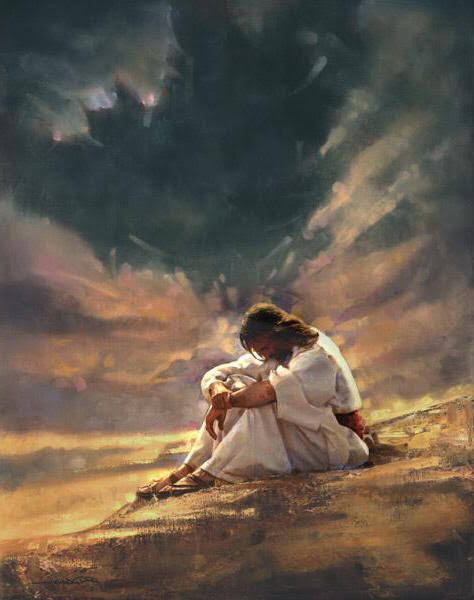
Battling our Goliaths with Jesus in our Hearts

HOMILY: Thirty-Third Sunday in Ordinary Time

Mark 13:24-32

14 November 2021 

Fr. Ricky Cañet Montañez, AA

I saw this witty tweet last night as I was preparing this homily. Let me share it with you… When the Israelites saw Goliath, they said, “He’s so big, we’re doomed.” When David saw Goliath he said, “He’s too big, I can’t miss.” This brings out a very important lesson in dealing with the many challenges we have to face in life. Our experience tells us that when we know what we are up against, we definitely find ourselves in a better position to deal with it and to triumph over any adversity.  

If you think about it, Goliath could very well represent everything that we dread in life that proves to be a formidable foe in our struggle to be good Christians. In the gospel, this points to the end times — an era characterised by days of tribulation and cosmic disorder of great scope and intensity. We are afraid to talk about our own end, more so the total annihilation of the created world. “In those days after that tribulation the sun will be darkened, and the moon will not give its light, and the stars will be falling from the sky, and the powers in the heavens will be shaken.” (Mark 13:24-25) This same phenomenon is to take place, according to the prophecy of Daniel to occur before the birth of the new age of fulfilment. These horrific events are indeed bound to occur, as affirmed by Jesus Himself in a bold statement on the reliability of His words. “Heaven and earth, the world as it is known, will pass away, but my words shall not pass away.” (Mark 13:31)

Apocalyptic literature uses exaggerated imagery to emphasise the seriousness of the situation. This should not generate fear in us but rather instill David’s vigilance such that he does not miss the giant on his way and David’s readiness to face the Goliaths all throughout our faith lives.  We have no reason to mistrust the very words of Jesus. What is bound to happen is going to happen.  But the fact that Jesus has given us a heads up means we have the advantage, if we choose to use it. Since we know that these things are bound to take place, we have the opportunity to prepare for what is to come. (Alam na natin ang darating so pwede tayong mag-prepare.) I would like to believe that Jesus telling us, warning us about all these cataclysmic happenings is His way of helping us survive this crisis. Jesus most definitely wants us to succeed!!! Jesus wants us to be with Him forever in heaven so how can He want us to fail?  

A number of devotees here in St. Pio’s Shrine approach me after mass to be blessed or have their pens and pencils blessed before a board exam. Aside from prayers, we know that one has to study hard for an exam.  Preparation is key to lessening our fears and anxieties. When we take an exam, pag handa ka, di ka masyadong kabado. Pag di ka nag-aral o nag-cram ka, pagpapawisan ka talaga ng malamig. Hence, the message of the gospel is quite clear… “Be prepared! At all times be prepared for the coming tribulation; be prepared for the coming of the Son of Man. Be prepared!” Because we do not know the time when all these will come to pass.  By His life and His teachings, Jesus gives us tips and reviewers that will help us face the struggles we must endure. He has shown us what we must do so we need not fear the apocalypse. 

I think the most comforting idea of all is that we are lucky to have an ally who is formidable and way stronger than all the adversities we have to face in life. May malakas tayong kakampi. Jesus is in our corner! As St. Paul says: “If God is for us, who can be against us?” (Romans 8:31) Jesus is rooting for us, always ready to help when we need Him.  It is up to us to call upon Him and allow Him to be part of our life as our guide, our friend, and our King.  Dapat lang talaga tawagin natin Siya.  It is not in God’s nature to force us to love Him or accept Him.  The invitation is always open, but we have to respond to it. 

Lastly, to live as Christians is to live in hope. All the readings state that good will eventually prevail over evil. In the last days the angelic warrior, Michael will rise up against all of God’s enemies.  Let us be inspired by the vision we are given in the epistle — of Christ seated triumphantly at the right hand of the Father with His enemies under His feet. Be strengthened by the gospel passage stating that “the Son of Man comes in the clouds with great power and glory”. These two images are apocalyptic; yet each of them invites us to be faithful, to trust and to remain hopeful because it speaks of no other than Jesus who continually tells us He loves us. If we strive to always be connected to Him, and to live in His love, how can that be a truly fearful sight? Would you not want to see your beloved approach?   

Let us not sugarcoat today’s gospel. And let’s not avoid the issue.  The time will come when God will build up His kingdom on earth. Before then, we shall find ourselves in constant battle with evil either within ourselves and our very own darkness. We also have to face up to our everyday temptations, or some disturbing major events such as socio-political upheavals and unrests. Even though at times it feels like evil is winning in the world, we have to persevere in the light of Jesus and simply trust that good will be able to triumph in the end. Should we be shaken or maybe concerned and worried about the dramatic turn of events that are occurring maybe at this very time in our lives or in some future time?   If we are faithful and true; if we are determined, why then should we be troubled, why should we be afraid? Let us just set our eyes and hearts on God and persevere.

Giving from the Heart

HOMILY: Thirty-Second Sunday in Ordinary Time (B)

Mark 12:38-44

7 November 2021

Fr. Ricky Cañet Montañez, AA 

Why do you give? Do you give out of your excess? There is a famous person who gives her least favourite signature bags to friends because she knows she will hardly use them anyway. Is she truly being generous or simply making space in her closet for more expensive purchases? Do you give out of pity? When people mindlessly throw coins in the cup of a blind beggar, do they believe their spare change will remedy his hunger or are they simply trying to silence or avoid any feelings of guilt?  Would you be willing to give if the consequence would be your own inconvenience or suffering? 

I read the story of a taxi driver, known as Kuya Ariel. The pandemic has seriously affected the livelihood of taxi drivers because people aren’t keen to travel as much as before. Yet, he sacrifices what little earnings he makes by offering free rides for all medical frontliners.   Johannes, a nurse, was concerned when Ariel failed to start the taxi meter, thinking he was going to be kicked out of the cab for being a hospital worker. To his surprise Kuya Ariel pointed to his make shift sign that said “Basta frontliner, libre!”  Another nurse, Kate, was close to tears from exhaustion and hopelessness when she could barely get a ride home. By chance, she flagged down the cab of Kuya Ariel and his kind gesture, was a comfort to her, making her feel appreciated. Another passenger, Dr. Celito, was moved to tears as Kuya Ariel cheered him on before he alighted the vehicle. He said “Laban lang Doc. Hindi madali ang pinagdadaanan ninyong medical frontliners. Tandaan nyong may mga naniniwala at sumusuporta sa inyo.” 

Kung iiisipin natin di madali ang buhay ng mga taxi drivers ngayon. Dahil sa mga naging lockdown – halos walang biyahe. Kung meron man, matumal dahil takot din ang tao sa mga closed places. Pag nabawas na ang boundary at gas – kakarampot na ang naiiuuwi sa pamilya.

The generosity of Kuya Ariel parallels that of the graciousness of the widow of Zarephath in the First Reading and the widow in the gospel story. Although in dire straits, they both gave from what they had, without reservation. Kuya Ariel, was himself hard up in life, but he still gave of what he had— his time, his service, his kind words of encouragement, and the sacrifice of his profit for the day.  None of these were simply from his excess. His generosity was not motivated by a perception of inequality, where he had more and they had less. For sure the frontliners, are paid better than he is and because their expertise is in demand, doctors and nurses will not find themselves out of work.  Rather, his generosity came from a heart that is filled with compassion for one’s neighbour and empathy for those who are similarly suffering. More than anything, he wanted to lift their spirit by recognising their efforts and sacrifices. 

The widow of Zarephath gives Elijah the last meal intended for her and her son. Would you give your last meal to a poor stranger? A mother would sacrifice for the well-being of her child. Para sa isang ina, kahit ang isusubo niya na lang, kayang kaya niyang ibigay na lang sa anak niya. Pero kaya mo bang ibigay ang dapat sa anak mo para sa ikabubuti ng iba… para sa hindi ninyo kamag-anak? And yet that is exactly what widow did!  She and her son are perilously on the brink of starvation yet, she ungrudgingly offered what she had left to show the prophet a little hospitality. Do we not find it strange that Elijah found himself at the mercy of a widow — one of the poorest, most vulnerable, and least powerful members of the patriarchal society of their time? She who had the least to give, was asked to sacrifice what was within her capacity to give, for sheer compassion for another who was also suffering.  

Generosity does not require us to give beyond our means. Even those who have little but whose hearts are truly generous will find something to give from what they have. There are those who have so much and yet refuse to part with their gifts because it reduces their sense of security. Truly generous souls find their security in Jesus. They trust in God’s merciful providence and live in constant gratitude for God’s blessings in their lives, no matter how small.  Remember the story of PWD Romeo Menil?  Last year, he was featured in the news for having donated the alms he collected from begging on the streets to the victims of flooding in Marikina. 

They say, “There is no generosity unless there is cost.” The gospel widow gave but a few cents to the temple treasury but it was the equivalent of “her whole livelihood” and with it went whatever food or convenience or comfort she could afford to give herself.  Jesus says she gave the most because she gave all that she had compared to the rich folks who gave generously from their excess to be publicly acknowledged. When we drop our donation in the collection basket on Sundays, do we immediately scrounge around for the smallest bill in our purse or do we prepare our offering in accordance to our depth of gratitude for God’s blessings in our life? Do we give with a genuine desire to help support the Church? Would we consider volunteering our time, talent, or expertise to the Church or community?

Generosity does not expect a reward. We should not give for the adulation from others or because we expect something in return. Magdo-donate ka lang ba para iboto ka? Is it necessary to have your picture taken and posted on social media when you make a sizeable donation to charity or the community pantry? Do you feel bad when Fr. Steve forgets to mention your name when he acknowledges major donors for Christ The King’s outreach programs?  True acts of generosity are for God to reward. Sometimes, the reward is instantaneous like the widow of Zarephath whom we are told was never hungry for a year after that. Just to be clear, she did not receive a magic jar that mysteriously refilled itself with flour or a jug that miraculously refilled itself with oil (as it was depicted in the cartoon Superbook). Rather, by God’s mercy she benefitted from the generosity of others who never allowed her to be low on food supplies. Other times, like the widow in the temple, our generosity will go unnoticed and unrecognised by everyone except Jesus. And that should be enough. For God is always good to us and He can never be outdone in His generosity. Wala tayong maipagmamalaki sa Kanya. 

The two widows’ giving everything they had foreshadows the sacrificial giving of Jesus of Himself on the cross.  Through them we are challenged by the gospel not to shy away from the cost of discipleship. We pray that we may be more and more like Jesus who as St. Paul describes to the Corinthians as one “though he was rich, for your sake he became poor, so that by his poverty you might become rich.” (2 Corinthians 8:9) Let us remember that regardless of who we are, where we are and what situation we are in, we can in our humble ways, reach out and help others. No pandemic nor quarantine can and should stop us from being kind and generous to those who are in need. May we have compassion to recognise the suffering of others and the courage to deny ourselves in order to help ease their burdens.

In God’s Loving Embrace

Homily: The Commemoration of All the Faithful Departed 

2 November 2021 

Today, the commemoration of All Souls, we pray for all our departed loved ones.  In a special manner, we also pray for many people who have lost loved ones so suddenly during this pandemic. We remember those who had no chance to receive the sacraments before passing on to the next life. A friend tearfully recounted to me losing her husband recently to COVID 19. In her pain, she wanted to hear from me an assurance that her husband is all right in the next life despite not having had the Sacrament of the Sick before dying.  She is but one of many grieving people who continue to struggle with this question. Don’t you wonder what happens to those whose lives end abruptly leaving unfinished business such as broken relationships, wrongs never quite righted, conversations never completed? 

The Book of Wisdom sheds light and brings calm to all those whose hearts are disturbed and unsettled. “The souls of the just are in the hand of God, and no torment shall touch them.” The passage presents a very consoling image that our beloved dead are safe and at peace in the embrace of the Almighty God. In the face of the untimely death of many of our loved ones these days, our faith assures us and comforts us that our loving God gives grace and mercy to those who have turned to Him; those who have uttered His name in faith, in hope. 

In the Second Reading, St. Paul’s letter to the Romans encourages us: “Are you unaware that we who were baptised into Christ Jesus were baptised into his death? If, then, we have died with Christ, we believe that we shall also live with him.” St. Paul reminds us of our fellowship with Christ our Saviour through our baptism. If we become followers of Christ in this life, then after our death we shall continue to live with Him in eternal life. It is for this reason that Holy Water is sprinkled as part of the funeral rite — to remind us of the consequence of our baptism. 

Finally, the gospel reading from St. John quotes the consoling words of Jesus. He says that the will of God is that everyone who sees and believes in Him is promised eternal life. He will raise everyone up on the last day to live with Him forever. Jesus is telling us that God the Father does not want to lose anyone of us who have been entrusted in His Son’s care. Thus, while we journey on this earthly pilgrimage Jesus is already taking good care of us and leading us to eternal life. Nothing is lost. In Jesus, all who open themselves to God’s saving grace are “saved” and they are brought into greater glory. 

As we remember family members and good friends who have gone before us, let us also say a special prayer for those who may not have anyone to remember them. It is a very doable act of mercy on our part. May we all be comforted that our Faithful Departed are in God’s loving hands.  May we be consoled and strengthened by God’s promise until we are fully reunited with Him and those whom we love.

Called to Holiness

Homily: Solemnity of All Saints

Matthew 5:1-12

1 November 2021

Fr. Ricky Cañet Montañez, AA

Today is All Saints’ Day. It is a day for all the saints. But how does one become a saint? Who are those qualified to be a saint? 

We often think of sainthood as something that is beyond our grasp. We imagine saints to be those who have done everything right. They are very much unlike us who often falter and make a lot of mistakes, rendering the possibility of becoming like them highly unlikely. Di ba kadalasan ang katwiran natin kapag naubusan na tayo ng pasensya – “Hindi ako santo, no?”

However, the more we learn about them, the more we realize that they are no different from us. They, too were far from being perfect nor without sin.  They were fully human like you and me.  

Tama totoong tao sila – maraming kahinaan, maraming sablay, maraming pagkakamaling nagawa katulad natin. So kung parehas lang pala sila sa atin – e bakit sila kakaiba?

One thing… They have never forgotten who God is for them. They drew strength from God to persevere despite their trials. Sa gitna ng matinding pagsubok at pahirap na pinagdaaanan – kahalintulad sa mga pagsubok at mga paghihirap na atin ding kinakaharap sa ating mga buhay –  naging matatag ang kanilang pananalig na nandiyan ang Diyos  at hindi sila kailanman pababayaan.  Dito sila humugot ng lakas.

Brothers and sisters, these saints drew strength from God to persevere despite their trials.  Through it all, they remained steadfast and so “survived the time of great distress” (Revelation 7:14). Today as we remember all of these holy men and women, we celebrate their lives as examples of holiness and models for our imitation.

“While the church recognizes through the processes of beatification and canonization “exemplary imitations of Christ,” Pope Francis urges believers “to be spurred on (incited and encouraged) by the signs of holiness that the Lord shows through the humblest members of God’s people.” The Holy Father refers to them as “the saints next-door.” (Gaudete et Exsultate #8)

If you have noticed those beatified and canonized these days are mostly lay people, and quite a good number of them are young people. Aside from the millennial Blessed Carlo Acutis, another 22-year-old woman medical student, Sandra Sabattini was recently beatified for devoting her (short) life to helping the poor and disabled before she was killed by a passing car in 1984. She wrote three days before the accident: “It’s not mine, this life that is developing, that is beating by a regular breath that is not mine, that is enlivened by a peaceful day that is not mine. There is nothing in this world that is yours. Realize, Sandra! It is all a gift on which the ‘Giver’ can intervene when and how he wants. Take care of the gift given to you, make it more beautiful and fuller…”

Holiness is within reach. Ang kabanalan ay abot-kamay. Holiness is not beyond our grasp. Sa ating binyag, tayo ay naging mga santo na, bilang mga anak ng Diyos. So, says St. John, “We are God’s children now.” (1 John 3:2) The very nature of our Christianity challenges us to live our life in a way that embodies our identity as God’s children. Each one of us is called to holiness. That is why if we look around us, we come to realise that we are surrounded by what the Letter to the Hebrews refers to as a great “cloud of witnesses” (Hebrews 12:1).

Lahat tayo ay inaanyayahang maging banal, maging santo, maging tunay na anak ng Diyos. The Second Vatican Council’s Dogmatic Constitution on the Church, Lumen Gentium states that “all the faithful of Christ of whatever rank or status, are called to the fullness of the Christian life and to the perfection of charity” (Lumen Gentium Chapter V #40). We are all invited to live up to our destiny as children of God. We are all “called to be saints”. (1 Cor 1:2)

Today’s celebration of All Saints’ Day is a challenge for us to be “imitators” of all these holy men and women renowned as saints in heaven. May we be numbered among God’s holy ones forever praising and thanking the good Lord as citizens of the eternal homeland!

Listening with the Heart

HOMILY: Thirty-First Sunday in Ordinary Time (B) 

Mark 12:28-34

31 October 2021 

Fr. Ricky Cañet Montañez, AA

Although usually there are designated communities for the retired religious of the congregation in every country, our Assumption communities are always a mix of both old and young religious living together. This is to provide a healthy balance of wisdom and vitality in community life. It may not always be easy but it could be enriching at the same time. I lived with a few older religious priests when I was assigned in London. I enjoyed having them around because I learned a lot from them. I just needed to be very mindful though with what I say about them because they could be very sensitive at times. Our Superior in London used to warn us that the older brothers appeared to have hearing problems concerning most community matters but once they were the topic of conversation, they seemed to hear everything being said.  

The injunction “to hear” is found in both the passage from Deuteronomy and the gospel passage from Mark. Translated as “Shema” in Hebrew, this word begins the most significant prayer of the Israelite religion. We note that the whole Shema prayer is spoken daily in the Jewish tradition: “Hear, O Israel: The Lord our God, the Lord is one. You shall love the Lord your God with all your heart and with all your soul and with all your might.” (Deuteronomy 6:4)This is a sort of reminder for them of what their priority is as God’s Chosen People. 

Sa Pilipino tila isa lang ang kataga para sa “hear” at “listen”. Pero sa Bibliya malinaw na ang “makinig” ay higit sa pagdinig sa pamamagitan ng tenga, kundi isang pakikinig sa pamamagitan ng isip at puso.

I have read that as is the case with all senses, hearing is an ability that is most intimate. “The ear catches the sound and carries it into the very core of the person. Hence, openness to sound carries the symbolic meaning of openness to God.” Ang pakikinig ay nangangahulugan din ng pagiging bukas sa pagtanggap sa utos ng Diyos. 

There are quite a good number of other Bible verses containing the invitation to hear God’s Word as well as to act upon what was heard. In today’s gospel passage, Jesus compliments the scribe who questioned Him about the greatest commandment for hearing Him accurately. “And when Jesus saw that he answered with understanding, he said to him, “You are not far from the Kingdom of God.” (Mark 12:34) This is quite a compliment because in humanity’s relationship with God, there has always been a struggle to hear and heed God’s message. The Israelites who first heard the Word of God did not immediately follow God’s commands. It took some time for them to truly understand God’s message for them. This is because of their hard-heartedness and hard-headedness.  

In our own faith journey, we also struggle to hear and to obey God’s will in our lives. Sa panahon natin, struggle pa rin ang making at sumunod sa kalooban ng Diyos. Matigas din ang ating ulo. Matigas ang ating mga puso. We do not give our full hearts to the Lord’s commands. As Christians, we must hear God out. We must be attentive to God and His invitation to a change of heart. Hearing God’s Word is a prerequisite to achieving a change of heart. We need to strive to hear God’s Word first, be attentive to it in order for us to listen to and act on it.

Very few seem to really endeavour to hear, and to listen to what is being put across … to what is being conveyed and shared these days. Just try reading through the comments of people in social media and there you would be amazed at some people’s lack of proper perspective and context in issues they try to share their opinions with. Basta lang maka-comment. Basta lang maka-react. Di naman alam ang buong kwento at kung ano talaga ang totoo. 

A mother of teenagers shared how offended she gets at times when her children critically fact-checks her responses to their questions. Not only do they seem to trust the internet more than their mother but also the opinions of other people from whom they get their desired validation. This is quite alarming knowing that public opinion and information online can be very unreliable and oftentimes misleading. As a result, many of our children these days are deemed misguided because they would rather believe online resources or influencers more than they would would listen to the wisdom of their parents. Some end up not knowing what they really want because they are easily swayed by what they gather online. Di nakikinig sa mga magulang o sa payo ng mga nakatatanda; di naniniwala sa mga credible media outlets pero paniwalang-paniwala sa Tiktok, Youtube, FB Videos, etc.

Jesus is telling us that it is only in hearing God’s Word that we would find ourselves empowered and inspired by the Spirit to act on it and make it alive and true in our lives. We have Jesus himself as our model of attentively hearing and obeying God’s will. Si Hesus man ay mataimtim na nakinig sa kanyang Ama. Jesus regularly left the crowds and went off alone to draw guidance and strength from the Father through prayer. It was in those moments of communion with the Father, of listening to the Father that He was able to draw strength and courage in fulfilling His mission.

Let us pray then for the grace that we will be most attentive to God’s Word. May we have ears and hearts that truly heed God’s Word in all our choices and actions in life and may we let it take root within us and allow it to bear good fruit.

Know, Persist and Trust

Homily: Thirtieth Sunday in Ordinary Time (B)

Mark 10:46-52

24 October 2021

Fr. Ricky Cañet Montañez, AA 

I have a friend who is a shopaholic. She loves to walk around the malls and hunt for great deals. When there is a mall wide sale, she spends hours buying all sorts of things she fancies and insists she needs but when she gets home, she tends to have buyer’s remorse.  You’d think this pandemic would have slowed her down but no. She is now into online shopping. (Palaging tumutunog ang doorbell nila dahil sa delivery.) However, she behaves differently when she really wants something. When she is buying something she really wants, she will patiently search for that item until she finds it. She will spend hours combing through the shops in a mall, (now online), to look for it.   Pre-pandemic, her tired companions would chide her to get the next best thing but she would rather come home empty handed than purchase a substitute. When she knows what she wants, she will patiently save up for the item, no matter how expensive, wait for the opportunity to purchase it and will settle for no less. 

In the gospel this Sunday, we encounter Bartimaeus, the blind beggar, sitting at the side of the road as Jesus makes His way to Jerusalem.  He is ecstatic when he senses Jesus is nearby. He calls out to Him persistently, making such a racket that Jesus stops and asks him what he wanted. “What do you want me to do for you?” We recall a similar question asked by Jesus in relation to the request of James and John in last Sunday’s gospel passage. Bartimaeus asks Jesus for the gift of eyesight. “Master, I want to see.” (Mark 10:51) He does not flinch. He does not stutter. He does not take a moment to think it over. He knows exactly what he wanted from Jesus and he asks with full confidence and boldness.  The crowd rebuked him but Bartimaeus continued to call out to Jesus for healing. In his determination, he was not put off easily by those who wanted to silence him and his persistence was rewarded. 

There are three things we ought to learn from this story. First — know what you want. Second — be persistent.  Third — trust in God’s providence. 

Bartimaeus was blind and he knew that he wanted to see more than anything else. He wanted to be whole again! In those days, beggars would spread out their cloaks so they would be able to collect alms. We are told that Bartimaeus threw the only possession he had aside in order to respond to the call of Jesus. He approaches Jesus with nothing, leaving behind the alms he collected for the opportunity to ask what he wanted from the man who could give it.  Do you know what you would ask for if Jesus also asked you what you really want? Oftentimes, we want so much, not knowing if these are what we need or if it will be good for us. We even pray for the wrong things and wonder why God does not grant what we ask for. We tend to be overwhelmed by what the material world can offer — riches, fame and power, that we tend to lose sight of what is essential. It is by living mindfully and taking time to reflect on our life that we can determine what it is we really need. Know what you want. 

Second, be persistent. Bartimaeus’ resolve represents our tenacity to pursue what we want even in the face of opposition. Bartimaeus would not have received what he wanted if he simply gave in to the crowd’s pressure and stopped calling out on Jesus. Often when we pray, we expect an immediate answer and we grumble and get discouraged when God doesn’t seem to be listening. The key is to be persistent. Jesus, Himself, says, ask, seek, knock. (Matthew 7:7) He doesn’t say do it just once. In his letter to the Thessalonians, Paul reminds us to pray without ceasing, give thanks in all circumstances; for this is the will of God in Christ Jesus for you.” (1 Thessalonians 5:17-18) 

Finally, the passage teaches us to trust in God’s providence. Bartimaeus had faith that Jesus could heal him, so he asks boldly and believed that Jesus would be merciful to him. When you ask of Jesus, do you believe He can answer your prayer? Some of the faithful say that when they pray for something, they “claim it.” We must, however be prepared to wait patiently. Sometimes, our prayer will be granted in minutes, sometimes it takes a week, sometimes it will take years. God sees through space and time and he knows how everything in the universe interacts. His timing is always best. We have to trust in the Giver of the grace!

When Jesus asks us the question, “What do you want me to do for you?” (Mark 10:51), it is not on the same level as a waiter asking our order at a restaurant or a saleslady asking what we are buying. It is an opportunity we should never pass up. It is God asking! God, whose power is unfathomable, whose greatness is immeasureable and whose mercy is endless who asks of us what He can do for us. God’s love for us is so deep and personal that He opens the heavens to rain graces on us, even on those who reject Him. Let us know what we want. Let us ask Him persistently and be prepared to wait. Let us have faith in God’s providence and His love for us.

“No” to Lording it Over Others 

HOMILY: Twenty Ninth Sunday in Ordinary Time (B)

Mark 10:46-52

17 October 2021 

Fr. Ricky Cañet Montañez, AA

I have a friend who hates losing an argument because she believes she is always right. Can you relate with that?  I’m sure, if I ask you, you could identify politicians who cannot accept their loss in an election because they believe they are the more worthy candidates. There are also eldest children (panganays) who think they are more deserving than the other siblings of the best portion of the inheritance by virtue of their birthright.  Fine. Sila na ang magaling; sila na ang matalino; sila na ang deserving. Do you count yourselves among them? What does it benefit us to prove we are better than others? Is that how God sees you and me? 

In the verses pertaining to today’s gospel passage from Mark, Jesus has just informed the disciples that their journey to Jerusalem would end with Him being tried and condemned to death and three days later raised from the dead. He forewarns them that he has to suffer and die so that he may rise again.  This was shocking news but even more surprising was the opportunism of James and John who had the audacity to ask for places of honour beside Jesus when He returns to Heaven. Jesus had just shared a frightening prediction and we can only imagine how this was received by the other disciples. James and John were quick to take advantage of their closeness to Jesus and thought themselves worthy of positions of power over the other disciples. If we were Jesus, we would have likely lashed out at the two brothers for their self-serving request. In fact, we are told that the other ten (10) became indignant because of the brazenness of the two. Were they really angry at the request or were they angry because the brothers had beaten them to asking this of Jesus?  (Parang naunahan sila; naisahan sila.) 

Today’s passage shows how flawed the disciples of Jesus were. However, there is no reprimand from Jesus, He merely tells them it is not for Him to decide. Jesus is so patient and forgiving with His disciples: not just with James and John, but also with the others who have their own share of flaws. Each time they misunderstand what Jesus is telling them, Jesus would take time out to address their lack of understanding. Jesus would set them straight as to what it entails for them to be His disciples and that is to have a heart for service.  They are to serve the needs of others. They are to be servants. And they are to exercise their authority by not lording it over others. A servant-leader does not “lord his/her authority over” but he/she stands under (understands) the other or others. Jesus does not call them on those things; He gives them the chance to act differently. 

We have always thought that these instructions of Jesus on servant-leadership only apply to those of us who hold any civic or church leadership positions. I believe this applies to all of us Christians! We are invited by the gospel to examine ourselves and acknowledge the subtle ways we place ourselves above others, thinking we are better, smarter, more important than these other people are. Indeed, the tendency toward self-promotion is part of our human nature. (Ayaw natin maungusan! Dapat lagi tayo ang star!)  I remember hearing complaints about some security guards of the villages.  Some act with such arrogance and smugness while controlling traffic through gates.  They strut around like generals because they have a pistol on their hip and bear the title of supervisor. Does one’s job title really give one the right to treat others with disrespect? In politics, another hot topic these days, we see and hear mudslinging, character assassination and the spread of false and misleading information, just to get ahead of the other candidates. 

On social media there is also evidence of many lording things over. We have those who are using a lot of inappropriate language and calling others names just to win an argument. Recently, TV Host Bianca Gonzalez expressed worry over insults and rude comments which she said are now being “normalized” in social media. “Nakakabahala na “normal” na sa ilang tao yung nagco-comment ng “bobo” or “tanga” or “gago” at lalo na kapag chineck mo ang profile nila at magulang pala siya ng maliit pang bata o di kaya may Bible verse ang bio. We all want the best possible future, so sana wag ganyan?” She has articulated a very important factor — we must be mindful of how we conduct ourselves because we need to be good examples to the younger generation. We have to hold ourselves to higher standards so they will learn to value humility, decency and tolerance. 

To rise above our tendency to “lord it over” others is not impossible. One time I was watching a session in the parliament where I saw UK’s former Prime Minister Theresa May and her bitter-rival, the Labour MP Jeremy Corbyn engaged in a heated argument on the floor. Then both were seen cordial in a state event which they both attended together soon after the debates. I was impressed because they could be ruthless on the floor but managed to keep the discourse at the level of issues. No resorting to ad hominem arguments or attacking the person’s character or motives rather than addressing the issue at hand.  Today, I read a tweet that quoted one of the presidentiables for 2022. It said, “Mahirap magpigil na pumatol (sa batikos). Madaling makipag-debate, mas radikal ang magmahal. (Ang maunawaan) na hindi sila ang kalaban, kundi sila ang pinaglalaban natin.”  Such depth of understanding and broadmindedness! (Sana all.)

Like the disciples, we have much to learn as followers of Jesus. We thank the Lord for also being patient with us and how He continuously gives us the chance to cultivate attitudes that conform to our Christian ideals.  Jesus loves us despite our insensitivity, our self-centredness… our weaknesses. May we always be grateful for Jesus’ merciful love for us by humbling ourselves and being compassionate to others. May we learn to extend this same patient love and understanding He accorded us in the service of others.

In Choosing the Higher Good

HOMILY: Twenty Eighth Sunday in Ordinary Time (B)

Mark 10:17-30

10 October 2021 

Fr. Ricky Cañet Montañez, AA

I chanced upon a tweet that said “Wala akong pakialam kung sino ang sinuportahan at binoto mo noong mga nakaraang eleksyon. Tapos na ‘yon. Ang mahalaga ay kung sino ang iboboto mo sa 2022. ‘Yong jowa mo nga pinalitan mo noong niloko ka. Pwedeng magbago ng isip. Huwag magtiis, may choice ka.” (I don’t care whom you supported and voted in the last elections. It’s all in the past now. What is more important is whom you are going to vote in 2022. ‘You even dumped the boyfriend/girlfriend who cheated on you. So, you can always change your mind. You need not wallow in misery, you have a choice!’)

It’s truth dressed with humour. Life is indeed full of choices.  These days we choose how we spend our days at home, what food we want delivered, what K-Drama to watch, what “budol” we get suckered into ordering online.  Sometimes we take for granted the fact that we have the power to make important choices — ones that can determine or influence the future.  We end up making the wrong choices because of ignorance and fear.  When we feel so helpless, we delude ourselves into thinking we cannot effect change so we just never tap into that power. Other times, we are so complacent in how things are going for us that we shy away from choices that we fear would cause us discomfort even if they will benefit more people. 

The man in our gospel was surrounded by choices.  He happily declares to Jesus that since his youth he had chosen to follow all the commandments. However, Jesus presents him with another choice — to give up all his possessions and give them to the poor or to keep his status quo. I have always been intrigued by what happened after the last line of today’s Gospel passage. We are simply told that “when the young man heard [what Jesus told him], he went away sad, for he had many possessions.”  (Mark 10:22) Would you say he left seemingly dejected because he knew he couldn’t give up his possessions? Or do you think he left feeling down because he had the intention to sell his possessions, give up his present life and follow the Lord? Either way, the man’s choice would be difficult — wrought with fear and uncertainties. The first option endangers his chances at eternal life, while the second endangers his personal comfort. Neither motivation is a bad one but the latter choice would require a huge sacrifice on his part. Perhaps the idea is to present the reader with the opportunity to put themselves in his shoes and make their own choice. 

Brothers and sisters, many of us are like this man in the Gospel whose heart is in the right place as he approaches Jesus, fully convinced at the value of meriting what the Lord offered — eternal life. However, like him we also hesitate when the choice to follow Jesus involves a major personal sacrifice. We look for excuses; we look for reasons why we cannot follow God’s way and end up faltering in our tracks. At worst, we even start questioning the wisdom of God!  Take for example how people respond differently to the fact that we are mere stewards of God’s blessings. It amazes me when I read about indigent people helping those who are in a worse situation. Isusubo na lang nila, hahatian pa nila ang kapwa nila. (It’s the only thing they have but they still share it with others.) And yet, there are wealthy people who eat sumptuous meals while their househelp subsists on a regular diet of canned sardines.  There are people who donate from their excess and people who choose not to donate at all because it allegedly encourages the poor to be dependent on dole outs and it condones the inefficiency of government in finding solutions to poverty. In both instances, you see just how people struggle to part with their material wealth. 

I think on a very basic level, no one would willingly opt to let go of what one has been comfortably used to or what gives one security. In other countries, people put such a high value on their personal freedoms that they demand it at the expense of others. Before vaccines were available, we saw people refusing to wear masks in public simply because they were uncomfortable. They did not care about contributing to the concerted effort to stop the spread of COVID 19 and minimising fatalities. These times, more than ever, society encourages us to protect what we believe is best for ourselves over protecting ideals that are best for humanity. Is this truly a good thing? People value the freedom to choose their religion but yet they allow laws to be effected that prevent people from publicly praying to God and in extreme cases, allow the killing of those of a different faith. Yesterday, Maria Ressa was honoured with the Nobel Peace Prize for protecting freedom of expression. It suggests that the right to speak out and express one’s views is valued by society, YET we tolerate people spreading fake news and those cancelling out those who have a view or opinion contrary to theirs. We have to learn to weigh our choices and opt for what serves a higher purpose and achieves the greater good.

Making a choice can be tough. To choose one option is to relinquish the others. There is always a price to pay or an opportunity cost. When we choose for others to pay the price, we are being selfish. When we refuse to make smarter shopping choices to promote sustainability and protection of the environment, it is the future generations that will suffer the consequences. When we choose leaders who fill our pockets today and rob the country tomorrow, we would have deprived our nation of a true chance at unity and progress. We have to be brave enough to make adjustments in our lifestyle in order to defend our choices and commit to them. We have to take responsibility for our choices and be willing to make a sacrifice.  It is neither easy to make better choices especially when we are hurting. News reports warn us that increased joblessness due to the pandemic has given rise to criminal behaviour. The sad truth is that some people feel they have no other choice but to do others harm so they and their families will not starve. Consider also families that are suffering simultaneous COVID infections among their members. It is not easy for family members quarantined at home to remain in their houses while a family member fights to survive in the hospital. Under other circumstances, they would actively exhaust all their resources to provide any support they can to save their loved one. 

These same issues hold us back from wholeheartedly saying “Yes” to Jesus’ invitation to trust Him. Trusting and following the Lord means letting go of everything we cling to, offering each and every thing to Him including our woes, our pains, our fears. To choose Jesus is to acknowledge that He is the higher good, that He is always worth our greatest sacrifices. If we anchor our decisions on Jesus, we can be sure that He will lead us to the truth. The Second Reading guarantees that in all our choices, the Word of God is our true moral compass. “Indeed the Word of God is living and effective, sharper than any two-edged sword, penetrating even between soul and spirit, joints and marrow, and able to discern reflections and thoughts of the heart.” (Hebrews 4:12)

The Gospel challenges us to make wise choices; to bravely ask questions that allow us to make informed decisions. Hopefully, this leads us to relinquish our tendency to hold on to what is self-serving and what provides us with a temporary sense of security and to serenely entrust ourselves and our future to God’s providence and benevolence. St. Mark reminds us that there is a blessing in being “spiritually poor”. “Amen I say to you, there is no one who has given up house or brothers or sisters or mother or father or children or lands for my sake and the Gospel who will not receive a hundred times more in this present age… and eternal life in the age to come.” (Mark 10: 29-30). Let us set our hearts therefore on the Kingdom of Heaven where our true “treasure” lies.

Re-examining our Commitment to LOVE

HOMILY: Twenty-Seventh Sunday in Ordinary Time (B)

Mark 10: 2-16

3 October 2021 

Fr. Ricky Cañet Montañez, AA

Before I officiate over weddings, I conduct canonical interviews with the couples preparing for marriage. When I’d ask how the preparations are getting along, their usual response is about accomplishing the paper work, finalising the entourage, choosing the venue, picking the menu, deciding on the wedding motif, the decorations, the gowns, etc. I just sigh and remember the quote I once read, “The flowers you pick out for the bouquets will wilt, but the spiritual bouquets — made up of prayers, living the sacramental life — will produce a sacred harvest long past your wedding day.” In that spirit I always shift the couples’ attention to what is more essential in a church wedding and ask them about their spiritual preparation for their marriage. Most of them are taken off guard by the question. Sadly, even for believers who opt for a church wedding there is very little attention given to the spiritual preparation for marriage — the lifetime they have chosen to live with their partner after the festivity of a wedding. They focus too much on the externals. However, since the pandemic, I have observed that couples have learned to scale down on the pomp and flashiness of a wedding. Due to restrictions, they have learned to identify the most important people in their lives and invite them to witness the ceremony. Gone is the kilometric entourage with prominent people in business and government as sponsors. Even simple receptions were prohibited. Still, couples chose to push through with their wedding.  I appreciate that they treasure each other so much to make a life commitment before God and obtain His blessing. 

In the gospel passage this Sunday the Pharisees test Jesus with a question about divorce. Jesus responded by going back to the original intent of God that forms the basis of the Church’s teaching on the permanence of the marital union. In God’s design the couple has become one flesh and therefore must not be separated. “Therefore, what God has joined together, no human being must separate.” (Mark 10:9) As pointed out by the Pharisees, divorce was permissible according to the Mosaic Law so they were not really concerned about the acceptability of divorce. What they were trying to find out was whether Jesus would undermine the authority of the Mosaic tradition. Instead, Jesus challenges the Pharisees to aim for the ideal in marriage. Jesus invites them to strive for the ideals to which God has called them, rather than to submit to the accommodations people often tend to make for their convenience. 

There are varying reasons why people marry these days. The most ideal of which is because of love. Those who marry later in life do so for companionship. Still others enter into marriage for security, for money or because a child is involved. As a priest I have observed that couples whose marriages have been grounded on love tend to withstand the test of time. Marriages that required couples to make certain sacrifices and fight for their love would weather most of life’s challenges. I recently came across this article about Japan’s Princess Mako who had made sacrifices in order for her to wed the love of her life. She patiently waited for years when her family delayed their wedding due to their displeasure concerning the financial standing of her fiancé’s family. She finally chose to give up her chance to be in line for the crown and to forego a one-time million-dollar payment (150M Yen) usually offered to royals marrying commoners just so she could finally wed her college classmate. This love story attests to the fact that having a healthy, loving relationship does not imply that there are no struggles. In fact, the challenges we have to face often strengthen the relationship. We are “made perfect through suffering” (Hebrews 2:10), as the Letter to the Hebrews puts it. 

For us Christians, we aim for the ideal of marriage. Many people ask what is so distinctive about a Catholic Christian marriage? In the Catholic tradition, marriage is understood as a sacrament. It is a covenant made with God. We see this religious significance of marriage in the way the matrimonial vows are exchanged in a church wedding. In a civil wedding, vows are exchanged as such: I, [name], take you [name], to be my [husband/wife], to have and to hold from this day forward; for better or for worse; for richer, for poorer; in sickness and in health; to love and to cherish from this day forward until death do us part. Whereas in a church wedding, the vow begins with the words… “Grant us, O Lord to be one heart and soul…” While the former is worded as a promise, which we know we, as flawed human beings, can easily break, the latter is in the form of a prayer. The couple acknowledges that it is “the presence of the Lord that will render their marriage as full and profoundly true.” The couple recognises that they need to strive to be true to each other, not so much out of their own strength but through God’s grace. For those among you who were married in church, isn’t this why you sought out God’s blessing on your married life? You wanted what the readings today say, (for) “the Lord to bless them (you) all the days of their (your) life” (Psalm 128:5). This is the foundation on which you build your future together — you build your life together on solid rock, entrusting your love to Him who is love.  With God at your side, nothing can ever separate you! Who, indeed, shall separate us from the love of Christ? Shall trouble or hardship or persecution or famine or nakedness or danger or sword? (Romans 8:35) 

The point is not to give up easily on a relationship. Relationships are hard. Two very different and imperfect people from different backgrounds, choosing to be together is bound to generate some friction, misunderstandings and disagreements. These days, when there is such a focus on finding one’s personal happiness, people hop from one relationship to another. We observe this in the way people unfollow each other or cancel people out on social media. It seems so easy to delete, erase everything. I remember the days when people needed to take time to process or to even ritualise their break up by the shredding of the love letters, burning of the photos and getting rid of whatever it is that reminds them of the person. Not to oversimplify, “pero ngayon parang ang bilis maka-move on ng tao.” We should not let it reach the point where married people believe it’s the same for their union and they will not make an effort to save their marriage. The difference is that in a marriage, the couple has pledged to place each other’s happiness and welfare before their own. You have to expect to make sacrifices for the other and not toss them away when they are no longer pleasing nor benefitting you. If you must know, the Philippines is the only country besides the Vatican City State where divorce is not legal. Our lawmakers are pushing the bill for legalising divorce in the country. The danger is when this will be used as a ticket to trivialise marriage. To obtain divorce, couples declare the other to be so problematic and flawed that they cannot stand to be married to them anymore, as though people do not have the capacity to change and become better. They sever ties because they mistakenly believe it is just a contract between the two parties. Marriage is bonded by no less than God, Himself.  A couple should trust that God will reinforce that bond if the couple does not easily give up hope on their relationship and exhaust all means possible to save it. 

The readings this Sunday make us consider our various commitments in life.  It makes us examine in a special manner the vitality of our faithfulness to them as well as our covenant before God.  May we always welcome God into our relationships. Let us entrust to His divine wisdom and grace all our commitments. As the Psalm tells us… “Blessed are those who fear the Lord, who walk in his ways.” (Psalm 128:1) May the Lord strengthen us to always strive for the ideal of love in our relations with one another today and in the many years the Lord will bless us with.

Called to be Messengers, Consolers and Defenders

Homily: Feast of St. Michael, Gabriel and Raphael, Archangels

29 September 2021

Who are angels? What roles do they play in our faith history, in the story of human salvation? 

It is most fitting that we give light to these questions as we celebrate today the feast of Michael, Gabriel and Raphael. 

The word “angels” principally means “messengers”. They are God’s messengers as the Bible would portray them; they are the bearers of His will, of His pronouncements, of His love and goodness to His people. In Jewish and Christian Scriptures, the angels appear to suggest God’s presence. They are sent by God to be our helper, our rescuer and our source of comfort and consolation. The Letter to the Hebrews has more to say about the role of angels in our midst: “What are angels, then? They are spirits who serve God and are sent by Him to help those who are to receive salvation.” (Hebrews 1:14) We also take note that “El” is one of the Hebrew words for “God”. “Mica-el” means “who is like God.” “Gabri-el” means “God is strong.” “Rapha-el” means “God heals.” 

As messengers of God, we recall in the Gospel of Luke that it was the angel Gabriel who told Mary that she was to be the mother of Jesus. It was also Gabriel who announced to Zechariah the birth of his son of his old age, John the Baptist. In Matthew’s Gospel, it was also an angel who was sent to tell Joseph that Mary had conceived by the power of the Holy Spirit. It was also an angel who told Joseph to flee to Egypt with Jesus and Mary. It was an angel as well who told the women the great news that Jesus has been raised. 

As consoler of God, we call to mind Raphael’s mission to Tobiah in the Old Testament. He served as his guardian angel, protecting him on the dangerous journey, healing his father Tobit from blindness and introducing him to his wife Sarah and eventually healing her as well. In Tobit 12:15, Raphael reveals himself saying: “I am Raphael, one of the seven angels who enter and serve before the Glory of the Lord.” Though not named, an angel comforted Jesus in His agony in the Garden of Gethsemane. (Luke 22:43)

As defender of the good, Michael is depicted as battling against the dragon in the passage from the Book of Revelation. “The dragon and its angels fought back, but they did not prevail.” (Revelations 12:7)

Today’s feast and the stories of angels in the Bible remind us that we too can and should be God’s messengers, like Gabriel. We are to be bringers of God’s consolation and concern to our wearied brothers and sisters during these trying times, like Raphael. Finally, like Michael, we are called to emulate him in fighting for the good (defending the truth) and in ensuring that God reigns in every heart of all believers.

Let us thank God for the presence of angels in our lives. They are those angels whom we can see and those angels who act and are very much present, “ascending and descending” in our pilgrimage through life.