The Bigger Reality

HOMILY: Twenty Sixth Sunday in Ordinary Time (B)

Mark 9:38-43, 45, 47-48

26 September 2021

Fr. Ricky Cañet Montañez, AA 

Politics is everywhere! It has overtaken everyone’s Covid-related conversations. It’s in the news and in the different social media platforms such as Facebook, YouTube, Tiktok, etc. We are saturated with all kinds of propaganda videos of people who present themselves as the leaders who would bring about the change we want for our nation. Expect more to come next month as the deadline of the filing of candidacy nears. There are just so many candidates to consider in terms of quantity, but I’d say not so much of the quality, if we must choose based on real performance and competence. In the spirit of honouring the freedom to run for public office and the freedom to select candidates, we allow those who lack the qualifications and competencies a chance to govern us, to represent us, and make decisions for our future. Another disadvantage of a multiparty-system is that it exacerbates our divisiveness as a people. We are quick to label one another according to our political affiliations or beliefs these days and it affects the way we perceive and deal with each other. Our prejudices, intolerances and biases do prevent us from recognising the true state of things and the truth of what is for the common good. It’s so easy to fail at seeing a reality bigger than our own. 

This Sunday’s readings present two scenarios showing how our intolerances can prevent us from considering another person’s point of view and seeing a bigger reality than our own. In the passage from the Book of Numbers, Joshua wanted Moses to stop Eldad and Medad from prophesying. Joshua was offended that those who received the spirit in a different way from the rest would be allowed to prophesy. Like Joshua in the First Reading, John also wanted to stop someone from casting out demons in Jesus’ name. To Joshua, Moses replied: “Are you jealous for my sake? Would that all people of the Lord were prophets! Would that the Lord might bestow his spirit on them all!” (Numbers 11:29) Moses is plainly concerned about promoting the good of the entire people than preserving the exclusive prophetic authority bestowed on him and the elders. To his mind, if it would be better for the majority that they share their privilege as leaders, so be it. Similarly, Jesus teaches John that someone who does exorcisms successfully in His name is not an enemy but rather an ally. “Do not prevent him. There is no one who performs a mighty deed in my name who can at the same time speak ill of me. For whoever is not against us is for us.” (Mark 9:39-40) Jesus directs John’s attention to what is essential — that the work of ushering in God’s reign be done regardless of whoever does it.    

Going back to our upcoming elections… dumadami na naman ang mga “Epals”. This Filipino slang for “mapapel,” refers to those who are attention grabbers, scene stealers, or people who crave a role (papel) in affairs that are not necessarily theirs to handle or decide. I don’t mean to depress anyone of us. If we look closely, there are many good, dedicated and honest people who really serve the people in the truest sense of being public servants. They have a true “passion for service”. They have always been committed to improving the quality of life of our people. Sadly, most of the time their efforts are unrecognised because they work quietly. There are also some who cannot look beyond their political affiliations to acknowledge the good others are capable of doing. Di ba dapat tulong-tulong sa ikabubuti ng karamihan? Shouldn’t we support whatever it is that is for the good of the majority? After all, no one has a monopoly of good ideas and good deeds. “Di porket di ikaw ang may pakana, bad idea na.” Some value the credit to their name and reputation so much that they say, “Gawa na lang tayo ng sariling project kasi project yan ng ibang tao.” Please! Let us set aside our egos and our need for adulation and self-promotion. 

Sadly, this also happens in the Church among her minsters. A parish has different organisations and ministries with different charisms. Wouldn’t it be great if we supported their projects instead of launching our own similar projects to prove we are productive, or so others can fawn over how generous our members are or how good we are at organising and mobilising our own teams? I would like to believe that this is one of the reasons why the Church has convened a synod on synodality come 2023 in Rome with its preparations on the diocesan level already underway. Pope Francis is giving Catholics worldwide a voice in deciding the future of our Church. This is a privileged moment to have a time of listening, dialogue and discernment so we can collectively respond as a Church to our mission of relevantly proclaiming the Good News of Jesus Christ to the entire world.

The times we live in remind us of the great importance of unity among us. In a society divided so greatly by political affiliations and opinions, we as Christians are called to focus less on what will further divide us. We have to keep in mind that we can only get through this pandemic if we foster more unity among ourselves and work together to find ways and means to ensure that all of humanity survives. Let us then enter more deeply into the prayer of Jesus and continue to work for that unity among us. We pray passionately, longingly, confidently, and humbly, “Lord, make us all one in your ways.”

Should You, Because You Can?

HOMILY: Memorial of St. Pio of Pietrelcina, Priest

Matthew 11: 25-30 

23 September 2021

Fr. Ricky Cañet Montañez, AA 

I have mixed feelings about ending the ECQ. Do you? I understand the economy will suffer if we prolong strict restrictions. So many people’s livelihood will be in peril. On the other hand, being cooped up at home does take a toll on your physical and mental well-being. We constantly shift between the temptation to be restless and the temptation to be lazy, hoping to find some balance in between. Either way, we find so much to worry ourselves about. 

The pandemic has definitely raised our level of anxiety. Some break down in tears for no reason at all. Some feel exhausted, while others have sleepless nights. We all struggle to find ways to cope yet there are, of course, those who choose to defy the rules, because they can. I was recently told that in Poblacion, Speakeasy’s have mushroomed in the area and young people have been having underground parties so they can socialize with their friends, destress and drink their cares away in secret.  Escaping to these haunts is a challenge and quite a thrill if they succeed. They go, because they can — as if they can escape a COVID infection because it all happens in secret or BELOW the radar. On the other hand, there are those who believe they are ABOVE the law because of the size of their bank accounts, the weight their name carries or the position they hold in society.  I know of family members who use the IATF exemption IDs of their relatives to cross inter-city borders during ECQ — just because they can. It also brings to mind a news report of a high-level politician who insisted on being self-quarantined at a fancy suite in a luxury hotel on taxpayer’s money. He did it because he felt his status was worthy of the prestige. I’m sure you can identify other instances wherein people you know or you yourself have acted selfishly and delighted in putting one over the government and the rest of society. These acts of self-gratification are the same as boasting of what makes one special. 

On this Feast Day of St. Pio, we learn a lot from this man of God who was no stranger to the struggles we have today. St. Paul declares in the Second reading: “The only thing I can boast about is the cross of our Lord Jesus Christ, through whom the world is crucified to me, and I to the world.” (Galatians 6:14), but it might as well have been uttered by St. Pio. He had extraordinary gifts but never boasted about them or used them to influence situations in his favour. He accepted his circumstance with gentleness and full trust in God. St. Pio was undoubtedly a remarkable person. He was a sought-after confessor gifted with the capacity to see into people’s souls. He was said to have the otherworldly ability to bilocate — being at two places at the same time. He was also blessed with the stigmata of Christ! St. Paul, in his letter to the Galatians says “…the marks on my body are those of Jesus” (Galatians 6:17). Padre Pio literally bore the nail wounds in the hands and feet of Jesus and the piercing in His side. He did not openly display this gift for people to marvel or gawk at. He kept his hands modestly hidden in his sleeves or pockets or he wore gloves to conceal the wounds. Still, people came in droves from everywhere to see him and hear him, to confess to him and be blessed by him because he was so exceptional. 

His popularity must have alarmed the religious authorities at the time that they restrained the poor Capuchin friar. The book Padre Pio: The True Story by Bernard Ruffin, details how the saint reacted to the decree that worked against his ministry. It stated: “Padre Pio is to be stripped of all faculties of his priestly ministry except the faculty to celebrate the Holy Mass, which he may continue to do provided it is done in private, within the walls of the friary, in the inner chapel, and not publicly in church”. For a priest this is a very painful sanction yet Saint Pio responded: “God’s will be done,”…then he covered his eyes with his hands, lowered his head, and murmured, “The will of the religious authorities is the will of God.” He readily obeyed his superiors when they told him to confine himself while being investigated.  While in “quarantine” he experienced many struggles, even spiritual attacks. Through it all he prayed constantly, remained humble and cheerful. Asked by his friend and former teacher, Padre Agostino how he spent his time in confinement, he good naturedly responded: “I pray and I study as much as I can, and then I annoy my brothers.”    

In today’s Gospel Jesus declares “I bless you, Father, Lord of heaven and earth, for hiding these things from the learned and the clever and revealing them to mere children.” (Matthew 11:25) I’d like to think that because St Pio also had the humility, meekness, and wonder of a child, he used his time to seek Christ more deeply and was rewarded. And the gospel passage continues “…no one knows the Father except the Son and those to whom the Son chooses to reveal Him.” (Matthew 11:27) It was in his moments of meditation and prayer that Jesus allowed him to develop a greater understanding and love for God through a devotion to His Sacred Heart.  When emissaries of the Pope Pius XI were sent to check on Padre Pio two years after his “convent arrest”, it was reported: “They found no wild-eyed fanatic, no crazed neurotic, no embittered rebel, but a pleasant, humorous man. According to Padre Rafaele, one of the Pope’s representatives Mosignor Luca Pasetto was very much impressed with Pio’s humility, his docility, and the whole of his conduct.”   

If you think about it, his popularity would’ve been sufficient to make an appeal for a reversal of the decree. These days a slighted priest can opt to mobilize his flock to rally on his behalf or he could use the pulpit to criticize his detractors. Padre Pio did nothing of the sort. Neither did he flaunt his gifts.   The wisdom in his meekness is noteworthy.  When the country started to administer vaccines, I remember being in awe of Jaime Zobel de Ayala, who for all his wealth and influence, fell in line and waited for his turn to be vaccinated with Sinovac!  He could have simply boarded his private jet and gotten himself vaccinated in the US with any vaccine of his choosing, yet he opted to queue for the least favoured vaccine brand. Several days ago, I came across an article explaining why a favourite presidentiable had not declared her candidacy. She said: “Madaling tumakbo pero marami pang dapat pag-isipan.” Having served well in her capacity, she does have an advantage in terms of name recall and her many accomplishments as a public servant.  She said, however, that she wants to ascertain if her running will benefit the nation because if it will divide the nation further or damn the country to a worse fate, she is willing to hold back. There’s some self-sacrificing wisdom for you and me. We really should not lord things over others because we can, but rather choose humility and look beyond one’s self for the good of the other.

St. Pio is definitely someone we can look up to and strive to emulate as we struggle through this pandemic and recurring quarantines. He inspires us to take the high road even when our freedom is curtailed and we are done an injustice. He was never boastful nor arrogant nor did he resort to taking advantage of others for his benefit. He cautions people against useless worry and encourages people to pray and pray often. It was prayer that helped him fight many spiritual battles while alone in his room and helped him overcome the lack of support he suffered from people who should have looked after his welfare. St. Pio advocates the praying of the Holy Rosary disclosing that it is the most effective weapon against evil and the snares of the devil. By his example, St. Pio teaches us that against all uncertainties, we simply have to submit to God’s plan and trust in Him completely.

In Recognising and Pursuing TRUE Greatness 

HOMILY: Twenty Fifth Sunday in Ordinary Time (B)

Mark 9:30-37

19 September 2021 

Fr. Ricky Cañet Montañez, AA

A friend once chanced upon a social media meme with a picture of two women who are sitting on the floor each busy writing something in textbooks that lie open on their laps. They are discussing about their dreams for their children. The first woman said: “Mare, kailangan maging duktor ang anak ko paglaki niya para makatulong sa maysakit.” (Pal, my son must become a doctor so that he can help those who are sick.) The other woman answers, “Balang araw ang anak ko magiging engineer! Kaya dapat galingan na natin ang pagsagot sa assignments nila….” (Someday, my son will become an engineer! So, we better do well in answering their assignments…) Funny but very sad at the same time. I do not know if you have also read about “Online Kopyahan” in the news. It is a Facebook Group Page with 700,000 followers allegedly used by students to cheat on online learning tests and exams. The page is filled with posts of test papers and questionnaires with answers on various subjects. This is indeed quite alarming! 

In today’s Gospel passage, the disciples are squabbling over “who is the greatest” among them. While Jesus is speaking of His impending suffering, death and resurrection, the disciples are themselves engaged in a heated discussion about status within the community. However, instead of reprimanding them as Jesus did with Peter on last Sunday’s Gospel, this time Jesus seizes the opportunity to teach them what true greatness is: “If anyone wishes to be first, he shall be the last of all and the servant of all.” (Mark 9:35) This idea of greatness is in total contradiction to everything that the disciples perceive greatness to be. As disciples, they have indeed much to learn from Jesus. 

To illustrate His point, Jesus calls in a child. Amidst the bickering of the disciples over greatness, Jesus says, “Whoever receives one child such as this in my name, receives me; and whoever receives me, receives not me but the One who sent me.” (Mark 9:37) The child here represents those persons in society who have no power, no status, no influence whatsoever. They are the helpless, the neglected, the powerless among us whom the followers of Christ are called to minister to. When we accept, when we welcome such persons, Jesus says, is tantamount to welcoming Him. To “welcome” means to respect and to serve, in the way a host welcomes a guest with so much attention and care. Jesus showed them that the way to Christian greatness is simple: when we sincerely work for the wellbeing of others in need. To be of service to others is to pursue greatness in the Kingdom of Heaven. 

Just recently, John Arcilla, a Filipino actor, won with high honours for his acting talent in the Venice Film Festival. He is the first Filipino actor to win such an award. He even bested the likes of Benedict Cumberbatch, the actor who plays Marvel’s Dr. Strange. Despite his achievement John chooses to remain humble, saying… “I simply believe that no human being can live and survive without keeping their feet on the ground. I am a human being. I cannot be anything else.”

Many of us, even those who profess to be Christians have difficulties accepting Christ’s view of greatness. For us, greatness necessarily means being first, being on top, being in control or having people doing what we want them to do. It is no surprise then that there are some of us who want to be in positions of authority at all costs. They would even dare cheat their way into winning because of the perceived privileges that accompany these posts. The essence of authority which is first and foremost bestowed for the purpose of service is easily forgotten and taken for granted. It is indeed disheartening when those who take the reins of the community or a country get lost in their power and influence; when they forget the value and essence of humble public service in their leadership. This selfishness results to all kinds of corrupt practices and a neglect of the common good. 

Jesus is saying otherwise, true greatness is in being the servant or slave of all. A friend of mine who is frustrated about politics in the country told me, “Father, I think the priests need to be more emphatic and specific about the candidates we ought to elect in the coming elections.” How am I supposed to answer that without being accused of partisan politics? I believe if we take seriously what the Word of God tells us, we would find enough guidance in choosing the kind of our leaders who emulate the ways of Christ. In the Second Reading (James 3:16 – 4:3), St. James contrasts two styles of behaviour: the way of the foolish and the way of the wise. The former is characterized by jealousy, selfish ambition, while the latter (as it is motivated by wisdom) generates harmony, peace and goodwill among peoples. 

In closing I would like to invite you to picture St. Teresa of Calcutta. She was given a state funeral by the government of India. She was awarded the prestigious Nobel Peace Prize in recognition of her greatness, which she probably did not dream of nor want for herself. She was recognised for giving herself to the very lowest, treating them as brothers and sisters and living close to them. She and countless others are given as examples and inspiration to all of us to pursue true greatness in the way of Christ. The only sure way to recognise Christian greatness is to follow those who serve. May the Holy Spirit help us to recognise and to pursue true greatness.

Facing the Sorrows of Life like…with Mary

HOMILY: Memorial of Our Lady of Sorrows

Luke 2:33-35

15 September 2021 

Fr. Ricky Cañet Montañez, AA

Alinaya Cordero, a cardiologist, recounted on her FB post how broken she was after having to inform the mother of her youngest COVID patient that her child was gone. “Habang nasa gilid ng kalsada, kausap ko ang ina na OFW ng pinakabata kong pasyente na tinamaan ng COVID, 28 taong-gulang, para ipaalam na siguro ang pinakamasakit na salita na pwedeng marinig ng isang ina at pinakamasakit na salita na pwedeng masabi ng isang doktor.”  News such as this is a dagger to the heart of any mother. 

Today we remember how Mary, was not immune to suffering even if her Son, was God. As a mother, her heart was crushed every time she feared for her child, Jesus, and witnessed His sufferings. When we look at the image of Our Lady of Sorrows, Mary’s heart is often depicted to be pierced with seven wounds or with that of a sword. Explicitly we are reminded in today’s gospel reading of Simeon’s words to her: “And a sword will pierce your own soul…” (Luke 2:35). The devout man also foretold that a sword of sorrow would pierce Mary’s heart (Luke 2:22-37). Such is deemed the first sorrow of the Blessed Mother. Mary and Joseph’s flight into Egypt is said to be Mary’s second sorrow. The couple took the new-born Jesus to safety as they escaped the massacre of the children in Bethlehem (Matthew 3:16-18). In Mary’s third sorrow, we recall how the Child Jesus went missing for three days when they were in Jerusalem to celebrate the Passover. The 12-year-old Jesus was actually in the Temple discussing the Law with the teachers (Luke 2:41-52). Mary’s exchange with Jesus went like this… “Why were you looking for me? Did you not know that I must be in my Father’s house?”(Luke 2:49) The fourth sorrow of Mary was when Jesus met His Mother on the Way to Calvary. Though not mentioned specifically in the Scripture, we find Jesus’ ascent to Calvary bearing the cross in John 19:17. Mary’s fifth sorrow is noted in the Gospel of John which tells us that the Mother of Jesus was present right there at the foot of the Cross (John 19:25-27). The sixth, although with no specific scriptural reference, must have been part of the events after the death of Jesus on the cross in John 19:39-40. It is the traditional and heart-rending scenes from the Stations of the Cross and the Pieta where Jesus is finally taken down from the cross. Lastly, Mary’s 7th sorrow is recorded in all four gospels — Jesus is laid in the Tomb. This must have been a painfully sad moment for the Mother who must have believed this would be the very last time she would lay eyes on her Son (Matthew 28:57-61; Mark 15:42-47; Luke 23:50-56; John 19:38-50). 

In all of these sorrowful moments in Mary’s life, she remained most trusting in God. She may not have understood everything but she always pondered everything in her faith-filled heart. She was obviously sorrowful in all of those painful moments but she was also the perfect picture of calm. She was reflective. She kept everything in her heart but she was not overly emotional. Mary is an inspiration of contemplation and reflection for all of us in the most trying moments of our life.  She is there to comfort and console us as we make sense of all our painful experiences during this time.  

In this swirling pandemic where we are desperately clutching at straws and almost at the brink of despair, we turn to our Mother Mary, whose heart was battered by one sorrow after another. Yet, she did not waver in her faith, she did not falter in her resolve, she remained focused on Jesus even if her eyes were blurred by the searing pain of each sorrowful episode. Instead, she used each piercing, painful experience as a way to strengthen her faith in God. 

Our Lady of Sorrows, we pray that we may have pondering hearts like yours. May we be able to accept with serenity and hope whatever God wills for us in our lives.

Facing Hard Truths of Being Christian

HOMILY: Twenty Fourth Sunday in Ordinary Time (B)

Mark 8:27-35

12 September 2021 

Fr. Ricky Cañet Montañez, AA

A friend recommended that I watch the American adaptation of the South Korean medical drama series, The Good Doctor. The plot revolves around Dr. Shaun Murphy, a young physician with autism and savant syndrome, who joins the surgical unit of a prestigious hospital.  All throughout the series he is depicted as a super-smart diagnostician and a very skilled surgeon who struggles with picking up on social cues and dealing with emotions. His lack of empathy and sensitivity to the feelings of others usually gets him into conflict with patients and his colleagues. He does not understand how his words or actions upset people. He does not mince words. He says what he thinks and bluntly tells patients what they must hear. For Dr. Murphy there is no need for the usual niceties and sugarcoating. He openly declares all pros and cons of any procedure. His brutal honesty can be quite off-footing at times but it also endears him to the audience. One fan posted on IG: “Really wish everyone speaks honestly like Shaun does… It would surely make life much easier…” 

In the gospel passage from Mark this Sunday, we see Peter who balks at Jesus’ revelation that as the Christ he must “suffer greatly… be rejected… be killed…, and rise after three days.” When Peter was confronted with this hard truth, he could not simply bear the thought of the hoped-for Messiah being tortured and dying like a common criminal. Overwhelmed by his immediate reaction, Peter failed to see the complete picture of Jesus’ identity and what Jesus was meant to accomplish through His death. He failed to grasp that through His death Jesus would bring about new life. Dismayed at his imprudence, Jesus addresses Peter in the same way He admonishes “Satan” in the Temptation narratives and orders him “to get behind Him” for “thinking not as God does, but as human beings do.”  

If we are honest with ourselves, we too are no different from Peter at times. We also recoil at comments that make us uncomfortable. We tend to hear only what we want to hear— only those feel-good, complimentary and self-patronising comments of others about us. On the other hand, we refuse to hear what challenges us. Though unsettling and contrary to our whims, we immediately dismiss as mere criticisms any honest to goodness opinions of others. But if we take a hard look at most of our experiences, we realise that more often the things that we initially did not want to hear are the very things that usually have paved the way for our growth and improvement. In one of the first episodes of The Good Doctor, Dr. Shaun Murphy praises his boss Dr. Neil Melendez, but poses a straightforward question. He says “I saw a lot of surgeons in medical school. You’re much better than them. I have a lot to learn from you… You’re very arrogant. Do you think that helps you be a good surgeon (a better person)? Does it hurt you as a person? Is it worth it?” 

As followers of Jesus, we cannot simply sit back, stay put and be content with what seems agreeable. The one who truly wants to follow Jesus… the one who takes heed of Jesus’ teachings of carrying his/her cross cannot just close off to one’s self and remain the same. We do not want crosses. We do not want to be challenged. We are all invited to step outside of our comfort zones and humble ourselves in order to be able to truly hear the call of Jesus and bring to action what we learned from Him. We have to live out the demands of our faith that directs and leads us where we should go and what we have to do. St. James warns us today in the Second Reading, we are to be wary of those people who have “faith”, that is, they claim to be Christians and lovers of the Scriptures but their lives speak the contrary. 

I am sorry to say this but I believe we would have been or will be in a much better state in our Covid 19 Pandemic Response if we have learned how to truly listen to one another, to value each other’s opinions, and to work together for a common cause. We have become too divisive to have a common ground. We have become too unreasonably reactionary to the point that we consider every contrary opinion as a personal attack to our integrity. Let us set aside our egos at this crucial time when many people are getting sick and are dying. Let us be courageous enough to accept that we need to listen to the voice of reason in order for us to truly rally our people out of this pandemic.    

We pray therefore for God’s grace that we will not be rash and dismissive of other people’s suggestions, opinions and ideas especially those different from ours that might prove to be helpful for the common good. Let us be honest with ourselves, to recognise our failings, and to learn from the path of Jesus how we can be more like Him.

When a bit of Heaven is opened…

HOMILY: Twenty Third Sunday in Ordinary Time (B)

Mark 7:31-37

5 September 2021 

Fr. Ricky Cañet Montañez, AA

I recently heard a medical practitioner lament that COVID is the most complex disease that mankind has ever encountered. He said, “Every day, it seems we discover how this disease finds new ways to kill mankind. I cannot see a light at the end of this tunnel.”  I found myself wanting to cover my ears to save me from more anxiety. Everywhere it seems experts are discussing the emerging virus strains that are more contagious and vaccine-resistant.  We seem nowhere close to the end of the pandemic and I find myself asking more frequently, “What is the world coming to?” And together with the faithful I cry out in prayer: “God save us! 

On this Sunday’s Gospel, we are told that after performing some ritual gestures in the healing of the deaf-mute man, Jesus looks to heaven and groans and then says to the man: “Be opened!” (Ephphatha!). Then the gospel narrates… “And immediately the man’s ears were opened, his speech impediment was removed and he spoke plainly.” (Mark 7:35) The act of healing the deaf-mute man is one of the signs Isaiah gives in the First Reading that marks the restoration of Israel — their return from exile.  Isaiah says that when God comes to save Israel… “the eyes of the blind will be opened, the ears of the deaf be cleared…” (Isaiah 35:5) In today’s reading, a deaf-mute is healed. In the next chapter of Mark’s Gospel, we will hear about the healing of the blind man at Bethsaida. If you think about it, when Jesus healed these people, Israel was still under Roman rule. They did not have their independence so technically they still needed saving or deliverance. Nonetheless, by witnessing these signs, the people recognised the saving act of God saying: “He has done all things well. He makes the deaf hear and the mute speak.” (Mark 7:37)

“Be opened!” Don’t you think it is a strange command to restore the speech and hearing of a person? No one says “Open your ears” to hear or “Open your tongue or vocal chords” to speak, right?  I think, as Jesus gives this command, he opens up a little bit of Heaven in the deaf-mute man. We believe that in Heaven there is only wholeness. To experience this bodily restoration is to have a foretaste of the heavenly life, where God reigns supreme in a place (or state of being) where there is no death and decay. Is this also your idea of Heaven? I think sometimes we miss out on the signs that Heaven is for us, because we have a different idea of Heaven. For others, Heaven is an endless party or a huge family reunion. There are those who perceive heaven to be an open bar or an impressive buffet that never runs out of food. For others looking for peace, it is a vast garden of flowers or perhaps a serene beach with perpetual sunny days…. Now that we are stuck in cyclical quarantines, we have no mass gatherings so no big family get togethers, no parties, no drinking at bars and no more tarrying at buffets; no trips to the beach or botanical gardens except for a privileged few.  What happens to us when these experiences of what we perceive as “heaven” are now obscured from us? It becomes so difficult to feel and discern the presence and saving power of God.  It becomes so hard to see Him at work. How is God saving us from the pandemic when virus variants keep emerging one after the other?  Many of us are drowning in sorrow and despair. Even the most faithful of us are getting wiped out and overcome by the waves of grief and helplessness. 

Perhaps this command of Jesus to “Be opened!” are words we must learn to cling to.  To those of us also in need of deliverance from all of our present woes, these words are very powerful. At the very utterance of Jesus, heaven is opened and the gifts of His kingdom dispensed on those in need. That is the best “ayuda” we can hope for during this pandemic. We are invited to come to Jesus that He may open us to the reality of God’s presence in our midst, even in the vulnerabilities of life. In Jesus, we find that heaven is not a completely far off place (a state of being) closed off to us until our death… In fact, we can draw strength to persevere from the little bits of heaven we still experience despite the restrictions.  Isn’t heaven in the joy elicited by a friend’s smile, the tender hug of a caring mother, or the protective arm of a father, the dedicated service of a public servant, and even in the care shown by medical frontliners going beyond their duty by offering their patients words of comfort and consolation in moments of grief or fear. Most of the time heaven is found in the most ordinary things of life that we take for granted.  Yet these are ways Jesus OPENS UP heaven in us. These are ways God revives us, and strengthens our resolve to push forward and overcome what trials beset us and what else lies ahead.  We are invited to keep the faith and to entrust ourselves more fully to the will of our God who is compassionate and loving toward us. There is no human circumstance where God will abandon His people. He wants us to triumph on earth that we may spend eternity in heaven as His adopted children and therefore His heirs. 

We pray that like the deaf-mute man, Jesus will continue to open Heaven for us. Hence, as we have a foretaste of our heavenly inheritance, we may be inspired to help one another fix our hearts on the day of our deliverance, to expect it and to claim it!   When we pray the Lord’s Prayer throughout the bleakness and uncertainty of our present life, we ought to pray with greater conviction… “Thy Kingdom Come”… knowing that God saves His people and He will bring healing and wholeness, peace and justice.  We ask that Heaven open its gates for us… so that in our answered prayers we may receive hope in abundance and a foretaste of what we ultimately aspire for.

Outwardly Fervent, Inwardly True Within

HOMILY: Twenty-Second Sunday in Ordinary Time (B)

29 August 2021

Mark 7: 1-8, 14-15, 21-23 

Fr. Ricky Cañet Montañez, AA

I wonder if you’ve seen the video ad entitled “Pandemic Effect” before the company-sponsor was forced to take it down. It was a time-lapse video featuring a pretty girl who grows hairy, pimply and overweight as she sits on a couch watching TV during the quarantine.  Although it was meant to encourage people to “take care of themselves during this pandemic”, it drew a lot of criticisms from the netizens who found the ad to be insensitive to those with health issues. Others also said that the advert may actually foster more insecurities for people who are already going through a very tough time. Some pointed out that “the real pandemic effects are unemployment and people losing their loved ones to COVID-19.” In fairness, to the Belo Medical Group they readily apologised, thanked people who had expressed their thoughts on the video and promised to learn from this experience. 

In today’s gospel passage from Mark, Jesus is calling out the scribes and Pharisees for being a bit superficial in terms of their observance of the Law. This stems from the scribes and Pharisees’ indirect criticism of Jesus by complaining that Jesus’ disciples do not observe the proper ritual washing. It is important to understand that this is not merely a hygienic practice but rather a ritual washing. Having a penchant for observing the tiniest details of the Law, including those that are part of what they call the “oral law”, the “unwritten law”, or the “tradition of the elders”, the Pharisees tend to expect any religious person to adopt their very rigid and high standards of holiness. I don’t think the Pharisees are bad people because they do strive for holiness. There are times, however that they can be too caught up with the mere externals that they fail to realise that they have become oblivious to the true intention of the Law. The Law as we are told in the passage from Deuteronomy should direct our hearts to what is right and good, to the ways of God. That is why Jesus admonishes them to move from “outward observances” to “inward intention” of the Law. Jesus does so by quoting a passage from Isaiah against them: “Well did Isaiah prophesy about you hypocrites, as it is written; This people honours me with their lips, but their hearts are far from me; in vain do they worship me, teaching as doctrines human precepts. You disregard God’s commandment but cling to human tradition.” (Isaiah 29:13; Mark 7:6-8)

This is the same exhortation we find in the Letter of St. James in the Second Reading. He urges the people to act on the word and not merely to hear the word. Of course, it is important to hear the word (some could not even get passed this stage) but it should not stop there. St. James counsels that the word of truth takes concrete form in their lives through the service they render to the community’s most vulnerable, those who have no legal status in a patriarchal society such as the widows and the orphans. 

Reflecting on the 500 Years of Christianity in the Philippines our very own Cardinal Luis Antonio (Chito) Tagle has challenged church people and the laity to take their calling in Christ seriously. If we are honest with ourselves, how many of us take the time to really understand our faith practices as Catholic Christians? Some do not really know what religious meaning they hold for us. For others, these faith practices have completely lost their meaning and so they perform them out of habit. How many people these days care to have a “church wedding” because they understand the values and principle of such as a religious event? There are those who opt for civil marriage thinking a church wedding is an elaborate and very expensive production number.  Do you really think God intended marriage to be about well-dressed couples and their entourage, or expensive floral arrangements? I am happy for us in San Roque Parish that due to the quarantine, our fiesta became a purely religious event, reflecting and drawing inspiration from the life and example of San Roque of service to the Lord. I believe that we are being invited to strive to make of our religious practices an impetus towards a profound experience of God.     

I also invite everyone to take a long hard look at ourselves and how we choose to express our faith and adhere to our religious beliefs. Are we growing deeper in love with the Lord? Does it encourage us to develop more compassion for those around us?  Are we one of those people who like to flaunt their prayer life, in order to be seen or to be perceived as pious and devout more than anything? There are homes where nightly rosaries are a production number in the household. Everyone is there, rosaries, in hand, kneeling before the family altar bedecked with fresh flowers and candles. However, in order to gather everyone, the mom has yelled, scolded and threatened the kids. “Nasaan na kayo?? Ano? Magdadasal ba kayo o hindi?” And although her eyes are tightly shut as she leads the rosary aloud, she manages to yell out orders to the kasambahay or angrily shout expletives over noises that break her concentration on prayer.  It makes for a funny scene for local sitcoms but it is hardly a model for piety or the religious expression of our Catholic Christian faith. Can we be honest with ourselves and see what aspects of our faith life we need to improve on? 

In so many ways, Jesus reminds us that our religious faith has to be better than the mere “externals” of religion. As a people, we have a number of our pious ‘devotions’ that need to flow from a deep religious conviction. During this pandemic, the image of San Roque is popularly paraded in the streets of communities. Sometimes, organizing such events can be very tense and frustrating for our church volunteers. You know this to be true. The funny thing is, that image nor the Saint in heaven, as Bishop Ambo David ably pointed out, is not “superman”. His presence does not heal. God uses ordinary people like us to minister to the sick, to give them hope and encouragement and care. Our devotion to San Roque should make us healers and consolers to the sick through our prayer, provision and presence. I know, we cannot be physically present for those in isolation but we can still be supportive and emotionally present for them. Just take a closer look at the meaning of the word, “devotion”. It is derived from the Latin devotio, which describes an internal attitude that is close to “consecration, surrender, dedication, and the ready will to perform all that belongs to the service of God.” Within us, are our prayers that speak externally of our disposition and internally of our surrender to God. Each complements the other as our devotion should always lead us to the deepening of our faith. It should make us become more faithful and dedicated to the ways of God in our lives. 

A friend of mine, with a zany sense of humour, says she was sad that the Belo ad was taken down. She found the ad hilarious because it spoke the truth of her circumstance and the change in her appearance resulting from foregone salon treatments and gym sessions in lockdown. I believe that although it is necessary for us to take care of ourselves during these tough times, this self-care should go beyond the mere physical, external appearance. There is also the need to toughen what we call our inner reserves, which includes our mental, psychological and spiritual well-being. Admit it or not, many of us can easily get stuck only in the externals. This time of isolation is the perfect time to examine our own hearts. Pray that we may be fervent and true not only with our external practices but with what transforms us from within to make us more and more Christ-like. May we see, experience and share the fruits of piety in our lives… in our actions and in our dealings with one another.

Holding on to our Faith in Christ

HOMILY: Twenty-First Sunday in Ordinary Time (B)

John 6:60-69 

22 August 2021

Fr. Ricky C. Montanez, AA

Are you happy to be Catholic? I know of someone who says that if he were not born in a predominantly Catholic country he would probably have been Jewish, Muslim, Hindu, or Buddhist.  He often says this when he feels his Catholic Christian faith demands too much of him. He forgets that in any faith or religion, the faithful are expected to follow certain rules, live up to certain expectations and accept the consequences of disobeying their norms and failing to meet their standards.  

Both the First Reading and the Gospel from John call upon people to make a decision as to whom to serve. In today’s gospel Jesus’ followers are led to the threshold of deciding whether to accept or reject who Jesus claims Himself to be — the Bread of Life of whom all who partake will truly live. It is interesting that those who complain about Jesus’ words are not the hostile Jewish crowd but Jesus’ own disciples. “This saying is hard, who can accept it.” (John 6:60) This leads Jesus to give the remaining disciples the option “to remain with Him” or “to leave Him”. Jesus says: “Does this shock you?” (John 6:61) They are made to choose whether to accept the hard saying or not. Will they stay with Jesus or not? This same dilemma is faced by the tribes of Israel in Shechem in the First Reading. Joshua addresses them saying: “If it does not please you to serve the Lord, decide today whom you will serve…” (Joshua 24:15)

The choice that confronts both the Israelites and the disciples in both the First Reading and the Gospel is the same choice that we face every single day of our lives as Christians. It always boils down to our choice!!! Will we accept the hard saying and choose to be faithful to God? Can we say with conviction: “Therefore, we will also serve the Lord, for he is our God.” (Joshua 24:18) or as the Gospel concludes: “We have come to believe and are convinced that you are the Holy One of God.” (John 6:69)? Can we profess our faith and fidelity to Jesus or are we going to fall away like the rest of the disciples and choose to leave Him instead?     

One’s firm commitment to Christ is reflected in the self-sacrificing love required of husbands towards their wives in marriage admonished by St. Paul in his Letter to the Ephesians. (Ephesians 5:21-32) Just as this  spousal commitment draws inspiration from how Christ has loved the Church enough to give His life for her, so should our resolve be to follow Christ fully, wholeheartedly, unreservedly. As all marriages require a lot of sacrifice and dying to one’s self, we must also be prepared to bear difficulties when we choose to follow Jesus. 

Choosing to stay with Jesus is not without cost, despite the promise of eternal life. We need a great deal of faith because the demands of discipleship are oftentimes great and overwhelming for us.  The fact that we are drawn to Jesus is a gift from God the Father. Jesus says “… I have told you that no one can come to me unless it is granted him by my Father.” (John 6:65) If we dismiss this grace or fail to acknowledge it, our human weakness may tear us from Jesus’ side. The gospel recounts “…many of his disciples returned to their former way of life and no longer accompanied him.”  (John 6:66) This is clearly not something to aspire for, given that discipleship is a call to wholeheartedly live the Gospel at whatever cost. We are encouraged to make an effort to please God in the way we live our lives at all times. We can show our fidelity to Him by striving to live uprightly and by upholding the rights of all especially those who have been wronged and those who have been treated unjustly in our midst.  

There are Catholic nuns in Afghanistan who gave up their freedom and their safety by choosing to remain in the Taliban controlled country to minister to the Afghan children in their care.  They run a free day car centre that serves children with mental disabilities and they offer scholarship programs to help young Afghan women study. These nuns have chosen to stay despite the threat to their lives. In an interview by the Italian magazine Mondo e Misione, two of these sisters said that were very worried about the near future. “Our families are worried about us: every time they see the image of some attack on TV they fear for our safety. But we sleep peacefully, here we have many friends and for the rest we entrust ourselves to God.”  I personally fear for them but I am humbled by their commitment to their mission to serve the Lord in the person of children in need. 

There may be times – and they can be painful experiences – when we would have to reject even those closest to us who want us to join them in behaviour, that is harmful, unjust or unloving to others. How does one claim to follow Jesus, support family members or close affiliates who cheat in business, those who take advantage of others or those who disregard other people’s rights just to get what they want?  People in calamity stricken Haiti are so desperate for supplies that some have savagely looted Aid trucks to provide for their loved ones at the expense of other members of their community. If one is truly a follower of Jesus, one cannot condone such selfish and desperate acts. The end simply does not justify the means. Perhaps, in moments like this, we must stand firm and consider the exercise of fraternal correction.  Showing concern for their spiritual/moral wellbeing by gently opposing any immoral behaviour is the more charitable act. 

Jesus committed to pay the high price in faithfulness to His great love for us. For this valuable sacrifice, God the Father gives meaning to a person’s commitment to remain with His Son, Jesus! As Christians, we have a great example in Jesus of how to be true to the new covenant with God. Let us pray for courage that we may keep our fidelity to the God we serve, love, and follow. May we be happy to be Catholic, strong and steadfast in our faith in God despite the odds. Like Simon Peter may we always find ourselves saying with conviction: “Master, to whom shall we go? You have the words of eternal life.” (John 6:68)

Like Mary, Sharing the Fulness of God’s Promise

HOMILY: Solemnity of the Assumption of the Blessed Virgin Mary

Luke 1:39-56

15 August 2021

Fr. Ricky C. Montanez, AA

Three years ago, I received a token from a wedding I officiated in Iloilo of an old boy (an alumnus) and an old girl (an alumna) of Assumption Iloilo. The groom, who loves to sketch, drew for me two giraffes facing  opposite directions forming a small letter “r”. I love the token because I like giraffes and what they symbolise for me. I find they are really fascinating creatures. They have very long lean legs. If they want to eat grass, they literally splay their slender legs to bring their heads as close to the ground as possible. At the same time, they have very long regal necks that allow them to have a good vantage to spot threats or dangers ahead so as to avoid them. Being the tallest of all animals, they can see far into the horizon. I believe observing giraffes can teach us a few valuable lessons in life. Although giraffes enjoy great heights, they must lower their heads and struggle to feed themselves or their young from time to time. Our life here on earth also requires us to bend down or even to spread ourselves out to humble us and bring us closer to the ground. Like giraffes that can reach the choicest leaves on the highest branches of a tree, we too ought to pursue the best out of life and always look to the horizon.    

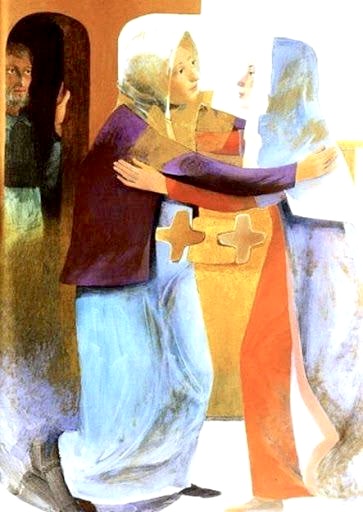
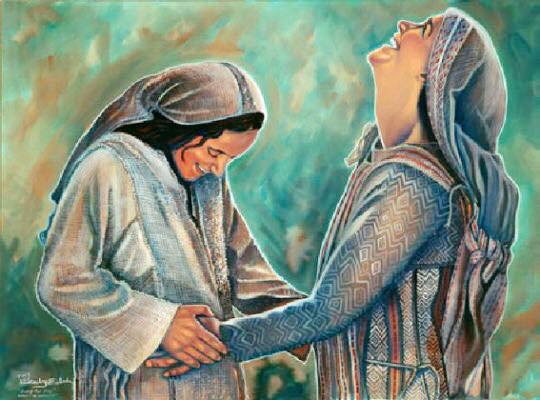
Our celebration of the Solemnity of the Assumption of Our Lady gives us a good reason to look beyond our present woes into the glorious inheritance we are all destined for as sons and daughters of God. Mary’s life was not bereft of struggles. Mary faced trying situations that tested her faith in God and humanity. At the Annunciation she gave her “Yes” to God’s will for the salvation of humankind despite the strange and illogical terms presented to her by the angel.  Even to the very end — at the foot of the cross where she witnessed the suffering of her Son, Jesus, as He won for us salvation! Had it been anyone else, they would have easily lost focus and perhaps turned away from God. Not Mary. She kept her gaze firmly fixed on Jesus and remained faithful to her committment to God. She may not have understood everything happening to her and to her loved ones but she trusted in God’s higher purpose.  She remained most trusting of God and His mysterious ways. Her steadfastness, her single-heartedness was not prompted by any external motivations, but rather by her fundamental faith in God. Elizabeth extols Mary in today’s gospel passage saying… “Blessed are you who believed that what was spoken to you by the Lord would be fulfilled.” (Luke 1:45)

Like Mary we are all invited to see past our struggles and remain trusting in a God who has a beautiful future prepared for all of His faithful ones. Indeed, we have so much cause for despair with what we have to contend with these days. As today’s mass preface says… “Mary’s Assumption is a sign of sure hope and comfort to God’s pilgrim people.” Mary is a hope-filled sign for all of us who continue to struggle in this life. 

In our parish in San Roque, we have been wanting to have a big statue of our Blessed Mother that is similar in size to that of our image of St. Joseph. Being an Assumptionist priest, my instinct is to introduce the parishioners to Our Lady of the Assumption. The Assumption of Mary image is one of my favourite depictions of the Mother of our Lord because although she retains her humanity, she is so honored and loved by the angels lifting her up to heaven. She is assumed body and soul. It is important to know this that she is closer to us. She is very much one of us. Her arms are open-wide, outstretched, reaching up in anticipation of the precious reward she is to receive from on high. At the same time she directs all of us, her children struggling here below, towards God’s promise of our future for us in heaven. 

Today, as we celebrate the Assumption of Mary, may we believe what St. Paul in our Second Reading says… “For just as in Adam all die, so too in Christ shall all be brought to life.” (1 Corinthians 15:22) We have been promised a future with God in Christ. May we see in Mary a cause for hope and rejoicing in God’s promise of a future in heaven for all the faithful followers of her Son Jesus. Let us look forward to the day when we the faithful ones can fully share with her the fullness of God’s promises in Christ!

Fighting! Stepping out of Despair

Homily: Nineteenth Sunday in Ordinary Time (B)

John 6:41-51

8 August 2021 

Fr. Ricky C. Montanez, AA

“ECQ na naman!” “Back to square one!” “Wala na namang trabaho!” “Saan na naman tayo kukuha ng papakain natin sa ating mga pamilya?” “Kelan kaya matatapos ito?”  How many of us have heaved these sighs of frustration now that Metro Manila and many parts of the country are back on the strictest lockdown. As my friend observed… “It seems like a vicious cycle.” Some of us are at the point of giving up on the fight to end the pandemic. 

What we are going through right now can be likened to the frustration of Elijah in the passage from the First Book of Kings. He has lost his appetite for doing God’s work. Elijah is frustrated to the point of death. He has not been successful in calling the people away from their sinful lives. He has had enough. So, he calls on God to take his life instead. “So, Elijah calls on God to take his life instead. He prayed for death saying: “This is enough, O LORD! Take my life, for I am no better than my fathers.” (1 Kings 19:4)

In this Sunday’s gospel something similar is happening. Jesus is also having a hard time convincing people that He is who He claims Himself to be. “How can he say, I have come down from heaven?” (John 6:42) The objection centres on the fact that they feel they know Him and are familiar with his parentage. How can He claim to have a heavenly origin when they are certain of His human origins?

Instead of being discouraged and frustrated at their non-acceptance, Jesus responds by saying: “No one can come to me unless the Father who sent me draw him, and I will raise him on the last day.” (John 6:44) What Jesus is trying to say here is that it is only through faith that they can come to Him and learn to accept Him. Their rejection of Him is a sign that they have not been called by the Father since it is the Father, not we, who finds us and leads us to Jesus, the True Nourishment. It is only in faith that they would be able to see beyond Jesus’ human origins and acknowledge that He indeed is the “bread that came down from heaven.” 

Similarly, it is easy for us to be tempted to believe that God has abandoned us. It is so easy to succumb to despair in dealing with all that we are all going through lately. The readings this Sunday teach us not to give up. As the South Koreans often say: “Fighting!” “Laban lang! Habang humihinga, may pag-asa!”  We are reminded that the only assurance we are given is in our faith in a God who loves us and who does not delight in our suffering. With the eyes of faith, we see God in Jesus who continues to love us and provide us with what we need for our life’s journey. And for us Catholic Christians, it is also in faith that we come to see beyond the material substance of bread and wine as we receive our spiritual nourishment in the very Body and Blood of Jesus in the eucharistic feast we celebrate. 

When we lose our appetite for life, we are in effect grieving personal losses of freedom, independence and a perceived control over our environment. We tend to retreat into ourselves and fail to see clearly the whole world that is filled with hope, beauty and positivity. St. Paul in his Letter to the Ephesians says that we should imitate Jesus. He tells them that they should be kind and treat others with the same grace and generosity shown to them by God. (Ephesians 4:30-5:2) In so doing, we can become ourselves a source of nourishment for our brothers and sisters in need. When we make an effort to uplift others we simultaneously step out of our own despair. 

Sa panahong ito na marami ang naghihikahos dahil sa epekto ng pandemya at lockdown – BE KIND.

Sa panahong ito na tila walang katapusan ang pagsubok sa atin – BE GENEROUS.

Sa panahong ito na tila sinusubukan ang ating pasensya ng iba’t ibang restrictions para ang lahat ay mailigtas – BE STRONG.

The challenge for us these days of another hard lockdown is to respond positively, not with rebellion, murmuring and indifference but with a renewed sense of humanity, with faith and above all with hope, which finds its very foundation in the love of God that is continuously poured in our hearts.