Prophets After Jesus’ Heart

Homily: Fourth Sunday in Ordinary Time (B)

Mark 1:21-28

31 January 2021

Fr. Ricky C. Montanez 

A friend of mine has been feeling burned out from her job in Makati.  She recently said she was considering quitting to focus on creating content on her own YouTube channel featuring her hilarious life experiences even if the videos would invade her privacy and make her look silly and unflattering.  She joked that she would put her pride up for sale if she could earn enough to retire young. Surprisingly, lots of kids today hardly dream of being engineers or architects or accountants but they aspire to be bloggers and influencers on social media! In 2020, the highest paid influencer on Instagram earned $142,000 per post! On the same list is a guy with 24M followers who earns $82,000 per post!  On YouTube, the highest earner of 2020 is a 9-year-old boy. By opening toys, playing with them and giving his opinion about them he earned almost $30M despite the pandemic. 

Many young people look up to people who are known as influencers. They have gained immense popularity through their vibrant presence in various social media platforms. But who exactly are these people? They are those persons who through blog posts, videos, photos, tweets and so on are able to generate interest in something. By posting something on a wide range of topics to which some of them are truly an authority, some who simply claim to have knowledge, while others are simply touted to be experts by virtue of their followers, they are able to exert influence on people’s decisions and courses of actions. They are so powerful that they can even shape and sway public opinions on a given political issue or party depending on which side they choose to take or which political agenda they want to endorse. Some of them are certainly helpful in disseminating information, acting as witnesses to the effectivity of products or raising awareness on important issues. Others simply do and say things to generate a hype that translates to an increase in their following or more cash for their pockets. 

The prophets in the Old Testament were hardly influencers.  They were very unpopular figures who lived in such dangerous times of political unrest. They often spoke of doom and gloom and were tasked by God to warn His people and their leaders of God’s wrath should they persist in breaking their covenant with God. In the First Reading from the Book of Deuteronomy, Moses enjoins the people to heed the words of God’s prophets. He also calls the people’s attention to consider their own calling to be responsible prophets themselves. He warns them of the dire consequences of deviating from the life-giving message of God. He urges them to be humbly reliant on God for direction and courage. A prophet does not speak His own words but He is simply a mouthpiece for God, conveying a message of truth, no matter how unpleasant or unpopular. 

Jesus was very much a great influencer in His time.  He caught the attention of many because of the wonder of His miracles and as He grew popular, people sought Him out and listened when He spoke.  In today’s gospel passage from Mark, the people experience Jesus as an authority figure in terms of His teaching and healing ministry. We are told… “People were astonished at Jesus’ teaching, for he taught them as one having authority and not as the scribes.” (Mark 1:22) Again, the people were amazed at Jesus’ power when He casts out the “unclean spirit in the man” (Mark 1:23). People were astounded yet confused as to the source of Jesus’ authority which was evident not only in the power of His word but also in the act of freeing the man from the unclean spirit that tormented him. The words of Jesus yielded so much power that not only did it move people’s hearts to take notice of Him and to follow His lead but it caused the demons to recognise Him and to obey His commands. They know who Jesus is… “the Holy One of God”! (Mark 1:24) They attest to the divine identity of Jesus and His power over them.  

Many of us are readily swayed by the eloquence and charm of powerful speakers or charismatic personalities whom we wish to emulate. This is what makes the so-called influencers so fascinating to many people these days. Never mind if what these people are saying may be what is farthest from the truth. There are some of us who allow ourselves to be duped and manipulated by their powerful words. This brings us to the question of how to be discerning. Who indeed are the true prophets of our day? We take the cue from Jesus Himself. First of all, Jesus was credible to His listeners because His actions were always consistent with His words. Jesus was never pretentious nor did He do things for popularity. Recall Jesus’ scathing rebuke of the Pharisees: “So, practice and obey whatever they tell you, but don’t follow their example. For they don’t practice what they teach.” (Matthew 23:3) It is thus no surprise why the Gospel accounts relay how Jesus’ adversaries desperately tried to find some reason to entrap Him since it was not easy to destroy a man who lived with such integrity. It saddens me that there are still many in society today who continue to believe in people who say one thing and choose to do something otherwise. Secondly, one’s credibility increases when it is motivated by goodness.  Jesus’ genuine care and compassion are very much evident in the way He carried out His healing ministry. Jesus’ words of preaching touched their lives and healed their emotional wounds and satiated their hunger. It is quite commendable when some of these influencers use their voice to bring to people’s attention the plight of some of our brothers and sisters that needs to be addressed. From time to time you would see netizens posting photos of people in need to either generate help or to inspire people to help those similarly situated around them. A recent one that went viral featured a Lola (grandmother) who was selling her crocheted items like coin purses, wallets, water bottle holders, etc. under the train station in Manila to make a living. The post went viral because many were moved by her perseverance and hard work and at the same time they felt sorry that working at her age she was placing herself at risk of contracting the virus.  Because of that post, people in the area took notice of her and helped her by buying her crocheted items. Lastly, the indication of a true prophet is shown when the good of others rather than one’s personal interest is the primary concern. To promote the welfare of others should be priority over the need for popularity. Sadly, some of these people looked up to by others to guide them in their decision making would rather tend to compromise the truth to keep their social media status and approval intact. In Jesus, we are challenged to relearn how to recognise authority. The only sure way to recognise authority is to follow those who serve. In Jesus, may we exercise authority through the loving service of others. 

As we continue to discern who we allow to have influence over us, let us also strive to become true prophets in our time. Let us pray that we may have the courage to always speak what is true and the mindfulness to live what we speak. May we manifest the same integrity as Jesus had shown throughout His life on earth. As the psalmist encourages us, let us then keep our hearts open to God’s word at all times so as to become prophets after Jesus’ own heart.

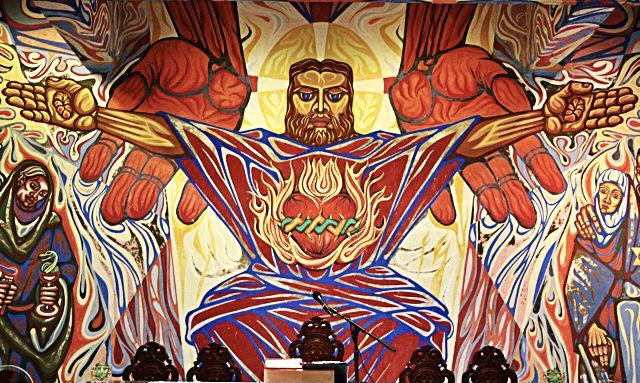
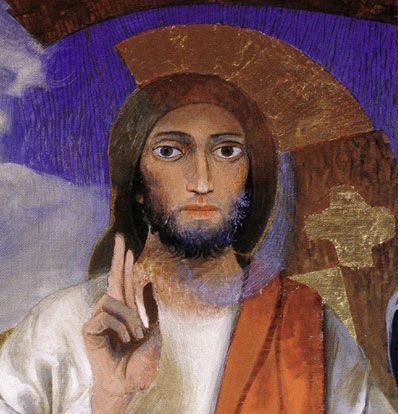
Art Work by Arcabas (Jean-Marie Pirot)

The Power of “The Call”

Homily: Third Sunday in Ordinary Time (B)

Mark 1:14-20

24 January 2021

Fr. Ricky C. Montanez 

Cardinal Chito Tagle was my professor in Theology and he was also the one who ordained me to both the diaconate and the priesthood 10 years ago. I have always known him to be a wise and humble person with a profound influence on people.  A friend of mine once told me that their batch in the seminary had planned an exposure trip to Davao. They were all excited at the prospect of taking a flight to Davao. Upon learning that they wanted to take the plane, Father Chito then intervened saying, “Wait, why take the airplane? Maybe it is better to take the boat.” Heeding Father Chito’s suggestion, the class agreed to take the boat so they started checking out rates for airconditioned ship cabins. Then Father Chito asked again, “Why the airconditioned accommodation? That isn’t the purpose to get to Davao so whatever means to get there is all right. It is always good if we could be in solidarity with the poor.” In the end, they all took the boat on economy class to Davao.  

Have you encountered someone so fascinating and admirable that you tend to hang on their every word and before you know it, they have such an influence on you that you just can’t seem to say no to them? It could be a parent, a teacher, a mentor, a lover, a leader, etc. 

In today’s Gospel Jesus appears to have been such a person with so much magnetism and influence on people. The story is about the call of Jesus’ first disciples — Simon Peter and his brother Andrew, James and his brother John. Simon and Andrew were doing their daily work and casting their nets at sea. Then Jesus shows up. He was just passing by the Sea of Galilee.  He chats with them a little and says “Come after Me, and I will make you fishers of men.” (Mark 1:17) If you think about it, this is a command, and not a request, coming from a total stranger.  Recall that John the Baptist had just been arrested and Jesus was just starting His ministry.  He had not yet accomplished all those great miracles or amassed such a following for his teachings. He was a nobody to these fishermen who knew little more than their trade as to the events in other towns.  How strange that at Jesus’ invitation these fishermen “abandoned their nets and followed Him”!  (Mark 1:18) To do what, might I add? To be “fishers of people”!  What could that mean for a fisherman? For someone who caught fish to sell for a living, why would he want to catch people? And yet, they immediately responded to Jesus’ invitation left their livelihood and followed Him. The passage continues saying Jesus “walks a little farther” (Mark 1:19) and spots James and John in their boat mending their nets with their father, Zebedee, and a few hired men. As soon as Jesus calls them, James and John leave their father and what we can surmise to be their inheritance — the fishing trade. To those listening today who have established a family business. Imagine yourself, teaching your children the business in the hope that one day they will take over, and then some unknown comes along, chats with your kids and the next thing you know they tell you they are out the door to follow the stranger!  Crazy, right?  Zebedee must have been in shock!  Simon, Andrew, James and John promptly and unquestioningly took a leap of faith and went as they were, leaving their whole life behind, to follow Jesus. 

As we delve into this awesome encounter I would like you to take note of 3 things — the caller, the call itself, and the response. There must have been something so compelling about Jesus that the four of them could not resist or delay.  Mark explains little but I assume that it was Jesus’ divinity and his natural penchant for teaching, coupled with the urgency of His message that convinced the four men.  First — Holiness… The inherent holiness of Jesus was so powerful and alluring in itself. To some extent I have felt this. As I watched the beatification of Carlo Acutis I was so moved by the holy life of this boy whom I never even met or heard of before. But as he was introduced through testimonials, I found myself overwhelmed with emotion that I couldn’t help but cry. Second — Innate Skill… Recall that Jesus was a carpenter.  He did not go to school to become a teacher, but He was so effective in preaching that people came in thousands to listen to Him.  As a teacher, I can tell you that not everyone in that profession is effective. No matter how interesting the topic, if you are boring and speak with no command or mastery of the subject matter, no one will listen to you. It could have been His voice or the manner by which He related to them that captivated their hearts or simply because Jesus spoke with such confidence and authority that Simon and his brother Andrew dropped everything at the words “Come after me.”  Third — Urgency of the Message… Recall that soon after John the Baptist’s arrest, Jesus started proclaiming “The Kingdom of God is at hand! Repent and believe in the Gospel.” (Mark 1:15) At hand… meaning it is so near! There is no time to prepare adequately. To do so, one must move NOW. And how is this message so believable? It is powerful because it is the truth. Jesus was credible because He only spoke the truth. 

Jesus calls the four fishermen to a life of casting their nets in a different way and using their talent for fishing to serve God as Jesus’ companions and helpers in establishing God’s Kingdom. We, too are called by God. Jesus presents us with the same challenge: “Come after me, and I will make you fishers of men” [of people]. (Mark 1:17) The Lord often approaches us while we are in the middle of our busy everyday life. He calls us to use our own skills, talents and gifts in new and different ways.  Sometimes the call of God challenges us to go out of our comfort zones, to venture into unchartered waters, to have the boldness of the saints who were willing to be fools for Christ or to give up their very lives to follow Him.  We, priests and religious men and women, live like that. We have to leave our hometowns and our families to go where we are assigned and needed, all in the service of God.  Most of the time, God simply asks us to serve Him where we are, in the particular context we find ourselves in.  A good friend of mine who loves to cook recently started selling a few of his dishes to his friends to help sustain the feeding program he and his family initiated to benefit the poor, the homeless and the hungry in the streets of Metro Manila. How do we know God is calling us? The call of God is always directed towards our own good and those of our brothers and sisters. We must be able to recognize and listen to God’s voice. God’s voice is unmistakable. We may not hear it with our ears but we hear it in our hearts or by inspired ideas. God’s voice makes us contribute to the building up of God’s reign in our midst. It allows us to foster unity and goodwill among people.

Of course, we read in the Bible how the lives of these four (4) plus eight (8) other individuals were transformed by just hanging around Jesus, assisting Him, listening to His teachings, witnessing His miracles, and by simply being His friends.  Because they said “YES” to the call of Jesus they lead such extraordinary lives and accomplished great things beyond their wild imaginings.  Can you imagine what might have happened if they said “NO”? Would God have punished them if they chose otherwise?  I don’t believe so. He does not walk away from us angry and say, “Bahala kayo sa buhay niyo. Kung ayaw niyo, di huwag!” After all it was God who gave humanity free will and He honours our decisions. I think the more important issue here would be the consequence of not conforming to the will of God. God knows everything and is not limited by time or space.  This enables Him to know what is best for us individually and collectively as a people in a society and as participants in the ongoing history of the world.  Simon, Andrew, James and John did not have to follow Jesus’ invitation. Most likely they would have continued to live and eventually die as fishermen, but it is by no means a punishment. For sure they would not have had the privilege of being with Jesus, learning from Him, and living remarkable lives as His disciples. What if Blessed Mary said “NO” to God? She would probably still be married to Joseph and they would lead a holy life together with their family but she would not have become the Mother of God and our salvation may have been delayed or compromised. I repeat, God will honour man’s decision to say no. However, God will continue to call us to what He knows is best for us and humanity. God can be so relentless because He loves us so much that He wants the best for all of us. He will never tire of seeking us out or trying to lead us on the best path.  What better proof can I give you today but the story of Jonah. Jonah was a prophet but then God called him to preach in Nineveh. The passage details Jonah’s obedience but if you read the passages prior you will see that he initially said “No”. He boarded a ship headed in the opposite direction of Nineveh. Then the ship was attacked by a violent storm and Jonah was thrown overboard and was swallowed by a huge fish where he survived in its belly for 3 days and 3 nights. When he finally agrees to God’s plan, Jonah is coughed up on the shores near Nineveh! Despite saying Yes to God, he is still the reluctant prophet.  Nineveh is large enough for a 3-day walk, but Jonah starts preaching only one day in, meaning he has just practically entered the city, near the outskirts. He is nowhere in the heart of the city where all the people are. Yet his message to repent is spread and heeded by the people and their king and they are spared from destruction.  It holds true for us today. God may not send a big fish to swallow us whole but He sends people or opportunities to help us see the wisdom of conforming to His will. It may take seconds or decades but God is patient with us. He waits for our “YES” to His call. Though our “NO” may have dire consequences, God’s love for us always finds a way to make things right or good in the end.   

If we respond unreservedly to Jesus’ persistent call of discipleship, we are assured of an unusual life as well.  Our response to God’s call is not a one-time event but rather a process. It grows and matures and deepens over time.  As we continue to heed Jesus’ call for our own conversion, may we be most attuned. May we be most attentive. May we recognize where Jesus is leading us to help Him establish God’s Kingdom in our midst — right where we are. Yes, this is the time! Let us open ourselves to learn new ways to be Jesus’ disciples in our time.

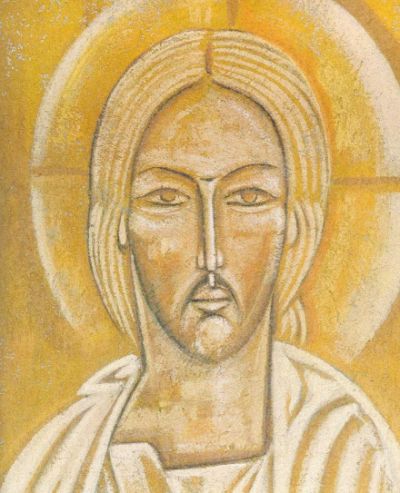
Art Work by Claudio Pastro

Bringing to the Fore the Child in Us

Homily: Feast of the Sto. Niño (Proper Feast in the Philippines)

17 January 2021

Mark 10:13-16

Fr. Ricky C. Montanez

When I was 6, I already loved to sing and I really wanted to be a professional singer. My Lola loved to sing and my Tatay was such a fan of American rockstar Ricky Nelson that he named me after him! Our family did not own a camcorder back then so none of my antics were ever recorded for posterity. These days there is so much online content featuring the misadventures of kids and amusing episodes in their lives. My nieces enjoy watching videos of kids interacting with family pets. Many of my friends love the videos where kids think and act as though they are grown-ups. There are many charming videos online that show toddlers speaking as though they were adults. I particularly love the videos of kids showcasing their talent because they don’t feel the pressure of criticism yet. There is a viral video of a cute little boy who impressively recites Bible verses A to Z without much difficulty at all. (A: “Ask and you shall receive, seek and you shall find.” B: “Be kind to one another.” C: “Cast your cares on the Lord and He will sustain you.” Z: “Zion hears and rejoices.”) My friend jokingly said that this boy puts to shame any Christian adult and perhaps even priests, with his familiarity with the Scriptures.

Today we celebrate the feast of the Sto. Niño (Holy Child). We celebrate our Lord Jesus Christ, as a small defenceless child.  It is indeed strange to perceive the omnipotent, omniscient and omnipresent God as small, weak and defenceless, right? Why do we choose to highlight this stage of our Lord’s earthly life?  In today’s Gospel passage, Jesus teaches that “whoever does not accept the Kingdom of God like a child will not enter it.” (Mark 10:15) Jesus presents an unusual model of discipleship — children.  The members of a society who usually take a back seat, are deemed without a voice and whom the world relegates as less important are esteemed by Jesus.   And I am sure, the adults in those days, as well as many among us today, wonder “why”?  Would this be the same reason Jesus is revered today in the image of a child?  Having had the chance to reflect on this matter, I would like to share with you three concepts which I believe we should learn from this story of the importance of children. 

First and foremost, we ought to value the children of today for they are the most beautiful and pristine of God’s creations.  We know that children are fully dependent on their parents and the adults around them for their every need. They lean upon those who care for them for their food, their clothing, their shelter, for assurance, for love, for guidance and protection. Unburdened by the hardships of life and uncorrupted by worldliness and sin, they are fundamentally trusting of those older than them. They do not have the capacity to be judgmental of others.  Their naiveté and innocence leads them to believe people are good, all is well in the world, and that they can be somebody wonderful when they grow up. Children are not concerned with all the roadblocks of life. They only see their dreams and are propelled by hope to reach them. They are not proud. They do not have ulterior motives. They are honest and brave, untainted by social norms and taboos. 

Secondly, as adults, I think we have to rediscover the child in each of us. We too were once innocent children with hopes, dreams and nary a care in the world.  Of course, as we mature, we are overwhelmed with troubles and we learn to rely on ourselves and our own strengths to resolve them. As we grow older and experience more of life and the world, we have the tendency to become too independent; forgetting that we need others, that we are also dependent on others. We think we are fine on our own. We forget that we are interdependent.  Some of us would dare brag and declare that we are self-made — that we have achieved success entirely on our own; that we owe nothing to anyone, completely forgetting the source of all our blessings and gifts.  In terms of our faith relationship with God, we should heed Jesus’ suggestion that we be more child-like. God, after all, is our adoptive Father who loves us dearly and on a very personal level such that He provides all our individual needs and looks after our well-being. In the presence of our loving God, there is no reason to always overthink, overreact, worry too much and struggle to be noticed. God knows each of us His children. He knows our quirks, our weaknesses, our desires and our needs. We do not have to scream to get His attention. He knows, He sees, and He listens to the whispers of our hearts. We simply have to trust, depend and rely upon God. We are invited to adopt this humble stance, this simple and accepting demeanour toward God who shapes and reshapes our hearts in preparation for His Kingdom. 

Thirdly, I think our celebration of this feast reminds us to remember that we have a responsibility to children. As adults, it is within our power to create a world that is safe for children to grow, develop, and reach their potentials.  I am not just speaking to lawmakers who must create policies that protect our minors but to everyone. We can be mindful about protecting our environment so that children of tomorrow can enjoy clean air, the beauty of nature we have had the chance to behold, and to also have the opportunity to benefit from the richness of our natural resources. We also have to protect our culture for our children, to give them a sense of their identity and learn to value it. We have to protect our ethics and our morals so that children grow up learning what is right, and learn to defend it as well. And as a priest, I urge you to teach the faith to the young. Do not allow them to grow up without a strong foundation in Jesus Christ. Jesus is our anchor, our guide and our life’s goal. Share this gift with the young. Do not allow them to grow up not knowing Jesus and His love for them. 

Today, as we celebrate the Feast of the Sto. Niño, we are given a model of child-like discipleship and complete dependence and trust in God as our Father. As followers of Jesus we have to take heed. We always have to remember that “to be great is to be like a child.” The image of the Child Jesus reminds us what it is to be free, pure, and innocent and to value and protect those characteristics in ourselves and in children around us.  The uncomplicated simplicity of our dear Sto. Niño brings us to see… that simple is enough —- simple and true from the heart is enough. Through the Holy Child’s example, may we at all times recognize our reliance on God and our interdependence on one another. May our devotion to the Sto. Niño teach us to trust in God’s unconditional love for us, to cultivate more child-like attitude within ourselves, and motivate us to safeguard the children in our society. Sto. Niño, bless us.

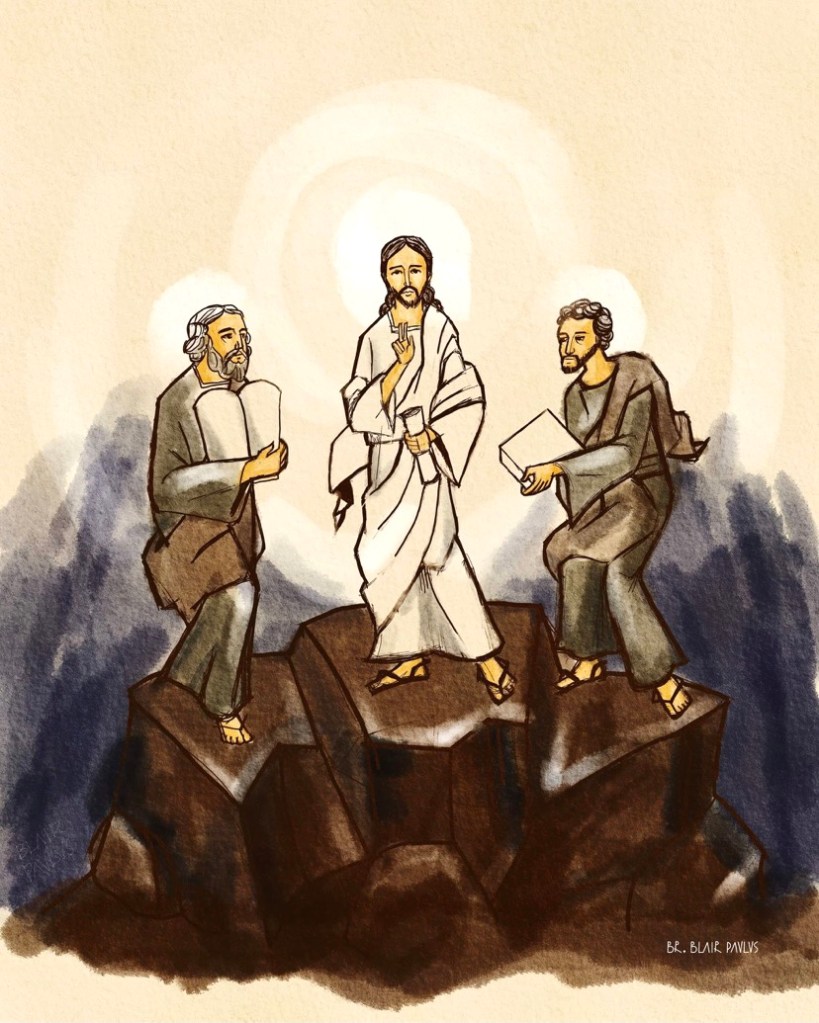
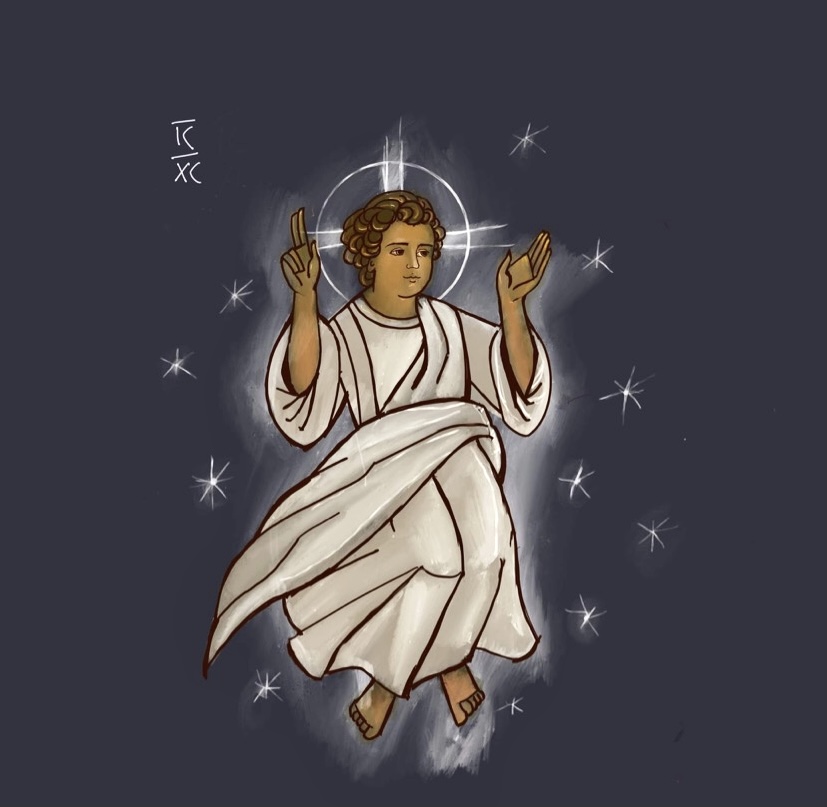
Illustration: Blair Paulus C. Nuyda, AA

Being True to Who We Are and our Calling

Homily: Feast of the Baptism of the Lord (B)

Mark 1:7-11 
10 January 2021

Fr. Ricky C. Montanez


I recently chanced on a friend’s social media posts and I was in awe at how slim and flawless she looked on her Instagram and Facebook photos! When I complimented her on her age-defying looks, she “PM-ed” me and revealed that she had been using an automatic photo retouching feature on her smart phone that alters face and body proportions to achieve a slimmer, younger and radiant image. I couldn’t help but laugh because she had me totally fooled! At the same time, I felt a tinge of sadness that she had fallen into that social media trap. 

I somehow miss the simpler days before the popularity of social media and a fascination for selfies and all these face and body filter apps.  Life was less complicated when we didn’t have to worry about proving anything to strangers on social media, some of whom have really nothing nice to say and who make a habit of putting people down by bullying and harshly criticizing. We struggle with contriving falsified images of ourselves and our circumstances in our desire to create a perfect life that others will admire and envy. We are so obsessed with perfection even if nothing can be farthest from reality.  Life, after all, can be messy and difficult. We can’t endeavour to keep up a perfect image 24/7. Isn’t it too taxing to put that much pressure on ourselves?  I’m sure all of you can give examples of netizens who like to angle and contort themselves into all these poses to hide flaws and appear skinny or long-legged or curvier in the right places. These photos can encourage a skewed perception of body image and make normal girls feel dissatisfied with their appearance. What about those who like to post photos of their travels or eating at all these fun places? Do you think their lives are always exciting and that they never have problems in life?  What about the so called “influencers” who are pressured to always be first to present something new and interesting that will go viral, even at the cost of being sincere and responsible? The truth is, no one is perfect and no one can always be at their best. 

It’s scary when even the persons closest to us do not know us anymore or when we start to believe our own lies of this altered reality that we create.  In a World Youth Day message, Pope Francis called on the youth “to resist the false image of reality portrayed by social media and reality TV and take charge of their own destiny.”  He emphasizes that “To have a past is not the same as to have a history.” He acknowledges that none of us can undo our past. However, we can choose to learn from our mistakes and our suffering, allowing these lessons to form part of our history — moments that contribute to who we are today and teach us to navigate through life in the present.  The Pope even suggested to faithful youngsters that they spend more time with their grandparents, who have lived most of their lives independently of social media pressures, in the hope that their love, concern and the wisdom of their experience will provide them with a foundation of values and a proper guide through the intricacies of life. 

As long as we are alive, we expect to learn continuously and inevitably make mistakes. We cannot discount the importance of having someone in our corner to guide us and affirm our actions. The virtue of humility teaches us that we cannot know everything at once and that we must accept that others have lived and survived certain moments ahead of us, and are better equipped to help us figure life out. We all need people who care about us enough to correct us, guide us, and affirm us — whether it be a parent, a grandparent, an older sibling or relative, or an authority like a teacher or superior at work.  In Mark’s account of the Baptism of Jesus we are given a glimpse of the depth of Jesus’ relationship with His Father. At His baptism, Jesus hears for Himself an affirmation of His identity as God’s Beloved Son, and the pleasure that His Father takes in Him. “And a voice from the heavens, “You are my beloved Son; with you I am well pleased.” (Mark 1:11) This is even foretold in the passage from Isaiah where the prophet speaks of God’s Chosen One, a Saviour pleasing to the Lord, who in His meekness guides the people and brings justice. (Isaiah 42:1) The timing of the Father’s loving estimation towards Jesus is perfect because He begins His public ministry after His baptism.  The Father’s message encourages Jesus to accomplish the mission God entrusted to Him and to endure the opposition and rejection He was to face from His adversaries. 

As a teacher I am convinced that everyone needs affirmation, children most especially. We all benefit from being reminded that goodness exists within us, that we are special because we are unique, and that we all have the potential to be exceptional. Our children need to be shown how valuable they are in the eyes of their parents and in the eyes of God.  Don’t we all, at some level, no matter what age we are, still try to be “pleasing” in the eyes of our parents? Isn’t it reassuring to hear from our parents when they take pride in us; or how happy we have made them?  These words not only elicit joy, but also the needed affirmation that sustains every child through the ups and downs of his/her life.  Without affirmation, a child can become distant and insecure. If no one cares enough to give gentle correction, they could grow up thinking what is wrong is right. If no one acknowledges the good in what they say or do, these young impressionable minds can be led to believe that they are never good enough. How easy it would be for them to look at themselves as inferior to others who present themselves with confidence as prettier, smarter, wealthier, more fashionable, or more popular. Sometimes, children even carry these issues with them long into their adulthood.  To go a step further, persons who cannot see the good within themselves will most likely have a hard time seeing the good in others as well. We must always appeal to the beauty of our identity as beloved children of God. All children of God are beautiful, unique, good, and worthy of love.  When we forget this ourselves, or make people feel otherwise, we run the risk of prompting feelings of discontent and unhappiness with who we are. After teaching for eight years, I am completely convinced that it is imperative for all educators to help their students to see the image of God within them and to encourage them to use the God-given potential in each one of them to serve others. 

Through today’s celebration of the Baptism of Jesus culminating the Christmas Season, we are reminded that the identity and the affirmation which Jesus has received from the Father is the same identity and affirmation which we can claim for ourselves by virtue of our Baptism.  We have become beloved daughters and sons of God through Baptism! Through it, we also share in the mission of Jesus. We too, are called to be the anointed of God, serving others quietly and kindly, accomplishing for Him the task He has for each one of us    — tasks vital in establishing His Kingdom here on earth. May the Father be “well pleased” with us as we strive to be true to who we are and to what we are all called to be — God’s beloved children.

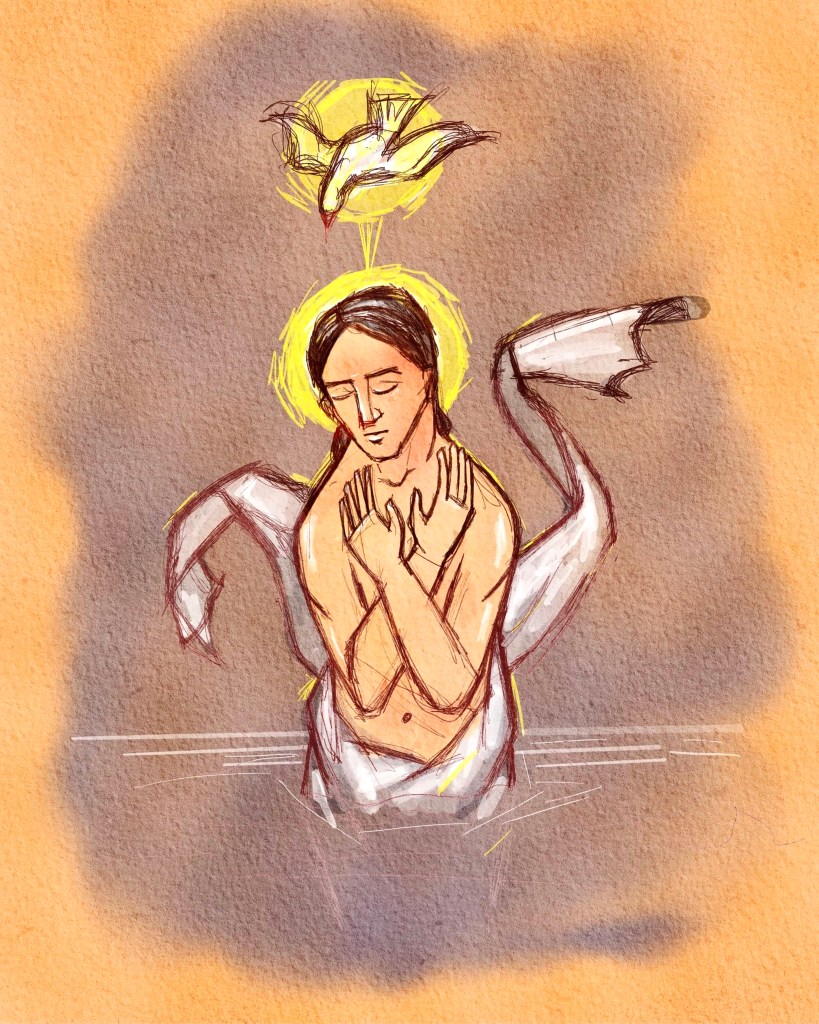
Illustration by Blair Paulus C. Nuyda, AA

Becoming Light, An “Epiphany” for Others

Homily: The Solemnity of the Epiphany of the Lord

Matthew 2:1-12

3 January 2021

Fr. Ricky Canet Montanez 

In my family, part of our custom for welcoming the new year is to make a list of resolutions. Do you still do that?  I’ve always managed to keep my resolution to eat healthy after the holidays. As for the other items on my list, I do try to fulfill them but in all honesty, I do not always succeed. Nonetheless, it doesn’t dissuade me from making my list every year because it gives me the chance to assess how I behaved in the past and see where I need to do better in the next 12 months. 

Three days into 2021 and I can tell you this is already a special one.  We are welcoming the new year equipped with more life preservation skills than ever, and a renewed capacity for selflessness and compassion fashioned by the difficult circumstances of the pandemic. I think that we can also agree that for this generation, no other year has been eagerly anticipated with higher hopes for the blessing of new beginnings and the restoration of prosperity. I read a Facebook post from a friend that kept me thinking on New Year’s Eve about how important it is for us to be properly disposed to welcome the graces this new year has to offer. It was a quote by Vern McLellan saying “What the new year brings to you will depend a great deal on what you bring to the new year.” Let me say it again, “What the new year brings to you will depend a great deal on what you bring to the new year.” This is great advice!  Think about it! This new year will either be good or bad depending mostly on our resolve to reinforce good habits and to break bad ones during the entire year. We have to resolve to carry with us in the new year what is life-giving and part with those that are death-dealing to make the most of this opportunity for new beginnings. 

The Epiphany of the Lord is the celebration of the manifestation of Jesus Christ to the world, represented by the three Magi, who were Gentiles.  Let me quote again the words of the First Reading… “Rise up in splendour, Jerusalem! Your light has come, the glory of the Lord shines upon you. See, darkness covers the earth, and thick clouds cover the peoples; but upon you the Lord shines, and over you appears his glory. Nations shall walk by your light, and kings by your shining radiance.  Raise your eyes and look about; they all gather and come to you: your sons come from afar, and your daughters in the arms of their nurses. Then you shall be radiant at what you see, your heart shall throb and overflow, for the riches of the sea shall be emptied out before you, the wealth of nations shall be brought to you.” (Isaiah 60:1-5) This is a beautiful image foreseen by Isaiah of the day when God would be worshipped by different nations. It is an assurance that the gift of His presence is intended for all peoples. 

Today I invite you to take a closer look at our gospel passage to see how this revelation of Christ was received by the main characters in today’s story. We are presented with two contrasting responses from the Magi and the Jews loyal to Herod. The Magi whom we presume to be learned in the fields of astrology and astronomy discovered something so extraordinary in the alignment of the stars and the planets that they decided to go on a dangerous adventure to find the prophesied King of the Jews. We take note that these men were quite influential in determining the courses of action for people. They were very highly respected and most likely very wealthy as well. Setting out on this dangerous journey meant leaving behind them comforts, luxury, indulgence — things that they were familiar with and accustomed to. They risked everything they had including their very lives to find where the Star was leading them.  Their diligent efforts lead them to Jesus.  It must have been by divine inspiration that they recognized a king in such a humble environment. In all humility they bowed and paid him homage and presented him with gifts fit for royalty. In contrast, we read in the passage that King Herod and all of Jerusalem with him were greatly troubled. We surmise that Herod was rightfully threatened by this prophecy and those surrounding him were also fearful that they may lose their power, their influence, and their security should a new King unknown to them and not among their allies should rise up and take power.  Herod’s heart turns duplicitous and maliciously plots against a potential rival. The chief priests and the scribes were no different, allowing themselves to be complicit to Herod’s scheming. As we all know from the readings of December 28 that Herod went as far as having all male babies 2 years old and younger, executed to ensure the elimination of the future king. 

In life we are faced with choices on how to respond when God manifests Himself to us through people, events, and situations. We can be like Herod or the chief priests and the scribes who remained closed and unyielding to the showing forth of a divine reality that was revealed to them. It is with sadness that I recount this story of a senior citizen who was very active and very independent before the pandemic. She detested that her children were very strict with her throughout the quarantine. She started to entertain thoughts that they did not love her anymore because they did not allow her to do what she wanted.  Because of her “tampo” she distanced herself from her kids and grandchildren and is wallowing in depression. She lost interest in her usual activities and did not even participate in the charitable endeavours organized by her friends and contemporaries who were themselves house-bound.  It is lamentable but you see, we are no different when we shut our eyes and show disinterest in following the light that emerges to illumine our path. When we ignore people who caution us on our decisions and actions or call us out on our bad behaviour, we are suppressing the light, fearing changes or losing what we have been trying to hold on to.  When we try to silence their voices or pretend to be blind to the signs, we are choosing to remain in the darkness of error and vice rather than allow the light to clarify our path and transform us.  However, we can be like the Magi — open-minded, humble in their search for the truth and having hearts filled with courage to take the necessary risks to follow the “light” from heaven.  For certain, it was this attitude that allowed us to survive the perils of 2020 and to find meaning in that experience. For those among us who found ways and means to reach out to the sick and the hungry during the lockdown, to provide food, clothing and essentials for those ravaged by the typhoons, do you realize that you allowed yourselves to be led by the light of heaven out of the bleakness of our circumstance? Did you not find Jesus in the people you helped? When you looked into the eyes of people to whom you showed compassion, did you realize you were staring into the eyes of Jesus? In the same way, those at the receiving end, experienced what it was like to be touched by Jesus through your kindness and generosity! 

2021 sets all of us on a new path of adventure, filled with chances to find better versions of ourselves, to find more lucrative or fulfilling opportunities, and of course, to find Christ the King in people and situations we encounter in this new year. We can be certain that the search is always guided and overseen by God who blesses us with all these wonderful opportunities that may draw us closer to Him.  When an “epiphany”, a discovery of an amazing insight comes to us, may we be prepared to receive truth, and to endeavour on a pilgrimage towards the light. As the Magi wisely took another route on their way home, may our life’s journey lead us to a new path where we become wiser and better persons ready to offer the best of ourselves to this King who desires to be revealed in us and through us this year.

Art Work by Claudio Pastro

Pondering like Mary; Waiting in Hope

Homily: Solemnity of Mary, Mother of God

1 January 2021

Luke 2:16-21

Fr. Ricky Canet Montanez

On Christmas day, less than a week ago, in this very church, we experienced an earthquake. I was in the choir loft watching the sanctuary lamp swinging and must admit I was scared. I thought to myself… “Oh no, isn’t 2020 through with its surprises yet?”  It turns out it was a 6.3 quake that originated from Batangas. All of us present, heaved a sigh of relief when the shaking lasted but a few seconds. This morning December 31, I read in the news that Croatia just suffered an earthquake of similar magnitude last Tuesday but it was more devastating for them. (Lord, have mercy. “Nagpahabol pa si 2020.”) 

From beginning to end, 2020 was hardly the year we all planned it to be. Just a few days after we welcomed the new year, thousands of Filipino families were displaced and millions worth of properties damaged by the eruption of Taal volcano. Just when Batangas and Cavite provinces were starting to get back on their feet, the whole nation was placed under lockdown to contain the Covid 19 pandemic. And as if to establish itself in the world, this monstrosity just kept eating away into every aspect of our lives. Disaster followed disaster. No wonder 2020 is the year we would rather forget and cancel from calendars and history books. We have indeed taken a painful beating all year round. Although it was a tragic year for most of us, 2020 has not been a complete loss. As a matter of fact, it will be a year that none of us living in these days should ever forget. The Year 2020 has taught us to re-order our priorities correctly and to value what is right in front of us — the little things, the often-overlooked details that actually make life worth living. There is so much to be thankful for! We just need to take a step back and look a little bit closer to see the many blessings in disguise that we all have received in abundance this year. 

Here we are on the cusp of 2021, some deeply traumatized and fearful to welcome another 365 days of surprises, others struggling to be optimistic and hopeful for better days ahead.  The world promises that a vaccine made available will restore us to a society we have been used to.  The Church however, proposes to us another perspective. On the first day of the new calendar year we are asked to look to the Blessed Virgin Mary as an example of faith and contemplation, guiding us and protecting us, her children, throughout this new year. In the gospel passage from Luke, the shepherds gain considerable insight into the wonder of God being born into a human family that He may be present among His people. It says “they made known what had been told to them about this child… and all were amazed.” (Luke 2:17-18) If you recall, whatever they knew, was made known to them by an angel who said, in earlier passages “Today in the town of David, a saviour has been born to you, He is the messiah, the Lord ” (Luke 2:11) and a great more angels appear and sing praises “Glory to God in the highest and peace to those on whom His favour rests”(Luke 2:14).  Mary, is described as “reflecting in these things and keeping them in her heart.” (Luke 2:19) I find it a little unnatural, don’t you? Any mother can tell you that if they had undergone such difficult circumstances for the birth of their child and then be told by absolute strangers that their new-born is the Messiah, the Saviour of the world, they may be ecstatic, but more confused, and skeptical more than anything. Mother Mary on the hand, is different, being the perfect picture of calm. She was reflective, not overly emotional, and she kept everything in her heart.  

What does it mean to keep things in one’s heart?  Recall that Mary cooperated with God’s plan of salvation, without fully understanding how everything would unfold. The gospel accounts even tell us how the events leading up to the birth of Christ were not easy.  They were dangerous and even bordering on scandalous. Still, everything came to be, quietly, by the grace of God. It is pretty clear that Mary did not understand all that was happening to her. How could she? When the Angel Gabriel spoke to her, she listened intently, and pondered, before she responded. Yet to be told she would be with child by unnatural means, and that the child would be God’s Son must have been a strange and frightening message for a young girl to receive. Yet she trusted the angel. She was calm despite what we imagine to be rumours about her virtue and an impending divorce from Joseph.  In the Presentation of the Baby Jesus in the Temple, she also gets two strange messages… the prophetess Anna is overjoyed at the promise of salvation in Jesus while Simeon tells her “that a sword will pierce her heart” (Luke 2:35). Once again, she does not freak out or challenge these declarations that come with such grave consequences.

I’d like to believe that it was because Mary always chose to ponder on these events that she was able to respond in faith and fulfill her role as mother to God’s Son, keeping her true to her word right to the very end, as she stood by Jesus at the foot of the cross. The experience of God’s providence, guidance and faithfulness in Mary’s journey is a continuous lesson in trusting God completely, even without being privy to all the details of His plan. In her heart she was confident that things would unfold as God intends, when He intends, and all would be the better for it. 

Similarly, so many things have happened to us in the last few months. Did we really take the time to sit and think about them or were our fingers much quicker in grabbing our gadgets to complain and criticize on social media? Perhaps, we should take a moment to look into the faces of our loved ones and see how we have come to know each other better living in quarantine, how we appreciate life more since we have been consistently taunted by death, how we have learned to value what we have instead of sulking over what we have lost.  I know of a family who lost a loved one in May. He had fallen ill over Christmas and had needed special care. His condition began to deteriorate by April and he passed away in May. His family realized that if not for the lockdown, the children might not have been able to take time off work to care for him meticulously, personally attend to his medical needs and make him feel comfortable and loved in his final weeks. Looking back, the situation was providential for them and it allowed them to expand their heart’s capacity for love, care and forgiveness.

To be honest, who is to say, what awaits us in the new year? We cannot prevent untoward things from happening in 2021. We can only pray and hope in God. The 19th century British preacher Oswald Chambers once said, “Faith never knows where it is being led, but it loves and knows the One who is leading.” 

Mary is an inspiration of contemplation and reflection for all of us.  She is there to comfort and console us as we make sense of all our painful experiences last year.  She promises us her guidance and protection as we prepare ourselves to be open to the possibilities of the new year. This is not to say we are going blindly through life without any clear direction, expecting life to look kindly on us. It is foolish and naive to think life will always be easy. The idea is to follow Mary’s example, calmly welcome the surprises of life, trust that God is in control and be confident that God loves us so much that He does not desire our destruction. Jeremiah 29:11 says, “For I know the plans I have for you”, declares the Lord, “plans to prosper you and not to harm you, plans to give you hope and a future”. Mary’s example encourages us to have pondering hearts like hers, patiently waiting, confident that in time the meaning and the value of all these events will be revealed. As we welcome 2021, we pray that Mary, the Mother of Jesus (The Mother of God, and our Mother) may inspire us to have pondering hearts so as to receive the fullness of God’s promises and the blessings of new beginnings. May God smile upon us this year, be gracious to us and grant us peace!

Illustration by Blair Paulus Nuyda, AA

Parenting with Roots and Wings

Homily: Feast of the Holy Family

Luke 2:22-40

27 December 2020

Fr. Ricky C. Montanez

Back in London, we had a volunteer catechist who conducted First Communion preparation class for the parish children. She used to tell me how impressed she was by one of the Filipino kids because she could recite the three basic prayers by heart! She stood out from all the other children who could identify the prayers but always needed a guide to recite them. Curious, the catechist asked the girl why she knew the prayers so well. She said that every night, her “mum and dad” would lead the whole family in praying the rosary. Wasn’t that magnificent?  Despite the presence of religion teachers and catechists, a child’s first introduction to the faith is truly through one’s parents. As the Catechism of the Catholic Church stresses: “The Christian family is the first place of education in prayer. Based on the sacrament of marriage, the family is the ‘domestic church’ where God’s children learn to pray ‘as the Church’ and to persevere in prayer.” (CCC #2685). 

In the Gospel for the Feast of the Holy Family we are given an idea of what Joseph and Mary were like as members of their society. Like a devout Jewish family, Mary and Joseph brought their Son to the temple to be dedicated to the Lord. Let’s rewind a little bit.  Mary was betrothed to Joseph, meaning their families observed their Jewish traditions of matchmaking.  Then when a census was decreed, they obeyed the guidelines and travelled to Bethlehem even if Mary was due to give birth any time. As good citizens, they proceeded despite what I imagine, people discouraging them from making the trip as it was potentially dangerous for both mother and child.  Twelve years later, we read about how the Holy Family went on pilgrimage to Jerusalem for Passover. These instances tell us that Jesus grew up in a solid Jewish religious upbringing in His early life with Mary and Joseph. Through the example set by His parents, Jesus “advanced in wisdom and age and favour before God and man.” (Luke 2:52) 

Joseph and Mary, were young, first time parents, not yet experts in child care.  They were not wealthy but they always did the best they could for the little boy God entrusted to them. They readily went to extremes to protect Jesus when His life was in danger. And years later when Jesus was separated from Joseph and Mary in crowded Jerusalem, they did not stop searching until they found Him.  Their experience of a parental nightmare tells us, they may not have been perfect parents 100% of the time but they were good and loving parents who made a strong effort.  That story also suggests that they were not overly protective of their son, likely allowing Him a bit of freedom to enjoy growing up around children his age. There are few details in the Bible about the childhood and teenage years of Jesus. It is by accounts of people’s encounters with Jesus in His adulthood  that tells us Joseph and Mary had raised Him right. As one commentary puts it so beautifully, “The woman who could say, “I am your servant, my whole being is at your service,” (Luke 1:38) raised a Son who would say, “Father, may your will, not mine, be done.” (Luke 22:42)  Joseph, the silent, upright man, obedient to God, provided an excellent role model for Jesus such that He could say with confidence, “My food is to do the will of Him who sent Me and to accomplish His work.” (John 4:34)

Parents play a vital role in the development of a child.  To state the obvious, they must provide for the needs of their children and provide a home for them. They are also a child’s first teachers. They have a duty to make the child feel loved, safe, and wanted and to guide them as they progress in life. I expect some of you to question my authority in discussing parenting with you today. True, I do not have children of my own but I do have nephews and nieces whom I have doted on since they were born. My sisters sometimes rely on me to be a second parent to them.  Also, for 8 years, I had the privilege of teaching young girls from the ages of 13-16 in Assumption Iloilo. I observed how the demeanour and behaviour of children are reflective of their upbringing. Now that both “Tatay” and Mama are gone, I tend to remember them through the years as they raised me and my sisters. I recall the times they showed me affection, dispensed their wisdom, and expressed their pride and sometimes  their disppointment in the things we did. I’m sure if I ask you to look back into your own childhoods, you can identify moments with your mothers and fathers that define the people you have become today. 

In my teaching career I encountered a student who was almost expelled from school for aggressive behaviour towards her classmates. She would bully her classmates and terrorize them.  She used harsh language, criticised others unfairly and was renowned for peppering every sentence with expletives.  I found out that she grew up in a very strict and severe home environment. She was not allowed to reason out to her parents at home and was simply expected to do as she was told, no questions asked. Without a voice at home, she compensated by being one of the most boisterous and aggressive girls in school. In contrast, she had a batchmate who was quite the cheerful soul. She was a good listener, spontaneous, and consistent in her appreciation of others. She was not the most intelligent in class but she always managed to do her tasks well. Her parents were well-known in the school for being very much involved in the girl’s school activities.  Her parents were very supportive. They made themselves available to their daughter, encouraged her to speak her mind and inspired her to be a conscientious young lady. 

I hear that these days it is difficult to be a parent because the trend is to be lenient with children and let them figure things out at their own pace. Progressive parenting, if you will.  Back when malls were teeming with children, I observed how parents would handle children throwing tantrums.  Usually, they would just toss a gadget to their child to preoccupy and pacify them or put the fussy kid in the arms of ever dependable “yaya” (househelp).  Back when I was a child, throwing a fit got us nowhere. Parents simply would not have it. You’d be ignored and then given a lengthy lecture once you had calmed down. In my time, if you made a mistake, your attention would be called immediately. Spanking was an acceptable punishment as was kneeling with hands outstretched, although, my own parents did not subscribe to those methods. Later on, kids were disciplined by having them stand in the corner, the suspension of  TV privileges or by grounding. These days, the most painful punishment is to take away their gadgets! That is sure to have them shaking in their shoes. Parenting styles and trends have indeed changed through the years. What remains the same is the need to find a balance between understanding kids and correcting them when necessary.  I find two bits of advice very helpful in this aspect.  First, always remember to remain calm, don’t yell and be open to having a discussion about the effects and consequences of their actions. Secondly, teach your child to think rather than force behaviours onto them and they will display good behaviour on their own — without the need for constant warnings or conditions.

It’s not easy to be a parent in any generation. In the past, couples married in their teens and had big families. Later, when people started caring about pursuing careers, they married later in life and chose to have just one or two children. These days, some skip marriage altogether and have kids at whatever age they please. I am not here to judge. I should say, there are many success stories of parenting in every instance.  What is important though is to recognize one’s readiness to commit to raising a child before actually having one.  It is a lifelong commitment that entails a lot of sacrifice and an infinite capacity for love and forgiveness. One must be sure of one’s self as a person, developed one’s own character and figured out one’s values. It is by who you are and what you do more than by what you say that a child learns. Only then can a parent give a child solid foundations for life and nurture their potential, two important gifts to give one’s child — roots and wings. Roots that keep them steadfast no matter what influence the world will have on them and wings to give them the strength to overcome adversity and the confidence to dream and be the best they can be.  On this Feast of the Holy Family, we beseech Mary and Joseph to guide all parents and bless all families with their wisdom and protection.

Illustration by Claudio Pastro

When at the Door of Humility…

Homily: Solemnity of the Nativity of the Lord

John 1:1-18

25 December 2020

Fr. Ricky C. Montanez

Entering the Door of Humility

“By the power of the Holy Spirit He was born of the Virgin and became Man”. At those words, we all kneel each time the creed is recited during CTKs five masses for the Nativity of the Lord. On bended knees we acknowledge in gesture our faith in the great mystery of Christianity that is, God in Jesus Christ was born of a woman by the power of the Holy Spirit, in order that He may become one of us. This is how the Prologue of St. John’s Gospel puts it: “The Word was made flesh and dwelt among us”. (John 1:14) We prostrate ourselves in profound worship of our God who took on our humble state in order that He may raise us all up to status of being the children of God.   

Christmas is an equally important feast, as is Easter, because we celebrate the love of God who sent no less than His own Son to save us no matter how many times humanity has failed Him. “Through him the holy exchange that restores our life has shone forth today in splendour: when our frailty is assumed by your word not only does human mortality receive unending honour but by this wondrous union we, too, are made eternal.” They are the words of the Third Preface of the Nativity of the Lord.  God becoming man, revolutionizes our humanity. We are no longer merely human because as children of God we have been endowed with the divine potential. We are empowered to share in His divinity. “To those who did accept Him He gave power to become children of God.” (John 1:12) St. Irenaeus of Lyons expressed this process of divinization or deification as “God becoming what we are so that we might become what He is.” Each Christmas, we recall this divine condescension and marvel in worship at this unfathomable mystery of God’s love. 

I am sure some of you here have been blessed to visit the Holy Land at least once. In Bethlehem, you can visit the birthplace of Jesus.  Around that small patch of ground is built a massive church called the Church of the Nativity.  To enter, you must cross a small courtyard towards a tiny door that is disproportionate to the size of the church. It is called the door of humility. One has to literally bend and stoop low in order to enter. We are told that it was designed as such to discourage pilgrims in the old days from disrespecting the sacred site by riding their horses through the door.  Our tour guide pointed out to us that even kings and emperors who would visit the place had to dismount from their horses and get on their knees to be able to visit this holy place.  To this day, entering this door is always an act of humility.  It is only right that we must humble ourselves to visit the very place where our loving God stooped down to man’s wretchedness to give us hope. I would like to share with you a quote from Christian-thinker, Dietrich Bonhoeffer, a personal favourite of mine. He once was asked “Who will celebrate Christmas correctly?” He answered, “Whoever finally lays down all power, all honour, all reputation, all vanity, all arrogance, all individualism beside the manger.”  

It doesn’t seem logical that we should meet our God’s deep act of love and humility with arrogance and conceit. Don’t you, agree?   However, we sometimes forget that.  We forget that we ought to rise above our petty selves in order to live up to the potential we have received by the mystery of the incarnation. I know of someone who went to Church one Sunday morning yet entered into a heated argument with another churchgoer in the parking lot.  It really does not matter what started the whole disagreement, he just lost his cool and shouted expletives at the person who had slighted him. He felt bad about it afterwards but he justified his actions saying, “Awful days like this can happen,” “We cannot avoid annoying persons out there” and finally, the overused excuse, “I am simply human.” (Tao lang po.) I am simply human? We tend to think this is a valid excuse when we allow our emotions to get the better of us. Is it really? Was it a good enough reason to ruin one’s day of worship? I’m sure we all have our pet peeves.  When we choose to give in to irritation, we are no different from that person who had an outburst in the parking area after mass. When we think of the Incarnation, we realise that the “I am but human!” excuse takes on a very different meaning for us because Jesus has sanctified our existence and empowered us to become children of God. 

At the other end of the spectrum, we sometimes think that we are on the same level as God, such that God is degraded to someone who is supposed to serve at our whim and grant our wishes on demand like a genie. We get mad when we don’t get what we ask for. We blame Him when we lose things we love or enjoy. We criticize Him for allowing suffering in the world.  A famous friend of mine (“She wants me to refer to her as such.”) was having these very thoughts when her sister snapped her out of it, by asking her, “Who is God in that scenario? You or Him? Know your place.” We forget our place. Our arrogance prevents us from recognizing that God is supreme and that only His power and wisdom are without bounds. We have to learn to humble ourselves before Him and to submit to His plans. He is after all the one who designed the elaborate plan to save us from sin. A plan whose benefits we continue to enjoy. A plan that gives us the promise of spending eternity with Him. 

In closing, I would like to stress the importance of humility. Humility is the only appropriate posture of the creature before the Creator. We all must humble ourselves, bow low and walk through that door.   We surrender everything to God as an act of homage to His generous love for us. It is also our act of faith in our God who has come to make all things possible for us. And so, with Him, we endure suffering more patiently, we continue to hope through all levels of adversity and we give of ourselves more generously in service of our brothers and sisters in need. Today, we hold in faith that the path to a better world does not begin with lofty ideas and grandiose plans but rather on our knees before a God who came to save and raise us up.

Inviting Christ into our Hearts

Homily: Fourth Sunday of Advent (B)

20 December 2020

Luke 1:26-38

Fr. Ricky Canet Montanez 

One of the things I’ve missed throughout this pandemic is travel. I enjoy traveling as much as you do. I learn so much about our country, our world and people. I do avoid traveling during the Christmas peak season when people are desperately trying to get home to spend the holidays with family and loved ones. I opt to visit my family in January to avoid the craziness at the airports. I guess everyone just craves the good feelings of home associated with Christmas. Sadly, this year, airports are going to be ghost towns and bus terminals won’t be bustling with people. This pandemic has everyone observing travel and social gathering restrictions. Many of us, myself included, won’t be having the full experience of being “home”. Those in Bicol and Aurora, have literally lost their homes because of the typhoons; medical frontliners and those keeping peace and order will be busy at work and can’t even be with their families; and those who’ve lost jobs or had to take pay cuts would not have saved up any money for a ticket to go to the province or reunite with family abroad. The most difficult Christmas, I believe will be for families who have lost mothers, fathers, and children during this quarantine — they who were unable to properly mourn their loved ones or even bury them. Home will never be the same. 

Today is the last Sunday of Advent. As we stand at the threshold of Christmas we are asked to consider preparing a home for the Lord. Today’s readings present to us the story of King David and Mary who have different concepts of a house for God. In the passage from the Second Book of Samuel, the settled and victorious King David intends to build a worthy dwelling for the Ark of the Covenant in thanksgiving to God.  David felt it unjust that he lived in a palace while the Ark was in a tent. He thought he was doing the right thing by wanting to build a more respectable “House of God” but God sent the Prophet Nathan to remind David that what is more essential than building GOD a house is making room for God in his life.  Nathan asks David to remember and acknowledge that the power, success and privilege he enjoys have all been gifts from the Lord and that only He would ensure the perpetuity of David’s dynasty. The first-person pronoun “I” has been used eleven 11 times in God’s message through Nathan as an emphatic reminder to David to assess his priorities. We all know how easy it is to leave God out of the picture when we are contented with our lives. We tend to forget that the good things we enjoy in life come from the goodness of God but when misfortune strikes we are quick to grumble, complain, and resent God for such unhappy circumstances.  

In the Gospel, Mary is invited by God through the Angel Gabriel to make room for Him by bearing God’s Only Begotten Son. Mary ponders, questions and clarifies the possibility of the never-before occurrence of the virgin birth.  “How can this be, since I have no relations with a man?” (Luke 1:34) In the end, Mary still agrees to cooperate with God even if she did not comprehend fully what was happening.  She readily made room for God in her life through her Fiat.  Mary could have said no because she was endowed with free will and God does not coerce us into accepting His plans. However, Mary willingly and voluntarily chooses to declare herself the handmaid of the Lord, allowing herself to become the worthy vessel of God’s presence when she accepted into her womb the Son of God, our Lord Jesus Christ. This explains why such importance is given to her and her role in the history of human salvation. This honour is given to Mary as she is identified in the Litany as the Ark of the New Covenant. Rightly so, Mary becomes the living shrine of the Real Presence of God for humanity. In Mary’s obedience, God’s loving plan of salvation, which St. Paul says “has been kept secret for ages” (Romans 16:25) is made manifest.  

Author Thomas Merton best describes the circumstances God has chosen to bless us with His greatest gift to humanity — His Son, Jesus.  I quote “Into this world, this demented inn, in which there is absolutely no room for him at all, Christ comes uninvited. But because he cannot be at home in it, because he is out of place in it, and YET he must be IN IT, his place is with those others for whom there is no room. His place is with those who do not belong, who are rejected by power because they are regarded as weak, those who are discredited, who are denied the status of persons, tortured, exterminated. With those for whom there is no room, Christ is present in this world. He is mysteriously present in those for whom there seems to be nothing but the world at its worst.”  Every Christmas, we are reminded of all the blessings and gifts we have received from God. We are asked if, we too, in thanksgiving, can make room for Jesus in our life, and prepare a fitting home for Him in our hearts. We make space for Him when we are patient, sympathetic, welcoming and understanding of others and ourselves; when we make room for forgiveness for those who have hurt us even if they do not deserve it; when we remove our social biases and respect the differences that exist among us; when we are less critical of our physical and character imperfections and acknowledge that all people are beautiful and valuable; when we look beyond our personal comfort and convenience to extend a helping hand to others.  We are all simply struggling to get by in this world. In truth, none of us is perfect. None of us qualifies as a “fitting dwelling” for God, but He does not judge us for it. He swiftly makes His home in our hearts at the slightest hint of an invitation because the love He has for each of us fills us to the brim, making up for all that we lack. To borrow a line from a movie where Tom Cruise says to his leading lady, “You complete me”, I dare say that Jesus completes each of us. (For the benefit of millennials and GenZ-ers out there, the movie is the 1996 blockbuster Jerry Maguire. 🙂)

All throughout this Advent Season, we have been preparing our hearts for the coming of the Lord. We, too are invited to cooperate with God as He continues to bring the merciful, healing and loving presence of Christ to the world. Like Mary, we, too are invited to participate in the ongoing mystery of God becoming flesh in the lives of people today. May we allow Him to be born in each of us that we may become the visible presence of our compassionate God to those who desperately need Him in their lives and in their homes.

With Him, we rejoice amidst our woes

Homily: Third Sunday of Advent (B)

13 December 2020

John 1:6-8, 19-28

Fr. Ricky C. Montanez 

Last week the world was ecstatic over the news that some people in the United Kingdom had finally received the much awaited COVID vaccine. Although it might take months or even a year for these vaccines to reach our shores, the good news has offered much needed hope to those overdosing on woes from this pandemic.  It has been a long 10-month journey and we are still far off from the finish line but the news of the vaccine gives us a reason to look forward to better days ahead. 

On this Third Sunday of Advent, the word “Rejoice” is heard a number of times in the readings. It is fitting because today is also called Gaudete Sunday, and Gaudete is Latin for Rejoice. In the first reading we hear Isaiah declare, “I rejoice heartily in the Lord.” (Isaiah 61:10) The Psalm that follows ought to be familiar to all of you. It is Mary’s Magnificat — her hymn of praise! “My spirit rejoices in God my Saviour,” (Luke 1:47) sings Mary. In the second reading we find Paul urging the Thessalonians: “Rejoice always!” (1 Thessalonians 5:16) In our Gospel, John the Baptist is more than happy to admit that someone greater than He, whose sandal strap he is not worthy to untie, is coming after him.  John the Baptist appears to be an unnerving figure as he brazenly responds to the incessant questioning of the Jewish religious leaders. His confidence results from a certitude of his own identity and mission, and an interior joy in knowing that something, rather, someone wonderful is coming. He is happy to prepare the people to receive an enormous blessing, that they did not even deserve!  This Sunday, we too, are invited to rejoice or be joyful as we prepare ourselves this Advent for Christmas 2020.   

The big question is — How in the world are we to be joyful in the midst of the seemingly insurmountable troubles borne by this pandemic? What reason do we have to be joyful when our movements are restricted, jobs are endangered and businesses are failing; when we are forced to look at each other with suspicion and we must live in constant fear of contracting or spreading this deadly virus? On the home-front, we continue to feel the catastrophic effect of the health crisis on many aspects of our life, especially our finances. I read that charitable institutions are badly struggling and understandably so, because all of us have deeper pockets these days.  It is a huge challenge for them to meet the ever-growing demand for food assistance among the millions of poor families across the country who are going hungry because they no longer have a means of livelihood. It is almost inconceivable to tell them to “rejoice!” Right? 

Before we move forward, let us be clear on one thing — joy is not the same as happiness. Although both refer to a state of well-being, happiness is more of an emotional response when we feel pleasure or satisfaction. Joy on the other hand, is a stronger, deeply rooted disposition that is independent of factors that bring us bliss. Joy can cause us to smile even when there is nothing to laugh about. The theologian Henri Nouwen describes the difference between joy and happiness saying happiness is dependent on external conditions, joy is the experience of knowing that you are unconditionally loved and that nothing – sickness, failure, emotional distress, oppression, war, or even death – can take that love away. Thus, joy can be present even in the midst of sadness. I saw an FB post about a couple who recently filed for bankruptcy because their business could not survive these months of crisis. However, they are not sulking over their loss. They are grateful for the freedom of having nothing to prove and excited for the possibilities of the next endeavour. For them, this is not the end. Their failure will not be the legacy they leave their children.  This will not define them as people. They choose to be undaunted by the mountains in their path and concentrate on simply taking their next step together. Instead of being miserable, they choose to be joyful because they remain grateful for all the blessings they have received in life. St. Paul says, “in all circumstances give thanks, for this is the will of God for you.” (1 Thessalonians 5:18) There is joy in gratitude. 

St. Paul tells the Thessalonians that they should be joyful at all times. He does not dismiss the reality of suffering because it is part and parcel of human life. Instead what he advocates is the joy that comes from knowing and believing that Christ’s power is stronger than all the forces of death and evil that we have to contend with in our human existence. This joy that comes from a deep faith is only possible when we are able to see the bigger picture. Instead of being discouraged, we should always strive to see how the hand of God is at work in the midst of all our life’s challenges. We have to believe that our God is one who continues to bring out the promise of rebirth from all the death-dealing experiences in life.  We recall the story of Joseph and how the mistreatment of his brothers led him to Egypt and how in Egypt he was able to save his own people from famine. In their tearful reunion, Joseph tells his brothers: “As for you, you intended to harm me, but God intended it for good to accomplish what is now being done, the saving of many lives.” (Genesis 50:20) For sure, it is a story of forgiveness, perseverance and faith. But it is also a story of joy because Joseph did not allow himself to be embittered by the tragedies of his life.  He welcomed and trusted the surprises that God laid in his path. Recently there was an article published in CBCP’s site that cited a recent study of the effect of faith on mental health.  It says that Americans who continued attending religious services WEEKLY, not just monthly, are the only group who registered improved mental health in 2020. All other demographics in the study showed a marked decrease in mental well-being. At times we cannot really see what lies ahead but if we anchor ourselves on God we are able to live serenely and even joyfully in spite of the adverse circumstances we find ourselves in life. There is joy in faith.

God is in control of everything and we trust that He designed all of creation to serve a higher purpose.  He desires that each one of us accept the significant part we must play in it. He engages us and motivates us to accomplish His purpose. I am reminded of the scientist Ugur Sahin. Are you familiar with this name?  He is a Turkish immigrant to Germany who is presently the CEO and co-founder of German biotech firm BioNTech that partnered with pharma giant Pfizer to develop one of the first Covid-19 vaccines. As a boy his family fled their native Turkey for greener pastures in Cologne, Germany. Life is never easy for an immigrant because options for employment are not as abundant nor profitable. He had to overcome various hurdles in life to get to where he is. It was the opportunities and resources he had in Germany that allowed him to develop a vaccine we need so badly today.  His life is a testament of how God can bring out a higher good from the adversity we experience. We must be patient because we never know when we are being prepared for something important. There is joy in trusting in God’s plan. 

Finally, I would like to call your attention to John the Baptist, who declared he only lived to magnify Christ. “I am not the Messiah.” (John 1:20) “I am not even worthy to untie the straps of His sandals.” (John 1:27) Jesus is the light and John is a witness to the light. Just as John the Baptist was aware of his role in relation to Christ, we, too can lead happy and contented lives if we acknowledge the person and mission of Jesus —- God who loves us so much that He became one of us to save us. If we keep in mind how valuable we are to Jesus that He would give His own life for us without question, we would possess an unspeakable joy that will make us rise above life’s adversities.  

Now do you see the answer to our big question of HOW to be joyful this advent 2020?  Count our blessings and be ever grateful. Nurture our faith in the Lord and trust that God has a plan. The outcome may not be immediately visible to us but we trust that God is always good. Finally, we must fix our eyes on Jesus and fill our souls with love for Him. He is the source of all joy and the reason for this season. We prepare ourselves this advent joyfully anticipating the revelation of our Lord and Saviour in our lives.