Dealing with the Mystery of God’s Plan

Homily: Eleventh Sunday in Ordinary Time

Mark 4:26-34

13 June 2021

Fr. Ricky C. Montanez, AA 

In the past 14 months many awful things have happened to us or to people we know, and humanity, in general, making us wonder if all of it really is “part of God’s plan”.  As a priest, I have never had to conduct this many virtual blessings before cremation than in the recent months. I find myself at a loss for sufficient words of consolation for the bereaved.  A friend of mine contracted the virus and died so unexpectedly. He was a healthy 39-year-old, gone too soon. A few months ago, I was shocked to hear that a college classmate of mine had passed away. She had cancer but my classmates and I believed her treatment would succeed in extending her life. So many people are hurting from her loss. I cannot blame them for asking, “Where is God in all this? Has He been sleeping?” 

Our readings this Sunday give us two (2) learnings about God’s complicated relationship with His people. FIRST is that God has a master plan for all His people. In the passage from Ezekiel, God’s people were held in captivity in Babylon and they likely struggled to believe in God’s promise of deliverance. Imagine waking up every morning as a captive in a foreign land hoping and praying that would be the day God fulfills His promise of deliverance only for the sun to set with no change in the situation.  It was in their desperation that the prophet Ezekiel was sent to speak to them of God’s promised restoration for His people. Ezekiel uses the metaphor of the tender shoot from which their salvation shall come forth. God Himself will cultivate this chosen sprout until it reaches full growth. “It shall put forth branches and bear fruit, and become a majestic cedar.” (Ezekiel 17:23) Note that the method is not an immediate one but a slow process of growth. According to Google, a Lebanon cedar grows 15 inches a year and reaches 100 feet in maturity. That means, it takes roughly 80 years for a shoot to grow into its maximum height as a gigantic tree that can live up to 600 years!  This passage mirrors Isaiah’s prophecy of the coming of a Messiah who shall descend from the house of David, the son of Jesse. “There shall come forth a shoot from the stump of Jesse, and a branch from his roots shall bear fruit.” (Isaiah 11:1) Do you know how long it took for Isaiah’s prophecy to be fulfilled?  About 700 years — from the time of Isaiah till Jesus was born!  In both stories, the metaphors end with a promise of a bountiful, prosperous future as suggested by the “fruitfulness” of the tree. It does however entail a lengthy passage of time that is indeterminate. This leads us to the SECOND learning — we need to be patient because everything happens in God’s time, not ours.  He is not a slave who does our bidding when we demand it. In the Second Reading, St. Paul advises the Corinthians to take courage and be steadfast in the midst of their struggles in life. As Christians they are to “walk by faith, not by sight.” (2 Corinthians 5:7) Life for them was not easy and Paul was not privy to God’s plan of deliverance for them. He could only advise them to develop eyes of faith to perceive the hand of God helping them through all of life’s adversities.  

Each of us has had to bear burdens during this pandemic —- to be afflicted with COVID, to lose loved ones, to lose a job, to suffer hunger, to struggle with sanity, etc. Some of our troubles are so challenging that it is difficult for us to imagine how we can overcome them. We are overwhelmed by the crushing fact that things are undeservedly failing around us and things are not working well in our lives.  I was not exempt from this experience.  For those of you who may not know, I am a religious priest seeking a broader experience of diocesan life. As an Assumptionist, I have had lengthy assignments in the US, South America, and most recently the United Kingdom. It was particularly difficult for me to be abroad when my mother became so sickly and I could not frequent her bedside to attend to her medical needs and comfort her. I felt that becoming a diocesan priest in the Philippines would allow me to be more available to her.  Unexpectedly, Mama died a few days after the lockdown of 2020. I was not even able to preside over her funeral mass nor witness the inurnment a year later. She was the reason I needed to stay and now she is gone. My heart was broken and I wondered what lay ahead for my priesthood. Despite my personal ordeal, I trusted God, serving Him and his people faithfully at Christ the King Parish throughout the height of the pandemic. Within days of Mama’s 1st Death Anniversary, I received word that I had been accepted in the diocese under conditional status as priest-on-loan. It has been a long wait but I believe the shoot has finally sprouted for me. The well of hope within me is now overflowing and I pray that my journey with the diocese will become a tree bearing much fruit. 

Finally, I’d like to share with you the story of a young girl with the stage name Nightbirde, who, just this week, secured the golden buzzer from judge Simon Cowell assuring her of a spot in the finals of America’s Got Talent. In her hauntingly beautiful voice, she sang an original composition about her journey with cancer. By age 30 she had 3 bouts with cancer. When she was first diagnosed, she had to stop working and her husband had also left her saying he did not love her anymore. In her blog, she talks about the difficulties of her treatments, her struggles with faith, her arguments with God, and her eventual surrender to His will. She won the first 2 battles with her disease. This time she has cancer in her liver, spine and lungs and was told she had a 2% chance of survival. Her experience taught her to trust God and to be always grateful for the people in her life and for the time she has to live. With a conviction that 2% is “not nothing”, she joined the talent competition to fulfill her dreams of becoming a singer. She wowed the judges with her talent, her cheerful disposition and her optimism. She said “[one] can’t wait until life isn’t hard anymore until [one] decides to be happy”. Her Christian faith reminds her that no matter how bleak the days, God’s last word is not one of suffering but of wholeness and restoration. 

I have no definite answers as to how this pandemic and all the suffering it wrought fit into God’s plan. Only God knows that. I do know that God is always good and it is but logical that He desires only goodness for His beloved people. The consoling and transforming interventions of God (the reign of God) in our lives is often mysterious and imperceptible to us just as a scattering of the tiniest seeds and the sprouting of a small shoot. Our personal experiences of deliverance and renewal assure us that by God’s grace and in God’s time, the seeds will grow into the largest of plants with large shady branches, and the shoot can grow into a majestic tree.   For the moment, let us learn to live each day, with faith — filled with the hope and grace to live our life as fully as it comes.

If you want to help San Roque Parish, Bagumbayan, Quezon City, please get in touch with Fr. Ricky. Thanks.

A Spiritual Longing for the Eucharist

HOMILY: Solemnity of the Most Holy Body and Blood of Christ 

Mark 14:12-16, 22-26

6 June 2021

Fr. Ricky Canet Montanez, AA 

I miss seeing our churches overflowing with people. Of course, the global health crisis has rendered us helpless in rectifying the situation, so we make do with what we can by God’s grace. Still, my heart sinks when I see only a handful of people at mass, knowing how vital the Eucharist is to the faith life of the church. Since public masses resumed, several parishioners have told me that they were moved to tears after receiving their first communion in months. (I have observed this myself over the past year.) I believe that these moments of epiphany are testimonies to the True Presence of Jesus in the Eucharist. Today we shall reflect on Jesus in the Blessed Sacrament and then we shall talk about the relevance of this mystery in our life. 

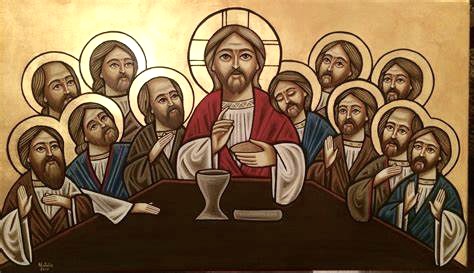
This Sunday we celebrate the Solemnity of the Most Holy Body and Blood of Christ, traditionally called in Latin as the feast of Corpus Christi (The Body of Christ).  We acknowledge and honor the wonderful gift of the Eucharist and its implication in our life as our spiritual nourishment. In the past Sundays, we have been contemplating on God’s desire to remain present to all of us even after Jesus’ Ascension. At the Feast of Pentecost, we reflected on the empowering presence of the Holy Spirit in the lives of all believers. Last Sunday, we celebrated the reality of the Trinity and God’s role in our relationships as we foster communion among us. And now, we are made to appreciate the enduring presence of Christ in the Eucharist as the sign of the Covenant (a new covenant) in the blood of Jesus shed for us. Through the lasting gift of Himself made available to us — His sacred body and blood — Jesus continues to sustain, nourish and strengthen us to be true to what we all have become through Him — God’s beloved children. Through the Eucharist, Jesus remains present to us even after His death to be the life-giving presence that we count on throughout our life here on earth. 

As we participate in Holy Communion, we experience that unique sacramental presence of Christ received as nourishment in the form of bread and wine, as spiritual food in our journey through life. It only seems logical that we ought to receive communion with deep respect.  Yet how many times in our life have we taken this gift for granted? What is going through your mind when you are in line waiting for your turn? What do you do when you go back to your seat? Do you speak to Jesus as though you were alone in a room with Him and He had your full attention? Because that’s essentially it. Recall moments when you were overwhelmed by another person’s expression of love for you. Essentially, in Holy Communion, God is pouring out His love and mercy on you. In the person of Jesus, He intimately unites His Divine Self with your mortal being, filling you with the grace to be worthy of your divine inheritance. 

For this reason, saints and mystics are often enraptured when receiving communion and are always disposed with such humble reverence. A young man who died in 2006 at the age of 15 was so convinced of the True Presence of Jesus in the Sacred Species that he devoted his time and his talent to creating a website called Miracoli Eucaristici that presented a collection of testimonies of Eucharistic Miracles —accounts of hosts manifesting into pieces of living human flesh. It was clear to Blessed Carlo Acutis that he needed to share this important aspect of the Catholic faith with those who like him, were fully immersed in our digital age. To believe in the True Presence we essentially hope in our own transformation.  He once said: “The more Eucharist we receive, the more we will become like Jesus, so that on earth we will have a foretaste of heaven.” 

St Augustine once said “If we receive the Eucharist worthily, we become what we receive.” Even nutritionists today, tell us we are what we eat. In a way, it is true because what we put in our tummies is absorbed by our system and manifests in our bodies. In receiving communion, we receive Jesus and we have this opportunity to become more like Jesus. He is food for our souls that we may have strength to make the right choices. When our many concerns overwhelm us, some go to mass to draw strength from Jesus, His Word and the very gift of Himself broken and shared in the Eucharist.  Moreover, as we are nourished by Jesus through the Eucharist, we are challenged to become more and more a source of  nourishment for others. We are impelled to live the Christ-life by going out in service to the needs of others so Christ can continually be vibrantly present and active among His people in our world. It is in appreciation of this great gift that we pattern our lives on Jesus and His giving over of his body and blood for us all. 

Radio Veritas recently conducted a survey asking Filipino Catholics if they believe that the Holy Eucharist is indeed  “the actual body and blood of Jesus Christ” and not just a representation. Majority of those surveyed confirmed their belief in the core of the Catholic Christian faith — the real presence of Christ in the Eucharist. This is indeed a highlight in our celebration of the 500 years of Christianity in the Philippines! What does this mean to us at a time when  many of us are not privileged to receive the Eucharist sacramentally.  For now, many must content themselves with watching a mass from their homes. And I praise God that His Church remains alive in that sense but there looms the danger of finding this situation to be the more convenient and preferred mode of worship. The Church has been very clear that livestream and online masses are allowed to provide occasions for spiritual growth and to unite the faithful in prayer at this time when we cannot physically gather, but it is not meant to replace being present at Mass. We may be temporarily dispensed from Sunday obligation but joining a mass online still does not give us the opportunity to physically consume the Body and Blood of Christ.  Spiritual communion is just a temporary provision. In Filipino… “pantawid gutom lang siya”.  Kaya dapat nating asamin na makabalik at makadalo tayo sa banal na Eukaristiya sapagkat yan ang bilin at pamana sa atin ni Hesus. 

“Take and eat… This is My body.” (Mark 14:22) “Take and drink… This is My blood.” (Mark 14:24) Jesus is very direct.  He does not mince words. He is present. The Feast of Corpus Christi prompts us to look forward to the day we can be physically present at mass and to never extinguish our desire to be nourished by Jesus in Holy Communion. Ating ipagdasal na balang araw, sana sa lalong madaling panahon, magkita-kita tayong muli sa misa.

*Here are some of the ways you can help San Roque Parish, Fr. Ricky’s new parish assignment. 

Thru Bank Deposit:

Robinsons Bank: RCBC San Roque Parish

Account Number: 115230002492

For Checks: 

Please make checks payable to: 

RCBC San Roque Parish

The Triune God and Our Relationships

HOMILY: Solemnity of the Most Holy Trinity 

Matthew 28:16-20

30 May 2021

Fr. Ricky Canet Montanez, AA 

In the 90’s there was a very popular sitcom on 6 young people struggling in New York to build their careers and find love together as a tight group of FRIENDS. The show ran for 10 seasons, catapulting the actors to superstardom. To date, reruns continue to be played in numerous countries in different languages and the show has allegedly been watched 100 billion times!  Just recently, together with over a million people, I watched the much-awaited FRIENDS REUNION, 17 years after the final episode aired. The continuing friendship among the original cast was genuinely evident and the show maintains its entertainment value and relevance even among the kids of its original 90s fans. 

I’m a fan myself and I do have some favourite episodes of the 236 that were made. The show was successful because the issues were so relatable and fans identified with at least one character. We all loved the depiction of friendship and viewers felt that Ross, Rachel, Phoebe, Joey, Monica and Chandler were like actual friends they let into their homes every week. I know of fans who have watched all 10 seasons several times over, having purchased the VHS and DVD box sets when Netflix was not yet a thing. It is great to relive the laughter and the good feelings generated by watching this ensemble group of FRIENDS. 

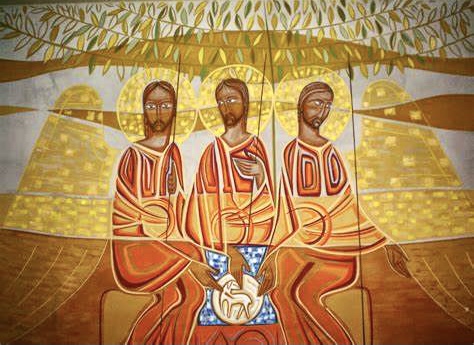
Today we celebrate the Solemnity of the Most Holy Trinity. We believe in One God who reveals Himself to us as Father, Son, and Holy Spirit — three persons of the Holy Trinity. The very notion is difficult to perceive, explain and especially understand without faith. No one has truly seen the Father, even the great people of the Old Testament blessed to have come into His presence and spoken to Him. The Bible has no accounts confirming God as a fatherly old man with long white hair and a white beard. Just last week we celebrated Pentecost — the descent of the Holy Spirit on the apostles. However, all biblical accounts only describe a strong wind and tongues of fire… no human form. It is by mankind’s experience of Jesus and His teachings about the Father and the Holy Spirit that we come across the trinitarian nature of God. Yet, until now, despite centuries of study, no one has come close to unlocking the mystery. Our understanding of the Triune God is limited to how “Father”, “Son” and “Holy Spirit” emerge in scripture in relation to one another. We understand God the Father as Creator whose existence and every action is love; who sends His Son, Jesus, His beloved, on a mission of redemption. In turn, it is Jesus who sends the Holy spirit, the bond of love proceeding both from the Father and the Son, to His followers to guide and strengthen them once He returns to heaven in the Ascension. 

However, I personally feel that our understanding of the Trinity is grounded on our experience of God and our need for Him. In the passage from the Book of Deuteronomy, we are told how God has been especially gracious in His dealings with His Chosen People — caring enough for them, providing their needs, which in this case was freedom from Egyptian slavery, an identity as a people, and a land to call their own. Of course, there are accounts of God reprimanding and punishing His people for their obstinacy and hard-heartedness as a father disciplines his children, but these are balanced out by accounts of how God desired that all His children prosper and enjoy the fullness of life He offers. As Moses enjoins the people: “You must keep His statutes and commandments… that you and your children after you may prosper, and that you may have a long life…” (Deuteronomy 4:40) This God goes even further. He has poured into the hearts of all believers His Spirit that moves us to relate to Him as our Abba (our Daddy, our Itay). In His Son Jesus, we are not treated like slaves but rather as brothers and sisters, adopted children of the Father, who are destined to a heavenly inheritance. St. Paul says: “The Spirit himself bears witness with our spirit that we are children of God, and if children, then heirs of God and joint heirs with Christ…”(Romans 8:16) All throughout Scriptures, we encounter a God whose very nature is goodness and is moved by that loving nature to share His goodness with all of us His children. 

As I am on the cusp of moving out of Christ the King Parish, the reality of my departure has finally dawned on me this week.  I am in a flurry of emotions. I am thankful for the confidence our Bishop has placed in me and I am eager to begin my new assignment.  At the same time, I feel a great sadness in parting with people I have come to know as friends. CTK has been a wonderful and happy home for me for many years.  It has been a joy getting to know many of you on a personal level. I have learned that when one enters into a sincere relationship with God’s people, one inevitably reaps happiness. I always tell myself that as a priest, this is what I have signed myself up for, for the rest of my life. I do not own my life. The life of priests is one given to God and in the service of God’s people. Hence, though difficult we are to be always prepared to go where God needs us to minister to His people. My experience of God moves me to trust Him and follow His lead always. 

I have been asking a few friends — priests and lay people alike for their advice regarding my new assignment. The best advice I received from them is to strive to get to know your flock, to establish a relationship with them and to allow yourself to be known by them. Once you have taken care of this most basic thing in ministering to others, all the other concerns will eventually fall into place. I find this to be a very wise piece of advice. I remember that as a teacher, the first thing I did was to remember the names of my students. It may not always be easy. But once you have started to associate the name and the person of the student, there is a better kind of relationship that is established between a student and the teacher. I found it easier to mentor them, to guide them and to help them. 

We are known by how we relate with each other. This is how we become relevant to one another. This is also humanity’s mutual connection with God. God is a relational God — one who seeks us, rather than imposes on us.  He seeks to know each and everyone of us intimately…. Psalm 139 says “Lord, you have searched me and known me. You know when I sit and when I stand; You understand my thoughts from far away. You scrutinise my path and my lying down, and are acquainted with all my ways. Even before there is a word on my tongue, Behold, Lord, You know it all.” (Psalm 139:1-4) Similarly, we get to know God through our associations and by being sensitive to His presence in the people and the world around us. Those blessed with wonderful parents, will best come to understand God as Father. Those who have had impactful experiences of loving siblings and close friends and inspiring teachers will best come to relate to the person of Jesus who has presented Himself as teacher, friend and brother. Those who have had profound experiences with the gifts of the Spirit, will come to recognise God as Holy Spirit. We are all called and drawn in different ways, to the same God — the One God. We nurture this relationship by reading the Bible, receiving the sacraments, and opening our hearts in prayer. To endeavour to fully grasp the immense nature of the Trinity is futile because of the limits of human understanding. However, when we endeavour to enter into a personal relationship with Him, allow Him to work in us and through us, our limited knowledge of Him becomes meaningful, often life-changing. 

We may not know or grasp everything about our Triune God but we know that the Father, the Son, and the Holy Spirit for all times has continuously reached out to us in love and desires to be known by His people as a loving God. In turn, as messengers of God in the world, we are commissioned to witness by our lives to the goodness of our Triune God. We draw strength from Jesus’ words: “I am with you always, until the end of the age.” This is my last mass in CTK and my final homily as your resident guest priest. I am always overwhelmed by your love and support and I cannot thank you, enough. The CTK parish community has made a mark in my life and I am the better for it. Thank you for being my FRIENDS!

The Spirit’s Enabling Power

Homily: Solemnity of Pentecost 

23 May 2021

John 20:19-23

Fr. Ricky Canet Montanez, AA 

Our shared life experience in the past year has profoundly altered the life perspective of many people. We all cope with a wide range of issues brought about by the COVID pandemic in a variety of ways.  I know of someone who literally never leaves his room and is hooked up 24/7 to all his gadgets devouring every bit of COVID 19-related information available online. Unfortunately, since not all of the data he finds are accurate and reliable he becomes needlessly paranoid and anxious. He spends his time indoors and in front of the computer screen, passing his time imagining the scariest possible scenarios arising from the pandemic. His is a life paralysed by fear.  He is very much alive but he has entombed himself already, cutting himself off from the people in his life that continues the struggle to live as a community — helping, supporting, and consoling one another. On the other hand, I know of a simple homemaker who leads a quiet life who is now at the forefront of an impressive initiative that serves home-cooked meals to the urban poor sector in Metro Manila.  She was so moved by the suffering of the less fortunate in her community and inspired by the OPLAN COVID initiative of CTK Parish that she mobilised her friends and employed their skills in cooking, organising, logistics, and fund raising to support her initiative to prepare meals for the hungry in the city.  She surprised everyone who knew her because she always opted to be a follower and shied away from the spotlight or leadership positions yet here she is, the general of a small army carrying out God’s work.  

While many have invested time in being more productive and more prayerful to help them cope, others have become so paralysed by their fears that they have become idle and so fearful to do anything, confining themselves in their own comfortable bubbles in the belief that they are saving their life. Yet there are those who allow themselves to be moved by the Holy Spirit to a life of service doing wonderful deeds for the people of God even in such uncertain and dangerous times as this. Efforts like this are essentially “buwis buhay” because these individuals risk their personal comfort and even their own safety so that others can simply survive. Many of these silent workers whose names or efforts never make the news or go viral on social media credit their unexpected success to the graciousness of God and the guidance of the Holy Spirit. They did not know they had it in them to accomplish big things in the face of many obstacles and social restrictions. The Holy Spirit inspires and also empowers! 

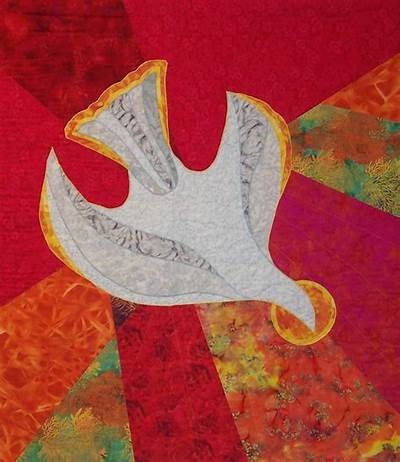
On this Solemnity of Pentecost, we are given two versions of the coming of the Holy Spirit in today’s readings.  Luke in the First Reading from the Acts of the Apostles cites how amazing things happened on the first Pentecost: “tongues as of fire” rested on the disciples (Acts 2:3), they spoke in “different tongues” (Acts 2:4), and they proclaimed “the mighty acts of God” (Acts 2:11). It was an astounding moment for all present!  In the gospel account by John, Pentecost is manifested as a new creation breathed into the disciples by the risen Christ. It is a very calm and peaceful scene where, by His own breath, Jesus bestows on His followers the Holy Spirit.  Although the two accounts differ in terms of how the Holy Spirit came upon the disciples, both readings tell us of the transforming power of the Holy Spirit on these terror-stricken followers of the crucified Messiah.  “Breath” in the gospel account is an important element because as we recall in the creation story, it is God’s breath that creates and gives life. He breathes over the waters; He also breathes life into the clay of the ground which he had formed into the first human being. Similarly, Jesus breathes on His disciples saying: “Receive the Holy Spirit.”  (John 20:22) In doing so, Jesus gives them new life making of them a new creation.  What follows in the account written by St. Luke, is a witnessing of how the Spirit has empowered the disciples into bold heralds of the mighty acts of God. The Spirit transformed them as they began preaching fearlessly. It was through the power of the Holy Spirit that these once fearful men have fulfilled Jesus’ mandate of going out into the whole world to proclaim the Good News. They were able to do so only through the Holy Spirit’s power. This is what St. Paul asserts in the Second Reading: “No one can say ‘Jesus is Lord’ except by the Holy Spirit.” (1 Corinthians 12:3)

Furthermore, we are reminded that the gift of the Holy Spirit has also been given to us all – the baptised (the confirmed) … Through the Spirit’s presence we are, in St. Paul’s words, “a new creation” (2 Corinthians 5:17) and “temples of the Holy Spirit” (1 Corinthians 6:19). We all have been charged with the same divine energy to share in the saving mission of Jesus to the world. We, too are empowered by this same creative Spirit to imbue the world with the presence of God through our words and actions. 

Here at Christ the King Parish, I am very proud of our sacristans (John, Jay, Noel and Eugene) who are now very skilled at live-streaming our daily masses. At the start of the lockdown, when we had to make personnel adjustments to make ends meet, we found that we needed people to help CTK bring the mass to its parishioners at home. Our sacristans were called upon to train how to use the equipment and the live-streaming platforms. John, who is up in the choir loft now, never imagined he would be doing this work especially since he was not adept at computers to begin with. Learning new skills was a truly empowering experience for them. Now they will also be helping San Roque Parish by training the parish’s future live-streaming team.  Recently also, I have come to subscribe to the YouTube channel of Fr. Casey Cole called “Breaking In The Habit”. He is a young American Franciscan Friar who has had his own YouTube channel for the past 5 years. He started out as a blogger but he felt he was called to do VLOGGING to evangelise to the online community after an initial attempt got encouraging feedback and good reviews. There were a lot of hits and misses in the beginning and he constantly questioned his calling to work with social media. He says he felt stupid talking to a camera in public especially since he was a one-man team of videographer, host and editor. To his surprise, despite all his misgivings, he was led to trainings, he met people who mentored him, and his community sponsored the expense of all the equipment he needed. Today he has 212,000 subscribers and a small team that helps produce weekly content for his channel.  This was not something he imagined he would be doing when he chose to become a priest or friar.  He is personally amazed how the Holy Spirit has empowered him and allowed his little project to soar to greater heights. 

As you all know by now, I have been appointed by Bishop Ness as Parish Administrator of San Roque Parish in Bagumbayan (not very far from here). I take this new mission with joy but at the same time a tinge of trepidation. Although I worked in our parish in London, this will be the first time that I find myself in the forefront of parish life. What gives me courage is the fact that deep in my heart I know that when God calls, He also equips the one He calls.  I cannot say that I am the perfect person for the job because in all humility, I know there is much for me to learn about parish administration, but I am convinced that the Holy Spirit will empower me to accomplish the task I have been called to do for the greater glory of God. Last Sunday, I said my first mass in San Roque and after the mass I was formally introduced to the members of the Parish Pastoral Council. The people are very welcoming of their new pastor and assured me that we are in this together. “Father, makipagtulungan po kami sa inyo sa lahat ng aming makakaya!”  And for that I am very grateful and hopeful that my experience there will be a fulfilling one. 

On this day, let us thank the Father for our “soul’s most welcome guest” – the Holy Spirit! May we be open to the promptings of the Spirit in our lives just as the home maker who feeds the poor of Metro Manila, our CTK sacristans, and Fr. Casey Cole. Just as I am taking courage in accomplishing my new mission in life, I encourage you to do the same as well.  Life in quarantine can still be an adventure if we allow ourselves to be led by the Holy Spirit. May the Lord continuously send us His Spirit to renew the face of the earth.

Jesus’ Presence in His Absence

Homily: Solemnity of the Ascension of the Lord

16 May 2021

Mark 16:15-20

Fr. Ricky Canet Montanez, AA 

Two years ago, my friend, a single mother, sought my advice concerning the plan of her only son to study abroad. Typical of a parent who has her child’s best interests at heart, she was extremely concerned for his safety while living alone in a foreign country. She couldn’t help anticipate all the scary scenarios he may encounter by himself and this frightened her and kept her from granting her boy permission to leave. She knew she would never be able to forgive herself if something bad would happen to her son in such a far-off place. Separation anxiety had also intensified her hesitations and it was difficult to accept that her son’s new world at university would now exclude her. Anyhow, after much prayer and a long cry, she decided to let go and allow her son to follow his dreams. To date, he has begun his studies abroad and everything seems to be going well for him. My friend realised that in letting her son go, they have become much closer to each other because he makes an effort to communicate with her more often than he used to. In view of their physical separation, they made opportunities to be present to each other in whole new ways that allowed them to have a more fulfilling relationship as mother and child. 

Today’s gospel for the Solemnity of the Ascension of the Lord recounts for us the end of Jesus’ time with His disciples on earth. At His departure, Jesus commissions them to preach the gospel to every creature. And as they take on the saving mission of Jesus, He assures them that they will not be on their own as He will continue to be present to them in a new and glorified way. First of all, Jesus will continue to be present to them through the experience of His life and teaching from which they would always draw inspiration, guidance, and strength for all their missionary endeavours. This is what St. Paul urges the Christians of Ephesus to pray for: “May the God of our Lord Jesus Christ, the Father of glory, give you a Spirit of wisdom and revelation resulting in knowledge of him.” (Ephesians 1:17) Secondly, their preaching of the Good News will be accompanied with signs and wonders. “These signs will accompany those who believe: in my name they will drive out demons, they will speak new languages. They will pick up serpents with their hands, and if they drink any deadly thing, it will not harm them. They will lay hands on the sick, and they will recover.” (Mark 16:17-18) Jesus’ power will flow in and through them as they preach and teach, heal and comfort, and forgive people in Jesus’ name. Finally, as they allow the power of Jesus to work through them, they themselves will become the very sign of the Lord’s presence for others.  They will become the agents of belief and new life for those who come to believe in Jesus. 

All of us believers are entrusted with the same task of continuing the saving mission of Jesus in our own spheres of influence. After all, we, the community of believers together make up the Body of Christ.  In and through His Body, the Church, Jesus carries on what He began on earth. We all contribute to this saving work through our varying vocations in life. The assurance Jesus leaves His friends that He will not abandon them in the mission, is the same assurance He gives us. Today, we continue to experience His presence when we read the Bible or listen to the Word of God in the proclamation of the Gospel and get to know Jesus more deeply.  We also experience Him through the miracles around us. Testimonies of miraculous healings from life threatening diseases are proof that Jesus the Healer continues to work in the world even though we do not see Him.  Miracles of conversion show us that Jesus has not ceased to touch human hearts with His love and forgiveness. Prayers and petitions granted should also signify to us that Christ is listening and is very much involved in our lives as He continues to be intimately connected to each one of us and preserves us as best He can for our destiny to be with the Father in Heaven. If we allow Jesus to mould us into His true disciples, we too will ultimately bear His reflection to others and become the palpable presence of Jesus to those we encounter, channelling His hope, love, mercy and grace. This is how we know that Jesus continues to be with us even if He ascended to heaven 2000 years ago to take His place at the right hand of God the Father. 

Throughout the pandemic, doctors and nurses have become the caring and healing presence of Jesus to those afflicted with COVID 19. Many of them even go beyond their duties to give medical care to their COVID patients by encouraging them, comforting them and facilitating video calls with their loved ones at home. I was particularly struck by news of a Filipino nursing attendant who creatively attempted to bring comfort to his COVID-19 patients with just a pair of disposable gloves. Merabel shared that he wanted to mimic the “human touch” for his patients who were fighting for their life at a hospital in Quezon City. “Nakita ko kasi ginawa sa Brazil na yung mga gloves pinuno ng warm water at ipinahawak sa pasyente.” He decided to do the same for his intubated patients because he did not have the luxury to stay by each of their bedsides long enough to hold their hands and give them comfort. The 39-year-old frontliner said that giving patients the sensation of someone holding their hand was encouraging for them and they were less stressed because they did not feel alone. They were inspired to fight to recover and live a long life with their families. One patient was so grateful that she wrote him a thank you note as she couldn’t speak while on the ventilator. Merabel addressed his fellow healthcare workers saying “Frontliners tuloy lang ang laban, ituring niyong kamag-anak o mahal sa buhay ang mga pasyente ninyo. Basta bigyan ninyo ng dedikasyon ang ginagawa ninyo at minamahal ninyo ito.”  Merabel’s invitation for frontliners to do their work with love and dedication and to treat patients as their loved ones enables them to take on the loving, sacrificing and compassionate nature of Jesus. They become the experience of Christ to their suffering patients, leading them to grow in faith and hope in our one true God. 

Our celebration of the Ascension of Our Lord reminds us that Jesus has not really departed from us. It only seems so. In fact, He makes Himself present to us most intimately through our participation in the Eucharist and in Jesus’ saving mission. Jesus is close to each one of us forever, assuring us of His continued presence as we take up His mission to preach the gospel, by our words and example, to the ends of the earth.

Graced to Love as God Loves

Homily: Sixth Sunday of Easter (B)

9 May 2021

John 15:9-17

Fr. Ricky C. Montanez, AA

Many single girls try to avoid family and school reunions because they end up in very awkward situations with people persistently asking them “Why are you still single?” “When are you getting married? Don’t you want your own family?” Some enterprising Filipinos have actually capitalised on very witty, humorous, sometimes scathing replies to these questions.  A local celebrity recently tweeted… “If motherhood or getting married is the best thing that ever happened to you, I am happy for you. I’m sure it is the happiest place to be. Pero okay naman ako sa Jollibee. Kanyan-kanyang trip lang yan. Naiiyak nga ako sa magandang sunset and it’s also the best thing for me.” 

A single friend asked me, “Why do they make me feel less of a person because I’m single? Do they really think I’m lonely? Do they think there is no love in the life of someone who chooses to be single? On the other hand, a married friend whose marriage was not blessed with children shared that she would feel really sad whenever people insinuate that it is only when she bears her own child that she will feel and experience what true love really is.

I myself, am no stranger to such insensitivities. One time, as I was preparing for ordination, a classmate jokingly asked, “Why do you want to be ordained a priest? You will be single forever. Who will cry over your coffin or urn when you leave this planet?” (Don’t bother asking me what I told him in reply!)  Don’t you find it funny how some people perceive love as a situation created for them as the consequence of having a life partner or their own kids? 

Love is in all of us. And paradoxically, when we give love, we receive love. It doesn’t have to be a spouse or a biological child. There are single people who commit themselves to worthwhile causes where they give of themselves to uplift sectors of society or to save the planet for future generations.  There are single children who have devoted themselves to caring for their siblings or caring for their aging and sick parents. We priests, have the capacity to be spiritual fathers to thousands of people entrusted to us by the Bishop or our religious superiors because we don’t need to earn a living and provide for a wife and kids. Love is inclusive. It is for everyone. It does not limit itself to specific types of people.  As Peter attests in the First Reading after seeing that the gift of the Holy Spirit has been poured out on the Gentiles also, “In truth, I see that God shows no partiality.” (Acts 10:34) All are acceptable to God, Jew and Gentile, man and woman, slave and free… God’s invitation to love is for all! 

This Sunday’s gospel passage from John, is all about love.  We find Jesus urging His disciples twice to “remain in His love” and twice “to love one another”. If we look closely, these two commands are actually interrelated as remaining in His love is to love others. What is at the heart of the command is the invitation for all of us believers, without exception, to love the way Jesus loves — a total self-giving for the sake of the one being loved. It is a selfless offering of himself for others. Jesus says, “[There is] no greater love than this: to lay down one’s life for one’s friends.” (John 15:13) And that is exactly what He did not just in the way He died where we are told His blood and water flowed in mercy for all of humanity, but also in the way that He lived, his priority was making sure that the people He loved were restored to wholeness and nourished by the word of God. 

Thus, when we love we must be willing to put the good of the people we love before our own wants; before our own needs. Often this involves varying degrees of sacrifice.  I recently saw this interview of a local celebrity mom who shared her pain and hardship in trying to be the best mom for her son with special needs. She noted how she changed her workaholic and partying lifestyle so she could properly care for him. She shared how hurt she was when her son attended parties and none of the kids wanted to play with him so he learned to bring his own toys so he could play by himself.  And when the school refused to allow him to march at graduation for fear he may throw a tantrum, she staged his own graduation march in their barangay plaza and invited church friends to be his audience. She swallowed her pride and bore the rejections and found ways to move past them. How selfless is the love of a mother! 

As it is Mother’s Day this Sunday, we celebrate the love of moms for their children. I would say the love of a Mom, a Mama, a Nanay to her beloved child is the most magnanimous, the most giving, the gentlest, the most enduring and most patient kind. It is difficult to be a mother, even when you share parenting duties with a husband. Imagine what it must be like to be raising a child on your own! Today we also call to mind the sacrifices of many single mothers to ensure the future of their children. But this motherly love is not only exemplified by biological mothers themselves but also of those who in their own ways have been mothers to others. I have a single aunt who cared for me and my siblings and her other nephews and nieces out of the goodness of her heart. There are even nannies who cared for their wards as their own children. Last Thursday a good friend of mine and his family asked me to do a virtual blessing for their now retired “yaya” who is very sick in Negros Occidental. She meant a lot to them for the love she lavished on them. 

In the passage from John’s First Epistle, we are invited to replicate this example of love shown by Jesus in the Gospel. We need not fear that we may not have the capacity to love as such because it is God who gives us the grace to do so. “Beloved, let us love one another, because love is of God; everyone who loves is begotten by God and knows God.”  (1 John 4:7) To love like Jesus and lay down our lives for others is very much against man’s natural tendency for self-preservation and thus, it cannot originate from our human capabilities but rather in God. We know how it is to love because we first feel His love for us. “In this is love: not that we have loved God, but that he loved us.” (1 John 4:10) It is God who initiates this love as exemplified in Jesus. “As the Father loves me, so I also love you.” (John 15:9) Clearly, the source of this selfless love is divine love itself. This is so because love is the very being of God. St. John says: “God is love.” (1 John 4:8) We too, are granted a share in this nature when we are “begotten by God” through baptism — love becomes part of our being as well. The Spirit of love has been poured into the hearts of all believers to make us capable of this self-giving love of Christ regardless of our status or vocation in life.   

In summary, take to heart that as Christians, our loving should take after the selfless and self-giving way Jesus loves us; and how greatly God the Father has loved us first and most deeply in Jesus. Jesus paid a high price to express this love for us and to teach us what love is. So, learn to love. It doesn’t matter if you are called to be a mother to your own kids or to help raise the children of others, or whether your vocation is to be married, single, or called to the religious life, love is within all of us because we have Jesus. Let us love as God loves each one of us — faithfully, truly, unconditionally.

Pruned to Bear Fruit

Homily: Fifth Sunday of Easter (B)

John 15:1-8

2 May 2021 

Fr. Ricky C. Montanez, AA 

After he survived COVID 19, a priest-friend declared that he is “born again” and has resolved not to smoke again. After battling a severe case of Covid, another friend vowed to be more diligent and consistent in maintaining health protocols to protect herself from Covid such as taking a shower as soon as she arrives from work. After losing her job because of the pandemic, another friend decided to simplify her lifestyle by focusing only on the essentials.  It wasn’t easy for my friends to change the way they were accustomed to living but it was necessary if they wanted to survive this pandemic. 

Last Sunday, we talked about Jesus as the Good Shepherd. This Sunday’s gospel reading speaks about another familiar image of Jesus as the Vine. All who follow Jesus are branches that must be connected to Him always. He says, “Remain in me, as I remain in you. Just as a branch cannot bear fruit on its own unless it remains on the vine, so neither can you unless you remain in me.”  (John 15:4) One thing that catches my attention is the fact that it is not enough that we remain attached to the vine because we are expected to bear much fruit! That is a consequence that is so much desired that the Father, Himself, as Vine Grower, personally takes on the responsibility of pruning every branch attached to Jesus. He cuts away what does not bear fruit so the branch withers and dies whereas he prunes further the fruit bearing branches so they bear even more fruit. 

Throughout the pandemic, so many have taken up the hobby of caring for plants at home. Some grow vegetables, others, ornamental and flowering plants. Any serious “plantito” or “plantita” would have learned that one essential rule in plant care for proper plant growth is pruning. Every gardener knows that a plant can become overgrown if not properly pruned. This process involves cutting away not just the dead leaves and branches, or diseased  parts of plants but sometimes also healthy parts — parts that are just starting to blossom or develop but in areas where they shouldn’t. The presumption here is that the gardener has a plan for the plant, based on his knowledge and expertise. First, he will ascertain that the plant will grow into the ideal shape or contour and size.  And second, he will not allow the richness of the the soil and fertilizers to be wasted on overgrowing parts. He will trim it to what is necessary so the plant can utilize the nutrients for the desired functions such as bearing flowers and fruits. 

Similarly, as followers of Jesus, we are also in need of pruning to make us more fruitful. Throughout the past year, I have read reflections from people that make me believe the pandemic is a way of pruning us. We have come to realize what is essential in life — good health, family, a cohesive community and a strong spiritual life. I know of ladies who were compulsive shoppers who now question their behavior as they look upon all the shoes, bags, accessories and clothes they’ve amassed which they don’t even get to wear anymore because they are stuck at home in their dusters and lounge wear. I know of young people who’ve collected luggage, coats and jackets and snow gear for trips abroad who have stored away their things, realizing they are unnecessary for living in  our tropical climate. Just yesterday, a mechanic revealed they’ve had very few clients over the past year because vehicles have less wear and tear and don’t need as much maintenance. The travel restrictions have kept people at home and their numerous vehicles parked in garages. These days, people are simply grateful to be alive and to be connected with loved ones. All the time spent before amusing ourselves at the malls, at the movies, resorts and spas, or travelling for leisure, we now spend at home with our familes… eating together, talking with each other, doing chores together or simply spending time in prayer with family. More people have learned to pick up their Bibles, made time for personal prayer or listening to spiritual talks online and attending livestream masses at home. It is this awareness of our common situation, that has allowed us to see the suffering of others, motivating us to do something to help them. This period has been difficult for all of us but it has allowed us to bear fruit in terms of nourishing our souls and sharing of ourselves for the good of others. Jesus reminds us that “Whoever remains in me and I in him will bear much fruit, because without me you can do nothing.” (John 15:5)

Jesus does not leave all the pruning to the Vine Grower. He says that His followers are to be pruned continuously by HIS WORD. We are shaped by Jesus’ word to become the faithful disciples God intends us to be. Just as the pruning of the plant involves cutting away parts of it,  the pruning-words of Jesus can sometimes be painful for us especially when His teachings are very difficult to accept and comply with.  They hurt especially when through them we are challenged to give up some “good things” we enjoy but which may be harmful to us such as our vices which not only contribute to the destruction of our bodies, our spirit, but also of important relationships we have in life. It is only when we allow ourselves to be corrected for our bad behaviour and challenged to be less self-centered and instead more generous towards others that we can say that we have subjected ourselves to pruning for our future growth and fruitfulness. Heeding the words of Jesus and taking them to heart is not without its reward. Jesus says, “If you remain in me and my words remain in you, ask for whatever you want and it will be done for you. By this is my Father glorified, that you bear much fruit and become my disciples.” (John 15:7-8)

In the hands of a gardener, an overgrown and diseased plant can certainly be brought back to life with proper care and pruning. In the First Reading (Acts 9:26-31), we note that when Saul came back to the group of the apostles in Jerusalem, they refused to have anything to do with him, because of his reputation. It was hard for others to believe that he would ever have a change of heart after having been a rabid persecutor of Christians. Saul found out the hard way how difficult it is to escape the consequences of his mistakes in life. I would say this was a continuing experience of pruning for Saul.  The pruning began on the road to Damascus when he was knocked off his feet by the voice of Jesus asking: “Saul, Saul, why are you persecuting me?” (Acts 9:4) This episode trimmed off the aspect of his life that did not allow him to grow into the person he was meant to be. It started to fashion him for evangelization and as we know, he bore much fruit and became the most effective apostle to the Gentiles. Still, Paul had to live with his past. In humility, he writes in Philippians 3:13 that he has to forget the past and press on to what lies ahead. This is not to forget simply for the sake of forgetting but rather coming to terms with the past, learning from it in order to move on and recommit oneself to becoming better in the present. 

In this sense, the Risen Life we all have been given through baptism is a continuous invitation to a life in union with God. We note that in the gospel passage we are told five times to bear fruit and eight times to remain in Jesus. Repetition in the Bible is meant to emphasize the importance of the message. We are being told how vital it is for us to live in love always. (It is different from falling in love or being in love). A life in love is a life with Jesus and for Jesus — not only expressed in word and speech but also in deed and truth (1 John 3:18), as the Second Reading instructs us. It is to remain always a part of Christ as the branches remain connected to the Vine in order to bear fruit. Again, the Second Reading tells us: “This is how we shall know that we belong to the truth.” (1 John 3:19)

As we strive to remain connected to the vine, we open ourselves to be trained, to be disciplined, to be “pruned” by the Vine Grower and by the Word of Jesus to make us fruitful and productive disciples in God’s vineyard.

Shepherding God’s Flock from the Heart

Homily: Fourth Sunday of Easter (B)

John 10: 11-18

25 April 2021 

Fr. Ricky C. Montanez, AA

It isn’t easy to care for someone — to be responsible for the well-being of another person.  Husbands and wives are responsible for each other. Parents are responsible for their kids. And when kids grow up, they become responsible for their ageing parents. Employers are also challenged to look after the welfare of their employees. It Isn’t easy.  Even us priests encounter challenges when we pastor communities. Sometimes, it can even be very discouraging. Any one of you who fills any of the shoes I mentioned, will agree that caring for someone is never a walk in the park because caring for another requires something not everyone is willing to give — a sacrifice of self. 

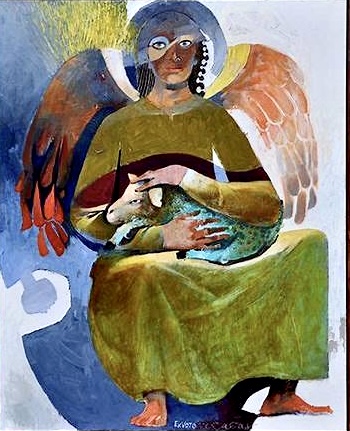
Today is Good Shepherd Sunday and the gospel passage brings up a much-loved image of Jesus.   In the gospel reading, we hear Jesus speak of Himself as the “Good Shepherd” who lays down His life for the sheep.  Unlike the hired hand who merely treats the sheep as simply an element of his job — livestock to be managed, the shepherd, who owns the flock, considers every single one of the sheep as the object of his love and concern. Jesus knew that the people would identify with this comparison as shepherding was common in Israel at the time. For the Jews a good shepherd knows the flock well enough and cares a great deal for them to the point of risking his own safety for each one under his care. He is faithful to his duties and protects the sheep from all dangers and threats. For the shepherd, the sheep come first. He is totally committed to the well-being of the sheep that he would sacrifice his own life for them.  

In the gospels, particularly Chapter 10 of John’s Gospel, Jesus is portrayed as that kind of leader for His people. He takes good care of every single one of those entrusted to Him by the Father. “I am the good shepherd. The good shepherd lays down his life for the sheep.” (John 10:11) As a Good Shepherd, Jesus exhibits exceptional commitment to His flock that He would go searching for lost sheep and bring them back to the fold. In the Synoptic gospels, Jesus as the Good Shepherd is portrayed as the shepherd who would go as far as leaving 99 of His sheep to find one lost sheep. This is how dedicated and responsible the Good Shepherd is towards His flock. 

It is not only Good Shepherd Sunday; it is also Vocation Sunday.  For far too long we have had a narrow understanding of vocation as a calling to the priestly or religious life. But, in fact every single one of us has a vocation. We all have a role to play in society. We, as individuals, have unique gifts that we share with one another, contributing to the collective good of society. We all have a mission in life to accomplish as fathers, mothers, workers, students, employers, law enforcers, media practitioners, medical workers, leaders, etc…. We are called upon to be good shepherds to one another according to the gifts and talents we have been given.  We already have the privilege of experiencing our Good Shepherd’s care for us so it is but right that we are invited to be good shepherds to one another. We do this according to the example of Jesus who shows compassion for each of His sheep, seeking them out when they stray and has loved them unconditionally. 

It may seem like a daunting challenge to be shepherd to those around us because we might think ourselves undeserving or incapable. At times we think that what we can offer is too menial, too negligible to make a difference in people’s lives. We must however learn from Jesus who never discounts the value of each member of His flock.  The Shepherd would not hunt for a single animal if he did not think it valuable. We too, as members of Jesus’ flock are individually of value. Each is gifted. Each is blessed. There is always something that we can give, if we choose to give freely and generously of ourselves.  The controversial community pantries encourage people to give from their excess that others who have nothing may benefit.  It’s a wonderful idea!   But it touches the heart more when those who are already in need, give from the little they have. Recall the Bible story of the Widow’s Might where Jesus speaks highly of a poor widow whom He saw giving 2 small coins for the Temple.  He says she gave the most because she gave all she had as compared to the rich folk who gave generously from their excess to be publicly acknowledged. I am reminded of Manong Romeo.. a simple man featured on social media, who handed P46, the amount he raised from selling metal scraps as cash donation to the Integrated Centre for the Young. They thought at first that Mang Romeo was looking to get some goods from the ICY Community Pantry which had already closed for the day but to their surprise Mang Romeo donated whatever he earned because he wanted to be of help in any way he can. In another story, an 11-year-old boy used his talent for baking to make cupcakes that he donated to their community pantry. We must acknowledge and celebrate the countless others who like them give from the little that they have to help others. 

In a post I chanced upon recently it said… “I’ve noticed something about people who make a difference in the world: They hold the unshakeable conviction that individuals are extremely important, that every life matters. They get excited over one smile. They are willing to feed one stomach, educate one mind, and treat one wound. They aren’t determined to revolutionise the world all at once; they’re satisfied with small changes. Over time, though, the small changes add up. Sometimes they even transform cities and nations, and yes, the world.” One clear lesson taught by Jesus through this gospel account has to do with having a clear willingness to give, regardless of how small the gift might be. This brings to mind what St. Teresa of Calcutta said: “What we are doing is nothing more than a drop in the ocean. But if the drop were not there, the ocean would be missing something.” 

Brothers and sisters, on this Good Shepherd Sunday, let us learn from Jesus and do whatever we can do for others, regardless of how menial or negligible it may seem to us, let us do it out of love. Our small efforts may seem insignificant to us, but it could very well be the blessing others have been waiting and praying for all along. Let us be good shepherds to one another, treating one another as brothers and sisters as we are all the beloved children of God, our Father!

Illustration by Claudio Pastro

Seeing Past the Pain to Recognise the Risen Jesus

HOMILY: THIRD SUNDAY OF EASTER (B)

18 April 2021

Luke 24:35-48 

Fr. Ricky C. Montanez, AA

My Facebook wall is currently swamped with sad news. Friends abroad who are  unable to come home to be with family as they grieve the loss of loved ones have taken to social media to express their sorrow and grief. We are still very much in the Easter Season, but it is such a struggle for me to perceive the power of the resurrection at work in our lives when the number of tombs are growing with the casualties of this pandemic. These are indeed trying and challenging situations even for us priests because our own friends, colleagues and relatives are falling victims to this virus. 

These days, our sadness and disappointment keeps us from recognizing Jesus.  The disciples’ inability to recognise the Risen Jesus as the same friend and teacher whom they had buried, is a predominant feature of practically most, if not all of the post-resurrection accounts in the gospels. We recall the two disciples on the road to Emmaus who failed to recognise the Risen Jesus even if He was literally walking alongside them and conversing with them for hours! They had believed Him to be simply a fellow sojourner as they departed from Jerusalem. At another instance, Mary Magdalene initially does not realize the Risen Christ speaking to her even if they are practically face to face! It isn’t until Jesus calls her by her name that she receives clarity. What’s quite interesting with some gospel accounts such as the one we have this Sunday is that the disciples think they are seeing a “ghost” when they see Jesus. He quickly assures them that He is not a ghost, but in fact alive and well, proving that the resurrection is real. 

Given all the scientific learnings we know now, it is tougher for many to believe in the supernatural.  You may think people back then without the benefit of this knowledge would be quicker to believe the stuff of legend.  It certainly took the disciples some time to grasp the concept of the resurrection and recognize the Risen Jesus, perhaps due to the shock or trauma from losing their friend or the fact that they were really simple-minded men. Nevertheless,  Jesus patiently accompanied His disciples in their journey of dicovering the mystery of His risen life!   Wouldn’t you be “startled and terrified” if you had been there in the room with the disciples? What is so unusual about the resurrected Jesus that prevented them from identifying Him as soon as He appears? First, we know that the consciousness is retained… He remains the same Jesus, thinking the same way and recalling His life as He lived it. He is not a mindless zombie. He recognizes His friends and is able to reassure them and comfort them by wishing them peace. Secondly, the resurrected body is not a spirit that has no physical presence or manifestation. Jesus invites them to touch Him as ghosts do not have flesh and bones. It is very much one that functions as a human body. Jesus asks them to give Him something to eat to prove to them that He is really alive. There is something new about the resurrected body — He is alive but in a new mode of life, such that His presence is no longer limited by time and space. He appears in the midst of His disciples in a room with locked doors. The glorified body of the Risen Jesus can permeate every reality, and is not limited by the laws of nature. He is able to achieve the unexpected and conquer the  challenging. The fact that He is not immediately recognized does not negate the fact that He is there with them. 

Pope Francis once told a group of children during their Confirmation that “it is important to encounter Jesus, who loves us, who has saved us, who gave His life for us.” So, where and how then do we encounter Jesus in our lives?  The Holy Father goes on to say that there are three places to meet the living Jesus as Catholic Christians. “First, Jesus is alive in His word, the inspired Gospel stories and the living tradition of our church.” In the gospel passage we are told that “Jesus opened their minds to understand the Scriptures.” (Luke 24:45) Second, we meet Jesus in the sacraments, especially  during our regular participation in both the Eucharist and the Sacrament of Reconciliation. “The two disciples recounted what had taken place on the way, and how Jesus was made known to them in the breaking of bread.” (Luke 24:45) And third, Pope Francis says that “we meet Jesus in our loving service to those in need, those who live on the periphery of society.” “Truly I tell you, whatever you did for one of the least of these brothers and sisters of mine, you did for me.” (Matthew 25:40)

Easter faith involves having a readiness to encounter Jesus as a living personal presence. It challenges us to be attentive to the many ways that Jesus encounters us, often in the unexpected places and situations… among the poor, the sick, the needy, among those who treat us with care and among those who invite us to deeper love in all the events of our human life. 

I recently read about a netizen who witnessed a stranger helping an elderly woman while he was buying medicines at a pharmacy in Malolos, Bulacan. Uploader Mandy Viray was in line when she overheard the conversation between an elderly woman and a pharmacist. The pharmacist was explaining to the “lola” (grandmother) said that the medicine in the prescription amounted to P1,100. The elderly woman  brought out a small plastic bag filled with coins and counted out only P200. Distraught, she asked if the pharmacist would prepare one piece of each medicine she needed as that was all she could afford. Then a man beside the old woman unexpectedly approached the counter and offered to pay for the medicine.  He said ‘Miss, sagot ko na ‘yung kulang, bigay mo ‘yung lahat ng nasa reseta ni Nanay,”  for which the old woman was extremely thankful. The uploader also described the man’s act of kindness as “God’s work.”  “Tuwang-tuwa si Nanay grabe ‘yung pagpapasalamat niya kay kuya,” she said. The Good Samaritan replied, “Nay, di sa’kin galing ‘yan, sa Diyos ‘yan galing. Sa Diyos po tayo magpasalamat.” Viray said that what she witnessed reminded her that God always provides in ways we do not expect or cannot imagine. She says we can all be God’s instrument and proof that especially during the hardships of this pandemic, God does not abandon His people but rather provides for them. She adds “Hindi kailangan maging mayaman para gumawa ng mabuti — kahit simpleng pagtulong sa kapwa gaya ng pagbibigay ng pagkain sa nagugutom, pagdamay sa mga napipighati, pagtulong sa nangangailangan at iba pa.” Posting about the incident is her testimony to the work of the Risen Christ. The post has  already garnered more than 218,000 reactions and 109,000 shares. 

When we are blessed with the experience of Jesus’ resurrection, the joy and wonder simply cannot be contained. We who have encountered Jesus are called to be witnesses.  Peter fearlessly testifies to the Jews in the First Reading (Acts 3:13-15, 17-19), that Jesus whom they put to death is alive and has been glorified by the Father. We, too are to be witnesses of Jesus’ resurrection and His living presence among us by the way we live our lives as individuals and as a community. Going a step further, I challenge you to post on all your social media platforms your experiences of the work of the Risen Lord throughout this pandemic. All of us need to be inspired and reminded that the Risen Jesus is here among us. His presence is always at work in the world. 

Emmaus by Arcabas

Being Merciful: In Imitation of Jesus

Homily: Second Sunday of Easter / Divine Mercy Sunday

John 20:19-31 

11 April 2021

Fr. Ricky C. Montanez, AA

I would like to start this reflection by posing a few questions to all of you. Do you believe God is merciful?  Do you pray for God’s mercy? Are you in need of God’s mercy? Today the Second Sunday of Easter is also the Sunday of Divine Mercy. Jesus presents Himself to us as the image of unfathomable mercy — the font of blood and water springing forth for all who immerse themselves seeking forgiveness and the salvation of their souls. It is a loaded statement and quite a mouthful to say. Today, let us attempt to reflect on what God’s mercy means for us. It is such a broad concept that it could mean different things to people. 

Surprisingly, there are some of us who do not think or feel they need God’s mercy. They are quick to reason that they do not consider themselves as sinners. “Di naman ako makasalanan.” “What is there for me to apologise for?” Is mercy exclusively for grave sinners? This is the default excuse of some people who choose not to go to confession as often as possible. (These days it is understandably more difficult to receive the sacrament considering the health restrictions.) They say, “I only have my usual venial sins so God will understand.” When they approach the sacrament, if at all, they spend most of their time justifying their faults and end up confessing the sins of others.  I actually get a lot of this in Confessions. A wife intends to confess how she has been neglecting her children but ends up rationalizing her failings by emphatically enumerating her traumas from the exploits of her philandering husband. There is no true contrition there because the penitents do not even think they are to blame for anything. 

Others would say that everything we do is encompassed, covered by God’s mercy even without our asking for it. Because our God is loving and merciful, He showers us with the graces and blessings we need and constantly guides us in life. The German theologian, Dietrich Bonhoeffer, called this “cheap grace” in his book, “The Cost of Discipleship”. In that book, Bonhoeffer defines “cheap grace” as “the preaching of forgiveness without requiring repentance, baptism without church discipline. Communion without confession. Cheap grace is grace without discipleship, grace without the cross, grace without Jesus Christ.” Notice that other Christian sects preach that one simply needs a verbal acceptance of Jesus as Lord and personal Saviour — just a passive submission to God’s mercy. Is this really all one needs to be saved? In the Catholic Christian tradition, we believe that we struggle with sin all our lives. We find comfort in the Sacrament of Reconciliation by which we are given opportunities to recommit ourselves to a life of grace. St. Ambrose says there are two conversions “water and tears”: the water of Baptism and the tears of repentance. (Catechism of the Catholic Church #1429)   

Others perceive mercy as pity for their misery. In Filipino, we commonly translate “mercy” as “awa”.  When we commiserate with those suffering or in distress, we urge them to persevere and believe in a God who will not abandon them by saying “May awa ang Diyos.”  When we pray at mass, when we pray our devotions, when we pray the Oratio Imperata — we ask for God’s mercy. It is an acknowledgement of our lowliness as humans vis a vis the almighty and all powerful God.  We beg Him to cast a merciful gaze upon us that in His condescension, His heart may be moved to send us relief from our sufferings.  

As followers of Jesus, we ought to see God’s mercy as the outpouring of excessive LOVE. The Hebrew word for mercy is (HESED). This theological term denotes God’s steadfast love for those in a special relationship with Him. As we have proclaimed in the Psalm: “Give thanks to the Lord for He is good, His love endures forever.” (Psalm 118:1) This love of God is best revealed by the Father in Jesus Christ. In Misericordiae Vultus, Pope Francis says that “Jesus Christ is the face of the Father’s mercy.” In taking on human flesh, Jesus, the Incarnate Son reveals to us the mercy and love of God the Father. “For God did not send His Son into the world to condemn the world, but to save the world through Him.’ (John 3:17) Through God’s mercy, we who deserve the wrath of God have been refashioned into the sons and daughters of God in Jesus Christ, restoring us to the right relationship with God.  We are not mere slaves of a ruler but children of a loving Father. His mercy is given freely and never forced on us. In His love, He takes every chance to draw us closer to Him and gives every opportunity for us to be reconciled with Him. 

Having received of the tremendous gift of His mercy, what are we to do?  God expects us to dispense of what He has given us justly and charitably. God’s mercy compels us to act, to forgive, to console, to help. Unfortunately, with COVID cases on the rise, many people are getting more scared for themselves and their loved ones.  Out of fear for their lives, those who have the means, choose to cut themselves off from any contact with the outside world, voluntarily placing themselves in their comfortable bubbles, safe from these critical days of the pandemic. It reminds me of the disciples who were all huddled up in the Upper Room after the resurrection, still fearing for their lives. The good news is that Jesus is always ready to embolden us and empower us with His presence. In the same way that walls and closed doors did not prevent Him from being with His disciples, He meets us in the ordinariness of our lives to reassure us of His presence. It is with the eyes of faith that we shall recognize Him. Jesus tells Thomas, “Blessed are those who have not seen and yet believe.” (John 20:29)

This Sunday’s readings centre on the bountiful mercy of God and our responsibility as believers to extend this same forgiving love to our brothers and sisters. It is the experience of the abundance of God’s mercy that is fundamental to our forgiving one another. This realization has the power to reverse our human tendency to hold grudges against those who have wronged us. We can choose to prepare ourselves spiritually by making amends with God and consequently seeking forgiveness from the people we have wronged, or by forgiving those who have hurt us. We live in uncertain times. We are learning so painfully that life is too short. Many of those who die these days are unable to make amends with those they have hurt or who have hurt them. Some of them never make it back from the hospitals while others die so suddenly. We cannot tell, when we or people we love will find ourselves in that situation. Why waste what precious time we have?

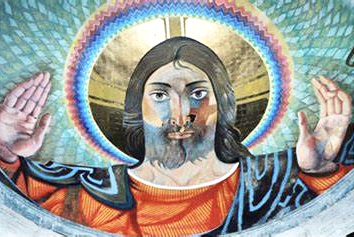
In His recently published book, “Let Us Dream”, Pope Francis says, “In the trials of life, you reveal your own heart: how solid it is, how merciful, how big or small.”  As we continue to struggle through this pandemic, let us choose to never close our hearts to others nor withhold mercy from one another.  Despite all our woes, God has been extremely merciful to all of us. We all need God’s mercy, and in gratitude for that which we receive as a gift, we must also give and share. On this Divine Mercy Sunday, let us take recourse in the love and mercy of our Risen Lord and may we always act mercifully toward one another in imitation of Jesus Christ.

Illustration from http://www.pinterest.com