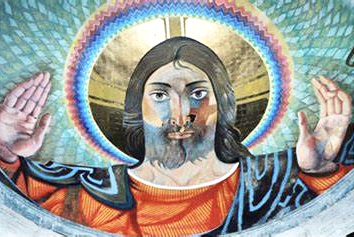
Holding on to our Faith in Christ

HOMILY: Twenty-First Sunday in Ordinary Time (B)

John 6:60-69 

22 August 2021

Fr. Ricky C. Montanez, AA

Are you happy to be Catholic? I know of someone who says that if he were not born in a predominantly Catholic country he would probably have been Jewish, Muslim, Hindu, or Buddhist.  He often says this when he feels his Catholic Christian faith demands too much of him. He forgets that in any faith or religion, the faithful are expected to follow certain rules, live up to certain expectations and accept the consequences of disobeying their norms and failing to meet their standards.  

Both the First Reading and the Gospel from John call upon people to make a decision as to whom to serve. In today’s gospel Jesus’ followers are led to the threshold of deciding whether to accept or reject who Jesus claims Himself to be — the Bread of Life of whom all who partake will truly live. It is interesting that those who complain about Jesus’ words are not the hostile Jewish crowd but Jesus’ own disciples. “This saying is hard, who can accept it.” (John 6:60) This leads Jesus to give the remaining disciples the option “to remain with Him” or “to leave Him”. Jesus says: “Does this shock you?” (John 6:61) They are made to choose whether to accept the hard saying or not. Will they stay with Jesus or not? This same dilemma is faced by the tribes of Israel in Shechem in the First Reading. Joshua addresses them saying: “If it does not please you to serve the Lord, decide today whom you will serve…” (Joshua 24:15)

The choice that confronts both the Israelites and the disciples in both the First Reading and the Gospel is the same choice that we face every single day of our lives as Christians. It always boils down to our choice!!! Will we accept the hard saying and choose to be faithful to God? Can we say with conviction: “Therefore, we will also serve the Lord, for he is our God.” (Joshua 24:18) or as the Gospel concludes: “We have come to believe and are convinced that you are the Holy One of God.” (John 6:69)? Can we profess our faith and fidelity to Jesus or are we going to fall away like the rest of the disciples and choose to leave Him instead?     

One’s firm commitment to Christ is reflected in the self-sacrificing love required of husbands towards their wives in marriage admonished by St. Paul in his Letter to the Ephesians. (Ephesians 5:21-32) Just as this  spousal commitment draws inspiration from how Christ has loved the Church enough to give His life for her, so should our resolve be to follow Christ fully, wholeheartedly, unreservedly. As all marriages require a lot of sacrifice and dying to one’s self, we must also be prepared to bear difficulties when we choose to follow Jesus. 

Choosing to stay with Jesus is not without cost, despite the promise of eternal life. We need a great deal of faith because the demands of discipleship are oftentimes great and overwhelming for us.  The fact that we are drawn to Jesus is a gift from God the Father. Jesus says “… I have told you that no one can come to me unless it is granted him by my Father.” (John 6:65) If we dismiss this grace or fail to acknowledge it, our human weakness may tear us from Jesus’ side. The gospel recounts “…many of his disciples returned to their former way of life and no longer accompanied him.”  (John 6:66) This is clearly not something to aspire for, given that discipleship is a call to wholeheartedly live the Gospel at whatever cost. We are encouraged to make an effort to please God in the way we live our lives at all times. We can show our fidelity to Him by striving to live uprightly and by upholding the rights of all especially those who have been wronged and those who have been treated unjustly in our midst.  

There are Catholic nuns in Afghanistan who gave up their freedom and their safety by choosing to remain in the Taliban controlled country to minister to the Afghan children in their care.  They run a free day car centre that serves children with mental disabilities and they offer scholarship programs to help young Afghan women study. These nuns have chosen to stay despite the threat to their lives. In an interview by the Italian magazine Mondo e Misione, two of these sisters said that were very worried about the near future. “Our families are worried about us: every time they see the image of some attack on TV they fear for our safety. But we sleep peacefully, here we have many friends and for the rest we entrust ourselves to God.”  I personally fear for them but I am humbled by their commitment to their mission to serve the Lord in the person of children in need. 

There may be times – and they can be painful experiences – when we would have to reject even those closest to us who want us to join them in behaviour, that is harmful, unjust or unloving to others. How does one claim to follow Jesus, support family members or close affiliates who cheat in business, those who take advantage of others or those who disregard other people’s rights just to get what they want?  People in calamity stricken Haiti are so desperate for supplies that some have savagely looted Aid trucks to provide for their loved ones at the expense of other members of their community. If one is truly a follower of Jesus, one cannot condone such selfish and desperate acts. The end simply does not justify the means. Perhaps, in moments like this, we must stand firm and consider the exercise of fraternal correction.  Showing concern for their spiritual/moral wellbeing by gently opposing any immoral behaviour is the more charitable act. 

Jesus committed to pay the high price in faithfulness to His great love for us. For this valuable sacrifice, God the Father gives meaning to a person’s commitment to remain with His Son, Jesus! As Christians, we have a great example in Jesus of how to be true to the new covenant with God. Let us pray for courage that we may keep our fidelity to the God we serve, love, and follow. May we be happy to be Catholic, strong and steadfast in our faith in God despite the odds. Like Simon Peter may we always find ourselves saying with conviction: “Master, to whom shall we go? You have the words of eternal life.” (John 6:68)
Like Mary, Sharing the Fulness of God’s Promise

HOMILY: Solemnity of the Assumption of the Blessed Virgin Mary

Luke 1:39-56

15 August 2021

Fr. Ricky C. Montanez, AA

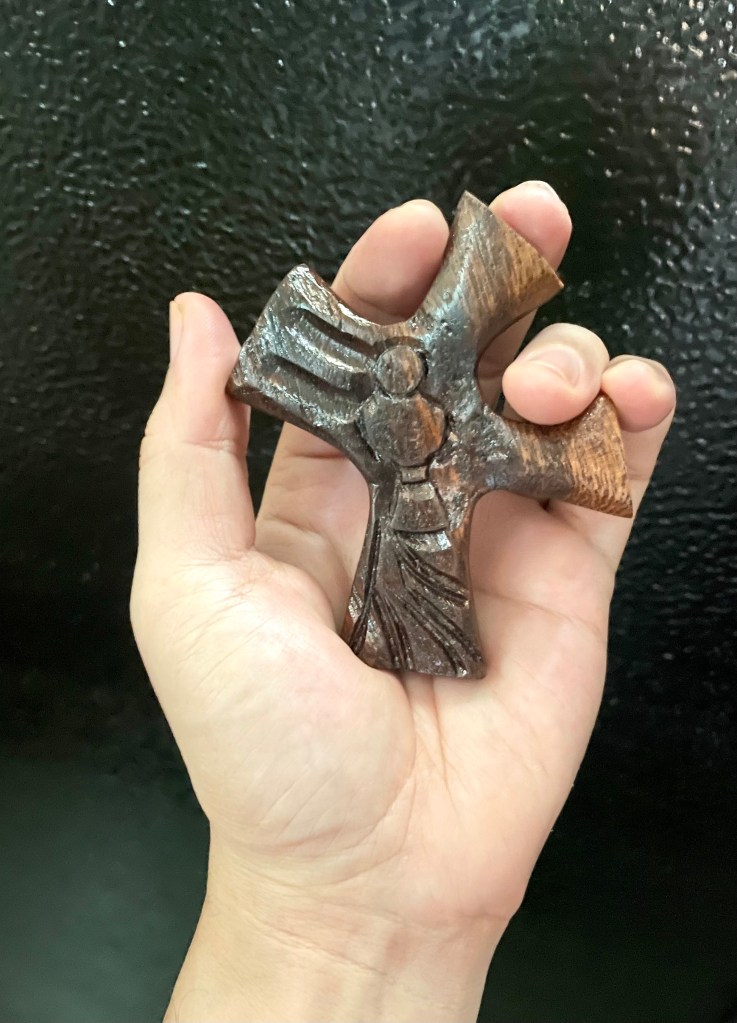
Three years ago, I received a token from a wedding I officiated in Iloilo of an old boy (an alumnus) and an old girl (an alumna) of Assumption Iloilo. The groom, who loves to sketch, drew for me two giraffes facing  opposite directions forming a small letter “r”. I love the token because I like giraffes and what they symbolise for me. I find they are really fascinating creatures. They have very long lean legs. If they want to eat grass, they literally splay their slender legs to bring their heads as close to the ground as possible. At the same time, they have very long regal necks that allow them to have a good vantage to spot threats or dangers ahead so as to avoid them. Being the tallest of all animals, they can see far into the horizon. I believe observing giraffes can teach us a few valuable lessons in life. Although giraffes enjoy great heights, they must lower their heads and struggle to feed themselves or their young from time to time. Our life here on earth also requires us to bend down or even to spread ourselves out to humble us and bring us closer to the ground. Like giraffes that can reach the choicest leaves on the highest branches of a tree, we too ought to pursue the best out of life and always look to the horizon.    

Our celebration of the Solemnity of the Assumption of Our Lady gives us a good reason to look beyond our present woes into the glorious inheritance we are all destined for as sons and daughters of God. Mary’s life was not bereft of struggles. Mary faced trying situations that tested her faith in God and humanity. At the Annunciation she gave her “Yes” to God’s will for the salvation of humankind despite the strange and illogical terms presented to her by the angel.  Even to the very end — at the foot of the cross where she witnessed the suffering of her Son, Jesus, as He won for us salvation! Had it been anyone else, they would have easily lost focus and perhaps turned away from God. Not Mary. She kept her gaze firmly fixed on Jesus and remained faithful to her committment to God. She may not have understood everything happening to her and to her loved ones but she trusted in God’s higher purpose.  She remained most trusting of God and His mysterious ways. Her steadfastness, her single-heartedness was not prompted by any external motivations, but rather by her fundamental faith in God. Elizabeth extols Mary in today’s gospel passage saying… “Blessed are you who believed that what was spoken to you by the Lord would be fulfilled.” (Luke 1:45)

Like Mary we are all invited to see past our struggles and remain trusting in a God who has a beautiful future prepared for all of His faithful ones. Indeed, we have so much cause for despair with what we have to contend with these days. As today’s mass preface says… “Mary’s Assumption is a sign of sure hope and comfort to God’s pilgrim people.” Mary is a hope-filled sign for all of us who continue to struggle in this life. 

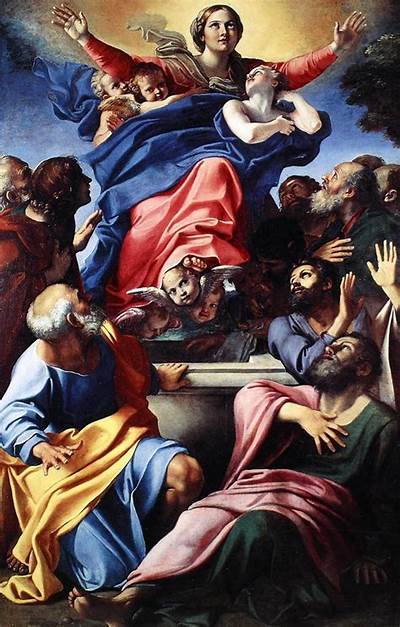
In our parish in San Roque, we have been wanting to have a big statue of our Blessed Mother that is similar in size to that of our image of St. Joseph. Being an Assumptionist priest, my instinct is to introduce the parishioners to Our Lady of the Assumption. The Assumption of Mary image is one of my favourite depictions of the Mother of our Lord because although she retains her humanity, she is so honored and loved by the angels lifting her up to heaven. She is assumed body and soul. It is important to know this that she is closer to us. She is very much one of us. Her arms are open-wide, outstretched, reaching up in anticipation of the precious reward she is to receive from on high. At the same time she directs all of us, her children struggling here below, towards God’s promise of our future for us in heaven. 

Today, as we celebrate the Assumption of Mary, may we believe what St. Paul in our Second Reading says… “For just as in Adam all die, so too in Christ shall all be brought to life.” (1 Corinthians 15:22) We have been promised a future with God in Christ. May we see in Mary a cause for hope and rejoicing in God’s promise of a future in heaven for all the faithful followers of her Son Jesus. Let us look forward to the day when we the faithful ones can fully share with her the fullness of God’s promises in Christ!

Fighting! Stepping out of Despair

Homily: Nineteenth Sunday in Ordinary Time (B)

John 6:41-51

8 August 2021 

Fr. Ricky C. Montanez, AA

“ECQ na naman!” “Back to square one!” “Wala na namang trabaho!” “Saan na naman tayo kukuha ng papakain natin sa ating mga pamilya?” “Kelan kaya matatapos ito?”  How many of us have heaved these sighs of frustration now that Metro Manila and many parts of the country are back on the strictest lockdown. As my friend observed… “It seems like a vicious cycle.” Some of us are at the point of giving up on the fight to end the pandemic. 

What we are going through right now can be likened to the frustration of Elijah in the passage from the First Book of Kings. He has lost his appetite for doing God’s work. Elijah is frustrated to the point of death. He has not been successful in calling the people away from their sinful lives. He has had enough. So, he calls on God to take his life instead. “So, Elijah calls on God to take his life instead. He prayed for death saying: “This is enough, O LORD! Take my life, for I am no better than my fathers.” (1 Kings 19:4)

In this Sunday’s gospel something similar is happening. Jesus is also having a hard time convincing people that He is who He claims Himself to be. “How can he say, I have come down from heaven?” (John 6:42) The objection centres on the fact that they feel they know Him and are familiar with his parentage. How can He claim to have a heavenly origin when they are certain of His human origins?

Instead of being discouraged and frustrated at their non-acceptance, Jesus responds by saying: “No one can come to me unless the Father who sent me draw him, and I will raise him on the last day.” (John 6:44) What Jesus is trying to say here is that it is only through faith that they can come to Him and learn to accept Him. Their rejection of Him is a sign that they have not been called by the Father since it is the Father, not we, who finds us and leads us to Jesus, the True Nourishment. It is only in faith that they would be able to see beyond Jesus’ human origins and acknowledge that He indeed is the “bread that came down from heaven.” 

Similarly, it is easy for us to be tempted to believe that God has abandoned us. It is so easy to succumb to despair in dealing with all that we are all going through lately. The readings this Sunday teach us not to give up. As the South Koreans often say: “Fighting!” “Laban lang! Habang humihinga, may pag-asa!”  We are reminded that the only assurance we are given is in our faith in a God who loves us and who does not delight in our suffering. With the eyes of faith, we see God in Jesus who continues to love us and provide us with what we need for our life’s journey. And for us Catholic Christians, it is also in faith that we come to see beyond the material substance of bread and wine as we receive our spiritual nourishment in the very Body and Blood of Jesus in the eucharistic feast we celebrate. 

When we lose our appetite for life, we are in effect grieving personal losses of freedom, independence and a perceived control over our environment. We tend to retreat into ourselves and fail to see clearly the whole world that is filled with hope, beauty and positivity. St. Paul in his Letter to the Ephesians says that we should imitate Jesus. He tells them that they should be kind and treat others with the same grace and generosity shown to them by God. (Ephesians 4:30-5:2) In so doing, we can become ourselves a source of nourishment for our brothers and sisters in need. When we make an effort to uplift others we simultaneously step out of our own despair. 

Sa panahong ito na marami ang naghihikahos dahil sa epekto ng pandemya at lockdown – BE KIND.

Sa panahong ito na tila walang katapusan ang pagsubok sa atin – BE GENEROUS.

Sa panahong ito na tila sinusubukan ang ating pasensya ng iba’t ibang restrictions para ang lahat ay mailigtas – BE STRONG.

The challenge for us these days of another hard lockdown is to respond positively, not with rebellion, murmuring and indifference but with a renewed sense of humanity, with faith and above all with hope, which finds its very foundation in the love of God that is continuously poured in our hearts.

Hungering for the Spiritual

HOMILY: Eighteenth Sunday in Ordinary Time (B)

John 6:24-35

1 August 2021 

Fr. Ricky C. Montanez, AA

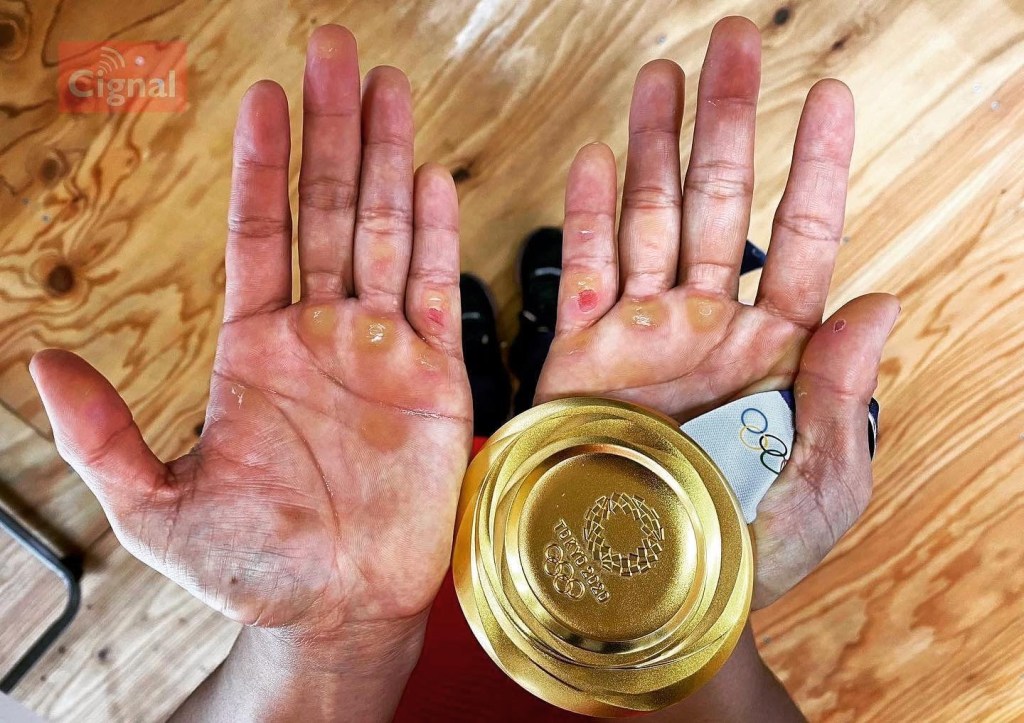
So, many triumphant photos of our national pride Hidilyn Diaz have been circulating online. She is depicted as someone victorious holding the Olympic gold medal that has remained elusive to us Filipinos for the longest time. It took a woman to finally end the Philippines’ century-long drought for Olympic Gold. Hidilyn also achieved a new Olympic record in the women’s 55-kilogram division by lifting 127 kilograms in her final attempt. 

In all of the photos I have seen of Hidilyn, there is one particular photo that I consider the best one. It’s a simple picture of her open palms showing her gold medal but if you look closely you see countless blisters and calluses. It’s a photo that reveals evidence of the painful sacrifices she had to make such as putting in long hours of practice, and suffering through countless cuts, bruises and muscle pains. It is a reality check for those of us who only want the glory without undergoing the pain of the process.  The hands that brought home the gold are the same hands that bore so much pain. 

She now can look forward to enjoying the fruits of her hard work and sacrifice.  She will be receiving over P50 million in cash, a lifetime of free flights, houses and lots, a condominium and many other bountiful gifts from people who rewarded the honour she brought to the nation. Who wouldn’t want such a hefty prize or a taste of her popularity? But how many are willing to put themselves through such a struggle for the promise of glory?

In today’s gospel passage from John, Jesus tells the people that they are looking for Him for a very superficial reason — “they ate the loaves and were filled.” They clearly did not see any other significance to the multiplication of the loaves beyond that it was an easy way to get more bread to fill their bellies. Similarly, the Israelites would rather endure slavery and the “fleshpots” of Egypt where they had an abundance of food rather than secure their freedom and claim the Promised Land. “Would that we had died at the Lord’s hand in the land of Egypt, as we sat by our fleshpots and ate our fill of bread! But you had to lead us into this desert to make the whole community die of famine!” (Exodus 16:3)

Although being a follower of Christ promises that we become co-heirs to the eternal inheritance, to be a Christian is never easy. We have to take the same path that Jesus took.  To follow Jesus, we must expect… even welcome the struggles and strains of following God. We cannot avoid nor escape our share in the sufferings of Christ in order to share in His glory.   

There are some of us who seize every moment that gives us pleasure.  But we would immediately shun a situation or experience that causes us discomfort or suffering and move on to pursue the next thrill or fun thing. It is no surprise that many people especially the young develop a low tolerance for criticisms causing them to easily fall into depression. Some as noted even have resorted to harming themselves when reprimanded by either their parents, teachers or any authority. Life will never be perfect. Life is beautiful but it can be harsh. We cannot give up easily and say no to life because there are bumps along the way. This is definitely not the Christian response. We have to learn to trust the process.There are no detours.  We cannot have shortcuts. Impatient generation. Instant gratification. 

Anyone who has worked hard for something, realises the value of the goal, and deeply treasures the achievement. Look at our athletes competing now in the Olympics. They can attest that victory is sweetest after enduring all pain that their training entailed. The artists among us don’t simply throw things together, do we? We work hard to design our piece and use choice materials, carefully constructing our piece to bring to life our vision.  I have read somewhere that “One of the greatest causes of failure in life is the inability to make sacrifices.” 

Jesus says: “Work for food that lasts for eternal life.” (John 6:27) Jesus invites us to ask ourselves: Have we ever caught ourselves trying to fill a spiritual emptiness with material things? We recall the words of the prophet Isaiah, “Why spend money on what does not satisfy? Why spend your wages and still be hungry? Listen to me and do what I say, and you will enjoy the best food of all.” (Isaiah 55:2) Similarly, St. Augustine famously said: “Our hearts are restless until they rest in You, O Lord.”   

May we heed what St. Paul tells the Ephesians: “You should put away the old self of your former way of life, corrupted through deceitful desires, and be renewed in the spirit of your minds, and put on the new self, created in God’s way in righteousness and holiness of truth.” (Ephesians 4:22-24) May the Lord Jesus strengthen us with His grace to resist the superficial consolations of worldly ways. May we instead hunger deeply for the spiritual; for those that is the Lord’s and what we need to be with Him.

Let me close with the words of Hidilyn Diaz herself… “Jesus is the most priceless reward that I gained in this entire experience. Without Him, I won’t be able to face life with a smile again. He is the reason why I am a different person now — optimistic in life, unafraid to give, unafraid to love. He lifted the weight off my chest, regardless of how heavy it was. With Jesus, I am assured that I can carry whatever life throws at me. He’s the Weightlifter who won’t ever bring me down.”

When the SCANT becomes PLENTY

HOMILY: Seventeenth Sunday in Ordinary Time (B)

John 6:1-15

25 July 2021 

Fr. Ricky Cañet Montañez, AA

Just when I thought things were finally getting better, we are again beset with so much fear and anxiety over the news of the highly transmissible Delta variant possibly triggering another surge of COVID cases in the country. As much as possible we want to do everything in our power to avoid this. We have suffered long enough! We even feel helpless and overwhelmed when simply thinking of ways to survive this health crisis. Parang wala ng katapusan! My friend sighed: “It is a mad cycle.” 

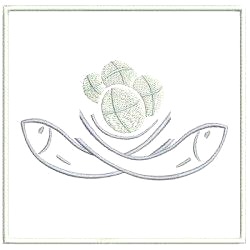
In the Gospel passage, we learn how it is to shepherd God’s people from what Jesus teaches His disciples. The story of the feeding of the crowd of five thousand with five loaves and two fish teaches us more than feeding those who are less fortunate among us, both in the physical and in the spiritual. It teaches us that giving is more a consequence of a generous spirit than giving of our excess. It also urges us to believe in the providence of God, our Father. 

Often like the disciples, we find ourselves overwhelmed by perceived problems. Phillip says: “Two hundred days’ wages worth of food would not be enough for each of them to have a little.” (John 6:7) How indeed can they provide for such a multitude from their limited funds? Andrew says: “There is a boy here who has five barley loaves and two fish, but what good are they for so many?” (John 6:9) What a blessing it was to actually have food available but the gift was immediately diminished because five loaves and two fish were deemed a meagre supply amounting to nothing much. It is not enough; it is too little to share with thousands of others. Jesus’ disciples said: “Because we have so little, we have nothing for so many people.” This tendency for equating “meagre” with “nothing” is a mindset Jesus changed in his disciples. Through the miraculous feeding of the multitude with the five loaves and two fish, Jesus challenged their defeatist mentality, showing them how a little can actually go a long way with the love and mercy of God. 

Isn’t this a common attitude among us Filipinos as well? We catch ourselves saying this from time to time: “I have nothing to give because I am a nobody.”  Time and again, I have heard the less fortunate in society excuse themselves from contributing to the good of society saying: “We are poor. We are not educated. We are just illegal settlers. We do not have a voice. ”  Even in the parish setting, when there are fundraisers, I hear some parishioners say: “We don’t need to give. The wealthier among us can raise the funds themselves. It will not hurt them to donate a large sum.”  The focus is erroneously on what one does not have or will find too difficult to acquire than on what one does have.  This is what we call the “poverty mentality.”  It is an attitude that presumes one has nothing worthwhile to give or share because what they have does not compare to those who have more.  

Our status in life does not determine how much we are able to contribute. It should not limit our capacity to do good for others. I saw an article online about a Filipino boy who was granted a full scholarship to Amherst College in Massachusetts, USA. Gelbert Cresencio is the son of a farmer/tricycle driver and a humble store keeper in the province of Bohol. Witnessing Alzheimer’s destroy his grandfather, he dreamed of becoming a neuroscientist or a neurosurgeon to develop a device to detect the onset of the disease in its early stages so the patient can already receive treatment. He knew his parents could not afford to fund his education so he took on a job after graduating High School but he endeavoured to apply for a scholarship at Amherst. Out of 5,000 applicants worldwide, he was among 118 students selected for a full scholarship with free board and lodging amounting to over P4 Million pesos! Once he achieves his dream, he is committed to return to the Philippines to serve his countrymen. He did not let his financial deficiency stop him from trying to make something of himself so he can be of greater benefit to more people in the future. He is making a very generous gift of himself to the world. 

Inability is not the same as unwillingness.  At the heart of generosity is a confidence in the providence of God our loving Father. It is knowing that we are children of a God of abundance and that we are all stewards of His bounty. Granted, some are stewards of more material wealth than others, but we are all blessed with our own gifts in other aspects and of that we can always share. Your wallet may be empty but you may have the physical strength to help others do manual tasks they find difficult, or you may have the intellectual capacity to think up solutions to problems, or the gift to speak inspiring words and give encouragement. 

Today’s gospel calls us to witness to the love of God for His people by sharing our “loaves” and “fish” to feed those in need. When the 5 loaves and 2 fish are blessed and shared, we all know what happened next… the collected leftovers filled twelve wicker baskets. This miracle happened when the value of the meagre was acknowledged, and when the little was shared. The scant became plenty—more than enough for everybody!  The little that we have when shared in love will go a long way in assuring our less fortunate brothers and sisters of God’s providence and His constant presence throughout their struggles. After all, it is through each other that we also experience God’s goodness and mercy.  One of my favourite saints is St. Pedro Poveda whose feast we will celebrate this Wednesday. He once said, “One does not need to be rich in order to give, one only needs to be good; when one is good he/she will always find something to give.” 

We must never belittle our ability to give. In our own little ways we can contribute to society, help the needy and alleviate someone’s suffering.  To stave off another COVID surge, some people are advocating a voluntary ECQ and strictly observing the necessary health protocols, even if we are officially under GCQ with heightened restrictions. Our personal sacrifices to restrict our movements and increase our self- awareness not only contributes to our safety but also to that of the majority.  That is in itself a small gift we give to our society. I was struck by a recent article in the news. It featured Dionisio Lingaling, Jr. who was simply watching over a COVID patient in the ICU of a hospital in Ilocos Norte. Seeing the plight of doctors and nurses in the COVID ICU, he offered his services to the hospital team so they did not have to undergo the tedious process of donning and doffing PPEs to do tasks outside the unit. He said he volunteered to fill up oxygen tanks for them and run other small errands because he wanted to minimise their exposure and saw that they were already fatigued. A small act of kindness meant so much to the team because he gave them a little respite and valued their sacrifice.

At the start of the homily, we mentioned the “mad cycle” of suffering. The cycle is always broken when people make an effort to alleviate others’ pain, difficulty, and misfortune. The miracle of multiplication continues to happen when we offer of our humble selves to others, no matter how poor, little or least we are. Elisha was able to feed one hundred people with a handful of barley loaves and Jesus was able to feed five thousand with five barley loaves and two fish. We are never without something to give because we are blessed by a generous and loving God who calls us His heirs.  We are all stewards of His abundance. With our commitment to Jesus’ mission of feeding our hungry brothers and sisters— addressing those in need — we, too, can transform the ‘food of the poor’ into the ‘food for all’.

JESUS: In Choosing and Being Good Shepherds

HOMILY: Sixteenth Sunday in Ordinary Time (B)

Mark 6:30-34

18 July 2021 

Fr. Ricky Canet Montanez, AA

After reading through the comments of netizens on the results of a local singing contest, my friend tweeted… “Sana ganyan din tayo kabusisi mamili ng ihahalal nating pinuno. Ang daming marunong ha?” They say most Filipinos are hard to please and are very critical of performing artists. In one of her interviews, I remember our very own internationally-acclaimed broadway star, Lea Salonga saying (as excellent an artist as she is) that it is always more demanding to perform for the “home crowd” because Filipinos have very high expectations of performers. Just visit our social media pages. Kung mamintas at manlait ang ilan sa pinaka-maliit na pagkakamali – wagas – abot langit! Sobra tayong perfectionist. Ang taas ng standards! Kung sana ganun din kataas ang standards natin sa pagpili ng ating public servants. I wish we were as meticulous when choosing our leaders. (Parang di kasi tayo ganun ka-critical magbusisi sa ating mga pulitiko.) 

Today’s readings contrast between good and bad shepherding. In the First Reading, the prophet Jeremiah talks about leaders who do not have their people’s best interest at heart. They do not care for the people’s needs. Jeremiah even says that not only have they neglected the people of God but they have also misled them. Speaking through the prophet, the Lord addresses these self-serving leaders as such… “You have scattered my sheep and driven them away. You have not cared for them.” (Jeremiah 23:1) So God speaks of sending a leader for God’s people, “the great shepherd of the sheep” who will pasture His people after His own heart. We know this good shepherd to be none other than Jesus Christ. 

In his Letter to the Ephesians, St. Paul highlights the union that has been accomplished in Christ. In Christ, those who were once “far off” from the faith have now been brought together as one people in their faith in Him. (Ephesians 2:13) In talking about “breaking down the wall of enmity” (Ephesians 2:14) St. Paul seems to refer to the divisions between the Jewish Christians and the Gentile Christians that have all been reconciled in Christ. In doing so, St. Paul presents Christ as a model for leaders to promote unity rather than division among the people.   

We also have the beautiful Twenty-Third Psalm. The psalm offers a couple of images of repose and of restful waters and the refreshment that the Good Shepherd brings to those who take their refuge in the Lord. The Gospel shows Jesus as a leader who takes good care of His apostles. He makes sure that they all get rest, be re-energized and fit for the work ahead.  Jesus Himself doesn’t get to have his share of rest as the crowd has been eagerly trying to follow Him and His disciples wherever they went. Though exhausted, when Jesus sees these people “like sheep without a shepherd,” He would unreservedly attend to their needs and “… teach them many things.” (Mark 6:34)

As in the time of Jeremiah, many of us who are in leadership roles have so much to answer for. Many of us need to relearn, understand and recognise how best to exemplify authority for service. By the life He led, Jesus showed the disciples how authority is first and foremost, bestowed for the purpose of service. This is a continuing lesson for us all. When this is forgotten, power and privileges that come with authority are abused and the common good is forgotten. This happens when leaders (civic or church) forget they are supposed to be public servants, servant leaders. 

Our readings encourage us to be carefully discerning in choosing well our leaders in the next elections. Dependable shepherds walk with us in the dark valleys of our lives. They do not leave us alone to fend for ourselves. They will never say or act in a manner that suggests, “Bahala na kayo sa mga sarili ninyo”. They are willing to sacrifice their own convenience for the sake of their flock. They even go as far as risking their own safety for the sake of their constituents. “I am the Good Shepherd. The good shepherd lays down his life for the sheep.” (John 10:11) They, too, have the capacity to promote unity rather than division among the people. Good leaders rally people to work together for the common good. 

Our national election is sooner than we think. I think 75 days left to register for all our new voters and the like. Magpa-rehistro tayo! We should take responsibility for the future of our country. This time, we really have to be able to choose well our national leaders. We have to be perceptive and wise in matters that will affect all of us and future generations. We are reminded through our readings to be cautious of made-up truths spread on social media and to be wary of those behind them. Don’t be deceived by appearances, grandstanding and false witnessing. Nakasalalay ang ating kinabukasan sa sino man ang ating pipiliing mga mamumuno sa atin sa susunod na 6 na taon. 

As we take refuge in and assurance from Jesus, we are privileged to experience our Good Shepherd’s care for us. Thus, we, too are invited to be good shepherds to one another. We do this according to the example of Jesus who has shown compassion for each of His sheep, seeking them out when they stray and loving them unconditionally. May we always look to the Good Shepherd for inspiration in choosing our shepherds and in shepherding others. With Him as our guide we will never go astray.

A Shared Mission

Homily: Fifteenth Sunday in Ordinary Time (B)

11 July 2021

Mark 6:7-13 

Fr. Ricky C. Montanez, AA

It has been a month since I moved here to San Roque and my experience has been fulfilling thus far. I strongly believe God has been affirming my new mission as evidenced by the outpouring of His grace since I arrived.  Just a week after my arrival we have managed to improve the live-streaming of our masses with the help of parishioners of Christ the King who donated most of our new equipment. With so many generous people helping San Roque Parish plus the cooperation of our own parishioners, ramdam na ramdam ko na hindi ako nag-iisa sa misyong ito. I am more inspired to continue giving my best and my all for the mission.

The work of God is never a solitary affair.  This is very apparent from the first line of this Sunday’s gospel passage from Mark. “Jesus summoned the Twelve and began to send them out two by two and gave them authority over unclean spirits.” (Mark 6:7) They are not sent alone but in pairs (“two by two”). They have the gift of one another to support and sustain each other in the given task of proclaiming the Good News. My recent experiences leading up to my becoming administrator of this parish is a testament to this. In more ways than one, so many people have joined me to enrich the faith and worship experiences of San Roque Parish. This is a shared mission. 

Hindi ba karamihan sa atin kailangan ng katuwang, ng kasama lalo na kung meron malaking hamon na kinakaharap? Siyempre mas okay kung meron kang ka-holding hands, kabalikat, kabatak sa gitna ng misyon. Huhugot kayo ng lakas sa isa’t isa. Aalalayan niyo ang isa’t isa.

Many times a mission can be overwhelming especially when we feel we are not trained for it or equipped with the necessary skills for it. To this fear of not measuring up, St. Paul counters saying God has blessed us with every spiritual blessing and has provided us with all “wisdom and insight” into the mystery of His will. (Ephesians 1:8) We all have been gifted tremendously with the potential for success. We simply need to trust that God is with us and that He will supply everything we need. “Where two or three are gathered in my name, there am I in their midst…” (Matthew 18:20) 

As with Amos, God blesses us with all that is needed to fulfill His will for us and to be of service to others. So we need not worry that we may not have what it takes to complete God’s purpose. Jesus assures us that He will provide all that is needed to overcome our inadequacies and failings. I am personally consoled when I am reminded that the disciples, themselves, were ordinary men bestowed with the wisdom to grasp the truth of the Gospel.  They shared the Good News with accompanying signs and wonders that they clearly could not have mustered only with their own capabilities. God provides! 

As the apostles were warned, working for the Lord will entail many difficulties. They will be shunned and rejected at times. I know that when I accepted my mission in San Roque, I will surely experience my share of rejection but I am undaunted. As the French say: C’est la vie. That’s life! More importantly, God has been very good at assuring me that He is with me in my new mission. Just after Bishop Ness talked to me about the assignment in San Roque some time in May, I was asked by one of the Christ the King parish staff if I could do a blessing of a statue. Guess whose statue it was I had to bless? San Roque! Then in early June, when I took a few days to rest before assuming my post here, I was surprised to discover that the parish church across from where I stayed was under the patronage of San Roque!  The support I have been receiving from many friends, here and abroad, even before I reported for this assignment, has truly been overwhelming. As I read today’s gospel, I am reminded to be grateful for the friendship, companionship, and the material and prayerful support showered upon me in my ministry throughout this time. 

Kung ano mang agam-agam ang naramdaman ko nang ibigay sa akin ang assignment na ito, yan ay kaagad napawi dahil sa naramdaman ko ang suporta ng marami na alam kong sinugo ng Dios. Kayo ang naging instrumento ng Diyos para tumatag ang loob ko at lubos akong magtiwala. Araw araw, ramdam na ramdam ko na kasama ko kayo sa misyon na ito. We are in this together. And I am never alone. 

All of you present here and those listening to the livestream, even those who will watch the recording later — all of you also have a share in Jesus’ mission. By virtue of your baptism, you are all continuously sent in the unique circumstances of your existence —whether wealthy or struggling, homemaker or working professional, employee or entrepreneur,  a doctor, a teacher, an artist, student, etc. — to evangelise to people you encounter, to invite them to know Jesus, to love Him, and to follow Him. Di ba nga ang tema ng ating selebrasyon ng 500 Years of Christianity ay Gifted to Give? Yan ay pagkilala na lahat tayo ay merong pwedeng i-ambag sa misyon. Lahat tayo ay may biyayang pwedeng i-share. At lahat tayo ay bibigyan ng angkop na biyaya para sa ating pangangailangan. Dapat lang tayong magtiwala na hindi tayo kailan man pababayaan ng Diyos. Just as God has blessed me for my work here, you can be assured that you will also be equipped with everything and everyone you need for a fruitful mission! You will never be alone. Count on Jesus’ word and rely on His promises.

God’s Misunderstood Messengers

Homily: Fourteenth Sunday in Ordinary Time

Mark 6:1-6

4 July 2021

Fr. Ricky Cañet Montañez, AA

“We see things not as they are, but as we are.” I shall say it again…“We see things not as they are, but as we are.” That’s by British writer Henry Major Tomlinson.  I agree with him! You see, if we are honest with ourselves, our understanding of the world is influenced by our prejudices, our intolerances, our biases. Sometimes that keeps us from seeing the truth for what it is. 

The people in today’s gospel passage are portrayed as such. They think they know Him  well enough because He grew up in their town. They are unable to believe that Jesus could be anything more than the carpenter’s son they know Him to be, much less, the Messiah.  “Isn’t this [man] the carpenter’s son? Isn’t his mother’s name Mary… his brothers James, Joses, Simon and Judas? [and] aren’t all his sisters with us?” (Mark 6:3) In the first reading, the people to whom Ezekiel is sent by God are no different. Ezekiel is warned that he is being sent to a rebellious people. “Son of man, I am sending you to the Israelites, rebels who have rebelled against me; they and their ancestors have revolted against me to this very day. Hard of face and obstinate of heart are they whom I am sending you.”  (Ezekiel 2:3-4)

It is unfortunate to note that many modern-day prophets in our midst continue to be criticised, maligned, and misjudged by others. In some countries like the Philippines, beauty queens or athletes who win prestigious competitions abroad, receive a hero’s welcome in their hometown. There are parades and motorcades and many people lining the streets to catch a glimpse of them and wave at them. They are overjoyed for the honor that this instant celebrity brings to their town.  It is however, different for prophets who, by nature, articulate and give voice to the inconvenient truth that people do not want to acknowledge. They throw a light on our blindspots and show us where we are failing in order to help us recognise ways and means by which we can improve ourselves and escape from difficult or less ideal situations. I have a few examples for you. First, back in the 1940s medical professionals first proved that cigarette smoking was causing lung cancer. However, since the Tobacco Industry was big business worldwide and even doctors had taken up the habit, the world was in denial for decades. It was only in 2011 that stern warnings and graphic pictures were printed on cigarette packaging. Despite that, statistics show that 8 Million people die annually from tobacco smoking related disease. In the Philippines alone, 110,000 Filipinos die yearly from smoking-related diseases. (That’s more than the number of those felled by this COVID pandemic.) Despite these figures, many young people still take up the habit. Another example is Mother Teresa who was a prophet of sorts, whose actions spoke louder tham her words.  Her life work shone a spotlight on the plight of the poor and the suffering in India, drawing support and compassion for from a world that had become indifferent. When she was starting out, she suffered criticism and the local church and government authorities in Calcutta were not eager to support her. At the time of her death, the Missionaries of Charity was operating 610 missions in 123 countries. 

We too, have prophetic missions among the circles we move in and oftentimes, we are immediately criticized and ostracized by friends, family and colleagues. They can not separate the value of the message from the person of the messenger. We are known to them a certain way, imperfections and all. Divine awakenings and a call to prophesy do not automatically come with a seal of approval or expert accreditation. It can be difficult for others to accept warnings and counsel from someone they deem inexperienced, too young, too idealistic,  ignorant, OA (over-acting) or flawed.   Nevertheless, we should not shrink back and hold our tongue, especially when God is obviously sending us to people out of His love for them. In the Second Reading, Paul is painfully aware of his inadequacies but he perseveres quoting God’s assurance to him “My grace is sufficient for you, for power 

is made perfect in weakness.” (2 Corinthians 12:9)

If we find ourselves called to prophecy, we have to expect that our efforts will not yield immediate fruits. I read somewhere that “If we are prejudiced against a person, that person can do nothing right in our eyes. If we are prejudiced in favour of a person, that person can do nothing wrong in our eyes.”  Jesus was not able to perform any mighty deed in His native place because of their bias towards Him. His “kababayans” could not see past His human origins (probably thinking he was that quiet child of Mary, one of the local kids who played in the streets, the local carpenter who took after his father, Joseph’s, trade).  Expect that those you minister to will continue in denial and refusal to acknowledge their mistakes and they will not recognise you as the prophet in their midst. Oftentimes, we are not called to stand on street corners and yell at the top of our lungs. Perhaps, all that is asked of us is to speak up against an injustice, offer a gentle reminder to be conscientious and compassionate to one’s self or others, or render a clear reprimand for bad behavior. Sometimes, all we are asked to do is plant the seed of realization in someone’s heart and allow God to grow it in His time. 

Brothers and sisters, let us pray for courage when He calls us to be a prophet to His people. May He give us the grace to acknowledge prophetic truths and be sensitive to God speaking to us in the people around us. Moreover, let us help one another  welcome God’s messengers of truth in our realities and to respond to the gift of divine revelation with humility.

Helping that Heals

Homily: Thirteenth Sunday in Ordinary Time

27 June 2021

Mark 5:21-43 

Fr. Ricky Cañet Montañez, AA

Throughout the past year, I have witnessed numerous outreach projects spearheaded by parishes, barangays, LGUs, private entities, and individuals. So many people wanted to help soothe the wounds of a world suffering from the scourge of the pandemic. Many were motivated by genuine concern for society while sadly, others used it as an opportunity to further their personal agenda. They prioritise the posting of their photos on social media or highlighting their names on banners and containers of dole outs. 

On this Sunday’s gospel from Mark, we see how Jesus responds to those in need around Him. We find two miracle narratives that highlight Jesus’ extraordinary capacity to empathise with the plight of others. First, Jesus shows compassion to the haemorrhaging woman who received healing by merely touching his clothes. Second, is an account of the raising of Jairus’ daughter who was believed to have died. In both stories we observe consistencies in Jesus’ response — He is sensitive to their suffering, He is gentle in His dealings, He communicates compassion through touch, and He acts with no regard for His personal inconvenience. 

In the first story, Jesus is practically mobbed by people who are pushing against Him, touching Him. But that one touch of His cloak from the sick woman was something He was acutely aware of. He felt her suffering and desperation for healing. He was in a rush to heal Jairus’ daughter but He still stopped to address the woman.  He gently tells her, “Daughter, your faith has saved you. Go in peace and be cured of your affliction.”  In the second story, on His way to Jairus’ house Jesus is told that the girl had died and that He should not bother to come. However, He is so sensitive to the pain of Jairus that He takes pity on Him and proceeds to see the little girl.  Despite, the taunting and ridicule from the crowd that had no faith in Him, He took the child by the hand and said to her, “Talitha koum”, which means, “Little girl, I say to you, arise.” (Mark 5:41) To everyone’s shock, she wakes up and is healed!  Jesus goes a step further, by asking them to give her something to eat. This, to me, also reflects that He was very aware that the child needed to replenish the strength she had lost because perhaps while sick she had not been eating at all. Nothing escapes the sensitivity of Jesus. He is most sensitive to the needs of people!  

Reaching out to help others was so much a part of who Jesus was that even during his great suffering and darkest hour he still instinctively reached out to others. Even in His own suffering, Jesus was still sensitive to the needs of others around Him. We recall how Jesus healed, comforted, forgave, and instilled hope in others not only during His public ministry but also during His passion. In spite of his own life being on the line on the cross, He still managed to give life to others! This is what the passage from the Book of Wisdom reminds us of God: “He fashioned all things that they might have being.” (Wisdom 1:14)

These days when there is still much difficulty going about in public and because of physical distancing, people think it’s not easy to feel the pulse of a neighbour in need.  It is already a challenge to be fully present with one another even just in our conversations. Nevertheless, I urge you to see with the eyes of your hearts because then you will find the many opportunities to be of service to others. Our cook in London once told me how appreciative she was of Filipino nurses who took care of her during her hip replacement surgery. She related how kind and sympathetic they had been to her by taking time to talk to her and treat her as a “person”. They made her feel as though she was the only patient they had by painstakingly attending to her every need very meticulously. They always spoke kindly to her and most importantly, addressed her by her first name — Brigid. In that experience she came to know first-hand the gentleness and compassion of Jesus through the Filipino nurses.  In my former parish, one of the lectors, a senior citizen was heartbroken that she could not attend mass at church and fulfill her ministry as a lector. However, while stuck in her condo unit, she was able to continue her Cenacle group via zoom and augment the spiritual needs of her friends. She also started cooking meals for the security guards and receptionists who could not go home to their families. Malaking bagay na libre ang pagkain nila kasi kulang ang budget at wala namang malapit na mapagbibilhan ng pagkain. You don’t have to look far to find people who are in need. A small gesture of kindness and compassion goes a long way. 

For Jesus, it was never about Himself… when people needed Him, sila ang bida for Him… He paid them attention. He gave them importance.  He affirmed them and consoled them as if no one else mattered. Minsan tutulong na lang tayo, andami pang satsat. Magsesermon pa o may kasamang guilt trip lalo na sa mga taong paulit-ulit na humihingi ng tulong.  Sino ba ang tunay na kawawa? Ang nagpapakumbabang humihingi ng tulong o ang naglilimos ng tulong?  Pinapamukha lang natin na tayo ang bida na inaagrabyado nila. Mas importante ang schedule natin, ang convenience natin, ang oras natin… All according to our terms. Si Hesus, hindi pabida.  In fact, walang break time, lunch time, siesta para sa kanya basta may nangangailangan sa kanya. Sila lagi ang mauuna. He does not complain that they have delayed His schedule. He does not scold them for being so needy and impatient. 

Jesus’ empathy allows Him to put Himself in their shoes, to understand their despair and their pain. That is enough to make Him drop everything and turn a merciful gaze upon them because His heart was bursting for love of them.  As the saying goes, “the lover only has eyes for the beloved.” This is similar to what St. Augustine prays in The Confessions: “O good and all-powerful God, who cares for each of us as though each were the only one, and for all alike with the same tenderness you show to each.” (The Confessions, Book III. 11, 19)

Let us all be mindful that regardless of who we are, where we are and what situation we are in, we can in our humble ways, reach out and help others. No quarantine can and should stop us from being kind and generous to those who are in need. St. Paul urges the Corinthians to imitate Jesus that “though he was rich, for your sake he became poor, so that by his poverty you might become rich.” (2 Corinthians 8:9) Through the Spirit we all have been gifted with the grace to be sensitive to the needs of others, to be instruments of God’s healing touch for our sick brothers and sisters. May we always strive to be healers for one another reaching out and making ourselves available for others.

Finding Calm in Our Heavenly Father

Homily: Twelfth Sunday in Ordinary Time

Mark 4:35-41

20 June 2021

Fr. Ricky C. Montanez, AA

I haven’t been getting much sleep lately. I always find myself waking up at 3 AM for no reason and have trouble falling back asleep. I’m told perhaps I haven’t gotten used to my new environment yet. Another friend joked…  It’s because I’m getting old. (Pag maaga nagigising alam na. Palatandaan na daw yan!) I read online that when one ages, sleep patterns change. You need less hours of sleep at night and more short naps throughout the day. Another suggested I may be developing a sleep disorder like sleep apnea but I have no one to corroborate this. (Because I sleep alone.) It really is tough when we are deprived of sleep. We need it to properly rest our minds and our bodies. 

In today’s gospel passage from Mark, Jesus sleeps! The story tells us of an incident wherein Jesus and His disciples are out in the boat during a violent storm that is likely tossing the vessel about and crashing waves against it. This causes the disciples to panic in fear for their lives.  Strangely enough Jesus is peacefully asleep at the stern. His disciples call out to Him “Teacher, do you not care, that we are perishing”.  Why indeed was Jesus asleep? If we go back to the start of Chapter 8, we see that Jesus had a long day of healing. He healed the man with leprosy, the centurion’s servant, Peter’s mother-in-law, all the sick, and he even expelled demons from the possessed.  At day’s end He is exhausted as He boards the boat with His disciples and so He falls asleep. It is evident in Jesus’ response to His disciples’ desperation: “Why are you terrified? Do you not yet have faith?” (Matthew 8:26) Jesus questions the faith of His disciples, their trust in God, and in effect, their trust in Him who is the Son of God. 

Sometimes, we can be no different from the disciples. When things go wrong with our plans, or when we are overstressed with problems, we wonder in exasperation if God has been sleeping on the job.  I have a friend who approached me for counselling once. Her father had just died after a lingering illness and she was feeling lost.  She had prayed for his recovery and she sacrificed her career and her social life to care for him. After his death she confessed she felt that she had been cheated out of life. She felt she made the right choice by gambling what she had built up for herself in the hope of prolonging her dad’s life but she ended up losing everything anyway. For a long time she refused to pray. She went to Sunday masses angry with God and often ended up crying tears of hurt and frustration. My friend described her dad as a doting father who personally looked after his daughters and raised them well. And that was why it was difficult to have him die. I believe it reminds us that kids shouldn’t take their fathers for granted and make them feel loved and appreciated. As it is Father’s Day, we greet all our fathers. Similarly, there are those who have lost loved ones, livelihood and rare opportunities because of the pandemic and were tempted to ask God if He truly cared about humanity. They feel they have suffered enough and are close to giving up.  Such are the storms, which in biblical terms, represent the forces of evil deemed at work in creation. When the waves and the wind are threatening, how do you respond? 

Jesus managed to sleep through the chaos. Does he simply take after His earthly Father, St. Joseph? Perhaps… but more importantly I’d say He sleeps soundly because He has confidence in His Heavenly Father. In a very literal manner, Jesus shows us what it means to trust that God is our Father. It is to live with the assurance that a Father does everything to protect his children. And even if he allows his children to undergo painful experiences, it is meant to strengthen them and to better equip them to deal with more difficult life challenges.  He never abandons them, nor does He remain a spectator. He is there to encourage, guide, and console.  Jesus knew this in his heart.  His steadfast faith in His Father became his soft pillow. He sleeps because there is an overwhelming sense of peace and calm within Him because His Father will never fail Him. 

Another element of the story I find important is that Jesus gave in to the request of his disciples to take action. The fact that He is able to command the natural elements is an exercise of His divine power. The Bible has accounts where God the Father triumphs over chaotic waters such as the parting of the red sea and the drowning of Pharaoh’s army. We are reminded again and again of God’s power to protect us… to take care of us, to secure us from all storms of our life. Some of the Psalms make references to this belief: “The Lord sits enthroned over the flood; the LORD is enthroned as King forever.” (Psalm 29:10) “The Lord stills the roaring of the seas, the roaring of the waves, and the tumult of the peoples.” (Psalm 65:7) In Psalm 89, it says: “You [O God] rule the swelling of the sea; when its waves rise, You still them.” (Psalm 89:9).  By calming the stormy seas, Jesus manifests His power and total control over the hostility of nature the power of God is over and above all forces of evil in the world. Isn’t this enough assurance for us?  

Brothers and sisters, today’s Gospel illustrates the value of rest and how all of us followers of Jesus ought to confront the storms in our life.  We must keep our gaze fixed on Jesus, no matter how strong the wind blows and how strong it lashes from different directions.  We must walk toward Jesus, hold tight to Him.  We must cling and be resilient on our grip as we anchor on the power of the Lord … on the power of His Word. We have to remain steadfast, unwavering, undisturbed of the swirling powers around us.  

Pope Francis urged all the faithful in his Urbi et Orbi message “Let us invite Jesus into the boats of our lives. Let us hand over our fears to Him so that he can conquer them. Like the disciples, we will experience that with Him on board there will be no shipwreck.” May the Lord increase our little faith so that in all the storms of life we shall conquer everything. With Him at our side, we echo St. Paul’s words in Philippians 4:13: “I can do all things through Him who strengthens me.”

Here are some ways you can help San Roque Parish, Fr. Ricky’s new assignment:

*Bank Transfer or Deposit:

Robinson Bank: RCBC San Roque Parish

Account number: 115230002492

*Please make checks payable to: RCBC San Roque Parish