Holding our Ground in Faith

HOMILY: Twentieth Sunday in Ordinary Time

Luke 12:49-53

14 August 2022

Fr. Ricky Cañet Montañez, AA

Nabudol na ba kayo sa online shopping?  Habang tumitingin ka lang, may makikita kang jacket… Sabi mo… “Uyy, parang maganda ah”. Wala kang kabalak-balak bumili pero inadd-to-cart mo na at chineck out mo pa. Bahala na!  You wait with much anticipation and when the rider rings your doorbell, you get excited in seeing the blue or orange parcel in his hand. You practically rip it apart… Ang ganda ng kulay, ang ganda ng quality!  You put it on and then…  your heart sinks. Ang sikip sa braso at kahit hindi ka huminga, hindi mo talaga maisara ang zipper. Maliit pala ang sizing nung store. It’s not what you were expecting.  Tapos magagalit ka sa seller at mag-iiwan ka ng hindi magandang review. Tama ba? 

Sa pakikinig sa ebanghelyo sa araw na ito, marami din sigurong makakaisip na nabudol sila ni Hesus. After all, He is the Prince of Peace meant to unite us all, and yet, He speaks of pitting one person against the other, even family members against each other! A picture of Jesus saying, “I came for division!” (Luke 12:51) seems very out of character for Him. We would probably much like to hear Jesus say, “I come so everyone might just get along.” Sadly, it is not so.  It is very confusing —not at all what we would expect!  Is it time for us to have second thoughts about Jesus? Ipagpapalit na rin ba natin Siya?  Wag naman sana. Tayong mga tunay na nakakakilala kay Kristo ay hindi dapat matinag sa mga salitang Kanyang nasambit. 

There ought to be no doubt that Jesus is the Prince of Peace. When Jesus was revealed to the shepherds, the angels declared: “Glory to God in the highest, and on earth peace to people of goodwill!” (Luke 2:14) We echo this greeting of the angels every time at mass we sing or recite the Gloria. At the Last Supper, do we not recall Jesus saying that He was giving His peace to His disciples — a peace that the world cannot give and that no one could ever take away from them? (John 14:27) Peace was also the greeting of the Risen Christ in the various post-resurrection encounters He had with the disciples. Jesus is all about peace. He gives peace.  He is peace. He cannot contradict Himself. 

The division He speaks of is not His goal but rather a consequence of His presence and His teachings. Siya ang matatawag nating POLARIZING. You either like Him or you don’t. You accept Him or reject Him. Walang patumpik-tumpik at pag-aalinlangan. There is no middle ground.  Sa wika natin, hindi pwedeng mamangka sa dalawang ilog. You either follow Him or you don’t. There is no “half way”. Hindi pwedeng sabihin nating tagasunod tayo ni Kristo, gagawa tayo ng maganda sa kapwa at sa simbahan pero pagdating sa bahay malupit tayo sa ating mga kasambahay.  You cannot be a doting mother or father, being so loving and generous towards your children and family members and yet you make a living by cheating other people or running a drug business.  Living by Christ’s teachings means turning away COMPLETELY from sinful ways and the ways of the world to keep our gaze fixed on Jesus and our hopes pinned on a Heaven that we only see, for now, with the eyes of faith.  

In His lifetime, Jesus Himself saw and experienced personally, a powerful opposition.  He challenged abusive power and manipulation, false religiosity and arrogance, selfish living and neglect of the poor.  He came to call people to a new way of life. In doing all this, He clearly did come to “set the earth on fire.” (Luke 12:49) Jesus called people to a radical way of living that challenged them to making the hard decisions in life. And thus, His message was either met with repentance or provoked anger and strife against the messengers. Like Jesus, Jeremiah’s preaching divided the city and incited such opposition that people wanted to kill him. Do you think they wanted enemies? Of course not! Who wants enemies? But it was inevitable. Jesus had enemies in the Scribes and Pharisees and among His own people — the Jews. They did not like that He was shining a light on their wrongdoings. They even orchestrated His death so they could persist in their way of life and keep their power and influence. 

Isn’t it no different when we look to our political arena? Whistle-blowers who call out certain government officials involved in graft and corruption practices can be made to seem like the bad guys. Sometimes, they too, stand alone. Sometimes they are made to testify in the Blue-Ribbon Committee or they are interviewed by prominent and credible journalists but their enemies work overtime to destroy their reputations — lies are spread about them and people are paid to bear false witness. Only when, in time, the truth is exposed, are they vindicated. Sometimes it is too late because they would have already lost their lives. 

It doesn’t always have to be dramatic. You often experience similar situations in your own homes. Kayong mga magulang na may higit sa isang anak, alam ninyo ang ibig kong sabihin. Hindi ba’t minsan, nag-aaway ang inyong mga anak at nagkakasakitan pa sila?  Siyempre, kailangan ninyong awatin! Sasawayin ninyo at papagalitan ang anak ninyong nagsimula nung away. Tapos magagalit at magtatampo ang anak na iyon dahil sa tingin niya kumakampi kayo sa kapatid niya. Eh ang totoo, wala naman kayong kinakampihan, pinapangaralan niyo lang sila, itinutuwid ang mali nilang ginagawa at inilalalgay sa tama. Sila na nga ang mali, sila pa ang galit at kayo pa ang masama. Hindi po ba? Paghumupa na ang kanilang galit at natanto nila ang kanilang pagkakamali, nagkakabati na ang lahat. Take note. They need to realize their mistake first and choose to do what is right. Doon lang nailalagay sa ayos ang lahat at doon nagakakaroon ng kapayapaan sa inyong tahanan. 

Being committed to our Christian faith always places us in the cross-hairs of opposition. As followers of Jesus, we, too cannot expect that our preaching of the Good News will always be met with “Glorias and Hallelujahs”. Discipleship demands a readiness to stand alone. Sadly, at times those closest to us may even be the ones who never get to understand us for standing up for our faith. I know of a youth leader who is the only Catholic member of his family. He is admirable in the way he holds his ground on the Catholic teachings. Though he finds himself alone in going to church on Sundays, he is not discouraged nor does he compromise on what he believes in. How does he manage? He prays fervently for strength and perseverance. He prays for steadfastness in faith. He prays for patience. He prays for the conversion of His family. He prays. He prays. He prays. As Christians, we cannot think we can succeed apart from Jesus. He is our Guide, our Protector and our Ally. Let us keep Him close at our side at all times! 

In the end, we have to take stock and commit ourselves more fully to the ways of God. Gospel living is not always easy but we can be assured that we are never alone. Jesus and the heavenly court are ready to assist us. The Letter to the Hebrews assures us that there is a vast throng (“a cloud of witnesses” Hebrews 12:1) cheering us on to remain steadfast in our faith and to press on towards our eternal rewards in God’s Kingdom!
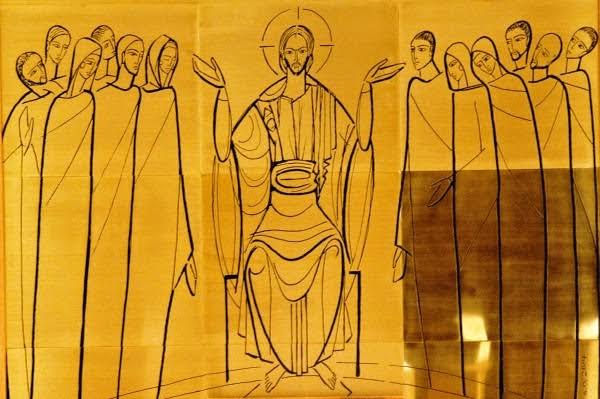
By: Claudio Pastro

Vigilance: Living in Faith and Hope

HOMILY: Nineteenth Sunday in Ordinary Time

Luke 12:32-48

7 August 2022 

Fr. Ricky Cañet Montañez, AA

Yesterday, I was shocked to have found out that Filipina actress par excellence Cherie Gil had passed away at only 59 years of age. She died “young” never even having reached the official age for a senior citizen. It was not something I was expecting but looking back, it seems she had prepared herself. Back in February she was featured on the cover of Mega magazine with a bald head. And she spoke of getting rid of all her clothes that were symbols of her past. She packed up and left for New York. She claimed it was a journey into her rebirth but I feel she knew she was headed into a battle she may not return from. She had prepared herself mentally, emotionally, spiritually and physically. Tayo ba, alam natin ang nakalaan sa ating hinararap? Nakahanda ba tayo?

Right in the middle of Ordinary Time, we are given a gospel passage that centres on the theme which we often associate with the end of the liturgical year and the Season of Advent — that of vigilance. Ang pagiging alisto. Kailangan laging handa sa pagkilos o pagtugon. Jesus in the Gospel of Luke admonishes His disciples to be vigilant, to be ready with their belts fastened and their lamps burning. By telling His disciples to tuck their flowing robes under their belts, Jesus wants them to be ready for action, for hard work or even for battle. If they keep their robes flowing about them, they cannot run or else they will trip all over themselves. Then, they are also to light their lamps suggesting that they are to remain watchful even at night for the master’s arrival. The unpredictability of the Lord’s return is further compared to a thief breaking into one’s house. “Be sure of this: if the master of the house had known the hour when the thief was coming, he would not have let his house be broken into.” (Luke 12:39) Hence, every disciple must be prepared at all times for no one knows on which day the Lord will come… We don’t know the day nor the hour.

Vigilance is normally associated with Christ’s second coming. We often fear this because it is the time when we shall all be judged. We know that to manage fear, we simply have to be prepared. How are we to live ready? While we wait for the Lord’s return, the best preparation is the living of every moment fully. Preparedness does not mean simply waiting and doing nothing. One must be responsible during the wait. While servants must be vigilant for the master’s return, they too must be faithful in carrying out the master’s will. What the servants do while the master is away proves to be the very test of their fidelity to him and his will. That is why Jesus says at the end of the Gospel that everyone shall be held accountable. “From everyone who has been given much, much will be demanded; and from the one who has been entrusted with much, much more will be asked.” (Luke 12:48) Although, this ultimately refers to our final judgement, we can still find meaning in this in our day-to-day life. Isa ito sa pinanghahawakan ng ilang mga pamilyang may kaya sa buhay. Sa kanilang paniniwala, sila ay biniyayaaan ng Diyos ng higit sa kanilang pangangailangan dahil sila ang inaasahang magbabahagi ng grasya ng Diyos sa mga salat at kapus-palad. Hindi ba’t pinaghihinayangan natin ang mga matatalino na ginagamit lamang ang kanilang galing upang pagyamanin ang sarili kahit yurakan nila ang kanilang kapwa? We expect better from them. Hindi ba’t silang may mataas na pinag-aralan, silang mas nakakaalam at may karanasan ang ating inaasahan na mamuno o lumutas sa problema ng lipunan? We simply have to live according to what God has given us. If he blessed us with a family, we should care for our family to the best of our ability. If He gave us a job, we must do our job well. We have to simply do what is expected of us as Christians — be just in our relationships, be prayerful, and be true and faithful to God in all our ways. Our unfailing fidelity in the smallest of these daily responsibilities builds in us that habit and attitude of vigilance! It allows us to be sensitive and keen to moments of Jesus’ manifestations in our life and ready to respond to the call of discipleship — to serve where there is a need. 

The Letter to the Hebrews highlights another element of preparation and waiting — Faith. Abraham is an example of this vigilance borne out of one’s deep faith in God. Abraham’s faith in God’s promise to him, rendered him ready to leave the familiarity of one land for the uncertainty of another. This reminds me again of the late Cherie Gil. Who is to say that because she was prepared to begin a new chapter of life in the US, she had the opportunity to receive the best treatment for her cancer? Ang mga nag-mimigrate abroad, hindi basta bastang nag-alsabalotan. They prepare by ensuring they will have a place to live there, a job prospect in that country and schools for their children to go to. Moreover, they have to settle all their business concerns and sell off properties and assets to secure funds and tide them over while they settle in. Although these matters require a lot of preparation, they still entail a leap of faith.  Abraham himself did the same when he believed God’s declaration that his wife Sarah was to bear a child, despite the fact that they were long past their childbearing years.  Likewise, Abraham’s faith was made apparent when he wilfully prepared to sacrifice his only son, Isaac to please the Lord. Through the witnessing of Abraham, we find that God does not fail His people and He rewards fidelity with blessings beyond expectations. During each mass we have the chance to express our faith in God’s providence. When it is time for offertory, we ask the Lord to bless us and I see people open their palms, letting go of whatever they are holding onto in a symbolic gesture of offering back to God, and receiving His graces. 

Waiting for the Lord whether in unexpected moments of our life or in the Parousia (Second Coming), need not be frightful if we know what we must do.  We must ready our hearts and our spirits for much is expected of us. One Bible commentator says “It is not about getting ready, but about living ready.”  Be ready here and now and leave the future to take care of itself.  A life so lived in the present takes care of itself – and its future. Since we do not know the hour nor the day, Jesus urges all of us to be prepared, to be vigilant. We do so when we strive always to live in the presence of the Lord. Vigilance demands that we live lives of faith at all times. As a people of faith, we wait for the Lord in hope.

From Primal Survivor

Rich in What Matters Most

HOMILY: Eighteenth Sunday in Ordinary Time

Luke 12:13-21

31 July 2022

Fr. Ricky Cañet Montañez, AA

It is hard to keep up with our fast paced and ever-changing world. Kung bibili kang latest model ng kotse mid-year, 7 months later lalabas na ang bagong model. Pag-iipunan mo ang pambili ng laptop na mabilis ang processing power pero wala pang isang taon may ilalabas na modelong doble na ang bilis. Those with iPhones often find themselves salivating for the next generation iPhone. Pipila pa ng mahabang oras sa labas ng Apple store para makauna sa pagbili.  Di ba tayo napapagod? Sa kakatrabaho, minsan nagkakasakit na o nawawalan ng oras para sa pamilya o pagsimba basta makabili lang ng latest. Bawal na bang makuntento?

Our readings this Sunday direct our attention to how easy it is to have a false sense of security in our possessions and in the fleeting things of this world. We are reminded that nothing in this life lasts forever. Whatever earthly possessions we have, we cannot truly hold onto them. It is a depressingly uncomfortable statement but it is important to note that this awareness and recognition of the transitoriness of life is an invitation to set our sights beyond what we have to the lasting treasures that await those of us who believe in Jesus. In the gospel, Jesus is approached by a man who wants him to act as arbiter between himself and his brother over their dispute on inheritance. His request is not a sincere one founded on a desire for what is just and fair. Jesus sees into His heart and finds it full of greed. Since Jesus was one who spoke with authority, the rich man was hoping that he could use that to his advantage.  Jesus simply read his heart and turned the situation around into a teaching opportunity. Jesus emphasized the fact that any reliance on wealth and possessions is pure folly since all worldly possessions and our very human existence are not permanent.  In fact, in the First Reading, Qoheleth describes in even greater detail the misfortune which befalls people like the rich man in the gospel parable. “For what profit comes to a man from all the toil and anxiety of heart with which he laboured under the sun?” (Ecclesiastes 2:22) According to Qoheleth, labouring for wealth and possessions is not only foolish but results in sorrow, grief, and anxiety.

But mind you, I don’t think that in advising us to “take care to guard against all greed,” (Luke 12:15) Jesus is asking us to completely divest ourselves of everything we own. Nowhere does the gospel passage say that wealth or even its accumulation is evil. In fact, prudently providing for our future is responsible planning. There is also no question in one’s right to enjoy the fruits of one’s labour acquired through a fitting manner. Jesus simply challenges us in the gospel not to place our security in possessions. We have to be careful not to lose ourselves in our possessions so much so that all our efforts are solely directed to accumulating more possessions and protecting what we have at the cost of our relationship with God and others. If this is what fills our minds and hearts 24/7 and all our time and energy are spent on making money or acquiring material wealth, then things and money become our idols. They take the place of God in our life and such is essentially the sin of greed. Sa taong ganid, ang pangangamkam ang nagiging puno’t dulo ng kanyang buhay. Obsessed to possess. 

The danger here is missing out on what truly matters. We miss out on values like family, friendship, simplicity, love, compassion, and sacrifice.  We also forget the Lord who is the Giver of all blessings and graces. We leave no room to develop our spirituality, our love for God and our neighbour.  If we are greedy, we accumulate more than what we need and hoard our time, talent and treasure. Hindi ba’t we are only stewards of God’s gifts? Maaaring hindi tayo patas-patas sa yaman pero ang lubos na binibiyayaan ay inaasahang magbabahagi sa mga nangangailangan. Those who are blessed with resources such as knowledge and wealth have the responsibility to uplift their fellowmen. What good does it do us if we end up rich in material things but we end up poor in what matters most: love, compassion, mercy trust, kindness, forgiveness, fidelity?  Jesus teaches us that the only wealth worth acquiring is to become “rich in what matters to God”. (Luke 12:21) Similarly, St. Paul admonishes the Colossians: “If you were raised with Christ, seek what is above… Think of what is above…” (Colossians 3:1-2) Every Christian sets his/her mind with intent and determination on the things above.  

Philippine pole vaulter EJ Obiena was featured in the news for his generous donation to athlete Lydia de Vega who is battling stage 4 breast cancer. “I have just learned of the plans of PSC to reward me with P250,000 incentive for breaking the Asian Record. This is deeply appreciated, and certainly needed since my funding is still yet to be sorted, despite the mediation agreement. However, on the flight back to Italy, it occurred to me that despite my own training needs, Ma’am Lydia needs this money more than I do. So, I am hereby pledging to [give] the P250,000 once paid, directly to the family of Lydia de Vega for her medical expenses.” I am impressed by this gesture. He is young and he has a long career ahead of him. If he works hard, monetary grants and product endorsements will surely fill his pockets. He earned the P250,000 he is set to receive. It is rightful for him to keep it for his training and expenses but he saw that a retired celebrated athlete had a more urgent need for it so he did not mind parting with the amount.

I was also recently present at the babang-luksa mass of a former parishioner.  He was a very successful businessman who built up his company by the sweat of his brow. I was so moved by the testimonial given by one of his children saying their dad “never fought with anyone, especially about money. It wasn’t because money wasn’t important, he understood the role money plays as a tool in life and how relationships are more than about money. Growing up he taught us to value hard work more than what we could buy with money. It didn’t matter how rich one has become, what is important is to remain humble, be honest and always be hungry… [for what matters most]. He was never one to rest on his laurels.” That lesson he taught was a most valuable legacy to his children.  

Brothers and sisters, the time we have in this life is short and most things in this world don’t last forever. Money is spent, things get destroyed, lost or stolen, investments can lose their value, relationships can end. Ang matalino puwedeng magka-dementia at Alzheimer’s; ang malakas puwedeng humina at magkasakit. Walang forever, puwera sa Panginoon.  Let us then reorganise our priorities in life. May we secure our future not in barns filled with grain and other earthly pursuits but rather on those godly things which lead us to God who brings fullness of life!

Prayer Lessons from Jesus

HOMILY: Seventeenth Sunday in Ordinary Time 

Luke 11:1-13

24 July 2022

Fr. Ricky Cañet Montañez, AA

Paano ka magdasal? How do you pray?  Kailangan ba nakapikit ka at nakaluhod? Sa loob ka lang ba ng simbahan nakakapagdasal? Do you pray rosaries and novenas? Or do you pray from the heart? To whom do you address your prayer? To God the Father? Jesus? The Nazareno? The Sto. Niño? What do you say? Panay hingi ka lang ba? Nagbibigay puri ka ba? Humihingi ka ba ng tawad? Do you pray for yourself only or for others?  Mga kapatid maaaring may iba-iba tayong nagugustuhan o nakagawiang paraan ng pagdarasal pero kuntento na ba tayo doon? May pagkakataon ba’ng ninais rin natin na mas lumalim pa ang ating karanasan sa pagdarasal? 

In today’s Gospel the disciples ask Jesus how they ought to pray. Jesus responds by teaching them what we now call as “The Lord’s Prayer” or “The Our Father”. Every Christian — whether Catholic, Orthodox, Protestant, Born Again or whatever denomination — acknowledges and prays this as a legitimate way to converse with God. Some question whether Jesus was teaching us a prayer that we should repeat verbatim (word for word) or simply showing us a pattern to follow in praying. Most commentators believe that it is the latter or both. Para Kay San Augustin ang Ama Namin ay kumpleto nang dasal. He advises: “What we ought to pray for is in the Lord’s Prayer; what is not in it, we ought not to pray for.”  There are three things we should reflect on about this moment of Jesus teaching us to pray. 

First of all, when Jesus is asked about prayer, Jesus says to call God — Father.   The invocation “Father” suggests a relationship that is intimate and child-like. When we pray, we are to speak to God like family, because He is our Father in heaven, and like most fathers on earth, He wants to guide, help and protect us. “What father among you would hand his son a snake when he asks for a fish? Or hand him a scorpion when he asks for an egg?”  A good parent would naturally give only good things to his/her child. Notice also the plural pronouns in the prayer — “OUR Father”, “Give US this day”, “Forgive US, etc. — these denote communal character. Sama-sama tayong anak ng Diyos. Hindi lamang sarili natin ang ating inilalapit sa Panginoon kundi pati ang ating kapwa na dapat ituring bilang kapatid.

Secondly, Jesus teaches His disciples to persist in their prayer, as Abraham persisted in begging God’s mercy for the innocent of Sodom and Gomorrah. They are to be persistent in their prayer as characterised by the man who awakened his sleeping friend to offer hospitality for another friend. Neither Abraham nor the man in the gospel was deterred by any obstacle. In one of the commentaries, I read it says that “the English translation “persistence” actually weakens the impact of the original Greek word anaideia. St. Irenaeus and Clement of Alexandria who spoke and wrote in that language, translated the term as “shamelessness” (kawalan ng hiya). In his persistence, Abraham may have even seemed too bold to have haggled with the Lord about divine justice. The needy friend in the story is depicted as shamelessly disturbing the peaceful midnight slumber of his friend and his household. He was also risking his friendship with one friend in order to respond to the need of the other. Take note again, that the two narratives describe prayer as offered for someone else. Confident prayer is confident, daring and yes, shameless as one looks to God as a parent. If you have noticed, the Our Father is prefaced in the mass with these words… “At the Saviour’s command… we dare to say…”) I would like to believe that this shamelessness in prayer is nothing but an expression of deep trust in our heavenly Father’s goodness and His love for us, His children.  

Thirdly, our prayer changes us. Through our persistent prayer, we come to the knowledge and consciousness that everything is in God’s hands and to trust that God will respond to our prayers as He sees fit.  Pope Francis in one of his instructions on prayer said: “We’ve all experienced this — how many times have we knocked and found a closed door? In those moments, Jesus recommends that we insist and not give up. Prayer always transforms the reality — always. If the things around us don’t change, at least we change, our heart changes. Jesus has promised the gift of the Holy Spirit to every man and every woman who prays.” Laging may higit na kabutihang naidudulot ang pagdarasal. Kung di man nasasagot ang ating hiling na masulusyonan ang problema o pangangailangan natin, maaaring tayo ang pinatatatag ng Panginoon upang malampasan natin ang ating problema. 

I read somewhere that God indeed answers our prayers but responds to them in three ways: (1) YES. These are prayers that are granted as they are requested because they are in line with His plan for us. (2) WAIT.  He grants it according to His own timing… Sometimes we do not get the things we pray for right away because it is ‘not yet the time’ for us to have them. As they always say: “God’s timing is always perfect and so it is never late!” (3) NO. God answers our prayers but not according to how we want them answered because He has something better for us. What we ask for may not always be good for us! We have to trust that God knows best.

Brothers and sisters, when we pray, we are conversing with the living God who hears and answers prayers. He is our loving Father who persists in a loving relationship with us, His children. Let our prayer be the means to get to know God more and to grow deeper in our relationship with Him. Let us open yourself up in prayer and pray often that we may benefit from its transformative power. Yes, let us be shameless in your persistence and with confidence let us call on God our Father who loves and cares for us, His children!

From cefphilippines.com

Finding the Happy Mean

HOMILY: Sixteenth Sunday in Ordinary Time

Luke 10: 38-42 

17 July 2022

Fr. Ricky Cañet Montañez, AA

For the past 2 days, we served as hosts for two simple parties in the parish. Last Thursday it was the birthday of Bro. Julius and last Friday was my (15th) birthday. I always find it challenging to have guests around for celebrations. Aside from being busy with the food, physical arrangement, getting the drinks, etc., I also want to be with the guests and make sure they are taken care of. I ended up not eating anything and getting exhausted. (I missed out on the goodies but I keep the pounds off.) Seriously though, the challenge is how to be hospitable and be attentive to the guests at the same time. This can really be tricky. Nevertheless, the guests are more important than anything else.

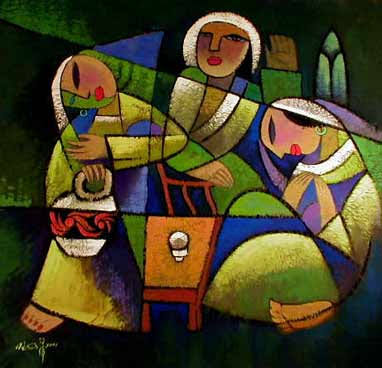
Most of us are familiar with this gospel story about Mary and Martha. In many occasions, we must have read and reflected upon this gospel passage. I bet, many of us have identified ourselves with Martha. Si Martha ang kumakatawan sa mga taong bibong gumawa ng iba’t ibang tungkulin. Parang walang kapaguran. Mga mommy, relate na relate kayo diyan, hindi ba? Lahat kailangan inaasikaso. Those who are still part of the workforce also will know what I refer to. We priests can also be so caught up in administrative duties that we have very little time for doing pastoral work among the faithful.   Whether working from home or some other place of work, our tasks and duties have the tendency to take up all our time, sometimes overwhelming us. We tell ourselves that someone has to do the work. Someone has to do the concrete tasks of hospitality.  Someone has to do the menial tasks, etc.

In truth, there is nothing wrong with work. In fact work is blessed by God. It is a means to grace. It is how we become Jesus to others. The danger is when we lose sight of the reason why we have work, and for whom we work. Do we still take the time to pray? Do we thank the Lord for the blessing of our jobs, considering so many people have become unemployed? Do we thank God that we still have our hands, our feet, our eyes, our mouths and our minds to help us accomplish tasks set before us? Naisip ba natin kung papaano na ang buhay kung tayo’y nagkasakit o nagkaroon ng kapansanan? (This is not to demean those differently-abled, because they are to be praised for hurdling bigger challenges.) Have we ever been so overworked that we no longer have the time to appreciate and enjoy the love and company of our family? Kung lagi na lang tayo pagod at masungit pag-uwi natin sa bahay, hindi nagiging maganda ang samahan ng pamilya.

In contrast, we find Mary to be seemingly doing nothing. We are told that she was “listening to Jesus speak”. Listening to Jesus’ message is an important task of a disciple (a learner) of Jesus. “Listen!” This is what He often tells His disciples and the crowd to be doing all the time. Mary was present.  She was in the moment. She was engaged. She was being, not doing. Here listening goes beyond simply hearing but rather it involves understanding, accepting and assimilating the message so that it becomes part of oneself. Hindi lamang simpleng pakikinig ang ginagawa ni Mary. Ninanamnam niya ang bawat mensahe ni Kristo. At dahil tumatatak sa kanyang puso ang salita ni Hesus, nalalaman niya kung ano ang saloobin ng Diyos para sa kanyang buhay.

Si Mary naman yung nasa paanan ni Kristo na maihahalintulad sa mga kalma lang na nagdarasal o di kaya mahilig magmasid, makinig, mag-aral at matuto. Bilang tagasunod ni Kristo, kabilang sa ating tungkulin ang pag-aralan ang Kanyang tinuturo at mga pamamaraan. We learn from Christ’s teachings. We fill our minds and our hearts with the words of our Lord. Nagagawa natin ito pag nagsisimba tayo, nag-aattend ng bible study, prayer meeting o sumasali tayo sa mga formation talks ng parokya. Importante din naman ito sapagkat ang turo ni Kristo ang daan na dapat natin tahakin. Kung hindi natin alam ang daan, maliligaw tayo, hindi ba?  

One funny thing in our gospel story is that Mary orders Jesus to tell Mary to stop what she is doing and to make Mary help her in the preparations. Pakialamera pa si Martha, ano? Inutusan pa niya si Kristo. Martha’s complaint to Jesus seems to portray Mary as idling and even selfish. Minsan ganyan din tayo, inuutusan natin si Lord pag tayo ay nagdarasal tungkol sa mga kailangan natin sa trabaho natin. “Lord, please do this” , “Lord, give me…”, “Lord, sana madaming bilhin yung customers namin…”, etc. Tayo na ang nagtuturo sa Kanya imbes na tayo ang nakikinig sa Kanya. Wala nang “Thy will be done!” kundi “My will be done!”. In that sense we are lost.  Martha did not realize her error so she was surprised when Jesus said that Mary had “chosen the better part” which would “not be taken from her”. (Luke 10:42) Mary has chosen the better part because listening is essential to be able to do the will of God in our lives. If we do not spend time listening to God, how can we know that our endeavours are properly directed? 

Natatabunan na ba ang Salita ng Diyos dahil sa ating sobrang pagka-busy? Naririnig pa ba natin ang saloobin ng Diyos para sa ating buhay sa ingay ng maraming pinagkaka-abalahan? We can lose sight of God’s will as we get wrapped up in our many tasks, as well meaning as they can be. Last Sunday, we saw how giving loving care to a person in need is more important than fulfilment of one’s responsibilities as in the case of the Levite and the priest. The “better part” then is attentiveness to the other which will eventually express itself in loving service.

Today’s gospel encourages us to strike a balance between the two aspects of our Christian discipleship. If we find ourselves getting overwhelmed, break muna. Balanse ng konti. Humugot muli ng lakas mula sa Salita ng Diyos para magampanan ang mga tungkulin para sa katawan at kaluluwa. Service without love will not do. Prayer without action will be deficient. Finding the happy mean is a challenge and the Lord’s invitation for all of us.

From Religiosi Camelliani

Cultivating Good Samaritan Kindness

HOMILY: Fifteenth Sunday in Ordinary Time

Luke 10:25-37

10 July 2022 

Fr. Ricky Cañet Montañez, AA

Narinig niyo na ba ang kasabihang ang taong mapagkakatiwalaan sa maliit na bagay ay mapagkakatiwalaan sa malalaking bagay? “Whoever can be trusted with very little can also be trusted with much.” (Luke 16:10) The key is consistency. Pag palagi mong ginagawa, nakakasanayan mo na. It becomes a habit. In some instances, you can easily observe the progression.  Winners in competitive sports don’t become successful overnight or simply because of luck. They work hard and train regularly to become the best. Sometimes, it’s less obvious such as when one builds character. Nangyayari ito sa loob ng mahabang panahon. Minsan di na napapansin. If you think about it, your actions throughout your lifetime have molded you into the person you are now. You are actually the sum of your experiences.

Bakit kailangang nating banggitin ang pambungad na iyon? Sapagkat importanteng makita natin na sa kwento ng Mabuting Samaritano, ang bida ay kumilos alinsunod sa kanya nang nakagawian. For us listeners and perhaps the other characters in the story he did something extraordinary. However, for the Samaritan, saving another human being in need was the most natural thing to do. 

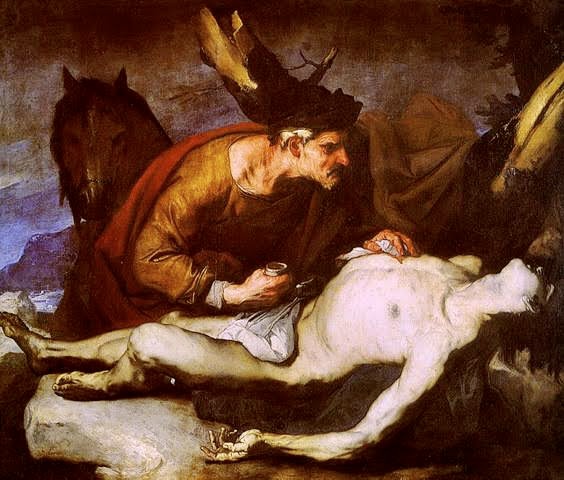
Jesus’ Parable of the Good Samaritan in today’s gospel reading challenges some aspects of our notion of goodness. A commentary I have read on this parable suggests that the act of the Samaritan was good not solely because he attended to the injured man but because what he did was not unusual to what he had been doing all his life. That is to say that this man’s random act of kindness… his attending to the injured man is simply second nature to him. This benevolent gesture however, was just magnified when contrasted to the hesitation, if not the total indifference, of the priest and the Levite. We expect the Jews in the story, by virtue of their race and religion, to rush first to the aid of the injured man; to our surprise, they did not. They avoided him, justifying their actions with their desire to adhere to the Jewish laws for Sabbath and ritual cleanliness. They did not want to be inconvenienced because if they helped him, they would be ritually unclean for the Sabbath and would need to go through the process of purification. Hassle masyado.  

Through this story, Jesus is trying to teach the scholar of the Law (and all of us, His followers) two things. Firstly, we are made to see that goodness is cultivated through the practice of good habits and noble character. Goodness is a habitual discipline that requires practice and often entails readiness to make sacrifices.  The Samaritan did not start out his journey thinking about the good that he can do for others. When the need arose; nevertheless, he was ready to respond in charity and mercy. He may have been immortalised for his charitable act but to a selflessly good man, doing the right thing is a must, an instinct. Secondly, to be humane is more important than following laws. This is the law written within our hearts — not some legalistic keeping of specific commandments, but rather simply an instinctive concern for the other that arises out of genuine love. The Samaritan did not only bandage the wounds of the injured, but he also brought him to the nearest inn and provided for his immediate and subsequent needs. He personally cares for the victim. To spare no expense to help a stranger is an example of how Jesus teaches us to love… personally, extravagantly, continuously.

Every now and then, when we become frustrated and disappointed with our church and civil leaders, we lament the lack of good men and women in society.  They did not become corrupt, greedy, and arrogant overnight. These bad habits and unfortunate characteristics were developed in them over time. Conversely, we need to realise that good men and women come from families where kindness is practiced, respect is fostered, honesty is embraced and integrity is lived. Goodness has to start when we are young.  It has to be nurtured and encouraged from a good home. If you are parents, you need to provide this environment for your children to learn compassion.  Reinforce and validate their good behaviour and kindness so kids learn to make this a habit. 

During the shooting in a school in Uvalde, Texas, a border patrol officer made it to the scene and saved the lives of many frightened school children. He was not there as a trained law enforcer. He was there because he was a good, protective father and a husband. His wife and daughter were trapped in the school and he was there to save them. In the process, he saved dozens of other students. After his family found safety, he continued to risk his own life to save other children. Paano niya kinaya yun? Napagtantong mabuti siyang ama na nagmamalasakit sa anak niya. He saw the other frightened kids and remembered his own children. He could not leave them behind at the mercy of the shooter.  He doesn’t like being called a hero because for him, he only did what he would do for his own children. 

As Christians, may we strive to cultivate kindness in ourselves and extend the same goodness of heart to those in need among us. May we always keep our eyes open to opportunities where we are needed by others and may we strive to be loving persons, good Samaritans to one another, always guided by the law of love and compassion. And in so doing, may we with God’s grace inherit eternal life.

In Doing God’s Work

HOMILY: Fourteenth Sunday in Ordinary Time

Luke 10:1-12,17-20

3 July 2022

Fr. Ricky Cañet Montañez, AA

As a teacher, I know from experience that not all of our students will have the same receptivity to what we, teachers are trying to teach them. Some would take heed what are instilled in them while others wouldn’t. May sadyang matigas ang ulo. Meron namang sobrang distracted ng dahil sa gadgets, sa friends, sa crushes. Meron din naman talagang mga walang pakialam. These form part of the heartaches of teachers. As we know, teachers don’t earn much nevertheless, they have to deal with loads of paper and online work on top of preparing a good and meaningful lesson plan. Minsan nakakadismaya kapag naiisip ng ating mga guro kung may halaga ba ang pagsasakripisyo? May halaga pa bang maging guro kung wala namang natututo sa itinuturo? There are however points in a teacher’s career where they encounter special students, inspiring young minds who actually work hard to learn and aspire for a better future. These are students who fuel the teachers’ passion to teach, to give their all, to give their best. Yes, these learners make their teachers’ effort worth it as the latter simply would love to see their students become successful, true, confident and  consistently making sound decisions in life. 

This reality presented by Jesus in this Sunday’s gospel speaks of the life and challenges of discipleship — much work for too few labourers, and many difficulties and rejection to face. Jesus talks about rejection as He sends forth the disciples in their mission. Not everyone will welcome the message of the Good News. More so, not everyone will appreciate the demands of discipleship. Discipleship, after all, bears the mark of the cross, so there is the inevitability of suffering. Throughout history, all prophets have always had to contend with rejection and resistance from the people to whom they have been sent to proclaim the truth. Even the experience of Jesus, Himself, was no different. We recall that the gospels tell us that Jesus, though mainly disliked by the religious leaders (the Scribes and Pharisees in particular), He also experienced a hostile reception back in Nazareth among His own kin. (Luke 4:22-30)

We can imagine how hurtful that must have been — to be doubted and rejected by the people you grew up around. Yet, Jesus remained unfazed and He did not mope around and allow himself to be immobilised by depression. Jesus simply accepted them as they were and quietly moved on. Jesus’ passion for His mission was never dependent on whether people believed Him or not. Hence, when He saw that they were so hard-hearted and they would not change their minds, He concentrated His efforts elsewhere where He could possibly make an impact on people. His mission was to proclaim the Kingdom of God. He was not sent by the Father to prove Himself, His credibility nor His identity but rather it was to sow the seeds of the Kingdom in the hearts of humanity. In Jesus’ Parable of the Sower, we recall that not all seeds grew and prospered. Some fell on rocky soil, some fell on weeds, some fell on the dry path. (Luke 8:6-8) Since Jesus said the seeds were the word of God, we know He expected that even if He proclaimed the Kingdom far and wide, not everyone would believe, not everyone would allow God’s word to take root in their hearts.  To me it seems that Jesus did not care to be successful 100% of the time, because He could not control how people reacted to what He had to say. What was of more importance was that He stayed faithful to His mission. We can draw inspiration from the strength and courage of Jesus as we labour to faithfully proclaim His message of life eternal to our brothers and sisters. Similarly, Jesus advises His followers that should they encounter such rejections, they were to shake the dust of that town from their feet. Those who were open to the message were blessed, but those who refused determined their own fate.

What does this mean for us as Christians? As followers of Christ, we have to expect similar rejections and frustrations. There are mothers who are heartbroken when their babies, whom they painstakingly reared in the Catholic faith no longer go to church when they reach adulthood, worse, they convert to other faiths! Yet these mothers do not simply throw in the towel. They pray ceaselessly for their children.  Aren’t we frustrated to know that some of our most corrupt government officials were products of Catholic schools? Minsan pa nga, nag-aaral na rin doon ang mga anak at apo nitong mga corrupt na pulitiko.  Bukas pa naman ang mga eskwelahan na yan. Minsan pa nga, nag-aaral na rin dun ang mga anak at apo nitong mga corrupt na pulitiko. Dapat na bang isara? Siyempre hindi dahil may mga maaayos namang graduates o alumni ang mga paaralang ito. Sa ating mga nagsusumikap gumawa ng mabuti… eh tuloy-tuloy ba ang effort? Wala bang backsliding? My friend said, it seemed like when she took the path of goodness, more trials and temptations came her way. Pero, naging mas matinik na siya sa pagkilala sa mga ito dahil conscious na siya. Dati, “Bahala na si Batman!”. Anything goes. Ngayon, mas alam na niya kung anong mga bagay ang ikagigiliw ng Diyos sa kanya. 

The rejection and resistance that we have to contend with in witnessing to our faith is not just external but also internal. We will always have our own resistance to the Christian mission because our human nature draws us to what is worldly while our spirit draws us to things of heaven.  Nonetheless, we should not be discouraged nor deterred from living out the Gospel, witnessing to it, and giving meaning to it knowing that we are doing God’s work. Despite the disciples facing difficulties and sometimes being rejected, they had faith that in time their labours will bear fruit, for it is God’s power that works through them. Both the First Reading (Isaiah 66:10-14) and the Psalm response (Psalm 66) give us a glimpse of what can happen when the message of the Good News is taken seriously. “The city is renewed; the world is rejuvenated; the prosperity of God is enjoyed by all; those who suffer are comforted; the kindness of God fills the whole world.” The fruit of the disciples’ labours may not always be apparent in our present reality but we have a foretaste of this when we experience peace, healing, and prosperity in our midst.

Today, we followers of Christ are sent out in the same way to spread the Good News. We, too are called to remember that even though God’s word is not always welcomed or accepted, the experience of Kingdom prevails. The work of the Lord continues through us. And like Jesus, we are only expected to be faithful to the mission. The rest, we leave in the powerful hands of God.

By Claudio Pastro

Resolute in our Faith Convictions

HOMILY: Thirteenth Sunday in Ordinary Time

Luke 9:51-62

26 June 2022

Fr. Ricky Cañet Montañez, AA

Just this week, a member of San Roque’s SOCOM Ministry, passed the Board Exam for Architects. He may have taken the exam last weekend, but he had been preparing for it since last year. He was set to take it in January but the Examiners decided to divide the group into 2 batches. He was included in the 2nd batch scheduled in June, he did not stop preparing for the test. By the grace of God and his hard work, we now have a new architect in our parish! 

His story tells us that when we have a clear goal in mind, no obstacles, no challenges nor conflicts can deter us from successfully achieving it. That is being resolute. He and other recent board passers  in the parish embody the resoluteness of Jesus in today’s gospel passage. This Sunday’s gospel reading from Luke introduces Jesus’ purposeful journey to Jerusalem, which will result in His Passion, Death and Resurrection. Luke suggests that Jesus sensed His destiny but He was not discouraged. The evangelist writes: “When the days for His being taken up were fulfilled, He resolutely determined to journey to Jerusalem and He sent messengers ahead of him” (Luke 9:51). Resolute. This means acting out with purpose. (Pagkilos na merong adhikain.) The word also means determined in character, action or ideas. Sa Pilipino, maituturing na may determinasyon at hindi natitinag ang taong resolute. 

Alam ni Hesus kung ano ang naghihintay sa kanya sa Herusalem. Alam niya ang mga paghihirap na pagdadaanan Nya pati ang Kanyang kamatayan. Pero hindi Siya nagpatinag. Sa halip ay buo ang kanyang loob na harapin ang mga ito. Even if He encounters obstacles on the way to Jerusalem, He is not deterred. Jesus experiences the hostility of the Samaritans as He passes through Samaritan territory. Luke writes, “On the way they entered a Samaritan village to prepare for his reception there, but they would not welcome him because the destination of his journey was Jerusalem.” (Luke 9:52-53) That the Samaritans reject Him is only a foretaste of the much greater rejection that the leaders in Jerusalem will perpetrate in the months to come. Through it all, Jesus remained steadfast and trusting in the Father in fulfilling His mission. He didn’t waste any time on those like the Samaritan villagers who are closed to His presence. He didn’t even sugarcoat the demands of discipleship to those who wanted to follow Him. He was focused on His mission of bringing about salvation for God’s people.  

As Christians, we are also called to have the same determination if we choose to follow the Lord. We will surely face opposition and conflict in our desire to be faithful to Him. Setbacks should not dampen our spirits but rather strengthen our conviction and increase our courage in pursuit of our goal. We are  asked to have the same steadfastness and singlemindedness with the will of God the Father. In the gospel, there are people who express their desire to follow Jesus but Jesus seems to discourage them as if to say… “Are you sure? There is much uncertainty about my lifestyle. I dont know where my next meal will come from or where I will be sleeping for the night.” Jesus is being truthful about the urgency of His mission. He is constantly on the move. He wants to reach as many people as He can, given His short time on earth. We,  however,  love to dwell in our comfort zones and sometimes can not be bothered to go out of our way for others or for the church — tinatamad na. Mas pipiliin pang maglaro ng games, manood ng Netflix, magpakababad sa kuwartong naka aircon…. So many little creature comforts that focus on ourselves and keep us cocooned in our little world. In the gospel, one person says he will bury his father, the other needs to say goodbye to his family but Jesus does not seem to believe they will return to follow Him. Malamang, di naman isang araw na palugit lang yun. Baka isang linggo, na hahaba pa sa dami ng aasikasuhin. By then, Jesus would’ve moved on.  Jesus doesnt say these are bad things to do. However, we must not make excuses to keep us from following Him. Kung gusto, may paraan, kung ayaw, may dahilan. Hindi ba?  Jesus asks us to dare to leave our comfort zones to follow Him as He goes to places where He is not welcome, to places unfamiliar to Him, places difficult to access, places where He has no friends — because those are the places where He is needed the most. If we must be the Lord’s hands and feet, we too must go where people are in need of God’s love and mercy. Tayo ang magdadala kay Kristo sa kanila. 

Let us not oversimplify this choice, either. The work is not easy and it is not attractive to many. Throughout history, we are given the example of many Christians who are persecuted all over the world because of their faith conviction. Ang mga martir ng simbahan umabot sa pagbubuwis ng kanilang buhay sa ngalan ng kanilang pananampalataya!  Humugot sila ng inspirasyon at lakas sa halimbawa ni Hesus. We are mistaken if we believe that persecution is just a thing of the past. It is very REAL for us today. It is a growing danger. Think of those who recently died in the bombing of St. Francis Catholic Church in Owo, Nigeria on Pentecost Sunday. So many catholic children were martyred that day! There was a report on religious freedom in the world released last year by the Aid to the Church in Need, saying two thirds of the world’s population live in countries where religious freedom is not respected. Sadly, these numbers are on the rise. Of these people persecuted for their faith, 75% are Christians. This indicates that up until now, Christianity is the most persecuted religion in the world. They estimate that about 646 million Christians live in countries where religious freedom is not respected. Again, this clearly shows that the life of a disciple of Jesus is not easy. Mga Saksi. The English word, “martyr” is from the Greek word (martus) meaning a “witness”. We are all called to be witnesses. Katulad ni Hesus, ang mga martir para sa pananampalataya ay hindi nagpapatinag sa mga nagpapahirap sa kanila bagkus nagiging matatag pa ang kanilang paninindigan na ipagtanggol ang kanilang pananampalataya. We are assured that their efforts do not go unnoticed by the Church, not just on earth — the Church Militant,  but by our members in Heaven who have succeeded — the Church Triumphant, and even those who have yet to be purified — the Church Suffering. Hindi kasi tayo nag-iisa, sama-sama tayo sa Simbahan ni Kristong ating Hari. 

Brothers and sisters, may we have the courage to be true to our Christian faith no matter what and regardless of what we will have to face and endure.  May we be assured as we remain faithful to our faith that we are never alone on our journey as Jesus’ followers. Let us resolutely live out our faith with compelling conviction and endeavour to share the love of Christ with others.

Martyrdom by Arcabas

Sacrifice, Sustenance and Symbol of Love

HOMILY: Solemnity of the Most Holy Body and Blood of Christ 

Luke 9-11-17

19 June 2022

Fr. Ricky Cañet Montañez, AA

Do you remember what it feels like to be hungry? I’m sure all of us have felt it at one time or another. When I was a student, it was typical for my classmates and I to miss meals when cramming for tests. My teachers would caution us “hindi gagana ang utak pag walang laman ang tyan.”  Some of us got really cranky when hungry. I understand theres a term for that these days —- “hangry”. (Angry when you are hungry…) May ganyan ba sa inyo?  Parents, generally do not have that luxury. For whatever reason: kulang ang pagkain or walang pambili ng pagkain, they will forego food as long as their children get to eat. Isusubo na lang, ibibigay pa sa anak. What a sacrifice, right? 

This Sunday we celebrate the Solemnity of the Most Holy Body and Blood of Christ, traditionally called in Latin as the feast of Corpus Christi (The Body of Christ). You may be wondering why our gospel today is on the feeding of the multitude with five loaves and two fish instead of a passage on the Last Supper where Jesus institutes the Eucharist. We shall get to that. For now, I invite you to listen and remember 3 “S”es.  The Body of Christ as a Sacrifice, as Sustenance and as a Symbol of Love. 

SACRIFICE. We know that at the last supper Jesus leaves His followers with a special gift. He institutes the Eucharist as a memorial of His offering up of His Body and Blood to save us from the consequence of sin. From that moment until today, every time we celebrate the Liturgy of the Eucharist and receive communion, our faith tells us we are receiving not just bread and wine but the Body and Blood of our Lord Jesus Christ. At every mass, we re-live the sacrifice of Jesus on the cross when we listen to the words of consecration… “This is my body which will be given up for you” and “This is the chalice of my blood…. which will be poured out for you and for many for the forgiveness of sins…”. Through the mystery of transubstantiation, the bread and wine are transformed into no less than our Lord, Jesus Himself. Not Jesus in His glory, but Jesus, who was beaten, bruised, crucified and sacrificed for us. Sometimes, we forget that and line up for communion, ready to receive just a host. When we line up for communion be prepared to receive our Saviour, who gave up His life for us, who took on the punishment for our sins. When possible, go to confession and receive Jesus in the state of grace. If it is not possible, simply make a perfect act of contrition and be sorry for your sins. I also still subscribe to the practice of fasting from food and drink one hour before receiving communion. It reminds me that “man does not live on bread alone…” (Luke 4:4) Stand up straight, approach with a grateful heart and receive the Lord with reverence and love.  

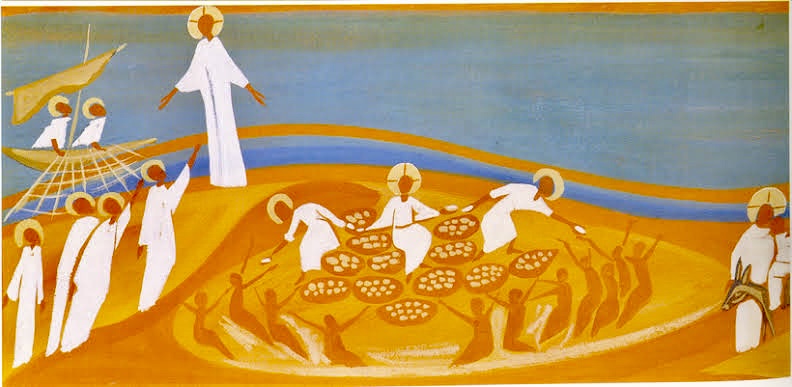
SUSTENANCE.  Our gospel talks about how Jesus provided food for a multitude with a few loaves and fish. He provided bodily sustenance for His followers who were getting hungry for the day. Through His sacred Body and Blood — the lasting gift of Himself made available to us, Jesus continues to sustain us to be true to what we all have become through Him — God’s beloved children. We acknowledge and honour the wonderful gift of the Eucharist as spiritual nourishment and its implication in our life as followers of Jesus.  Through the Eucharist, we are also Jesus nourished to become a source of nourishment for others. “Give them some food yourselves.” (Luke 9:13) Through these words, Jesus wants His disciples to realise that His mission of shepherding over God’s people continues through them. Like Jesus, they are to look after the needs of others not only spiritually but physically as well. It is not enough to simply feel sorry for them. We are to endeavour to provide for the needs of those less fortunate among our brothers and sisters. St. Theresa of Calcutta once said: “I used to pray that God would feed the hungry, or do this or that, but now I pray that he will guide me to do whatever I’m supposed to do, what I can do.” Like the disciples, we might also find ourselves asking how we can possibly help feed these people. “Five loaves and two fish are all we have…” (Luke 9:16) The disciples felt they have too little to share. What they have is obviously not enough for so many people. Through the Feeding of the Multitude with five loaves and two fish, Jesus wanted to rectify this defeatist mentality of considering what is “meagre” as “nothing”. 

SYMBOL OF LOVE. Let us be conscious that Jesus’ sacrifice that gives us a continuous source of spiritual sustenance are proof of God’s love for us. God allowed His only Son to become flesh, to live as one of us, to subject Himself to the difficulties of human life, to suffer and die a painful death so that He may draw us once more close to Him. By the sin of Adam and Eve, heaven was lost to humankind but through Jesus, the door to eternal life was opened again for us. What compels the Almighty to do this for His lowly creatures who consistently disappoint Him?  LOVE. Jesus reveals to us, that if we accept Him as our brother, we become adopted sons and daughters of God. We can dare to call Him “Father” in the same way Jesus does as His only Son. Today is Father’s Day. Happy Father’s Day sa lahat ng mga tatay at father figures. We can not expect all fathers to be perfect because it is a tough job. It is said that fatherhood is not simply having children but it is about raising children, right? Hindi ka ama dahil nagkaanak ka. Ama ka kung ikaw ay nagpaka-tatay. If you are a father, remember that you are the first example of fatherhood whom your children will witness and live with. The concept of God as Father is likely based on these children’s experiences and understanding of what a fatherly role, responsibility, presence… and love is. Kaya sa mga tatay nawa’y pagsumikapan ninyong maging mabuti at mapagmahal na ama upang makilala ng inyong mga anak ang kabutihan at pag-ibig ng Diyos Ama. 

SACRIFICE, SUSTENANCE AND SYMBOL OF LOVE. These are the things we need to remember about the Most Holy Body and Blood of Jesus Christ. Huwag ipagwalang bahala ang sakripisyo ni Hesus. He paid a high price for our salvation. He paid with His life. Let us not take for granted the gift of the Eucharist. Let us receive Jesus in communion as often as we can. He meets us at every mass. It is our hope that we become what we eat. Allow the Lord to sustain us, strengthen us, and transform us through His Body and Blood. Lastly, remember the greatness of God’s love. A love that has transformed the cross — a symbol of shame and punishment to a symbol of salvation and love. To all fathers out there, you have been blessed by God with children. Care for them and raise them with the model of God’s love. By your actions, witness to the goodness and mercy of God. 

On this feast of Corpus Christi, we are called to witness to the generous love of God, in the very gift of Christ Himself broken and shared in the Eucharist. Nourished by Jesus through the Eucharist, we are challenged to become more and more a source of  nourishment for others. We are impelled to live the Christ-life by going out in service to the needs of others so Christ can continually be vibrantly present and active among His people in our world.

Our Triune God: Revealing Himself, His Truth 

HOMILY: Solemnity of the Most Holy Trinity

John 16:12-15

12 June 2022

Fr. Ricky Cañet Montañez, AA

Did you know that in 2019, an organization released the results of a study on the learning capacity of students from around the world? The Philippines ranked the lowest in reading comprehension and second lowest in science and mathematics among 79 countries.  That was in 2019. With the pandemic forcing students to do online learning in the 3 years following, do you think the capacity of our students for learning has improved or deteriorated even more? 

Of course, there are many factors at play but inevitably, one reason for these dismal findings is the lack of interest in learning especially about topics that are not “fun”, or that which we think can’t help us earn more money. Even when we were students ourselves, we must have wondered why we need to learn Calculus, Biology, Chemistry, or Shakespeare if we want to be lawyers or businessmen or priests one day? Doesn’t this also translate to the equally unpopular topic of religion? If we go to a Catholic school, the subject is at least part of the curriculum and students must learn the faith (even if begrudgingly for some), but it is not the case in the public school system. If there are no catechists helping out, where do our young people learn the important aspects of our faith?  Do we even care to ask questions? Can we teach our faith to our children and grandchildren? 

We don’t have to be Bible scholars or trained to be Catholic apologists but at least we need to understand our faith because we cannot say we love what we do not know and we cannot teach/share what we do not understand.  Paano mo masasabing masarap para sa iyo ang pagkain kung di mo alam ang lasa o ang hitsura?  Paano mo masasabing tunay mong mahal ang gusto mong maging girlfriend or boyfriend kung di pa kayo nagkakakilanlan? Isn’t it true that when we love someone, we want to spend as much time with them and truly get to know them? And isn’t it true that the more we know them, we are able to proudly introduce them to others? For example:  Mabait, maganda, matalino, magaling magdamit, masarap magluto, etc. Today, we celebrate the Solemnity of the Holy Trinity. How is it that we claim to believe in one God and yet we say we have a Triune God? Three in one, just like coffee? How is it that three persons in one God do not equate to three Gods? How do you explain to a child that 1 + 1 + 1= 1? One of the most important dogmas of our church remains a mystery. Yes, we may not understand everything about the Trinity now but that simply means there is still much for us to learn. 

Learning can come when we have a genuine interest in something or someone, as in our earlier example of the person in love. Learning can also come when we are overcome with doubt such as when people doubt the existence of God. May Diyos nga ba talaga? Paano siya naging Santatlo? Sometimes, doubt is a good starting point of knowledge because it can prod us to discover the truths of our faith.  Someone said that “some of the world’s most devout believers have something in common: from time to time, they were plagued by doubt.”  This brings to mind what the character of Father Brendan Flynn in the movie Doubt based on the multi-awarded stage play, Doubt: A Parable. Father Flynn said: “Doubt can be a bond as powerful and sustaining as certainty.” Dahil nagdududa ka, nagakakaroon ka ng mga katanungan, napapaisip ka at nauudyok na maghanap ng kasagutan. 

The development of our church doctrines, although divinely inspired, are the product of a long process of human thought and learning. The Church has always encouraged critical thought in dealing with our faith beliefs. The tenets of our faith found in the CREED for example are products of thorough and tedious debates and discussions of many church thinkers throughout church history. Others challenged Catholic beliefs and our forefathers were forced to gather, pray, and learn together what they were able to pass on to us. So, when people tell us that we Catholics are not encouraged to think for ourselves in terms of the tenets of our faith,  this we know is not true. We survived 2000 years because of the process of questioning and learning that we may understand better what we pass on to the next generations.

Finally, we have to acknowledge that God plays a huge role in what we know about Him. God revealed His power and might as Father and Creator through the prophets and great leaders in the Old Testament. In the New Testament, Jesus became man to further reveal God as merciful and loving to all of humanity. After Jesus’ Ascension, until this very day, the Holy Spirit continues to instruct us and helps us understand our faith and the will of God the Father. The dogma of the Holy Trinity is not a product of pure human reasoning but rather the result of reason’s collaboration with divine revelation. We can never come to know the God who is one in three, without God first revealing this to us. In the gospel passage, Jesus makes clear to His disciples: “I have much more to tell you but you cannot bear it now.” (John 16:12) And the Lord continues by assuring them that the Holy Spirit will lead them (and us) progressively to a deepening grasp of the truths that He Himself reveals in time. As it turns out, our maturity in the faith as well as growth in discipleship require the use of our intellect. The Church, through the power of the Holy Spirit endeavours to help us understand why we believe what we believe and do what we do so we can better understand, appreciate and live out the teachings of Jesus with meaning and purpose. The Holy Spirit continuously opens us more and more to the mysteries of our faith. 

We may not know or grasp everything about our Triune God but we know that the Father, the Son, and the Holy Spirit for all times has continuously reached out to us in love and has desired to be known by His people as a loving God. The Trinity of God is definitely a mystery and we will continuously struggle in some attempts to understand it, but it is vital to TRY, if we are to adequately teach our faith to the youth and help them to understand it. The blessing of today’s solemnity is that Jesus in the gospel passage reminds us that He will always be with us through the Holy Spirit who continues to lead us to the Truth.

By Claudio Pastro