Staying the Course FAITHFULLY

HOMILY: Thirty-Third Sunday in Ordinary Time 

Luke 21: 5-19

13 November 2022

Fr. Ricky Cañet Montañez, AA

The end of the world. Have you stopped to wonder what that will be like? Will it be as dramatic as the explosion of the planet? Or will something happen causing the obliteration of life on the face of the earth — like the Ice Age that killed all the dinosaurs or the flood that destroyed all but those aboard Noah’s Ark? Will it mean the extinction of humanity? When will it happen? Will we still be alive by then? 

The answer to that question is: “We don’t know.” In fact, nobody knows. For centuries, doomsayers like Nostradamus have prophesied the apocalypse. Some of them have given the exact dates! I remember that people around the world feared that the world would end simultaneously with the beginning of the year 2000, or Y2K. They said the computers on which all the world’s systems heavily relied upon would reset after December 31, 1999.  These days the COVID pandemic and the Russia-Ukraine War is being touted as signs of the end times.  Sa kabila ng lahat, andirito pa rin tayo sa awa ng Diyos. 

On this Sunday’s gospel, Jesus speaks of frightening visions of a cataclysmic and apocalyptic signs heralding the world’s end. The description is not a pleasant one… “Nation will rise against nation, and kingdom against kingdom. There will be powerful earthquakes, famines, and plagues from place to place; and awesome sights and mighty signs will come from the sky.”  (Luke 21:11) Paborito itong panakot ng mga street preachers. Sa US, nakasuot pa sila ng karatula —- “Repent! The end is near!” 

Indeed, it causes many to be anxious and fearful. Ano ba ang kinatatakutan natin—ang mamamatay? Lahat naman tayo mamatay. Wala naman sa ating imortal, hindi ba?  Takot tayong mawala ang ating mga ari-arian at ang nakagisnan nating buhay? Hindi natin maaaring kalimutan na ang lahat ng tinatamasa natin ay sadyang ipinahiram lang sa atin ng Diyos Ama at anumang oras o araw, maaari Niya itong bawiin. Hindi na kailangang hintayin ang end of the world. 

Hindi tayo dapat pangunahan ng takot, lalo na at tayo ay mga Kristiyano! The Gospel is actually very encouraging towards the end. Jesus enjoins His followers not to be afraid because “not a hair on their head shall be destroyed”.  (Luke 21:18) We are called to take courage and place our faith in God. The key to securing our lives is simple — remain faithful to ways of the Lord at all times.

As Christians we understand the concept in context with the Second Coming of Jesus, where He reigns supreme over heaven and earth. It also brings into focus the final Judgment.  For all of us disciples of Jesus who have tried to live by the values of the Gospel, the end times will be the time of our vindication. Those who are good shall receive their reward while those who are evil shall receive their punishment.  It is a time when God will set all things right — there will be no more injustices, destructions, tears, and sufferings!  Hence, the end times is not some event to be feared about but rather to be welcomed. 

Yun nga lang di natin alam kung kelan magaganap ang mga pangyayaring ito. Tanging ang Diyos Ama lamang ang nakakaalam. Therefore, we should not be complacent because what is bound to happen shall come to pass. We simply have to be ready! 

It is no wonder that the apocalyptic feel of the First Reading and Gospel is tempered by St. Paul’s focus on the present. How? We hear St. Paul telling people to imitate him in not being idle. (2 Thessalonians 3:9 Huwag tayong tatamad-tamad.  By profession, St. Paul was a tent-maker. There is a danger for people to be lazy or to be hedonistic because they believe the end to be near. Meron yung mang-utang ng malaki kasi baka sakaling abutin ng end of the world at di na kailanagang magbayad! Andyan din ang gimik ng gimik. Akala mo di mauubusan ng alak at party. Nanamnamin ang sarap ng buhay bago magunaw ang mundo. Andiyan naman ang mga nagmumukmok, nade-depress at nagsisitago. Para namang mapagtataguan ang katapusan ng mundo… Remember — what must come to pass, shall come to pass. Wala tayong control doon. Hindi natin ito tuluyang mapipigilan, kaya hindi tayo dapat magpaka-stress! St. Paul shows us that our concern for the future should be grounded in the present. Live justly and righteously today! Every choice we make now holds a bearing for our eternal future. 

I remember doing a wake mass via zoom for an 86-year-old lady who died a few days after suffering a massive stroke. Prior to her stroke she kept herself busy and faithful to her daily duties. Wala siyang sinayang na oras sa buhay niya. Panatag ang kanyang pamilya na yumao siya ng walang pinagsisisihan at walang pag aagam-agam.  She lived as a good Catholic, a good daughter, wife, mother and grandmother. Every day of her life was lived in preparation for the life she hoped to have in heaven with Jesus when she died. 

This Sunday we are invited to be concerned with how we actively live our calling to be loyal sons and daughters of God our Father, rather than be paralysed by our fear of how we meet our end. The beginning and end of all life, ours included, lie solely in God’s hands.  Pray for guidance and enlightenment, hope and courage that we may not be consumed by our fears. As we strive to be consistently faithful to our Christian life, we will face many difficulties. Let us pray that we stay the course and always believe that God’s truth, goodness and justice will prevail in the end.


Alive in God

HOMILY: Thirty-Second Sunday in Ordinary Time 

Luke 20:27-38

6 November 2022

Fr. Ricky Cañet Montañez, AA

A friend who lost her husband to Covid once asked me this question — “In the afterlife, are we going to recognise one another?”  What an interesting question indeed but one that I really could not answer with accuracy as I have not yet experienced the afterlife! What I do know is that those of us who yearn for a lost loved one do wonder: “If we find each other in heaven, will our relationship be the same, as though time had not passed?” Only God really knows and we can only hope in His promises.

As we inch closer to the end of the liturgical year, we are asked to think about end-of-life issues. This Sunday’s readings nudge us more particularly in the direction of the resurrection. The passage from the Book of Maccabees relates to us how a mother and her children’s firm belief in the resurrection  made them endure a painful martyrdom. In contrast, the Sadducees ask Jesus in the gospel passage about consecutive marriages to debunk the belief in the resurrection of the dead. 

First of all, it is important to note why the Sadducees do not believe in the afterlife. They had restricted their beliefs to the Pentateuch, the first five books of the Bible, namely (Genesis, Exodus, Leviticus, Numbers and Deuteronomy) supposedly written by Moses and containing the essence of the Jewish Law. They did not believe in the immortality of a soul. They believed the dead went to a permanent place called Sheol which was neither a place of punishment nor reward. For them, death was the end of everything.  The Pharisees on the other hand, accepted some beliefs in the later writings of the Old Testament — i.e. the existence of spirits and angels, and the resurrection of the dead. Death for them was a transition to another beginning. 

To test Jesus and to assert their own faith convictions, the Sadducees proposed an imagined situation of seven brothers who died one after another. Eventually, all seven brothers married one and the same woman as mandated in the Mosaic Law. The unanswerable question: “Which of the seven would be the woman’s husband in the next life?” (Luke 20:33) For the non-believers in the resurrection, there was no problem since with death everything ends. However, for those who believed, this question posed a serious problem. Who becomes the rightful spouse of the woman? Would she be considered polygamous and sinful? 

In His response to the Sadducees, Jesus manages to avoid the trap they have set for Him by giving them an insight into the truth of the afterlife. He declares with authority that in the next life there are no marriage relationships. “The children of this age [i.e. those who belong to this world] marry and remarry but those who are deemed worthy to attain to the coming age and to the resurrection of the dead neither marry nor are given in marriage”.  (Luke 20:35) Marriage after all is meant to create families and to rear children and continue to populate the earth. Heaven does not need that. In other words, we are not supposed to assume that heaven is like earth. The things of heaven are not the things of earth.  Jesus’ response says that our earthly relationships take on a different form when we are all reunited in heaven. Since we have become adopted children of God in Christ, brothers and sisters to each other, there will be a different essence and focus to our relationship with God and one another in God’s Kingdom. Everything we know, we know because it is revealed by Jesus who is Lord of this life and the next. The details of the afterlife remain a mystery to us who are living and perhaps will only be made clear as we find ourselves at death’s door. 

To further prove His point, Jesus challenges the Sadducees’ unbelief about life after death by quoting from a part of the Bible which they recognise as true. He reminds them of the episode at the burning bush with the voice identifying Himself to Moses. “I AM the God of your father, the God of Abraham, the God of Isaac and the God of Jacob” (Exodus 3:6). God, says Jesus, is the God of the living and not of the dead [i.e., of those who have gone ahead and do not exist physically anymore]. Since Abraham, Isaac and Jacob’s God is a god of the living, then by consequence, are also living.  This is how Jesus makes apparent where the Sadducees’ argument fails.

Recently we lost a very dear Sister in the Religious of the Assumption (Sr. Mary Fidelis Estrada, RA). I remember her as one person who was never afraid to die… to pass on to fuller life. She once told me that she would always  pray to God to take her as soon as her mission on earth is done. Her life was a testament of love and gratitude. She was convinced that we have a loving God who will not allow those who believe in Him to suffer eternal damnation. She was of the conviction that in God’s love no one is ever lost. 

Lastly, I urge you to focus on what is essential. Let us not waste time speculating over things which will not yield a precise knowledge or we do not have an experience of.  It is enough that we place our trust in Jesus and in the declarations He has made in Scriptures. There is no reason for us to doubt Him or to challenge His teachings. He has not failed us and He never will. As a people of faith, although we may not fully understand God’s plans for us we should be rest assured that our future lies securely in God’s hands. Jesus’ promises are more than enough to keep us going! Saint Paul says that “God is always faithful and that He directs our lives toward His love and the endurance of Christ.”  (2 Thessalonians  3:5) Let us allow the Lord to lead us to Himself and trust that He has prepared a place for us in His heavenly home.

True Greatness in God’s Eyes

HOMILY: Thirty-First Sunday in Ordinary Time

Luke 19:1-10

30 October 2022

Fr. Ricky Cañet Montañez, AA

There is a matronly lady (She’s in her 80’s!) from the former parish I served who never leaves her house without a full face of make-up, baubles, frills, and glittery clothes even on ordinary days — to go to the grocery, pick up her prescription meds from the pharmacy (chemist), or drop by the parish office. She always looks like she is going to a party. You simply cannot miss her. The glint of the glitters or the flashy colours of her outfit will get you looking her direction. She simply enjoys the attention and is only happy to chit-chat with people who approach her. She absolutely hates the feeling of being ignored. Well, no one wants to be overlooked, (or under-looked), to be always passed by and worst of all, not to be ‘seen’ by others. We may not be as ostentatious as my friend, but we do care about receiving the attention and recognition from people who matter in our life. 

We have a good example of Zacchaeus in today’s Gospel. Zacchaeus is described as small in stature, and thus everyone must have always looked down on him.  All his life he always needed to look up to other people. People looked down on him to see him. In psychology, we are told that this is a cause for insecurity and sometimes it can motivate people to embark on things to boost their ego. In Zaccheus’ case, he held a job of importance that gave him power over the regular folk. And he lorded it over them. And they did not like him very much. In a way, it caused people to look down on him even more. Most likely, when he had his back turned they spoke of him as though he were dirt. They probably had awful secret code names and unkind nicknames for him.

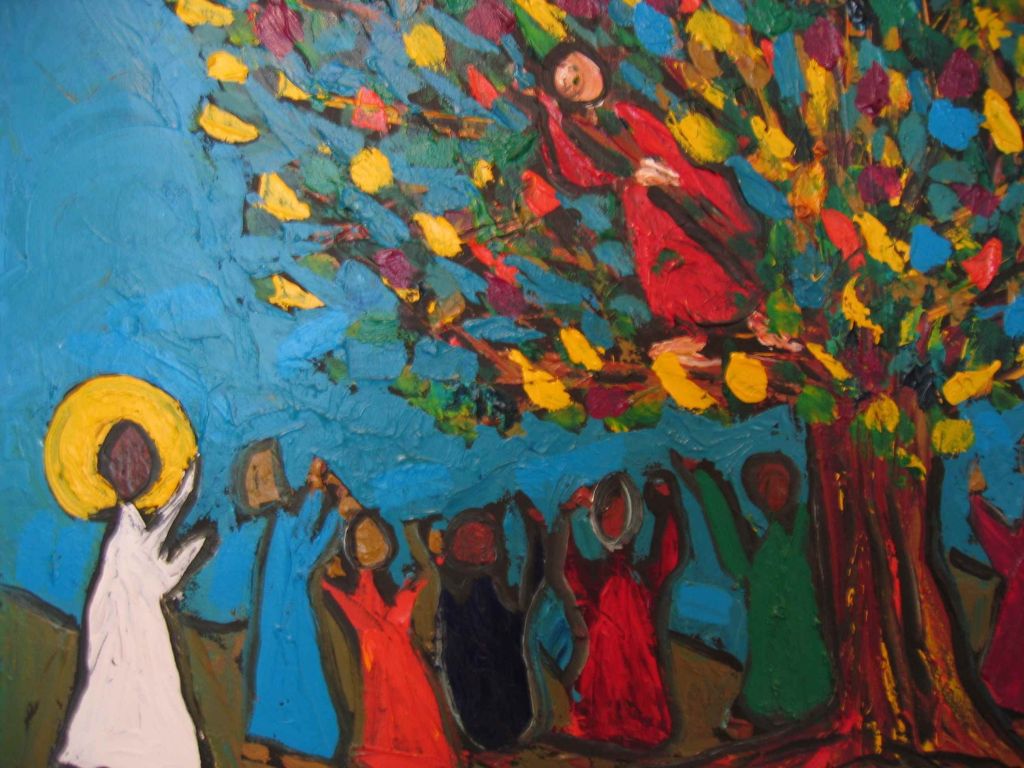
When Zaccheus heard Jesus had come into their town, he felt compelled to see Him. He wanted to see Jesus. And perhaps look upon this man he had heard so much about. Because he was vertically challenged, he climbed a sycamore tree in order to have at least a glimpse of Jesus passing by. The ensuing encounter with Jesus was most unusual for Zacchaeus. For the first time someone looked up at him and for him — calling him by name — invited him down and really saw him beyond his small stature, his littleness, and his inferiority. Jesus saw Zacchaeus for who he truly is. While people only saw him as an extortionist being a tax collector (and mind you, he was not only one of the tax collectors, but the chief of tax collectors in Jericho and so probably more unjust than others), Jesus saw a person who had great potential to be a person pleasing to God. He saw a redeeming factor in this man. There was hope for him to be what God intended him to be.

But the call of Zacchaeus is not without cost. Conversion is always costly since it involves breaking away from our sinful and selfish attachments. He had to share his goods with the poor and make restitution to those whom he had defrauded. As the Book of Wisdom tells us: “But you spare all things, because they are yours, O Lord and lover of souls,… Therefore you rebuke offenders little by little, warn them and remind them of the sins they are committing, that they may abandon their wickedness and believe in you, O Lord!” (Wisdom 11:26 – 12:2) We can think of some famous celebrities as good examples. Many of them like to be photographed in fashionable and expensive clothing while hanging out in posh places. Few of them manage to shy away from the paparazzi to live quiet lives and they focus their energies on championing causes and supporting worthwhile endeavours such as bringing attention to the plight of the sick or those in need of justice. These individuals do not see themselves as extraordinary… They simply recognise that they are in a position of influence. And they use their status for the good of others. Such is their redeeming factor. 

All those who have had a deep encounter with Jesus find their lives radically transformed. A meal with Jesus must have been a dream come true for Zacchaeus — an honor, but also a humbling experience. It moved him to desire to be a true disciple of Jesus. He made the necessary sacrifices to change his way of life and be pleasing to God. We can say that this conversion made him TRULY GREAT (to be BIG) in God’s eyes! Let us pray with St. Paul that like Zacchaeus our God may make us worthy of His call! (2 Thessalonians 1:11)

Walking in the Ways of God

HOMILY: Thirtieth Sunday in Ordinary Time (C)

Luke 18:9-14

23 October 2022

Fr. Ricky Cañet Montañez, AA

Will you oblige me today by answering a few questions? Who among you go to mass every Sunday without fail?  (May I have a show of hands?) Who among you, in addition to Sunday obligation, attend daily mass? Who among you go to frequent confession? Now, does this make you any better than those who did not respond (or raise their hand)? Does this make you feel more worthy of a heavenly reward? Does this make you a good person?

What makes a good person? In today’s gospel reading, we expect that the Pharisee would easily fit the mould of a “good” person. As a Pharisee, we assume he carefully keeps the Jewish Law and the Commandments of God.  Being a good Jew, he faithfully prays, fasts, and gives alms.  And yet, Jesus does not hold him up as an example of righteousness. Why?  Because he is too full of himself. He tells God, “I thank you that I am not like the rest of humanity — especially like this terrible tax collector…”  (Luke 18:13) Notice how many times the word “I” appears in this rather short prayer — 4 times!  In a way, what he is really trying to say is: God should be thankful that there are a few persons like him who are faithfully following His commands. Yes, he does pray, fast, give alms. But are they done out of love for God and the poor, or are they simply gestures to make him feel good about himself?

On the other hand, we have the Tax Collector. He belongs to the most-hated class in Jewish society. Tax collectors were considered traitors by their fellow Jews for colluding with the Roman colonisers in taking advantage of the local population. In the parable, the table is turned because the one who is seemingly “virtuous” is not right  with God at all. Why is this so? The tax collector knows for certain that he is a sinner.  He surely does not observe the Jewish law. He has behaved very poorly before God and neighbour.  Although undoubtedly a sinner, the tax collector admits his sins.  He knows that he needs God’s mercy in order for him to become a person most pleasing to God. Hence, in his prayer he implores God to be merciful to him, a sinner. We recall the words of Jesus in Luke 15:7: “There will be more rejoicing in heaven over one repentant sinner than over ninety-nine righteous people who do not need repentance.” As the passage from the Book of Sirach assures: “The prayer of the lowly pierces the clouds.” (Sirach 35:21) God will most readily come to the aid of a sinner who in his humility recognises his need for God than a proud man who thinks he can very well take care of himself.

I have worked in parishes where some of the retiree volunteers and benefactors are ill-reputed for their difficult and condescending  attitudes and harsh language.  Yet, they are confident that their generosity with their time and treasure for the church guarantees that they will go to heaven when they die. This is something they brag about not realising they are terribly mistaken. No one can buy their way to heaven.  Even the saints, in all their virtues and holiness, could not presume that they were worthy. You will not find one among them, after their moment of conversion, who claims to have triumphed of their own accord. All of them attribute their accomplishments to the power of the Almighty. All of them recognise that they are simply channels for God to bless His people and to dispense His graces.

Similarly, it is not for us to say that those of different faiths have no chance of going to heaven. Some Christian sects claim that theirs is the only way to heaven.  And there are others who condemn non-Christians to hell. Of course, we value the tenets of our faith, which we believe to be handed down to us by Jesus and the apostles but in the grand scheme of things, who are we to judge? It is not religion, per se that saves a person,  but God. We cannot presume to completely understand the heart of God. He sees us in our entirety — our past, present and future. He knows the state of our minds, our hearts and our souls. We can only hope in His mercy and trust in His love for humankind. 

In the Second Reading, we get the impression that St. Paul may seem to have the same air of confidence exhibited by the Pharisee. St. Paul declares: “I have completed well; I have finished the race; I have kept the faith. From now on the crown of righteousness awaits me, which the Lord, the just judge, will award to me on that day…” (2 Timothy 4:7-8) But as we read further, it is clear for St. Paul to whom he attributes the strength he needed to triumph over all the hardships he encountered in his missionary activities. “The Lord stood by me and gave me strength… To him be glory forever and ever.” (2 Timothy 4:17-18).

Today’s readings give us both a warning and a sign of hope. They caution us against being complacent in the good that we do. Nothing we accomplish in this world can match the greatness of God’s work. Nothing we can give will surpass the generosity of God. Therefore, we have no reason to boast.  The tax collector is given to us as an example of how we are to conduct ourselves before God. Like him, we are reminded that with God and before God, humility is the only posture a creature can take before his/her Creator. In one of the Eucharistic Prayers, we pray “giving thanks that God has made us worthy to be in His presence and minister to Him…” We ought to remain humble and recognize how truly small and insignificant we are compared to the power and splendour of our Lord. 

We can however stand firm in the hope that our efforts do not go unnoticed by God. He knows each of us intimately and looks upon us with such interest and concern.  Most importantly, we should take to heart what St. Paul reveals to us — we need to persevere in the ways of Jesus until the very end of our life, doing everything, and living every moment with love. Rest assured, God keeps His promises to those He, alone, deems worthy.

Praying without Ceasing

HOMILY: Twenty-Ninth Sunday in Ordinary Time

Luke 18:1-8

16 October 2022

Fr. Ricky Cañet Montañez, AA

Sino dito and naka-I-Phone? Alam niyo ba na may bagong labas na I-Phone 14? Every time there is a new I-Phone model, so many people are so eager to get their hands on it. Sa US, pinipilahan pa ang pagbukas ng Apple I-Store para una silang makabili ng phone. Minsan overnight na sila pumipila  — may baon na kumot, upuan at pagkain — minsan naka-diaper para di na kailangang umalis sa pila para mag CR. Grabe ang effort and patience! Sana ganyan din tayo ka-persistent at patient pagpinipilahan natin ang Panginoon  upang magsumamo. 

Our readings this Sunday present to us the importance of the spiritual discipline of prayer that helps deepen our dependence on God. In the passage from the Book of Exodus, so long as Moses sustained his prayers to God, the Israelites proved to be formidable in battling against Amalek. Maisip niyo ba iyon na pagbinaba ang kamay, nananalo ang kalaban? Habang nakataas, talo ang kalaban! Ito ay labanan kaya matagal-tagal ito. Nakakapagod! Nagkakulani na siguro iyon sa kilikili sa tagal ng pagkakataas ng kamay. Sige, nga itaas niyo ang inyong kamay at ibababa lang pagtapos na ang homily! (Joke lang.) 

We are told that Aaron and Hur even supported the hands of Moses to keep them up! What does this mean for us? Para sa akin, patunay ito na maaari natin tulungan ang kapwa natin sa pagdarasal kung may hinihiling ito sa Diyos! We help friends and family pray for the healing of sick loved-ones. We pray for peace in other nations like Ukraine and Russia. We pray for the well-being of others, even those who are not Catholic. That is how we are as a Church. Our prayers are stronger together. We support one another especially when the one praying seems to be losing hope. Sinasabi natin… “Ipagdarasal kita. Huwag kang mawawalan ng loob. May awa ang Diyos.” Hindi ba?

In the gospel passage this Sunday, Jesus introduces a widow to give example to his disciples of “the necessity of praying always and [of] not losing heart”.  Because of her persistence, she was successful in receiving a just judgement from the judge. It is through this widow that the disciples are taught how to be persistent, how to be patient in their prayers and not be discouraged by difficulties they might have to face. (Sa pamamagitan ng balo na ito – tinuruan ni Hesus ang mga disipulo na mag pursige sa pagdarasal at huwag panghinaan ng loob sa gitna mga mga pagsubok na kinakaharap.)

We have to take note that the unjust judge described in the gospel story is one who did not fear God nor respected people. But eventually he acceded to the persistent request for a just verdict from a powerless widow. “Because this widow keeps bothering me, I shall deliver a just decision for her lest she finally come and strike me.” Sa simpleng salita – nadaan sa kakulitan. Dahil sa paulit-ulit na pagpapa-alala na mabigyan ang balo ng hustisya, minabuti ng hukom na magbaba ng maayos na desisyon para hindi na siya balik-balikan pa ng balo at kulitin pa. This unjust judge may have thought that if the widow received what she is asking for she would finally stop pestering him and he could be left in peace. If an unscrupulous man like him could not help but give in to the persistent request of the widow, how much more would our God?  God is, to us, such a good, just and loving Father who wants to see us happy and want only what is best for His children.  Our goal in praying ceaselessly is not to change the mind of God but rather learning to surrender ourselves to the will of God. And surely, He desires only what is good for us.

In the Second Reading, St. Paul continues to instruct Timothy in the conduct of his ministry. He reminds him of the importance of what he had known from infancy. “Remain faithful to what you have learned and believed…”  In saying this, St. Paul is pointing out the need to be consistent in what we have been taught about the faith, even as children. Paano ba natin unang naintindihan ang ating pananampalataya? Sa Pilipinas, ituturo ang mga imahe sa bahay o simbahan “look at Papa Jesus”. Hehehe. Mali yun ha? Jesus is our BROTHER. Tapos ituturo ang sign of the cross. Di ba? Most of us have been taught basic prayers when we were children. Pag tumanda na tayo, unti-unti, naghahanap tayo ng mas malalim na paraan upang makausap ang Diyos — meditation, Rosary, novena, retreat, etc. As we become more consistent in the practice of prayer, we gradually have found more effective ways in turning to God in our prayers, not limiting ourselves to the words and the texts we recite. Ang iba, mas malalim ang experience of prayer by just sitting in silence in front of the altar! 

But it all starts from somewhere and from someone to whom we should be grateful.  St. Paul brings out a very important aspect in the work of evangelisation, he was encouraging the spreading of faith within the family circle. Ideally, faith is transmitted from parents to one’s children. Unfortunately, a lot of parents these days have expressed their frustration and sorrow because their children are no longer practicing their faith. May nagbiro na ang bata paglumaki na, lahat ng turo at bigay ng magulang, tinatanggihan puwera ang mana. May katotohanan din diyan. Nevertheless, Catholic parents have the responsibility to instruct their children on the faith! Sino dito ang magulang? You have the job of teaching your kids what it is to be Catholic. You should be the one to initiate prayer in the home. Teach them that the family that prays together stays together (Fr Patrick Peyton). But it is not only in words that you can instruct your children but more importantly by example! How do we treat our family members and relatives? How do we treat others — especially the poor, the marginalized and the needy? Your children see and learn from you!

Ang sabi sa atin sa Bibliya, alam na ng Diyos ang ating panga-ngailangan bago pa man natin ito hilingin. At hinding-hindi Niya kakalimutan o tatalikuran ang mga kahilingan na makabubuti sa atin. Pwede natin Siyang lapitan at lambingin. Pwede natin siyang pakiusapan. Pwede tayong maging bukas at totoo sa ating mga hiling. Hindi Niya kailangan ng pambobola o pagpipilit dahil alam Niya ang laman ng ating mga puso. We are to have a confident prayer… a prayer from the heart.  It is true, without reservations, daring and yes, unabashed as one looks to God as a loving parent. This persistence in prayer is an expression of a deep trust in our heavenly Father’s goodness and love for all of us, His children. What parent could turn a deaf ear to cries for help of his/her own child? Ang kailangan lang ay ating pagpupursige, pasensya at tiwala na makukuha natin ang nararapat sa tamang panahon.  At siguradong sasagutin Niya ang ating mga kahilingan sa paraan na pinaka-makabubuti sa atin.

Therefore, let us be confident and most trusting that God our Father who loves and cares for us and knows what is best for us, hears our prayers. He will always answer — perhaps, not right away, or in the way we want Him to, but God will respond to our pleas in His own perfect time and in the best way possible for us!

Magdasal. Maghintay. Magtiwala. At siguradong tutugon ang Diyos sa tamang panahon.

Being Thankful As a Way of Life

HOMILY: Twenty Eighth Sunday in Ordinary Time

Luke 17:11-19 

9 October 2022

Fr. Ricky Cañet Montañez, AA

One of the first lessons we learned as children is the importance of saying ‘Thank You!’ Kahit paslit na di pa halos nakakapagsalita, pag may tinanggap que kendi lang o mamahaling laruan tinuturuang magpasalamat. “What do you say?” “Anong sasabihin kay Ninang?” At hindi titigilan hangga’t di masabi ng bata ang “thank you po.” 

Today we are reminded to be grateful to God and to express our gratitude to Him who has given us so much. Gratitude is a virtue we all are encouraged to cultivate as Christians throughout our lives. We recall St. Paul’s words to the Early Christians: “In every situation [no matter what the circumstances] be thankful and continually give thanks to God; for this is the will of God for you in Christ Jesus.” (1 Thessalonians 5:18) Be thankful always! 

It is so easy to be grateful when we get what we ask for. Sa Unang Pagbasa, si Naaman ay desperadong-desperado na siya ay gumaling sa sakit na ketong. If we read the whole story, we see Naaman brought with him a fortune in gold, silver and expensive clothing because he was willing to pay a high price for a cure! When he was healed, he offered these gifts in gratitude to Elisha. Ngunit ito’y tinanggihan ng propeta dahil di naman siya ang nakapagpagaling kay Naaman, kundi ang Panginoong Diyos. Humingi si Naaman ng lupa ng Israel upang maiuwi niya sa Syria pampagawa ng altar kung saan sasambahin niya ang kinikilala na niyang nag-iisang tunay na Panginoon. We can be like that too, when we receive something, we pray for so fervently — agad-agad may pa-thanksgiving mass at malaki-laki ang iaambag sa simbahan. Di ba? Tiyak pasasalamatan si Lord pag gumaling ang isang maysakit, nakapasa ang anak sa exams, nakuha ang inaasam na promotion sa trabaho, o kaya nakahanap din ng mapapangasawa kahit kwarenta na. 😄 

Other times, God gives us unexpected blessings. In the gospel story, the 10 lepers approached Jesus but He did not heal them right away. Bagaman sila ay inutusang “pumunta sa mga pari.”  (In those days, leprosy rendered a person unclean and only a priest could officially declare them healed or clean enough to assimilate back in society.) Siguro nagtaka yung sampu, kung bakit sila pinapunta sa pari. Baka nagmaktol pa nga yung iba at natakot na maalipusta sila muli pero nagpunta pa din sila. And on their way, they were surprised to discover they had been healed!  Ang masaklap, iisa lang ang nagmadaling bumalik kay Kristo upang magpasalamat.  Minsan ganyan din tayo. Nawawalan tayo ng loob pag medyo matagal bago sagutin ng Diyos ang ating panalangin. We forget that God blesses us in His time. Hindi tayo pwedeng magdikta sa Diyos. God knows the best time to dispense of His graces. Kinakailangan nating magpakumbaba, maghintay at magtiyaga. When the grace finally arrives or if we get something better, ano ang reaksyon natin? Tatakbo din ba tayo pabalik kay Kristo upang magpasalamat? Do we drop to our knees in prayer to thank the Lord? Or do we simply say:  “It’s about time! Hay salamat!” and then move on?  Baka naman feeling natin, deserve naman talaga natin yung grasya at pinagdamutan lang tayo ni Lord sa pagpapahintay sa atin? Entitled!  

In these instances, we receive so it’s easy to be grateful. However, how can we say thank you even if things don’t go our way or when we don’t get what we pray for? Noong kasagsagan ng COVID, may taga-Sampaloc na lumapit sa iba’t ibang tanggapan ng gobyerno upang makiusap na magpadala ng ambulansya sa Pangasinan upang sunduin ang kanyang inang nasa critical condition. Walang kapasidad ang clinic na pinagdalhan sa nanay niya at puno ang ibang malapit na ospital. Kinailangan siyang madala sa ospital sa Maynila. Pray sila ng pray. Friends and family were praying with them. They were willing to do anything, even sell their possessions, just to give their mom a second chance at life. Walang naibigay na ambulansya. Namatay ang nanay nila. They were devastated but they thanked the Lord for giving them a mother like her. Kahit masakit, tinanggap nilang panahon na ng mommy nilang bumalik sa Maykapal. Kung sa atin nangyari yan, makakapagpasalamat ba tayo? 

There is a value to having an attitude of gratitude.  Jesus highlights this as He calls out the ingratitude of the other nine lepers saying, “Ten were cleansed, were they not? Where are the other nine? Has none but this foreigner returned to give thanks to God?” (Luke 17:17-18) First of all, gratitude is the acknowledgement of God’s action on our behalf. It is the realisation that all we have are gifts from God who bestows on us His blessings. Everything we have is by the grace of God. Kailangan nating magpasalamat sa Diyos dahil umaasa tayo sa Kanya. Minsan kasi nakikita lang natin kung ano yung wala tayo. Kung titingnan natin kung ano ang meron tayo na bigay ng Diyos, di natin maipagkakailang napakarami nating dapat ipagpasalamat. 

Secondly, thanksgiving draws us out of ourselves and toward another. Being grateful helps us forget ourselves and teaches us to think of others. Gratitude moves us out of our tendency for “self-absorption”.  Kung mayroon kang tinanggap, ibig sabihin, may nagbigay. There is an interconnectedness. God is the giver of grace and mercy and we receive. We give glory and praise to God. In our families and communities, we all contribute something out of our talents and gifts. (Cooperation rather than competition.) We give of ourselves and our possessions, because others are in need of what we have. Gratitude helps us to be self-aware of what we have received in abundance and to be sensitive to those who have less of it and need our help.

Finally, thanksgiving is a way of life! Every day we are blessed with the miracle of life. Every day we wake up we should make it a habit to thank God for the gift of a new day. In Greek, they say Ευχαριστώ efkharisto to say, thank you. It is the root of the word eucharist, which highlights the aspect of “thanksgiving ” in our celebration of the mass. We are grateful for the gift of our salvation in Christ and for the continuous outpouring of God’s blessings in our life. Notice that at every Eucharistic celebration we say, “Let us give thanks to the Lord our God’, and we declare it to be right and just (the proper thing to do).  We acknowledge that there is so much in life to be thankful for! Tandaan. Ang misa ay isang paraan ng pagpapahayag ng ating pasasalamat sa Diyos!

We are invited to remember three (3) things. First, God is the source of all graces and blessings and He has been very generous with us. Second, we have all received abundantly from the Lord in different capacities. Iba-iba ang natanggap nating kakayahan, talento, yaman, at oportunidad upang matuto tayong magbahagi at magtulungan. And most importantly, we need to continuously thank the Lord even when we do not understand His decisions or His silence. God has a grand plan and each of us has a part that He will reveal at the right time. Patuloy lang tayong magtiwala sa pagmamahal ng ating Diyos Ama dahil tanging kabutihan natin ang hangad Niya.

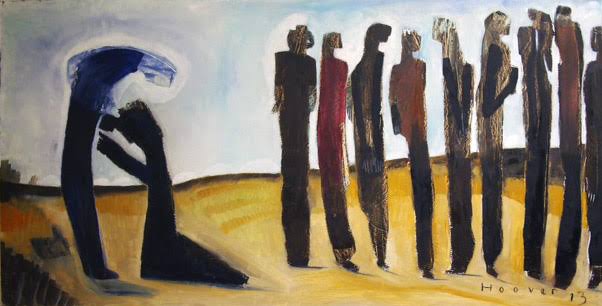
The Ten Lepers by Bill Hoover

Keeping the Faith

HOMILY: Twenty-Seventh Sunday in Ordinary Time

Luke 17:5-10

2 October 2022

Fr. Ricky Montañez, AA

I have a friend who seems to have defied all odds after having been diagnosed with breast cancer two years ago. Napakahirap na panahon ito para sa kanya at sa lahat ng nagmamahal sa kanya. Just last year, she finished the treatments prescribed to her by her doctors. What is most impressive is the fact that she continues to live a normal life with her family. Such is the faith of this woman! 

Our readings this Sunday offer us a few situations where an increased faith is most needed in order to remain true to our being followers of Jesus. 

When do we need to pray for an increase in faith?  First, we find a need for an increased faith in moments when we doubt God’s presence in the experience of broken relationship, business loss, betrayal of one’s spouse, serious illnesses, tragic death, etc.   These are trying moments when we often experience the silence of God or when we tend to feel abandoned by God. Going through such difficult circumstances help us sympathise with Habakkuk, the prophet in the First Reading who felt deserted by God crying out to Him in anguish: How long? Why? Sa mga panahon na ito, napapadalas ang ating pagdarasal. Minsan nga lang ang dasal ng iba: “Gusto ko nang bumitaw, Lord! Ayoko na.” Ang iba naman pinagdarasal ang nagpapahirap sa buhay nila: “Kunin mo na siya Lord!”  Wag naman sana tayo ganun. Pero sa totoo lang marami sa ating nagdarasal na sana’y bigyan tayo ng lakas ng Diyos na malampasan ang mga pagsubok. 

Huwag nating katakotan ang pagsubok. Pero wag din nating ipagdasal. “Lead us not into temptation but deliver us from evil…”, is something we ask in the Lord’s Prayer! Ngunit pag dumating, hilingin natin na patibayin ng Diyos ang ating pananampalataya.  It is in these moments when our faith is forged and refined and we are to continue believing in God’s promises. “God’s vision has its time, it presses on to its fulfilment and it will surely not disappoint.” (Habakkuk 2:3) We must be patient though “if it delays” because “it will surely come.” As the passage from Habbakuk declares: “The just one shall live because of his faith.” (Habakkuk 2:4)

Second, often an increased faith is needed when we feel inadequate to fulfil a task given to us. Pag sa ating palagay tila napakahirap ng kailangan nating gawin na hindi na kakayanin ng powers natin. We come face to face with our limitations and shortcomings to accomplish anything on our own.  Yan ang dasal ng mga may katungkulan sa trabaho, mga magulang na hirap sa pagtataguyod sa pamilya, hindi ba?  Thus, St. Paul in the Second Reading urges Timothy to have this tiny faith… “Stir into flame the gift of God… Who did not give us a spirit of cowardice but rather of love and power and self-control…” (2 Timothy 1:6-7) Like Timothy, there may be times when we see darkness in our life and feel insecure and fearful. And so, Jesus says: “If you have faith the size of a mustard seed, you would say to this mulberry tree, ‘Be uprooted and planted in the sea,’ and it would obey you.” (Luke 17:6) We can think of people of great faith who have accomplished great things in life.

Finally, another insight can be drawn from Jesus’ response to the disciples’ request to increase their faith through the story about unprofitable servants. We need an increase in our faith in God, when we have become quite satisfied with our own capabilities that we think we can do things on our own.  Isinasaisantabi na lang natin ang Diyos dahil tila kayang kaya namang solusyunan ng ating galing at talino ang mga pagsubok ng buhay. We can easily become too self-reliant with what we think we have and are capable of doing that we eventually lose faith in God. Naiisip natin na di na naman natin kailangan ang tulong ni Lord. Di na natin Siya gagambalain pa, dahil kaya na naman natin mag-isa. 

This is why when we think we have done something great, we need to be reminded “we are unprofitable servants who have done only what we are supposed to do.”  (Luke 17:10) Lahat tayo ay ipinanganak na may layuning gagampanan para sa Panginoon at sa ating kapwa. We are mere creatures that serve the Creator. Kailangang maiaalis natin ang yabang sa ating pag-iisip. Lahat ng ating kakayahan ay bigay sa atin ng Diyos. Lahat ng pagkakataon na humasa sa ating galing ay kaloob ng Diyos. Tayo ay inihanda lamang para kayanin natin ang anumang pagsubok na humadlang sa ating pagganap sa ating tungkukin. This is why St. Paul tells Timothy: “Bear your share of hardship for the Gospel with the strength that comes from God.” (2 Timothy 1:8)

We have recently lost five brave rescuers in Bulacan during typhoon Karding. They are remembered for their heroic acts. If you ask people like them who have been recognised for their heroism most likely they would say: “I was only doing my duty. Wouldn’t you do the same if you were there?” Ganyan din ba tayo kay Lord kung tunay tayong tagapasunod ni Kristo? Our faith should always lead us toward engagement with the struggles of the people of our time. Sapagkat tayo ay naniniwala sa Diyos dapat sensitibo tayo sa mga bagay na importante sa ating Maykapal at ang importante sa Kanya ay ang kanyang mga mahal na nilalang. Importante sa Kanyang matugunan ang kanilang pangangailangan at masalba sila sa oras ng pangangailangan.

The life of a Christian is the way of the cross. Someone said it so well: “God never said that the journey would be easy but He did say that the DESTINATION would be worthwhile.” To have faith lies at the very heart of our being Christians. To have deep faith in Jesus Christ means to have such trust in Him that we bear our share of His cross and we obey whatever He commands. And so, our prayer today and always should be: Lord, increase our faith!!!

From shutterstock.com

Sensitive to Our Neighbours’ Needs

HOMILY: Twenty-Sixth Sunday in Ordinary Time

Luke 16:19-31

25 September 2022

Fr. Ricky Cañet Montañez, AA

Naranasan niyo na bang magutom? Mahirap na sitwasyon ito hindi ba? Mas masaklap kung, sa iyong pagkagutom, nakakakita ka ng mga taong nagpapakasasa sa pagkain at sa kalauna’y nagsasayang na rin ng pagkain. Sa bahay ng aking kaibigan, bawal magtira ng ni-isang butil ng kanin sa plato. Her grandfather taught them to get only what they can consume and to leavr their plate clean all the time. He pointed out that every grain of rice was the result of the sweat and effort of a farmer so it is not to be wasted. Kaya lubos din ang kanilang panghihinayang pag may nakikita silang wagas kumuha ng pagkain sa party tapos kalahati lang ang uubusin. Sana wag tayong ganoon. Nakakahiya sa kapwa nating mga nagugutom. 

Both the First Reading and the Gospel relate stories of INDIFFERENCE to human suffering or the plight of others. The prophet Amos warns the people not to be too satisfied with the comforts and the privileges they enjoy in the world — those sprawled on their couches, eating food they did not bother to hunt for or to grow, drinking no longer from glasses but bowls! (Nakahilata sa higaan, ni hindi nangaso o nagsaka para makakain.) Yan naman ang buhay ng tamad at walang pakialam. The indifferent revel in wine and music while society is in ruins around them. Amos concludes, “They shall be the first to go into exile.” (Amos 6:7) It is a frightful consequence that awaits those who neither notice the suffering of their countrymen nor prepare to defend against the threat of invaders.

In the parable of the rich man and Lazarus, Jesus tells us of a nameless Rich Man  who lived a life of excess. What is interesting is the fact that it is the poor man who is given a name — Lazarus. This is strange, considering the poor usually do not count for much in this life. Sila ang mga di kinikilala, walang mukha, ipinagtatabuyan at naisasantabi sa lipunan.  The rich man is said to wear fine clothing. He does not simply eat well; but we are told that he “dined sumptuously each day.” (Luke 16:19) While the rich man gorges himself; he literally does not see Lazarus in need at his doorstep. May mga nagsasabi na kaya walang pangalan ang mayaman sa kwento dahil maaari nating ipangalan ang karakter sa bawat isa sa atin. We at some point will identify with this rich man because we are all rich in our own ways. Maaaring sa pera, sa talino, sa abilidad, sa karanasan, sa impluwensiya, sa kaibigan o sa talento. Pero kung di naman natin ito magamit sa pagpapabuti ng ating kapwa, wala tayong pinagkaiba sa mayaman sa kwento. 

One Bible commentator said that it should be noted that there is nothing in the story to suggest that “the rich man ill-treated Lazarus, was rude to him, shouted obscenities after him, held him in contempt or had him removed from his gate.” None of these things we find in the gospel story… Hence, the rich man is not called out for being rich but chastised for doing nothing when he should have been doing something for someone in need. The rich man’s problem is not his wealth but his indifference.  In the movie, Crazy Rich Asians, Rachel Chu asks her boyfriend Nick Young if his family was indeed rich and he answers: “We’re comfortable!” and Rachel replying to that says, “That’s exactly what someone super-rich would say. Nakakalungkot kasi hindi naman siya talaga nagpapakumbaba, lumalabas na ang sobrang taas na antas ng pagkayaman ang siyang nakapagpapakuntento sa kanila. Would they not have been “comfortable” if they had been a few hundred million dollars less rich? At their level of wealth, it surely would not have made a dent in their pocket but it would have meant the world to a person whose life depended on whether they can manage to eat even once a day for a week.  Someone said that the opposite of love is not hate, but it is indifference; the opposite of life is not death, it is indifference. This is why in the Confiteor we mention not only the sins borne out of our thoughts, our words, and our actions but also those that result from our failure to act on the good that we should have done. Yan ang tinatawag natin na “sins of omission”.

It was reported recently that humanitarian organisations estimate there is one person dying of hunger every four seconds. Non-Governmental Organisations (NGOs) have called on leaders gathered at the 77th UN General Assembly to take on decisive action to end the spiralling global hunger crisis. Sa ating bansa ramdam na ramdam ang hirap ng buhay. Ang gasolina, gulay, isda, karne, sibuyas, pati asukal at asin — lahat nagtataasan ng presyo!  Lahat nagmamahalan, sana pati tayo — matutong magmahalan. Pansinin at mahalin natin ang ating kapwa. Let us love our neighbour. (Ang mga may asawa, hindi ko sinasabing magmahal ng iba. Baka sisihin niyo ako. Bawal pa rin sumakabilang-bahay.) We are called upon to be mindful of the sufferings of others and respond magnanimously to the needs of needy people in our midst. Billionaire Yvon Chouinard, Patagonia Founder along with his wife and their two adult children, irrevocably transferred their ownership of the outdoor apparel company to a set of trusts and non-profit organisations to fund efforts to deal with climate change, as well as protect the wilderness. After watching this news, my friend commented that he cannot believe that there are persons like Yvon who can do this for a greater cause. Dito kaya sa Pilipinas, kakayanin din yan ng mga nagmamayari ng napakalaking mga negosyo? 

Finally, I want us to recall that the rich man ran out of time before he could change his ways. Namatay na siya sa panahong di niya inaasahan. The rich man’s brothers sadly were in danger of not being convinced to act on the invitation to love others.  It is, however, not yet too late for us to “pursue righteousness” (1 Timothy 6:11) and to “take hold of eternal life” (1 Timothy 6:12) as Paul urges Timothy to do! Let us pursue righteousness! Let us take every opportunity that comes our way to do good for those in need among our brothers and sisters. Kakayanin pa natin magbago habang tayo ay may buhay at bago bumalik ng mag-uli si Hesukristo. Sa araw na iyon, tayong lahat ay huhusgahan ng banal na hukom at gaya nung mayaman sa kuwento ay maitatakda na ang ating kalalagyan sa kawalang hanggan. 

Today, we are asked, “Who are the people at our doorstep who like Lazarus need our attention, our patience, our smile, our forgiveness, our love?” Sometimes we might be surprised by who is lying at our doorstep. Baka nga wala sila sa labas ng ating tahanan kundi mga mismong kasama natin sa bahay… Let us ask Jesus for the grace to be sensitive to the needs of our neighbour and, regardless of our status in life, to have the generosity of spirit to give of what we have to uplift the lives of the poor.

By Nigel Lawrence (Saatchi Art)

Recommitting to a Life of Grace

HOMILY: Feast of St. Pio of Pietrelcina, Priest

Matthew 11:25-30

23 September 2022

Fr. Ricky Cañet Montañez, AA

None of us like people who are boastful. We may tolerate them, but we do not like them.  They get to be such noisy people, advertising excessively all the impressive things in their life. Look at what I bought with my money! Look at the people I associate with because of my power and influence! Look at the great things I have achieved because of my intellectual prowess! They speak as if their identity is dependent on all these things.  How silly! None of it truly belongs to us. Everything comes from God. We own nothing in this world. We are simply stewards. Everything belongs to God. 

In the readings today we are reminded that we cannot boast of anything. The prophet Jeremiah preaches that we cannot boast before God of our wisdom, valour, or riches. What we should strive to gain is an understanding and knowledge of the Lord who is just and merciful. St. Paul in the second reading says he can only boast of the cross of Jesus Christ, meaning he has come to accept Jesus and the way of suffering service and love. To Paul, it was not necessary to be circumcised or to have other bodily or outward markings to prove his belief in Jesus. Following the teachings of Jesus was more than enough proof.  Our gospel passage neatly ties in the message of both readings. Jesus, Himself, says that we cannot know God the Father without getting to know the Son. So, as we come to know and understand Jesus who is one with the Father, we come to know and understand our God. This is what should form our identity. This is what we can boast of — we are God’s children. He created us out of His love for us. 

Today we celebrate the Feast of St. Pio of Pietrelcina. He was a humble man. Never boastful of anything. He was obedient to his superiors. He only cared to love and serve the Lord, and for this Jesus revealed Himself to Him in very special ways. As we know he was gifted with the stigmata (the wounds of Christ) and he had the gift of healing. We know him to be a a very effective intercessor for healing of bodily illnesses but he also dispensed graces for the healing of souls. He was a much sought-after confessor! Even Pope John Paul II when he was still the young Father Karol Wojtyla in 1947 made a pilgrimage to the small town of San Giovanni Rotondo in Southern Italy to meet Padre Pio and to have his confession heard by him.

If we study closely the life and ministry of St. Pio as a priest, we would immediately realise that hearing confession was a major part of his daily activity.  St. Pio had the extraordinary gift of being able to look into the souls of his penitents — to see deeply into the heart of a person. It was not possible to lie to St. Pio during a confession. He proved to be very demanding in administering the Sacrament of Reconciliation. To encourage timid and hesitant penitents he would prod them by mentioning their sins during the confession. Sometimes, we are so embarrassed by our sins, we cannot even articulate them. Some people are so overwhelmed with regret but their shame prevents them from even speaking about their sins, much more confessing them to a priest. They end up suffering inside and it affects their well-being. To have a mystic like Padre Pio see a person in their secret sinfulness and still show mercy and compassion through the sacrament must have been a liberating experience for the penitent.

Regrettably, the Sacrament of Reconciliation is considered one of the least used and often most misunderstood among the Church’s sacraments in our time. Is it because there are some of us who do not think or feel they need God’s mercy? They are quick to reason that they do not consider themselves as sinners. “Di naman ako makasalanan.” “What is there for me to apologise for?”  Wow! Ikaw na! Mercy is not just for grave sinners. This is the default excuse of some people who choose not to go to confession regularly. They say, “I only have my usual venial sins so God will understand.” When they approach the sacrament, if at all, they spend most of their time justifying their faults and end up confessing the sins of others.  I actually get a lot of this in Confessions. A wife intends to confess how she has been neglecting her children but ends up rationalising her failings by emphatically enumerating her traumas from the exploits of her philandering husband. There is no true contrition there because the penitent does not even believe she is to blame for anything. We have to acknowledge that as human beings, weakness is part of our existence. No one is strong all the time. No one can resist temptation all the time. The sacrament is there precisely because God understands that it is a continuous struggle for us to follow Him. It is through reconciliation that God gives us the grace to be spiritually stronger so we can do better, sin less, and make better life choices. Imagine what you are missing out by failing to receive the sacrament? The doors of the confessional are wide open for us as they are the embracing arms of God the Father welcoming us back each time we are sorry for the mistakes we have made. 

One of the hardest things we may ever have to do in life is to apologise for the bad things we have done or to say sorry to the people we have hurt. Reconciliation always starts with admitting we were wrong; we are wrong. That is often not easy either because we tend to be too self-absorbed, proud, or fearful of the consequences. As Jesus says in today’s gospel passage: “I give praise to you, Father, Lord of heaven and earth, for although you have hidden these things from the wise and the learned you have revealed them to the childlike.” (Matthew 11:25) Because of our pride and hardheartedness, sometimes it takes something drastic to shake us back into our senses. In my experience as a priest, I have met people who were humbled by a life-threatening affliction, tremendous failure in business, devastating heartbreak, or the loss of loved ones. These moments become moments of conversion for many. These become the turning point of one’s contrition, where they realise their own failings and seek reconciliation with God and the people they have hurt. Contrition is defined as the “heartfelt sorrow and aversion for the sin committed, along with the intention of sinning no more”.  If we regularly receive the sacrament of confession, we will recognise at some point the sincerity and commitment we make as we recite the Act of Contrition.

We look to Jesus in humbling ourselves before God, who took on the ultimate punishment for humanity’s selfishness — death. He took on the punishment for our sins that we may have the chance to be reunited with the Father. On this Feast of St. Pio, let us find comfort in the mercy by which we are given opportunities to recommit ourselves to a life of grace. Let us not forget that our identity is in belonging to God and that we must always seek the Father through Jesus.

By Giuseppe Molteni

Prudence in Matters of this World

HOMILY: Twenty-Fifth Sunday in Ordinary Time

Luke 16:1-13

18 September 2022

Fr. Ricky Cañet Montañez, AA

Sino sa atin dito ang di pa nakakaranas na matuksong gumawa ng mali? Maaaring natukso tayong magsinungaling upang protektahan ang kaibigan o kapamilya o katrabaho. Maaaring tayo ay napilitan na gumawa ng labag sa ating prinsipyo o pananampalataya para maging tagumpay sa trabaho o negosyo. We have to accept that this is the way the world works. This is the consequence of living in an imperfect world with imperfect people. But does this mean that we have no redemption?

In today’s gospel, we encounter such a man. He was a steward or “katiwala” who allegedly squandered his master’s property. We are not told the reason why he does these things but Jesus gives a twist to the story saying the man had a shrewd plan that was a win-win situation — either he fell into favour with his master or found friends with the debtors.  Since the man in the story has a happy ending, does this mean Jesus is glorifying this character? “Why did Jesus praise a crook for being dishonest?” Would Jesus be encouraging dishonesty? Tunay nga bang pinupuri ni Hesus ang kamalian ng katiwala?

A wrong reading… A wrong interpretation of the gospel may lead to some form of confusion, a disconnect in Jesus’ teachings. Many people have indeed a hard time making sense of the gospel passage this Sunday.  Let it be clear though that Jesus does not commend the steward’s dishonesty. Di kelan man katanggap-tanggap ang pandaraya. Rather, Jesus gave him due recognition and praise because of his prudence (foresight). Jesus praises the dishonest steward’s astuteness… his sharpness, his perceptiveness in dealing with his immediate situation. Jesus says, “For the children of this world are more prudent in dealing with their own generation than the children of light.” (Luke 16:8) What did Jesus mean by this? What did Jesus want His listeners, all of us to learn from the dishonest steward?  

It is suggested that we need to understand the economic reality of the times behind the parable to have a better grasp of its true meaning. “The steward was empowered to make [legal] contracts for his master. [He was also] allowed by the customs of the time to make profit for himself on the deals he made.” In reducing the debtors’ responsibilities through promissory notes, he was in effect giving up his surcharge, his extra profit.  Prudently and maybe a little selfishly, this is for him to forge friendship with them for his own long-term interest. Despite the battle between good and bad in the steward, it is also quite clear that the master was not cheated out. The steward gave back everything that was due him. Hence, the enterprising steward himself was not put to shame as (it did appear) that he did not take advantage of his master. Simply put, the steward seemed to have known what was more important given the situation. He also knew that he has to prepare himself for something more. He demonstrated the kind of foresight we should have in dealing with our time, talent and treasure in this life to prepare for the next.

In a way, we are invited to exhibit the same astuteness, the same sharpness, the same foresight in dealing with our worldly affairs. We can learn from the steward especially on how he dealt with his temporal possessions. We have to be shrewd but we must choose the ways of the Lord at all times. We have to see beyond all of our worldly possessions — who we are, what we have become because of our education, money, titles and position.  We have to see ourselves in relation to our faith, our quest for the truth and our desire for eternal life.  Yes, Jesus calls us to be astute like the steward; to have the wisdom to recognise the value of what has to be valued; and to be able to direct ourselves to God’s path; to our very own heavenly inheritance.  

We mentioned in the beginning that it is not easy to live 100% according to the teachings of Jesus. It is possible, but difficult. Even the saints have experienced difficulties. However, what we need to remember are the opportunities we have to do better and to make up for our mistakes and failings. I have a friend who is bothered because she is being asked to work for unscrupulous people in positions of power. She is good at her job and the project will help a lot of people. Her sister told her that she has to look at the greater benefit. If those people had hired a less competent person the project may fail and there would be less of a positive impact on the community. She now tries to see her work as a gift from God to help more of His people rather than to simply help improve the image of the people whom she does not believe in.  We all have our unique circumstances. Some of us have positions of influence, positions of power, some are responsible for many (like government officials and leaders of organizations) and some over a few (moms rearing children). Tayo lang ang nakakaintindi sa ating mga kinatatakutan, pinahahalagahan at kung ano ang mga magiging kahihinatnan ng ating mga desisyon. We cannot help but be children of the world but our faith must still guide our decisions. Our choices should always be geared towards making the world a better place and glorifying the Lord!

It is in this context that we can go further and consider the idea of accountability. We understand that everything comes from God. Everything is on loan to us. We are mere stewards of all that we have. Hence, we are to be accountable for what has been entrusted to us. By its very nature stewardship entails accountability. Thus, the more we have, the more we will be held accountable. That is why Jesus talks about the importance of being trustworthy. “The person who is trustworthy in very small matters is also trustworthy in great ones; and the person who is dishonest in very small matters is also dishonest in great ones.” (Luke 16:10)

I remember attending a talk organised by the Citizens TELCO (The East London Citizens Organisation), a citizens’ group which tackles issues on injustice in the local communities in the East London area. After the talk, I overheard the speaker asking for the “receipts” of the token and the bouquet of flowers given to her. She explained that she is required by law to declare them as gifts. That is how meticulous and responsible they are when it comes to public funds. Sana ganun din sa atin! This is perhaps the reason why St. Paul in his Letter to Timothy asked the community of believers to pray for everyone, but more specifically for civic leaders that they may govern in peace.  

In summary, the Gospel foremostly teaches us of setting our hearts aright to things eternal. Hence, we are to serve God and God alone. Secondly, we have the duty to give an account of our stewardship. We are to be responsible for our given time, talent and treasure not only for ourselves but for others as well.

From Escape to Reality Blog