Witnesses of Faith

HOMILY: First Day of Misa de Gallo

John 5:33-36

16 December 2022

Fr. Ricky C. Montanez, AA

“Show, don’t tell!”  is the most effective way by which we can evangelise others! Almost five decades ago, in 1974 Pope Paul VI made a similar observation. The Pope addressed a group of lay people and said, “Modern man listens more willingly to witnesses than to teachers, and if he does listen to teachers, it is because they are witnesses.” Mas pinakikinggan ang mga saksi at sa gurong nakakapagpatotoo sa kanyang itinuturo.

Sa dami ng sinungaling at namemeke ngayon, lagi na tayong naghahanap ng ebidensya. Minsan nga ang batayan ay social media. Pag walang posts at engagements patungkol doon, malamang chika lang yun. More so when we talk about matters of God, words or lip service are not enough to make us believers. Nakakatawa kasi ang pananampalataya ay sadyang pagtiwala sa mga bagay na di nakikita o di nangangailangan ng ebidensya. We are so blessed that our God is patient and understanding. Pinagbibigyan Niya tayo sa ating kakulangan ng tiwala. Jesus had His share of critics and doubters but He made Himself known by the evidence of His deeds and actions. The Lord Jesus made available by His wondrous works, signs that directed His followers to the truth of who He claims to be — the Son of God.  

In today’s gospel passage, we read that Jesus Himself is not spared from people who are continuously critical of His mission and the work entrusted to Him by the Father. In John 5:36 Jesus tells the Jews that the work that the Father gave Him to accomplish — these works that He performs — testify on His behalf that the Father has sent Him.  But they cannot be convinced otherwise because their pride and hard-heartedness have kept them from seeing beyond the humanity of Jesus.   

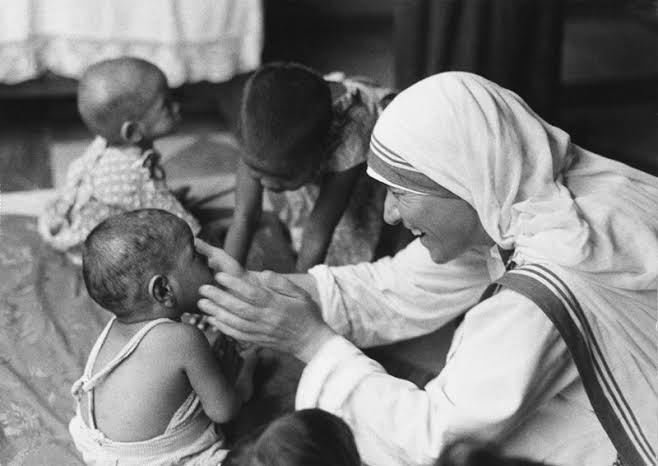
I recently had conversations with a young man who, after joining a group of young volunteers for charitable projects among the poor in Metro Manila, decided to be baptised a Catholic Christian. He said that the joy in service exhibited by the Catholic youth volunteers attracted him to the faith. Pag naisasabuhay nating mga Katoliko ang ating pananampalataya, pinatutunayan natin sa madla ang katotohanan ng mga itinuro ni Kristo. 

If we look back on the past years of the pandemic, we have seen how the Church has been in the forefront of outreach activities. If you have contributed to helping others in need, you make yourself a credible representative of the Church.  Noong simula ng mga lockdown, binuksan ng simbahang katoliko ang kanyang nga pinto sa mga palaboy at walang matirahan — ang mga paaralan, kumbento, retreat centres at maraming religious-run institutions ang nagsilbing silungan at kanlungan ng mga nangangailangan. In times of disasters, various Catholic charitable institutions promptly provide assistance for rebuilding homes and establishing livelihood in the affected areas.  Alinsunod sa ehemplo ni Hesus, pinatotohanan ng Simbahan, sa pamamagitan ng kanyang mga miyembro at institusyon, ang pagmamahal, pagkalinga, at awa ng Diyos Ama para sa sangkatauhan, lalong lalo na sa mga aba. 

There are countless others among us who work silently, below the radar of the press and social media. By their charitable works they become witnesses of the faith they profess and agents of God’s tender care for His people. They are a light for others during dark times… The light they carry within them is no less than Jesus. 

Wag sana kayong mawawalan ng loob o makikipag-away pag naririnig ninyong binabatikos ang simbahan natin.  We can not please everybody. And it is not our duty to please everybody! Our best response to all these bashings is the testimony of our service to the poor around us and in our communities. As Jesus says in the gospel: “The deeds my Father gave me to do…speak on my behalf.” (John 5:37) Elsewhere he says that if you don’t believe because of what I say, “believe because of the things I do.” (John 14:11) 

This first day of our Simbang Gabi, we are challenged to be evangelizers by our works, more than our words. We must be witnesses of our faith and our God to a fractured world beset with so much suffering. So many need to get to know and accept Jesus our Savior. Let us strive to be like John the Baptist who was  “a burning and shining lamp” (John 5:35) reflecting Christ’s Light, helping others to see that Jesus is truly the Light of the World!
In Joyful Anticipation

HOMILY: Third Sunday of Advent (A)

Matthew 11:2-11

10 December 2022

Fr. Ricky C. Montanez, AA

Do you like being compared with other people? Ok sana kung mas maganda ka o mas pogi, mas matangkad, o mas matalino. What if people perceive you as the unfortunate one? Parang nakakasama ng loob pag ikaw pala yung dehado, hindi ba? Siyempre, gusto natin tayo ang lamado. 

In today’s gospel passage, Jesus compares John the Baptist with other people. He speaks highly of him saying he is the greatest of all men. (Matthew 11:11) People went out to see a prophet and found more than what they were expecting. They had come to hear John relay what God wanted to say to His people but they did not expect such a special message. John had an extraordinary mission — to prepare the way for the coming of the Messiah. “Behold, I am sending my messenger ahead of you, he will prepare the way before you.” (Malachi 3:1) It was a unique privilege for John who came after a long line of prophets. 

His greatness, however is in no sense the greatness we attribute to kings, accomplished warriors or great thinkers.  Jesus Himself said, if you wish to see someone in fine clothing, John was not their guy. John lived a very simple life. The Bible tells us he lived alone in the desert, wore clothes of coarse camel’s hair and ate only locusts and honey. When Jesus says “I tell you, among those born of women none is greater than John.” (Matthew 11:11), He is referring to the special role and connection he had with Jesus. He was Jesus’ cousin and the precursor of the Messiah. Si Juan Bautista ay tinaguriang “The Great Precursor”, ang tagapag-pauna. He recognized the Lord as early as an unborn infant leaping in the womb of his mother, Elizabeth, when Mary visited her. His role was to bring people to come to terms with their own sinfulness and to await the coming of the Messiah whom God sent to save them.

Jesus continues to say that despite John’s unique position, privilege, and mission, the least in the kingdom of heaven is still greater than he.”  (Matthew 11:11) Who are the least in the kingdom? Sa tingin ko, tinutukoy ni Hesus ang mga karaniwang nilalang na makasalanan tulad natin. John did not have the opportunity to witness the wonders and miracles of Jesus. He did not have the chance to hear Jesus’ teachings. Take note that John was languishing in prison at the time when Jesus was doing all those wondrous deeds. Sapagkat siya’y nakapiit sa kulungan, malamang di niya napagmasdan ang mga nakakamanghang nagawa ni Hesukristo o narinig ang pagtuturo ni Hesus sa sinagoga o sa mga templo.  In fact, in a passage from Matthew 13: 16-17, Jesus addresses the crowds and says, “But blessed are your eyes, because they see; and your ears, because they hear.  For truly I say to you that many prophets and righteous people longed to see what you see, and did not see it, and to hear what you hear, and did not hear it.”  Para kay Hesus, higit na lamado ang mga nakinig sa Kanyang salita at nakaranas ng Kanyang awa, pagpapagaling, pang-unawa, pagpapatawad, at pagmamahal. Sa panahon ngayon, atin pa ring napakikinggan ang salita Niya sa misa o kapag tayo’y nagbabasa ng Bibliya. We also continue to be witnesses of God’s love and mercy even in the ordinariness of each day. The world is never short of miracles. Sa gayon, tayo ay mabibilang din sa mga nakalalamang kay Juan Bautista!

Today is Gaudete Sunday. The Third Sunday of Advent is a moment of joyful anticipation.  Dapat magsaya tayo kasi nakikilala natin si Hesukristo. Tinatanggap natin Siya bilang Diyos na nagkatawang tao upang tayo’y iligtas sa kasalanan. At inaasahan natin na tutuparin Niya ang pangakong Siya’y babalik muli. So many people in the world have not had the opportunity to get to know Jesus in their lifetimes. Today, we still have atheists and people of other religions who do not avail themselves of the living bread that fills all hungers and the living water that quenches all thirsts. How blessed we are to have that hope that our struggles are not in vain; that our sacrifices and efforts to live a life pleasing to the Lord will not go to waste simply because we trust Jesus when He said so.

Very seldom do we experience immediate gratification for being true and faithful followers of Christ. We trust that the fulfilment of God’s promises will come in God’s own time. Since no one knows the hour, except God the Father, it is in the best interest of all Christian believers to learn to wait for the day patiently and to continue to persevere till then. The kind of patient endurance required of us is described by James in the example of a farmer who waits for the crop to grow and mature. We know that farming is no easy occupation. The ripening of the crops depends upon various climactic patterns over which the farmer has no real control. While waiting for the crops to mature, he can remove stones and see to it that conditions for the crops to become fully-grown are in place. James reminds us that we have to “make our hearts firm” and that we “do not have to complain”. (James 5: 8-9) Instead, we have to live in love and in peace with one another! 

We await the return of Jesus Christ, no longer as a suffering servant that dies on the cross, but a triumphant King to rule His people. Isaiah, in the First Reading describes what a joyful occasion this will be like and he likened it to the time when the exiled Israelites returned to their land. All peoples shall experience abundance and joy as they see the glory of the Lord and the splendour of God. Gaya ng awitin sa misa kapag Adbiyento… “Balang araw ang liwanag matatanaw ng bulag… mumutawi sa bibig ng mga pipi and awit ng lualhati… tatakbo ang pilay at lumpo.” All shall be restored and made whole. All sorrow and mourning will flee and all who have been saved, shall be crowned with everlasting joy!

More than the fear of the Final Judgment at the end of time, we who hope in Christ must look forward to that time with joyful anticipation. On that day, our King returns to vindicate us who have sacrificed and struggled and persevered in His name. Let us continue to pray for the grace to live temperately, responsibly and cheerfully as we patiently await the Second Coming of the Lord!

The PAINS of CHANGE

HOMILY: Second Sunday of Advent

Matthew 3:1-12

4 December 2022

Fr. Ricky C. Montanez, AA

Do you still watch the news? There are some of us who do not want to anymore. They say doing so would only be very discouraging. I still do from time to time. I enjoy watching Karmina Constantino. The broadcast journalist who anchors the long-running ANC news show “Dateline Philippines”. She is very popular on social media. She is known to have put a few persons in their place on her news program. Once she received praise from netizens after she called out a presidential candidate for insinuating she received money from another candidate.  In retrospect she said: “I didn’t think any differently of what I did. I just knew at that time that I had to do what was needed to be done, which is to correct him right away… This is precisely why we’re here in this situation (of fake news and disinformation): walang nagsasalita, hinahayaan yung mga pagkakamali. And I’ve always been that kind of person kasi eh. Whenever an opportunity presents itself to make things right, you take it.”   

Isaiah and John the Baptist both deliver a message of judgment in our readings this Second Sunday of Advent. Isaiah prophesies that a Saviour would transform the world and bring it God’s peace but can only come once the ruthless who burden the poor and oppress the lowly have been cut down. Isaiah says: “He shall strike the ruthless with the rod of his mouth, and with the breath of his lips he shall slay the wicked.” (Isaiah 11:4) In the gospel passage from Matthew, John the Baptist uses harsh words to call people to repentance. John the Baptist’s message to the Pharisees and Sadducees is a scathing judgment — “You brood of vipers!” (Matthew 12:34) But John’s harsh language, unrelenting judgment and uncompromising challenge, was a  demand that people give a wholehearted response to by evaluating their personal lives and seeing what gets in the way of their fidelity to God. The prophet Isaiah and John the Baptist courageously called out the sins and  wrong doings rampant in society at that time which needed correcting and changing.

We can imagine that not everyone believed them or received the message well. For sure, some were angered, offended and perhaps even attacked John as well. Do we like to be told off or called out? Obviously not! This is true especially when the truth hurts and the words can be scathing. This is because we tend to protect ourselves at all cost. However, it is important for us to take criticism with grace. For those of us who give criticism, let us make sure it is constructive, so the person is encouraged to take a long hard honest look at himself/herself and to see the opportunity to right what is wrong.  For our young people, do you become very upset with your parents when they tell you off? Do you sense that your parents seem to think that you are not doing anything right?  As you are still young, it is expected that you will make lots of mistakes but these of course are opportunities for growth. Your parents, your elders should take it upon themselves to guide and to correct you. Yes, they love you and they want you to make better choices in the future. 

Sisters and brothers, let us remember that not all those who call us out would only like to put us down, mar our name or intentionally destroy our reputation. Sometimes, we have a tendency to think that this is so in the heat of the moment. There are those who are simply concerned for our well-being and desire that we become better.  Sometimes, it is by being painfully honest that we gain insight into ourselves leading us to change. Change can only happen if we are willing to step back, assess ourselves and our reactions, and endeavour to put ourselves on the straight path to reconfigure whatever behaviour impedes us from becoming persons of integrity. 

To some of us who are calling people out, let us make sure that before minding other people’s flaws and incapacities, we have early on doubly prompted and corrected ourselves. John the Baptist was believed by many because he lived a life that manifested what he proclaimed. He practiced what he preached. It is difficult to tell a child not to lie when we ourselves are lying. How can they believe us? The integrity of John the Baptist’s way of life gave his words power, which also drew many to him and challenged them to live lives of the same integrity.

During the time of Isaiah and John the Baptist the people needed to be readied for the coming of the Messiah. John portrays the One coming after him as a farmer with a threshing fork in His hand, tossing wheat and husks up into the wind. As He does so, only the wheat (that is of substance) will fall back and be stored. The husks are of no use and would simply be blown away. Why is it important for us now to change our ways and to correct the wrongs in our midst? It is because we are waiting for the Second Coming of Christ. It is because upon His return, He, the King shall separate the sheep from the goats. Hence, we have to ready ourselves while we still can.

Our readings this Sunday invite us to take a hard look at ourselves and see what is within us that opposes God’s ways and that rejects Christ’s coming and reigning in our lives. What is it within us that needs to change? John the Baptist’s challenge still rings true to most of us: “Change your ways, be open to God’s Spirit of change and renewal.” For this week, let us pray that we may be humble enough when we are criticised and let us try to understand and determine what change would be needed so that we can become pleasing to Christ.

Setting our Eyes on God’s Path

HOMILY: First Sunday of Advent (A)

Matthew 24:37-44

27 November 2022

Fr. Ricky Cañet Montañez, AA

Did you ever wonder what we would have done differently if we had known the global pandemic was going to happen? Many of us thought when the lockdown was declared that everything would be over by two weeks. We were surprised that the days dragged on and weeks turned into months and years. We started to become worried of how we would work and earn our keep. The hospitals did not have enough facilities for the number of people pouring through their emergency rooms! If we probably have made the necessary preparations, things would have turned out very differently for us.

Today’s readings for the First Sunday of Advent speaks of what awaits a pilgrim people, a people called to go on pilgrimage to God. The First Reading invites us to approach the mountain of the Lord, the place where God dwells in a special way among His people. It says, “Come, let us climb the Lord’s mountain… that He may instruct us in His ways, and we may walk in His paths.” (Isaiah 2:3) The people are instructed to approach God and to walk in His ways toward the vision of a future of peace and harmony among the peoples. The Israelites or the Jews have indeed prepared for the coming of the Messiah, the one whom they hoped would free them from their oppressors.  At the Messiah’s coming, they could finally live in peace. 

The second reading and the gospel passage from Matthew invite us to wake up, that is to open our eyes not only to the purpose of our lives in the here and now but also to the very end of the world.  In the gospel, Jesus warns that every disciple should be ready at all times for the fulfilment of this vision in the Parousia, (the Second Coming of the Son of Man). He gives us two (2) concrete examples of the consequence of not being prepared — those who perished in the great flood of Noah’s days, and the homeowner who gets robbed by a thief in the night. What would the people have done differently if they had known that for forty (40) days the rain would pour continuously and flood the earth? If we knew that our house would be broken into, we would probably made sure the locks are all working and we would have asked for protection from the police and local authorities. What would have been our preparation if we knew that the pandemic lasted for three years?  For the final coming of God’s Kingdom, St. Paul invites all of those who believe in Christ to be ready to act accordingly in the present. Let us. “Let us then throw off the works of darkness
and put on the armor of light.” (Romans 13:12)

With life so difficult these days, we can easily get caught up in our daily troubles that we can lose sight of the greater vision beyond our immediate concerns. Working hard. Everything is almost back to normal. It is traffic everywhere once more. We work overtime to the point of not having enough time with family. We surely work for our future, for our children’s future… but why do we continue to neglect our future with God?  What necessary and conscious preparations are we making for that future?  Jesus tells us that when the time comes, many people will be caught unaware. Many exactly like most of us will be doing very ordinary things and we will just be shocked at His return. People will be so engrossed in doing their immediate concerns without giving any thought to the ultimate purpose and end of their life. I am not saying it is wrong to work hard. In fact, we need to work harder because life has been very difficult lately. There is no question that we need to work, to earn our living, to take care of our families… but we must also prepare for the final call. We must prepare for the most important appointment of our life! 

One of my former parishioners recently passed away. She was in her nineties. Anyone who knew her cannot deny that she was truly prepared to meet the Lord. She raised her children to be God-fearing and devoted Catholic Christians. In fact, they are all very active in the charismatic community. They served the church to the best of their capacities. They were also known to be very generous. When they grew older, they would always say that they were ready to meet the Lord. When the husband became sick and eventually died, it took many years before she herself died.  During those years, she would often ask why the Lord had not taken her yet because she had always been ready. Now, all the people who have known and loved them believe that she is now happy with the Father and her beloved husband. That is how things are we would really have no way of knowing when our time is up, we only need to be prepared at all times.  

Recently declared a Doctor of the Church, St. Irenaeus (Latin Church Father, 2nd century) instructed that we have to think of living our Christian life as a pilgrimage.  We are on a pilgrimage with the goal of growing in our relationship with God.  More so, we need to be focused so that each and every one of our words, of our actions would lead to the goal… would take us to our ultimate destination.  (One foot in front of the other…) To live as a Christian thereby means that we should be working on our relationship with God at all times. No one time or day is more special for this task than another.  

During the past week we have heard about scary events associated with the end times.  As Christians, we need not be afraid or worried about the signs of the Second Coming of Christ. If we are faithful and true; if we are determined, if we have set our eyes and our hearts on God’s path, why then should we be troubled, why should we be afraid? This Advent, we pray that we would take all the means to make ready for that most important day to come… when it comes.

A Different Kind of King

HOMILY: Solemnity of Our Lord Jesus, King of the Universe

Luke 23:35-43

20 November 2022

Fr. Ricky Cañet Montañez, AA

A few months ago, one of the most popular monarchs of this Century passed away. You all have heard of her… Queen Elizabeth II! Her son, Charles, will be crowned King in May next year. His coronation is expected to be a fantastic royal event. He will continue to wear expensive clothing, live in palaces, travel in style and be honoured by his subjects. It is nevertheless a very different kingship from that of the King we celebrate in today’s mass. 

Our readings this Sunday shed light on the meaning of the feast we are celebrating. The title of the solemnity, itself, celebrates the power and authority of Christ — “King of the Universe”. What a mighty image! However, our readings, particularly the gospel reinterprets for us the concept of Jesus’ kingship. Jesus is presented as a Crucified King in the gospel passage from Luke. This kingly image of the Crucified Jesus overturns the more common notion of king associated with honour and glory flowing from one’s position of power and authority. Jesus, our King, is hanging nailed to a cross between two criminals. This is far from being a position of reverence and honour. He is rather mocked and derided as He is called, ‘The King of the Jews’. Apart from the terrible physical pain He experiences, Jesus also suffers the worst kinds of indignities as He hangs naked on the cross. The crucifixion account in Luke’s gospel makes us see a King who exercises His authority in reaching out to the other in mercy and salvation. Jesus demonstrates His kingship not by focusing on Himself and saving Himself, but by turning towards others and saving them instead.

The passage from the Second Book of Samuel alludes to two metaphors that further characterises this kingship of Jesus. It was typical of monarchs in the Ancient Near Eastern world to be commonly portrayed as shepherds. There are quite a few passages in the Old Testament where we find the prophets chastising religious and civic leaders who were neglectful of the needs of the people entrusted to their care. We recall, for instance, how the Lord God instructed Ezekiel to prophesy against the “shepherds of Israel”: “Woe to you shepherds of Israel who only take care of yourselves! Should not shepherds take care of the flock? You eat the curds, clothe yourselves with the wool and slaughter the choice animals, but you do not take care of the flock. You have not strengthened the weak or healed the sick or bound up the injured. You have not brought back the strays or searched for the lost. You have ruled them harshly and brutally. (Ezekiel 34:3-4) Kings have been tasked to secure the well-being of their people, so they take on the character of a shepherd. A shepherd needs to be closely attentive to the well-being of the flock; familiar with their needs and concerns as well as have the readiness to address them accordingly. Jesus, if you recall has the image of a Good Shepherd who cares so much for His flock. He is King also to those who accept and recognise Him as the Saviour King, including the outcasts, those deemed beyond the mercy of God. We know this because at His crucifixion, He reached out to the repentant thief in mercy. 

The other image of the king is that of a commander, or a captain who leads the people by going before them. A good leader rallies the people towards victory over those that threaten their security and peace. Such an ideal leader is not removed from the people, expecting only to be served by them but one who willingly risks his own life so that others may be led to safety. Jesus faces unimaginable suffering and a painful crucifixion in order to save us from the consequence of sin, which is death.  Jesus’ kingship is marked by His self-offering. This the King we hail! He is our leader and commander. Are we willing subjects? 

In recognising Christ as our King, we acknowledge that “We are not the King of the Universe.” This we tend to forget when we think the world revolves around us, or as we sometimes want it to be. Marami pa din sa atin ang naghahari-harian sa kalsada pag nagbabarumbado…. sa mga opisina pagnapupunta sa ulo ang pagka-boss o feeling boss…  sa mga restaurant and stores pag nanghahamak ka ng mga waiters and sales crew… pati na rin sa ating mga bahay. We are actually very small and very powerless compared to the grandeur and immensity of the universe and the Almighty who created it.  If Jesus is our King, then He must be our model of authority and leadership. 

As we celebrate the Solemnity of Christ the King, we are called not simply to pay homage to our Eternal King but to do as He did, devoting His life to others to the point of sacrificing His own that others may live. May we pursue our King’s self-giving way in our reaching out to others so that God’s reign may come among us.

Recognising God’s Visitation

HOMILY: Memorial of St. Elizabeth of Hungary, Religious

(Seventh Day of Novena Masses for the Solemnity of Christ the King)

Luke 19:41-44

17 November 2022 

Fr. Ricky Cañet Montañez, AA

Theme: Mission: Disciples Make Disciples

(We bring people to a deeper faith by having lives folded to the Lord’s teachings.) 

What brings you to tears? Sadness? Anger? Frustration? All of the above?  Parents with kids who are picky-eaters know the feeling. They provide nutritious food but their child refuses to eat and becomes a cause for worry over that child growing hungry or becoming undernourished. It is frustrating because it is love that motivates the parent to do what is best for the child and yet the child rejects what is being offered. Imagine the feeling. Nakakaiyak, hindi ba? 

Jesus, in today’s gospel sheds tears as He draws near Jerusalem.   We feel the sorrow in His words when He says: “If you [the people of Jerusalem] had only recognised on this day the way to peace!  But in fact, it is hidden from your eyes!”  Jesus further laments that they do not recognise the moment of God’s visitation. (Luke 19:41,42). 

He weeps over the people and the coming consequence of their ignorance and indifference. They have missed their opportunity for salvation, because they rejected the Gospel that was preached with accompanying mighty signs and works. The Jews were looking for a warrior and political leader thinking he was the key to peace. In the passage from the Book of Revelation, we find an allusion to Genesis 49:9, which recalls that the Messiah was expected to show himself as the Lion of the Tribe of Judah, a mighty warrior. Yet, the drama of the scene from Revelation points to the surprising truth that the Lion has become the Lamb, the Lamb slain, put to death, purchasing a people by his Blood. This mindset prevented the Jews from recognising the Son of God in their midst who was sent to bring them peace and show them the way to lasting peace. if only they accepted Jesus and His teachings, they would have been spared so much strife. How painful and frustrating it must have been for Jesus who loved them very much. 

To this day, Jerusalem is constantly in the midst of some conflict. How sad, considering, that Jerusalem literally means “City of Peace”! Yerushalayim comes from two words: Ir and Shalem. “Ir” meaning city and “Shalem” or “Shalom”, meaning peace. It remains the only city in the world to which three major world religions lay hereditary claim. If we visit Jerusalem, we will discover it is a Holy Site not only for Christians who go to see Basilicas and Churches, but for Muslims who visit the Dome of the Rock and the Jews who preserve the Wailing Wall, their Temples and their fortified city. The cultural diversity, differing expressions of faith and political agenda continue to create tension and division that polarizes Jerusalem. All of this resulted from the failure of the Jews to recognise the moment of their visitation. Jesus was already there in their midst. He could have been born to some other race, but God sent His son to His Chosen People and yet they did not welcome Him. 

Have we realised that Jesus continues to visit us? Can we identify moments when Jesus has come to us? In a video released by the SOCOM Ministry for the CTK Fiesta we are reminded that when the Philippines was on lockdown and churches were closed, Jesus came to our villages and homes! CTK live-streamed mass frequently that we may still hear the Word of God and pray as a community. Fr. Steve carried the Blessed Sacrament in a monstrance through our streets that Jesus may come to bless us with courage, with His protection, and healing mercy. Yes, God responded when we called out to Him. 

It is God’s turn to call on us. By God’s mercy, we have vaccines that give us some protection against COVID. We also have some leaders who implemented policies that managed the spread of the virus and medical practitioners who selflessly placed the well-being of others over their own. Restrictions have mostly been lifted. We are not even required to wear masks. (I actually just visited a country where wearing of masks is not mandatory. It made me uncomfortable so I still wore mine in enclosed spaces.) Churches are now open to all. CTK has been open to us! God is waiting for us here at the altar. He is calling us back to worship in His house. Do we not wish to respond? He offers Himself to us in Holy Communion so that we may one day become what we consume! Do we not wish to receive Him anymore? He is always here. Now that we are freer to leave our homes with less fear and anxiety, do we not wish to come to His house to worship as a family?  A rejection of His invitation is surely bound to bring tears to His eyes again. Jesus wept because people were indifferent to His visitation. They rejected His loving offer. Today, Jesus waits for us in the Church where He offers His Body and Blood in Communion. Must we be indifferent to Him today?

When we pray and worship together here in Church there is value. The prayers of many are more powerful. We augment one another and supply for one another’s deficiencies. The voice of many rings louder — helping those whose voices are meek. I remember CTK, pre-pandemic, when it was teeming with people! When I presided over the mass, I could feel such energy generated from within the walls of this Church! We all benefit from the outpouring of graces during the mass. We receive Jesus in the Eucharist and we are blessed beyond our comprehension. Such a wonderful experience and encounter is not something one keeps to himself or herself. It is meant to be shared! That, friends, is the beauty of discipleship. By our witness to the presence of Jesus, we are able to bring more people to Him. Let us note how lighting just one match in a bunch of matches, sets the whole stack on fire!  In the family of CTK, each one’s spark of participation and initiative can set the community ablaze with life and dynamism again. Disciples making more disciples happens when we allow ourselves to experience the beauty of a personal encounter with Christ and by our witness, welcome others to come to visit Jesus in His church.

Brothers and sisters, let us not forget that Jesus awaits us in His house. At mass Jesus gives Himself to us in communion. By His visitation we receive of His love, mercy, grace and peace. This is an opportunity that is too valuable to pass up. Thus, let us open our hearts to this visitation of Jesus. We have the capacity to already fill up the malls and supermarkets, concert and sports venues, and return our children to the schools. Why can we not fill our churches again? Throughout this Fiesta Novena, may GOD increase our desire for the fruits of communion with Him and with one another in this church.

Staying the Course FAITHFULLY

HOMILY: Thirty-Third Sunday in Ordinary Time 

Luke 21: 5-19

13 November 2022

Fr. Ricky Cañet Montañez, AA

The end of the world. Have you stopped to wonder what that will be like? Will it be as dramatic as the explosion of the planet? Or will something happen causing the obliteration of life on the face of the earth — like the Ice Age that killed all the dinosaurs or the flood that destroyed all but those aboard Noah’s Ark? Will it mean the extinction of humanity? When will it happen? Will we still be alive by then? 

The answer to that question is: “We don’t know.” In fact, nobody knows. For centuries, doomsayers like Nostradamus have prophesied the apocalypse. Some of them have given the exact dates! I remember that people around the world feared that the world would end simultaneously with the beginning of the year 2000, or Y2K. They said the computers on which all the world’s systems heavily relied upon would reset after December 31, 1999.  These days the COVID pandemic and the Russia-Ukraine War is being touted as signs of the end times.  Sa kabila ng lahat, andirito pa rin tayo sa awa ng Diyos. 

On this Sunday’s gospel, Jesus speaks of frightening visions of a cataclysmic and apocalyptic signs heralding the world’s end. The description is not a pleasant one… “Nation will rise against nation, and kingdom against kingdom. There will be powerful earthquakes, famines, and plagues from place to place; and awesome sights and mighty signs will come from the sky.”  (Luke 21:11) Paborito itong panakot ng mga street preachers. Sa US, nakasuot pa sila ng karatula —- “Repent! The end is near!” 

Indeed, it causes many to be anxious and fearful. Ano ba ang kinatatakutan natin—ang mamamatay? Lahat naman tayo mamatay. Wala naman sa ating imortal, hindi ba?  Takot tayong mawala ang ating mga ari-arian at ang nakagisnan nating buhay? Hindi natin maaaring kalimutan na ang lahat ng tinatamasa natin ay sadyang ipinahiram lang sa atin ng Diyos Ama at anumang oras o araw, maaari Niya itong bawiin. Hindi na kailangang hintayin ang end of the world. 

Hindi tayo dapat pangunahan ng takot, lalo na at tayo ay mga Kristiyano! The Gospel is actually very encouraging towards the end. Jesus enjoins His followers not to be afraid because “not a hair on their head shall be destroyed”.  (Luke 21:18) We are called to take courage and place our faith in God. The key to securing our lives is simple — remain faithful to ways of the Lord at all times.

As Christians we understand the concept in context with the Second Coming of Jesus, where He reigns supreme over heaven and earth. It also brings into focus the final Judgment.  For all of us disciples of Jesus who have tried to live by the values of the Gospel, the end times will be the time of our vindication. Those who are good shall receive their reward while those who are evil shall receive their punishment.  It is a time when God will set all things right — there will be no more injustices, destructions, tears, and sufferings!  Hence, the end times is not some event to be feared about but rather to be welcomed. 

Yun nga lang di natin alam kung kelan magaganap ang mga pangyayaring ito. Tanging ang Diyos Ama lamang ang nakakaalam. Therefore, we should not be complacent because what is bound to happen shall come to pass. We simply have to be ready! 

It is no wonder that the apocalyptic feel of the First Reading and Gospel is tempered by St. Paul’s focus on the present. How? We hear St. Paul telling people to imitate him in not being idle. (2 Thessalonians 3:9 Huwag tayong tatamad-tamad.  By profession, St. Paul was a tent-maker. There is a danger for people to be lazy or to be hedonistic because they believe the end to be near. Meron yung mang-utang ng malaki kasi baka sakaling abutin ng end of the world at di na kailanagang magbayad! Andyan din ang gimik ng gimik. Akala mo di mauubusan ng alak at party. Nanamnamin ang sarap ng buhay bago magunaw ang mundo. Andiyan naman ang mga nagmumukmok, nade-depress at nagsisitago. Para namang mapagtataguan ang katapusan ng mundo… Remember — what must come to pass, shall come to pass. Wala tayong control doon. Hindi natin ito tuluyang mapipigilan, kaya hindi tayo dapat magpaka-stress! St. Paul shows us that our concern for the future should be grounded in the present. Live justly and righteously today! Every choice we make now holds a bearing for our eternal future. 

I remember doing a wake mass via zoom for an 86-year-old lady who died a few days after suffering a massive stroke. Prior to her stroke she kept herself busy and faithful to her daily duties. Wala siyang sinayang na oras sa buhay niya. Panatag ang kanyang pamilya na yumao siya ng walang pinagsisisihan at walang pag aagam-agam.  She lived as a good Catholic, a good daughter, wife, mother and grandmother. Every day of her life was lived in preparation for the life she hoped to have in heaven with Jesus when she died. 

This Sunday we are invited to be concerned with how we actively live our calling to be loyal sons and daughters of God our Father, rather than be paralysed by our fear of how we meet our end. The beginning and end of all life, ours included, lie solely in God’s hands.  Pray for guidance and enlightenment, hope and courage that we may not be consumed by our fears. As we strive to be consistently faithful to our Christian life, we will face many difficulties. Let us pray that we stay the course and always believe that God’s truth, goodness and justice will prevail in the end.

Alive in God

HOMILY: Thirty-Second Sunday in Ordinary Time 

Luke 20:27-38

6 November 2022

Fr. Ricky Cañet Montañez, AA

A friend who lost her husband to Covid once asked me this question — “In the afterlife, are we going to recognise one another?”  What an interesting question indeed but one that I really could not answer with accuracy as I have not yet experienced the afterlife! What I do know is that those of us who yearn for a lost loved one do wonder: “If we find each other in heaven, will our relationship be the same, as though time had not passed?” Only God really knows and we can only hope in His promises.

As we inch closer to the end of the liturgical year, we are asked to think about end-of-life issues. This Sunday’s readings nudge us more particularly in the direction of the resurrection. The passage from the Book of Maccabees relates to us how a mother and her children’s firm belief in the resurrection  made them endure a painful martyrdom. In contrast, the Sadducees ask Jesus in the gospel passage about consecutive marriages to debunk the belief in the resurrection of the dead. 

First of all, it is important to note why the Sadducees do not believe in the afterlife. They had restricted their beliefs to the Pentateuch, the first five books of the Bible, namely (Genesis, Exodus, Leviticus, Numbers and Deuteronomy) supposedly written by Moses and containing the essence of the Jewish Law. They did not believe in the immortality of a soul. They believed the dead went to a permanent place called Sheol which was neither a place of punishment nor reward. For them, death was the end of everything.  The Pharisees on the other hand, accepted some beliefs in the later writings of the Old Testament — i.e. the existence of spirits and angels, and the resurrection of the dead. Death for them was a transition to another beginning. 

To test Jesus and to assert their own faith convictions, the Sadducees proposed an imagined situation of seven brothers who died one after another. Eventually, all seven brothers married one and the same woman as mandated in the Mosaic Law. The unanswerable question: “Which of the seven would be the woman’s husband in the next life?” (Luke 20:33) For the non-believers in the resurrection, there was no problem since with death everything ends. However, for those who believed, this question posed a serious problem. Who becomes the rightful spouse of the woman? Would she be considered polygamous and sinful? 

In His response to the Sadducees, Jesus manages to avoid the trap they have set for Him by giving them an insight into the truth of the afterlife. He declares with authority that in the next life there are no marriage relationships. “The children of this age [i.e. those who belong to this world] marry and remarry but those who are deemed worthy to attain to the coming age and to the resurrection of the dead neither marry nor are given in marriage”.  (Luke 20:35) Marriage after all is meant to create families and to rear children and continue to populate the earth. Heaven does not need that. In other words, we are not supposed to assume that heaven is like earth. The things of heaven are not the things of earth.  Jesus’ response says that our earthly relationships take on a different form when we are all reunited in heaven. Since we have become adopted children of God in Christ, brothers and sisters to each other, there will be a different essence and focus to our relationship with God and one another in God’s Kingdom. Everything we know, we know because it is revealed by Jesus who is Lord of this life and the next. The details of the afterlife remain a mystery to us who are living and perhaps will only be made clear as we find ourselves at death’s door. 

To further prove His point, Jesus challenges the Sadducees’ unbelief about life after death by quoting from a part of the Bible which they recognise as true. He reminds them of the episode at the burning bush with the voice identifying Himself to Moses. “I AM the God of your father, the God of Abraham, the God of Isaac and the God of Jacob” (Exodus 3:6). God, says Jesus, is the God of the living and not of the dead [i.e., of those who have gone ahead and do not exist physically anymore]. Since Abraham, Isaac and Jacob’s God is a god of the living, then by consequence, are also living.  This is how Jesus makes apparent where the Sadducees’ argument fails.

Recently we lost a very dear Sister in the Religious of the Assumption (Sr. Mary Fidelis Estrada, RA). I remember her as one person who was never afraid to die… to pass on to fuller life. She once told me that she would always  pray to God to take her as soon as her mission on earth is done. Her life was a testament of love and gratitude. She was convinced that we have a loving God who will not allow those who believe in Him to suffer eternal damnation. She was of the conviction that in God’s love no one is ever lost. 

Lastly, I urge you to focus on what is essential. Let us not waste time speculating over things which will not yield a precise knowledge or we do not have an experience of.  It is enough that we place our trust in Jesus and in the declarations He has made in Scriptures. There is no reason for us to doubt Him or to challenge His teachings. He has not failed us and He never will. As a people of faith, although we may not fully understand God’s plans for us we should be rest assured that our future lies securely in God’s hands. Jesus’ promises are more than enough to keep us going! Saint Paul says that “God is always faithful and that He directs our lives toward His love and the endurance of Christ.”  (2 Thessalonians  3:5) Let us allow the Lord to lead us to Himself and trust that He has prepared a place for us in His heavenly home.

True Greatness in God’s Eyes

HOMILY: Thirty-First Sunday in Ordinary Time

Luke 19:1-10

30 October 2022

Fr. Ricky Cañet Montañez, AA

There is a matronly lady (She’s in her 80’s!) from the former parish I served who never leaves her house without a full face of make-up, baubles, frills, and glittery clothes even on ordinary days — to go to the grocery, pick up her prescription meds from the pharmacy (chemist), or drop by the parish office. She always looks like she is going to a party. You simply cannot miss her. The glint of the glitters or the flashy colours of her outfit will get you looking her direction. She simply enjoys the attention and is only happy to chit-chat with people who approach her. She absolutely hates the feeling of being ignored. Well, no one wants to be overlooked, (or under-looked), to be always passed by and worst of all, not to be ‘seen’ by others. We may not be as ostentatious as my friend, but we do care about receiving the attention and recognition from people who matter in our life. 

We have a good example of Zacchaeus in today’s Gospel. Zacchaeus is described as small in stature, and thus everyone must have always looked down on him.  All his life he always needed to look up to other people. People looked down on him to see him. In psychology, we are told that this is a cause for insecurity and sometimes it can motivate people to embark on things to boost their ego. In Zaccheus’ case, he held a job of importance that gave him power over the regular folk. And he lorded it over them. And they did not like him very much. In a way, it caused people to look down on him even more. Most likely, when he had his back turned they spoke of him as though he were dirt. They probably had awful secret code names and unkind nicknames for him.

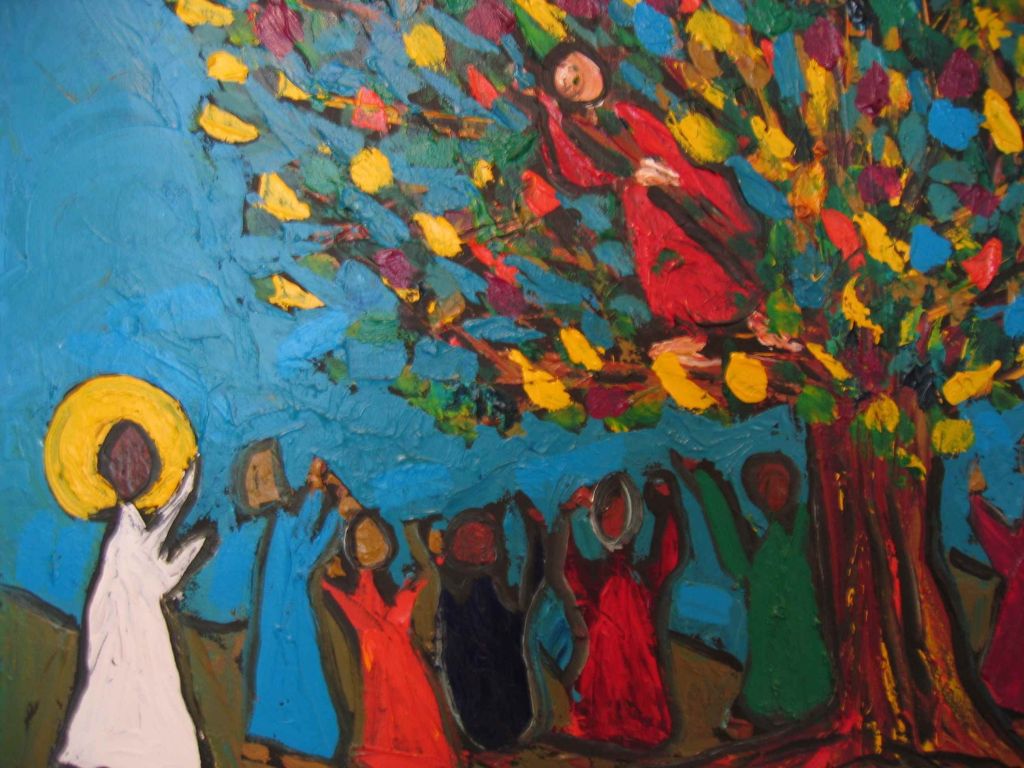
When Zaccheus heard Jesus had come into their town, he felt compelled to see Him. He wanted to see Jesus. And perhaps look upon this man he had heard so much about. Because he was vertically challenged, he climbed a sycamore tree in order to have at least a glimpse of Jesus passing by. The ensuing encounter with Jesus was most unusual for Zacchaeus. For the first time someone looked up at him and for him — calling him by name — invited him down and really saw him beyond his small stature, his littleness, and his inferiority. Jesus saw Zacchaeus for who he truly is. While people only saw him as an extortionist being a tax collector (and mind you, he was not only one of the tax collectors, but the chief of tax collectors in Jericho and so probably more unjust than others), Jesus saw a person who had great potential to be a person pleasing to God. He saw a redeeming factor in this man. There was hope for him to be what God intended him to be.

But the call of Zacchaeus is not without cost. Conversion is always costly since it involves breaking away from our sinful and selfish attachments. He had to share his goods with the poor and make restitution to those whom he had defrauded. As the Book of Wisdom tells us: “But you spare all things, because they are yours, O Lord and lover of souls,… Therefore you rebuke offenders little by little, warn them and remind them of the sins they are committing, that they may abandon their wickedness and believe in you, O Lord!” (Wisdom 11:26 – 12:2) We can think of some famous celebrities as good examples. Many of them like to be photographed in fashionable and expensive clothing while hanging out in posh places. Few of them manage to shy away from the paparazzi to live quiet lives and they focus their energies on championing causes and supporting worthwhile endeavours such as bringing attention to the plight of the sick or those in need of justice. These individuals do not see themselves as extraordinary… They simply recognise that they are in a position of influence. And they use their status for the good of others. Such is their redeeming factor. 

All those who have had a deep encounter with Jesus find their lives radically transformed. A meal with Jesus must have been a dream come true for Zacchaeus — an honor, but also a humbling experience. It moved him to desire to be a true disciple of Jesus. He made the necessary sacrifices to change his way of life and be pleasing to God. We can say that this conversion made him TRULY GREAT (to be BIG) in God’s eyes! Let us pray with St. Paul that like Zacchaeus our God may make us worthy of His call! (2 Thessalonians 1:11)

Walking in the Ways of God

HOMILY: Thirtieth Sunday in Ordinary Time (C)

Luke 18:9-14

23 October 2022

Fr. Ricky Cañet Montañez, AA

Will you oblige me today by answering a few questions? Who among you go to mass every Sunday without fail?  (May I have a show of hands?) Who among you, in addition to Sunday obligation, attend daily mass? Who among you go to frequent confession? Now, does this make you any better than those who did not respond (or raise their hand)? Does this make you feel more worthy of a heavenly reward? Does this make you a good person?

What makes a good person? In today’s gospel reading, we expect that the Pharisee would easily fit the mould of a “good” person. As a Pharisee, we assume he carefully keeps the Jewish Law and the Commandments of God.  Being a good Jew, he faithfully prays, fasts, and gives alms.  And yet, Jesus does not hold him up as an example of righteousness. Why?  Because he is too full of himself. He tells God, “I thank you that I am not like the rest of humanity — especially like this terrible tax collector…”  (Luke 18:13) Notice how many times the word “I” appears in this rather short prayer — 4 times!  In a way, what he is really trying to say is: God should be thankful that there are a few persons like him who are faithfully following His commands. Yes, he does pray, fast, give alms. But are they done out of love for God and the poor, or are they simply gestures to make him feel good about himself?

On the other hand, we have the Tax Collector. He belongs to the most-hated class in Jewish society. Tax collectors were considered traitors by their fellow Jews for colluding with the Roman colonisers in taking advantage of the local population. In the parable, the table is turned because the one who is seemingly “virtuous” is not right  with God at all. Why is this so? The tax collector knows for certain that he is a sinner.  He surely does not observe the Jewish law. He has behaved very poorly before God and neighbour.  Although undoubtedly a sinner, the tax collector admits his sins.  He knows that he needs God’s mercy in order for him to become a person most pleasing to God. Hence, in his prayer he implores God to be merciful to him, a sinner. We recall the words of Jesus in Luke 15:7: “There will be more rejoicing in heaven over one repentant sinner than over ninety-nine righteous people who do not need repentance.” As the passage from the Book of Sirach assures: “The prayer of the lowly pierces the clouds.” (Sirach 35:21) God will most readily come to the aid of a sinner who in his humility recognises his need for God than a proud man who thinks he can very well take care of himself.

I have worked in parishes where some of the retiree volunteers and benefactors are ill-reputed for their difficult and condescending  attitudes and harsh language.  Yet, they are confident that their generosity with their time and treasure for the church guarantees that they will go to heaven when they die. This is something they brag about not realising they are terribly mistaken. No one can buy their way to heaven.  Even the saints, in all their virtues and holiness, could not presume that they were worthy. You will not find one among them, after their moment of conversion, who claims to have triumphed of their own accord. All of them attribute their accomplishments to the power of the Almighty. All of them recognise that they are simply channels for God to bless His people and to dispense His graces.

Similarly, it is not for us to say that those of different faiths have no chance of going to heaven. Some Christian sects claim that theirs is the only way to heaven.  And there are others who condemn non-Christians to hell. Of course, we value the tenets of our faith, which we believe to be handed down to us by Jesus and the apostles but in the grand scheme of things, who are we to judge? It is not religion, per se that saves a person,  but God. We cannot presume to completely understand the heart of God. He sees us in our entirety — our past, present and future. He knows the state of our minds, our hearts and our souls. We can only hope in His mercy and trust in His love for humankind. 

In the Second Reading, we get the impression that St. Paul may seem to have the same air of confidence exhibited by the Pharisee. St. Paul declares: “I have completed well; I have finished the race; I have kept the faith. From now on the crown of righteousness awaits me, which the Lord, the just judge, will award to me on that day…” (2 Timothy 4:7-8) But as we read further, it is clear for St. Paul to whom he attributes the strength he needed to triumph over all the hardships he encountered in his missionary activities. “The Lord stood by me and gave me strength… To him be glory forever and ever.” (2 Timothy 4:17-18).

Today’s readings give us both a warning and a sign of hope. They caution us against being complacent in the good that we do. Nothing we accomplish in this world can match the greatness of God’s work. Nothing we can give will surpass the generosity of God. Therefore, we have no reason to boast.  The tax collector is given to us as an example of how we are to conduct ourselves before God. Like him, we are reminded that with God and before God, humility is the only posture a creature can take before his/her Creator. In one of the Eucharistic Prayers, we pray “giving thanks that God has made us worthy to be in His presence and minister to Him…” We ought to remain humble and recognize how truly small and insignificant we are compared to the power and splendour of our Lord. 

We can however stand firm in the hope that our efforts do not go unnoticed by God. He knows each of us intimately and looks upon us with such interest and concern.  Most importantly, we should take to heart what St. Paul reveals to us — we need to persevere in the ways of Jesus until the very end of our life, doing everything, and living every moment with love. Rest assured, God keeps His promises to those He, alone, deems worthy.