A Welcoming Faith Community

HOMILY: Thirteenth Sunday in Ordinary Time

Matthew 10:37-42

2 July 2023

Fr. Ricky Cañet Montañez

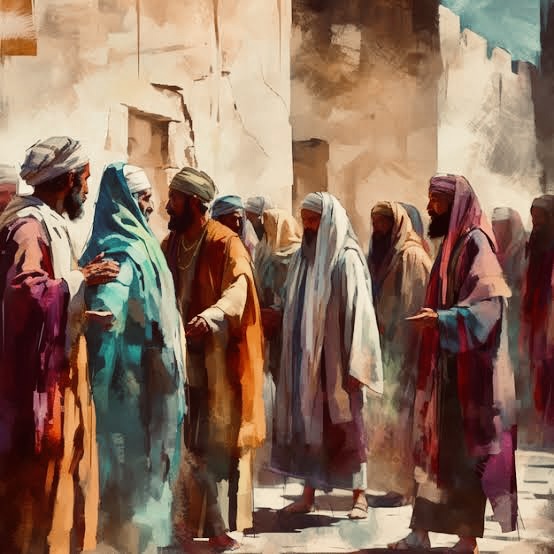
Our parish community is very blessed! In San Roque Parish, the spirit of volunteerism is very much alive. Despite this, there is still something I wish for our worshipping community.  Do you know what that is? A sense of hospitality that becomes a marked characteristic of our church or parish communities. We do have greeters who meet us with a smile at the parish church entrance to make us feel welcome, but when we sit down, we are oblivious of those seated next to us. The painful truth is we still remain strangers to one another. It is sad because the Eucharist is supposed to be a real experience of encounter with Jesus who invites us to welcome one another as He welcomes us. 

Although true Christianity asks us to be ready to help even those we do not know, we must admit that when we know people and understand what they need, it is easier for us to see how we can help them from our own resources of advice, funds, emotional support, referrals, or what have we.  In the United States of America, they have a wonderful practice of having regular activities after mass that helps the parishioners mingle and get to know one another. Sometimes, parishioners are assigned prayer groups that meet regularly so they get to know each other better and they are able to support one another through their struggles.

This Sunday’s gospel passage outlines some demands on those who follow Jesus.  We are called, by virtue of our baptism to demonstrate our commitment to Jesus by a complete renunciation of everything that gets in the way of following Him.  Do we take the message literally so as to ignore and abandon our basic needs and the concerns of our families in the name of discipleship and helping strangers? I don’t think so. It is just saying that if these things ever come in conflict with our living a truly Christian life, we must always choose the path that Jesus would want for us. During the pandemic, there were people who chose to be selfish in the name of self-preservation. Remember the hoarding of toilet paper fiasco in the USA? They hoarded goods for themselves at the expense of others. Now, if we observe your very own child to be unkind to the less fortunate, would we allow him/her to persist in his/her uncharitable ways so we could be the “cool” parent? Of course not. Our relationship and desire to be accepted and revered by our child should not get in the way of our Christian charity.  We have to correct what is wrong because that is what Christ would want us to do. Nothing should separate us from God – not people in our lives, not the things we own. He should always come first. 

Our commitment to Jesus is not all about radical gestures of discipleship. Our commitment to Jesus also entails being consistent in our faithfulness especially in the trivialities of our everyday activities, being ready to share our gifts and resources with others in the name of Christ. God has blessed each one of us in different ways – some materially, some spiritually, some in terms of friends, some in terms of talent, others in terms of opportunity. The use of these gifts is meant to help us glorify God and to grow in love for Him.  Everything we have is not only meant to sustain us but also for us to share and spend in service of others. Consistency is built by regularity even in small things until it eventually develops enough to be applicable even in big matters. If we are tight-fisted when it comes to giving our loose change for a beggar, we will most likely find it difficult to give when it actually hurts our wallet.  Those who practice stewardship as a way of life practice charity in all aspects of their life – whether insignificant and trivial to major decisions. They are not allergic to making sacrifices because they subscribe to the idea of “taking up one’s cross to follow Jesus”. (Matthew 10:38) Whoever wishes to follow Jesus must walk the same path of the cross He tread.

In the passage from the Second Book of Kings, the Shunemite woman was rewarded with the gift of a child not so much for her faith in God but for being gracious to the prophet. Such an overly generous payment for a very basic gesture of hospitality, we might say. We have to remember that God promises that wholehearted commitment will be rewarded. I read somewhere: “If we lose our lives in this way, we will really gain them. If we are unselfish in the way we share ourselves with others, we will be enriched through our generosity.”  God sees even the good we do in secret and He does not forget our kindnesses. Jesus says: “And whoever gives to one of these little ones even a cup of cold water because he is a disciple, truly I say to you, he shall not lose his reward.” (Matthew 10:42) I am not going to promise that God immediately rewards us but in one way or another the goodness we give returns to us a hundredfold.  God cannot be outdone in generosity and a small charitable act as such, if done for the little ones of His flock will be magnanimously rewarded in His time. 

Again, while this may sound quite simple enough, there is a lot more to it in the fast-paced world we live in. It is so easy to refuse the person in need who approaches us because we find ourselves always too busy to care. We feel inconvenienced. When I was in Bukidnon as a youth volunteer among the Higaonons, I remembered that I had so much time that I could always afford to “waste” time with the people I encountered there. These days, I can barely find time to sit down. So, it requires much effort to pay attention to those in need around me and to address their concerns. It is not easy. Let us be honest with ourselves, would we bend over backwards to help a stranger? If after mass, as we go to our respective cars, then we notice that a stranger parked beside us has a flat tire, or his car is overheating… would we readily offer our assistance at an inconvenience to our own schedule or think to ourselves… “I’m in a hurry. He can surely do it by himself.”  A priest-friend of mine once said: “How do we spell love these days? T-I-M-E.” Think about it.  No matter how busy and tired parents are, they spend quality time with their children, even if it’s just on weekends; lovers make time for each other or else they grow apart; those who love God and wish to spend time with Him, do not count the hours for prayer. Supporters of our BEC and SSDM projects make time to visit the sick, go to jails, prepare care packages for the needy and raise funds for their needs. All of that entails time and effort. It requires much love! To be busy is never really an excuse… the idea is to make the time because it is part and parcel of discipleship.

Jesus never withholds His love and mercy from anyone. As His disciples, we too are called to be ready to give of ourselves to those in need, whether, friend, stranger, or foe. We recall the words of Hebrews 13:2: “Do not neglect hospitality to strangers, for by this some have entertained angels without knowing it.” In the stranger, God visits us. It is only by being truly hospitable that we facilitate a real encounter with others. May we then be welcoming, most ready to open our eyes, our hearts to God’s loving presence among us.

Tremendously Loved by God

HOMILY: Twelfth Sunday in Ordinary Time

Matthew 10:26-33

25 June 2023 

Fr. Ricky Cañet Montañez

The gospel today is very meaningful to me. Its message hits me hard. As it says “… even the hairs on your head have all been counted.” (Matthew 10:30) I really feel it because if you notice my hairline it is exponentially receding. Please don’t stare at it too much later. You are only making me more insecure.😜 A friend even recommended a Hair Rescue and Thickening Serum and Shampoo! Imagine my relief when my barber recently observed that there were baby hairs growing where the hair was thinning on my head! It seems effective then. So when my friend asked me to give a video testimonial for Hair Reve, I willingly obliged.  I’ve been too shy to watch myself on the video but the experience taught me something important. Who would have thought that I would be making public my greatest insecurity? And now by sharing my experience, those who are  similarly-situated may find a solution to their problem as well. 

We all have something we are ashamed of in life. Some may have small insecurities and deficiencies, while others may be embarrassed by their massive failures or shameful circumstances. More often than not, there is an element of sin in what we are most ashamed of. When we sin, we feel ashamed, right? No one comes to the confessional taking pride in having sinned. We can barely enumerate our transgressions to the priest.  We can hardly say it out of shame. Other times, it is the sin of another that is the source of our shame.  For instance, we don’t want to be called a child of  a drunkard nor of a criminal. Even the culture of a society can be so saturated with social sin that many members of the community are forced to live in abject poverty. It’s not a sin to be born poor, but we don’t want to be poor for the rest of our lives, right? We work hard so that we can improve our lives and that of our families. In all these instances, God always finds a way to bless us and others. People who give very powerful testimonials of conversion are those who suffered much either by their own sinfulness or were victims of their circumstance. Their stories serve as an inspiration and source of strength for many.

Today’s readings bring us good news and a message of hope!  There is a reason to let go of our fears and insecurities. St. Paul reminds us that although sin has entered the world through Adam, we find redemption and salvation in Jesus Christ in whom grace flows in abundance for humanity.  In the gospel, Jesus tells us to “fear no one…..not even the ones who can kill the body.”  When He said: “Even the hairs of your head have all been counted… You are worth more than many sparrows.” (Matthew 10:29-30), Jesus is giving us an idea of how precious we are in God’s eyes!  I read somewhere that the heads of blondes contain about 150,000 hair strands; brunettes, about 125,000; and redheads, 100,000! Let us think of it this way… If the Father knows the exact count of every singular strand of hair on our heads, how much more is He knowledgeable of our needs? No one is assigned to take care of wild birds but they live. The Creator takes care of them and does not abandon them. If God cares for every sparrow that lives, how much more is He concerned for each member of humankind, whom He considers His best creation? As impossible as it may seem, there is nothing we should doubt or worry about. Nothing is impossible for God.  

The immensity of God’s love for us not only moves Him to provide for our needs and assuage our fears. He is also moved to protect us from harm. The First Reading narrates the plans of Jeremiah’s detractors to discredit him and threaten him. Instead of hiding in fear, the prophet puts his full trust in the Lord. God becomes Jeremiah’s mighty champion who will avenge him. He was confident that  God would deliver him from the hands of all those who sought his downfall. “But the Lord is with me, like a mighty champion: my persecutors will stumble, they will not triumph.” (Jeremiah 20:11)  I hope we are the same. I am not saying that we ignore people who have done us harm especially if what they have done is a crime and against the law. What matters is that in our heart, we learn to forgive and to leave their fate in God’s hands. Evil will never prevail. There is nothing greater than the power of our Lord.

Brothers and sisters, today we are invited to recognise that we are valuable, irreplaceable, and loved by a loving Father. Despite our many shortcomings and insecurities, God loves us very much. He will not forsake us. There are even times when He will turn our weakness into strength. Never forget that when we are afraid, when we stumble and hesitate, God’s word assures that He is right there beside us gently reaching out His hand to help us up — “Do not be afraid.” So, hang in there! Don’t give up!

Qualified for the Mission

HOMILY: Eleventh Sunday in Ordinary Time

Matthew 9:36-10:8)

18 June 2023

Fr. Ricky Cañet Montañez

In my 12 years in the priesthood, I’ve come across some funny misconceptions about priests. They say all seminarians or priests can sing well. Hmmm… maybe most but not all. The talent has been sharpened by the constant seminary singing practice. They also say that those who enter the priesthood are the kindest and most obedient male children in the family. That’s a fallacy. Those of you who know Fr. Steve Zabala will recall he claims to be the most naughty among his siblings. Above all, they say all seminarians and priests are handsome. Ah, I didn’t say anything about that. 😜 It’s just a joke.

When we go over the list of the “The Twelve”, Jesus selected to be His most intimate followers and co-labourers we are not at all impressed by His choice! They were definitely not the best and the brightest nor the cream of the crop. The resume of those shortlisted among the 12 apostles is not impressive. They were not rich, nor were they famous. Most of them are uneducated and lacked faith. Some of them had questionable character. By our standards -– the chosen disciples are not impressive at all. But the Lord’s standards are different. As Isaiah 55: 8-9 reminds us… “For my thoughts are not your thoughts, neither are your ways my ways,” declares the Lord. “As the heavens are higher than the earth, so are my ways higher than your ways and my thoughts than your thoughts.” 

In choosing these simple, uneducated and far from perfect individuals, Jesus is making a very important point as regards discipleship. Save for Judas who despaired, all of them had a profound experience of conversion. When God chooses a person, it is not because he or she is the best but because that person has the potential to bring God’s plan to fruition. I would reiterate — “They have potential.” Free will plays a big part in making that conscious choice to cooperate with God for the fulfilment of His plan. It is, however, by God’s grace, not their own strengths, that the disciples were eventually changed into courageous witnesses of the Gospel. What set these men apart? It was their openness to the transformative grace of God in their lives. St. Paul recognises that the saving grace of God is what brought all believers to salvation of life in Christ. St. Paul tells the Romans that they have in no way justified themselves, rather they have been justified by Jesus’ saving action. (Romans 5:1-11)

The disciples were aware of their shortcomings. Instead of these to being an obstacles, their weaknesses became the way for them to have a deeper faith in Christ’s power to make them truly His apostles. Peter confesses, after the recognition of his failure to love Jesus as he should: “Lord, you know that I love you!” (John 21:15) and Thomas in his doubt and uncertainty acknowledges Christ: “My Lord and my God!” (John 20:28). It was a humbling experience for the disciples to acknowledge where they fall short as Christ’s followers. However, it was the catalyst for their conversion. In God’s hands they achieved great wonders for the sake of the Kingdom of Heaven.

Today is Father’s Day. Happy Father’s Day to all fathers. We, priests are also greeted on this day because our fatherhood is recognised through the faithful entrusted to us. Today’s greetings are often addressed to “The Best Dad in the World” or “The Perfect Father”. Is this how your children still feel about you for the other 364 days of the year? Some kids envy the dads of their classmates and friends. Some wish they had dads who spent less time at the office and had more time for them. Some wish their dads were less formal and instead hugged them and laughed with them more. Well, we can’t choose our fathers but it is by no accident that they became our dads. They are God’s gift to us. We just have to accept that dads are also imperfect people, who have shortcomings.  All of us children, let us thank the Lord for our fathers. Let us forgive them for their failings and treat them with love and respect throughout their life. To all daddies, entrust your fatherhood to God that He may give you what you need to provide for your children, to love them, and to raise them right. 

Finally, let us always remember that “God qualifies those whom He calls.” In the face of our own inadequacies and failures, we simply cannot rely on our own strengths. In whatever capacity we may be called, we must place our trust in God, and allow ourselves to be “qualified” by the Lord for the mission to which He has especially called us. Today, we pray especially for all fathers that God may bless them with the capacity and opportunity to love and care for their children and bring them to a closer relationship with Jesus Christ.

Joyful Reception of the Eucharistic Gift

HOMILY: Solemnity of the Most Holy Body and Blood of Christ

John 6:51-58

11 June 2023

Fr. Ricky Cañet Montañez, AA

I think it is safe to say we all like receiving gifts, right?  What is the best gift you have ever received? Was it something bought from a store or one that is home and personally made? I think you would agree that what matters most is… if the giver is special to you or someone you love. Gifts need not be expensive and often the most appreciated ones are those that come from the heart.

In the Last Supper, the very last time Jesus and his friends were gathered under happy circumstances, the disciples received a very special parting gift from Him. It was not just a store-bought gift but rather a very special one. Jesus prepared a way for His friends to always have Him with them; to always remember Him and what He had taught them and done for them. He left His closest friends with the gift of Himself in the Eucharist. As friends of Jesus, it is also this this greatest ‘Gift’ that He has for each one of us. 

We believe that the Eucharist is Jesus Himself, because Jesus Himself said so… “I am the bread come down from heaven.” (John 6:51) Although we only see the bread and wine on the altar, we believe that during the consecration, the Holy Spirit descends upon them to change the bread and wine into Jesus’ Body and Blood. This is what we call Transubstantiation. It just means that although the bread and wine may look the same, its substance has already been transformed by God’s love and mercy into the Body and Blood of His Son, Jesus. When the host and the wine are elevated and the priest repeats the words of Jesus “Take and eat, this is my body” and “Take and drink, this is my blood”, (1 Corinthians 11:24-25) we affirm this by gazing up at the bread and wine and quietly acknowledging “My Lord and My God!” (John 20:28)

Now, isnt it true that when we give someone we love very much a gift, we try our best to make an effort? Hindi puwede ang puwede na. Dapat espesyal! There is sacrifice involved when we save up to give something we know will bring joy to the recipient. If the recipient ignores our gift or takes it for granted, it becomes very hurtful, di ba? Jesus is giving us the gift of Himself in Holy Communion. He asks us to receive Him into our heart, body, and soul. Since it is Jesus, Himself, we are receiving, we should always approach the sacred host with love, reverence, respect, and devotion! Let us ask ourselves when we fall in line for communion, “Are we fully aware of the valuable gift we receive or are we taking it for granted? “Pila, kain, luhod, tapos na? Puwede na ulit lumipad ang isip? Sana hindi.” (Queue up, eat, kneel… and then it is over? It is done so the mind can wander off again. I hope not.) This is a time for us to speak to Jesus. Let us tell Him our pains and ask for His help. Let us thank Him for the everyday blessings and graces we receive. Let us tell Him how much we love Him. He has our undivided attention. He is there; He is present for us.

This is the reason why we are encouraged to prepare ourselves to receive Him. At the start of the mass, we examine our conscience and ask forgiveness for our sins as part of our internal preparation. (We may even have to go to confession if the offense is grave.) We also prepare our bodies by dressing appropriately and carrying ourselves with dignity. My aunts taught us to dress well for Church. “Kahit luma, basta malinis at maayos.” Our pambahay, pang-beach, pang-clubbing and pamalengke clothes are best used elsewhere. (They need not be new clothes as long as they are clean and decent. Clothes worn at home, for the beach, for clubbing and marketing are best used elsewhere.) We properly dispose ourselves by observing the one (1) hour fast before communion and an air of solemnity as we quietly and prayerfully wait for our turn in the communion line. When it is our turn, we bow in reverence, answer “Amen” as we receive Jesus and quietly return to our seats to kneel in reverence and allow ourselves to revel in the intimate moment where our powerful, loving and merciful God is one with us.  We must always be aware of how special this moment is! We are receiving the Lord Himself. As Jesus Himself said: “My flesh is real food and my blood is real drink.” (John 6:55) We get to be super close to Jesus Christ, “the bread come down from heaven” (John 6:51) who continues to nourish and strengthen us so we can resist evil and temptation and persevere in doing good.

On a final note, know that when we receive Holy Communion and become so closely united with Jesus Christ, we also become united with one another. The Eucharist is what makes us the Church.  Through our union with Christ, we are also united deeply with one another as the Body of Christ — some of us will be the ‘eyes’ that see where Jesus is most needed, some will be the ‘lips’ to bravely proclaim His glory, while others will become ‘hands’ to help and feet to run to the aid of others.  We all form the Body of Christ. We move in the world bringing Jesus to each other and especially to those who still do not know Him. When we receive the Eucharist, our soul is fed. Nutritionists and dietitians will say, we are what we eat, meaning we are healthy if we eat healthy. When we receive Holy Communion, we receive Jesus and it is our hope that we become more and more like Him. Together, we become one in Christ. 

On this Feast of Corpus Christi, let us remember what a precious gift Jesus gives us. He says  “Whoever eats my flesh and drinks my blood remains in Me and I in Him… and will have life because of Me…and I will raise him up on the last day.” (John 6:54) Every chance we have, let us joyfully receive this gift; desire the opportunity to partake of this gift that we may never be without Jesus in the Eucharist. We do so with the hope that one day, we find ourselves united with Jesus in heaven.

LOVE: Essence of the Trinitarian Life

HOMILY: Solemnity of the Most Holy Trinity (Basic Ecclesial Community BEC Sunday)

John 3:16-18

June 4, 2023 

Fr. Ricky Cañet Montañez, AA

I chanced upon a video of a young Filipina stand-up comedian cracking a joke about the Catholic practice of making the sign of the cross. She likened it to hand signals used by street gangs to secretly identify their members.  I could have shrugged my shoulders and chalked it up to her ignorance but it occurred to me that even those among our ranks often take for granted the act of crossing themselves! The sign of the cross is in itself a prayer, calling on God the Father, the Son and the Holy Spirit for assistance or blessing and acknowledging with reverence the God we worship.

Today is the Solemnity of the Holy Trinity. We give special honour to the Trinitarian God we name in the sign of the cross.  We believe there are Three Divine Persons in One God, but it is not something we can really explain, can we? The dogma of the Trinity is difficult God-talk and it is not easy to understand. I remember some of us praying before our comprehensive exam in Theology not to be asked a lot about the Trinity. Although we want to avoid talking about it, we cannot ignore it for it is the central mystery of our faith and the source of our own life and holiness as Christians. 

First of all, let us be very clear that human beings did not create the concept of the Holy Trinity. It is rather the result of human reasoning’s collaboration with divine revelation. Any human attempt to define God, or to describe who God really is, would only prove to be inadequate or deficient. God, Himself, in his wisdom and mercy, reveals His reality to humanity. He does this through sacred scriptures — both the Old and the New Testaments. Through the Bible, we arrive at some understanding of the divine essence when we reflect on what God has done for us and for all His people. 

In the passage from the Book of Exodus, God Himself reveals His name: YHWH (the LORD)! Then it is followed by a description of what that name means. God is merciful, gracious, slow to anger, rich in loving kindness and truth. (Exodus 34:6)If we look closely, all of these adjectives are relational and somehow associated with God’s relationship with His people. They identify the dispositions of God toward covenant partners. God has revealed some characteristics of divine love. God is merciful that despite the stubbornness, ingratitude and unfaithfulness of the Israelites, God renews His covenant with His people. He does not turn away from them but rather remains faithful to His promises. 

This graciousness of God the Father finds fullness in the person of Jesus Christ. Throughout His life on earth, He lovingly gave to anyone and everyone the means to salvation, excluding no one from His saving work. St. John tells us: “God so loved the world that He gave His only Son, so that everyone who believes in Him might not perish but might have eternal life.” (John 3:16) God the Father gives Jesus to humanity, so that Jesus could reconcile us with Him. 

In St. Paul’s Second Letter to the Corinthians 13:13, he writes how the fellowship of Father, Son and Holy Spirit is an essential part of God’s character. If we live lives of harmony and peace, we essentially participate in the very essence of the Trinitarian life which is LOVE. That is why St. Paul urges the Corinthians to greet one another with an expression of this love in their encounters. Similarly, we who are all baptised in this truth and who constantly acclaim this during the welcome greetings at every mass are continually called to share in the communion of persons — Father, Son and Holy Spirit. Our belief in the Trinitarian God by which we have all been baptised (“I baptise you in the name of the Father, and of the Son and of the Holy Spirit.”) should propel us out of our lives of isolation and separation to life of communion and fellowship with others. 

I am most certain that despite my attempt to help make sense of this Dogma, it still leaves many questions unanswered and  it perhaps creates even more questions. This is however the reality of a Divine Mystery. We allow God to reveal Himself to us in moments of our life — not necessarily the defining moments, but even in the quiet seemingly insignificant moments — such as when we quietly cross ourselves when passing a church or before we go to sleep at night. Today we pray that God will increase our faith and keep us attuned to His gentle proddings to encounter Him as Father or Son or Holy Spirit. 

Having said of all of these, the Trinity of God is definitely a mystery, which we cannot have a full grasp of. Yet as “we find ourselves mumbling our words in our attempts to understand that which we can never fully understand,” our assurance is Jesus’ promise that through the Holy Spirit we will be led to the Truth of God the Father’s love for each and everyone of us.

Art Work by Kateryna Shadrin

Pentecost: A Celebration of Life

HOMILY: Pentecost Sunday

John 20:19-23

28 May 2023 

Fr. Ricky Cañet Montañez, AA

Pentecost Sunday is the “Birthday of the Church.”Please say to the person beside you, “Happy Birthday to us!” Can we be livelier than that? Is that how we greet a birthday celebrant? Even if there is no party and food, we still need to have fun. We can still have a quiet and meaningful celebration. We don’t have a big birthday party every year, do we? We consider Pentecost as the Church’s birthday because it is our rebirth into new life having been re-created in the Spirit. 

In our readings today, we have two moments of re-creation. One is grand while the other is simple. (Just chill.) The first, is the fantastical account we heard in the passage from the Acts of the Apostles. Imagine being so afraid of our society that we choose to hide away in our house and lock all the doors. That’s what the disciples did. In the silence they suddenly heard a sound like a very strong wind from the sky. And though the door of the room where they were was closed, it managed to enter and fill the whole house.The passage does not say the wind was actually blowing. It said there was a NOISE like a strong driving wind. Actual strong winds would have tossed the apostles around in the room and destroyed everything in the house. Think of the force of the wind of a storm, isn’t it devastating? Or that strong wind that entered an Aseana Airlines plane when a restless passenger opened an exit door? But in this story, there is no destruction. Then out of nowhere, there appear tongues of fire descending on each one of them, empowering them, giving them courage, and the ability to speak different languages that they never learned before!  How grand and special the manner by which the Holy Spirit comes to the disciples!

In the gospel passage from John, we have a quiet and simple story.  We are told that Jesus appeared to them, showed them His wounds and then breathed on the disciples and said “Receive the Holy Spirit…” (John 20:22) In this ordinary moment of breathing, specifically exhaling onto them, He recreates the disciples. This is reminiscent of the second account of creation in Genesis wherein the creating power of the breath of God breathes divine life into a lump of clay making it the living being He called Adam.  Similarly, all of us baptised have been recreated in Christ. This is one of the reasons why the Easter season is a privileged time for celebrating baptisms, for it is in our baptism that we have first received the Spirit and the new life Christ has won for us through His passion, death and resurrection. Today is a celebration of our being God’s redeemed people.  

Because of the Holy Spirit, we have a new life with God. There is a deeper intimacy because now God dwells within us through the power of the Holy Spirit. As re-created, redeemed people in Christ, we now share in the mission of Jesus. Jesus tells His disciples, “As the Father has sent me, so I send you.”  (John 20:21) We share in the task to “renew the face of the earth”. This new life in Christ must bear fruit in practical ways in our life. One of the signs of re-creation is forgiveness, “pagpapatawad” and the fruit of re-creation is peace, “kapayapaan”. Note that Jesus greets the disciples twice with… “Peace be with you.” The wish of peace, which is the common Jewish greeting of the day, was also a prayer for wholeness, health, prosperity, and all good things. When Jesus wishes peace for His disciples, it is not a simple well-wishing; rather, it is a promise of “presence.” It is an assurance of the presence of the Risen Jesus in the strains and stresses of our striving to bring God’s peace in our midst. That is why at mass, we do the same thing, because Jesus is present here at mass. 

Furthermore, St. Paul says that another fruit of being re-created by the indwelling of the Holy Spirit is harmony and interdependence within the members of the Body of Christ. In the Church there are no more distinctions, whether Jews or Greeks, slaves or free. We treat each other equally. Everyone is considered friends and brothers and sisters. There is patience, kindness, generosity, faithfulness, gentleness, and self-control. Through the Spirit, the world is renewed, the community is revitalised, and we come to know the mysterious yet all-pervasive peace of Christ.

Perhaps, many of us wonder, “If we all have been recreated by the Spirit of God, how come our world looks the same?  Some will say that the world’s problems are getting worse and more evil is spreading. Why is there so little peace, comfort, or solace experienced by us in life?” Has the face of the earth really been renewed? The answer to this is a resounding “YES”! You and I are proof. Everyone who believes in Jesus Christ is proof that the work of renewal continues. There is hope! The Spirit of God continues to work in our lives, in our midst.  The Spirit works wonders whenever human hearts are open to His promptings. Let us not be afraid! Instead, let us be hopeful. Let us be more trusting. Let us allow the Holy Spirit to direct our life and empower us to accomplish our mission for the Church and for Jesus. Again, Happy Birthday to us all! 

The Ascension and Our Christian Mission

HOMILY: Solemnity of the Ascension of the Lord

Matthew 28:16-20

21 May 2023

Fr. Ricky Cañet Montañez, AA

Recently, I accompanied a group of pilgrims to different iconic and religious sites in Italy. Among the sites we visited were the Sistine Chapel in Rome which contains Michelangelo’s finest frescoes and the breath-taking Cathedral of Florence dedicated to Santa Maria del Fiore. The frescoes on the interior of the dome of both these places of worship are simply a feast for the eyes. Our neck is bound to hurt from staring up at the majestic array of beautiful colours, vivid imagery, and complex history layered within each brushstroke of the paintings overhead.  We could stare at it endlessly and always discover some new and interesting detail because one viewing is not enough to fully absorb and appreciate every inch of it. 

Today, we celebrate the Solemnity of the Ascension of the Lord. Jesus returns to the glory of the Father. In the Ascension account from the Acts of the Apostles, we are told that as Jesus disappears from their sight, the disciples continue to gaze upwards into the sky. It is then that two men wearing white garments stand beside the disciples and told them: “Men of Galilee, why are you standing there looking at the sky? This same Jesus who has been taken from you into heaven will return in the same way as you have seen him going into heaven.” (Acts 1:11)

Can we put ourselves in the shoes of the disciples? Our idol, our  teacher/rabbi, our dearest friend, the person who proved that He is God the Son is going up into the sky…. Would we not intently keep on gazing at him until he is gone? Would will we not wish that maybe, just maybe, if we held our gaze long enough, He just might return again just as swiftly? In the same way we gaze up at marvels of the art world, the disciples gazed up at the marvel that is Jesus Christ. They were however reminded by men in white whom we can assume are angels, that they must rethink their fascination with the gravity-defying spectacle. They can’t just stay dumbfounded. We cannot simply keep looking for Him in the sky. As Jesus’ disciples, it is our duty to make Jesus present in this world — to allow others to know Jesus and to experience His love and mercy.  

If we look closely, the Ascension of our Lord is a time of transition in our discipleship to a life of mission. In fact, Jesus commissions His apostles to “go into the whole world and proclaim the gospel to every creature.” (Matthew 28:19) The power of His Holy Spirit that has been poured into us through our baptism compels us to be His “witnesses” in this world. We are called to give witness to the Risen Jesus in our own life situation. Jesus ascends back to His Father in heaven but He ensured that the work of redemption which He began on earth, will continue through His new Body, the Church. He continues to teach through the prophets, apostles and evangelists. He ministers though the church’s pastors. In and through the Church, Jesus continues to heal, to comfort, to forgive and to include God’s children.  

As we know, any transition we experience in life is often difficult. But Jesus assures us as we soldier on that the Holy Spirit will guide us to fulfill the mission He has entrusted to us. Through the Paraclete, God still remains with us and among us. In a sense, the Ascension of Our Lord is not a story of Jesus abandoning us. It only seems so because we can no longer interact with Him as we do with other human beings. He does make Himself present to us most intimately in the Eucharist and in every endeavour undertaken for His continuing salvific mission. Jesus can be close to each one of us forever for He is no longer bound by the limits of this earth. He is with us on our journey through life. He is with us in our hardships and comforts, in our defeats and victories, in our sorrows and joys. He will be with us until the end of our lives. This is what He promised before He departed this world, “And behold, I am with you always, until the end of the age.” (Matthew 28:20)

Finally, we have got to look beyond this world to the destiny which we are to share with Christ — in the Father’s Kingdom. Everything in this world is temporary. Wealth, fame, sorrow and suffering — all are temporary. This world does not hold our inheritance as children of God, so we do not cling so much to the things of this world. The Ascension is a reminder that we have a permanent home in heaven that Jesus Himself has prepared for us! Let us not forget that the Holy Spirit is sent to us as a Guide and Protector so that we don’t lose our way back to God the Father. Meanwhile, let us be strong and take courage as we continue life’s journey and allow the Holy Spirit to help us fulfill our Christian mission on earth.

The Spirit of Truth

HOMILY: Sixth Sunday of Easter

John 14: 15-21

14 May 2023

Fr. Ricky Cañet Montañez, AA

The lawyers among us would readily know that the best witnesses in any trial are not those who speak about what “might have happened” or can only speculate about the “probable cause”. It is however credible witnesses themselves who know exactly what they are talking about from their first-hand experience. 

In the gospel passage from St. John this Sunday, Jesus is preparing His disciples for His imminent departure. He must leave them soon to return to the Father. This is why He gives His disciples some very important reminders prior to His departure. To further assure them of His continued presence among them, He says that when “The Advocate”, the Spirit of truth comes, He will testify on Jesus’ behalf. In other biblical translations the Holy Spirit is referred to as a ‘Counsellor’, ‘Comforter’, ‘Helper’, ‘Intercessor’, ‘Advocate’, and ‘Strengthener’. The Greek word is parakletos, from which comes the English word ‘Paraclete’. The Holy Spirit who proceeds from the Father and the Son will keep on speaking the truths which Jesus first spoke. This same Holy Spirit will also strengthen the Apostles in the difficult task of proclaiming the Good News especially to hostile territories. We see these credible and effective gospel witnesses in the persons of Paul, Barnabas, Silas and Luke among others in the early church who through the power of the Holy Spirit were able to bring many people to embrace the faith and witness to it with courage even in the face of death. St. Peter reminds us: “For it is better to suffer for doing good, if that be the will of God, than for doing evil.” (1 Peter 3:17)

The same Spirit of Truth has been poured into the hearts of all of us faithful when we receive the sacraments of baptism and confirmation. In confirmation, the Bishop extends his hands over those who are to be confirmed, prays that they may receive the Holy Spirit, and, while laying his hand on the head of each person, anoints the forehead with holy chrism in the form of a cross. This is in imitation of what Peter and John did in the First Reading from the Acts of the Apostles wherein they lay hands on the new converts in Samaria to call down the Holy Spirit upon them. Just as the mission is brought to life in the new converts, we, too are expected to keep the truth alive in our hearts by testifying, by being living proof and true witnesses of the faith in the world. 

Recently, Pope Francis announced  together with Pope Tawardros II, that 21 Coptic Orthodox martyrs will be inserted into the Roman Martyrology of the Catholic Church as a sign of communion of the two Christian Churches. We know that the Greek word (martus) for “witness” gives us the English word, “martyr”. Martyrdom is the ultimate form of witnessing. A martyr gives up everything, even one’s life, to give credence to the truth. Not all of us will be called to witness to our faith by offering our lives. Many of us will simply be called to witness to our faith in our daily lives, in our work places, in our respective spheres of influence.

Often times it will not be an easy task. Two years ago, a young prosecutor from Sicily who dealt with the criminal activity of the mafia in the 1980s was beatified as a “martyr of justice and faith”. Blessed Rosario Livatino confronted what Italians later called the “Tangentopoli”, the corrupt system of mafia bribes and kickbacks given for public work contracts. Describing the heroic act of Blessed Rosario Livatino, Pope Francis said: “In his service to the community as an upright judge, he never allowed himself to be corrupted. He strove to judge, not to condemn, but to redeem.” The Pope added, “He always placed his work ‘under the protection of God’; for this he became a witness of the Gospel until his heroic death. May his example be for everyone, especially [for the] magistrates, an incentive to be loyal defenders of the law and liberty.” Can we imagine ourselves standing up for the truth in the face of such an immense criminal institution? In our own ways, we may have to witness to Christ…. when the wrong change is given for purchases, when people at a restaurant maltreat the staff, when our friend is unkind to their househelp… These are simple but sometimes difficult acts of those who must witness to Jesus Christ. 

Brothers and sisters, this truth must be something which we ourselves are convinced about. We believe in this truth. It is our life and the very path we take as Jesus’ followers. We can speak about it and we live it out with compelling conviction. As Christians, we are called upon to be the martyrs of our faith even in our everyday witnessing to the truth. Thus, today’s readings invite us to ask ourselves: Are we true witnesses of Christ? May God give us the courage and strength through the Holy Spirit to be living witnesses, credible, and faithful witnesses of Jesus in our world!

Following Jesus, The Way

HOMILY: Fifth Sunday of Easter

John 14: 1-12

7 May 2023 

Fr. Ricky Cañet Montañez, AA

In the first few years of my religious formation in Worcester, Massachusetts, the American Assumptionists found it quite amusing and hilarious at the same time how we, Filipinos tend to use our lips to point to certain things. One time, a fellow Filipino in formation was asked by one of the American Assumptionists where he placed the Bible he had borrowed from him. This Filipino brother responded by pointing his lips to the direction of the table. This Assumptionist priest jokingly quipped: “Did you want to kiss me?” 

Last Sunday, we celebrated Good Shepherd Sunday and we established that we are like sheep in constant need of guidance and protection from our Good Shepherd, Jesus Christ. We are often distracted by so many things and we end up moving in the wrong direction or worse, getting lost and finding ourselves in big trouble. This Sunday, we are reminded that if we want to stay on track, we have to keep our eyes only on Jesus. In the gospel passage from John, Jesus presents Himself to Thomas as “The Way”. In saying this, Jesus makes it clear that “The Way” to the Father is life with Him, a life in communion with Him. 

Other faiths will have you believeing in a philosophy,  a way of life, that wise men have come to realize through their journey of prayer and meditation.  We Christians, however, follow a PERSON! We believe in Jesus Christ, the One we profess as our Mediator to the Father. He does not come into knowing “The Way” but He is Himself “THE WAY”. From the beginning of time, Jesus has been with the Father. He was sent to us to save us and show us the way back to the Father! No one else could possibly have that knowledge except the One who co-exists with the Father. Would you take directions from me to find a place here in Italy? Of course not, because I am not from here and I do not know my way around. It is only logical that people who are from here can point out to you the best route to where you need to go!  Jesus literally tells us that He is “The Way”. It cannot get clearer than that. It is interesting to note that in the nascent church, before the followers of Jesus were called Christians in Antioch, they were first referred to as the “followers of the WAY”. Hence, in our imitation of Jesus, we learn how we can return to the Father and the place Jesus has prepared for each one of us in the Father’s house. 

In the Second Reading, St. Peter urges all Christians to strive to be “living stones” that make up the Holy Temple of God. He says: “Like living stones, let yourselves be built into a spiritual house to be a holy priesthood to offer spiritual sacrifices acceptable to God through Jesus Christ.” (1 Peter 2:5) Of this temple, Jesus Christ is the cornerstone, so we have nothing to fear. Isn’t it true that for travellers an iconic edifice or landmark can give you a sense of where you are and in what direction you need to be going? For example, in Paris, you may want to look out for the Arc de Triomphe, the Louvre, Notre Dame, or the Eiffel Tower. In Manila, shopping malls like Mall of Asia, Glorietta, Trinoma will immediately tell you what Metro Manila City you are in. For us to be living stones building up a temple, we are asked to show Jesus to others that they may find “The Way” in Him as well. We  need not be great architects or engineers to do this. Amazingly, we accomplish much by simply giving generously of our time, talent and resources to all those around us. We are already following Jesus’ way when we do simple, everyday acts of love, mercy, and compassion shown to others. In doing Jesus’ work, we become more like Him — taking on His love for those in most need and His passion for proclaiming the coming of God’s Kingdom. Our humble imitation of  Jesus makes of us the very “pointers” to the presence of God in our midst. 

Our gospel ends with a vote of confidence from Jesus. He says: “Amen, Amen, I say to you, whoever believes in me will do the works that I do, and will do greater ones than these, because I am going to the Father.” (John 14:12) We, who remain, and have inherited the faith, have the responsibility to continue the work of Jesus. It is for us to endeavour to share Him with others that they may also find the way. St. John Mary Vianney once said to a shepherd who had shown him the way to Ars… “You have shown me the way to Ars. I will show you the way to heaven.” One good turn deserves another. May we all find ourselves in Jesus and continue to lead others to Him.

Recognising the Voice of the Divine Shepherd

HOMILY: Fourth Sunday of Easter / Good Shepherd Sunday

John 10:1-10

30 April 2023

Fr. Ricky C. Montañez, AA

When you need guidance or advice, whom do you turn to? To whom are you listening? In a small survey, it was found that Gen Xers listed parents, grandparents, family and friends as influential in their life choices. Millenials also list friends and members of family but notably, grandparents do not make it to their list. For Gen Zers, surprisingly, top of their list are parents, friends and social media influencers. Wow! Social media influencers have a lot of power over the youth. The voices of these influencers direct the minds of the youth today in seeking advice and guidance in life.

We know this. Children get paid to tell netizens what’s cool to wear, cool to eat, where to vacation, and even how to handle real life problems like depression, heartbreak, confusion, etc. We can only hope they are qualified to dispense advice or if they take to heart their social responsibility. Sadly, many of them will do and say things that increase their engagement, even if it is the wrong thing to say or do. 

In this respect, we are no different from sheep. We are not very familiar with sheep and simply think of them as cute and cuddly animals but surprisingly they have very distinct behaviours. The sheep is said to be stubborn and can be stupid at times. When they become so engrossed in either what they eat or play with, it is most likely that they would be left behind and be separated from the flock. They often wander, head off in the wrong direction and get themselves into trouble with animals that prey on them.  This is why the shepherd has to be on alert at all times. The shepherd can’t just sit back and take things easy.

Today, we again hear a passage from the 10th Chapter of John. Our readings illustrate how Jesus is our Good Shepherd and we are to be His obedient flock. At night, the sheep are put in an enclosure and the shepherd lies down at the door of the enclosed space to protect his flock. I guess, this is where we get the term “laying down one’s life” from the fact that at night the shepherd literally lies down across the opening so that the sheep do not wander out and wolves do not get in. For sure, it is not comfortable at all for the shepherd but a good one would readily accept personal inconveniences for the good of his sheep. At the same time, he knows every single one of the sheep. Most importantly, the sheep being stubborn creatures have to be familiar with the voice of their master so they can stay close to the shepherd and to the flock to keep themselves protected from wolves, thieves and other dangers. If one gets lost, the shepherd would climb mountains and hills to look for it and call out its name. Whether it has fallen into a pit or is trapped in a bush of thorns, as soon as it hears the voice of its master, it will bleat and the shepherd will go and rescue it. That’s how important it is to know the shepherd’s voice.

As God’s flock, we must stay close to our Good Shepherd at all times for guidance and protection. We must learn how to submit ourselves to the promptings of the Lord in our lives. After all, we are used to following various rules and regulations — at home, in school, in the office, in government institutions, even on the road while driving. We follow these laws because we are confident that it is for our good and the good of the majority. If everyone is free to do as one pleases, there would surely be chaos. Even a child knows this. When a child confesses to being disobedient to his/her parents, I often ask if they believe that their parents only want what is best for them. If they say “YES”, I tell them to at least listen to them because they know it is for their own good. As followers of Christ, we practice the virtue of obedience wholeheartedly because we want to follow Christ, our Good Shepherd as closely as possible. 

To follow our Good Shepherd, we also need to be familiar with the voice of our Divine Shepherd. Learning by heart the voice of Jesus takes time and practice. That is learned through the discipline of praying — not just speaking and asking but listening to God’s will in our lives. We have to always listen attentively and consistently because there are many voices and noises out there that demand our attention. Someone once pointed out to me that if we look closely at the word “LISTEN”, when it is jumbled, it also spells “SILENT”. We need to be silent so we can listen to God’s voice through God’s Word in Scriptures.

Finally, brothers and sisters, let us then allow ourselves to be protected by the Good Shepherd by staying close to Him. Let us be obedient to Him. Let us be familiar with His voice. May we allow ourselves to be led by the Good Shepherd to verdant pastures, to a life that is abundant, to a life that is everlasting.