The Spirit of Truth

HOMILY: Sixth Sunday of Easter

John 14: 15-21

14 May 2023

Fr. Ricky Cañet Montañez, AA

The lawyers among us would readily know that the best witnesses in any trial are not those who speak about what “might have happened” or can only speculate about the “probable cause”. It is however credible witnesses themselves who know exactly what they are talking about from their first-hand experience. 

In the gospel passage from St. John this Sunday, Jesus is preparing His disciples for His imminent departure. He must leave them soon to return to the Father. This is why He gives His disciples some very important reminders prior to His departure. To further assure them of His continued presence among them, He says that when “The Advocate”, the Spirit of truth comes, He will testify on Jesus’ behalf. In other biblical translations the Holy Spirit is referred to as a ‘Counsellor’, ‘Comforter’, ‘Helper’, ‘Intercessor’, ‘Advocate’, and ‘Strengthener’. The Greek word is parakletos, from which comes the English word ‘Paraclete’. The Holy Spirit who proceeds from the Father and the Son will keep on speaking the truths which Jesus first spoke. This same Holy Spirit will also strengthen the Apostles in the difficult task of proclaiming the Good News especially to hostile territories. We see these credible and effective gospel witnesses in the persons of Paul, Barnabas, Silas and Luke among others in the early church who through the power of the Holy Spirit were able to bring many people to embrace the faith and witness to it with courage even in the face of death. St. Peter reminds us: “For it is better to suffer for doing good, if that be the will of God, than for doing evil.” (1 Peter 3:17)

The same Spirit of Truth has been poured into the hearts of all of us faithful when we receive the sacraments of baptism and confirmation. In confirmation, the Bishop extends his hands over those who are to be confirmed, prays that they may receive the Holy Spirit, and, while laying his hand on the head of each person, anoints the forehead with holy chrism in the form of a cross. This is in imitation of what Peter and John did in the First Reading from the Acts of the Apostles wherein they lay hands on the new converts in Samaria to call down the Holy Spirit upon them. Just as the mission is brought to life in the new converts, we, too are expected to keep the truth alive in our hearts by testifying, by being living proof and true witnesses of the faith in the world. 

Recently, Pope Francis announced  together with Pope Tawardros II, that 21 Coptic Orthodox martyrs will be inserted into the Roman Martyrology of the Catholic Church as a sign of communion of the two Christian Churches. We know that the Greek word (martus) for “witness” gives us the English word, “martyr”. Martyrdom is the ultimate form of witnessing. A martyr gives up everything, even one’s life, to give credence to the truth. Not all of us will be called to witness to our faith by offering our lives. Many of us will simply be called to witness to our faith in our daily lives, in our work places, in our respective spheres of influence.

Often times it will not be an easy task. Two years ago, a young prosecutor from Sicily who dealt with the criminal activity of the mafia in the 1980s was beatified as a “martyr of justice and faith”. Blessed Rosario Livatino confronted what Italians later called the “Tangentopoli”, the corrupt system of mafia bribes and kickbacks given for public work contracts. Describing the heroic act of Blessed Rosario Livatino, Pope Francis said: “In his service to the community as an upright judge, he never allowed himself to be corrupted. He strove to judge, not to condemn, but to redeem.” The Pope added, “He always placed his work ‘under the protection of God’; for this he became a witness of the Gospel until his heroic death. May his example be for everyone, especially [for the] magistrates, an incentive to be loyal defenders of the law and liberty.” Can we imagine ourselves standing up for the truth in the face of such an immense criminal institution? In our own ways, we may have to witness to Christ…. when the wrong change is given for purchases, when people at a restaurant maltreat the staff, when our friend is unkind to their househelp… These are simple but sometimes difficult acts of those who must witness to Jesus Christ. 

Brothers and sisters, this truth must be something which we ourselves are convinced about. We believe in this truth. It is our life and the very path we take as Jesus’ followers. We can speak about it and we live it out with compelling conviction. As Christians, we are called upon to be the martyrs of our faith even in our everyday witnessing to the truth. Thus, today’s readings invite us to ask ourselves: Are we true witnesses of Christ? May God give us the courage and strength through the Holy Spirit to be living witnesses, credible, and faithful witnesses of Jesus in our world!
Following Jesus, The Way

HOMILY: Fifth Sunday of Easter

John 14: 1-12

7 May 2023 

Fr. Ricky Cañet Montañez, AA

In the first few years of my religious formation in Worcester, Massachusetts, the American Assumptionists found it quite amusing and hilarious at the same time how we, Filipinos tend to use our lips to point to certain things. One time, a fellow Filipino in formation was asked by one of the American Assumptionists where he placed the Bible he had borrowed from him. This Filipino brother responded by pointing his lips to the direction of the table. This Assumptionist priest jokingly quipped: “Did you want to kiss me?” 

Last Sunday, we celebrated Good Shepherd Sunday and we established that we are like sheep in constant need of guidance and protection from our Good Shepherd, Jesus Christ. We are often distracted by so many things and we end up moving in the wrong direction or worse, getting lost and finding ourselves in big trouble. This Sunday, we are reminded that if we want to stay on track, we have to keep our eyes only on Jesus. In the gospel passage from John, Jesus presents Himself to Thomas as “The Way”. In saying this, Jesus makes it clear that “The Way” to the Father is life with Him, a life in communion with Him. 

Other faiths will have you believeing in a philosophy,  a way of life, that wise men have come to realize through their journey of prayer and meditation.  We Christians, however, follow a PERSON! We believe in Jesus Christ, the One we profess as our Mediator to the Father. He does not come into knowing “The Way” but He is Himself “THE WAY”. From the beginning of time, Jesus has been with the Father. He was sent to us to save us and show us the way back to the Father! No one else could possibly have that knowledge except the One who co-exists with the Father. Would you take directions from me to find a place here in Italy? Of course not, because I am not from here and I do not know my way around. It is only logical that people who are from here can point out to you the best route to where you need to go!  Jesus literally tells us that He is “The Way”. It cannot get clearer than that. It is interesting to note that in the nascent church, before the followers of Jesus were called Christians in Antioch, they were first referred to as the “followers of the WAY”. Hence, in our imitation of Jesus, we learn how we can return to the Father and the place Jesus has prepared for each one of us in the Father’s house. 

In the Second Reading, St. Peter urges all Christians to strive to be “living stones” that make up the Holy Temple of God. He says: “Like living stones, let yourselves be built into a spiritual house to be a holy priesthood to offer spiritual sacrifices acceptable to God through Jesus Christ.” (1 Peter 2:5) Of this temple, Jesus Christ is the cornerstone, so we have nothing to fear. Isn’t it true that for travellers an iconic edifice or landmark can give you a sense of where you are and in what direction you need to be going? For example, in Paris, you may want to look out for the Arc de Triomphe, the Louvre, Notre Dame, or the Eiffel Tower. In Manila, shopping malls like Mall of Asia, Glorietta, Trinoma will immediately tell you what Metro Manila City you are in. For us to be living stones building up a temple, we are asked to show Jesus to others that they may find “The Way” in Him as well. We  need not be great architects or engineers to do this. Amazingly, we accomplish much by simply giving generously of our time, talent and resources to all those around us. We are already following Jesus’ way when we do simple, everyday acts of love, mercy, and compassion shown to others. In doing Jesus’ work, we become more like Him — taking on His love for those in most need and His passion for proclaiming the coming of God’s Kingdom. Our humble imitation of  Jesus makes of us the very “pointers” to the presence of God in our midst. 

Our gospel ends with a vote of confidence from Jesus. He says: “Amen, Amen, I say to you, whoever believes in me will do the works that I do, and will do greater ones than these, because I am going to the Father.” (John 14:12) We, who remain, and have inherited the faith, have the responsibility to continue the work of Jesus. It is for us to endeavour to share Him with others that they may also find the way. St. John Mary Vianney once said to a shepherd who had shown him the way to Ars… “You have shown me the way to Ars. I will show you the way to heaven.” One good turn deserves another. May we all find ourselves in Jesus and continue to lead others to Him.

Recognising the Voice of the Divine Shepherd

HOMILY: Fourth Sunday of Easter / Good Shepherd Sunday

John 10:1-10

30 April 2023

Fr. Ricky C. Montañez, AA

When you need guidance or advice, whom do you turn to? To whom are you listening? In a small survey, it was found that Gen Xers listed parents, grandparents, family and friends as influential in their life choices. Millenials also list friends and members of family but notably, grandparents do not make it to their list. For Gen Zers, surprisingly, top of their list are parents, friends and social media influencers. Wow! Social media influencers have a lot of power over the youth. The voices of these influencers direct the minds of the youth today in seeking advice and guidance in life.

We know this. Children get paid to tell netizens what’s cool to wear, cool to eat, where to vacation, and even how to handle real life problems like depression, heartbreak, confusion, etc. We can only hope they are qualified to dispense advice or if they take to heart their social responsibility. Sadly, many of them will do and say things that increase their engagement, even if it is the wrong thing to say or do. 

In this respect, we are no different from sheep. We are not very familiar with sheep and simply think of them as cute and cuddly animals but surprisingly they have very distinct behaviours. The sheep is said to be stubborn and can be stupid at times. When they become so engrossed in either what they eat or play with, it is most likely that they would be left behind and be separated from the flock. They often wander, head off in the wrong direction and get themselves into trouble with animals that prey on them.  This is why the shepherd has to be on alert at all times. The shepherd can’t just sit back and take things easy.

Today, we again hear a passage from the 10th Chapter of John. Our readings illustrate how Jesus is our Good Shepherd and we are to be His obedient flock. At night, the sheep are put in an enclosure and the shepherd lies down at the door of the enclosed space to protect his flock. I guess, this is where we get the term “laying down one’s life” from the fact that at night the shepherd literally lies down across the opening so that the sheep do not wander out and wolves do not get in. For sure, it is not comfortable at all for the shepherd but a good one would readily accept personal inconveniences for the good of his sheep. At the same time, he knows every single one of the sheep. Most importantly, the sheep being stubborn creatures have to be familiar with the voice of their master so they can stay close to the shepherd and to the flock to keep themselves protected from wolves, thieves and other dangers. If one gets lost, the shepherd would climb mountains and hills to look for it and call out its name. Whether it has fallen into a pit or is trapped in a bush of thorns, as soon as it hears the voice of its master, it will bleat and the shepherd will go and rescue it. That’s how important it is to know the shepherd’s voice.

As God’s flock, we must stay close to our Good Shepherd at all times for guidance and protection. We must learn how to submit ourselves to the promptings of the Lord in our lives. After all, we are used to following various rules and regulations — at home, in school, in the office, in government institutions, even on the road while driving. We follow these laws because we are confident that it is for our good and the good of the majority. If everyone is free to do as one pleases, there would surely be chaos. Even a child knows this. When a child confesses to being disobedient to his/her parents, I often ask if they believe that their parents only want what is best for them. If they say “YES”, I tell them to at least listen to them because they know it is for their own good. As followers of Christ, we practice the virtue of obedience wholeheartedly because we want to follow Christ, our Good Shepherd as closely as possible. 

To follow our Good Shepherd, we also need to be familiar with the voice of our Divine Shepherd. Learning by heart the voice of Jesus takes time and practice. That is learned through the discipline of praying — not just speaking and asking but listening to God’s will in our lives. We have to always listen attentively and consistently because there are many voices and noises out there that demand our attention. Someone once pointed out to me that if we look closely at the word “LISTEN”, when it is jumbled, it also spells “SILENT”. We need to be silent so we can listen to God’s voice through God’s Word in Scriptures.

Finally, brothers and sisters, let us then allow ourselves to be protected by the Good Shepherd by staying close to Him. Let us be obedient to Him. Let us be familiar with His voice. May we allow ourselves to be led by the Good Shepherd to verdant pastures, to a life that is abundant, to a life that is everlasting.

The MASS: An Emmaus Experience

HOMILY: Third Sunday of Easter

Luke 24: 13-35

23 April 2023 

Fr. Ricky Cañet Montañez, AA

Please raise your hand if you believe that Jesus is present at every mass? The Holy Mass is the one opportunity for us to come face to face with our God not just through the presider, but through the proclaimed Word, the sacred species of Christ’s body and blood, and the congregation. In all these, Jesus Christ becomes alive in every mass. So every mass is important!

Today’s gospel story of the disciples heading to Emmaus points to us the privileged places for encountering the risen Christ in the Eucharist. The two disciples on the road to Emmaus were privileged to be accompanied by Jesus along the way, to listen to Him explaining the Scriptures to them, and to break bread with Him. If we look at it closely, what indicated to the two disciples that their travel companion was Jesus, are also the two most important parts of our mass. First of all, they recognised Him only by His breaking of the bread. Secondly, they recalled that their hearts were “burning” when He quoted and explained the scriptures to them. Isn’t that also our experience at mass? We gather at the Table of the Word to hear the scripture proclaimed to us and through the priest’s homily we seek to understand the message of God for us. As Jesus explained the Scriptures to the two disciples; “He interpreted to them in all the scriptures the things concerning himself” (Luke 24:27).  Jesus speaks to us His Word of life in the Scriptures proclaimed every Sunday.  Then afterwards we gather at the Table of the Eucharist to partake of Jesus’ body and blood in communion! Every time we celebrate the Eucharist, we meet Jesus and are nourished from the Table of God’s Word and the Table of Christ’s Body. 

I have talked to friends who were baptised and raised Catholic but later changed their religion. Surprisingly, the main reason for their switch is the quality of the Sunday masses of the Catholic Church. They found it to be unsatisfying and unfulfilling. A young French friend told me, he doesn’t like our songs at mass.  He said they can be repetitive and uninspiring. Others get frustrated with priests because they have issues with them — grumpy, with vices, strict, and so on. The others said they did not get anything from the readings and the priest’s homily. They just fall asleep. Those are their reasons why they are leaving the Catholic church. It is a bit shallow, isn’t it? If only they received sufficient catechesis and made an effort to know more of their faith, they may have developed a better understanding and appreciation of the beauty and the significance of the mass for all of us Catholic Christians.  

Departure stories like this are sad considering what I mentioned at the beginning of this homily that Jesus is part of the mass on so many occasions. The song selection is the responsibility of the choir and the music minister. They should choose hymns that are suitable, touching and singable. Besides giving life to the liturgical celebration, the songs are meant to unify the people in worship! The purpose is defeated if the massgoers cannot sing the songs. Mass is not the place for the choir to show off their vocal calisthenics. Their role is to encourage participation from the congregation. Many people also do not like the mass because of the priest. Sometimes they even go to mass and avoid the priest. Please remember that we, priests are not God. We are not perfect. We are also imperfect human beings and we cannot please everyone. Some don’t like those priests who speak fast, some don’t like those who speak slowly. Some people like priests who are  serious, some like those who crack jokes. In truth, sometimes the priest does not know anymore what to do and how to act in most respects. Let us remember what the Catechism teaches us: “While a human being is the minister of the sacrament, Christ Himself is the one who is at work:  He baptizes, He confirms, He absolves, He changes the bread and wine into His Body and Blood, He unites a couple in marriage, He ordains, and He anoints.  Acting in His sacraments, Christ communicates the grace…” (Catechism, #1127-28.) But even if the presider were extremely flawed as a person and as a presider, Jesus is still present in the proclaimed Word — in the readings at mass. So the lector is also important! She must be prepared as well. If the lector does not give life to the word of God. Even the priest should prepare the homily! Because this is an opportunity to discuss God’s message in the readings. Again, even if the lector is a dismal failure and the homily is lacklustre, Jesus is still present in communion! During consecration, the bread and wine become, by God’s love and mercy, the Body and Blood of Jesus that we may receive Him and become what we eat — become like Jesus. Never forget that Jesus is also present in mass through each one of you. You all carry Jesus in our hearts and make Him present to your seat-mate when you behave properly so everyone can worship, or when you participate actively so you contribute to the liveliness of the celebration! So it is not true that one does not get anything from the mass. We all encounter God in various forms during the celebration of the mass. 

Don’t lose heart and change religions if you find it a bit difficult to appreciate the significance of the masses. Recall that even those disciples going to Emmaus, had a hard time recognising Jesus who was travelling with them. If they didn’t recognise Jesus who walked with them on the way, who talked to them, who listened to them and who shared a meal with them, how much more most of us who never had such a first-hand experience of the Risen Christ? It is God’s grace that opened their eyes, their minds and hearts. Last Sunday, Jesus makes a special effort to help His friend and apostle, Thomas, to believe that He is indeed resurrected and alive. Remember what Jesus tells him?  “Have you come to believe because you have seen me? Blessed are those who have not seen and have believed.” (John 20:29) We recognise that it is much harder for many of us to believe and witness to the resurrection of Jesus in our lives because there are no more living eyewitnesses from the time of Jesus’ resurrection. Hence, it is only in seeing through the eyes of faith that we are able to recognise and to truly encounter the Lord in our midst. 

In each mass, we journey with Jesus just as the disciples journeyed with Him to Emmaus. Every mass is an opportunity for us to encounter Jesus so let us not be “foolish” and “slow to believe”. Today, I pray that God may also open our eyes, minds and hearts so we may recognise Him frequently and consistently in our masses. May we leave each celebration with our hearts also “burning within us” from a meaningful encounter with our Risen Lord, Jesus Christ! AMEN!

Goodness beyond Measure

HOMILY: Second Sunday of Easter

John 20:19-31

16 April 2023

Fr. Ricky Cañet Montañez, AA

It is very common among charismatic groups to say… “God is good….all the time!” Can we all say it out loud? “God is good, all the time!”  Do you believe this? Raise your hand if you truly believe this statement. Really? Even if life is hard? Even if evil seems to be widespread in the world? Even if there is a war? Even if basic commodities are very expensive? Even if you feel like you are experiencing one bad luck after another? 

The answer is a resounding YES! We just articulated this in our responsorial psalm. “Give thanks to the Lord for He is good; His love is everlasting.” (Psalm 136:1) In the Lord’s goodness, He sends His only Son so that we can be saved from sin. The ultimate sacrifice of God’s own Son for our salvation is something He did not have to do. The truth is none of humanity deserves God and all the wonderful things He does for us. No one, not even the saints, by their own merit, can say that they deserve God. It is God who of His goodness, chooses to love us and save us despite our failings and our weaknesses.

In today’s readings we hear all sorts of proof of God’s goodness to us. In the Acts of the Apostles, they describe the kind of harmonious living God desires for His people and in His goodness, He is said to have added daily to the number of those who were saved. (Acts 2:42-47) In our second reading, Peter praises God who gives us “new birth to a living hope”, “inheritance in heaven”, and “salvation ready to be revealed in the final time”.  Such everlasting gifts for such undeserving subjects. (1 Peter 1:3-9)

In the gospel, Jesus makes an extra effort for the benefit of His disciples to help them believe in His Resurrection, proof of mankind’s salvation. He showed the disciples the wounds on His hands and side. He even makes an exception for Thomas who was absent when He visited the disciples the week before. Jesus allows Thomas to place his finger on His hand and his hand on His side so he would believe that He was indeed, the same Jesus who was crucified. As people, we always tend to look for something tangible and palpable. It is not enough to see or be told about something. To be able to touch and feel something with our own hands, guarantees something is REAL. It gives a better understanding. The Lord lowers Himself so that people can reach Him. (Patuloy na ibinababa ng Panginoon ang Kanyang sarili upang maabot Siya ng tao.) In God’s goodness, He indulges humanity with signs and wonders that we may believe in Him. 

Today is also Divine Mercy Sunday. This day is important because what we celebrate speaks of another proof of God’s goodness. He cannot emphasise further that there is no sin so grave that He cannot forgive. He gives everyone an ultimate chance to repent and be saved by seeking refuge in His Divine Mercy. Despite the hardness of our hearts and our recurring repeated rejection of Him, we are still given a chance. By His sorrowful passion, Jesus obtains for us the boundless mercy of His Father. We can barely understand the logic behind God’s goodness and love for us. 

God the Father knows that we all can be likened to Thomas. We, too search for tangible proof of the resurrection. St. Paul reminds us that as followers of Christ: “We walk by faith and not by sight.” (2 Corinthians 5:7) Thomas was called to believe through the testimony of others who had the first-hand experience of the risen Lord. Actually, the gospel does not say whether Thomas actually touched the wounds of Jesus. We are simply presented with his response in faith: “My Lord and my God” (John 20:28) — a profession of faith that contains the very words used in the Old Testament to refer to the one true God. Seeing with physical eyes is not enough, for in the post resurrection sightings, the disciples had their eyesight but did not readily recognise the Lord. It is seeing through the eyes of faith that brings recognition and encounter with the Lord and tangible proofs of the risen life in the Christian community.  Our first reading attests that Jesus was alive in those who devoted themselves to the teaching of the apostles, who strove to live an ideal communal life, who broke bread with others, and who prayed as individuals and as a faith community. (Acts 2:42-47)

Today, Jesus is very much present in people who dedicate their lives to the work for peace and reconciliation and who share their time, talent and treasure with others. The risen Lord is at work whenever people feed the hungry, clothe the naked, shelter the homeless, visit the sick, free the captives and comfort the sorrowful. It is not always easy to have a response in faith to the goodness shown to us by the Lord.  Let us entrust ourselves to Him that in His mercy He may increase our faith and bring to completion the work that He has begun in each one of us as witnesses to the Resurrection of Jesus Christ. Never forget that: “God is good…all the time!”

EASTER: Our FOREVER with GOD

HOMILY: Easter Sunday of the Lord’s Resurrection

John 20:1-9

9 April 2023 

Fr. Ricky Cañet Montañez, AA

 Not too long ago, 2,010 British adults were surveyed about their religious beliefs.  The research was commissioned by the British Broadcasting Corporation (BBC) local radio for Palm Sunday of that year. The result was surprising. It revealed that only 17% of all people believe the Biblical account of the resurrection word-for-word. Of the Christians surveyed, only 31% believe the Bible word-for-word—a shockingly low percentage! The figures only increased to 57% when the respondents were Christians who attended church at least once a month. It is sad to think that possibly half of Catholics, Protestants and other Christians do not believe in the resurrection of Jesus. Despite the events of 2000 years ago, the growth of the church and the testament of the saints, many still doubt that the resurrection of Jesus Christ really took place.

In our time when most of the core Christian beliefs are challenged, it is doubly necessary to make an effort to better understand them. At each Sunday mass, we profess the tenets of our Christian faith by reciting the Creed. Sometimes we recite the Nicene Creed, sometimes the Apostles Creed. Among others, we hold in faith a belief in the resurrection of the dead. In the Apostles Creed we profess… “I believe in the resurrection of the body and life everlasting…” while in the Niceno-Constantinopolitan Creed we declare… “I look forward to the resurrection of the dead and the life of the world to come.”  These are basic for us Catholics. It is what our faith is built on — proof that Jesus spoke the truth that He is the Son of God, that He saved us from sin by His death, and by His resurrection, those who follow Him can look forward to the promise of everlasting life!

Now, if we really believe this, we should have no fear of death. Is anyone here eager to go first? (🤣) Yes, although we may have that fear,  true Christians have hope that we shall live in the presence of the Lord in the afterlife, and when Christ returns we shall experience the resurrection of the body. Sadly, for some of us, belief in the resurrection remains in theory only. For instance, those who experience the death of loved ones can not visualize their loved ones taking part in the resurrection of Jesus.  Instead of being assured that their departed loved ones are in Christ’s embrace in heaven, they dwell and wallow in their state of mourning.

In the gospel accounts of the resurrection, we note that the common reaction to Jesus’ rising from the dead was met with fear, confusion and doubt. In the gospel, we are told that Mary of Magdala, Peter and the disciple whom Jesus loved “did not yet understand” that Jesus “had to rise from the dead.” It took a while before they could fully grasp the reality of Christ’s resurrection, more so the call for them to become witnesses of this risen life. The First Reading from the Acts of the Apostles, shows us how the once guilt-stricken Peter now openly professes to convince others that Jesus is God’s Anointed One. Like the first disciples, we, too perhaps “do not yet understand”. Yet, we continue to struggle and open ourselves to the transforming grace of the Holy Spirit. Recall that the apostles first had to receive the Holy Spirit before they gained the courage to proclaim the miracle of the resurrection. The Holy Spirit is the key so that we no longer doubt the risen Christ and eventually testify ourselves to the truth of this holy mystery. To borrow the words of a priest-friend, “The proof of Christ’s Resurrection should not only be the empty tomb. Rather, every believer of the Risen Christ should be a living sign of his Resurrection. In fact, the only living proof of Christ’s resurrection is US – YOU and ME. By our self-giving, by our selfless love, by our humble service, by our living and dying for others, as Jesus did, we become a living sign of the Resurrection.”

St. Paul stresses: “But now Christ has been raised from the dead, the first fruits of those who have fallen asleep.” (1 Corinthians 15:20) Jesus conquers death so that we, too, may share in His life!  The Easter mystery, however, does not unfold all at once. As Christians, we need to continually grow in our belief, understanding, and appreciation of the resurrection.  It is a mystery which we cannot fully understand but only accept with faith. No one really knows the details of this risen life with God. When it will happen and what we will look like, we do not know, but we have faith that there is definitely a future waiting for us in the presence of God the Father. Rejoice then, brothers and sisters for there is indeed everlasting life! Let’s be happy,  my friends, because we can find FOREVER in the Lord. Happy Easter!

The Eucharist: Jesus’ Gift of Himself

HOMILY: Mass of the Lord’s Supper/Holy Thursday

John 13:1-15

6 April 2023

Fr. Ricky Cañet Montañez, AA

When we want our friends to remember us, we usually give them gifts. Sometimes we give them gifts we know they will like, or give them things that will remind them of us, or sometimes we treat them to experiences like a trip (ang “shala”), a movie, or treat them to a meal.  They are tokens of our friendship.  Gifts need not be expensive among true friends; rather meaningful gifts are more precious and reflective of the depth of the friendship.  

At the Last Supper, Jesus also gives His disciples a special parting gift. It is not just any kind of gift but rather a very special one.  Jesus gave Himself and His constant presence among them in the Sacrament of the Eucharist. The Eucharist is His greatest Gift to us; it is the source and summit of our Christian Life. 

Tonight, more than the washing of the feet of the apostles, we celebrate the institution of the Sacrament of the Holy Eucharist. At every mass, we remember Jesus’ gift of Himself for His dear friends. It is not a past event that we worry about. Hindi ito isang nakalipas na pangyayari na ating inaalala. Neither are we watching a reenactment of Jesus’ flogging, passion and crucifixion but rather we witness Christ’s sacrifice on the cross becoming truly present in the celebration of the Eucharist. Tuwing inaalay ang katawan at dugo ni Kristo sa altar ay nangyayari na mag-uli ang Kanyang pagsasakripisyo para sa ating kaligtasan.  Though the Paschal mystery of Christ is not repeated, it is made present by the power of the Holy Spirit at every mass. How is this possible? Sa totoo lang ito ay isang Banal na Misteryo ng simbahan. Hindi natin lubos na maintindihan ang galaw ng ating makapangyarihang Diyos. Pero nanampalataya tayo na totoo ang binitiwang habilin ni Hesus sa Huling Hapunan.  Sa ikalawang pagbasa ng sulat ni San Pablo sa mga Korinto, ikinukuwento muli ang mga sinabi ni Hesus sa kanyang mga kaibigan. Jesus twice told the apostles, “Do this in remembrance of me.” First, after He says over the bread: “This is my body that is for you,” and then again, after He says over the cup: “This covenant is the new covenant in my blood.”  The Church teaches “All that Christ is – all that He did and suffered for all men – participates in the divine eternity, and so transcends all times” (CCC 1085) Dahil sa umaapaw na pagmamahal ni Kristo para sa sangkatauhan, ipinahintulot Niya na ating maranasan sa bawat misa ang Kanyang sakripisyo na siyang ugat ng ating kaligtasan. 

Kamakailan, may isang estudyante na ginawan ng food review ang consecrated host “Ostiya”. Ibinulsa ang ostiyang natanggap sa komunyon at ginawan ng food review na tila ito ay ordinaryong pagkain lamang. Nakakalungkot ito dahil ito ay patunay na tila kulang na ang ating kaalaman at pananampalataya kung kaya’t di natin kinikila ang halaga ng banal na sakramento. Importanteng, nakikita sa atin ng kabataan kung paano dapat respetuhin ang katawan ni Kristo sa ostiya.  Salamat sa Diyos at nang may isang news article na nagsabing “the host symbolises Christ” ay may pari na umalma at itinama ang balita. The host is not a symbol! The host is Christ Himself!” The scriptural basis for this belief can be traced back to the Last Supper, as recounted in the Gospels. In particular, the Gospel of John (6:53-56) highlights Jesus’ command to His disciples to eat His flesh and drink His blood, an act necessary for eternal life. 

Theologically, this can be explained through what is termed as “Transubstantiation”, which means a change of substance. Sa oras ng “consecration” sa misa nagbabagong anyo ang tinapay at alak ay nagiging katawan at dugo ni Kristo. Kahit pareho lang ang hitsura nito sa atin, nananampaltaya tayo na binago na ng Diyos Ama sa kapangyarihan ng Espiritu Santo ang inihain sa altar. 

Since it is Jesus Himself we are receiving, we should always approach the Holy Communion with reverence, respect, and devotion! Kaya tayo ay pinapayuhang mag-ayuno ng isang oras bago magkomunyon, magbihis ng maayos bago humarap sa Panginoon, at ihanda ang kalooban (mas mabuti kung nakapagkumpisal) bago tanggapin si Kristo. We must realize that as we approach the altar, we are to receive Jesus, not mere bread and wine symbolic of Jesus, but truly Jesus Christ, the bread come down from heaven, His true Body and Blood. We are receiving the Lord Himself. As Jesus Himself said: “My flesh is real food and my blood is real drink.” And as St. Paul said: “The cup of blessing that we bless, is it not a communion in the blood of Christ? The bread we break, is it not a communion in the body of Christ?” (1 Corinthians 10:16). 

When we receive Holy Communion and enter into this most intimate union with Christ, we are also most intimately united with one another. The Eucharist is what makes the Church. Ang binubuklod ng Sakramento ay di lang ikaw at si Hesus kundi ang buong sambayanang banal. Through our union with Christ, we are also united deeply with one another as the Body of Christ.  When we receive the Eucharist, our soul is fed: we become what we receive, we become ONE IN CHRIST.  What an amazing gift indeed!

Photo from: Denver Catholic

Not Alone; Not Abandoned

HOMILY: Palm Sunday of the Lord’s Passion

Matthew 27:11-54

2 April 2023

Fr. Ricky Cañet Montañez, AA

Do you like the feeling of being alone? It’s true that some prefer to be alone. They are at peace — alone but not lonely. But loneliness is far different from being alone. It can be felt even when you are surrounded by so many people.  Loneliness can be a terrible thing. The feeling of having no one to talk to, no one to understand us, no support in times of trouble, no one to share our joys is sad and painful.

In counselling sessions, a very common issue is the feeling of abandonment. There are children who feel abandoned by parents who have other priorities and are always too busy for them. But there are more and more elderly people who feel that their children have already forgotten them. Some are the “empty nesters” whose children have moved on to make their own lives. Others, even when living with their family, feel that they are just a burden and are simply useless.

Whether we admit it or not, we all yearn to be wanted, acknowledged and accepted.   We fear rejection and abandonment because we are by nature, relational beings. Don’t we say, “no man is an island” and we sing, “no one lives for oneself…”? We all struggle with the feeling of not measuring up or not being accepted and loved for who we are.  

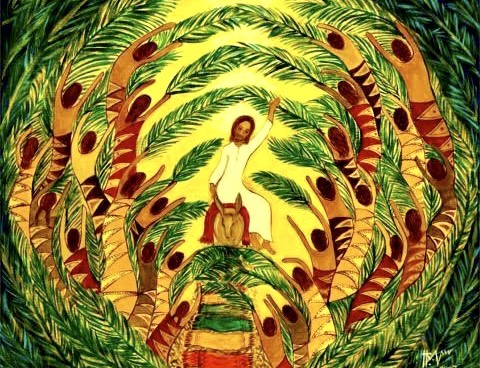
Today is Palm Sunday, the start of the Holy Week. Listening and meditating on today’s account of Jesus’ Passion according to Matthew, we are made to imagine the sense of abandonment Jesus experienced on the cross. Abandoned by friends, betrayed by one and denied by another, mocked by soldiers, taunted and jeered at by the bystanders, Jesus could not have felt more alone at His darkest hour. To highlight this utter abandonment, Matthew’s account does not make mention of the presence of Mary and the Beloved Disciple standing at the foot of the cross. At least in the other Passion narratives, both are described as having accompanied Jesus up unto His crucifixion. Mary Magdalene and the other women are also mentioned but they were supposedly looking on from a distance. 

Jesus cries out in agony and desperation from the cross: “My God, my God why have you abandoned me.” (Psalm 22:1) One Scripture scholar notes that this is the only time in the gospel accounts that Jesus prays to His Father using the formal and distant name — “God” — as compared to other gospel accounts where He consistently calls God, “Abba” (Father). Jesus knew how it felt to be in pain, to cry out for God, and to feel alone. At a very crucial moment of His life, Jesus has a very human response. This is important for us because we can be sure that Christ fully understands what we are going through. There is no pain hidden in his knowledge and experience. Our God is not oblivious to our suffering. Victims of war and natural disasters who struggle to survive in a world that is indifferent to their plight, children of broken families who end up thinking they are to blame, the desolation of those who die alone — these are some of the many faces of Jesus today who cry out to God (and us) for mercy, relief and compassion. 

However, Jesus does not dwell on this painful human experience. His confidence in His Father wins out in the end. We are told that Jesus cries out AGAIN and this time hands over His spirit to the Father. Jesus dies in anguish but still trusts in God’s vindication. Just like the Psalmist’s prayer of lament that ends with a statement of trust in God: “For He has not despised nor scorned the suffering of the afflicted; Nor has He hidden His face from him; But when he cried to Him for help, He heard.” (Psalm 22:24) Jesus hands over Himself in obedience. He remains faithful to the end — seeking to fulfil God’s will to the very end of His life. Jesus does not lose confidence in His Father. He abandons Himself to the loving arms of the Father because He knows, in the Father’s mercy, everything turns out for the good. This should encourage us to persevere and to have hope. Desperation, loneliness, and abandonment should never be the end of our story. God never abandons His people. He knows each one of us intimately and loves us unconditionally. In Isaiah 49:15-16, God says: “…even if a mother forgets her child, I will never forget you. I have engraved you in the palm of my hand.” 

The call for us this Holy Week and throughout all our lives — is to recognise that Jesus, in His love for us, is one with us, even in our suffering and feelings of abandonment and He shows us by example what it means to have complete confidence in the Father. Let us ask the Lord to deepen our faith so that we can surrender to God all that is troubling our hearts and minds. May we never lose sight of His unwavering promise of new life. “Father, we place ourselves into your hands in our desire to become sharers of your divine life!”

As Christ-like, As Life-givers

HOMILY: Fifth Sunday of Lent (A)
John 11:1-45
26 March 2023
Fr. Ricky Cañet Montañez, AA
 
It is crazy and annoying to read or watch “nega” posts and videos on social media. It destroys our peace and mental well-being. Even in text messages, if we are not careful, we might be spreading fake news. As my friend calls it, we, ourselves, have become purveyors of death rather than of life to those around us.
 
Isn’t it better for us that we give life and hope to others? Why do we have to join in so many toxicity and negativity around us? There are so many traces of death, destruction, and chaos in all aspects of life today. Sometimes it may feel like we are living in tombs like Lazarus. We do not have to be locked in our tombs and even more so we shouldn’t put others in that situation.
 
The raising of Lazarus is a PREVIEW into the resurrection.  Although it is proof of the power of God over death, the raising of Lazarus was a resuscitation not a resurrection. Lazarus retained his same mortal body that would have been subject to aging, sickness and death. In due time, Lazarus also died. Easter is our first genuine example of the resurrection. In His resurrection, Jesus’ body is transformed and is eternal, a body that will never die. This resurrection of dead people at the second coming of Jesus is believed and expected by all who believe and accept Christ.
 
Today’s first reading from Ezekiel gives us an image of this resurrection of the dead. God opens the graves and makes the dead rise out of them. It is not zombie apocalypse. They are fully alive and not the living dead. They are brought back to life by God’s very spirit that He puts in them. The second reading tells us how precious and powerful the Spirit of God is. It says, “If Christ is in you, although the body is dead because of sin, the spirit is alive because of righteousness. If the spirit of the one who raised Jesus from the dead dwells in you, the One who raised Christ from the dead will give life to your mortal bodies also.” (Romans 8:10-11) Let’s remember that after Adam and Eve disobeyed God, they were punished with mortality — they grew old and died. In Genesis 3:19 God says to Adam that he shall return to the ground “for dust you are and to dust you shall return.” All of us as descendants of Adam and Eve inherit this punishment. We will all die in time. That is the wages of sin. But the reading says, if Christ is in us, our soul will remain alive and the Lord who resurrected Christ will also resurrect our human body. That’s God’s promise! We can hold on to him because the Lord never lies.
 
What does this mean for us now as we wait for the day of Christ’s return? As followers of Jesus, we need to choose life and what is life-giving. The restoration of life depicted in the readings is very much like the work of Creation. In the beginning, the creature that had been formed from the dust of the ground came into being when God breathed the breath of life into it. (Genesis 2:7). When we choose things that are in accordance with Christ, it is as if we are participating in God’s work of giving life. We participate in God’s work of creation, in Christ’s work of redemption, in the Holy Spirit’s work of recreation!
 
In times of crisis like the earthquake in Turkey and Syria, we witnessed the volunteerism of many good Samaritans, heroes, and saints. They were there to save as many lives as they could — rescuing people, providing treatment to the injured as well as food and shelter to the victims rendered homeless by the catastrophe. Many of us, will not be given the opportunity to join such rescue operations but if we look around us, we will see who needs our help. Sometimes, it is our own companions in the house who need our care the most. 
 
Although we cannot, on our own, raise ourselves out of the many forms of death that afflict us, remember that the author of life never tires of reviving us. Jesus is constantly calling to us, inviting us to follow Him, the same way He called Lazarus out of his grave to restore him to life. Let Jesus be our inspiration to be LIFE-GIVERS to one another. Let us draw from within ourselves what is good, true, and Christ-like to bring people out of their tombs of death and lead them to faith and hope in our God!

Seeing the Good; Seeing God in all Things

HOMILY: Fourth Sunday of Lent (A)

John 9:1-41

19 March 2023

Fr. Ricky Cañet Montañez, AA

“For all the little boys and girls who look like me watching tonight, this is a beacon of hope and possibilities…. This is proof that dreams come true.” This is what Michelle Yeoh said in her acceptance speech as best actress in the recently concluded Academy Awards last Sunday. She adds, “And ladies…never let anybody tell you that you are past your prime.” Michelle Yeoh makes history as the first Asian to win an Oscar for best actress for her role as Evelyn Wang in “Everything Everywhere All at Once.” Her win is ground-breaking because now filmmakers and producers will start seeing Asians, Asian women, and older women as the talented and bankable Hollywood artists that they are. They will no longer be passed up for meaty lead roles in movies. 

The principal theme of the readings for the Fourth Sunday of Lent centres on seeing. It is not just about physical seeing but rather a much deeper kind of seeing that leads to spiritual insight. Ang kuwento ng ebanghelyo ngayong ikaapat na Linggo ng Kuwaresma ay ang pagpapagaling ni Hesus sa isang taong ipinanganak na bulag. If we look closely, there are more here than meets the eye! It wasn’t just the sight of the blind man’s eyes that was restored. He actually gained in-sight into who Jesus was and the impact He made on his life. Unlike the Pharisees who continue to persist in darkness and acknowledge the truth before them, the once-blind-man can really see who Jesus is — the Messiah. 

In the Gospel, ironically everyone who had sight failed to see. Everyone except the blind man. This blindness is prevalent throughout the gospel passage. First the incredulous disciples asked: “Who sinned, this man or his parents, that he was born blind?” (John 9:2) And Jesus responded “Neither he or his parents sinned; it is so that the works of God might be made visible thru him.” (John 9:3) Right there and then, Jesus wanted them to see that it is through human weakness that the power of God is able to enter through and work in someone’s life. Diyan pa lang sa Kanyang salita, ipinakikita na ni Hesus na sa kahinaan ng tao natin maaaninag ang kapangyarihan ng Diyos Ama. Second, you have some of the blind man’s neighbours who only saw him for his disability: “Isn’t this the one who used to sit and beg? Some said, “It is,” but others who refused to recognise the healing said, “No, no he just looks like him.” (John 9:8-9) Thirdly, you have the Pharisees who chose to live in the darkness of their prejudice towards Jesus. Ginawa nilang issue ang pagpapagaling ni Hesus sa Sabbath. They discredit Jesus by focusing on the fact that Jesus has failed to observe Jewish law and even condemn the once-blind-man as a fraud saying he was born in sin. “This man is not from God, because he does not keep the sabbath.” (John 9:16) They were adamant despite the presence of dissenting voices who recognise the truth about Jesus: “How can a sinful man do such signs?” (John 9:16) They were easily drowned out by those who shouted the loudest. As they say, “If we are prejudiced against a person, that person can do nothing right in our eyes. If we are prejudiced in favour of a person, that person can do nothing wrong in our eyes.” Lastly, even the parents of the blind man who should have been the most credible witnesses of such a miracle were afraid to open their eyes to the blessing received, abandoning their son to the cynical crowd. Instead of witnessing for him, say their son is of age and can answer their questions himself.

This theme of seeing is further emphasized in the story of the search for a new king and the eventual choice and anointing of David as King of Israel. Nobody saw anything worthwhile in the youngest child, David; he was considered too young and unimportant to be thought of as a viable contender to become king of Israel. Not even the great prophet Samuel saw in him such a potential. The prophet was reminded, however, that “Not as man sees does God see, because man sees the appearance but the Lord looks into the heart.” (1 Samuel 16:7) God saw David’s heart and was obviously pleased with what is there for him to become God’s anointed one.

The readings this Sunday offer us an opportunity to look carefully at how we perceive others and the situations we find ourselves in. Do we consider some people too insignificant for greatness?  Are we so jaded and biased by society’s judgment of people that we cannot see them for who they are?  Dati, ang mga pulis ay may reputasyon sa pagiging baluktot. Di na halos makita ang mga magigiting na pulis na kahanga-hanga at may integridad. Pag nakakakita tayo ng “Bumbay” na nakamotor, agad iniisip 5/6 ang negosyo nito, samantalang iba-iba na rin ang trabaho nila. Sometimes, we are so hung up on what is going wrong all around us that we fail to see what is gojng right in our life.  Are we too focused on what afflicts us that we fail to see the good God makes out of all of our life’s challenges? Di ba sabi nila “Count your blessings?” There is actually a prayer that goes “Lord, increase my faith that I may see You through my tears.”

St. Paul tells the Ephesians in our Second Reading today: “Live as children of the light, for light produces every kind of goodness and righteousness and truth.” (Ephesians 5:8-9) Let us pray for a deepening of faith. Let us pray that we may be open to receive the light of Christ that illumines the darkness around us. In moments of blindness and doubt, when we are seemingly asked, “Do you believe in the Son of Man?” (John 9:35) we can answer confidently, “Yes, I do believe, Lord!” (John 9:38)