Good Things Are Not Rushed

HOMILY: Sixteenth Sunday in Ordinary Time

Matthew 13:24-43

23 July 2023

Fr. Ricky Cañet Montañez

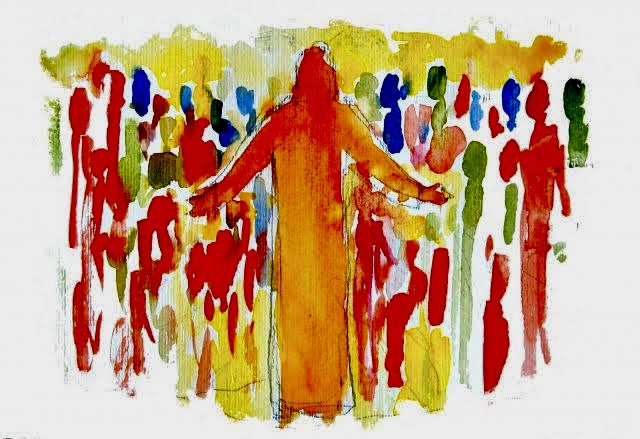
We recently concluded the Painting Workshop for our children in San Roque Parish. There were 150 who signed up for the intensive painting classes moderated by three artists — all graduates of the University of Santo Tomas. On the second day, only 130 children returned for class. The following day 20 more children did not show up. Eventually, on the last day only 100 children successfully finished the painting sessions. I was impressed by how well they progressed after each day’s sessions. Since their artworks are quite impressive, we decided to mount an event to showcase them in an “Exhibit-for-a-Cause” as well as have them made into pocket calendars and cards for sale. The proceeds are intended to help them with their school needs. We look forward to welcoming your generous support! 

This recent experience with the painting workshop reminded me that worthwhile things take time and require patience. We tend to be very impatient and demand immediate outcomes. I am assuming that all those who eagerly signed up for the sessions thought that they would become good at it after the first few sessions only to be disappointed with themselves. For those of you who know how to bake, you know that there are very specific cooking time for cakes, cookies, brownies, and breads. If you cannot wait for the full cooking time, you will end up with half-baked goodies that are inedible. What a waste it would be!   

I am also well aware that there is our tendency to be ever so jealous of people who are so successful early in life. There are the children who were discovered for their talent either in singing, dancing and acting and suddenly became famous on TV or in the movies. There are those who have immediately become famous on social media and earn millions by being funny or by making a review of almost anything of your choosing. When I was a child, majority of children wanted to grow up and be professionals — doctors, nurses, lawyers, architects. These courses require 5-10 years of studies. Parents work hard to pay for tuition and the kids  work hard in school to graduate.  These days, many kids opt to drop out of school to become “content creators” because they believe with some creativity, they can go viral and make big money in a short span of time. They don’t see the point in spending their youth in school to learn things as they don’t believe these are relevant to making them a truckload of money or gaining them status or fame. With Tiktok or Youtube, if you’re lucky, you can become popular right away, and you can make a lot of money.

It is the same with becoming persons belonging to the Kingdom of Heaven. While we are assured that fullness of life will be ours, we all must live faithfully and persevere as we contend with the many temptations that keep us from being faithful. There is no shortcut to heaven. Holiness is not something that happens overnight. It comes after a long struggle with our failures and imperfections. All of us are moving towards maturity and self-actualisation.  We cannot be jealous of each other because we are all growing together at different paces — the advanced and the slackers, the old-timers and the newbies, those who persevere and those who easily give up. We find ourselves together in the struggle called life.

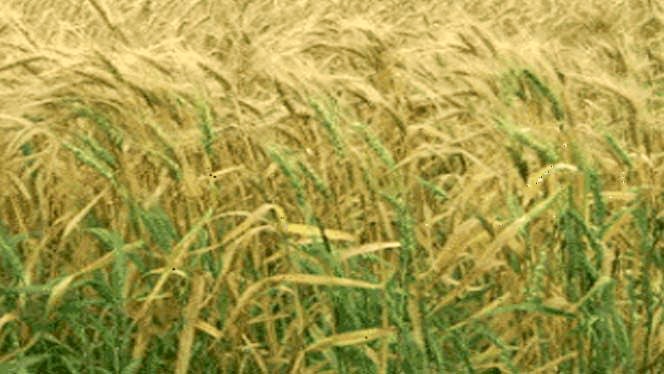
Just like the slaves of the landowner, our impulse is to pull the weeds right away so the wheat can grow faster and healthier. But the landowner realises that in doing so, we could pull up the good wheat as well and in effect the harvest can be compromised. So, he advises that the wheat should be allowed to grow with the weeds and at harvest they just separate the crop from what needs to be discarded. The implication is that the soil is rich enough for both the wheat and weeds to grow! As we are all a work in progress, we are invited to be patient with ourselves as we grow in our discipleship. There is a saying that the sun shines on both the good and the bad. God showers His graces to everyone. (Walang pinipili ang grasya na pinapaulan ng Diyos.) The air we breathe, the sun that shines — everything in the world God created — is meant for all, not just a select few.

Actually, to think that people can be classified as simply good and bad is unrealistic. In each one of us exists a combination of wheat and weeds. Every person struggles with being pulled in opposite directions: either toward the values of the kingdom or to everything opposed to it. St. Paul expressed this frustration within himself as he recognises his continued sinning in spite of his desire to do good and follow God’s law. “So, I find this law at work: Although I want to do good, evil is right there with me.  For in my inner being I delight in God’s law; but I see another law at work in me, waging war against the law of my mind and making me a prisoner of the law of sin at work within me.” (Romans 7:21-23) Like St. Paul, we are reminded that God’s power is more than sufficient for our growth and maturation. Though there are weeds among the wheat, a harvest is imminent. A large bush from the smallest of seeds is underway as a loaf of bread shall rise from a mere bit of yeast. So, we need to learn how to be patient with our own weaknesses as God is patient with us, given that we constantly fall from grace and commit the same mistakes repeatedly. How blessed are we then that the power of God is manifested not in the destruction of the sinner but rather in the salvation of the repentant.  “And you taught your people, by these deeds, that those who are just must be kind; and you gave your children good ground for hope that you would permit repentance for their sins.” (Wisdom 12:19)

We have been immersed long enough in a global culture of instant gratification and fear that we won’t have enough time to succeed or to make it big, that we no longer have the ability to defer the satisfaction of our desires and endure suffering. It’s so easy to get discouraged these days. Just having a minor problem makes one really depressed. Let us be patient with ourselves!!! Nobody is perfect. Nobody is born immediately successful. We all must go through a process of growth and development. No matter how small the beginnings, if we are faithful to the spirit and values of the Kingdom, we will surely help build a world where the reign of God is experienced among us, not in some distant future, but in the here and now.  

For those of us who are short-tempered and anxiety-ridden, Jesus reminds us to respect the process of growth as it entails time and grace.  All good things in this life cannot be rushed. “Let us not become weary in doing good, for at the proper time we will reap a harvest if we do not give up.” (Galatians 6:9) Let us have faith in the power of God and His divine timing. Trust that God’s merciful love will transform us into the persons He has intended us to be.

Receptivity to God’s Word

HOMILY: Fifteenth Sunday in Ordinary Time

Matthew 13:1-23

16 July 2023 

Fr. Ricky Cañet Montañez

“I’ve heard it said that people come into our lives

For a reason, bringing something we must learn

And we are led to those who help us most to grow

If we let them, and we help them in return

Well, I don’t know if I believe that’s true

But I know I’m who I am today because I knew you…” 

These are the lyrics to a song from one of my favourite musicals, Wicked. It is a beautiful song of friendship where two friends, Elphaba and Glinda, express to each other how they have been mutually changed by their friendship… “For Good”. Glinda begins by saying that while she doesn’t know if it is true that people come into our lives for a reason, “I know I am who I am today because I knew you.” Similarly, Elphaba tells Glinda that “whatever way our stories end, I know you have rewritten mine by being my friend.” Each one’s lives have been changed… “For Good”! 

Do we believe that people come into our life for a reason? Whether they’re our friends, classmates, workmates, they serve as bridges or linkages.  They help us connect with ourselves and others and in the process grow and mature. Even the toxic people whom we encounter, become instruments of learning some tough lessons in life. It seems that until we learn the lesson, the same kinds of negative personas will find their way into our realities.  Painful as it maybe, the truth is, in retrospect, every single one of these difficult individuals are helping us find our strengths and become the best versions of ourselves. 

The Parable of the Sower on this Sunday’s gospel passage has Jesus presenting to us the different ways by which we, as His followers, receive the Word of God in our hearts. The issue at hand is how receptive we are as represented by the different kinds of soil that receive the seed of the Word of God. Receptivity is defined as “the willingness to allow ourselves to receive from another, to be influenced by the other, perhaps even to be transformed.” Sadly, God’s Word can frequently fall on beaten tracks and it does not take root at all. At other times, God’s Word fall on barren rocks where it cannot grow lasting roots. At other times, God’s Word falls among thorns where it may take root but it does not bear fruit because the plant itself is choked. If lucky, it falls on good soil where it takes root and bears fruit. The amusing thing is that all four kinds of terrain are very much present in each one of us…within us. It all depends on what state of life we find ourselves in. (Depende sa panahon ng ating buhay.) If we truly want to be His disciples, it is important that we examine ourselves to discover the extent to which we are open to receive God’s Word in our lives. How receptive are we to God’s Word? 

Jesus is “makulit” (persistent) because He does not want to lose any one of us. In the gospel, Jesus really wants His audience to open their minds and hearts and be ready to listen. There are many of them who refused to listen to Jesus and rigidly bound themselves within the confines of the Mosaic Law. This is why Jesus says: “They look but do not see, listen but do not hear [nor] understand”. (Matthew 13:13) This happens, not because the parables (the teachings of Jesus) are difficult but because the hearers are not prepared to listen. What about us? (Tayo ba?) What laws do we bind ourselves to that prevent us from listening to Jesus? The laws of social media? The laws of our social construct? The laws of finance? The laws of romantic relationships? The laws at our workplace? Sometimes, the laws laid down within our family can hinder us from hearing the Word of God and letting it impact our lives for the better.

We are provided with many opportunities to take to heart the Word of God. We can listen and reflect on it at mass, in our study of God’s Word, in our spiritual readings and conversations, etc. However, it is not enough to simply hear it. There is one particular worship gesture that I like very much. We do this just before the recitation of the Gospel reading at mass. It is done pretty quickly and is often unnoticed. This is the brief tracing of the cross on our forehead, the lips and the heart. This is performed routinely, even mechanically sometimes and with no conscious effort at all but this act contains a richness of meaning and Biblical symbolism. There was even one musician who tried to put words and music to accompany the gesture to make it more meaningful for the faithful. It goes like this… “Fill our minds, that we may hear your wisdom, touch our lips, that we may speak your truth; hold our hearts, that we may always follow you; come now, O Word of God.” Similarly, before proclaiming the Gospel, the priest on his part prays these words silently: “Cleanse my heart and my lips, almighty God, that I may worthily proclaim your holy Gospel.”  When Rev. Edrylle proclaims the Gospel, he first asks for my blessing. I utter this prayer “May the Lord be in your heart and on your lips that you may proclaim the gospel worthily and well. In the name of the Father, and of the Son, and of the Holy Spirit.” Such gestures and prayers have depth and a profoundness in them. They are an act of openness to the Word of God. They are not simply a performance of some random gestures. 

Why should we care to be receptive to God’s Word?  Because God’s Word has power — the power to build us up and also tear us down, to save us and convict us — all in the spirit of establishing His Kingdom of Heaven on earth. In the short reading from the Prophet Isaiah, God declares: “My word shall not return to me void, but shall do my will, achieving the end for which I sent it.” (Isaiah 55:11) It is like the rain and snow that accomplishes their purpose.  Listen to God’s Word deliberately and with the intention to live by it because it is a revelation of His love for us and His instructions on how we can be saved.   May we become rich and fertile soil that welcomes, receives, retains and brings to fruition God’s Word in our community.

Learning Humility from Jesus

HOMILY: Fourteenth Sunday in Ordinary Time

Matthew 11:25-30

9 July 2023

Fr. Ricky Cañet Montañez

Cardinal Tagle loves telling the story of how he enjoyed commuting. He knew the routes for buses, jeeps and tricycles from Cavite to Metro Manila. Even as a bishop, he used to commute. He brings with him an extra polo shirt in case he would perspire a lot. Nobody could believe a bishop like him did not drive his own car nor did he have a driver. He eventually out of need had to have a car and driver because of the numerous engagements he had to attend to. 

I am amused by such stories of humility. These days, many of us choose to live beyond our means in a desperate attempt to “keep up with the joneses”.  We put so much pressure on ourselves to do what others do or have what others have. There was a driver who dreamed of buying a motorcycle. His boss gave him a loan; However, the payment will be deducted from his monthly salary so that this need not  last for more than three (3) years. He chose a model that was rather pricey — more than what he could really afford. It meant a deduction of 1/3 of his take home pay every month. These days he has difficulty managing the budget to support his wife and three children and he barely has enough money to buy gasoline for his new motorcycle. He is always short of money and so he is forced to borrow.

Humility, the focus of this Sunday’s readings is a virtue that many of us struggle with. In the gospel passage this Sunday Jesus says… “Learn from me, for I am meek and humble of heart; and you will find rest for yourselves.” (Matthew 11:29) In this passage, we see how Jesus explicitly tells those listening “TO LEARN” from Him, who Himself is meek and humble of heart, who in the eyes of the world, is lowly and insignificant. As the humble one, Jesus shows appreciation for the “little ones” because He has always identified Himself with the lowly. From the very moment He came into this world, He was born in a stable and He was laid in a manger. All throughout His life, Jesus exemplified humility. Although John the Baptist publicly acknowledged at the Baptism in the river Jordan that he is not even fit to untie Jesus’ sandal straps, Jesus still submits Himself to be baptised by John. 

Of course, it is not easy to be humble. We often associate humility with “nobodies”. In a world where we measure our success by the positions, titles and accolades we have acquired for ourselves, nobody wants to be “unseen”, “overlooked”, and “ignored”. Everyone wants to be the most admired; to be the most followed in social media; and to be on top of everything. Nevertheless, the way of Jesus is different. If we are blessed with high station, it should not result in our being proud. A true disciple is called to be humble. In the Second Reading, we are presented with two ways of living: life in the flesh and life in the Spirit. To live in the flesh means we anchor our hopes and existence on the things and values of this world that are temporary, imperfect and those that rot and decay. St. Paul urges all Christians to choose life in the spirit because it is only through it that we can please God and become united in Him. 

In the first reading Zechariah foretells of a king — a saviour who will become the instrument of God’s blessing to all the people. The people were expecting a saviour- king whom they pictured as a majestic political leader with a strong army that would deliver them from their enemies. We, Filipinos should find this very relatable especially since we have a tendency to choose our leaders based on who is popular, who has the best performance at rallies, who gives away the most money, or who impresses us most with their promises of deliverance from poverty. Zechariah, however, does not speak of a mighty, overbearing monarch astride a majestic stallion but rather of someone who is meek and riding on a humble colt, the foal of an ass. This is not however to describe Him as weak and powerless. (Zechariah 9:9-10) On the contrary, his dominion will be vast and he will succeed in bringing peace to all. He will “lift up all who are falling and raise up all who are bowed down” (Psalm 145:14). For us, Christians, this Saviour-King is none other than our Lord Jesus Christ — the Messiah who came to save the world not with a glorious army and the might of a sword but by proclaiming peace and love and demonstrating humble obedience to the will of the Father.

Jesus in today’s Gospel invites us to follow His example, “Son though He was, He learned obedience from what He suffered.” (Hebrew 5:8) When we learn to imitate Jesus’ meekness and gentleness, life becomes less complicated and less stressful for ourselves. The life of a person who always has to prove or assert himself/herself or to keep up with others is very tiring and stressful. Do we really need to always be better, to know better, and to have the last word on things? Do we always have to go along or to keep up with others? Then, after that? Are we happy? I hope so. Sadly, most of the time, we are not.

As followers of Christ, we must remember, that despite all our achievements and accomplishments we must remain humble. We must learn to foremostly give glory to God in everything we do. We must not forget that it is by His grace that we live and we thrive and that without Him, we are nothing.

A Welcoming Faith Community

HOMILY: Thirteenth Sunday in Ordinary Time

Matthew 10:37-42

2 July 2023

Fr. Ricky Cañet Montañez

Our parish community is very blessed! In San Roque Parish, the spirit of volunteerism is very much alive. Despite this, there is still something I wish for our worshipping community.  Do you know what that is? A sense of hospitality that becomes a marked characteristic of our church or parish communities. We do have greeters who meet us with a smile at the parish church entrance to make us feel welcome, but when we sit down, we are oblivious of those seated next to us. The painful truth is we still remain strangers to one another. It is sad because the Eucharist is supposed to be a real experience of encounter with Jesus who invites us to welcome one another as He welcomes us. 

Although true Christianity asks us to be ready to help even those we do not know, we must admit that when we know people and understand what they need, it is easier for us to see how we can help them from our own resources of advice, funds, emotional support, referrals, or what have we.  In the United States of America, they have a wonderful practice of having regular activities after mass that helps the parishioners mingle and get to know one another. Sometimes, parishioners are assigned prayer groups that meet regularly so they get to know each other better and they are able to support one another through their struggles.

This Sunday’s gospel passage outlines some demands on those who follow Jesus.  We are called, by virtue of our baptism to demonstrate our commitment to Jesus by a complete renunciation of everything that gets in the way of following Him.  Do we take the message literally so as to ignore and abandon our basic needs and the concerns of our families in the name of discipleship and helping strangers? I don’t think so. It is just saying that if these things ever come in conflict with our living a truly Christian life, we must always choose the path that Jesus would want for us. During the pandemic, there were people who chose to be selfish in the name of self-preservation. Remember the hoarding of toilet paper fiasco in the USA? They hoarded goods for themselves at the expense of others. Now, if we observe your very own child to be unkind to the less fortunate, would we allow him/her to persist in his/her uncharitable ways so we could be the “cool” parent? Of course not. Our relationship and desire to be accepted and revered by our child should not get in the way of our Christian charity.  We have to correct what is wrong because that is what Christ would want us to do. Nothing should separate us from God – not people in our lives, not the things we own. He should always come first. 

Our commitment to Jesus is not all about radical gestures of discipleship. Our commitment to Jesus also entails being consistent in our faithfulness especially in the trivialities of our everyday activities, being ready to share our gifts and resources with others in the name of Christ. God has blessed each one of us in different ways – some materially, some spiritually, some in terms of friends, some in terms of talent, others in terms of opportunity. The use of these gifts is meant to help us glorify God and to grow in love for Him.  Everything we have is not only meant to sustain us but also for us to share and spend in service of others. Consistency is built by regularity even in small things until it eventually develops enough to be applicable even in big matters. If we are tight-fisted when it comes to giving our loose change for a beggar, we will most likely find it difficult to give when it actually hurts our wallet.  Those who practice stewardship as a way of life practice charity in all aspects of their life – whether insignificant and trivial to major decisions. They are not allergic to making sacrifices because they subscribe to the idea of “taking up one’s cross to follow Jesus”. (Matthew 10:38) Whoever wishes to follow Jesus must walk the same path of the cross He tread.

In the passage from the Second Book of Kings, the Shunemite woman was rewarded with the gift of a child not so much for her faith in God but for being gracious to the prophet. Such an overly generous payment for a very basic gesture of hospitality, we might say. We have to remember that God promises that wholehearted commitment will be rewarded. I read somewhere: “If we lose our lives in this way, we will really gain them. If we are unselfish in the way we share ourselves with others, we will be enriched through our generosity.”  God sees even the good we do in secret and He does not forget our kindnesses. Jesus says: “And whoever gives to one of these little ones even a cup of cold water because he is a disciple, truly I say to you, he shall not lose his reward.” (Matthew 10:42) I am not going to promise that God immediately rewards us but in one way or another the goodness we give returns to us a hundredfold.  God cannot be outdone in generosity and a small charitable act as such, if done for the little ones of His flock will be magnanimously rewarded in His time. 

Again, while this may sound quite simple enough, there is a lot more to it in the fast-paced world we live in. It is so easy to refuse the person in need who approaches us because we find ourselves always too busy to care. We feel inconvenienced. When I was in Bukidnon as a youth volunteer among the Higaonons, I remembered that I had so much time that I could always afford to “waste” time with the people I encountered there. These days, I can barely find time to sit down. So, it requires much effort to pay attention to those in need around me and to address their concerns. It is not easy. Let us be honest with ourselves, would we bend over backwards to help a stranger? If after mass, as we go to our respective cars, then we notice that a stranger parked beside us has a flat tire, or his car is overheating… would we readily offer our assistance at an inconvenience to our own schedule or think to ourselves… “I’m in a hurry. He can surely do it by himself.”  A priest-friend of mine once said: “How do we spell love these days? T-I-M-E.” Think about it.  No matter how busy and tired parents are, they spend quality time with their children, even if it’s just on weekends; lovers make time for each other or else they grow apart; those who love God and wish to spend time with Him, do not count the hours for prayer. Supporters of our BEC and SSDM projects make time to visit the sick, go to jails, prepare care packages for the needy and raise funds for their needs. All of that entails time and effort. It requires much love! To be busy is never really an excuse… the idea is to make the time because it is part and parcel of discipleship.

Jesus never withholds His love and mercy from anyone. As His disciples, we too are called to be ready to give of ourselves to those in need, whether, friend, stranger, or foe. We recall the words of Hebrews 13:2: “Do not neglect hospitality to strangers, for by this some have entertained angels without knowing it.” In the stranger, God visits us. It is only by being truly hospitable that we facilitate a real encounter with others. May we then be welcoming, most ready to open our eyes, our hearts to God’s loving presence among us.

Tremendously Loved by God

HOMILY: Twelfth Sunday in Ordinary Time

Matthew 10:26-33

25 June 2023 

Fr. Ricky Cañet Montañez

The gospel today is very meaningful to me. Its message hits me hard. As it says “… even the hairs on your head have all been counted.” (Matthew 10:30) I really feel it because if you notice my hairline it is exponentially receding. Please don’t stare at it too much later. You are only making me more insecure.😜 A friend even recommended a Hair Rescue and Thickening Serum and Shampoo! Imagine my relief when my barber recently observed that there were baby hairs growing where the hair was thinning on my head! It seems effective then. So when my friend asked me to give a video testimonial for Hair Reve, I willingly obliged.  I’ve been too shy to watch myself on the video but the experience taught me something important. Who would have thought that I would be making public my greatest insecurity? And now by sharing my experience, those who are  similarly-situated may find a solution to their problem as well. 

We all have something we are ashamed of in life. Some may have small insecurities and deficiencies, while others may be embarrassed by their massive failures or shameful circumstances. More often than not, there is an element of sin in what we are most ashamed of. When we sin, we feel ashamed, right? No one comes to the confessional taking pride in having sinned. We can barely enumerate our transgressions to the priest.  We can hardly say it out of shame. Other times, it is the sin of another that is the source of our shame.  For instance, we don’t want to be called a child of  a drunkard nor of a criminal. Even the culture of a society can be so saturated with social sin that many members of the community are forced to live in abject poverty. It’s not a sin to be born poor, but we don’t want to be poor for the rest of our lives, right? We work hard so that we can improve our lives and that of our families. In all these instances, God always finds a way to bless us and others. People who give very powerful testimonials of conversion are those who suffered much either by their own sinfulness or were victims of their circumstance. Their stories serve as an inspiration and source of strength for many.

Today’s readings bring us good news and a message of hope!  There is a reason to let go of our fears and insecurities. St. Paul reminds us that although sin has entered the world through Adam, we find redemption and salvation in Jesus Christ in whom grace flows in abundance for humanity.  In the gospel, Jesus tells us to “fear no one…..not even the ones who can kill the body.”  When He said: “Even the hairs of your head have all been counted… You are worth more than many sparrows.” (Matthew 10:29-30), Jesus is giving us an idea of how precious we are in God’s eyes!  I read somewhere that the heads of blondes contain about 150,000 hair strands; brunettes, about 125,000; and redheads, 100,000! Let us think of it this way… If the Father knows the exact count of every singular strand of hair on our heads, how much more is He knowledgeable of our needs? No one is assigned to take care of wild birds but they live. The Creator takes care of them and does not abandon them. If God cares for every sparrow that lives, how much more is He concerned for each member of humankind, whom He considers His best creation? As impossible as it may seem, there is nothing we should doubt or worry about. Nothing is impossible for God.  

The immensity of God’s love for us not only moves Him to provide for our needs and assuage our fears. He is also moved to protect us from harm. The First Reading narrates the plans of Jeremiah’s detractors to discredit him and threaten him. Instead of hiding in fear, the prophet puts his full trust in the Lord. God becomes Jeremiah’s mighty champion who will avenge him. He was confident that  God would deliver him from the hands of all those who sought his downfall. “But the Lord is with me, like a mighty champion: my persecutors will stumble, they will not triumph.” (Jeremiah 20:11)  I hope we are the same. I am not saying that we ignore people who have done us harm especially if what they have done is a crime and against the law. What matters is that in our heart, we learn to forgive and to leave their fate in God’s hands. Evil will never prevail. There is nothing greater than the power of our Lord.

Brothers and sisters, today we are invited to recognise that we are valuable, irreplaceable, and loved by a loving Father. Despite our many shortcomings and insecurities, God loves us very much. He will not forsake us. There are even times when He will turn our weakness into strength. Never forget that when we are afraid, when we stumble and hesitate, God’s word assures that He is right there beside us gently reaching out His hand to help us up — “Do not be afraid.” So, hang in there! Don’t give up!

Qualified for the Mission

HOMILY: Eleventh Sunday in Ordinary Time

Matthew 9:36-10:8)

18 June 2023

Fr. Ricky Cañet Montañez

In my 12 years in the priesthood, I’ve come across some funny misconceptions about priests. They say all seminarians or priests can sing well. Hmmm… maybe most but not all. The talent has been sharpened by the constant seminary singing practice. They also say that those who enter the priesthood are the kindest and most obedient male children in the family. That’s a fallacy. Those of you who know Fr. Steve Zabala will recall he claims to be the most naughty among his siblings. Above all, they say all seminarians and priests are handsome. Ah, I didn’t say anything about that. 😜 It’s just a joke.

When we go over the list of the “The Twelve”, Jesus selected to be His most intimate followers and co-labourers we are not at all impressed by His choice! They were definitely not the best and the brightest nor the cream of the crop. The resume of those shortlisted among the 12 apostles is not impressive. They were not rich, nor were they famous. Most of them are uneducated and lacked faith. Some of them had questionable character. By our standards -– the chosen disciples are not impressive at all. But the Lord’s standards are different. As Isaiah 55: 8-9 reminds us… “For my thoughts are not your thoughts, neither are your ways my ways,” declares the Lord. “As the heavens are higher than the earth, so are my ways higher than your ways and my thoughts than your thoughts.” 

In choosing these simple, uneducated and far from perfect individuals, Jesus is making a very important point as regards discipleship. Save for Judas who despaired, all of them had a profound experience of conversion. When God chooses a person, it is not because he or she is the best but because that person has the potential to bring God’s plan to fruition. I would reiterate — “They have potential.” Free will plays a big part in making that conscious choice to cooperate with God for the fulfilment of His plan. It is, however, by God’s grace, not their own strengths, that the disciples were eventually changed into courageous witnesses of the Gospel. What set these men apart? It was their openness to the transformative grace of God in their lives. St. Paul recognises that the saving grace of God is what brought all believers to salvation of life in Christ. St. Paul tells the Romans that they have in no way justified themselves, rather they have been justified by Jesus’ saving action. (Romans 5:1-11)

The disciples were aware of their shortcomings. Instead of these to being an obstacles, their weaknesses became the way for them to have a deeper faith in Christ’s power to make them truly His apostles. Peter confesses, after the recognition of his failure to love Jesus as he should: “Lord, you know that I love you!” (John 21:15) and Thomas in his doubt and uncertainty acknowledges Christ: “My Lord and my God!” (John 20:28). It was a humbling experience for the disciples to acknowledge where they fall short as Christ’s followers. However, it was the catalyst for their conversion. In God’s hands they achieved great wonders for the sake of the Kingdom of Heaven.

Today is Father’s Day. Happy Father’s Day to all fathers. We, priests are also greeted on this day because our fatherhood is recognised through the faithful entrusted to us. Today’s greetings are often addressed to “The Best Dad in the World” or “The Perfect Father”. Is this how your children still feel about you for the other 364 days of the year? Some kids envy the dads of their classmates and friends. Some wish they had dads who spent less time at the office and had more time for them. Some wish their dads were less formal and instead hugged them and laughed with them more. Well, we can’t choose our fathers but it is by no accident that they became our dads. They are God’s gift to us. We just have to accept that dads are also imperfect people, who have shortcomings.  All of us children, let us thank the Lord for our fathers. Let us forgive them for their failings and treat them with love and respect throughout their life. To all daddies, entrust your fatherhood to God that He may give you what you need to provide for your children, to love them, and to raise them right. 

Finally, let us always remember that “God qualifies those whom He calls.” In the face of our own inadequacies and failures, we simply cannot rely on our own strengths. In whatever capacity we may be called, we must place our trust in God, and allow ourselves to be “qualified” by the Lord for the mission to which He has especially called us. Today, we pray especially for all fathers that God may bless them with the capacity and opportunity to love and care for their children and bring them to a closer relationship with Jesus Christ.

Joyful Reception of the Eucharistic Gift

HOMILY: Solemnity of the Most Holy Body and Blood of Christ

John 6:51-58

11 June 2023

Fr. Ricky Cañet Montañez, AA

I think it is safe to say we all like receiving gifts, right?  What is the best gift you have ever received? Was it something bought from a store or one that is home and personally made? I think you would agree that what matters most is… if the giver is special to you or someone you love. Gifts need not be expensive and often the most appreciated ones are those that come from the heart.

In the Last Supper, the very last time Jesus and his friends were gathered under happy circumstances, the disciples received a very special parting gift from Him. It was not just a store-bought gift but rather a very special one. Jesus prepared a way for His friends to always have Him with them; to always remember Him and what He had taught them and done for them. He left His closest friends with the gift of Himself in the Eucharist. As friends of Jesus, it is also this this greatest ‘Gift’ that He has for each one of us. 

We believe that the Eucharist is Jesus Himself, because Jesus Himself said so… “I am the bread come down from heaven.” (John 6:51) Although we only see the bread and wine on the altar, we believe that during the consecration, the Holy Spirit descends upon them to change the bread and wine into Jesus’ Body and Blood. This is what we call Transubstantiation. It just means that although the bread and wine may look the same, its substance has already been transformed by God’s love and mercy into the Body and Blood of His Son, Jesus. When the host and the wine are elevated and the priest repeats the words of Jesus “Take and eat, this is my body” and “Take and drink, this is my blood”, (1 Corinthians 11:24-25) we affirm this by gazing up at the bread and wine and quietly acknowledging “My Lord and My God!” (John 20:28)

Now, isnt it true that when we give someone we love very much a gift, we try our best to make an effort? Hindi puwede ang puwede na. Dapat espesyal! There is sacrifice involved when we save up to give something we know will bring joy to the recipient. If the recipient ignores our gift or takes it for granted, it becomes very hurtful, di ba? Jesus is giving us the gift of Himself in Holy Communion. He asks us to receive Him into our heart, body, and soul. Since it is Jesus, Himself, we are receiving, we should always approach the sacred host with love, reverence, respect, and devotion! Let us ask ourselves when we fall in line for communion, “Are we fully aware of the valuable gift we receive or are we taking it for granted? “Pila, kain, luhod, tapos na? Puwede na ulit lumipad ang isip? Sana hindi.” (Queue up, eat, kneel… and then it is over? It is done so the mind can wander off again. I hope not.) This is a time for us to speak to Jesus. Let us tell Him our pains and ask for His help. Let us thank Him for the everyday blessings and graces we receive. Let us tell Him how much we love Him. He has our undivided attention. He is there; He is present for us.

This is the reason why we are encouraged to prepare ourselves to receive Him. At the start of the mass, we examine our conscience and ask forgiveness for our sins as part of our internal preparation. (We may even have to go to confession if the offense is grave.) We also prepare our bodies by dressing appropriately and carrying ourselves with dignity. My aunts taught us to dress well for Church. “Kahit luma, basta malinis at maayos.” Our pambahay, pang-beach, pang-clubbing and pamalengke clothes are best used elsewhere. (They need not be new clothes as long as they are clean and decent. Clothes worn at home, for the beach, for clubbing and marketing are best used elsewhere.) We properly dispose ourselves by observing the one (1) hour fast before communion and an air of solemnity as we quietly and prayerfully wait for our turn in the communion line. When it is our turn, we bow in reverence, answer “Amen” as we receive Jesus and quietly return to our seats to kneel in reverence and allow ourselves to revel in the intimate moment where our powerful, loving and merciful God is one with us.  We must always be aware of how special this moment is! We are receiving the Lord Himself. As Jesus Himself said: “My flesh is real food and my blood is real drink.” (John 6:55) We get to be super close to Jesus Christ, “the bread come down from heaven” (John 6:51) who continues to nourish and strengthen us so we can resist evil and temptation and persevere in doing good.

On a final note, know that when we receive Holy Communion and become so closely united with Jesus Christ, we also become united with one another. The Eucharist is what makes us the Church.  Through our union with Christ, we are also united deeply with one another as the Body of Christ — some of us will be the ‘eyes’ that see where Jesus is most needed, some will be the ‘lips’ to bravely proclaim His glory, while others will become ‘hands’ to help and feet to run to the aid of others.  We all form the Body of Christ. We move in the world bringing Jesus to each other and especially to those who still do not know Him. When we receive the Eucharist, our soul is fed. Nutritionists and dietitians will say, we are what we eat, meaning we are healthy if we eat healthy. When we receive Holy Communion, we receive Jesus and it is our hope that we become more and more like Him. Together, we become one in Christ. 

On this Feast of Corpus Christi, let us remember what a precious gift Jesus gives us. He says  “Whoever eats my flesh and drinks my blood remains in Me and I in Him… and will have life because of Me…and I will raise him up on the last day.” (John 6:54) Every chance we have, let us joyfully receive this gift; desire the opportunity to partake of this gift that we may never be without Jesus in the Eucharist. We do so with the hope that one day, we find ourselves united with Jesus in heaven.

LOVE: Essence of the Trinitarian Life

HOMILY: Solemnity of the Most Holy Trinity (Basic Ecclesial Community BEC Sunday)

John 3:16-18

June 4, 2023 

Fr. Ricky Cañet Montañez, AA

I chanced upon a video of a young Filipina stand-up comedian cracking a joke about the Catholic practice of making the sign of the cross. She likened it to hand signals used by street gangs to secretly identify their members.  I could have shrugged my shoulders and chalked it up to her ignorance but it occurred to me that even those among our ranks often take for granted the act of crossing themselves! The sign of the cross is in itself a prayer, calling on God the Father, the Son and the Holy Spirit for assistance or blessing and acknowledging with reverence the God we worship.

Today is the Solemnity of the Holy Trinity. We give special honour to the Trinitarian God we name in the sign of the cross.  We believe there are Three Divine Persons in One God, but it is not something we can really explain, can we? The dogma of the Trinity is difficult God-talk and it is not easy to understand. I remember some of us praying before our comprehensive exam in Theology not to be asked a lot about the Trinity. Although we want to avoid talking about it, we cannot ignore it for it is the central mystery of our faith and the source of our own life and holiness as Christians. 

First of all, let us be very clear that human beings did not create the concept of the Holy Trinity. It is rather the result of human reasoning’s collaboration with divine revelation. Any human attempt to define God, or to describe who God really is, would only prove to be inadequate or deficient. God, Himself, in his wisdom and mercy, reveals His reality to humanity. He does this through sacred scriptures — both the Old and the New Testaments. Through the Bible, we arrive at some understanding of the divine essence when we reflect on what God has done for us and for all His people. 

In the passage from the Book of Exodus, God Himself reveals His name: YHWH (the LORD)! Then it is followed by a description of what that name means. God is merciful, gracious, slow to anger, rich in loving kindness and truth. (Exodus 34:6)If we look closely, all of these adjectives are relational and somehow associated with God’s relationship with His people. They identify the dispositions of God toward covenant partners. God has revealed some characteristics of divine love. God is merciful that despite the stubbornness, ingratitude and unfaithfulness of the Israelites, God renews His covenant with His people. He does not turn away from them but rather remains faithful to His promises. 

This graciousness of God the Father finds fullness in the person of Jesus Christ. Throughout His life on earth, He lovingly gave to anyone and everyone the means to salvation, excluding no one from His saving work. St. John tells us: “God so loved the world that He gave His only Son, so that everyone who believes in Him might not perish but might have eternal life.” (John 3:16) God the Father gives Jesus to humanity, so that Jesus could reconcile us with Him. 

In St. Paul’s Second Letter to the Corinthians 13:13, he writes how the fellowship of Father, Son and Holy Spirit is an essential part of God’s character. If we live lives of harmony and peace, we essentially participate in the very essence of the Trinitarian life which is LOVE. That is why St. Paul urges the Corinthians to greet one another with an expression of this love in their encounters. Similarly, we who are all baptised in this truth and who constantly acclaim this during the welcome greetings at every mass are continually called to share in the communion of persons — Father, Son and Holy Spirit. Our belief in the Trinitarian God by which we have all been baptised (“I baptise you in the name of the Father, and of the Son and of the Holy Spirit.”) should propel us out of our lives of isolation and separation to life of communion and fellowship with others. 

I am most certain that despite my attempt to help make sense of this Dogma, it still leaves many questions unanswered and  it perhaps creates even more questions. This is however the reality of a Divine Mystery. We allow God to reveal Himself to us in moments of our life — not necessarily the defining moments, but even in the quiet seemingly insignificant moments — such as when we quietly cross ourselves when passing a church or before we go to sleep at night. Today we pray that God will increase our faith and keep us attuned to His gentle proddings to encounter Him as Father or Son or Holy Spirit. 

Having said of all of these, the Trinity of God is definitely a mystery, which we cannot have a full grasp of. Yet as “we find ourselves mumbling our words in our attempts to understand that which we can never fully understand,” our assurance is Jesus’ promise that through the Holy Spirit we will be led to the Truth of God the Father’s love for each and everyone of us.

Art Work by Kateryna Shadrin

Pentecost: A Celebration of Life

HOMILY: Pentecost Sunday

John 20:19-23

28 May 2023 

Fr. Ricky Cañet Montañez, AA

Pentecost Sunday is the “Birthday of the Church.”Please say to the person beside you, “Happy Birthday to us!” Can we be livelier than that? Is that how we greet a birthday celebrant? Even if there is no party and food, we still need to have fun. We can still have a quiet and meaningful celebration. We don’t have a big birthday party every year, do we? We consider Pentecost as the Church’s birthday because it is our rebirth into new life having been re-created in the Spirit. 

In our readings today, we have two moments of re-creation. One is grand while the other is simple. (Just chill.) The first, is the fantastical account we heard in the passage from the Acts of the Apostles. Imagine being so afraid of our society that we choose to hide away in our house and lock all the doors. That’s what the disciples did. In the silence they suddenly heard a sound like a very strong wind from the sky. And though the door of the room where they were was closed, it managed to enter and fill the whole house.The passage does not say the wind was actually blowing. It said there was a NOISE like a strong driving wind. Actual strong winds would have tossed the apostles around in the room and destroyed everything in the house. Think of the force of the wind of a storm, isn’t it devastating? Or that strong wind that entered an Aseana Airlines plane when a restless passenger opened an exit door? But in this story, there is no destruction. Then out of nowhere, there appear tongues of fire descending on each one of them, empowering them, giving them courage, and the ability to speak different languages that they never learned before!  How grand and special the manner by which the Holy Spirit comes to the disciples!

In the gospel passage from John, we have a quiet and simple story.  We are told that Jesus appeared to them, showed them His wounds and then breathed on the disciples and said “Receive the Holy Spirit…” (John 20:22) In this ordinary moment of breathing, specifically exhaling onto them, He recreates the disciples. This is reminiscent of the second account of creation in Genesis wherein the creating power of the breath of God breathes divine life into a lump of clay making it the living being He called Adam.  Similarly, all of us baptised have been recreated in Christ. This is one of the reasons why the Easter season is a privileged time for celebrating baptisms, for it is in our baptism that we have first received the Spirit and the new life Christ has won for us through His passion, death and resurrection. Today is a celebration of our being God’s redeemed people.  

Because of the Holy Spirit, we have a new life with God. There is a deeper intimacy because now God dwells within us through the power of the Holy Spirit. As re-created, redeemed people in Christ, we now share in the mission of Jesus. Jesus tells His disciples, “As the Father has sent me, so I send you.”  (John 20:21) We share in the task to “renew the face of the earth”. This new life in Christ must bear fruit in practical ways in our life. One of the signs of re-creation is forgiveness, “pagpapatawad” and the fruit of re-creation is peace, “kapayapaan”. Note that Jesus greets the disciples twice with… “Peace be with you.” The wish of peace, which is the common Jewish greeting of the day, was also a prayer for wholeness, health, prosperity, and all good things. When Jesus wishes peace for His disciples, it is not a simple well-wishing; rather, it is a promise of “presence.” It is an assurance of the presence of the Risen Jesus in the strains and stresses of our striving to bring God’s peace in our midst. That is why at mass, we do the same thing, because Jesus is present here at mass. 

Furthermore, St. Paul says that another fruit of being re-created by the indwelling of the Holy Spirit is harmony and interdependence within the members of the Body of Christ. In the Church there are no more distinctions, whether Jews or Greeks, slaves or free. We treat each other equally. Everyone is considered friends and brothers and sisters. There is patience, kindness, generosity, faithfulness, gentleness, and self-control. Through the Spirit, the world is renewed, the community is revitalised, and we come to know the mysterious yet all-pervasive peace of Christ.

Perhaps, many of us wonder, “If we all have been recreated by the Spirit of God, how come our world looks the same?  Some will say that the world’s problems are getting worse and more evil is spreading. Why is there so little peace, comfort, or solace experienced by us in life?” Has the face of the earth really been renewed? The answer to this is a resounding “YES”! You and I are proof. Everyone who believes in Jesus Christ is proof that the work of renewal continues. There is hope! The Spirit of God continues to work in our lives, in our midst.  The Spirit works wonders whenever human hearts are open to His promptings. Let us not be afraid! Instead, let us be hopeful. Let us be more trusting. Let us allow the Holy Spirit to direct our life and empower us to accomplish our mission for the Church and for Jesus. Again, Happy Birthday to us all! 

The Ascension and Our Christian Mission

HOMILY: Solemnity of the Ascension of the Lord

Matthew 28:16-20

21 May 2023

Fr. Ricky Cañet Montañez, AA

Recently, I accompanied a group of pilgrims to different iconic and religious sites in Italy. Among the sites we visited were the Sistine Chapel in Rome which contains Michelangelo’s finest frescoes and the breath-taking Cathedral of Florence dedicated to Santa Maria del Fiore. The frescoes on the interior of the dome of both these places of worship are simply a feast for the eyes. Our neck is bound to hurt from staring up at the majestic array of beautiful colours, vivid imagery, and complex history layered within each brushstroke of the paintings overhead.  We could stare at it endlessly and always discover some new and interesting detail because one viewing is not enough to fully absorb and appreciate every inch of it. 

Today, we celebrate the Solemnity of the Ascension of the Lord. Jesus returns to the glory of the Father. In the Ascension account from the Acts of the Apostles, we are told that as Jesus disappears from their sight, the disciples continue to gaze upwards into the sky. It is then that two men wearing white garments stand beside the disciples and told them: “Men of Galilee, why are you standing there looking at the sky? This same Jesus who has been taken from you into heaven will return in the same way as you have seen him going into heaven.” (Acts 1:11)

Can we put ourselves in the shoes of the disciples? Our idol, our  teacher/rabbi, our dearest friend, the person who proved that He is God the Son is going up into the sky…. Would we not intently keep on gazing at him until he is gone? Would will we not wish that maybe, just maybe, if we held our gaze long enough, He just might return again just as swiftly? In the same way we gaze up at marvels of the art world, the disciples gazed up at the marvel that is Jesus Christ. They were however reminded by men in white whom we can assume are angels, that they must rethink their fascination with the gravity-defying spectacle. They can’t just stay dumbfounded. We cannot simply keep looking for Him in the sky. As Jesus’ disciples, it is our duty to make Jesus present in this world — to allow others to know Jesus and to experience His love and mercy.  

If we look closely, the Ascension of our Lord is a time of transition in our discipleship to a life of mission. In fact, Jesus commissions His apostles to “go into the whole world and proclaim the gospel to every creature.” (Matthew 28:19) The power of His Holy Spirit that has been poured into us through our baptism compels us to be His “witnesses” in this world. We are called to give witness to the Risen Jesus in our own life situation. Jesus ascends back to His Father in heaven but He ensured that the work of redemption which He began on earth, will continue through His new Body, the Church. He continues to teach through the prophets, apostles and evangelists. He ministers though the church’s pastors. In and through the Church, Jesus continues to heal, to comfort, to forgive and to include God’s children.  

As we know, any transition we experience in life is often difficult. But Jesus assures us as we soldier on that the Holy Spirit will guide us to fulfill the mission He has entrusted to us. Through the Paraclete, God still remains with us and among us. In a sense, the Ascension of Our Lord is not a story of Jesus abandoning us. It only seems so because we can no longer interact with Him as we do with other human beings. He does make Himself present to us most intimately in the Eucharist and in every endeavour undertaken for His continuing salvific mission. Jesus can be close to each one of us forever for He is no longer bound by the limits of this earth. He is with us on our journey through life. He is with us in our hardships and comforts, in our defeats and victories, in our sorrows and joys. He will be with us until the end of our lives. This is what He promised before He departed this world, “And behold, I am with you always, until the end of the age.” (Matthew 28:20)

Finally, we have got to look beyond this world to the destiny which we are to share with Christ — in the Father’s Kingdom. Everything in this world is temporary. Wealth, fame, sorrow and suffering — all are temporary. This world does not hold our inheritance as children of God, so we do not cling so much to the things of this world. The Ascension is a reminder that we have a permanent home in heaven that Jesus Himself has prepared for us! Let us not forget that the Holy Spirit is sent to us as a Guide and Protector so that we don’t lose our way back to God the Father. Meanwhile, let us be strong and take courage as we continue life’s journey and allow the Holy Spirit to help us fulfill our Christian mission on earth.