The Kingdom Beyond Us

Homily: Eleventh Sunday in Ordinary Time

Mark 4:26-34

16 June 2024

Fr. Ricky Cañet Montañez

Early last year I attended our school’s alumni homecoming as we (our batch) were pearl jubilarians. I had the chance to get together with my former colleagues at Assumption Iloilo (most of them are either retired or have gone abroad for other work opportunities). Our conversation centred on a few of our former students who were real “challenges” to most of us teachers but who have grown to be very successful in life and their respective careers. I remember a particular student who was a sure candidate for expulsion. I am glad that we, her teachers, decided to give her one last chance… Fast forward to today, the girl is now a medical doctor. Her classmates told me she helps a lot of people by giving pro-bono services to poor patients. We felt so proud of her. We also marvelled at how God had worked on each one of those “difficult” students through these years.  We realised that in most respects we simply have to patiently trust in God’s plan for each one of us and never give up on people because God’s plans are always for our own good.

Today, Jesus continues teaching by way of parables and offers two images for “how it is” in the Kingdom of God.  The seed that grows though the farmer “knows not how” (Mark 4:27) magnifies our confidence in the amazing power of God at work, especially where we mistakenly assume that the burden of responsibility in making the Kingdom of God come is in our own hands. Then, Jesus cites the mustard seed, “smallest of all the seeds on the earth,” (Mark 4:31) as a reminder that, with patience, God can bring about great things from what seems to be insignificant. These parables draw out from us the importance of confidence in God, not in ourselves.  They invite us to hope for “great things” from God.  They point to the need for patience in all our endeavours. 

In the passage from Ezekiel, we are reminded that God has a master plan for all His people. The context of the passage is the captivity of God’s people in Babylon.  They most likely struggled, as captives of Babylon, to believe in God’s promise of deliverance. Imagine waking up every morning as a captive in a foreign land hoping and praying that would be the day God fulfils His promise of deliverance only for the sun to set with no change in the situation.  It was in their desperation that the prophet Ezekiel was sent to speak to them of God’s promised restoration for His people. Ezekiel uses the metaphor of the tender shoot from which their salvation shall come forth. God Himself will cultivate this chosen sprout until it reaches full growth. “It shall put forth branches and bear fruit, and become a majestic cedar.” (Ezekiel 17:23)

Similarly, in the Second Reading, St. Paul advises the Corinthians to take courage and be steadfast in the midst of their struggles in life. As Christians they are to “walk by faith, not by sight.” (2 Corinthians 5:7) Life for them was not easy and Paul could not physically come to their rescue, or give them the solutions to their problems. Paul was not privy to God’s plan of deliverance for them.  He could only advise them to develop eyes of faith to perceive the hand of God helping them through all of life’s adversities. 

Through the readings we are invited to see with the eyes of faith various situations in our lives that seem to be apparently without God’s presence. We are also invited to discern how God is powerfully at work in each of our lives, especially in those persons and places where our impatience makes “seeing” and “believing” very difficult and almost impossible. Let us remember that it is not we who are responsible for the growth of God’s Kingdom. God is the one working through us, achieving His saving work, if we only cooperate with Him — getting out of His way and allowing Him to work wonders in our lives and those of our brothers and sisters. 

There is a homily by Bishop Ken Untener, which he had written as a priest in 1979, for a cardinal presiding over a special mass. It was inspired by Saint Oscar Romero’s reminder for those who work for the coming of God’s Kingdom that “we cannot do everything”. I would like to read an except to close today’s homily: “We accomplish in our lifetime only a tiny fraction of the magnificent enterprise that is the Lord’s work…. This enables us to do something and to do it very well. It may be incomplete, but it is a beginning, a step along the way, an opportunity for the Lord’s grace to enter and do the rest. We may never see the results, but that is the difference between the master builder and the worker. We are the workers, not the master builders, ministers, not messiahs. We are prophets of a future that is not our own. Nothing we do is complete, which is another way of saying that the Kingdom always lies beyond us.”

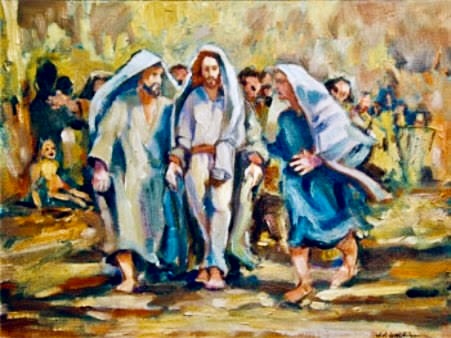
Art Work from sincovaga.com.br

Standing Up for Jesus

Homily: Tenth Sunday in Ordinary Time (B)

Mark 3:20-35

9 June 2024 

Fr. Ricky Cañet Montañez 

The Crown is a series on Netflix that I find interesting because it is about the British Royal Family. In one episode they depicted a conversation that allegedly transpired between Queen Elizabeth II and Margaret Thatcher when she was Prime Minister of the United Kingdom. In the scene, the Queen tells the Prime Minister that it is a  mistake to assume that privileged people lack strength of character. Her Majesty then adds that to make enemies everywhere is a rather dangerous game. Margaret Thatcher replies that she is quite comfortable with making enemies. Moreover, she recites the lines of a poem by Charles Mackay: “You have no enemies, you say? Alas, my friend, the boast is poor. He who has mingled in the fray of duty that the brave endure, must have made foes. If you have none, small is the work that you have done. You’ve hit no traitor on the hip. You’ve dashed no cup from perjured lip. You’ve never turned the wrong to right. You’ve been a coward in the fight.” (“Walang kuwenta ang pagmamalaki mong wala kang kalaban. Ang taong nangangahas na gumawa ng tama at tahakin ang tuwid na landas ay tiyak na may makakasagupa. Kung walang kumokontra sa iyo, yun ay dahil di ka nangahas na ituwid ang mali, ilantad ang taksil at itama ang kasinungalingan. Wari’y isa kang duwag na di nanindigan para sa katuwiran.”) Simply put, when we do what is right, we will make enemies of those who delight in doing what is wrong. 

The gospel this Sunday illustrates how Jesus has made enemies of those who misconstrued the motives of His ministry. Sadly, even His own kin doubted Him and the authenticity of His actions. We are told they came to seize Jesus by force if need be, to subdue Him, perhaps out of concern for His safety, but more likely because they thought He was out of His mind. Then Jesus is challenged by His adversaries who questioned His motivation for the miraculous driving out of demons and evil spirits. They witnessed Jesus’ miracle of healing but “the hardness of their hearts” made them refuse to accept Him. Refusing to recognise the power of God at work in Jesus, they resorted to discrediting Him by accusing Him of being in league with Beelzebul, the prince of demons. After Jesus responds by trying a little bit of logic with them, their argument falls flat and they were exposed for the fools that they were. “How can Satan drive out Satan? If a kingdom is divided against itself, that kingdom cannot stand. And if a house is divided against itself, that house will not be able to stand. And if Satan has risen up against himself and is divided, he cannot stand, that is the end of him.” 

Today’s gospel passage reminds us that as Christians, we will surely face opposition and conflict in our desire to be faithful to Jesus. There will also be people who will misconstrue our motivations for doing good or question our conviction for upholding what is right and just. They will discredit us especially if our values do not conform to their standards for or models of goodness. In today’s society it is very common that people who fight and expose corruption are the ones  who end up persecuted and prosecuted? They make enemies of those who are corrupt and of the people who benefit from such illegal and immoral practices. Their reputations are attacked, stories are made up about them and they are crucified in the media and especially on social media. In the same way, those who work in solidarity with the oppressed to change unjust social structures end up “retagged”.  Smear campaigns are launched by those who make their fortunes at the expense of others. The message of our gospel is that we should never allow setbacks such as these to dampen our spirits but rather strengthen our resolve and increase our courage in the pursuit of goodness for in this way we can be assured that we follow in the footsteps of the Lord. 

In closing, I would like to share with you a poem claimed by some sources to have been found in an orphanage in India while others attribute it to St. Teresa of Calcutta. It goes… 

People are often unreasonable, irrational, and self-centered. Forgive them anyway.

If you are kind, people may accuse you of selfish, ulterior motives. Be kind anyway.

If you are successful, you will win some unfaithful friends and some genuine enemies. Succeed anyway.

If you are honest and sincere, people may deceive you. Be honest and sincere anyway.

What you spend years creating, others could destroy overnight. Create anyway.

If you find serenity and joy, some may be jealous. Be joyful anyway.

The good you do today will often be forgotten. Do good anyway.

Give the best you have, and it will never be enough. Give your best anyway.

In the final analysis, it is between you and God. It was never between you and them anyway.

Brothers and sisters, let us have courage! Let us not fear making enemies in our attempt to be good and in doing what is right. If we choose to follow in Christ’s footsteps, we should expect to face adversity and endure difficulties. Those who shun Jesus will fight to hold on to the wealth and power that the world has given them. God never forgets those who stand up for Him. May we resolutely live out our faith with compelling conviction and endeavour to share the love of Christ with others at all times.

Screenshot

The EUCHARIST: A Gift and A Challenge

Homily: Solemnity of the Most Holy Body and Blood of Christ

Mark 14:12-16, 22-26

2 June 2024

Fr. Ricky Cañet Montañez

When I was still a religious in formation, one of my assigned tasks was to work with a community in the Northern Philippines for their relocation because they lived in danger zones — on the banks of the Cagayan River. I remember that in each trip I always found myself carrying more bags on my return compared to one backpack on my way there. [I had calamansi, camote, peanuts, fried dinuguan, etc. as pasalubong/pabaon.] Generosity is one virtue that we experience among people in the province. At times I felt like they literally took whatever they had and gave it all to me. Their acts of kindness and generous sharing exemplify the message of today’s Scripture readings and the significance of today’s celebration. 

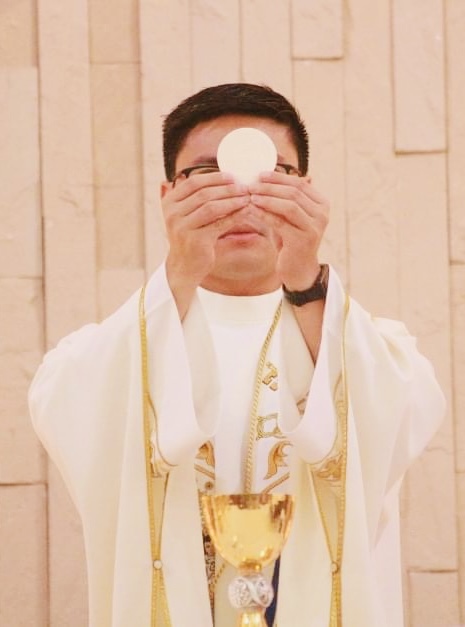
This Sunday we celebrate the Solemnity of the Most Holy Body and Blood of Christ, traditionally called in Latin as the feast of Corpus Christi (The Body of Christ). We celebrate with great joy Christ’s total self-giving through the Eucharist — His giving us of His Body and Blood. This is not just a simple sharing of what one has but rather an ultimate act of total self-giving. We often hear people say that we have not truly given of ourselves until it hurts.” When we love, it is painful! We are broken. It entails sacrifices. Sometimes it means swallowing our pride.

Our faith teaches us that every time we come to mass, the bread and wine we offer as a sacrifice, become the body and blood of Jesus Christ. It is not just a symbol or a representation but it IS! To be honest, we do not see the host turn into a living, bleeding human flesh, as Jesus would have appeared as He was sacrificed on the cross. Perhaps this is why some people have a difficulty showing respect and reverence when they receive communion. We have to mentally, emotionally and physically prepare to receive Jesus Christ, our Lord. We dress decently, observe the one-hour fast, attend the mass (we don’t just show up for communion and go), and properly receive the Lord. When the priest or minister says “The Body of Christ”, what do we say? The proper response is “Amen” not “Thank you”, “Okay” nor even “I love you Jesus”. We receive the host with reverence (we can bow if we can) and receive Jesus on our tongue or in clean hands. We make sure to consume the host IMMEDIATELTY. It is not for takeout or to “save for later”. It is very important that we respond to this special experience as though Jesus, Himself were standing in front of us saying, “I have died to save you from your sins, that you may have eternal life!”

In acknowledging and honouring the wonderful gift of the Eucharist, we are also made to reflect on the implication of this gift of spiritual nourishment in our lives. St Augustine once said “If we receive the Eucharist worthily, we become what we receive.” In receiving communion, we receive Jesus and we have this opportunity to become more like Jesus. As we are nourished by Jesus through the Eucharist, we are also challenged to become more and more a source of nourishment for others. We are impelled to live the Christ-life by going out in service to the needs of others. This way our Lord Jesus Christ can continually be present and active among us.

When we receive Holy Communion and enter into this most intimate union with Christ, we are also most intimately united with one another. Being one with Jesus, we cannot simply turn our backs to those in need among us. Being one with Jesus, we cannot hold back forgiveness from people who ask for our forgiveness. Being one with Jesus, we choose to be understanding and encouraging instead of being negative and critical. To be one with Jesus is to be united in His family, the Church. As family, we cannot turn our backs on each other.

Brothers and sisters, as we value this precious gift of the Eucharist in our lives, may we always strive to be a source of nourishment for our brothers and sisters. This our gift and our challenge!

The Triune God and Our Call to Discipleship

Homily: Solemnity of the Most Holy Trinity

Matthew 28:16-20

26 May 2024

Fr. Ricky Cañet Montañez

How many stars do you think there are in the sky? If we check tonight, we will see maybe a hundred of the brightest stars from the constellations. However, have we ever seen the night sky while we were at a beach or in the province — far from the city lights and LED billboards?  We will realise that there are so many more stars in the heavens. The universe is one of the greatest mysteries to humankind. Our scientists and astronomers try to learn as much as they can about the cosmos but there is so much more we do not understand. Despite this, we can still appreciate the beauty of a million stars twinkling in the sky.

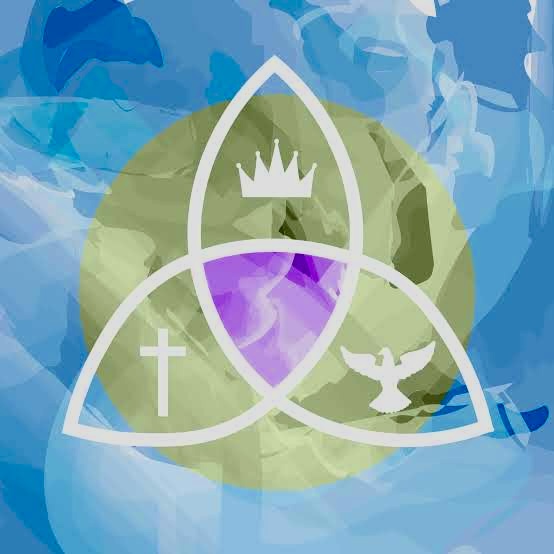
Today we celebrate the Solemnity of the Most Holy Trinity. It is one of the greatest mysteries in Christianity.  We believe in One God who reveals Himself to us as Father, Son, and Holy Spirit — three persons of the Holy Trinity. The very notion is difficult to perceive, explain and especially understand without faith. No one has truly seen the Father, even the great people of the Old Testament who were all blessed to have come into His presence and to have spoken to Him. The Bible has no accounts confirming God as a fatherly old man with long white hair and a white beard. Just last week we celebrated Pentecost — the descent of the Holy Spirit on the apostles and the Blessed Virgin Mary. What we read in biblical accounts is a description of the Holy Spirit such as a strong wind and tongues of fire… no human form. It is by humankind’s experience of Jesus and His teachings about the Father and the Holy Spirit that we come across the trinitarian nature of God. Yet, until now, despite centuries of study, no one has come close to unlocking the mystery. Our understanding of the Triune God is limited to how “Father”, “Son” and “Holy Spirit” emerge in scripture in relation to one another. We understand God the Father as CREATOR whose existence and every action is love, and who sends His Son, Jesus, as REDEEMER of the world. In turn, it is Jesus who sends the Holy Spirit, the SANCTIFIER, proceeding from the Father and the Son, to guide and strengthen the followers of Jesus in the work of evangelisation.

I personally feel that our understanding of the Trinity is grounded on our experience of God and our need for God. In the passage from the Book of Deuteronomy, we are told how God has been especially gracious in His dealings with His Chosen People — caring enough for them, providing their needs, which in this case was freedom from Egyptian slavery, an identity as a people, and a land to call their own. Of course, there are accounts of God reprimanding and punishing His people for their obstinacy and hard-heartedness as a father disciplines his children, but these are balanced out by accounts of how God desired that all His children prosper and enjoy the fullness of life He offers. As Moses enjoins the people: “You must keep His statutes and commandments… that you and your children after you may prosper, and that you may have a long life…”   (Deut. 4:40) This God goes even further. He has poured into the hearts of all believers His Spirit that moves us to relate to Him as our Abba (Father). In His Son Jesus, we are not treated like slaves but rather as brothers and sisters, adopted children of The Father, destined to a heavenly inheritance. St. Paul says: “The Spirit himself bears witness with our spirit that we are children of God, and if children, then heirs of God and joint heirs with Christ…” (Romans 8:16) All throughout Scriptures, we encounter a God in the Holy Spirit whose very nature is goodness and is moved by that loving nature to share His goodness with all of us His children.

For all of us believers, the Trinity is not just a dogma but an experience of the presence of three Persons in our faith life as God continually creates, saves and, sustains humanity and all creation. As followers of Jesus, we all share in the very life of the Trinity and we have been commissioned by Jesus to carry forth the saving work of the Trinity. We are called “to the creativity of the Father into a seemingly hopeless predicament.” Have you ever held a position of authority or granted responsibility over others?  As a parent of a family or the boss of an office, we will always be faced with challenges that can be overwhelming and almost impossible to address — how to stretch a small budget; how to make time for everything, and having to make sacrifices for the good of the majority.  In times like these, let us call on God the Father to guide us and to strengthen our resolve to face such challenges.

-We too, are to extend the forgiveness of the Son to all of us who recognise our guilt and who want to make amends for the wrong we have done. This is one of the more difficult things we have to do.  Naturally, because no one is perfect, we are all bound to make mistakes — mistakes that tend to hurt one another. What is important is we ask forgiveness from those we have hurt and forgive those who have hurt us. We pray this every time in the Our Father…. “Forgive us our sins as we forgive those who sin against us.” And yet, there are those among us whom we find difficult to forgive. We still feel there are those who don’t deserve our mercy and understanding. Let us call on the Lord Jesus to grant us the grace to forgive — to help us see the face of God in them. It is not about our worthiness for forgiveness but our capacity to be the bigger person. Let us remember that Jesus forgave us and loved us when humanity was unlovable and not even sorry for the sins each and everyone has committed.

Lastly, we are to bring the wisdom of the Holy Spirit to those who are finding their way to the right path. We are all responsible for one another because we are all part of God’s family. We should never say “we are not our brother’s or our sister’s keeper”. We are! We should care about one another and counsel one another when we see that there are those among us losing their way. Two weeks ago, when we celebrated Pentecost, we were reminded that the Holy Spirit gives us seven-fold gifts. We have to use these gifts to guide one another in genuine compassion. Even if people may misunderstand or reject our effort, the important thing is to try. We owe it to one another as we are brothers and sisters in Christ.

In all these ways the God who is love goes forth to “all nations” through us. Yes, we may not know or grasp everything about the FATHER, the SON, and the HOLY SPIRIT especially when they are referred to as the Holy Trinity. However, for all times, our TRIUNE GOD has continuously reached out to us in love and with the ardent desire to be known by His people as a loving God. In turn, as messengers of God in the world, we are all commissioned to witness by our lives to the goodness of THE BLESSED TRINITY. Moreover, we draw strength from Jesus’ words: “I am with you always, until the end of the age.” (Matthew 28:20)

Gathering as ONE in the Spirit

Homily: Pentecost Sunday (B)

John 20:19-23

19 May 2024

Fr. Ricky Cañet Montañez

How many of us know Fr. Thomas Green? For those who may not know him, he is a well-loved and respected Jesuit priest who was a mentor to many priests like myself.  He was my professor in two of the Spirituality courses I took at the Loyola School of Theology at the Ateneo de Manila University. I was also very lucky to have him as my spiritual director. I remember he shared with us what St. Ignatius taught about the discernment of spirits. St Ignatius believed that the soul is affected by a ‘good spirit’ and a ‘bad spirit’. It is said that various affections are at work within the human heart. These affections move us to do some things and to avoid others. Hence, St. Ignatius deemed it important for every believer to know how to recognise each spirit. “The aim is not to be pushed around by one’s temptations and worst inclinations but instead to be guided by one’s best qualities.” In this way, the discernment of spirits can help one grow not only in self-knowledge but also progress in the spiritual life.

On this Solemnity of Pentecost, we are reminded that the gift of the Holy Spirit has been given to all of us – the baptised, the confirmed… On this very special day, which we consider the Birthday of the Church, we are made to reflect more deeply on the workings of the Holy Spirit in our faith life. Unlike the Father and the Son, our Lord Jesus Christ, the Holy Spirit is revealed through us with various names: “The Comforter”, “The Advocate”, “The Spirit of Truth”.  One name I particularly like referring to the Holy Spirit is “The Paraclete”.  I have read that “the root meaning of the Greek word, “Paraclete,” is actually made up of the prefix: para- + kalein, or the verb kaleo, which means “to call.”  The prefix para adds the sense of “being around, of being near, of being close by.”  It roughly translates to “call together.”  A commentary I read suggests that “The Paraclete” could very well be translated as “The Gatherer.”  It is so apt because the workings of the Holy Spirit are to gather God’s children. We recall that before ascending back to the Father, Jesus promised His disciples that He would not just “leave” and abandon them.  He assured them “I will not leave you as orphans; I will come to you.” (John 14:18) For the disciples and all those whom they have inspired to follow Jesus, the Spirit is to remain with them as “The Gatherer”, “The Unifier”, “The Reconciler”. 

As Catholics, we believe that various kinds of spirits affect us only if we let them. Thus, when we are faced with tough situations in life, we have to be careful and we need to seek the guidance of none other than the Holy Spirit. When we are confused or at our weakest, other spirits may seek to influence us. It is not very difficult to gauge whether it is the “Evil One” whom we have allowed to control our decisions, choices, and actions in life. The “Evil One” will surely sow jealousy, selfishness, and insecurity to destroy the good relationships within a family, a community or a group.  When there are conflicts and frictions among groups of people, bad spirits make manifest in people’s refusal to make compromises, to recognise one’s share of the blame, eventually allowing misunderstandings to fester, and inflict new wounds. This results to the loss of hope, joy, freedom and peace because persons in conflict feel some degree of anger and some desire to be unforgiving of the other. If we truly desire to follow Jesus or claim to be followers of Christ, we should not allow evil spirits to control our thoughts and actions.

On the other hand, when it is the Spirit of the Lord at work in our lives, we find ourselves striving to bring people together, uniting them, and reconciling the existing conflicts and division in the community. Cooperating with the Holy Spirit, thereby engenders hope, joy, and great peace.  St. Paul says that another fruit of being re-created by the indwelling of the Holy Spirit is harmony and interdependence within the members of the Body of Christ. In the Church there are no more distinctions, whether Jews or Greeks, slaves or free. (Pantay-pantay ang trato sa isa’t-isa.  Lahat magkakaibigan at kapatid ang turingan.) There is patience, kindness, generosity, faithfulness, gentleness, and self-control. Through, with and in this “Gatherer”, the world is renewed, the community is revitalised, and we come to know the mysterious yet all-pervasive peace of Christ.

On this Pentecost Sunday, let us look into our life experiences and see if, in our circles, we have become the sowers of discord and unrest. If this is us, perhaps it is time to correct ourselves. (Magulo na ang mundo kaya huwag na tayong dumagdag.) Let us always remember to invoke the guidance of the Holy Spirit so that in our families, among our friends, and in our community, “we will not be willing victims of “The Scatterer” – or worse, its unwitting agents.” May we always choose the Spirit of the One who gathers us all into one family of God!

Saved to Proclaim the Good News

Homily: Solemnity of the Lord’s Ascension (B)
Mark 16:15-20
12 May 2024
Fr. Ricky Cañet Montañez

Today, most of the world over, celebrates Mother’s Day. Happy Mother’s Day to all the mamas, nanays, inays, mommies and moms! Today, we celebrate how special you all are. The lady who raised me was pretty special too. Unfortunately, l can no longer hug and kiss her and buy her gifts and flowers. I miss her very much. She taught me the importance of having friends and going out of my way to always help others. Whenever I recall what she taught me, I know she lives on in me.

Today, the Church celebrates Ascension Sunday. The first important moment that transpires  this day is when Jesus leaves the earth and goes back up into heaven. He makes it clear that His friends, followers and loved ones will not be seeing Him for a long time. This is a very sad moment between those who love and respect each other.  His followers will always feel that they need Him around to guide and encourage them. His friends and family, as expected will always want Him in their company to go through life experiences with Him. However, we know that everything runs its course and eventually, nothing is left but to move on. Jesus moved on because He had completed His mission on earth. He accomplished what His Father had sent Him to do. He had also passed on what was necessary to His apostles and disciples that they may continue the mission for Him.

Which brings us to the second important moment of this day — the commissioning of His apostles to “Go into the whole world and proclaim the gospel to every creature.” (Mark 16:15) And what is this Good News that they were to proclaim everywhere? They were to proclaim the Good News of salvation won by Christ for all of us believers through His passion, death and resurrection. They were to make known to all peoples that in Christ, our life does not end in emptiness because we have a future with God. It is good to note that He did not leave them alone to fend for themselves. He left them in a community where they would find strength and support with one another as they continued the mission throughout their lives. As the new Body of Christ, they continued the work of Jesus to bring healing and comfort to those who were sick and suffering; forgiveness and wholeness to all those who were estranged and broken-hearted. Moreover, as they carried out the saving mission of Jesus, they were assured of His continued presence in their midst.

In a sense, the Ascension of Our Lord makes us aware that Jesus has not really departed from us. It only seems so. In fact, the Ascension is a way for Jesus to be present in a new manner in our midst as we take on His saving mission. In our work of continuing His work of salvation, we are assured that “the Lord works with us”. We are never alone. His continued presence among us guides and strengthens us as we take up the mission of preaching the gospel, by our word and example. He is with us as we continue to struggle in our earthly pilgrimage. Next week, we celebrate another special occasion — the reason why we can never feel alone. Jesus sends us the Holy Spirit in His place to be our guide and inspiration.
 
In like manner, all of us baptised Christians share in the same call to preach the Good News to all peoples. We may not be standing up in front of big audiences and speaking into the microphone about Jesus but we can witness to the truth of Jesus by living true Christian lives. Let our lives indeed be “Good News” for others, not “Bad News”. I believe, more than anything else, we need more messengers of hope and light for our brothers and sisters in the darkness of this world. Let us ask ourselves… Are we bearers of the Good News for others in the darkness of this world?  Moms, ask yourselves are you bearers of light and love to your children? You have been given such a special role in this world. Not everyone gets to be a mother. Is your life a testament to the Good News of Jesus Christ to your family?

We are all challenged to look beyond this world to the destiny which we are to share with Christ — in the Father’s Kingdom. The Ascension is a reminder of our salvation —proof that there is a place called heaven where our Lord and Saviour has returned to and where He awaits us! For the meantime, we strive to walk in the footsteps of Jesus on this earth, hastening our steps towards our heavenly home!

Ascension, Gwyneth Thompson-Briggs, 2020

Love in All of Us

Homily: Sixth Sunday of Easter (B)

5 May 2024

John 15:9-17

Fr. Ricky Cañet Montañez

As I was preparing for ordination, a classmate jokingly asked, “Why do you want to be ordained a priest? You will be single forever. Who will cry over your coffin or urn when you leave this planet?” (Ganern?) A single friend once complained that some people made her feel less of a person because she was single. She asked “Do they really think I’m lonely? Do they think I am cursed to live a loveless life?” On the other hand, a married friend who did not have any children shared that she would feel really sad whenever people insinuate that only after experiencing the birth of her own child would she feel what true love really is. Whoa, harsh! It’s funny how some people think that the only way to have love is with a life partner and their own kids.

Love is in all of us. And paradoxically, when we give love, we receive love. It doesn’t mean we all should have a spouse or a biological child. There are single people who commit themselves to worthwhile causes where they give of themselves to uplift sectors of society or to save the planet for future generations.  There are children who chose to be single and have devoted themselves to caring for their siblings or their aging and sick parents. We priests, have the capacity to be spiritual fathers to thousands of people entrusted to us by the Bishop (or our religious superiors) because we don’t need to earn a living and provide for a wife and kids. Love is inclusive. It is for everyone. It does not limit itself to specific types of people.  As Peter attests in the First Reading after seeing that the gift of the Holy Spirit has been poured out on the Gentiles also, “In truth, I see that God shows no partiality.” (Acts 10:34) All are acceptable to God, Jew and Gentile, man and woman, slave and free… God’s invitation to love is for all!

This Sunday’s gospel passage from John, is all about love.  We find Jesus urging His disciples twice to “remain in His love” and twice “to love one another”. If we look closely, these two commands are actually interrelated, as “remaining in His love” will redound to loving others. What is at the heart of the command is the invitation for all of us believers, without exception, to love the way Jesus loves — a total self-giving for the sake of the one being loved. It is a selfless offering of himself for others. Jesus says, “[There is] no greater love than this: to lay down one’s life for one’s friends.” (John 15:13) And that is exactly what He did not just in the way He died where we are told His blood and water flowed in mercy for all of humanity, but also in the way that He lived, his priority was making sure that the people He loved were restored to wholeness and nourished by the word of God.

Thus, when we love we must be willing to put the good of the people we love before our own wants; before our own needs. Often this involves varying degrees of sacrifice.  The first thing I think of is a mothers’ love for their children as the best example of this sacrificial love. However, motherly love is not only exemplified by biological mothers themselves but also of those who in their own ways have been mothers to others. I have a single aunt who cared for me and my siblings and her other nephews and nieces out of the goodness of her heart. There are even nannies who cared for their wards as their own children. Once a good friend of mine and his family asked me for the anointing of their very sick  “yaya” who means a lot to them for the love that she lavished on everyone. My friend said their  “yaya” has been with them since she was 18 years old. Now at 90, she continues to be a beloved extended member of the family.

In the passage from John’s First Epistle, we are invited to replicate this example of love shown by Jesus in the Gospel. We need not fear that we may not have the capacity to love as such because it is God who gives us the grace to do so. “Beloved, let us love one another, because love is of God; everyone who loves is begotten by God and knows God.”  (1 John 4:7) To love like Jesus and lay down our lives for others is very much against man’s natural tendency for self-preservation and thus, it cannot originate from our human capabilities but rather in God. We know how it is to love because we first feel His love for us. “This is love: not that we have loved God, but that he loved us.” (1 John 4:10) It is God who initiates this love as exemplified in Jesus. “As the Father loves me, so I also love you.” (John 15:9) Clearly, the source of this selfless love is divine love itself. This is so because love is the very being of God. St. John says: “God is love.” (1 John 4:8) We too, are granted a share in this nature when we are “begotten by God” through baptism — love becomes part of our being as well. The Spirit of love has been poured into the hearts of all believers to make us capable of this self-giving love of Christ regardless of our status or vocation in life.   

In summary, let us take to heart that as Christians, our love should take after the selfless and self-giving way Jesus loves us; and how greatly God the Father has loved us first and most deeply in Jesus. Jesus paid a high price to express this love for us and to teach us what love is. Thus, we need to learn how to love. It does not matter if you are called to be a mother to your own kids or to help raise the children of others, or whether your vocation is to be married, single, or called to the religious life, love is within all of us because we have Jesus. Let us love as God loves each one of us — faithfully, truly, unconditionally.

Staying Connected to Jesus

Homily: Fifth Sunday of Easter (B)

John 15:1-8

28 April 2024

Fr. Ricky Cañet Montañez

Do you notice how it is very common for our politicians to groom their children to be their successors? It happens in the baranggay level, mayoral, congress, senate and even for the presidency. Do you realize that three of our Presidents were children of former Presidents?  These political scions cannot escape being identified or associated to the characteristics and achievements of their parents. When scions are elected into office, they are expected to be as good as or even better than their parent politician. Isn’t that right?

We may not all be politicians’ children, but when people look at us, they readily see our fathers or mothers in us. Such likeness begins when we start to acquire our parents’ values, take on their ways of doing things, or when we consciously emulate their interests, habits, even mannerisms. The similarity becomes even more pronounced when it permeates our way of being and of living. When we have matured into adulthood, the mimicry ends because by then, it has become part of who we are.

This Sunday’s gospel passage highlights the very special relationship that exists between every believer and the Lord Jesus Christ. Jesus says, “I am the vine and you are the branches.” (John 15:5) In saying this, Jesus invites every faithful to strive to be intimately connected to Him as the branch is to the vine. This intimacy with Jesus is vital if we are to share in the life that flows from Him.  The branches have to remain connected at all times to the vine for it to blossom and bear fruit.  He asks us always to remain in Him.

How are we connected to Jesus? Firstly, we are grafted into Jesus, the vine, by our baptism. This is what St. Paul says in Romans 6:4: “…We have been buried with Christ through baptism into death, so that, just as Christ was raised from the dead through the glory of the Father, so we too may walk in newness of life”. Secondly, we secure our connection to Jesus by listening to His word. Jesus’ word “prunes us”, transforming us into persons of faith, perseverant in seeking God’s will for us and courageous in facing life’s challenges. Thirdly, we are joined to Jesus in a special way through the healing grace of the Sacrament of Confession and the spiritual nourishment we receive in the Holy Mass. Lastly, we are connected to Jesus when we strive to live out our faith through acts of love towards others. St. John urges us in the Second Reading, “Let us love not in word or speech but in deed and truth.” (1 John 3:18)  

This connection to Jesus does not make life easy, in fact it entails some difficult implications for us, Christians: If we are joined to Jesus, we cannot look the other way when someone is in need. We can’t withhold forgiveness from people who have hurt us. We extend love towards others even to those whom we think do not deserve it. As Christians, we can either lead others to God or drive them away by the way we witness to our faith in our lives so much so that the Second Vatican Council’s document, Gaudium et Spes (Pastoral Constitution on the Church in the Modern World), suggests that we all share in responsibility for the rise of atheism.  

Moreover, sometimes when we are associated with an ugly past, people cannot seem to see us differently. In the First Reading (Acts 9:26-31), the disciples were suspicious of Saul because he had persecuted many Christians before. It was only when Barnabas vouched for him did they believe he had truly been converted. Early this year,  I finished watching the K-Drama, Welcome to Samdal-ri. The female lead, Cho Samdal, a famous fashion photographer decides to return to her hometown after she hits rock bottom due to a horrible scandal where she is accused of abuse of power. In reconnecting with her roots — her family and childhood friends — she attempts to find solace and direction to put herself back together again. In the same way, when we find ourselves in a disconnect with Jesus, we simply have to go back to the church, and find direction with the help of our brothers and sisters in the faith. 

Let us check ourselves regularly to see if we are still projecting the likeness of Christ. Are we a testimony to the living God or do we conceal the reality of His existence through the choices we make, our actions, and our dealings with others? Let us always try to remain in Jesus because “apart from Him we can do nothing” (John 15:5) but connected to the Lord, we are assured that we can ask what we want of Him, and glorify the Lord by bearing much fruit for the Kingdom.

Art work by Irina Yaresko

Shepherds to One Another

Homily: Fourth Sunday of Easter / Good Shepherd Sunday / World Day of Prayer for Vocations

John 10:11-18

21 April 2024

Fr. Ricky Cañet Montañez

When I was still studying in London, I was invited by a family from Cebu for dinner. The family has three sons and a much-awaited daughter who was born when the mother was 40 years old. The mother, a very devout Catholic has always wanted one of her boys to become a priest. Thus, she made sure that all the three of them became altar servers in our parish in Bethnal Green. The mother started asking each of the boys if they wanted to become priests. Both the eldest and middle child remained silent and simply smiled when their mum asked them if they wanted to become priests. It was her youngest boy’s reply that we found really funny. He said: “No mum, I want to be NORMAL!” (Bigla akong nagka-identity crisis. I thought, “What does that make of me? Or the likes of Fr. Steve Zabala?”☺️)

I shared with you this little story because today is not only Good Shepherd Sunday but also World Day of Prayer for Vocations.  For far too long we have had a narrow understanding of vocation as a calling to the priestly or religious life. However, in fact every single one of us has a vocation. Priests do not own the exclusive right to be called shepherds. We all have a role to play in this world as members of God’s family. We, as individuals, have been blessed with unique gifts that we share with one another, contributing to the collective good of the community. We all have a mission in life to accomplish — whether we be fathers, mothers, workers, students, employers, law enforcers, media practitioners, medical workers, leaders, etc…. In our distinct situations, we are called upon to be good shepherds to one another, ministering to those we find in our circles of family, friends and acquaintances.  It has been our privilege to experience the love of a Good Shepherd in Jesus.  It is but right, hence that we pay it forward and be good shepherds ourselves to one another by showing compassion to our respective flocks, loving them unconditionally, and seeking out those who stray.

In today’s gospel passage, Jesus speaks of Himself as the “Good Shepherd” who lays down His life for the sheep. This is a very much-loved and favoured image of Jesus. Unlike the hired-hand who merely treats the sheep simply as livestock to be managed — an element of his job, the shepherd, who owns the flock, considers every single one of the sheep as the object of his love and concern. Jesus used this comparison because people could easily relate with shepherding which is common in Israel. The Jews know that a good shepherd is very familiar with his flock and cares a great deal for them to the point of risking his own safety.  For the Shepherd, the sheep come first. He is totally committed to the well-being of who he tends that he would sacrifice his own life for them. 

In the gospels, particularly Chapter 10 of John’s Gospel, Jesus is portrayed as that kind of leader who takes good care of every single one of those entrusted to Him by the Father. “I am the good shepherd. The good shepherd lays down his life for the sheep.” (John 10:11) As Good Shepherd, Jesus exhibits exceptional commitment to His flock especially in search of the lost sheep and in the efforts to bring them back to the fold. In the Synoptic gospels, Jesus as the Good Shepherd is portrayed as one who would go as far as leaving 99 of His sheep to find one that went astray. This is how dedicated and responsible the Good Shepherd is towards His flock.

Is it a daunting challenge to be a shepherd? Yes! Speaking from personal experience, I have had to give up many things such as my privacy, my comfort zones, my chance at having family life if not having to grow roots. It is not easy to be always “on-call”. Sometimes at the most ungodly hours, I have to be present for those who need services for the depressed, the gravely sick, and the dead. I go where I am needed.  Perhaps this is the “not normal” part of my life.  I also have to contend with those who are not considerate enough of our priestly schedules and personal boundaries, etc. As parish priest, one is also required to manage the affairs of the parish. Not everything is taught and learned in school, so it can be a struggle sometimes. We are just very grateful for the lay leaders and parish staff who help us every day. I can attest that God sends help to support His shepherds. He has been so gracious to me and my ministry that I have no reason to be afraid even when things are difficult or uncertain. Needless to say, after 12 years (going 13 this year), I am still very much in the service of the Lord.

The same goes for each and every one of us. Let us not think of ourselves to be undeserving or incapable to be a shepherd to others. If you are a mom or dad, you are leading your family.  If you are a leader at work, in school, or a church organisation, or even of your barkada, consider the people around you as your flock — gifts of God that He has placed in your care. Yes, everything we do for their benefit, no matter how small, makes a difference in their lives. Let us not be discouraged if the impact seems small. It is still important because we do it for someone God deems valuable. St. John tells us who we are in the Second Reading: “Beloved, we are God’s children now. What we shall be has not yet been revealed. We do know that when it is revealed we shall be like him for we shall see him as he is.” (1 John 3:2) Let us celebrate our giftedness and share our blessings! There is always something that we can offer, if we choose to be true to who we are and we choose to live out our vocation to the best of our abilities. Recently, a porter or pushcart retriever working at NAIA for 32 years, made sure that a bag containing $10,000 or half a million pesos that was left on a trolly by mistake, was returned to its rightful owner.  He can be considered a “good shepherd” because he looked out for a traveller passing through the airport where he worked. Whatever our vocation is — married, single, priest or nun, we shepherd God’s people in our children, our community, our parishioners, our colleagues.

Sometime in June, I shall be leaving San Roque Parish for my new assignment at the Parish of the Lord of Divine Mercy. I am happy to report that I have convinced doubters that I am “normal”. I would like to think my efforts at good shepherding have not been in vain because three boys from our parish have been encouraged to consider the priesthood. One of them is actually considering joining the minor seminary next school year. We therefore offer our prayers today for these children and we ask God to grow the seed of priestly vocation in their hearts. Let us all be inspired to dare to take up the staff and be a good shepherd to the flock God entrusts to us — as we are all the beloved children of God our Father!

Art Work by Jorge Cocco

Encounters with God in the Ordinary

Homily: Third Sunday of Easter (B)

Luke 24:35-48

14 April 2024

Fr. Ricky Cañet Montañez

One time, Pope Francis had the opportunity to speak to a group of children who were candidates for confirmation.  The Holy Father advised them that “it is important to encounter Jesus, who loves us, who has saved us, who gave His life for us.”   He however, acknowledged with regret that “In our increasingly digital age, it can be easy to forget the living presence of the risen Lord in concrete human lives.”

In today’s gospel reading, the two disciples who met Jesus on the road to Emmaus had immediately returned to Jerusalem to share their experience with the rest of the disciples. While they were sharing their story of their astonishing encounter with Jesus and how they recognised Him in the Breaking of the Bread, Jesus suddenly appears to the whole group and greets them: “Peace be with you.“ His disciples are startled and terrified. Wouldn’t we be? Just imagine one of our closest friends, though wrongfully accused, was sentenced to death for heinous crimes and because of our association with him, we go into hiding, fretting for our life. We are afraid for ourselves but we are also mourning the death of our dear friend. Then all of a sudden, he is standing beside us, alive and well, and he speaks to us… Would we not be frightened and think that we are seeing a ghost?

These disciples were likely the same people who abandoned Jesus during His passion. If this had happened to us, FO na! (Friendship Over, right?) But Jesus did not sulk (tampo) nor was He angry with them. Earlier, He joined two of them on the road to Emmaus, sharing in their grief, sadness and anger over the crucifixion that had transpired. He walked with them and helped them to understand how everything that happened was foretold in the scriptures. When He appeared to the disciples in hiding, He offered them some comfort by reassuring them He is not a ghost. Jesus even invited them to touch Him so they could see His wounds are real and that He has flesh and bones. In their presence, Jesus ate the fish He was given and He spoke again about what was foretold in the scriptures about His passion.

What is important to note is that Jesus does not overwhelm them with a supernatural experience or a vision of His glorious countenance. He does not magically transport them somewhere awesome to show off. He does not seek to impress. He simply meets them where they are and presents Himself as they know Him. It is funny that in the ordinariness of the encounter, the disciples are still paralysed by fear and disbelief that they initially do not recognise their friend and teacher. It is the same for us today.  It is easy to recognise the Lord’s presence in miraculous and supernatural events but it is not easy for us to realise when we encounter Jesus in the ordinary events of our life.  Like the disciples, Jesus often meets us where we are, in our grief, in our difficulties, in our boredom, and in the messiness of daily life. When we are troubled and distressed, we tend to be so consumed by sadness, anxiety and fear that we develop a sense of hopelessness that numbs our senses to His living presence in our lives.

Easter season is the perfect time for us to renew our conviction in the Resurrection of Christ. If we believe that God the Father raised His Son, Jesus, from the dead, we must always have that readiness to encounter Christ as a living personal presence. Drawing inspiration from his predecessor, Pope Emeritus Benedict XVI, Pope Francis points out three places to meet the living Jesus as Catholic Christians. “First, Jesus is alive in His Word, the inspired Gospel stories and the living tradition of our church. Second, we meet Jesus in the sacraments, especially in regular participation in both the Eucharist and the sacrament of Reconciliation. And third, we meet Jesus in our loving service to those in need, those who live on the periphery of society.”

Admittedly, it is a challenge to be fully aware of moments when we encounter Christ. Catholics are not known for reading the Bible. Sometimes, those who attend mass are not even paying attention during the liturgy of the Word. To check how attentive everyone is, in what book does our First Reading come from? What about our Second Reading? Our Gospel?  If we do not make time to read and listen to the Word of God, how will we ever recognise moments of encounter with Jesus there? In the same way, if we shy away from the sacraments like the Mass and Confession, or if we are mentally and emotionally absent despite our physical presence, we are sure to miss opportunities to encounter Jesus. He is often in the unexpected places and situations… among those who need us like the poor and the sick, those who treat us with love and care and yet we take for granted, and possibly even in those who irritate us and challenge us to be more patient, understanding and compassionate. 

 My friend’s family regularly gives hot meals to the street dwellers in the city. He shared that he once encountered a woman whose own companions taunted as “baliw”. My friend observed that when he gave her the box of food, she immediately went to share her food with her husband. My friend was so moved by what he witnessed. He said “Love is the only sanity left for these two mentally-challenged persons.”  He said that even in her questionable mental state, Christ was alive in that woman. We must be open to finding Christ in everything. Here in the parish, some say the only reason people come to mass is because of the monthly ration of rice that is distributed. If that is true, then I would like to believe that eventually people will recognise the Living Christ’s love and care for them because of the generosity of others. There are simply no limits as to how the Risen Christ can be present to us.

Lastly, it is important to emphasise that an experience with the resurrected life cannot be contained. Just as the two disciples returned to Jerusalem to tell others how they met Jesus on their journey, we, too, who have encountered Jesus in our life are called to be witnesses.  Let us attest to the living presence of Jesus by the way we live and we will encourage others to be more sensitive to the presence of Christ and to welcome opportunities to meet Jesus. God bless us all.