HOMILY: Solemnity of Our Lord Jesus Christ, King of the Universe
Ezekiel 34:11–12, 15–17 | 1 Corinthians 15:20–26, 28 | Matthew 25:31–46
22 November 2026
Fr. Ricky Cañet Montañez, AA
Have you ever failed to help someone who needed you? Maybe someone was going through a difficult time, but you were too busy to listen? Maybe someone needed a little encouragement, but you assumed that somebody else would give it? Maybe someone was waiting for you to visit, but you kept saying, “Next time na lang.” only to realise there was no longer a next time and you totally missed the opportunity.
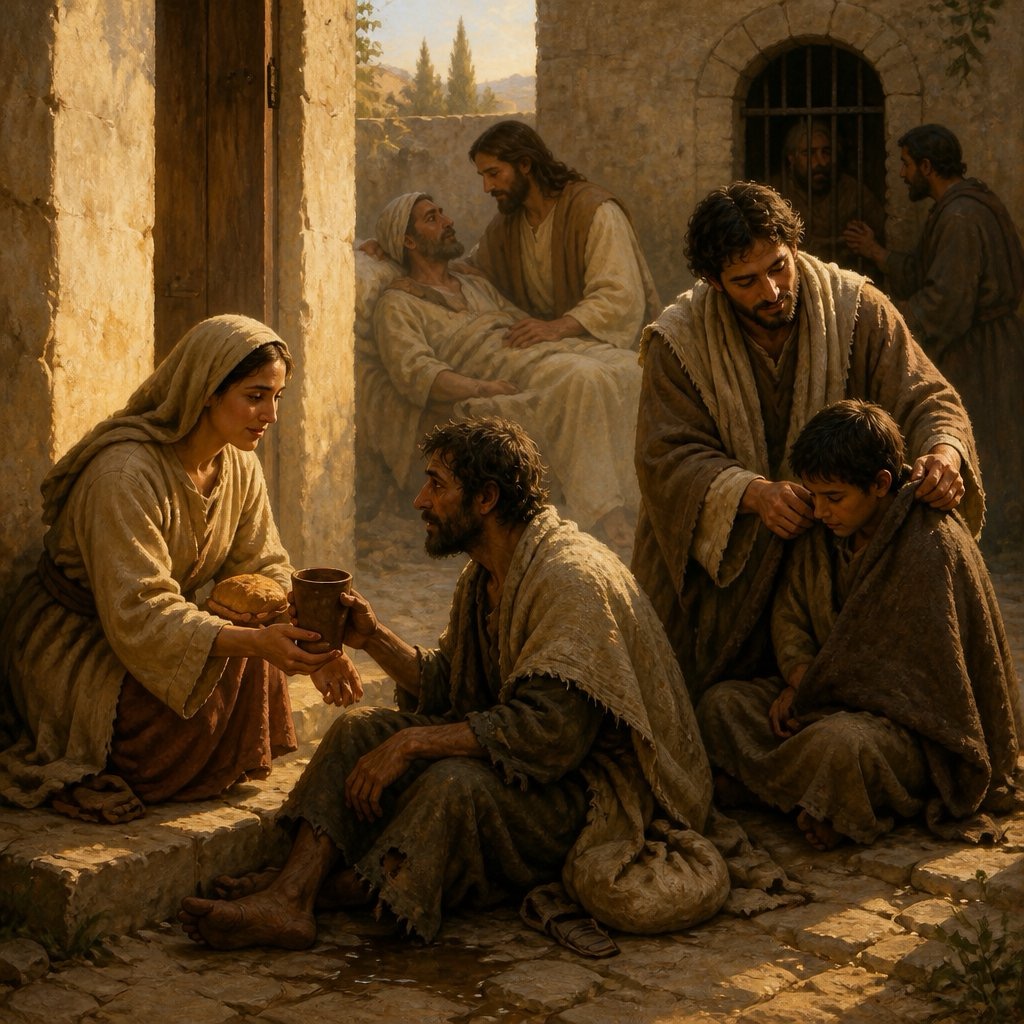
There is a unique pain in the memory of good left undone rather than evil committed, and that is precisely what makes today’s Gospel so unsettling. In Matthew 25, Jesus describes the final judgment where the King separates the sheep from the goats. Isn’t it rather surprising that Jesus does not begin by asking about their greatest sins? He does not ask how many commandments they broke, how many scandals they caused, or how many terrible things they did. Instead, he asks about something much more ordinary: “I was hungry and you gave me food, I was thirsty and you gave me drink, a stranger and you welcomed me, naked and you clothed me, ill and you cared for me, in prison and you visited me” (Matthew 25:35–36).
Both the righteous and the unrighteous are surprisingly caught off guard in Matthew 25 because neither group realised they were interacting with Jesus. When the righteous ask, “Lord, when did we see you hungry?” (Matthew 25:37) and the others similarly question, “Lord, when did we see you hungry or thirsty or a stranger or naked or ill or in prison?” (Matthew 25:44), it reveals a striking truth in the Gospel: the righteous did not necessarily recognise Christ in those they helped. Instead, they simply recognised a fellow human being in need of food, help, company, or compassion, choosing to love without first needing to see Jesus. This perhaps is one of the most beautiful surprises of Christianity: We do not have to recognise Christ in someone before we can love that person. We only have to recognise that person needs our love.
There is another detail in the Gospel worth noticing. Jesus does not mention extraordinary achievements. He does not ask whether we built impressive churches, organised successful programs, occupied important positions, or received awards for outstanding service. Of course, these things can be good, but we shouldn’t discount the value of little everyday things intentionally done with love. He speaks about giving someone food, offering a drink, welcoming a stranger, visiting someone who is sick or imprisoned. In other words, the final examination is about very ordinary things.
We spend much of our lives remembering what we have accomplished. We keep photographs of our achievements, celebrate anniversaries, display certificates, and sometimes even check how many likes our social media posts have received! We want to know that people noticed what we did. But what if, at the end of our lives, God remembers something entirely different? What if God remembers the person who was waiting for us to listen, but we were too busy or the person who needed a visit, but we kept postponing it? We may think nothing of it but God sees and He will always remember the person who was silently struggling, but whom we never bothered to notice. Let us consider this: at the end of our lives, we will be held accountable not only for the wrong things we have done, but also for the good things we could have done but failed to do.
This brings us back to our First Reading. In Ezekiel 34:15–16, God describes Himself as a shepherd who personally searches for his sheep, brings back the strays, binds up the injured, and strengthens the weak. Let us take note that God does not simply count His sheep. He notices them. He notices the missing, the wounded, the weak, and the forgotten. And that is what makes Jesus such a different kind of King. The world measures greatness by how many people notice us. Christ measures greatness by how many people we notice.
Paul tells us in 1 Corinthians 15:26 that the last enemy to be destroyed is death. Christ will ultimately conquer even death itself. But while we await that final victory, there are smaller deaths happening around us every day: the death of hope, the loneliness of someone forgotten, the pain of someone who feels invisible. And perhaps Christ wants us to become His answer to those little deaths.
On this Solemnity of Christ the King, we often ask ourselves whether we have truly made Christ the King of our lives. But perhaps there is another question worth asking: Have we been so preoccupied with our own lives that we have failed to notice the people around us who needed our love, our attention, and our presence? The day we finally stand before the King, we may be surprised by what He remembers. He may not begin by asking how many people applauded us, how many titles we carried, or how many accomplishments we could present. He may simply ask: “Do you remember that person who needed you? That person who was waiting? That person you could have helped?”
Brothers and sisters, the greatest tribute we can offer Christ our King is not to spend our lives trying to be noticed by Him, but to spend our lives noticing those whom the world has forgotten. For in the end, we may discover that the people we almost overlooked were the very people through whom Christ was waiting to meet us.