Homily: Twenty-Fifth Sunday in Ordinary Time (Year A)
Isaiah 55:6-9, Philippians 1:20c-24, 27a, Matthew 20:1-16a
20 September 2026
Fr. Ricky Cañet Montañez, AA
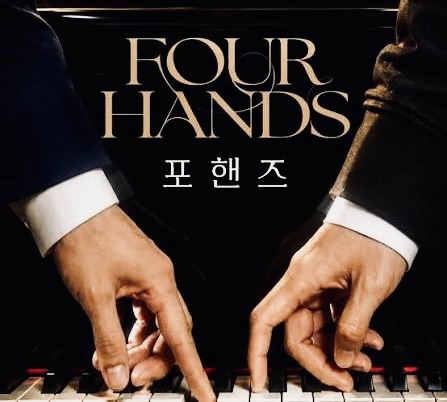
Lately, I have been watching a Korean drama called Four Hands, Two Sonatas. As I scrolled through my K-Drama choices, the title immediately caught my attention: Four Hands, Two Sonatas—four hands, two people, one piano. It revolves around two musicians and, in many ways, explores the complicated relationship between talent, friendship, ambition, and recognition. I am still waiting for the next episodes to drop, and I do not know yet how it ends.
Cuatro manos, or four-handed piano pieces, require two pianists to play on the same piano at the same time, but they do not always have the same notes, the same rhythm, or the same prominence at every moment. One may carry the melody while the other provides the accompaniment. Then, a few measures later, they switch. Each has to know when to play, when to listen, and even when to remain silent. And I thought: isn’t life sometimes like that? We often concern ourselves with whose part sounds more beautiful, whose contribution is noticed, and who receives the applause. And sometimes, when another person’s part seems more important than ours, we quietly ask, “Why him? Why her? Why not me?”
Someone once shared with me a frustration he had been carrying at work. He had served his company faithfully for years and hoped that one day his efforts would be recognized. When an opportunity for promotion finally came, he thought, “Maybe this time, it will be me.” But someone else was chosen. He smiled, congratulated him, and moved on. Later, he admitted, “Father, I was happy for him… but there was a sting. I kept asking myself, ‘Why him? After everything I’ve done, why him?’” If we think about it, technically, he had not lost anything because the job was never his to begin with. I think many of us understand that feeling. We peg goals for ourselves, ask God for His blessing, and are overjoyed when we receive it. However, when another person receives something we perceive as a greater blessing, our own blessing suddenly feels smaller. No one has taken anything away from us, yet we feel cheated and discontent. That is precisely where today’s gospel passage touches something very deep in us.
The workers who came first were not cheated. They had agreed with the master for the usual daily wage, and that is exactly what they received. The master tells them, “My friend, I am not cheating you. Did you not agree with me for the usual daily wage?” (Matthew 20:13). They received what was promised. Nothing was taken away from them. But when they saw that others who had worked less had received the same wage, they became angry. It is hard to admit this, but sometimes what hurts us is not that something was taken from us. What hurts is seeing someone else receive what we had hoped for ourselves. We can be grateful for what God has given us—until we compare it with the blessing someone else has received. We can be happy with our contribution to our ministry until another person is recognized instead of us. We can be content with our place until someone else is given the opportunity we were hoping for. And suddenly, someone else’s blessing feels like an insult to us.
That is why the question of Jesus is so piercing: “Are you envious because I am generous?” (Matthew 20:15). Notice: Jesus does not ask, “Were you cheated?” He knows they were not. He asks, in effect, “Why does another person’s blessing bother us?” This can happen even among those who have spent many years serving God and the Church. Slowly, almost without realizing it, we can begin to keep a record in our hearts: “I have been here longer. I have sacrificed more. I have carried more responsibilities. I was there when others were not.” And if we are not careful, our service becomes a ledger. We begin to think, “After everything I have done, why him?”
This is a dangerous moment. Faithfulness can quietly become entitlement. And what began as love can slowly become a demand for recognition. What began as selfless service can quietly become resentment toward the one we serve. We begin to believe that we have been treated unfairly, and we grumble. In the parable, the master does not deny their faithfulness. He simply refuses to let their faithfulness become a reason for resenting another person’s grace. Isaiah gives us the deeper reason: “For my thoughts are not your thoughts, nor are your ways my ways, says the Lord” (Isaiah 55:8). We calculate hours, seniority, achievement, and merit. God sees what we cannot see.
Consider those workers who arrived at five in the afternoon. They were just standing there, waiting to be hired. Perhaps nobody had chosen them all day. And the master says, “Go into my vineyard too” (Matthew 20:7). Maybe the person we think is receiving “too much” is someone who has spent years receiving too little. Maybe the person whose success irritates us has carried wounds we never saw. Maybe the grace we question is precisely the grace that person desperately needed. We should be slow to judge others when we know so little of what they have been through. Only God sees our circumstances in their entirety. Only He knows the full story of each person’s life and what each one truly needs.
And here the image of Four Hands, Two Sonatas comes back to me. When two people play one piano, the music is not beautiful because both are trying to prove who is better. It is beautiful because they listen to each other. There are moments when one carries the melody and the other supports. There are moments when one has to give way. And sometimes, the beauty of the music depends precisely on allowing the other person’s part to be heard. Faith is something like that. God has not given all of us the same part. But He has given each of us a part. St. Paul gives us the freedom to live this way: “For to me life is Christ” (Philippians 1:21). If Christ is truly the center of our life, another person’s blessing does not diminish ours. We do not always have to be the first. We do not always have to be the one who gets noticed. We do not have to compete for God’s attention.
Perhaps this is the grace we ask for today: not simply to congratulate others when our own hearts are hurting, but to become free enough to say, “Lord, thank You for blessing that person.” When we can genuinely thank God for blessing someone else, even when something in us still aches, it is a clear sign that God is transforming our hearts. What God has given us is still ours. His love for us has not diminished. Our calling remains just as precious. Our sacrifices have not become meaningless because someone else has been blessed. Our deepest freedom begins when another person’s blessing no longer feels like a threat to our own, but becomes a reason to praise God even more.
 Sunday Gospel Reflections