HOMILY: Fourth Sunday of Lent
Luke 15: 1-3, 11-32
27 March 2022
Fr. Ricky Cañet Montañez, AA
One of the first impressions I have of the British is that they tend to say ‘sorry’ quite a lot. They apologise for almost any given situation, such as accidentally bumping into you in the tube, asking a stranger for the time, sneezing, feeling sorry for being late, etc. A friend said that because they tend to use the word ’sorry’ so often, the word’s meaning has changed over time. It is easier to blurt out for trivial things but harder to say when we know we have deeply hurt someone — and that is when it really matters.
In the gospel parable, which we normally refer to as “The Parable of the Prodigal Son”, the younger son’s redeeming factor for all his misgivings is his willingness to humble himself and acknowledge his sins. Great indeed were his sins by asking for his share of the father’s inheritance. I have read that in the Middle Eastern culture the distribution of the inheritance is traditionally done when the parents are on their deathbed. Hence, the request of the younger son for his inheritance while the father is still alive was tantamount to him saying, “Dad, I wish you were dead already.” The Father must have been offended but he gives in to his son because He loves Him. He does not send him away in anger, but rather the son voluntarily leaves his home with an arrogance that he can make it on his own or do even better away from his father. In the foolishness of his youth, he spends his sudden fortune in living a life of total debauchery and self-centred indulgence. “Nagpakasasa siya sa kanyang mga luho.” Eventually, he spent everything and was left with nothing. He was reduced to something utterly detestable for the Jews — living with pigs and even eating their leftovers, a situation that is awful in any culture. Coming to his senses, he swallows his pride, returns home and throws himself at the mercy of his father. He was so desperate that he was even willing to relinquish any filial claims and be treated as one of his father’s hired workers.
The younger son gives us an example of how we can make the first steps towards reconciliation. On his part, the younger son had to admit his wrongdoing, to accept (or even to suggest) the punishment he deserves, and then eventually to seek out his father’s forgiveness. Admittedly one of the hardest things we may ever have to do in life is to apologise for the bad things we have done or to say sorry to the people we have hurt. Reconciliation always starts with admitting you were wrong. That is often not easy either because we tend to be too self-absorbed, proud, or fearful of the consequences. Sometimes it takes something drastic to shake us back into our senses. On the part of the erring son, it was the experience of hunger and the realization that he was now living with filthy animals. In my experience as a priest, I have met people who were humbled by a life-threatening affliction, tremendous failure in business, devastating heartbreak, or the loss of loved ones. These moments become moments of conversion for many. These become the turning point of one’s contrition, where they realize their own failings and seek reconciliation with God and the people they have hurt.
One of the most important ways, we Catholics experience and exercise the act of saying sorry is through the Sacrament of Reconciliation and Penance — Confession. This is very timely because it is Lenten Season and this is the time we are asked to look at ourselves and see where we have failed God and our neighbour in the spirit of humbling ourselves before Him, in Jesus, who took on the ultimate punishment for man’s selfishness — death. He undergoes the most painful and humiliating death so we need not go through it anymore as long as we abide in Him. You might say, my sins are minor and they do not merit death so I do not need to make amends. However, let us be reminded that all sins have an effect on our body and spirit. When we are not at peace, or when we suppress guilt feelings, this tends to manifest as health concerns that could progress into something serious if unaddressed and untreated. Forgiveness not only repairs relationships, it also grants healing — of both body and spirit.
In his homily for the Feast of the Annunciation, Pope Francis encourages those who hesitate to approach the Lord in the Sacrament of Reconciliation: “Dear sister, dear brother, if your sins frighten you, if your past worries you, if your wounds do not heal, if your constant failings dishearten you and you seem to have lost hope, do not be afraid. God knows your weaknesses and is greater than your mistakes. He asks of you only one thing: that you not hold your frailties and sufferings inside. Bring them to Him, lay them before Him and, from being reasons for despair, they will become opportunities for resurrection. Do not be afraid!”
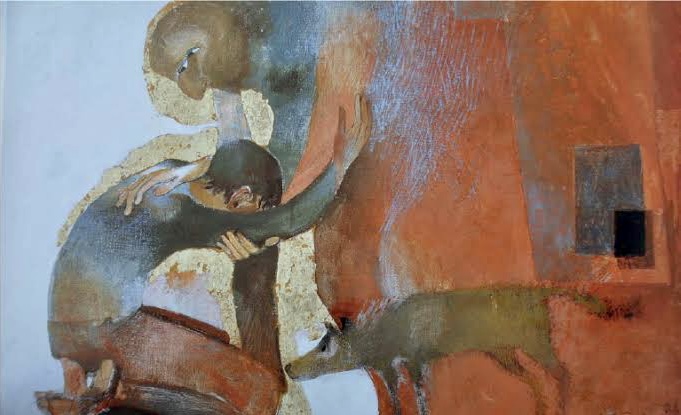
Pope Francis also wants us to realize that Confession is how we experience the mercy of the Father. In the same way that the father in today’s gospel welcomes back his wayward son, God too waits patiently for us. Notice that the father in the gospel runs out to meet his son even if he is still a distance away. And he throws his arms around his boy even before he is finished with his apology speech. The transgressions of the son become irrelevant because he is simply overjoyed that his son is back and he can keep him safe. The father humbles himself for a second time by going out to speak to his elder son who refused to come in and join them in their feasting. Pope Francis further emphasized in his homily that in confession… “It is not so much that we go to the Lord, but that He comes to us, to fill us with His grace, to fill us with His joy. Our confession gives the Father the joy of raising us up once more. It is not so much about our sins as about His forgiveness.”
We must never underestimate the power of God’s love and mercy for us His children. If we, human beings in our own frailty and brokenness find it in our hearts to forgive those we love, how much more for God, Our Father? One very popular modern saying is that “God is bigger than [our] sins.” It is true! There are no sins God cannot forgive if we return to Him and ask His pardon. Let us think of our worst, most embarrassing sin and know that God will still run to us and embrace us when we come to the confessional. When I hear confessions, I try to communicate the love and mercy of God to the penitent. Even if I am shocked or horrified by the sin confessed, I remind myself, it is not I who forgives but it is God who forgives through me and there is no sin greater than His love. I myself, as a priest, value this sacrament. I make sure, I too confess my sins to a brother priest at least once a year or as often as needed. Even though I am a minister of the sacrament to the lay faithful, I also seek the forgiveness of God, my Father and desire to be in His grace. I hope you avail yourselves of this grace and seek the Father’s forgiveness this Lent. (Magkita kita tayo sa Kumpisalang Bayan. Wag na nating hintayin ang Holy Thursday para mangumpisal. May dalawang linggo pa naman.)
On this Laetare Sunday, we rejoice at our God whom Jesus came to reveal as a loving and merciful Father. God has lovingly shared His life with us in Christ. Having been reconciled to God through Christ, let us go out and spread the good news of reconciliation everywhere. Let us be agents of reconciliation that guarantees new life for all our brothers and sisters.
 Sunday Gospel Reflections
Thank you Fr. Sorry was not able to post your homily. I was in Buruanga this werkend.
Melds
On Sun, Mar 27, 2022, 12:59 PM Sunday Gospel Reflections wrote:
> Rick Montanez posted: ” HOMILY: Fourth Sunday of Lent Luke 15: 1-3, 11-32 > 27 March 2022 Fr. Ricky Cañet Montañez, AA One of the first impressions I > have of the British is that they tend to say ‘sorry’ quite a lot. They > apologise for almost any given situation, such ” >
LikeLike