HOMILY: Seventeenth Sunday in Ordinary Time (B)
John 6:1-15
25 July 2021
Fr. Ricky Cañet Montañez, AA
Just when I thought things were finally getting better, we are again beset with so much fear and anxiety over the news of the highly transmissible Delta variant possibly triggering another surge of COVID cases in the country. As much as possible we want to do everything in our power to avoid this. We have suffered long enough! We even feel helpless and overwhelmed when simply thinking of ways to survive this health crisis. Parang wala ng katapusan! My friend sighed: “It is a mad cycle.”
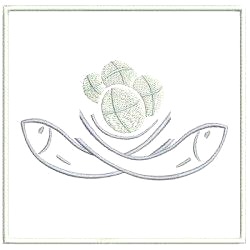
In the Gospel passage, we learn how it is to shepherd God’s people from what Jesus teaches His disciples. The story of the feeding of the crowd of five thousand with five loaves and two fish teaches us more than feeding those who are less fortunate among us, both in the physical and in the spiritual. It teaches us that giving is more a consequence of a generous spirit than giving of our excess. It also urges us to believe in the providence of God, our Father.
Often like the disciples, we find ourselves overwhelmed by perceived problems. Phillip says: “Two hundred days’ wages worth of food would not be enough for each of them to have a little.” (John 6:7) How indeed can they provide for such a multitude from their limited funds? Andrew says: “There is a boy here who has five barley loaves and two fish, but what good are they for so many?” (John 6:9) What a blessing it was to actually have food available but the gift was immediately diminished because five loaves and two fish were deemed a meagre supply amounting to nothing much. It is not enough; it is too little to share with thousands of others. Jesus’ disciples said: “Because we have so little, we have nothing for so many people.” This tendency for equating “meagre” with “nothing” is a mindset Jesus changed in his disciples. Through the miraculous feeding of the multitude with the five loaves and two fish, Jesus challenged their defeatist mentality, showing them how a little can actually go a long way with the love and mercy of God.
Isn’t this a common attitude among us Filipinos as well? We catch ourselves saying this from time to time: “I have nothing to give because I am a nobody.” Time and again, I have heard the less fortunate in society excuse themselves from contributing to the good of society saying: “We are poor. We are not educated. We are just illegal settlers. We do not have a voice. ” Even in the parish setting, when there are fundraisers, I hear some parishioners say: “We don’t need to give. The wealthier among us can raise the funds themselves. It will not hurt them to donate a large sum.” The focus is erroneously on what one does not have or will find too difficult to acquire than on what one does have. This is what we call the “poverty mentality.” It is an attitude that presumes one has nothing worthwhile to give or share because what they have does not compare to those who have more.
Our status in life does not determine how much we are able to contribute. It should not limit our capacity to do good for others. I saw an article online about a Filipino boy who was granted a full scholarship to Amherst College in Massachusetts, USA. Gelbert Cresencio is the son of a farmer/tricycle driver and a humble store keeper in the province of Bohol. Witnessing Alzheimer’s destroy his grandfather, he dreamed of becoming a neuroscientist or a neurosurgeon to develop a device to detect the onset of the disease in its early stages so the patient can already receive treatment. He knew his parents could not afford to fund his education so he took on a job after graduating High School but he endeavoured to apply for a scholarship at Amherst. Out of 5,000 applicants worldwide, he was among 118 students selected for a full scholarship with free board and lodging amounting to over P4 Million pesos! Once he achieves his dream, he is committed to return to the Philippines to serve his countrymen. He did not let his financial deficiency stop him from trying to make something of himself so he can be of greater benefit to more people in the future. He is making a very generous gift of himself to the world.
Inability is not the same as unwillingness. At the heart of generosity is a confidence in the providence of God our loving Father. It is knowing that we are children of a God of abundance and that we are all stewards of His bounty. Granted, some are stewards of more material wealth than others, but we are all blessed with our own gifts in other aspects and of that we can always share. Your wallet may be empty but you may have the physical strength to help others do manual tasks they find difficult, or you may have the intellectual capacity to think up solutions to problems, or the gift to speak inspiring words and give encouragement.
Today’s gospel calls us to witness to the love of God for His people by sharing our “loaves” and “fish” to feed those in need. When the 5 loaves and 2 fish are blessed and shared, we all know what happened next… the collected leftovers filled twelve wicker baskets. This miracle happened when the value of the meagre was acknowledged, and when the little was shared. The scant became plenty—more than enough for everybody! The little that we have when shared in love will go a long way in assuring our less fortunate brothers and sisters of God’s providence and His constant presence throughout their struggles. After all, it is through each other that we also experience God’s goodness and mercy. One of my favourite saints is St. Pedro Poveda whose feast we will celebrate this Wednesday. He once said, “One does not need to be rich in order to give, one only needs to be good; when one is good he/she will always find something to give.”
We must never belittle our ability to give. In our own little ways we can contribute to society, help the needy and alleviate someone’s suffering. To stave off another COVID surge, some people are advocating a voluntary ECQ and strictly observing the necessary health protocols, even if we are officially under GCQ with heightened restrictions. Our personal sacrifices to restrict our movements and increase our self- awareness not only contributes to our safety but also to that of the majority. That is in itself a small gift we give to our society. I was struck by a recent article in the news. It featured Dionisio Lingaling, Jr. who was simply watching over a COVID patient in the ICU of a hospital in Ilocos Norte. Seeing the plight of doctors and nurses in the COVID ICU, he offered his services to the hospital team so they did not have to undergo the tedious process of donning and doffing PPEs to do tasks outside the unit. He said he volunteered to fill up oxygen tanks for them and run other small errands because he wanted to minimise their exposure and saw that they were already fatigued. A small act of kindness meant so much to the team because he gave them a little respite and valued their sacrifice.
At the start of the homily, we mentioned the “mad cycle” of suffering. The cycle is always broken when people make an effort to alleviate others’ pain, difficulty, and misfortune. The miracle of multiplication continues to happen when we offer of our humble selves to others, no matter how poor, little or least we are. Elisha was able to feed one hundred people with a handful of barley loaves and Jesus was able to feed five thousand with five barley loaves and two fish. We are never without something to give because we are blessed by a generous and loving God who calls us His heirs. We are all stewards of His abundance. With our commitment to Jesus’ mission of feeding our hungry brothers and sisters— addressing those in need — we, too, can transform the ‘food of the poor’ into the ‘food for all’.
 Sunday Gospel Reflections
Thanks Fr.Sent from my Galaxy
LikeLike
Welcome, Melds! 🙏🏼
LikeLike
Doing good and sharing are meant for everyone, with no exception. And the more you have, the more you give. However, you don’t have to be rich to be generous. Remember the old woman who put her last 2 coins during the offering. Jesus reminded us that she gave more than the wealthy ones who gave out of their excesses. Nothing is really too small when shared with love. After all, we are all stewards of God’s blessings to us, no matter what they are.
The willingness to give, to share, to help make all things possible. The multiplication of the bread and fish is God’s way of telling us that wherever and however we may be, one small act of goodness and kindness can trickle down to everyone and does wonder to the whole community. The community pantry we have in our country is one example of a miracle of multiplication.
LikeLiked by 1 person
Very well said, Ester!!! ❤️ Thank you for taking time out to always read my homily!!! ❤️
LikeLike
So beautifully written. Thanks Toto Fr Rick for your words of wisdom. To focus on our individual and collective strengths and resources, no one indeed will be left poor.
LikeLike