Homily: Feast of the Sto. Niño (Proper Feast in the Philippines)
17 January 2021
Mark 10:13-16
Fr. Ricky C. Montanez
When I was 6, I already loved to sing and I really wanted to be a professional singer. My Lola loved to sing and my Tatay was such a fan of American rockstar Ricky Nelson that he named me after him! Our family did not own a camcorder back then so none of my antics were ever recorded for posterity. These days there is so much online content featuring the misadventures of kids and amusing episodes in their lives. My nieces enjoy watching videos of kids interacting with family pets. Many of my friends love the videos where kids think and act as though they are grown-ups. There are many charming videos online that show toddlers speaking as though they were adults. I particularly love the videos of kids showcasing their talent because they don’t feel the pressure of criticism yet. There is a viral video of a cute little boy who impressively recites Bible verses A to Z without much difficulty at all. (A: “Ask and you shall receive, seek and you shall find.” B: “Be kind to one another.” C: “Cast your cares on the Lord and He will sustain you.” Z: “Zion hears and rejoices.”) My friend jokingly said that this boy puts to shame any Christian adult and perhaps even priests, with his familiarity with the Scriptures.
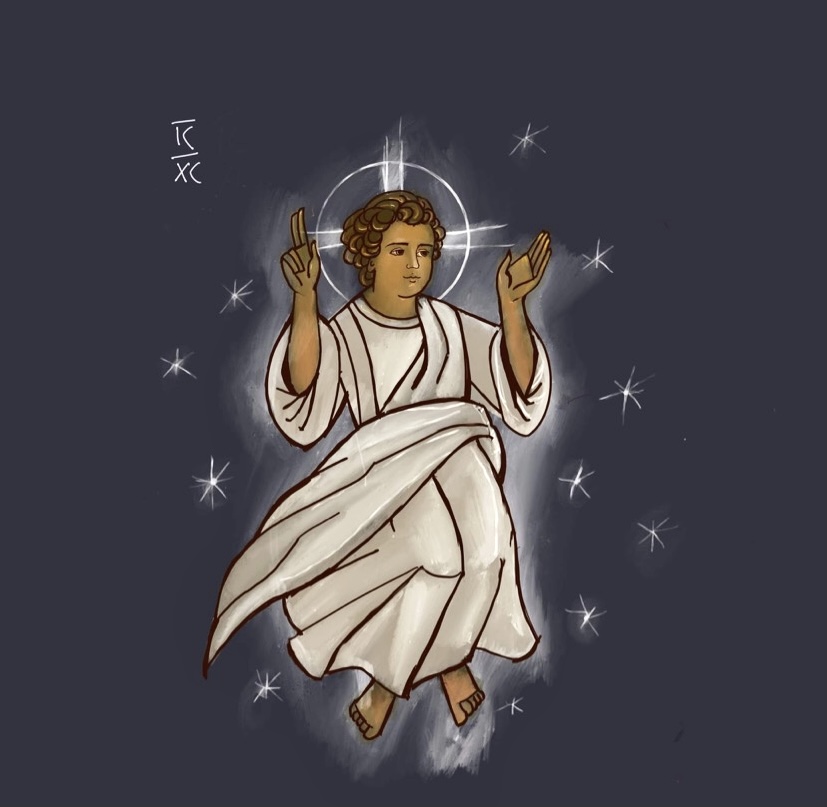
Today we celebrate the feast of the Sto. Niño (Holy Child). We celebrate our Lord Jesus Christ, as a small defenceless child. It is indeed strange to perceive the omnipotent, omniscient and omnipresent God as small, weak and defenceless, right? Why do we choose to highlight this stage of our Lord’s earthly life? In today’s Gospel passage, Jesus teaches that “whoever does not accept the Kingdom of God like a child will not enter it.” (Mark 10:15) Jesus presents an unusual model of discipleship — children. The members of a society who usually take a back seat, are deemed without a voice and whom the world relegates as less important are esteemed by Jesus. And I am sure, the adults in those days, as well as many among us today, wonder “why”? Would this be the same reason Jesus is revered today in the image of a child? Having had the chance to reflect on this matter, I would like to share with you three concepts which I believe we should learn from this story of the importance of children.
First and foremost, we ought to value the children of today for they are the most beautiful and pristine of God’s creations. We know that children are fully dependent on their parents and the adults around them for their every need. They lean upon those who care for them for their food, their clothing, their shelter, for assurance, for love, for guidance and protection. Unburdened by the hardships of life and uncorrupted by worldliness and sin, they are fundamentally trusting of those older than them. They do not have the capacity to be judgmental of others. Their naiveté and innocence leads them to believe people are good, all is well in the world, and that they can be somebody wonderful when they grow up. Children are not concerned with all the roadblocks of life. They only see their dreams and are propelled by hope to reach them. They are not proud. They do not have ulterior motives. They are honest and brave, untainted by social norms and taboos.
Secondly, as adults, I think we have to rediscover the child in each of us. We too were once innocent children with hopes, dreams and nary a care in the world. Of course, as we mature, we are overwhelmed with troubles and we learn to rely on ourselves and our own strengths to resolve them. As we grow older and experience more of life and the world, we have the tendency to become too independent; forgetting that we need others, that we are also dependent on others. We think we are fine on our own. We forget that we are interdependent. Some of us would dare brag and declare that we are self-made — that we have achieved success entirely on our own; that we owe nothing to anyone, completely forgetting the source of all our blessings and gifts. In terms of our faith relationship with God, we should heed Jesus’ suggestion that we be more child-like. God, after all, is our adoptive Father who loves us dearly and on a very personal level such that He provides all our individual needs and looks after our well-being. In the presence of our loving God, there is no reason to always overthink, overreact, worry too much and struggle to be noticed. God knows each of us His children. He knows our quirks, our weaknesses, our desires and our needs. We do not have to scream to get His attention. He knows, He sees, and He listens to the whispers of our hearts. We simply have to trust, depend and rely upon God. We are invited to adopt this humble stance, this simple and accepting demeanour toward God who shapes and reshapes our hearts in preparation for His Kingdom.
Thirdly, I think our celebration of this feast reminds us to remember that we have a responsibility to children. As adults, it is within our power to create a world that is safe for children to grow, develop, and reach their potentials. I am not just speaking to lawmakers who must create policies that protect our minors but to everyone. We can be mindful about protecting our environment so that children of tomorrow can enjoy clean air, the beauty of nature we have had the chance to behold, and to also have the opportunity to benefit from the richness of our natural resources. We also have to protect our culture for our children, to give them a sense of their identity and learn to value it. We have to protect our ethics and our morals so that children grow up learning what is right, and learn to defend it as well. And as a priest, I urge you to teach the faith to the young. Do not allow them to grow up without a strong foundation in Jesus Christ. Jesus is our anchor, our guide and our life’s goal. Share this gift with the young. Do not allow them to grow up not knowing Jesus and His love for them.
Today, as we celebrate the Feast of the Sto. Niño, we are given a model of child-like discipleship and complete dependence and trust in God as our Father. As followers of Jesus we have to take heed. We always have to remember that “to be great is to be like a child.” The image of the Child Jesus reminds us what it is to be free, pure, and innocent and to value and protect those characteristics in ourselves and in children around us. The uncomplicated simplicity of our dear Sto. Niño brings us to see… that simple is enough —- simple and true from the heart is enough. Through the Holy Child’s example, may we at all times recognize our reliance on God and our interdependence on one another. May our devotion to the Sto. Niño teach us to trust in God’s unconditional love for us, to cultivate more child-like attitude within ourselves, and motivate us to safeguard the children in our society. Sto. Niño, bless us.
Illustration: Blair Paulus C. Nuyda, AA
 Sunday Gospel Reflections
Thanos Fr. Happy feast of the Santo Niño.Sent from my Galaxy
LikeLike
You are welcome, Melds!
LikeLike
Valuing the children of today, rediscovering the child in each of us, and remembering that we have a responsibility to children- three very important reminders to all of us on this Feast of the Sto. Niño! Thank you Fr. Ricky for this stirring and heartwarming homily💕😘
LikeLike
Happy feast day of Sto Niño! Perhaps it is our nation’s devotion to the child Jesus that made us one of the few if not the only nation that still abhors abortion.. it will never be a choice.
Yes, we must safeguard children but more so those whose voices can not be heard in the womb…
Thank you po for your beautiful homily once again Fr Ricky.
LikeLike
Very uplifting to life by taking by in heart
LikeLike
Just like one book that tells us that what we need to know, we already learned them in kindergarten.
Why? Bec life is really that simple. We just complicate it.
Just look at the children. They are honest, full of hope and dream to be the best they can be, with no qualms with the worldliness and sins around them bec they believe in the goodness of people and the beauty of the world around them.
As Lolita said in the morning, children fight, but they easily kiss and make up and they bear no grudges. We adults tend to hold grudges even up to the end.
And children are so trusting and not ashame to show their dependency on their parents. The worst fear they have is to be parted fr them.
May we learn to be like them. To be honest, always hopeful, to love and not to hold grudges, to do our best and be the best we can be, and at all time, to trust and have faith in God who is always there for us bec without Him, we are nothing.
LikeLike
Ganda! Thanks Father Ricky always a pleasure to read your wonderful Homilies.
LikeLike