Homily: Feast of the Holy Family
Luke 2:22-40
27 December 2020
Fr. Ricky C. Montanez
Back in London, we had a volunteer catechist who conducted First Communion preparation class for the parish children. She used to tell me how impressed she was by one of the Filipino kids because she could recite the three basic prayers by heart! She stood out from all the other children who could identify the prayers but always needed a guide to recite them. Curious, the catechist asked the girl why she knew the prayers so well. She said that every night, her “mum and dad” would lead the whole family in praying the rosary. Wasn’t that magnificent? Despite the presence of religion teachers and catechists, a child’s first introduction to the faith is truly through one’s parents. As the Catechism of the Catholic Church stresses: “The Christian family is the first place of education in prayer. Based on the sacrament of marriage, the family is the ‘domestic church’ where God’s children learn to pray ‘as the Church’ and to persevere in prayer.” (CCC #2685).
In the Gospel for the Feast of the Holy Family we are given an idea of what Joseph and Mary were like as members of their society. Like a devout Jewish family, Mary and Joseph brought their Son to the temple to be dedicated to the Lord. Let’s rewind a little bit. Mary was betrothed to Joseph, meaning their families observed their Jewish traditions of matchmaking. Then when a census was decreed, they obeyed the guidelines and travelled to Bethlehem even if Mary was due to give birth any time. As good citizens, they proceeded despite what I imagine, people discouraging them from making the trip as it was potentially dangerous for both mother and child. Twelve years later, we read about how the Holy Family went on pilgrimage to Jerusalem for Passover. These instances tell us that Jesus grew up in a solid Jewish religious upbringing in His early life with Mary and Joseph. Through the example set by His parents, Jesus “advanced in wisdom and age and favour before God and man.” (Luke 2:52)
Joseph and Mary, were young, first time parents, not yet experts in child care. They were not wealthy but they always did the best they could for the little boy God entrusted to them. They readily went to extremes to protect Jesus when His life was in danger. And years later when Jesus was separated from Joseph and Mary in crowded Jerusalem, they did not stop searching until they found Him. Their experience of a parental nightmare tells us, they may not have been perfect parents 100% of the time but they were good and loving parents who made a strong effort. That story also suggests that they were not overly protective of their son, likely allowing Him a bit of freedom to enjoy growing up around children his age. There are few details in the Bible about the childhood and teenage years of Jesus. It is by accounts of people’s encounters with Jesus in His adulthood that tells us Joseph and Mary had raised Him right. As one commentary puts it so beautifully, “The woman who could say, “I am your servant, my whole being is at your service,” (Luke 1:38) raised a Son who would say, “Father, may your will, not mine, be done.” (Luke 22:42) Joseph, the silent, upright man, obedient to God, provided an excellent role model for Jesus such that He could say with confidence, “My food is to do the will of Him who sent Me and to accomplish His work.” (John 4:34)
Parents play a vital role in the development of a child. To state the obvious, they must provide for the needs of their children and provide a home for them. They are also a child’s first teachers. They have a duty to make the child feel loved, safe, and wanted and to guide them as they progress in life. I expect some of you to question my authority in discussing parenting with you today. True, I do not have children of my own but I do have nephews and nieces whom I have doted on since they were born. My sisters sometimes rely on me to be a second parent to them. Also, for 8 years, I had the privilege of teaching young girls from the ages of 13-16 in Assumption Iloilo. I observed how the demeanour and behaviour of children are reflective of their upbringing. Now that both “Tatay” and Mama are gone, I tend to remember them through the years as they raised me and my sisters. I recall the times they showed me affection, dispensed their wisdom, and expressed their pride and sometimes their disppointment in the things we did. I’m sure if I ask you to look back into your own childhoods, you can identify moments with your mothers and fathers that define the people you have become today.
In my teaching career I encountered a student who was almost expelled from school for aggressive behaviour towards her classmates. She would bully her classmates and terrorize them. She used harsh language, criticised others unfairly and was renowned for peppering every sentence with expletives. I found out that she grew up in a very strict and severe home environment. She was not allowed to reason out to her parents at home and was simply expected to do as she was told, no questions asked. Without a voice at home, she compensated by being one of the most boisterous and aggressive girls in school. In contrast, she had a batchmate who was quite the cheerful soul. She was a good listener, spontaneous, and consistent in her appreciation of others. She was not the most intelligent in class but she always managed to do her tasks well. Her parents were well-known in the school for being very much involved in the girl’s school activities. Her parents were very supportive. They made themselves available to their daughter, encouraged her to speak her mind and inspired her to be a conscientious young lady.
I hear that these days it is difficult to be a parent because the trend is to be lenient with children and let them figure things out at their own pace. Progressive parenting, if you will. Back when malls were teeming with children, I observed how parents would handle children throwing tantrums. Usually, they would just toss a gadget to their child to preoccupy and pacify them or put the fussy kid in the arms of ever dependable “yaya” (househelp). Back when I was a child, throwing a fit got us nowhere. Parents simply would not have it. You’d be ignored and then given a lengthy lecture once you had calmed down. In my time, if you made a mistake, your attention would be called immediately. Spanking was an acceptable punishment as was kneeling with hands outstretched, although, my own parents did not subscribe to those methods. Later on, kids were disciplined by having them stand in the corner, the suspension of TV privileges or by grounding. These days, the most painful punishment is to take away their gadgets! That is sure to have them shaking in their shoes. Parenting styles and trends have indeed changed through the years. What remains the same is the need to find a balance between understanding kids and correcting them when necessary. I find two bits of advice very helpful in this aspect. First, always remember to remain calm, don’t yell and be open to having a discussion about the effects and consequences of their actions. Secondly, teach your child to think rather than force behaviours onto them and they will display good behaviour on their own — without the need for constant warnings or conditions.
It’s not easy to be a parent in any generation. In the past, couples married in their teens and had big families. Later, when people started caring about pursuing careers, they married later in life and chose to have just one or two children. These days, some skip marriage altogether and have kids at whatever age they please. I am not here to judge. I should say, there are many success stories of parenting in every instance. What is important though is to recognize one’s readiness to commit to raising a child before actually having one. It is a lifelong commitment that entails a lot of sacrifice and an infinite capacity for love and forgiveness. One must be sure of one’s self as a person, developed one’s own character and figured out one’s values. It is by who you are and what you do more than by what you say that a child learns. Only then can a parent give a child solid foundations for life and nurture their potential, two important gifts to give one’s child — roots and wings. Roots that keep them steadfast no matter what influence the world will have on them and wings to give them the strength to overcome adversity and the confidence to dream and be the best they can be. On this Feast of the Holy Family, we beseech Mary and Joseph to guide all parents and bless all families with their wisdom and protection.
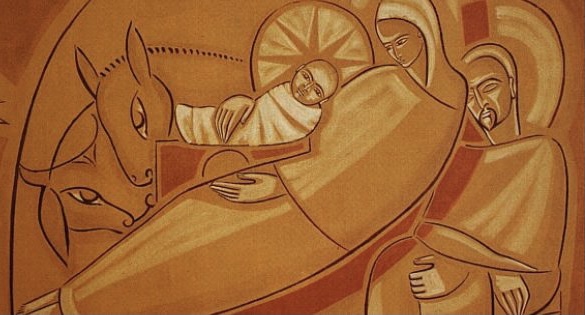
Illustration by Claudio Pastro
 Sunday Gospel Reflections
A blessed Sunday father..Thank you for such a good reminders to parent like me..yes taking care of the kids to this new generation is very challenging..but if we put Christ in the center of the family it works well..May God Bless us All.
LikeLike
True. It is by who you are and what you do more than what you say that a child learns. Yes, we can only teach by examples. That is why it is so important to develop ourselves to be a good model. Of course,
there is always the peer pressure and the strong influence fr the social media that make parenting these days so challenging.
But if we are steadfast, give time and effort to teach and nurture with love and forgiveness, allow open communication, encourage and motivate, and yes, give roots and wings to our children, and with the Holy Family as our guide, we have a good chance of raising wonderful children.
LikeLike