Homily: First Sunday of Advent (B)
Mark 13:33-37
29 November 2020
Fr. Ricky Montanez
When I was in London, one of my priestly duties was to hear confessions of children from one of the parochial schools in preparation for their First Communion. To one little boy, I intended to give the penance of an Our Father so I asked him if he knew how to pray it. The little boy answered shyly, “I only know the Lord’s Prayer.” I smiled and said: “They are the same.” The boy responded, “Oh, very well indeed.”Then, I told him, you may now say the Act of Contrition. Confused, he asked: “What is that all about?” I told him the “O my God…” He smacked his palm on his forehead and laughed, “Of course!”
We are not so different from this little boy, in the manner by which we understand and observe our Catholic practices and liturgical observances. We tend to know some of the Catholic terminologies but take for granted the richness of their meaning. Other times, we are so moved by a church experience but do not have the words to identify and discuss them. The Season of Advent, which we begin today is oftentimes merely a “liturgical” word for us, with not much meaning in our lived experience, if we are not mindful.
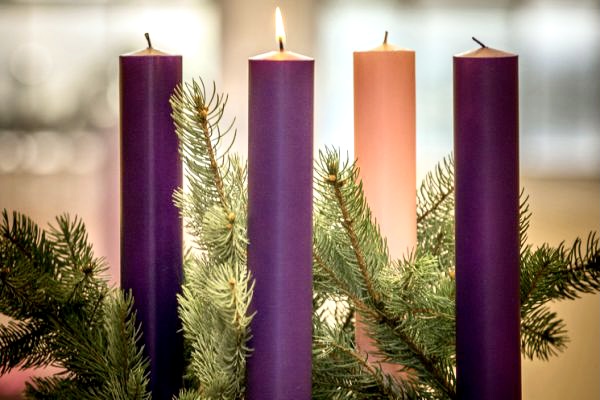
Advent, which in Latin is “adventus” translates in English as “arrival” or “coming”. For us Catholics, it is a season comprised of four (4) Sundays after the Feast of Christ the King and just before the 25th December, Christmas Day. It is an anticipation of the celebration of the blessed day when our God, sent His Son to be born as one of us, to save us from the misery of sin. Just as we find ourselves preparing for the arrival of valued guests in our home, the church deems it necessary to establish a period of preparation among the faithful that places them in the proper disposition to receive our God made flesh. We are taught that Advent is intended to be a preparation for more than just Jesus’ coming to us at Christmastime. It is a foreshadowing of The Second Coming of our Lord in the Parousia, which He divulges to His disciples before His Ascension. We are invited to observe a period of intense preparation which characterizes the Season of Advent.
In the Philippines, we are more prone to skip Advent altogether because we celebrate Christmas long before it is celebrated elsewhere in the world. Usually, the BER-months signal the start of the Christmas season for Filipinos. The experience is thus often taken for granted especially when eclipsed by the eager anticipation of the Christmas festivities. In view of this, a friend of mine curiously wondered whether many of us Catholics have a concrete understanding of what Advent preparation entails. In the liturgical calendar, it is akin to the Season of Lent in the sense that both are marked by the colour violet and that both seasons require the faithful to assume a more introspective demeanour. It is the time to bow our heads to reflect on two great moments in the plan of our salvation by our God — the Incarnation and Jesus’ Passion, Death and Resurrection. The discipline of Lent renders a clear idea of the penitential aspect of the season as it highlights prayer, fasting and almsgiving. It takes on a somber air because it forces us to bring to the fore an awareness of our sinfulness and a depiction of the intense suffering endured by God on our behalf. Advent, for certain, is not to be regarded as a miniature Lent. It is a time of joyful anticipation for the celebration of the Coming of the Son of God in the flesh roughly 2000 years ago. However, since we are also anticipating with hopeful hearts the Second Coming of Christ, should there be a penitential aspect to the celebration of Advent? Let me begin by saying this. For sure we regard Advent as a season of preparation. We are told that we have to prepare our hearts for the Coming of the Lord. But what are the things we can do to prepare ourselves internally, spiritually?
The readings for the First Sunday of Advent suggest that there is a penitential aspect of this joyous Season of Advent. First of all, we are asked to be aware of the inadequacies of our existence and how God is our hope for deliverance. Through the words of Scripture, we are invited to cultivate a greater sense of mindfulness of our need for God’s presence in our lives. In the passage from the Prophet Isaiah we see a people in dire need of liberation from their captivity in Babylon. Realising the disastrous consequences of their infidelity, they have acknowledged their sinfulness and their need for a saviour to rescue them from their predicament. I believe for Advent 2020, we are having a similar experience of that awareness of our need for God to save us from this pandemic and all the hardship it has brought on us.
Secondly, we must trust in God’s divine plan and the part He intends each of us to have in His plan. “You are our Father; we are the clay and You the potter: we are all the works of Your hands.” (Isaiah 64:8) Our Advent prayer consists in the consciousness that we are clay in God’s hands and it is He who continues to shape, mould and form us to be the persons He intends us to be. We are to trust that God, our Divine Potter works on us patiently until He is satisfied with the finished products. We need to trust that He has something beautiful for each one of us. We are His masterpieces. His Potter’s Hand will never rest in shaping and reshaping us until we are perfected. And just as the Chosen People called on God’s help to free them from the clutches of their captors, we, too earnestly implore the Lord in our Advent prayer to sustain and rescue us through all the challenges we continue to face in our life these days.
Finally, we take on the enduring spiritual value placed on the practice of fasting and other forms of penance and see them as ways of purifying our hearts. These religious observances can help us make a more conscious and purposeful Advent preparation so we can celebrate Christmas more meaningfully. Christmas is after all a great feast. I read somewhere that we cannot really feast on Christmas without a fast. When I am anticipating an invitation to a sumptuous meal, I often skip or do not eat as much in the meal prior so that I can fully enjoy the feast laid down before me. Doesn’t it make sense? I think one good example of true preparation is our Filipino tradition of dawn masses (Misa de Gallo) and Simbang Gabi. It is one way of concretely and consciously preparing ourselves for the celebration of the Coming of Jesus among us. During this novena, we humbly approach the altar declaring our need for Him, making the sacrifice of waking up early or sleeping late to complete nine (9) days of masses where we listen to readings and homilies that help dispose ourselves for Christmas. Through these spiritual practices, Advent becomes an opportune time for us to prepare our hearts and welcome the riches of the grace of God in the gift of His Son.
In the Gospel, we are told that the servants were not waiting idly for the house owner’s return. They were found mindfully and responsibly doing their tasks as the coming of the householder will be sudden and unscheduled. St. Paul reminds the Corinthians that they have been given all the gifts and talents that they need to use in order that they may be found ready to meet Christ when He comes as judge of the universe. (1 Corinthians 1:7) Similarly, we too have been gifted with talents and resources that we are to put to use and share with others for the common good. We are to bring the good tidings of Christmas to all our brothers and sisters especially to those in dire need during this difficult time. We just need to be a little creative. A friend of mine who turned 40, spent the 39 days prior to her birthday doing random acts of kindness to people whom she thought needed help. This was her way of making her 40th birthday more special and meaningful for herself and for all those whose lives she was able to touch.
As we begin this season of preparation, let us make the most of this time by keeping our eyes and hearts open and earnestly implore: “Lord, make us turn to you; let us see your face and we shall be saved.” (Psalm 80:3) And as we prayed in the Opening Prayer: “May the Lord grant us the resolve to run forth to meet Christ with righteous deeds at His coming, so that, we may be worthy to possess the heavenly Kingdom.”
 Sunday Gospel Reflections
Thank you Fr.Sent from my Galaxy
LikeLike
Welcome, Melds!
LikeLike
Many thanks again for your beautiful Homily on this 1st Sunday of Advent. Yes, we should welcome the 2nd coming of Jesus like a child when it’s birthday is near. Stay awake!!! God bless.
LikeLike
You are welcome! We should live ready!
LikeLike
Thank you so much for this beautiful homily. I never thought of fasting during advent as a preparation for Christmas. Maybe we will try that this time together with acts of kindness or giving. God bless you Fr Ricky!
LikeLike
God bless you, too. Have a meaningful Advent.
LikeLike
Advent is a time to remember the coming of our Lord, Jesus Christ, 2000 years ago when He came to save us fr our sins. It is preparing again this time for His second coming that we may have eternal life with him.
Advent is a time to celebrate knowing that we can be saved again inspite of the fact that we had sinned again and again and is now facing the dire consequence of our actions. May we acknowledge our shortcomings, resolve to change, and continue to do our tasks responsibly, making full use of our talents and resources given to us while waiting for our Lord that He may not find us wanting in our tasks should He come knocking at our doors.
LikeLike