Seeing Beyond Our Pains and Not Being Okay

Homily: Twenty-Second Sunday in Ordinary Time (A)

Matthew 16:21-27

30 August 2020

The national government recently called on religious leaders to counsel and guide the members of their flock in order to halt the increasing suicide cases in the country during this pandemic. Echoing the national government’s call, a DOH official was quoted as saying: “We are highly religious. We turn to prayers when things go bad. Maaring maibsan ang kanilang nararamdaman dahil tinitingala sila ng ating kababayan.” (They might be able to help ease whatever it is that our fellow Filipinos are going through because they look up to their religious leaders.) People now are so worried, anxious and stressed over a whole range of issues from contracting the virus, losing jobs, failing businesses and the general uncertainty of our situation for the next year or so. One thing is undeniable—we are not okay! 

In today’s First Reading, Jeremiah is seen in his most desperate moment. In misery, he laments to God that people made fun of him and looked upon him with disgust and disappointment because in being faithful to God’s call he had to proclaim unpopular and ridiculous-sounding messages. “You have duped me, O Lord, and I let myself be duped; you were too strong for me, and you triumphed. All day I am an object of laughter; everyone mocks me.” (Jeremiah 20:7) Jeremiah is not okay. He further resents the feeling that God is not comforting him and acknowledging the suffering he endures. Dejected, Jeremiah does the unthinkable—he considers refusing the responsibility of delivering the hard message of warning the people of God’s chastisement. I think, now more than ever, we know this feeling of simply wanting to give up.

In today’s Gospel passage from Matthew Jesus exposes His most vulnerable self to His disciples as He predicts His cruel fate in the hands of the religious authorities in Jerusalem. It reads “Jesus began to show his disciples that He must go to Jerusalem and suffer greatly from the elders, the chief priests, and the scribes, and be killed and on the third day be raised.” (Matthew 16:21) In obedience to God’s will, Jesus would suffer severely and be killed. Through it all, Jesus would not falter but rather remain resolute in the face of this bitter end. This resignation to fate, did not sit well with Peter who was still expecting that Jesus would still become a kingly, warrior Messiah who would save them all in a glorious display of power. “God forbid, Lord! No such thing shall ever happen to you.” (Matthew 16:22) Not getting it quite yet, Peter reacts (as did Jeremiah who questioned the ways of the Lord) to the idea of a suffering Messiah that Jesus presents. At this instant Jesus rebuffs Peter. He reminds him of the cost of being His disciple, “Whoever wishes to come after me must deny himself, take up his cross, and follow me.” (Matthew 16:24) This message is the same for all Christians throughout the centuries—-suffering is ultimately part and parcel of every Christian’s life. It is not something that we desire for its own sake. Rather, we deal with it knowing that it is not the end of the story. God’s power transforms suffering.

For both Jeremiah and Peter the prospect of pain and suffering in the life of the faithful servants of God is unacceptable. Isn’t this what our own instincts would tell us? “I have been really trying to be good Lord. So why do I have to suffer this way?” “Why would you allow this pandemic? Do we deserve all this suffering?” Jesus reminds us that we cannot attribute to God our human logic. “You are thinking not as God does, but as human beings do.” (Matthew 16:23) Sometimes, the overwhelming difficulties obscure the good that can yet come out of it. Take note that Jesus ends his prediction with His being raised from the dead. It is an invitation to His disciples to see beyond the immediate pain and suffering of this life to a promise of fullness of life with God. 

Our Christian vocation entails a readiness to accept sufferings in this life, perhaps even an untimely death if that is our lot. As Paul says in today’s Epistle, “Offer your bodies as a living sacrifice, holy and pleasing to God, your spiritual worship.” (Romans 12:1) We understand that conforming to the ways of the Lord opens us up to pain and suffering because it is a consequence of going against the ideals of the world and pursuing the ideals of heaven. Instead of shrinking back in the face of trials, we have to try to serenely accept our share in the passion of Christ for the sake of our edification as persons and as Christians. 

Like some of you, I also finished watching this KDrama with a simple but very telling title. “It’s Okay To Not Be Okay!” I realized that this TV series offers quite a number of valuable insights that can help us cope with the mental stress brought about by this pandemic. Allow me to share briefly some of them. 

The first step towards becoming OK always begins in admitting that everyone struggles. We may have different problems or similar ones to varying degrees but no one is exempt, because it is part of being human. To be vulnerable is to be human. To be human is to allow yourself to feel and show emotions when you’re happy, sad, or even angry. Moon Gang Tae may appear to be a strong person, but deep down is full of hurts, resentments and anger that he suppressed through the years. A step further from acknowledging the reality of difficulty is acceptance. It’s Okay To Not Be Okay! It is only through this recognition that we are to some degree all broken people and that we need one another to be able to get through all life’s pains and hurts. If you’re not okay, there is no shame in asking for help. The results may not be immediate but have faith that soon enough you will be okay bit by bit. Only the ones who acknowledge their need to be saved can call for a Saviour. 

In the series, the character of Ko Mun-yeung is an author who pens the book “The Boy Who Fed on Nightmares”. Moon Gang Tae reads it and learns that hurtful & painful memories, such as those of deep regrets, of hurting others and being hurt, of being abandoned — such memories buried in the heart of a person can make one stronger, more passionate and emotionally flexible. And only those with such an experience can attain happiness. No pain is for nothing. Every hurt has a future value. 

Lastly, the character of Nam Ju-Ri declares that “each of us has a set amount of misfortunes and happiness assigned to us. When things are bad now, it will only get better in the future.” No matter how bleak the outlook, we have to believe that we will get through it. 

As Christians, we are taught that God is the ideal of all that is good and perfect and that He wants the same fullness of life for us. He does not create moments of suffering for humanity. It is what we in our weakness and selfishness have caused one another. However, that is not the end for us because God does not condemn us for being human and making mistakes. He is always there to extend a helping hand. In our suffering, we simply have to blink through our tears, take His hand and not let go because eventually our God, in His generous and unconditional love for us, makes everything OK.

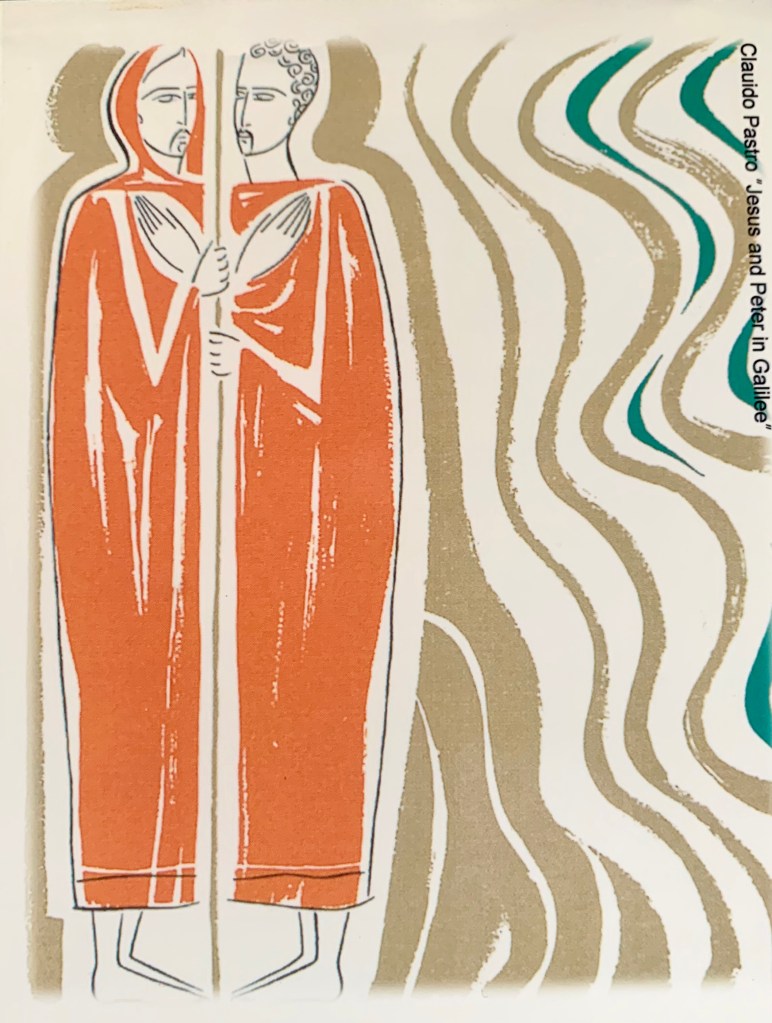
Unmasking the Christ in Us

Homily: Twenty-First Sunday in Ordinary Time (A)

Matthew 16:13-20 

23 August 2020

The expression on one’s face easily communicates that which remains unsaid. Lately, it is proving to be a challenge to adequately understand each other what with the mandatory wearing of face masks (and now face shields) we are prevented from completely seeing each other’s facial expressions. A simple smile that lights up one’s face to send a firm message of positivity to another now requires extra effort to express the same charm with only one’s eyes. (For those of us with big, beautiful eyes, now is their time to shine! Gollum!) Who would’ve guessed that masks would be an integral part of our life? We have seen all sorts of face masks being sold online from the utilitarian to the more fashionable ones to the downright funny. Though awkward and inconvenient, the wearing of masks has become a must to protect ourselves and others from the deadly virus. 

Masks have always been considered a form of disguise—an attempt to conceal a person’s true identity. It is not just used in theater or in the Mission Impossible movies but it’s pretty common in everyday life. Masks hide our fears and insecurities, give us courage to act boldly, and help us to function in uncomfortable situations. When I trained to conduct recollections, retreats or spiritual encounters on self-awareness, we had to always include a session on the taking off of our masks or the breaking down of our personal defences as an essential point of departure to achieving self-actualisation. The logic there is that we can only become the persons God intended us to be, if we are willing to shed off those masks we put on ourselves in order to look good to other people. In the First Book of Samuel, God directs the prophet , “Do not consider his appearance… The Lord does not look at the things people look at. People look at the outward appearance, but the LORD looks at the heart.” (1 Samuel 16:7) 

Jesus was not one to wear masks. In fact He was always true to Himself. However, the nature of His person was too complex to be fully comprehended by those who encountered Him. He did not take it against them, nor did He force them to know Him and accept Him. In His love and compassion for people, He allowed the mystery of His identitiy to be gradually revealed to them by what He taught and in the way He lived. 

In this Sunday’s Gospel passage from Matthew, Jesus conducts an assessment of how His words and actions were being understood by the people in relation to His messianic identity. “Who do people say that I am?” (Matthew 16:13) The varying impressions provided by the people about the identity of Jesus reveal the varied messianic expectations existing at that time. “Some say John the Baptist, others Elijah, still others Jeremiah or one of the prophets.” (Matthew 16:14) Then Jesus poses this question to His disciples. “But who do you say that I am?” (Matthew 16:15) Speaking on behalf of the others, Peter leads them all into a profession of faith. Peter confesses, “You are the Christ, the Son of the Living God.” (Matthew 16:16) Scholars say, God the Father opened the minds and hearts of the disciples through this declaration of Peter.

I’m sure you are familiar with the sayings…”birds of the same feather flock together” or “great minds think alike”. It presupposes that we gravitate to those we identify with and allow to influence us. To be affiliated and identified with someone means you acknowledge your commonality whether it is pre-existing, like a life experience, or forged such as sharing in that person’s vision, life perspective and values. The accuracy of Peter’s answer is an important element in today’s story because not only did it signify that he was beginning to see Jesus for who He really was but it was an affirmation that Peter was willing to share in Jesus’ identity and mission. This had serious consequences in the life of the disciples and how they identified themselves in their society. They lived closely with Jesus, listened to Him, observed His actions and learned from Him. Their share in His identity was especially manifest when they began their ministry after Jesus had ascended into heaven. 

We as followers of Jesus in this day and age are posed with this very same question and are made to consider the implications of our answer. What does it mean for us to profess with Peter that Jesus is the Anointed One (the Christ), the Son of the Living God today, especially at this time of the pandemic? Are we expected to stand in street corners and preach to thousands, heal the sick and cast out demons? Well, some do…. but for many of us, it is enough to get to know Jesus by reading the Bible, learning about Jesus, praying and participating in online masses, and trying our best to live a life in the service of others. Just last week, Nurse Mary Lorraine Pingol had the opportunity to witness to God’s love and care for the least among us. On her way to work, she encountered a homeless woman in labor on a Makati sidewalk. She stopped without hesitation, and assited in the childbirth. 

It could also mean making an effort to be compassionate, patient and understanding with people and situations beyond our control. A friend of mine who is the manager of a company told me how she was moved by the sense of solidarity of their employees when they announced a day’s closure for lack of deliveries. Sensing my friend’s sadness and frustration, an employee approached her and said: “Huwag na po kayo malungkot Ma’am. Makakayanan po natin itong mga pagsubok na ito basta sama-sama po tayo. Naiintindihan po namin. Di rin po kami bibitaw dahil hindi niyo rin po kami pinababayaan.” (Don’t be sad, Ma’am. We will get through these challenges as long as we are together. We will not give up on you because you have never abandoned us.) 

As a Church, we profess our faith in Jesus the Messiah and Son of God, by allowing God to work through us—to ensure that the poor, the powerless, the marginalized are never abandoned and left to fend for themselves. The Catholic Church through Caritas Manila along with some business groups had provided over 1 billion pesos worth of aid to poor families affected by the lockdown. This fact escaped the radar of those who criticized God’s people asking,  “Where is the Church in this time of crisis?” In imitation of our Lord, the Church has no desire to toot its own horn or “magbuhat ng sariling bangko”. Jesus tells us in Matthew 7:16: “By their fruit you will recognize them.” As it identifies to being a Church of the Poor, it is enough that the Church continues to work tirelessly but silently to help those in need. 

We, Christians, are still very much a work in progress. We are far from being “a peg in a sure spot” (Isaiah 22:33) in terms of our faith living. Like Peter, who was not always “the rock” Jesus intended him to be, we, too have our shortcomings and we do many things that are contrary to our identity as Christians. But through “the depth of the riches and wisdom and knowledge of God” (Romans 11:33) we have the strength to continue the struggle to be faithful to our shared identity as Christians. May we strive to become authentic witnesses of Jesus, God’s Anointed One, in our homes and in our communities.

Tearing Walls Down in Jesus’ Name

Homily: Twentieth Sunday in Ordinary Time (A)
Matthew 15:21-28
16 August 2020

Have you noticed that over the past months the protocols prescribed to prevent the spread of Covid 19 have gone from the practical to the ridiculous? There is the logical mandatory wearing of masks, proper and frequent handwashing and social distancing to the eyebrow raising motorcycle barriers and the wearing of masks inside homes! I remember seeing this funny viral video of a wife imposing physical distancing between herself and her husband within their own home. As the husband attempts to sit beside her on the sofa to watch TV, she takes out a measuring stick to ensure that they are at the prescribed distance from each other. At bedtime, the husband again attempts to sleep next to his wife on their bed but she promptly props two pillows between them to form a barrier. The exasperated husband gets up, takes out his salary from his wallet and counts it. Upon seeing the thick wad of cash, the wife lunges at her husband and tries to grab the wallet, forgetting all about physical distancing! (Wives, don’t be offended… this is just a joke.)

In Biblical times social distancing was already observed to stop the spread of contagious diseases like leprosy. The Jews were very particular about remaining ritually pure. So, they distanced themselves from all that they deemed unclean or unworthy. In fact, women also had to distance themselves during their monthly period as they were deemed unclean until the bleeding had passed. Another cultural practice that Jesus was born into was the distancing of Jews from the Gentiles, whom they viewed as idolatrous and often intent on persecuting them. This hostile divide is highlighted in the conversation of Jesus with the Canaanite woman in today’s Gospel from Matthew. “I was sent only to the lost sheep of the house of Israel.” (Matthew 15:24) This response of Jesus to the woman’s request for healing for her daughter expresses a popular belief among Jews that Gentiles could not share in their divine inheritance. Jesus was not being mean. It was not a personal affront. He was merely asserting the fact that the Messiah was initially meant to come to Israel to deliver God’s chosen people. The small-minded disciples considering her a nuisance, said “Send her away, for she keeps shouting after us.” (Matthew 15: 23)

Further in the story, the woman persists and follows them around. Jesus cautions her saying: “It is not right to take the food of the children and throw it to the dogs.” (Matthew 15:26) The food he speaks of is Himself, the Word of God and the Bread of Life that God the Father sends His children, the people of Israel. As we mentioned earlier, Gentiles had the tendency for polytheism and idol worship so it is not unusual for Jesus to compare them with dogs that eat and feed off anything indiscriminately. For the woman to say that “even the dogs feed on the scraps that fall from the master’s table” (Matthew 15:27) is a public declaration that she acknowledges there is truth to Jesus and His teachings. Though an outsider, her sincere faith in God’s boundless love tears a hole in the wall of exclusivity of Jewish claims on God’s beneficence. In recognition, Jesus commends her faith: “O woman, great is your faith!” (Matthew 15:28) and by granting her request, Jesus surprises His disciples with another revelation—- that His message and mission are inclusive of all peoples, for all time. The passage from Isaiah describes a God who desires to be in relationship with all people be they locals or foreigners who sincerely seek him. “My house shall be called a house of prayer for all peoples.” (Isaiah 56:7) This universality of God’s salvation is what St. Paul likewise affirms as he claims to be a Jew and yet commissioned to be an apostle to the Gentiles.

When we started our fight against Covid 19, we sang together in the face of this adversity to “Heal as One”. But since then our society has been considerably fractured by political affiliations, conflicting medical and economic opinions and flawed understanding of what constitutes curtailing personal freedom. There is so much colour-labelling going on that it diminishes our sense of patriotism and magnanimity towards our own countrymen. On the world scale, hate incidents have increased and social media is abuzz with the many forms of discrimination and cruelty toward people of Asian descent. Some journalists even use the racially charged term Wuhan Virus to refer to SARS Cov 2.

As Christians, especially in this time of pandemic, we are called to strive to do away with the divisions that exist among us that prevent us from filling the world with the compassion it desperately needs. We are meant to be instruments of God’s universal blessing to all peoples and reflections of God’s unequivocal and impartial love for humankind. Banded together under the banner of Jesus Christ, we will always be stronger than those that sow division in our midst. By working with each other and allowing the Lord to lead us, we will survive this world crisis and know with confidence that any disaster stemming from this pandemic will be resolved.

The Canaanite woman would not give up until her daughter was cured. When we approach Jesus in prayer, we too must not be discouraged. Jesus is always here for us. We simply have to keep faith. From our end, let us continue to strive for unity among us and enter more deeply into the communion we are called to foster. This is the way we can truly “Heal as one!”

Our Faith in the Raging Storm

Homily: Nineteenth Sunday in Ordinary Time (A)
Matthew 14:22-33
9 August 2020

Our Faith in the Raging Storm 

In London I lived with an elderly religious (Fr. Andrew) who likes to sit in the park and feed the birds. He would return home with great stories quite useful for homilies. Once he told me about a father and his little boy playing in the park and how impressed he was with the manner by which the father was watching over his little boy play. The father allowed the boy to wander around, roll on the grass (I hope no allergies!), and even attempt, at some point, to climb a tree. The father would approach his son once in a while but only when he had to. The little one appeared confident that his father was watching over him, assured that he would be close by if he needed to call upon him. What Fr. Andrew liked very much was how the father accepted his son for what he is—just a little boy. He allowed him to enjoy being a child who wanders around, experiments on things, makes false moves, and falls from time to time. 

Jesus in today’s gospel is also very much like that father. He takes his disciples as they are, particularly Peter, with all their character flaws and shortcomings and helps them in their time of need. Responding to the invitation of Jesus but challenged more by his own ego, Peter steps out of the boat and dares to walk towards Jesus on the water! Jesus does not dissuade him or give him fair warning but allows him to do his thing (in Filipino, we say, “Hinayaan niyang dumiskarte!”). At first Peter appears to be succeeding but the terrifying storm distracts him and he begins to submerge in the water.

What do you think made Peter sink? Besides his over confidence in himself, he doubted the power of Jesus to calm the storm and keep him skimming the surface of the water. Often times, we can get so carried away by our success and affiliations to power that we begin to think so highly of ourselves, believing we are invincible, and untouchable. We rely so much on our capabilities that we forget to be grateful and subservient to the One who blesses us with all these gifts and opportunities. We become like Peter, thinking ourselves capable of walking on water, and even soaring to the skies! Our security becomes dependent on maintaining the lifestyle we grow accustomed to, even if it must be at the cost of our integrity or at the expense of others. But life always has a way of testing our mettle and humbling us through unexpected troubles and hurts. Sometimes they can be such a devastating threat to the treasures we have amassed, the reputation we have built and the success we have achieved that people literally go crazy, lose faith or sink into depression. 

Another thing we must consider is that Peter sank, not only because he took his eyes off the Lord, but because he forgot that the Lord never took His eyes off of him! Despite the raging storm and the frightening waves, Jesus is undisturbed as He makes His way back to His friends on the boat. He sees them from afar and He walks to them with purpose. The disciples are so afraid and frazzled that they barely recognize Jesus at first. Jesus, on the other hand, sees them clearly and knows exactly who calls out to Him from the distance. The moment Peter steps out of the boat, Jesus is so focused on him that he sees when Peter is sinking, He hears the cry for help, and He comes right over to save him. We too are the same way. Storms in our life can be so strong that they bring us to our knees and we forget that God does not desire our destruction and that He has everything under control. 

You then might ask, why does God allow such storms to happen? Why does he allow us to make all these missteps that could lead to our undoing? The answer lies in the story we talked about in the beginning. GOD is a loving Father who accepts our individualities, peculiarities, strengths, and weaknesses. He gives us the freedom to live as we choose but He also allows us to face difficulty and suffering because through them we learn and we become stronger. We may lose our way and stumble along but through it all He assures us that He is close by if we call upon Him for help. Peter was allowed to have his way in order that Jesus could teach him about faith. He used the occasion to help the apostles gain valuable insights that will make them grow as persons and as his disciples.

In our present situation, we have encountered a combination of storms. We have faced natural calamities from typhoons, earthquakes and volcanic eruptions and now we have financial recessions, let-downs of government, unemployment, and a health crisis that has led to catastrophic loss of life.  

We are all suffering and reeling from the blows. Many have begun to sink into despair because they either forgot or found it too hard to fix their eyes on Jesus. It is not impossible, though. Looking to the efforts of the faithful in cooperation with the church we see a people who despite their own hardships, have learned to share with those who have less, to pray together, even for people they do not know, and who endeavour to spread some positivity around to uplift both neighbours and strangers.

This time of the pandemic is truly one of the most terrifying storms to ravage the whole world. We have to remember that only people of faith can brave calamitous situations like this with hope and come out of it stronger. May our faith be intensified as we struggle to keep our gaze fixed on Jesus and remember to always call on Him for help. He hears us and consoles us, reminding us constantly to patiently wait for deliverance and to “Take courage, it is I; do not be afraid!” (Matthew 14:27)

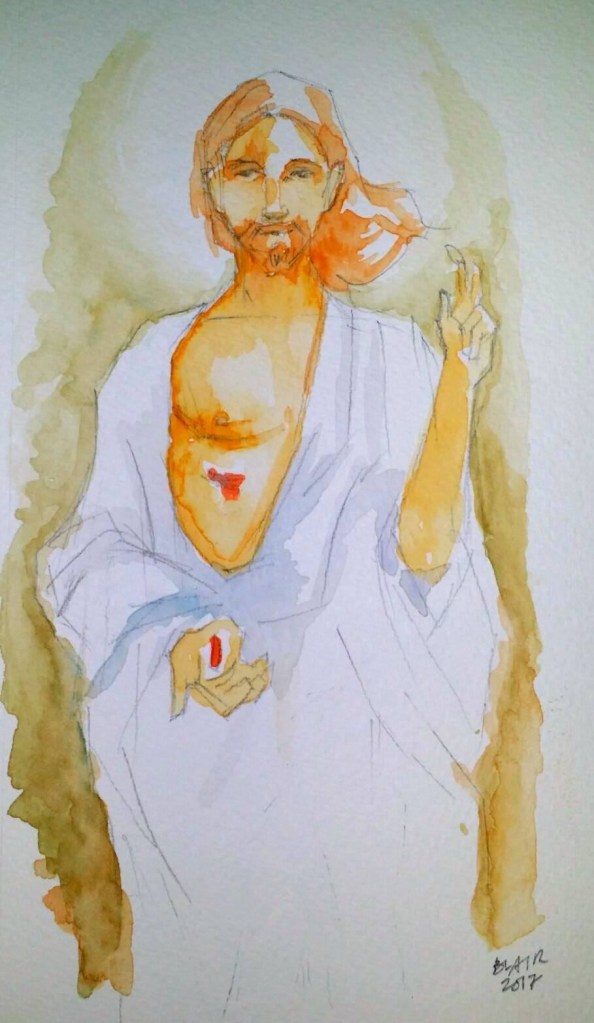
illustration by Blair Paulus Nuyda, AA

When Feeling Sorry Is Not Enough

Homily: Eighteenth Sunday in Ordinary Time (A)

Matthew 14:13-21

2 August 2020

Go viral! That’s the best way to get the public’s attention these days. When I was younger, people had to make the rounds of TV and radio stations, broadsheets and tabloids to attract attention for personal or societal concerns. Nowadays, if you want to fight for a cause or get help for somebody’s pitiful plight, you must get the issue to explode on social media. It has become a most effective tool in raising awareness, engaging large numbers of people, and getting appropriate action fast.

Back in June, widespread anger was generated online by a post on the death of single mother, Michelle Silvertino, who unknowingly died of Covid on a footbridge after days of being stranded in Manila waiting for the bus to take her back to her home province. Sadly, it was only after her death went viral on Facebook that we even took notice of her case and demanded that government see to the needs of hundreds of others similarly situated. It would be naive of us to ignore the fact that many viral posts have also destroyed the reputations of innocent people due to the propagation of lies and fake news but we can not discount the fact that it is instrumental in getting help for people who truly need it. 

Today’s gospel passage from Matthew, is popularly known as “The Feeding of the Five Thousand” wherein Jesus miraculously multiplies loaves of bread and some fish to feed the multitude. We are told that the disciples were not oblivious to the fact that the people needed to eat so they suggest to Jesus that He “dismiss the crowds so that they can go to the villages and buy some food for themselves.” (Matthew 14:15) However, Jesus knows that the situation presents a teaching opportunity. By His actions, Jesus emphasizes to His disciples that when it comes to responding to other people’s needs, there is no time to waste. We see here a compassionate God in the person of Jesus whose “heart was moved with pity” for the vast crowd. Jesus wanted His followers to learn that it was imperative that they are to take care of one another as He cares for  them. 

Let us dwell momentarily on the word “compassion.” Almost all the other translations of Matthew 14:14 use the word “compassion” instead of “pity” to describe how Jesus must have felt upon seeing the crowds. “When Jesus landed and saw a large crowd, he had compassion on them and healed their sick.” (NIV) The word compassion signifies more than just a fleeting emotion. It is defined as a “sympathetic consciousness of others’ distress together with a desire to alleviate it.” (Merriam-Webster) Showing compassion is exhibiting an inner capacity to suffer with those in distress and to act on their behalf. Jesus seems to challenge the disciples to show compassion when He tells them: “There is no need for them to go away; give them some food yourselves.” (Matthew 14:16) It is not enough to simply feel sorry for another’s plight. As Christians, we are called to respond to the needs of our brothers and sisters in distress just as Christ upon seeing the people’s need worked a miracle to fill it. 

In the opening statement of the Gospel passage, we are told that Jesus withdrew to a deserted place to most likely grieve the death of his cousin, John the Baptist. Take note, that in this story, Jesus, Himself is suffering because of the loss of a loved one.  This pandemic has wrought unspeakable misery on the whole world. None among us have been immune to the suffering.  We are all affected, albeit some to a greater degree than others. Just yesterday we had nearly 5,000 new infections and we are on the brink of reaching 100,000 confirmed COVID cases! Our collective woes seem to worsen as the number of cases continue to rise in the country. People cry out in the depths of despair pleading for God’s mercy; wondering if He cares enough about us to listen to our prayers. It is truly tempting to ask “Where is God in all this?”  

We find our consolation in St. Paul’s Letter to the Romans in the Second Reading: “What will separate us from the love of Christ?” (Romans 8:35) The Bible teaches us that God did not abandon even the unfaithful Israelites of old. He spares no expense. He even sends His only beloved Son, Jesus Christ to save mankind from its pitiful state.  God still continues to come to our aid today through the efforts of various people. As the country went into lockdown, all sorts of problems surfaced, mainly the slow distribition of food and financial assistance from the government, the lack of adequate public transportation for frontliners, the dearth of PPEs in hospitals, etc… All these problems were constantly in the news and on social media… Through Facebook, Instagram, Twitter, Viber, etc. people at home who could not sit idly by as fellow Filipinos were suffering, organized their own projects, pooling resources with their friends, relatives, and like minded-strangers to provide food, clean drinking water, medical supplies and PPEs, to wards, hospitals and poor communities! We hear of TNVS partners and ordinary citizens offering free rides to medical frontliners. So many people moved with compassion, each contributing according to their capacity to ease the suffering of God’s people. These individuals have followed in the footsteps of Jesus, who despite his own mourning did not turn away the sick and the hungry when they needed Him. It is actions like this that assures us that God, our Father, listens to our prayers and is concerned for our welfare and our needs.

In closing, I pray that all Christians, will have eyes that are keen to the suffering of others, ears that hear the lamentations of the distressed, and hearts consistently moved with compassion for the less fortunate among us. May we respond swiftly with charity and generosity, and become a testament that truly nothing and no one can ever separate us from the love of God in Jesus Christ, our Lord.

The Wisdom of Seeking Heaven

Homily: Seventeenth Sunday in Ordinary Time (A)

Matthew 13:44-52

26 July 2020

My friend and I share the same birthday. This year she asked me what was my birthday wish. For those of you who know me, I believe it is not very difficult to figure out what I prayed for. When I asked her in return, my friend told me that she prayed that God would put an end to this pandemic with the immediate discovery of a vaccine to stop the spread of Covid 19. We have heard in the news that various human trials have been yielding promising results but actual use and distribution are still a long way off. As my friend and I wait for God to grant our wishes, there is something else I pray for that I believe we all could benefit from—the gift of wisdom. That is, the ability to make the right choices in order to adapt and thrive in this new normal. We need the consciousness to allow our current situation to teach us valuable life lessons. 

In today’s passage from the First Book of Kings, Solomon, who is renowned for being the wisest of men, exhibits this wisdom in asking God for the best gift of all, a gift that God, Himself, was pleased with. Solomon could have asked for anything because there was nothing beyond the power of God to grant but in humility, Solomon asks God: “Give your servant, therefore, an understanding heart to judge people and to distinguish right from wrong.” (1 Kings 3:9) God was so pleased with Solomon’s choice of putting the good of God’s people over his own personal benefits that God rewarded Solomon immensely. “I give you a heart so wise and understanding that there has never been anyone like you up to now, and after you there will come no one to equal you.” (1 Kings 3:12) As an aside I must say I tend to agree. From leaders and monarchs we have studied in history to those presently in power, few have truly come close to Solomon. Many have placed their personal comfort and interests and the pursuit of pleasures before everything else. 

Through parables Jesus has taught us that the greatest priority we ought to pursue in life as His followers is the Kingdom of Heaven. Jesus teaches us about its incomparable value as He compares the Kingdom to a buried treasure or the pearl of great price which one endeavours to have at all costs. In the spirit of practicing what you preach, Jesus staked His life on this. He lived and died proclaiming the Kingdom of Heaven. He not only invites all His followers to pursue this in his or her lifetime but He also shows us the way by His words and deeds. 

God’s gift of wisdom (or what St. Ignatius of Loyola calls discernment, “the art of discovering how best to respond to God in daily life”) helps us to sort through the many distractions in life that keep us from distinguishing and pursuing this great treasure.  Through this health crisis, we are being taught some uncomfortable lessons in terms of what is truly essential in life. What with many businesses folding up and unemployment rising, we have come to realise that those things we so often relied upon can easily be taken away from us. Even with our sophisticated knowledge and all our scientific and technological advances in this day and age, we are still rendered helpless and inadequate to fully control this virus. This pandemic is continuously offering us countless opportunities to go back to the basics and refocus on what is truly essential. We have come to recognize what is and what is not important in life—things that so often take a back seat when we are preoccupied with getting rich, becoming famous and accumulating our wants. We have learned to appreciate the simple things like taking a deep breath unencumbered by a face mask and without fear of contracting a virus, mobility, being able to sit with good company at a restaurant over a good meal…. to more profound God given treasures such as family, togetherness, good health, and freedom.

It is never always easy to pursue what is just and true in this life. We must be willing to pay the cost of possessing the buried treasure or the pearl of great price. At times it will entail denying ourselves, delaying personal gratifications, and enduring some suffering. And for non-believers we may be taken for fools because the truth is, the Kingdom of Heaven is not yet completely within our grasp. However, as people of faith we trust in the Word made flesh. In Psalm 119 the psalmist declares that “the law of your mouth (God’s Law or God’s instruction) is more precious than thousands of gold and silver pieces.” (Psalm 119:72)

Sometimes it takes a crisis, for us to gain clarity and learn the hard lessons of life. This is not a time to lose hope. Our missteps and miscalculations due to our human shortcomings and tendencies can still be corrected through the power of God’s grace at work within us. This is what St. Paul assures the Romans, “All things work for good for those who love God.” (Romans 8:28) As children of God destined for the heavenly Kingdom, we have all been promised God’s assistance and sustenance in our pilgrimage through this life. We only have to always strive to walk in the presence of the Lord, to gain wisdom of heart so that we may attain our eternal reward!

Waiting Patiently in Hope

Homily: Sixteenth Sunday in Ordinary Time (A)

Matthew 13:24-43

19 July 2020

At the onset of this pandemic, I was immensely baffled by an image on the news of people in the supermarket actually fighting over rolls of toilet paper! Grocery shelves for tissue paper, alcohol, bleach and disinfectant sprays were empty. Surgical face masks and PPEs were traded like gold! Sadly, it’s not just material goods that continue to be in short supply. We are seeing online videos of people blowing their top, throwing tantrums and losing their temper over the slightest provocations. I can only shake my head. 

Our lack of patience has never been so manifest as at this time. Standing in line to enter the supermarket or the bank is an exercise in self-restraint. Gone are the express lanes and priority counters. We must bear with shoppers with overflowing carts and clients with multiple transactions.  Many of us have led fast-paced lives, enjoy fibre internet service, and have grown accustomed to instant downloads and guaranteed day-later package deliveries. As society grinds to a halt and restarts ever so slowly, we grit our teeth and pull our hair out. Ordering online has become a growing habit because we are forced to stay home. We tend to patronize vendors who can promise same day service because they fill our needs faster. You can imagine why people struggle with prayer when they do not get what they pray for right away. These days, I can envision all the petitions for a cure, for protection, for healing that reach heaven. I also perceive all the doubt, the grumbling and anger that mounts when suffering is brought upon us and our loved ones. 

We also have a tendency to be impatient with ourselves. Even before the pandemic, it is not unusual for young people to feel pressured to be achievers so early on in life. We get so disappointed with our failures and inadequacies that depression has become commonplace in our societies. We want to rid ourselves of the disappointing or messy parts of our lives not realizing that this may be God’s way of giving us the chance to learn, develop, grow stronger and wiser.

These days, the mere exercise of self-quarantine when warranted is almost unthinkable! We can barely manage to be alone with ourselves in a confined space and prohibited from going about our normal activities. We forget that we are not the only ones at play. We are essentially interdependent and, in this mix, there are things that will always be beyond our control. We should be patient with ourselves and realize that we cannot afford to be selfish because our decisions inadvertently affect others. 

Patience takes a lot of effort, discipline and grace. It already proves difficult under normal circumstances — let alone during a pandemic. This Sunday’s readings show us how patience is a divine attribute. The passage from the Book of Wisdom personifies the Almighty God as all powerful but One who governs His people with leniency and judges them with clemency. As Psalm 86 declares before the nations: “You, O Lord are a God merciful and gracious, slow to anger, abounding in kindness and fidelity.” (Psalm 86:15) If we identify as His children, should we not take it upon ourselves to follow His example? 

To be sure, God has more reason to be impatient with us, given that we constantly fall from grace and commit the same mistakes repeatedly. How blessed we are then that the power of God is manifested not in the destruction of the sinner but rather in the salvation of the repentant.  “And you taught your people, by these deeds, that those who are just must be kind; and you gave your children good ground for hope that you would permit repentance for their sins.” (Wisdom 12:19) In the parable the slaves of the master were disheartened by the simultaneous growth of both wheat and weeds in the field and wanted to immediately rid the field of the weeds. On the other hand, the master demonstrates patience and leniency leaving room for the weeds to grow alongside the wheat, wary that the crop may be pulled up together with the weeds. Jesus teaches us that God is extreme in his patience and that He offers every chance for His people to flourish. Instead of condemnation He desires repentance and wants to gather all the scattered children into the one community of God’s people. 

For those of us who are short tempered and anxiety ridden, Jesus reminds us to respect the process of growth as it entails time and grace — things cannot be rushed. We are all quite restless to reclaim our pre-Covid pandemic life situation. But as we slowly come to realize, life will never be the same. We will just learn to adapt. The process may be long and arduous so we simply have to learn to wait… and to do so patiently. We have been immersed long enough in a global culture of instant gratification and fear that we are losing time that we no longer have the ability to defer the satisfaction of our desires and endure the least bit of suffering. This pandemic has forced us to surrender our cares and anxieties to Him and trust that He has everything under control. 

We are half way through the month of July. In about a month and a half’s time, we expect to hear Jose Mari Chan start singing the all-time favourite “Christmas In Our Hearts”. The same time last year everyone would have been anticipating Christmas. This year, we are all anticipating the vaccine. Until then, we have to fortify our tolerance to make this period bearable for everyone. We are suffering through this together, after all. Let us pray for strength from the Holy Spirit to be able to endure all of life’s setbacks with patience and hope. Let us learn to treat ourselves and each other kindly just as God graciously treats us, His children. Finally, let us have faith in the power of God and His divine timing. Let us trust that in His mercy we will all be transformed into the persons God intends us to be… in His perfect time.

The Challenge of the Seed of God’s Word Sown in our Hearts

Homily: Fifteenth Sunday in Ordinary Time (A)

Matthew 13:1-9 (Matthew 13:1-23)

12 July 2020

Last Friday the IATF allowed motorcycle backriding for couples living in one household. It was subsequently announced that they should be able to present, upon inspection, evidence of their status such as a photocopy of their marriage certificate. Soon after a meme was posted on social media of a couple on a motorcycle, on the front of which they had mounted a large picture frame with their wedding photo. It was captioned “Proof ba kamo?”. (Want proof?) What is it with the world these days? There was a time when a mere declaration from the couple would have sufficed. There was no need for proof or assurances. Back then, you could trust someone’s word because it was the sum of their character. 

I’ve been taught that keeping one’s word is very important. This has a lot of bearing on one’s person. An upright person is praiseworthy and considered a good example for others. On the other hand, a dishonest person must be avoided and dismissed as a fraud. It is expected of anyone, at all times, to do everything in their capacity to preserve and uphold their personal integrity. We especially hold this standard against people of influence who continually crave the respect of their constituents. Would you believe a capricious person or someone who turns his or her back on their own word? Clearly, this is something of value but truthfulness and accountability to one’s word has become a rarity today. 

In today’s gospel Jesus uses the parable of a sower and seeds as an allusion to the word of God that is sown in the hearts of humankind. The word of God is consistent and trustworthy. Scripture tells us that when God enters into a covenant with His chosen people, He always keeps His word and remains faithful. God persisted in loving them despite their infidelity. In the Bible, God is sometimes likened to a man who stands by his wife even though she has strayed. Being a faithful covenantal partner, God has never reneged on His promises to His beloved. God remains merciful, abounding in goodness and steadfast in His love towards His people.

Far different from the Word of God, are the words we utter. They are often rash, tentative and unreliable. In everyday speech, we often find ourselves using words carelessly. We do not seem to mean what we want to say. In fact, it is so common to hear the word “like” in the English vernacular, to approximate what we can not or do not want to express. We have the Filipino equivalent for this… ‘parang’. Can we just say… “It was an unjust decision.”? Do we have to say… “It was, like, an unjust decision.”? Perhaps it is this hesitance to take a stand that renders our words ambiguous and lacking in credibility. 

What’s most funny to me is that despite this, people are adamant on making themselves heard! Before, one had to aspire to be published for their convictions to be widely acknowledged. Now we have Twitter, Instagram, Facebook, vlogs and blogs as platforms for people to shout out to the world what they have to say. With so many people “speaking” without regard for the quality or the veracity of their words, the internet becomes like a marketplace where people struggle to speak louder and above everyone else. Oftentimes they resort to verbosity, using big words and flowery language to appear smarter or convincing. To the listener, however, this inundation of words simply confuses and irritates. Word wars don’t help. We just don’t know what to believe or who speaks the truth.

Jesus, ought to be our model of truth because He is the Word of God in the flesh. In the beginning of his gospel, John references Jesus by saying “In the beginning there was the WORD…” (John 1:1) When we are cruel with our speech and unkind with our words, we go against what it is to be Christian. Very recently I saw this humble appeal posted on the FB walls of many of my friends: “Whenever you find a person infected with Covid 19 in your neighbourhood and going for quarantine, isolation or to the hospital, please do not take a video or photograph and make him/her feel shameful or guilty. Instead stand in your balcony or window or terrace and wish that person ‘good luck’ and a ‘speedy recovery’. This disease can be cured by each other’s help and not by humiliation.” How I wish that our words were used more frequently for the good— to encourage, appreciate and build others up instead of uttering insults, maligning others and tearing them down. 

God’s word will not fail. In the short reading from the Prophet Isaiah, God declares: “My word shall not return to me void, but shall do my will, achieving the end for which I sent it.” (Isaiah 55:11) It is like the rain and snow that accomplishes their purpose. This is so because His word is powerful! God’s word is a call to action, bringing people together and leading them toward the fulfillment of their most cherished hopes. Louis Bouyer says: “God’s word is an act, a truly creative act.” God’s word does not only create but also fulfills, sustains and saves a broken humanity into wholeness. Ultimately, the final word of God is Jesus Christ Himself on whom all of God’s promises find their fulfillment. As St. Paul claims: For Jesus Christ, the Son of God, does not waver between “Yes” and “No… as God’s ultimate “Yes,” he always does what he says. For all of God’s promises have been fulfilled in Christ with a resounding “Yes!” And through Christ, our “Amen” (which means “Yes”) ascends to God for his glory.” (2 Corinthians 1:19-20) There is finality in the Word of God in Jesus Christ! No other words will be spoken by God to people except in Jesus Christ. He is the summit of God’s revelatory act to humanity. 

Nowadays, many of us still value a person’s integrity. We demand that our leaders be honest, trustworthy and reliable. We want to get rid of the graft and corruption that is preventing our country from achieving our goals for prosperity. And yet we contribute to the persistence of this culture of duplicity. We never seem to run out of reasons to justify our deficiencies and the inefficiencies that beset our society. We have become skilled at making excuses if it means saving ourselves and getting what we want. As Frank J. Matera claims: “Integrity is always in short supply, and most people find ways to compromise what they believe without calling their dissimulation a lie.” Jesus challenges us in the Gospel: “Whoever has ears ought to hear.” (Matthew 13:9)

Brothers and sisters, every Sunday, the Word of God is sown in our hearts. Let it take root and cultivate within us a greater resolve to remain honourable—even when everything else in our midst is not so. Our Father is the fullness of truth and integrity and the perfect model of fidelity to His promises. Ultimately when the pursuit gets frustrating, when the words that flood our ears are more deceitful, be reminded that there will always be a consistent bastion of truth in God. We only need to cover our ears and attune ourselves to hear and be guided by the Word of God in our hearts.

Humility: Jesus’ invitation, a yoke to carry…

Homily: Fourteenth Sunday in Ordinary Time (A)

July 5, 2020

Matthew 11:25-30

Work has resumed for some offices in the country. Employers are relieved that business is once again generating funds to cover expenditures and employees are grateful for the opportunity to earn their keep. Of course, all must strictly observe health and safety protocols set in place for the protection of everyone. Reminders to do social distancing, wear masks, and frequently wash hands are common in any establishment you enter. There is a very funny signage outside an office building that reads… “We’re allowed back to work! But you’ve got to remember to avoid MEN (Mouth, Eyes, Nose) and instead, follow WOMEN (Wash your hands, Obey social distancing, Mask up, Exercise and eat well, No unnecessary traveling). The advice has a gender bias but is witty nonetheless. Somebody joked that married men would have no trouble with this since most of the time it is their wives who call the shots. Seriously speaking, men and women, rich and poor, CEO or janitor, all must humble themselves and submit to the protocols to save lives.

Humility. This is a virtue we all need in this time of crisis. We have all been subjected to a situation that few of us have experienced before. The world as we know it has spun off its axis and knocked the breath out of our lungs. For the most part, since March, the whole world was wrought with fear and confusion. No one could claim absolute knowledge about the virus and how to stop it. The world’s experts are still racing to understand it in the hope of finding a cure or at least retard its rapid spread. The rest of us, are left to follow the dictates of the experts and to abide by the guidelines set by government. As the situation drags on, we have witnessed increasing resistance. Complaints voiced on social media are already deafening. Everyone has an opinion. Everyone appears to know better. But is this really helping? These days, to insist on what we want or assert our impulses places lives at risk, if not our own. 

The gospel today relays to us how Jesus feels and thinks about humility. In the beginning Matthew tells us that Jesus is moved to praise the Father for showing favour on the few who dared respond to His call of discipleship despite all its risks and demands. This image is in contrast to the boastful who resist Him the most, believing themselves to be learned and wise. He insinuates that it is only the childlike who will have the capacity to open their hearts to His teachings and recognize Him as the Saviour. The logic here reminds me of a saying that (and I paraphrase) those who are proud and arrogant are like vessels filled to the brim. There is no room left to store something new or something better. 

Jesus has an appreciation for the “little ones” because He has always identified Himself with the childlike, and the lowly. From the very moment He came into this world, he was born in a stable and laid in a manger. All throughout His life, Jesus exemplifies humility. Although John the Baptist publicly acknowledges that he is not even fit to untie the sandal straps of Jesus, Jesus still submits Himself to be baptized by John. 

Of course, it is not easy to be humble. We often associate humility with losers or push overs. Nobody wants that. Everyone wants to be a winner; to be on top; to be first and not last. But the Bible tells us that is not so. In the first reading Zechariah foretells of a king — a saviour who will become the instrument of God’s blessing to all the people. The image he paints is unique. He doesn’t speak of a mighty, overbearing monarch astride a majestic stallion but rather someone who is meek riding on a humble colt, the foal of an ass. But this is not to say he is weak and powerless. (Zechariah 9:9-10) On the contrary, his dominion will be vast and he will succeed in bringing peace to all. He will “lift up all who are falling and raise up all who are bowed down” (Ps. 145:14). This King is no other than Jesus Christ — the Messiah who came to save the world not with a glorious army and the might of a sword but by proclaiming peace and love and demonstrating humble obedience to the will of the Father.

The effort to be humble is not without its rewards. Jesus promises respite from the cares and torments of life saying, “Come to me, all you who labour and are burdened, and I will give you rest.” (Matthew 11:28) Jesus further invites them to “take My yoke upon you and learn from me for I am meek and humble of heart”. (Matthew 11:29) Jesus shows us that following His example of humility and obedience as exhibited in His life and His relationships with God and others, will gain for us His full support. With Him by our side there is no burden too great that we cannot carry. 

Two weeks ago, I had a conversation with my friends living in Thailand and Vietnam, about how well these two neighbouring Asian countries have successfully managed to curb the spread of Covid 19. I listened to them, quietly hoping that the Philippines would eventually have the same success story in the nearest possible future. At that time, reports said that Vietnam has had only over 300 reported cases of Covid 19, most of whom have already recovered. And mind you, no Covid-related deaths have been recorded there. Zero (0). Nada. Similarly, Thailand was celebrating the rapid decrease of new cases in their country. In fact, they recently ended all lockdowns and re-opened their airports for domestic and international travel. With assurances raised by the health and safety measures implemented, schools have also opened their doors to students. The Thai people strictly adhere to the prescribed discipline necessary to survive the pandemic. Meanwhile, I read that Vietnam’s success is attributed to the people’s strong sense of nationalism. They acknowledged their common enemy —- the virus causing Covid 19, and collectively waged a war against it. I sadly reported to my friends that new Covid cases in the Philippines was on the rise again. I’ve heard one time too many that the surge in Covid cases is due to our lack of discipline. That’s sad. But is the surge in Covid 19 cases solely due to our lack of discipline? (I do not even want to go there.) One thing is certain though, if we are to make the Philippines Covid-free we all have to make a concerted effort. All of us must do our part, without exception. We must all be aware of our personal and social responsibility, and be intolerant of those who demand special treatment and deem themselves exempt from the guidelines for public safety.

Brothers and sisters, Jesus in today’s Gospel invites us to follow His example, “Son though He was, He learned obedience from what He suffered.” (Hebrew 5:8) When we learn to imitate Jesus’ meekness and gentleness, life becomes less complicated not only for ourselves but for everyone else. This is what it means to be yoked to Jesus. The pandemic has taught us that we are all connected to each other and that the actions of one can affect thousands. When we renounce our tendency for pride and self-entitlement, we contribute to the communal effort to rise above this crisis. We will soon feel that things are looking up because we are no longer alone in the fight.

Illustration by Blair Paulus Nuyda, AA.

Heroic Discipleship

Homily: Thirteenth Sunday in Ordinary Time (A)

Matthew 10:37-42

June 28, 2020

“Not all heroes wear capes”. I read that in the news…. and I agree. This pandemic has drawn this class of heroes out of their hideouts to help save our society from indifference and inhumanity. They are the everyday individuals who have done courageous and good deeds for strangers, with no desire for compensation. 

A few of these heroic feats of kindness have been documented by passers-by, highlighted on social media and picked up by mainstream news. Stories of acts of charity, both big and small, by people from all walks of life truly abound these days. Allow me to share with you three incidents which earned the praise of netizens and became a source of inspiration for many. 

The first is a viral post concerning a banana vendor who was seen selling bananas at the pre-pandemic price of P50 per kilo. She refused to increase the retail price saying “Kailangan ng taong kumain. Kahit dito lang, aambag ako.” She acknowledged how everyone was suffering these days and she did not want to add to their burdens by taking advantage of those who were only trying to meet the basic need for food. It was never a question of whether her customers could afford to pay. It was a conscious decision on her part, to express her solidarity with a world that was already suffering. 

Then there is Kuya Fil— an ordinary guy who volunteered to buy the medicines of his neighbours. “Nagbahay-bahay ako para makakuha ng lista ng mga kailangan nilang bilhin dito sa bayan.” When he saw that his aging neighbours and those who had no means to travel to town were already in distress over how to purchase their medications, he felt compelled to do something for them. He mustered his courage, shunned his own fears, and sought out his neighbours to help fill their desperate need. He didn’t have to be rich, powerful or well connected. He simply offered what he already had— his heart for service and compassion for his neighbours. 

Finally, let me tell you of Police Corporal Nimfa Camis from Kabayan, Benguet who earned praise for her gesture of kindness. She had spotted a woman carrying her baby in the market and had intended to call her attention for having violated quarantine guidelines. As we all know, individuals below 21 years old are prohibited from leaving their houses. But when the woman explained that she had no choice because there was no one else to mind her baby while she went to buy food, the policewoman’s heart was moved with compassion for the mother. She immediately offered to take care of the baby while the mother bought all their supplies. That small act meant the world to that mother who could attend to her urgent errands, confident that her baby was safe.

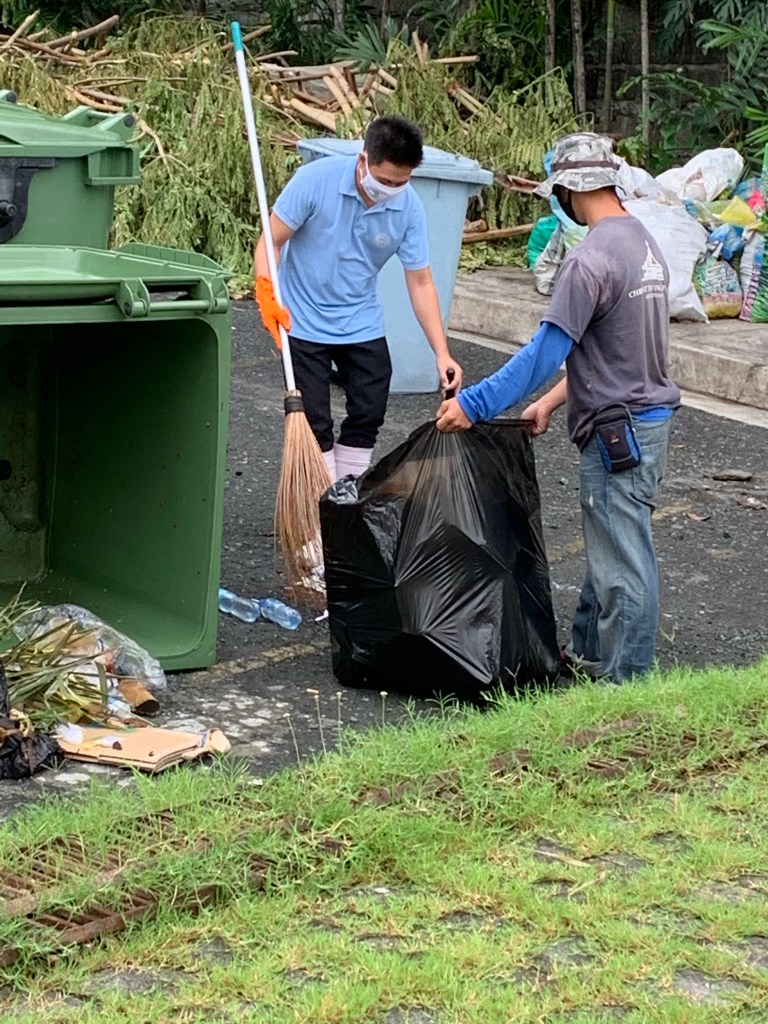
There are still countless others among us who work silently, below the radar of the press and social media. Those whose efforts we easily overlook or under-appreciate because we’ve been so used to taking their jobs for granted—those tasked with 3D jobs: dirty, dangerous and demeaning jobs. Yesterday, I was very happy to finally come across a Facebook group post expressing gratitude to these essential workers. It said simply… “Thank you… to all Janitors and Custodial Workers, cleaning and sanitizing the facilities that we all use.” I was led to think about our maintenance staff, the garbage collectors, those who operate the crematoriums, and others like them who have been working long hours through this pandemic, assisting us all from the periphery, while most of us remained safe in our homes. They are also frontliners who have made invaluable contributions to keeping our surroundings safe and sanitary. They, too, are unsung heroes in my book.

In the readings this Sunday, Jesus sets His disciples straight. They were not going to elevate their lifestyle, be treated as VIPs or proclaimed heroes for Israel for following the Messiah. In fact, it was easier to be overwhelmed by the demands of discipleship. Most of them were likely turned-off by the extremely difficult demands. For instance, Jesus calls for a complete renunciation of everything that gets in the way of following Him. You might ask yourself, can my “father and mother, wife and children, brothers and sisters” really be a hindrance to following Jesus? And do I really have to reject even my “own life”? Isn’t Jesus asking too much? Pretty extreme, I know, but Jesus, in his hyperbolic manner of speaking was simply asking for total commitment from His followers. As disciples of Jesus we can no longer put ourselves first. Jesus says further in the Gospel: “Anyone who does not take up his/her cross and follow me is not worthy of me.” He does not mince words to disillusion them with a life of privilege and fame. He tells His disciples it will not be easy. There will be sacrifices, and a cross to bear! But that is His way, and whoever wishes to follow Him, must walk the same path. To further complicate an already unappealing situation, Jesus insinuates that commitment to Him entails being consistent in our faithfulness especially in the trivialities of our everyday activities, being ready to share our gifts and resources with others in the name of Christ. Jesus says: “And whoever gives to one of these little ones even a cup of cold water because he is a disciple, truly I say to you, he shall not lose his reward.” Now there is the clincher! All one’s efforts, no matter how small do not escape the watchful eyes of our loving God, and He never forgets a good deed done.

In the passage from the Second Book of Kings, the Shunemite woman was rewarded with the gift of a child not so much for her faith in God but for being gracious to the prophet. Such an overly generous payment for a very basic gesture of hospitality, we might say. We have to remember that God cannot be outdone in generosity and a small charitable act as such, if done for the little ones of His flock will be magnanimously rewarded in His time.

In our efforts to be disciples, we must not be discouraged by the seeming insignificance of the task. Each little effort is an opportunity to make a huge difference in other people’s lives. In his book The Road to Daybreak: A Spiritual Journey, Henri Nouwen tells us that: “What little we give away multiplies. This is the way of God. This is also the way we are called to live our lives. The little love we have, the little knowledge we have, the little advice we have, the little possessions we have, are given to us as gifts of God to be given away.” These little acts of kindness become the seedbeds of a holy life. As we endeavour to give of what little we have, we encounter the miracle of discovering how much more there is to give away!

We are called, by virtue of our baptism, to demonstrate our commitment to Jesus, in whatever we do, regardless of how menial or negligible the task may seem to us. If we are moved to action out of compassion for others, lifting up to Jesus the risks we may face, for no gain but to live out our discipleship, then we too, will become heroes, in our own right.