Advancing God’s Kingdom Through Good Leaders

HOMILY: Sixth Sunday in Ordinary Time

Luke 6: 17, 20-26

13 February 2022

Fr. Ricky Cañet Montañez, AA 

Do you have those moments when you come to mass and listen to the readings in the liturgy of the Word and you get a sudden flash of illumination?  Have you ever felt like the Word of God has simply spoken to you giving you a moment of clarity over something that has been weighing on you? I feel that way about today’s gospel especially because the campaign period officially began a few days ago. Let me explain. 

In the Gospel today, which is Luke’s version of what we have known as the Beatitudes, Jesus assures the poor, the hungry, the bereaved, the despised, the marginalised, and the maligned as those who will possess the Kingdom of God and its manifestations. “Blessed are you who are poor, the Kingdom of God is yours. Blessed are you who are hungry, for you will be satisfied. Blessed are you who are now weeping, for you will laugh.” (Luke 6:20-21) All of these are promises of better things for those who are experiencing some tough times. They are promises of a brighter tomorrow. I don’t know about you but to me it sounds very similar to promises made by candidates running for the top positions of the executive and legislative branches of our government. All of them give us promises for a better future. Jesus, however, was not a political leader and we can be assured that He never makes an empty promise. How do we know this? It is because Jesus speaks the truth ALL the time. He can never contradict Himself. He cannot go against His nature for He IS the truth. 

Jesus tells us that this beautiful scenario of a just society all comes together in the Kingdom of God. In Matthew, He refers to it as the Kingdom of Heaven. Either way, the future tense in Jesus’ statements make it seem as though it is a distant reality that we can only come to grasp if we get to Heaven — where God is King and where He reigns supreme. I quote… “you WILL laugh…. you WILL be satisfied, etc”. Everything is in the future tense. This explains why we vaguely perceive ‘the Kingdom of God’ in terms of its future fulfilment.  We think of it as something that we all have yet to experience. Something far, far off in the distant future.  After all, heaven as we understand it, is a reward attained only in death — a condition we all hope comes for us later than sooner. No one here is in a rush, am I right? 

Does this mean that the poor in spirit, the hungry, the weeping, the persecuted etc, will never catch a break in this life? If we look at Luke’s Gospel, there are instances where Jesus explicitly speaks of God’s reign as already in our midst, in the here and now. Jesus tells the Pharisees: “For behold, the Kingdom of God is among you.” (Luke 17:21) Are you confused? Don’t be. He is actually trying to invite everyone to look closely and see that the very proof of the Kingdom is standing right in front of them. He invites them to recognise that He is the embodiment of the presence of God among them. Jesus’ feeding of the hungry, healing of the sick, teaching with authority, freeing of those possessed by the evil spirits and showing compassion for the sinner and the outcasts are all very clear evidences that the reign of God is real and something to hope for.  Jesus, Himself, was the personified proof that He was telling the truth. People who witnessed His teachings and His miracles were given a foretaste of what the Kingdom of Heaven would be like.  

My dear parishioners, candidates are going to court you with their beautiful words and their grand promises of a brighter tomorrow. I urge you to make the effort to learn about your candidates and see if they have given unmistakable proof that they are the most qualified people for these positions. Look at their track records and verify their accomplishments. If you owned a business, would you hire someone qualified or someone who simply looks and speaks confidently? If you are buying an item that promises to make life easier for you, don’t you ask the sales person to demo it in front of you to prove that it will deliver on its promise? We ought to be even more discerning when selecting which candidate to support. 

The coming elections are important to us, because we are choosing the leader of our nation — someone who will set the tone as to how the government will be run, and devise plans that ensure the best interests of the Filipino people and the nation. I urge you to be cautious in selecting your candidates. Jeremiah, in the First Reading (Jeremiah 17:5-8) reminds us that we should not place our faith in human beings. He asks us to put our faith in the Lord. How are we to apply this advice when obviously all candidates are human beings with their respective strengths and weaknesses? The church enjoins us to select a candidate who is God-fearing. Let us get to know who among the candidates put God FIRST in their lives; who among them has the agenda and platform that incorporate Christ-like values. Brothers and sisters, such is the candidate who will advance the Kingdom of Heaven here on earth. 

Jesus proclaimed the Kingdom of God, and gave undeniable proof to anyone who would listen.  He saved humanity because He got people to repent of their godless ways and open their eyes to the Truth. He was killed by people who saw Him as a threat to their security — people who put their security in their positions of power, influence, material possessions, and in themselves. Many saints and martyrs lost their lives following Jesus and proclaiming the Kingdom of God. Would you make sacrifices for the Kingdom?  The poor, the hungry, the bereaved receive the blessing because they belong to a society where they are protected, fed and cared for. When God reigns in the hearts of all, there can be no rich or poor because those who have more will always find it in their good hearts to share with those who do not have enough. And so, no one is left wanting. 

Our society has still a long way to go in making this Kingdom of God a reality. There is still so much injustice in our midst. Many are wanting of even the basic necessities of life while others have so much that they can afford to be extravagant and wasteful. This is why we have so much to do as God’s people to make this Kingdom of God come in our midst. It is important for us thereby to discern who we vote next to be our leaders. May Jesus’ teachings be our guide in choosing those who will lead our people, those who will head our country.

Let us pray then that we may put God first in our lives. May God make us true disciples so that one day we all can rejoice and be glad together in God’s Kingdom!
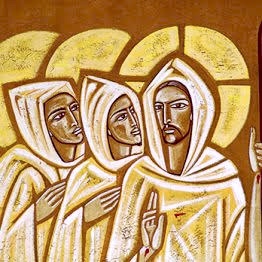

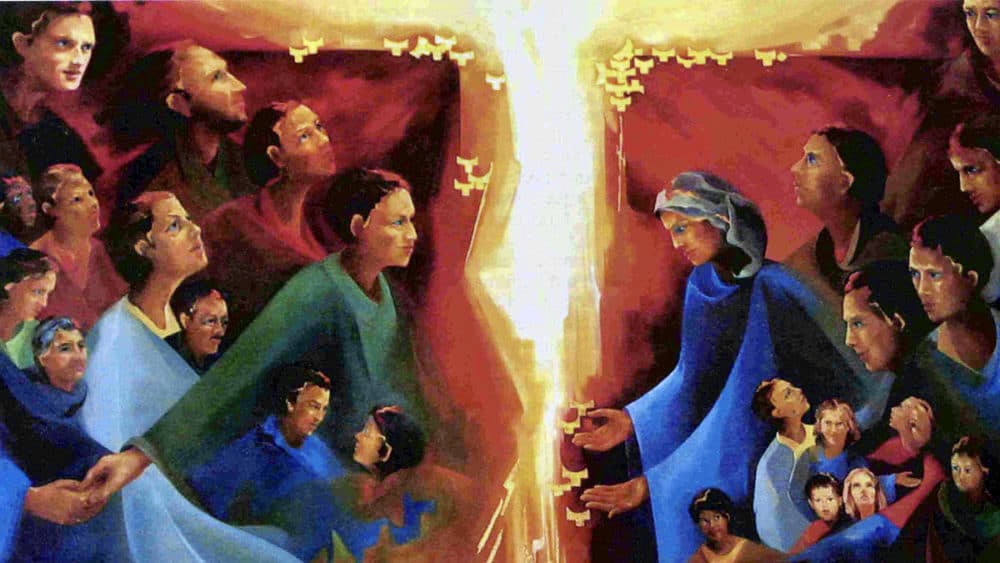
By Claudio Pastro

Called and Sent

HOMILY: Fifth Sunday in Ordinary Time

Luke 5:1-11

6 February 2022 

Fr. Ricky Cañet Montañez, AA

I love that lay ministers are now called extra-ordinary ministers of Holy Communion. This emphasises the extraordinary task assigned to these ministers. In other parts of the world, women are also privileged to be extraordinary ministers of Holy Communion. In the parish where I served in London, we have more women eucharistic ministers than men.  In the Philippines, the privilege is reserved more for the male faithful. Here in San Roque, I have very few Eucharistic ministers in the parish but they are all very responsible and dependable. We have been campaigning for more men to commit themselves to serving the Church as Eucharistic ministers but our prospects always seem to have very good excuses — “I am too preoccupied.” “I cannot commit myself to regularly take part in the required formation sessions.” “I am not ‘holy’ or ‘good enough’ for such a role.” “I would rather be in the pews.” Although some may indeed have valid reasons, others just make excuses to avoid any commitment to church service. This sure is a missed privilege and opportunity indeed; however, I hope this will not be for long. 

In the Bible, God’s call has always had a repulsive aspect that easily gives one a reason not to agree or cooperate with it.  The ones called always had very good objections to God’s invitations.  Remember the story of Moses?  In an attempt to get out of his mission, Moses told God that he stutters… “I am slow of speech and tongue.” (Exodus 4:10). Jeremiah excused himself from God’s prophetic call because he said he was too young. (Jeremiah 1:6) In today’s First Reading, we hear from Isaiah, “woe-is-me”. (Isaiah 6:5) He fears he is doomed because someone as unworthy as he is laid eyes on the most Holy God. In Jewish belief, no one who is unworthy can survive being in God’s awesome holy presence. In the gospel, Peter recognises his unworthiness before Jesus… “Depart from me, Lord, for I am a sinful man.” (Luke 5:8)

If we go over the list of the chosen disciples of Christ, we immediately note that they are not the best and the brightest, nor even the cream of the crop. Then as we go over their less-than-faithful performances, we are all the more unimpressed and disappointed. Peter’s denial, Thomas’ doubts, James and John’s desire for power and honour, and Judas’ betrayal. These slip-ups all remind us that the Lord did not choose men without fault. The readings make us realise that God works through ordinary, feeble and flawed individuals like you and me.  

We only need to open ourselves to God’s transforming grace in our lives to be able to become His instruments of spreading the Good News. In the First Reading Isaiah proclaims, “I am a man of unclean lips.” (Isaiah 6:5) Yet, he is healed by God’s power. In a dramatic scenario, Isaiah’s lips were touched by a burning coal from the altar to declare them clean.  For many others, there is no fanfare or marvellous manifestation. What is essential is that we receive the grace of God.  “By the grace of God”, St. Paul became the Christian faith’s most ardent promoter, becoming the apostle to the Gentiles although he definitely was “not fit to be called an apostle” because he once persecuted the Church and even tried to destroy it.  At one point in his life, St. Paul complained about his “thorn in the flesh.” Jesus told him: “My grace is sufficient for you, for my power is made perfect in weakness” (2 Cor. 12:9). The grace of God equips those who deem themselves unequipped for the mission. 

Though not stated explicitly, we read in the Bible that the chosen disciples underwent some form of preparation before they were sent forth for the mission. Being with Jesus was a sort of an on-the-job training for them before their missioning. It was necessary that they “be with” Jesus, to spend time watching Him, listening to Him, observing His ways with people, before heading out on mission. First, Jesus makes them His disciples, an expression derived from the Latin word discipulus, meaning “learner”. Then Jesus makes them His apostles, an expression that is rooted in the Greek word apostulus, meaning “to be sent”.    

By virtue of our baptism, we are also called and sent by the Lord to serve others. We all have different gifts that we can use to serve.  That’s why there are different ministries in the parish. If you are a good speaker and are brave enough to stand before the congregation, join the Lecoms! If you are cheerful and friendly, become one of our greeters and collectors. If you cannot get enough of FB, vlogging and creating videos, join the social media ministry. If you can sing, by all means the music ministry will welcome you. If your talent is for helping others, there are many Social Services and Development Ministry (SSDM) organisations in the parish to choose from… Prison Ministry, Migrant’s Ministry, Youth Ministry, etc. Do not be afraid and think of yourself to be unworthy. None of us is truly worthy, especially me. We are all sinners. We are all broken people with bad habits and dark sides to our persona. We all have a long history of mistakes and missteps. We admit this every time we receive communion when we say, “Lord, I am not worthy to receive you…” (Luke 7:6) And yet in that moment God comes to us and we receive Him in the Blessed Sacrament!  

In one of the parishes I served, there was a lector who struggled so much during the mass. She was a good lector because she had excellent diction and a loud clear voice, but she was a terrible commentator. She kept missing her cues, forgetting responses, and sometimes saying the old responses. The presiders, including myself were often distracted by all these errors. It seemed like her mind was wandering and she was not fully present at mass.  Many wanted to prompt her and ask: “Hello??? Are you with us?” The lecom head always received complaints about her. People would ask, “Who recruited her?” “Is there nobody else?” But this lecom was persevering. She believed God called her to serve in this ministry for a reason and she believed that He would empower her. She agreed to coaching sessions where she had one-on-one training with one of the senior lecoms. She welcomed feedback from her mentors every time she served at mass. Soon after she started improving. She worked very hard at mastering the parts of the mass and the responses. She is now one of the stronger lecoms in their ministry and the parish is proud to have her. 

Perhaps, you will have the same story? Who knows? Do not wait to hear the voice of God or an angel to appear to you.  Sometimes God calls you through me, your parish priest, your parents, or the “Ates” and “Kuyas” of our parish community.  As Christians, we are reminded that our zeal for the mission should always be coupled with our desire to be with Jesus in prayer.  We, too, need to spend time “being with Jesus” before going out to serve “in His name.” Like the apostles, we are invited to humble ourselves, to submit ourselves to the ways of learning and relearning how best we can serve God. My Superior in London would often remark… “We live and learn.” He simply wants to say that we are all a work in progress.  We should not be discouraged when we fail because the truth is we have yet so much to learn as followers of Christ.  

Isaiah, Paul, Peter and all the other prophets and disciples, were all ordinary people but God chose them to carry out His message of hope and love to all our brothers and sisters. Let us draw strength from the promise that God’s grace will sustain us and empower us. Let us allow God to use us to manifest how great and transformative His power can be. We all have the potential to collaborate with God in His work of redemption. The question is, “Would we respond, when He calls?

Openness to Truth is Openness to God

HOMILY: Fourth Sunday in Ordinary Time

Luke 4:21-30

30 January 2022 

Fr. Ricky Cañet Montañez, AA

Do you recall last year’s controversial interview of Oprah Winfrey with Megan Markle and Britain’s Prince Harry? In that interview the couple related their shocking decision to give up their royal titles and establish their family as ordinary citizens. In that same conversation, they also shared some of their sad and painful experiences while living as royals. The palace staff allegedly imposed a very rigorous and strict routine that they felt they could no longer be themselves and when they did go against protocol, they said they were criticized and reprimanded. Megan said she suffered from depression and contemplated taking her life. Harry, himself, disclosed that the palace took issue on whether their first born would take after his wife’s dark skin. Of course, we do not know the whole story. It nevertheless, shocked the world because in the eyes of their fans and their royal subjects, they had to be living a fairy tale life as they were of course a prince and a princess (officially the Duchess of Sussex). We assume that people who are good-looking, rich and famous like them would never experience any of these unpleasant things in life. They were such public figures that the whole world thought they knew everything there was to know about them.

In today’s gospel passage, we can very well see how Jesus was also a victim of people’s prejudices toward Him. Sadly, Jesus receives a hostile reception from those who are supposed to be more supportive and understanding of Him. “That’s just Jesus!” “We know him.” He’s a local boy, nothing special.” “Who is he to tell us what to do? Where does he get the guts to preach in the synagogue?” They thought that having witnessed Jesus growing up, they already know Him. It was a challenge to convince them that He was something more. Besides, Jesus didn’t fit the mould of the Messiah they were expecting. Thus, Jesus could only respond: “A prophet is not without honour except in his native place and in his own house.” (Luke 4:24) Their prejudice prevented them from recognizing the truth about Him. 

In fact, in another version of the gospel episode, we are told that because of their lack of faith in Jesus, He could not do many mighty works in his home area. (Matthew 13:58) The people’s initial appreciation of His wisdom and miraculous deeds was quite shallow as it easily turned into hostility and their utter rejection of Him. It is indeed discouraging to do some good works or to share what one knows if we are not appreciated. Worse, if one’s good intentions are even questioned and doubted. Don’t get me wrong, the power of Jesus was never dependent on whether people believed Him or not. He simply saw that they were so hard-hearted that no matter what He did, they would not change their minds. He concentrated His efforts elsewhere where He knew He could make an impact in people’s hearts and minds. After all, His mission was not to prove Himself, His credibility nor His identity but rather it was to sow the seeds of the Kingdom in the hearts of humanity. 

Like Jesus, the most loving person who ever lived, many of us may also find ourselves rejected, even hated and destroyed in our desire to pursue goodness and integrity. The sad truth is the more accepting we are of others, transcending labels and prejudices, the more likely we will be rejected, persecuted and hated, even by ‘religious’ people themselves. Take Pope Francis, for example. You would be amazed at the bashings he gets from some sectors within the church regarding some of his pronouncements for inclusivity and acceptance of others. He believes that the church should show compassion for the members of the LGBTQ community and for couples not married in church. However, his words were twisted by people to suit their agenda and misinterpreted by ultraconservatives as contrary to church teachings. It is indeed difficult to love. It is very hard to live out God’s commands. This is precisely why St. Paul in today’s Second Reading urges us to “strive eagerly for the greatest spiritual gifts”, “the more excellent way”, which is the way of “love”, of “charity”. (1 Corinthians 12:31)

As a prophet, this was also the experience of Jeremiah. The Lord clearly warned him to brace himself for opposition and rejection in passing on God’s message to the people. These days, there are a good number of brother-priests who are among the most bashed persons in social media simply because they voice out their political views and opinions or call people out for their inconsistency of beliefs. A priest-friend told me that some trolls are trying to harass him online and teach him how to be a priest himself… Some of them are not even Catholics themselves… To which he responded… “And why should we base our priesthood on what trolls say about how it should be lived out? Di nga kayo nagbabasa ng Church documents on priesthood, ayaw niyo pa sa katotohanan, at okay lang sa inyo ang pumatay, magnakaw, magsinungaling (yung mga labag sa utos ng Diyos ayon sa Bibliya), tapos you now have the audacity to tell us how we should be as priests? LOL” As Christians we draw encouragement from what St. Paul tells the Thessalonians: “Speak as those approved by God to be entrusted with the gospel. We are not trying to please people but God, who tests our hearts.” (1 Thessalonians 2:4) In other words, our calling as Christians is to solely please God for He alone truly knows us. He knows us more than other people know us or we know ourselves. 

Throughout human history this tragic story of Jeremiah and Jesus, and actually all other prophets who were rejected, maligned, and killed thereafter, continues to happen over and over again among the messengers of truth and justice in our time.  It is the messenger who pays a very high price.  Nevertheless, we should not be discouraged. We should instead opt for what is right, true and just despite the challenges we encounter. God assures us, as He assured Jeremiah that He would bless us with the necessary strength to carry out His message. “They will fight against you but not prevail over you, for I am with you to deliver you.” (Jeremiah 1:19) When God makes a promise, He never goes back on it. How wonderful it is to know that as long as we bravely speak the truth, God is on our side. Let us remain open to the truth. Let us trust that God would never leave us alone.

Photo from stbenedict.org

Spirit-Empowered for Greater Things

HOMILY: Third Sunday in Ordinary Time

Luke 1:1-4; 14-21

23 January 2022 

Fr. Ricky Cañet Montañez, AA

There is this scene about ambition from a 90’s American sitcom. The dad tells his teenage son to have big dreams. They stop outside this fancy restaurant and look at the diners through the glass windows. He calls his son’s attention to the beautifully-dressed customers and tells them they are famous people, executives and high-ranking government officials enjoying delicious meals prepared by a Michelin chef.  Then he says, “Son, one of these days you will find yourself here… serving these people.” Ay sus, waiter pala ang pinakamataas nyang pangarap para sa anak niya. (Oh my, all he wanted for his son was to be a waiter.) 

This Sunday’s gospel relates to us what Jesus has come to bring to God’s people. As the Anointed One, Jesus’ mission is “to bring glad tidings to the poor, liberty to captives, recovery of sight to the blind, freedom to the oppressed.” In other words, Jesus declares “a year acceptable to the Lord.” The expression year of the Lord’ calls to mind the Jubilee Year when “debts are forgiven, when the forfeited lands are returned to their original owners, and when those imprisoned because of financial adversity are freed.” Hence, it is a year anticipated by the disadvantaged for it is a time of deliverance for them. What Jesus came to bring is nothing more than the fulness of life for everyone.     

Furthermore, Jesus makes a bold claim in the gospel: “Today this Scripture passage is fulfilled in your hearing.” (Luke 4:21) Filled with the Spirit, Jesus inaugurates this time of deliverance for God’s people. But this work of bringing glad tidings to the poor continues in the persons of all the followers of Jesus themselves. Since the Spirit of God also dwells in each one of us, we are also tasked to bring glad tidings to our families, our communities and our society as a whole. As St. Paul reminds the Corinthians that the reception of the Spirit in baptism has concrete implications for their lives. “For in one Spirit we were all baptized into one body, whether Jews or Greeks, slaves or free persons, and we were all given to drink of one Spirit.” (1 Corinthians 12:13) As the “Body of Christ”, they are now called to proclaim Christ to the world as Christ’s ambassadors in whatever state of life they are in. 

This is worth emphasizing because most of the time we interpret this mission of bringing “glad tidings to the poor” as a task solely of those in positions of power or wealth towards those in situations of poverty. In this task, the poor are seen solely as beneficiaries rather than as partners in the mission. This attitude of inferiority is what Paul tries to rectify as he emphasizes that every member of the Body of Christ is needed for the body to be whole and to function as one. 

We see this defeatist mentality operative in our lives. Isn’t this also a common attitude among us Filipinos? The poor would say: “We are poor. We have not finished college. We are squatters.” — which is tantamount to saying: “We have nothing to give because we are nobody, because we are poor.” This is what we call the “poor-mentality”. We are the Body of Christ and, as its various members, we are valuable and are called to do great things. We all have been empowered to proclaim glad tidings to those in our midst.  We have to constantly strive to reach our full potential so we can best accomplish our life’s purpose. 

I have a friend who told me that when she was in kindergarten, her classmates dreamed of being doctors and lawyers, whereas her ultimate dream was to be a nanny (yaya). To her surprise, her classmates in an exclusive girl’s high school revealed they had similar dreams for themselves as kids. Despite the opportunities in life they had, one initially wanted to be a streetsweeper (metro-aide), another a laundrywoman, and another a housemaid.  They were smart and their parents could pay for their education so it was funny that they initially failed to see the extent of their potential.  As members of the Body of Christ, we have a responsibility to make sure it works at its best. We can only do that if we are at our best, making use of all our God-given talents and the opportunities He sends our way. 

It is also important that we recognize that God, our Father, wants the best for us and He will help us achieve our potential if we make the effort and work hard.  Someone shared with me that she and her siblings liked to watch real estate brokers sell beautiful mansions on Youtube. Sabi niya sa kapatid niya, “Ayoko ng ganyang bahay…  mamamatay ako sa kakalinis niyan. Walang maniniwala na tayo ang may-ari… mapagkakamalan lang tayong caretaker o katulong diyan.”  Kung ganyan ang paiiralin nating pag-iisip, paano tayo aasenso?  Do not think you are unworthy of better things! God our Father is rich. He owns everything we see and He is generous to His children. Hindi Siya nagmamaramot kung ating pagsisiskapan. 

Last night I did not miss the Presidential Interviews of GMA 7 hosted by the respected journalist Jessica Soho. I would say it was a good venue (the mainstream media) for both the candidates and the electorate beyond the propaganda and fake news usually found in the different social media platforms like Tiktok, Facebook and the like. The presidentiables were given the chance to talk about their take on different issues as well as their plan for our country. On the other hand, the electorate are given the chance to listen to them and thus helped to make an informed choice come May 2022. This election is crucial! We have to choose well. Pumili ng kandidato na hindi puro porma, pangako, at pambobola. Umiwas sa kandidato na mapangamkam sa yaman at kapangyarihan.  Filipinos deserve better. Dream bigger for the Philippines. We have so much to give the world in terms of talents, skills, and resources. We need a good leader who inspires us to maximise the potential of our systems to benefit all of us Filipinos and still be able to make a contribution to humanity on a global scale. 

Ating tandaan, tayo ay anak ng Diyos at ang hangad Niya ay ang ating kabutihan at pag-unlad sa buhay. We are heirs to the riches of His Kingdom!  Huwag din natin maliitin ang ating sarili. God created us beautiful and good. He has blessed each of us with special skills and talents that make us worthy members of the Body of Christ. Let us not limit ourselves or be discouraged by our circumstance. Let us glorify God by finding our purpose in life and by striving to be the best we can be.

Nurturing Children’s Dreams to Unfold God’s Masterpieces

HOMILY: Feast of the Santo Niño

(Proper Feast in the Philippines)

Luke 2:41-52

16 January 2022 

Fr. Ricky Cañet Montañez, AA

There is this tweet about a Lumad child who was asked what her dream is… The little girl responded: “Makaihi na walang nakakakita.” (To be able to pee without worrying that someone might see.) Yun na ang pangarap niya sa buhay! Parang ang babaw ano? This is funny but really sad. She’s been in the evacuation centre for so long that her only dream is to have a little privacy when she relieves herself. And the tweet continues… “Now we ask why Filipinos don’t dream big? Many of us don’t have even the littlest of things.” 

Today, we celebrate the Feast of the Santo Niño, a feast proper to the Philippines. The gospel for this feast relates the Finding of the Child Jesus in the Temple — the 5th Joyful Mystery of the Rosary. In the story, Mary and Joseph unknowingly lost Jesus on their way home from spending the Passover feast in Jerusalem. His parents frantically searched for Him and found Him still in the temple discussing things of the law with the “teachers.”  In this Gospel Infancy Narrative, we note that even as a child, Jesus seemed to already know quite well what His purpose in life was. Look at how He responded to His anxious mother who reprimanded Him for worrying them with His sudden disappearance. “Son, why have you done this to us? Your father and I have been looking for you with great anxiety.” (Luke 2:48) To this the Child Jesus responded saying: “Why were you looking for me? Did you not know that I must be in my Father’s house?” (Luke2:49) Early on in life, Jesus knew where He needed to be, what He needed to be busy about. Yet the Gospel ends by telling us that although Jesus seemed really sure of Himself, He still subjected Himself to the care and guidance of His parents. “He went down with them and came to Nazareth, and was obedient to them.” (Luke 2:51) Because of this, “Jesus advanced in wisdom and age and favour before God and man.” (Luke 2:52) 

Sadly, many of our children these days don’t bother to think about their purpose in life.  Recently, I read about this nine-year study conducted by Dream Project PH that revealed 8 out of 10 Filipinos do not have a dream! The study covered 614 Filipino teenagers in 54 provinces from different socio-economic classes across the country. The question asked them was, “Do you have a dream in life?” Is this a shock to you as it is to me? I mean, it doesn’t really matter if a kid does not attain his/her dream when he/she grows up, what’s important is that in his/her young mind he/she is able to see the immense possibility of his/her future and the promise of joy and fulfilment that comes with the fruits of hard work. When I was a child, I dreamed I would be a singer. I thought I would be doing musical theatre when I grew up. Well, we all know how that turned out because I am here delivering a homily. However, before I became a priest, I was a teacher to high school girls and the extent of my foray into musical theatre was having my students stage popular musicals as the culminating activity for the school year.  Sa ngayon sa misa at sa simbahan na lang ako nakakakanta. In a way, I still get to live my childhood dream. 

How sad that 80% of young Filipinos have stopped dreaming. The study identifies five possible reasons why they do not dream big anymore. The first reason given is the lack of conversations between children and adults in the family or in the school setting about their dreams. Most children these days are bereft of engaging conversations that would help them nurture their dreams. Most parents teach their kids to be practical in life. Another factor is the lack of role models. The study observed that “many in our generation have had mindsets shaped by the previous generation where this thinking prevails: “You study so that you can graduate, so that you can get a well-paying job.” This mindset limits one’s purpose to just having a well-paying job. Is this all there is to life? Na-hurt naman ako dun kasi sa pagpapari, walang mataas na sweldo. Para palang walang kakwenta-kwenta ang buhay kung di kumikita ng limpak-limpak na pera.  Many of our young people these days are not challenged nor encouraged to see that making a difference in society is the greater value. They have to be helped to see things in a much broader perspective.  The truth is, there is a lack of many lucrative opportunities for the youth but that should not deter them from pursuing something that will fulfil them, make them happy, and allow them to contribute to society. Finally, it is the lack of resources for many of these young people that keeps them from considering to dream big. If the basic needs are not met, having a dream beyond basic survival such as food for one’s stomach would be the least of a child’s priorities.     

In all honesty, it is our responsibility as adults in society to change this situation and help children believe in their purpose and dream again. You may have seen on social media the video of this 10-year-old child, Nicole DC Torres, from the Dumagat tribe, who dreams of being a doctor someday. When asked why she wants to be a doctor, she says: “Gusto ko kasi makapagtapos para makabawi ako kila nanay. Kung gaano nila ako minahal ganun ko din ibabalik ang pagmamahal ko sa kanila…. Pangarap ko maging doktor para makatulong sa may sakit.”  Through her teachers, Nicole is encouraged to make a difference in her community by becoming a doctor. I mentioned to you that I used to work in an an educational centre for the indigenous people in Bukidnon. We always reminded the students how fortunate they were to have the chance at an education. We also encouraged them to give back to their community someday. I am happy to say that many of them have returned and chose to serve their community after their studies. 

On this Feast of the Santo Niño, I ask you to be gracious to the children in your families, your homes and your communities. Kailangan nating maipahiwatig sa kanila na ang bawat tao ay espesyal sapagka’t tayo ay mga anak ng Diyos. Our second reading from Ephesians reminds us: “[God] has destined us for adoption to Himself through Jesus Christ.” (Ephesians 1:5) (Tayo ay itinalaga ng Diyos upang maging mga anak niya sa pamamagitan ni Hesukristo.) Within each child is a world of potential, a masterpiece of the Lord waiting to unfold. Let us resolve to do everything within our power to help children discover, nurture and reach their full potentials. May the Child Jesus help us ensure a future for them, in whom lies the hope of humanity.

A Baptism of Solidarity

HOMILY: Baptism of the Lord 

Luke 3:15-16, 21-22)

9 January 2022 

Fr. Ricky Cañet Montañez, AA

This Sunday’s feast of the Baptism of the Lord signals the end of the Christmas season and the beginning of “Ordinary Time.” In the past, Christmas season would have ended last Sunday, on the Solemnity of the Epiphany. Why do you think today’s feast was added to the Christmas season?  It actually completes the celebration of three great divine revelations of the Christmas season — 1. There is Christmas when we celebrate the mystery of the Incarnation, that is, ‘the Word becoming flesh in Jesus’ (St. John) — God becoming one of us, ‘the Emmanuel’, ‘God-with-us’ (St. Matthew), or how God comes among us with Good News for the poor, the outcasts and  sinners (St. Luke); 2. The Epiphany, when we celebrate how God has revealed Himself to all peoples with the message of salvation for everyone; and finally; 3. The Baptism of Jesus when we see how God has entered into solidarity with humanity by virtue of Jesus being baptised by John the Baptist.  

Kinailangan ba ni Hesus na siya ay binyagan? (Did Jesus have to be baptised?) Kung tutuusin, pawang makasalanan na nagbabagong buhay ang nagpapabinyag kay San Juan. (We are told that those coming for baptism to John the Baptist were repentant sinners.) Baptism, after all, cleanses all sins — personal sin, original sin, and punishment for sin. Inaalis nito ang lahat ng hadlang para ang tao ay maaaring makapasok sa kaharian ng Diyos. (It removes whatever would impede their entry into the Kingdom of God.) During the rite we are called to be true to what we become — sons and daughters of God.) Nakapagtataka na si Hesus ay nagpabinyag samantalang di na Siya kailangan magpa-ampon dahil tunay na Siyang anak ng Diyos. (Jesus did not have to be baptised as adopted son because He is Himself the Son of God.)  Nakakapagtaka na Siyang walang sala ay sumailalim sa  isang ritwal para sa mga naligaw ng landas.  Jesus was sinless so He did not need to be repentant. Even John the Baptist knew this, almost refusing to baptize Jesus whom he acknowledged to be greater than he is. So, why did Jesus insist on undergoing something He did not need? 

Jesus did it for us. He subjected Himself to baptism as the very first step of identifying Himself with sinners. He takes on our weaknesses and shortcomings in order to elevate us to the glory of being children of God. Si Hesus ay Diyos pero kahit kailan ay hindi Niya ipinilit na Siya ay tratuhin bilang VIP.  He never required any claim of privilege for Himself. Mas pinili nyang maging ordinaryo tulad natin. (Instead, Jesus chose to be like everyone else.) So much so, that they underestimated Him and wouldn’t believe Him if not for His miraculous works and extraordinary insight. We note how Jesus has often been met with hostility even by His own familiars: “That’s just Jesus!”  “We know him.” He’s a local boy, nothing special.” “Sino ba siya para sabihan tayo kung paano tayo dapat mamuhay?  Saan niya nakuha ang lakas ng loob na magturo sa synagogue?” “Coming to his hometown, he began teaching the people in their synagogue, and they were amazed. “Where did this man get this wisdom and these miraculous powers?… Where did this man get all these things?” (Matthew 13:54-56) Jesus did not prove Himself but just did what He needed to do. As in the words of St. Paul, Jesus did not deem to be equal with God, rather, he made Himself nothing by taking the very nature of a servant, being made in human likeness.” (Philippinas 2: 6-7) 

Kung tayo ay tagapagsunod ni Kristo, dapat sana ginagaya natin ang kanyang mga prinsipyo at sinusunod natin ang tinuturo Niya. Subalit, tila iba ang pinahahalagahan natin. Kamakailan, naisabalita na may isang dalaga na naniwalang siya ay angat sa kapwa niya —- na sobra niyang espesyal na di na niya kailangan sumunod sa batas na dapat mag-quarantine muna pagkarating mula sa ibang bansa. Dahil siya ay naging pabaya at makasarili, nakahawa sya ng COVID sa mga nagtatrabaho sa restaurant kung saan sya naki-party. Pati ang ilang mga bisitang walang kamalay-malay ay nahawahan. Nanganganib na rin ang kabuhayan ng mga taong nagtatarabaho sa hotel na tinakasan niya ng quarantine dahil ipinasara ito pansamantala.  Sometimes we think so highly of ourselves because we are either young, beautiful, rich or well-connected.  We want to cut corners or get ahead at the expense of others. O kaya iniisip natin na dahil magara ang kotse natin o branded ang suot o galing ka sa exclusive na paaralan ay mas importante tayo sa iba.  Bakit ba tayong mga ordinaryong nilalang ang mahilig maghari-harian sa mundong pag-aari ng Diyos Amang Tagapaglikha?

Jesus made of Himself the perfect example of humility. Tinuruan Niya tayo na sa pakikiisa sa aba, ay mas maiintindihan natin ang kanilang pangagailangan  at mas higit natin silang matutulungan. Recently, the team of Caritas Philippines led by Bishop Jose Colin Bagaforo and Fr. Antonio Labiao made solidarity visits to areas affected by Typhoon Odette in Southern Leyte province.  Hinikayat nila na tumulong pa rin ang taongbayan sa pagbigay ng donasyon pero higit doon, pinahalagahan nila ang pagtungo sa mga nasalantang lugar para maitaguyod muli ang komunidad, ayusin ang mga nasirang tirahan, at magbigay ng emergency livelihood assistance. Nakiisa sila sa mga kababayan nating nagdurusa upang magbigay ng pag-asa. (They deem it fit to visit the victims of the typhoon to be in solidarity with them. They also wanted to see for themselves the situation on the ground so as to help accelerate the rebuilding efforts of the affected communities.)

As we celebrate the Baptism of our Lord (and also the Feast of the Black Nazarene), we acknowledge with gratitude the depth of God’s love for us and the extent to which He went to show us His sincerity. He became like us and chose to be counted among us in every way except sin. He shed the privilege of His divinity and Kingship to show us the value of humility and true service. Bilang binyagan, tayo’y nabibilang na sa pamilya ng Panginoon bilang kanyang mga ampon na anak. Nawa’y maging totoo tayo sa ating dignidad bilang mga anak ng Diyos at masundan natin ng wagas ang ehemplo ni Hesus para balang araw ay kalugdan din tayo ng Diyos Ama. (May we be true to what we have become through our baptism — God’s sons and daughters! Let us follow the example of Christ so that some day God may also be pleased with us.)

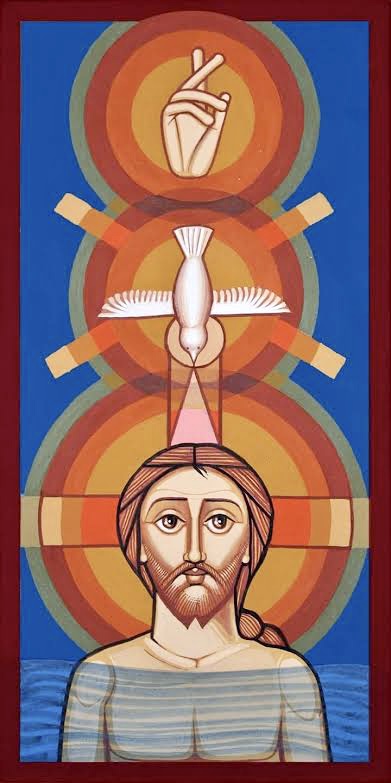
By Claudio Pastro

Pursuing our Star to find Jesus

HOMILY: Solemnity of the Epiphany of the Lord

Matthew 2:1-12

2 January 2022 

Fr. Ricky Cañet Montañez, AA

“The year 2021 was one for the books. What will 2022 bring? No matter what, remember: You are made of star stuff. Sparkly, glorious star stuff.” This was NASA’s New Year greeting on Instagram. They posted this along with an astounding image of a star cluster. Cute, right? But what does it mean? Can being sparkly and glorious help us face the challenges of the new year? 

In today’s gospel, we read about “star stuff”. St Matthew gives us the story of the visit of the Magi to the new-born Saviour. In the Gospel, we are told that “these wise men from the East” relentlessly followed the light of a star in their search of the infant king. First of all, who were these Magi, sometimes referred to as kings? Most scholars agree that in ancient times, in what is known to us as the Middle East, the Magi — from which come the words “magician” and “magic”— were astrologers. Some say they were Babylonian astrologers, Arabian magicians or simply adventure-seekers. They were men who studied the skies, and found meaning in the movement of the stars and the planets. Since they were known to be wise men, they were quite influential and would have been very wealthy.  They were respected in all levels of society and held sway in determining the courses of action in people’s lives. 

In their endeavour, to pay great attention to the marvels of the universe and reading the sign in the heavens, they found something of interest that pointed to a momentous event in history — the birth of a great ruler for the Jews. They set out on a journey despite the lack of certitude. You could imagine how the other astrologers reacted to this seemingly foolish endeavour.  Come to think of it, why would you leave everything within your comfort zone —- where you are safe, well- provided for, well-known and respected by people?  It’s not like they were given the exact address or the name of the person they were looking for. Today, anyone who has tried to locate an old friend or a missing relative would know, it’s not easy to track down someone who has a very small digital footprint —- meaning little to zero updated information on the internet. Could you really imagine leaving your home to track someone based on a star map, believing it will be “over the place” one is looking for? A commentary noted that “you could travel several hundred miles and the star could still be “over” you.” Can’t blame anyone who would eventually find the whole endeavour as a complete waste of time and just give up. And don’t get me started on the possible problems of travelling by night (how else would they see the stars?), encountering cloudy skies, stormy dessert conditions and possibly even the threat of robbers lurking on the path? It must have been a complete nightmare for them! Sa totoo lang, naisusulat na tatlo ang nakarating sa kinaroroonan ni Kristo. Maaaring madami sila sa simula pero sa anumang kadahilanan ay isa isa silang nabawas sa bilang. The three that remained persisted because deep within their hearts they were driven by their desire for something “more” as represented by that star. This star that travelled before them also gave them the courage to leave everything behind, to venture on a long and perilous journey, and to persist through all the hardships they encountered along the way. 

I came across this article on a married couple — Roy and Elna, both teachers who practice their profession in remote jungle schools here in the Philippines. Every day they must face the dangers of hiking through a tough and dangerous dense jungle terrain to reach remote areas where their students are located. The photos posted show they have to practically create their path through steep inclines and slopes which turn very slippery and muddy when it rains. Most recently they have been traversing this path with their 4-month-old baby daughter because no one else would care for her while they were working.  When Roy was asked why, he, a capable teacher who could choose to work in a more comfortable and safer place to work, still opted to risk so much for very little pay, he answered, “’This is where I find peace. This is where God has called us to be…. Anywhere God has called you to be is the safest place.”  It sounds absolutely crazy but they are happy and they find contentment in knowing this is where God intends them to be. Netizens commented that they were profoundly inspiring, selfless, and admirable for living a life of service to mankind. 

For a time I also chose to leave the comfort and security of my decent paying and fulfilling teaching job in Assumption Iloilo to teach in Bukidnon. Nag-volunteer ako for 1 year doon to set up the formal basic education for the Higaonons. It was a challenge and a huge adjustment for me but I can say it was one of the happiest I have ever been! That is in fact, where I discovered God was calling me to the priesthood. My life has been one wild ride ever since. Laging palipat-lipat ng mission center; madalas malayo sa mga kapatid ko, mga pamangkin ko at sa pamilya ko. I’ve been sent to the US, Europe and the UK. I’ve also been sent to South America where I had to learn a new language — Spanish, in order to mingle and communicate to the locals. Hindi madali, lalo na nung naging sakitin si mama at lagi akong nag-aalala kasi ang laki ng gastusin para sa gamot niya na pinagtutulungan naming magkakapatid. Yet, I can say that my life has been truly rewarding. I have met many wonderful people and experienced many miracles and wonders of the Lord because I chose to walk the path presented to me. Bukidnon was my star. It is what led me to Jesus. 

I invite you to look at your life and assess whether you feel this is where God intends you to be.  I have a friend who graduated from a prestigious university and was expected to get a high paying corporate job. As she applied for work, she prayed that God may present her with the option where He wanted her to be. She ended up in government service for over 10 years. While her contemporaries continued to ascend the corporate ladder in private firms, she chose to stop working to personally care for her sick father until he passed away. It was not easy especially since the expenses depleted her savings. But she believed it was where God meant her to be at the time. These days she is working for a small NGO that pays very little and is rather problematic but it is where she believes God intends her to be for now. She believes God wants her to help set things right for the institution. Another friend has been employed in a private company for over 15 years. Every 5 years, she tells herself she is quitting because the work is hard and the pay is below industry standard. Yet she stayed because she trusted it was where God intended her to be. Today she is the COO of the company and she is making changes, where necessary, to uplift the lives of their employees. In another 5 years she will probably wonder if it is time to quit the company but she hopes God will have an answer for her then, as always. 

I read somewhere that the Magi may represent to us today’s travellers restlessly searching for the next big thing, the ultimate experience or the perfect path.  Perhaps there are some of you listening who are faced with a difficult and seemingly foolish choice leading to a great possibility? Maybe some of you are still searching for your star.  At the very least, I can guarantee that your journey is going to be no less treacherous and difficult. There will be sacrifices and challenges that will make you want to give up but know that if you believe that it is where God is leading you or where He intends you to be, then you can trust He will be there for you every step of the way. In this new year, I pray you discover the true desire of your heart. May God reveal to you where He wants you to be at this point in your life. May He give you the strength and the courage to make your tough choice and pursue your star because in the end, trust that it is where you, too, will find Jesus.

Star Cluster from NASA’s Instagram Post

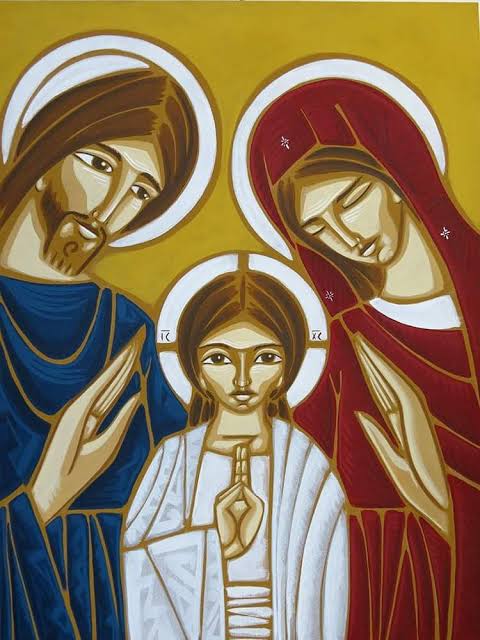
Invited to be Like the Holy Family 

HOMILY: The Holy Family of Jesus, Mary and Joseph

Luke 2:41-51

26 December 2021 

Fr. Ricky Cañet Montañez, AA

Today as we celebrate the Feast of the Holy Family, I want to share with you the story of Allan. He is a 12-year-old boy in Negros Oriental who already works as a magtutuba to provide for his mother and siblings. 

Allan would tie a knife to his waist and climb trees as tall as 40 feet to collect sap from the tree and place it in a jug. They would make this into tuba. Then he would walk nearly two hours to town to sell the wine for P50. At times, Allan would drink tuba just to get rid of his thirst and dip biscuits in it when he was hungry. He admitted that he was scared doing his job and would even get wounded, but he needed the money to feed his family. At a tender age, Allan was already the breadwinner of his mother and siblings. 

His mother “Lina,” left her partner in 2018.  “Nag-away kami dahil sa pinansyal. Umabot sa punto na nagkapisikalan na kami.  Sinabihan niya kami na papatayin niya kami kung hindi kami lalayas. Natakot ako kasi limang buwan akong buntis, kaya lumayas na lang kami.” After giving birth, she asked her ex for financial support but he didn’t have any money. She had to work at a food chain to provide for her family so Allan, only nine years old then, was left to take care of his siblings. Things got worse for the family when the youngest, who was 6 months at the time, developed seizures and was found to have cerebral ischemia.  

Lina wailed that her P2000 weekly salary was not enough for their daily needs and the hospital expenses. To augment her earnings, she decided to plant and sell sweet potato. In a week, she earned P250-P300. This is also what she fed her kids. “Mahirap talaga. Pero pinagsikapan ko lang talaga na mapakain ko sila sa tatlong beses sa isang araw kahit hindi man bigas at least meron mapasok sa kanilang sikmura,” Lina said. It was Allan who took care of his youngest sibling while his mom Lina was in the field with her other child. 

As life got even more difficult for them, she attempted to seek the help of the Department of Social Welfare and Development. That was when Allan offered to help his mother by becoming a coconut wine gatherer or magtutuba so she could stay at home and take care of his siblings.  “Gusto kong tumulong sa kanya dahil mahal namin siya. Wala nang ibang tutulong. Iniwan kami ng aming Papa… para na akong Papa dahil akong bumubuhay kay Mama at kay Dodong,” Allan said.   Although Lina was thankful to her son Allan, she expressed her guilt and sadness for how his life turned out. “Hindi na po siya halos kumakain.  Kailangan namin siya pilitin. Tagilid nga siyang naglalakad at ang kanyang paningin, parang meron ding deperensya.”  “Naaawa po ako sa anak ko, at nag-mature pa siya nang maaga. “, she said.”

According to a non-government organization, children in far-flung provinces have long been suffering from these problems, and they are increasing in number.  “Kung papapiliin ako kung magtatrabaho o maglalaro, magtrabaho ang akin. Mahal ko talaga sila. Gagawin ko ang lahat para makakain din sila,” Allan said. For now, Lina is simply grateful for her son’s sacrifice. “Nagpapasalamat ako sa Diyos na kahit gaano kasalbahe ang aking asawa noon, nagkaroon naman ako ng mga anak na  mababait.” 

Such are the struggles of family life. Even the Holy Family experienced difficulties. From the onset, Mary’s pregnancy was already controversial. When it was time for her to give birth, no one could take them and she had to deliver her baby in a stable with animals. Then, they had to pack up and flee to Egypt to save Jesus from Herod’s murderous rampage on baby boys. Imagine what life was like for them in a foreign land. They were Jews in Egypt — newlyweds with a little baby. There really is no reason for us to think that the Holy Family was spared from any of the pains of an ordinary Jewish family. Although there are few details in the Bible about the childhood and teenage years of Jesus, we can assume that Mary and Joseph, being devout in the Jewish faith, raised their son in a typical Jewish family. Jesus fully entered our human condition as He grew up by having a normal family life. And like any human family, it must have had from time to time its ups and downs, its joys and sorrows, its problems and difficulties. What made the Family of Jesus, Mary and Joseph “holy” is their collective attentiveness and obedience to God’s will amidst the struggles of their daily lives. 

In the Gospel for the Feast of the Holy Family we are told of a particular incident in the life of the Holy Family that illustrates that it was not always perfect, and of how they had to deal with the messiness of their life as a family. The gospel relates Mary and Joseph’s parental nightmare as Jesus was separated from them in crowded Jerusalem on their pilgrimage for the Passover. The fact that they “lost” Jesus for a moment, tells us that although they were good and loving parents who made a strong effort, they may not have been perfect parents 100% of the time. Let’s look at how Mary and Joseph reacted to the situation. They did not blame each other when they realised that Jesus was left behind in Jerusalem. Together they took on the responsibility of looking for Him. They did not stop searching until they found Him. And when they found Jesus, they were not harsh. They simply let Him know how displeased they were and that they were concerned for Him. In the Jewish tradition, it is said that “at the age of 12 a boy assumes responsibility for his faith and in this regard becomes an adult.”  Hence, like a typical teenager of that time, excited to assume some degree of responsibility, Jesus had missed out on communicating properly with His parents his intentions. Our children can learn from Jesus who after realising how loved He was, willingly returned home to continue being guided by His parents until He progressed in life toward the fulfilment of His vocation and mission. “And Jesus advanced in wisdom and age and favour before God and man.” 

Today, as we reflect on the quality of our own family life, we entrust to the Lord the many families that are struggling, like that of the 12-year-old boy in Negros Oriental. As Christians, we are called to model our own family life after the Holy Family in Nazareth.  This feast reminds us that every family (though not perfect) has the potential to be “holy”. We are invited to strive to show love and care for one another and to grow in holiness as God’s family.

Recognising and Rejoicing the Lord’s Presence 

HOMILY: Fourth Sunday of Advent

Luke 1:39-45

19 December 2021 

Fr. Ricky Cañet Montañez, AA

Last Tuesday, some teachers of St. Pedro Poveda College came to the parish for the gift-giving of our 130 Day Care children here in Bagumbayan. When the gifts were laid out on the sanctuary in preparation for the event, I noticed that they came in different sizes and packages. Some, unusually bigger than others. Some were wrapped in fancy and colourful paper while others came in basic packaging. Others even had attractive umbrellas on them. I immediately alerted the teachers that there might be a need to specify a system of distribution of the gifts so as to avoid potential chaos with everyone going for the bigger, more attractive packages. We made sure to announce to the recipients that the gifts would not have the same contents and packaging because they had been prepared by different students. Thankfully, we did not have any problems with any of the children nor the parents. Everyone was just so happy to receive a share in the gifts.  

In today’s gospel passage, we hear of the encounter of Mary and Elizabeth after these chosen women received an extraordinary blessing from the Lord. Elizabeth, in her old age was pregnant with “the Great Precursor” and Mary, despite her virginity, was now carrying in her womb, the Savior of the world. We are told of the jubilant response of Elizabeth and her unborn son to Mary’s greeting. “How does this happen to me, that the mother of my Lord should come to me?” (Luke 1:44) You may think this a common reaction of someone who has not seen a relative for a long time but this is actually a remarkable moment in our Christian history. It is the first recorded human acknowledgment of God incarnate! Elizabeth, filled with the Holy Spirit, recognises and celebrates the presence of the Lord in her midst, in the person of the unborn baby Jesus in Mary’s womb. If you were Elizabeth, would you have reacted the same way? Do you think you would have realised that, by virtue of Mary visiting you, Jesus was also visiting you?  Often, recognition and rejoicing at God’s presence elude many of us. We are often reminded that the Lord makes Himself present right here in our midst, and yet we fail to realise it! Perhaps it is because we are focused on the wrong things. Many of us, only notice what is wrong with our lives or perhaps what is wrong with others. “Where have we fixed our eyes?” As they often say, people who are too focused on what they do not have rather than on what they have, are most likely unhappy, discontent and resentful of their life. 

Although a secondary character in the nativity story, Elizabeth has much to teach us about being cognisant of the presence of the Lord in our midst. As I look closely at Elizabeth, I imagined she could have entertained thoughts of envy over Mary’s blessing. She could have chosen to focus on all the reasons why she, herself, would have been “the better choice” to be mother of the Messiah. After all, she was married to a respectable Jewish priest and she was a more mature woman who was more than ready to be a mother, given her many years of longing for a child. Although having been chosen to be John’s mother is blessing enough, she could have asked why was she not chosen to be the mother of the Saviour. Yet none of these thoughts entered her mind. As one Bible commentator puts it: “Elizabeth was so full of the Holy Spirit’s wisdom, so aware of the Lord’s presence, and so open to God’s will, that Elizabeth simply rejoices.” Because of this keen awareness of the divine, she was able to raise a son who could say, “He must increase while I must decrease.” (John 3:30) The grown-up son of Elizabeth insisted that Jesus was greater than himself, that he was not even worthy to untie the strap of Jesus’ sandals.  (John 1:27) John played a crucial part in the revelation of Israel’s Messiah —- rejoicing at his own role in God’s plan of salvation. 

During this Advent Season, we have made a conscious effort to walk on the path of holiness and righteousness so as to hasten the coming of the day of the Lord in our midst; readying our hearts to receive Him at the time of His choosing.  It may not be His great triumphant return as of yet but as Timothy Cardinal Dolan of New York suggests beautifully, Jesus can come to us today in the most subtle instances. “Christ comes to us in a very soft, gentle, unassuming and everyday kind of way. He comes in a prayer whispered or a smile exchanged. He comes in bread and wine changed into his very body and blood at Mass. He comes in his word in the Scripture. He comes in the cry of a baby and the countless other helpless individuals who cry out for help. He comes in the meal shared or in a tear dried. He comes in worn rosary beads and in those sacred words of absolution. He comes in forgiveness exchanged and a second chance given. He comes in water poured in baptism or vows exchanged in marriage. He comes in an imperfect Church in a struggling world.” 

As I was preparing this homily, I chanced on a meme showing on one side Santa Claus carrying a sack of presents happily announcing, “I have gifts for everyone!”. On the other side is Jesus wearing His crown of thorns, carrying His cross saying, “I have but one gift but it is enough for everyone.”  Right smack in the centre it said: Jesus can give you the gift of eternal life!  If you had to choose, whose gift would you accept? Let’s ask the Holy Spirit for wisdom that like Elizabeth and John the Baptist we, too, may recognise and rejoice at the Lord’s presence in our midst and eagerly accept the gift He offers.  May we have minds and hearts open to see and celebrate the Lord’s presence in our daily lives and not miss Him completely when He comes to visit us.

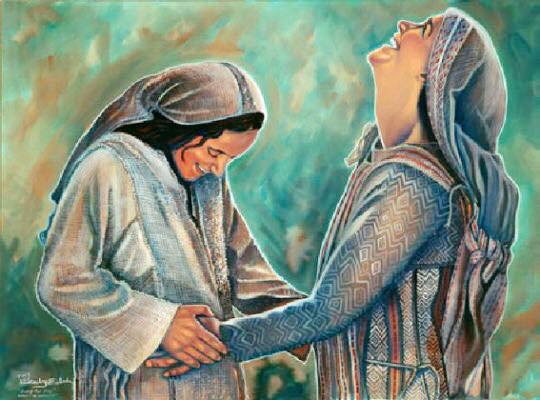
La Visitation d’Arcabas

Joy Rooted in Christ; Borne of Gratitude

HOMILY: Third Sunday of Advent

Luke 3:10-18

12 December 2021 

Fr. Ricky Cañet Montañez, AA

According to a Twitter Holiday Research, Filipinos still managed to have holiday cheer in December last year despite the challenges posed by the coronavirus pandemic.  The study found a staggering 2.3 million holiday-related conversations in the Philippines during that period in 2020. We even managed to celebrate Christmas creatively through our virtual parties. This year, with the alert levels downgraded and Covid cases at their lowest, we had the promise of an even merrier Christmas, until news of the Omicron variant came to spoil all the fun we were expecting. Nevertheless, there is still reason to be thankful because we are in a better state now (of course still with its own challenges) than we were last year.

Today is Gaudete Sunday (from the Latin “rejoice”). Today’s readings overflow with the call to: “Gaudete” – Rejoice! And then rejoice again! In fact, it calls us to rejoice always.  Hindi ba kapanipaniwala kaya dapat inuulit? When we want to attest to the veracity of something, we tend to say in the vernacular… “Oo! Talagang, talaga!”  The double introductory exhortation of Paul to rejoice is an emphatic attempt to convince the listener.  Perhaps Paul understood that it is not easy to be joyful because of life’s many struggles. Ngayong Pasko, masaya ang empleyadong makakatanggap ng Christmas bonus. Pero ang saya mabilis nawawala pag naipambayad na ang bonus sa dami ng gastusin sa kapaskuhan. Parang dumaan lang sa palad ang pera. I ask you now, “Is it really possible to remain joyful always? 

The readings tell us why and how we should remain joyful at all times. First of all, JOY is not the same as HAPPINESS. Sometimes we tend to use these words interchangeably but there is a difference! It is important to note that what Paul advocates is not merely the happiness derived from the enjoyment of the fleeting comforts of life. Rather, it is something deeper than that. It is a special kind of joy, which according to Paul is one of the fruits of the Spirit (Galatians 5:22). It is rooted in the faith of the nearness of God to us. In the passage from Zephaniah, Zion is told to shout for joy because God has saved her from all her enemies. God is in the midst of His people. St. Paul tells the Philippians that the Lord is near and that God will bring about peace for His people. In the Gospel, John the Baptist tells the people that the One coming after him “will baptize them with the Holy Spirit and fire.” (Luke 3:16) The “anointed one” will bring about peace and justice for the people. He is coming and this is reason enough for joy. 

Secondly, JOY is borne of GRATITUDE. In the KDrama, Hometown Cha Cha Cha, I like the character of Mrs. Kim Gam Ri. (To those who have yet to see it, forgive me for this spoiler.) In the episode before she died, her other elderly friends had a sleepover at her house and they asked her if she was happy. She responded by saying that she likes that she is old. Looking back, she said that she had many tasty dishes, seen great scenery, and met wonderful people. “Right now, I am chatting with you both.  What more can I ask for? My life is so much fun. Today, the evening glow looked so beautiful. The squid I had for dinner was scrumptious, too. Look around yourself closely, and you’ll realize that you’re surrounded by many precious things.”  How about you in the pews and those who are watching the livestream?  What are you thankful for?  Someone tweeted, “Getting a haircut at my usual place. And hindi na sila naka-PPE and shileds. Mukha na daw silang tao… Simple joys pero nakakagaan lang.” Personally, I am thankful that more people are returning to churches. Essentially, we are joyful because we experience how Christ is being enfleshed in our midst. His Presence is already near us and something we celebrate every day — the sheer goodness of many people around us, the utter joy of beholding nature’s beauty, the edifying moments of human interactions — all these point to the nearness of Christ in the flesh among us. 

Lastly, JOY is not dependent on LIFE’s CIRCUMSTANCES.  While we may not always feel like “shouting for joy”, there is always reason to be joyful about knowing that God is in our midst. It is that certitude, that faith in God’s love for us that fuels joy. The condition of our life should not determine whether we should rejoice or not.  As one Bible commentator points out: “Every experience, if we can only realise it, is touched by God and has its meaning.” We only have to discover and accept its meaning and we shall experience inner joy, the kind which no one can take away from us. The cause of our joy is Christ and Christ alone who is Emmanuel. There is this boy featured in KMJS last Sunday. His name is Jumong. Sabi niya na-bully na daw siya maraming beses dahil sa kanyang kapansanan sa mata. Sa kabila ng masakit na karanasan, natutunan na daw nyang balewalain ang pambubully sa kanya. Panatag nyang ipinagmamalaki na may puwang siya sa mundo at kaya pa niyang magbago. Jumong proves that being happy is really a matter of choice and a perspective in life. One netizen commented: “Jumong’s story attests that there’s no such thing as disabled – only differently-abled individuals. We should look at the very essence of their personality not at the very core of their condition. Because the real disability is the inability to see each of us as special.” 

Henri Nouwen, priest, theologian, and prolific writer said: “Joy does not come from positive predictions about the state of the world. It does not depend on the ups and downs of the circumstances of our lives. Joy is based on the spiritual knowledge that, while the world in which we live is shrouded in darkness, God has overcome the world. Jesus says it loudly and clearly: “In the world you will have troubles, but rejoice, I have overcome the world.” (John 16:33) 

I asked you earlier if it is possible to be joyful always…. It seems the answer is “YES”! Joy is not fleeting and shallow but rather a deep-seated sense of gratitude in what God has done, what He is doing and what He is about to do. It is a state of heart that cannot be changed or perturbed by any trouble or gloominess around us. Let us pray that in this season, we may possess that Christian joy deep in our hearts.