Choosing to be Found

HOMILY: Twenty-Fourth Sunday in Ordinary Time

Luke 15:1-32

11 September 2022

Fr. Ricky Cañet Montañez, AA

On September 9th (September 8th in the UK), the world was saddened to hear of the passing of Queen Elizabeth, the 96-year-old monarch of the United Kingdom. Her son Charles is becoming King at age 73 whereas she was only 25 years old when she ascended to the throne. In 1957, the Queen’s Christmas broadcast made history as the first to be televised. It was memorable because it was her public declaration of her devotion to the people.  “In the old days the monarch led his soldiers on the battlefield and his leadership at all times was close and personal. I cannot lead you into battle, I do not give you laws or administer justice but I can do something else, I can give you my heart and my devotion to these old islands and to all the peoples of our brotherhood of nations.” 

This Sunday’s gospel passage is something we all know well. It has to do with three parables about finding what is lost. The lost sheep, the lost coin, and the lost son. Today let us focus on the third parable, specifically, the motivation behind the three characters. Motivation is what drives our actions and behaviors. Ang pinagmumulan nito ay ang ang ating mga minimithi, pangangailangan, at pinahahalagahan. May commercial ng kape na nagtatanong… “Para saan ka bumabangon?” Que pagod ka dahil nag overtime ka sa trabaho, puyat ka sa kaka Netflix lagpas hatinggabi, o di naman ang sarap-sarap ng tulog mo dahil umulan, pero, kapag tumunog ang iyong alarm, pipilitin mo pa ring bumangon. Sa totoo lang, kailangan mo ng tulog. For many of us sleep is both a necessity and a luxury we afford ourselves. Yet we are willing to give it up, if not deprive ourselves of it for something we deem important. Ang iba, babangon dahil papasok sa school para makatapos ng pag-aaral at maabot ang pangarap; ang iba para sa trabaho kasi kailangan buhayin ang pamilya. Ang iba babangon dahil gusto nilang makapiling, mapagsilbihan ang kanilang mahal sa buhay. Hindi ba? 

The younger son was motivated by selfishness at first. He chose to shun his duty to his family and satisfy his wanderlust. He prematurely claimed his inheritance to amuse himself with the pleasures of the world. Nang maubos ang yaman niya, umuwi sya sa tatay niya. His return was motivated by need. Nakakararanas na siya ng gutom at kahirapan. He realized he was living so miserably whereas his father’s servants were living and eating well in his father’s employ.  He gained an awareness of shame for his folly and he swallowed his pride and returned home. 

The older son had a different motivation in life.  He serves his father and does what is expected of him out of a sense of duty. Though he never seemed to have complained, we observe that deep down in his heart he feels resentment. Sinumbatan pa niya ang kanyang ama sa handaang inilaan nito para sa kapatid niyang pasaway. “Have I not slaved all these years for you?”  His obedience is not motivated by his love for the father but it is rather a manifestation of his own desire to maintain an appearance of being a dutiful son. He does what is right not so much in the pursuit of some higher ideal, like righteousness or love, but rather as a way of holding on to others’ approval, especially that of his father. 

Are we bound by duty or devotion? Do we do things because we feel we are obligated to or is it out of love? Mayroong isang kusinera na ang sarap sarap magluto. Hindi naman siya trained chef pero napakalinamnam ng kanyang luto kahit ordinaryo at simple lang ang inihahanda niya, tulad ng adobo, nilaga, menudo o afritada.  She is not motivated by a desire to excel or to gain accolades or enrich herself. She is happy to cook and make her employers happy and healthy with her cooking. That is her motivation. 

Ngayong medyo bumabalik na sa dati ang ating pamumuhay, nagbabalik na rin sa normal ang buhay sa simbahan. Kataka-taka lang na hanggang ngayon, marami pa din ang pumipiling mag-online mass pa rin. Are you not motivated to come to church by a desire to receive Jesus in communion? We are asked to “take and eat” of His body. We can only do so in person, right? So, kung kaya nating pumunta sa mall, pumunta sa mga handaan ng kamag-anak at kaibigan, bakit hindi tayo makapunta sa simbahan minsan sa isang linggo?  Tayo namang nakakapagsimba sa simbahan, tanungin natin ang ating sarili. Bakit tayo nakikipagsapalaran para makapagsimba?  Ito ba ay dahil ito’y obligasyon bilang Katoliko o dahil masidhi ang ating pagnanais na maihayag natin ang ating pagmamahal at pagpapasalamat sa Diyos? 

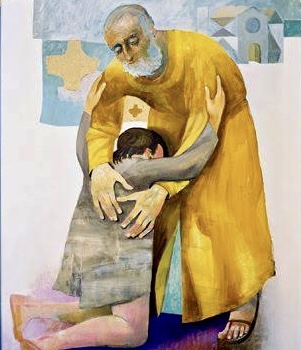
I have not forgotten the third character in the story — the father. The dad is only motivated by love for his children.  When the young son asks for his inheritance, it was an insult to him but instead of scolding and disciplining his son, he gave him what he asked for. Nang talunang bumalik ang anak, sa malayo pa lang natanaw na niya at tumakbo siya upang ito ay salubungin ng yakap. Hindi niya ipinagkait ang pagpapatawad, ipinagdiwang pa niya ang pagbabalik ng anak. Would you say, the father was playing favourites? I don’t think so. He says to the older, “My son, you are here with me always. Everything I have is yours.” (Luke 15:31) He has never failed to notice or acknowledge the dutifulness of the older son. In fact, his generosity is complete — “everything I have is yours” (Luke 15:31) not half, not a third, but everything. 

The tragedy of the story then is the heartlessness of the older son. His refusal to join in the celebration because of anger, resentment, and jealousy makes him the one who is truly lost.  It seems that to have “everything” his father had to offer was not enough. Tila mas sasaya siya kung ipinagtabuyan ng tatay nila ang kapatid niyang nagsisisi.  In spite of the younger son’s wastefulness and irresponsibility, his decision to return home and beg his father for forgiveness is what brings him a new lease on life. Perhaps the challenge of the gospel is to recognize how we have strayed from the path, let go of being lost and choose to be found?  If we choose to be followers of Jesus, the practice of our faith must not be motivated by mere compliance to a set of religious rules and obligations but rather more of a loving response to a loving God. In His lifetime, Jesus did all things out of love and devotion to the Father. This way He has pleased the Father.  Duty can only take us this far. Love brings us to do more and do better for God’s glory. Now, that is pleasing to God.  

Jesus ends the story before we hear whether the older son accepts his father’s request for compassion or not. Did he eventually choose life (mercy) over death (condemnation)? This to me signals that maybe there was a chance for the older son to have had a change of heart. We, too, have a chance to re-evaluate our motivations in life in the way we behave towards God and the people God has blessed us with. At the very least, we can be assured that God waits for the lost with mercy, compassion, and forgiveness. He is our loving Father who is ready to embrace those among us who are aching to be found.
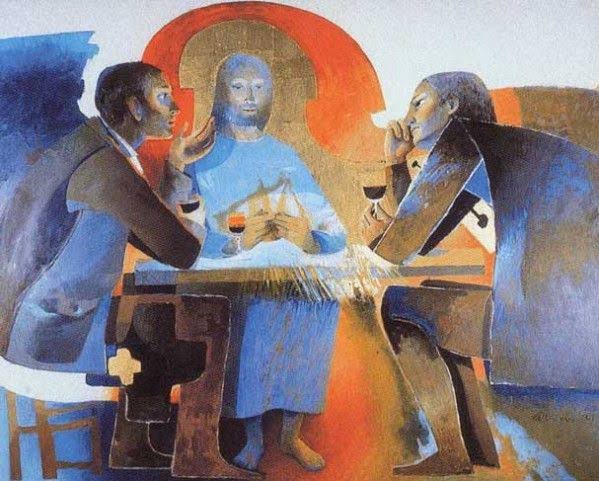
Arcabas

The Great Cost of Being Christians

HOMILY: Twenty-Third Sunday in Ordinary Time

Luke 14:25-33

4 September 2022

Fr. Ricky Cañet Montañez, AA

Uso pa ba ngayon ang ligawan?  Dahil sa apps, parang puro “dating” na lang at wala nang “courting” na nagaganap. Meron pa ngang 3 dates lang, live in na pero no labels daw. Di daw mag boyfriend at lalong di mag-asawa. Kakaiba na ngayon, ano?  At least when I was younger, more so during the time of my parents, boys courted girls. Minsan, inaabot ng taon ang panliligaw. For a boy to get a girl to be his girlfriend, he makes all sorts of fantastic promises. “Ibibigay ko sa iyo ang buwan at mga bituin.” “Tatratuhin kitang prinsesa.” “Pakakasalan kita sa lahat ng simbahan.”  Hindi ba? Siyempre, madalas ang mga pangakong ito napapako pero ganyan ang panliligaw noon. In order to enamor a girl, the suitor lets her hear the sweetest of things to attract, to entice her… to win her heart over. 

Throughout the public ministry of Jesus, He invited people to follow Him — “Come, follow me!” (Mark 1:17) He performed healing miracles as proof of the restoration to wholeness and forgiveness of sins that He preached. And people were amazed and followed Him. Para din Siyang nanligaw sa mga taong matitigas ang mga puso noon.  Ok na sana pero minsan nagsasabi din Siya ng mga bagay na hindi kaaya-aya. Eh kung sabihin ng manliligaw mo na “umasa kang may panahong mag-aaway tayo at masasaktan ka.” O kaya “madalas busy ako sa trabaho kaya di kita palaging mate-text, matatawagan, madadalaw o mailalabas.” Nagsasabi lang siya ng totoo pero sasagutin mo pa ba? 

A few weeks ago we heard Jesus say it is more likely for a camel to pass thru the eye of a needle than for a rich man to enter the Kingdom of Heaven. In today’s gospel, He asks us to “carry our crosses” and says “If anyone comes to me without hating his father and mother, wife and children, brothers and sisters, and even his own life, he cannot be my disciple.” (Luke 14:26) Hala! Ano na naman ito? Ang hirap di ba?  Bawal na bang mahalin ang pamilya at ang sarili? Nakaka-turn off di ba? When I came home from London last 2019, I wanted to be available to Mama who was very sick then. Having taken care of me all my life, I felt that now it was my turn to take care of her and be present for her. Isn’t this the right thing to do? Isn’t this the most Christian thing to do? 

Jesus’ condition for discipleship seems too extreme! Could it be possible for my “father and mother, wife and children, brothers and sisters” to get in the way of my following Jesus? And do I really have to reject even my “own life”? Isn’t Jesus asking too much? When Jesus speaks about hating our loved ones, carrying our crosses, and giving up everything, even our lives, He is telling us to let nothing – not even very good things like family and love – not even our lives – get in the way of our willingness to follow Him. Our first priority, in everything we do, must be our relationship with Jesus. Jesus knew that His disciples would face many setbacks and challenges if they agreed to commit their very lives to Him. He needed to prepare them that they may realize this too.

St. Luke’s depiction of Jesus’ call to discipleship has the most radical terms. In the earlier part of the Gospel according to St. Luke, Jesus says: “If anyone wants to be a follower of mine, let him renounce himself and take up his cross EVERY DAY and follow me.” (Luke 9:23) Thus, discipleship does not take us out of the ordinary. Instead discipleship is exercised in the mundane everyday existence that we lead.  If we look at the choices that we make each day, we’ll see the many ways we can and do to put God first. “Think of a construction company that refuses to use substandard materials to cut costs: what’s first here, profit…or honesty? Think of a sister who after their parents are gone chooses to take care of a paralysed sibling: what’s first here, her comfort… or love? Think of a teenager who stands up against an online bully, even though she risks being ostracised, bashed, blocked, unfriended: what’s first here, belongingness…or Integrity?” And so, there may be times – and they can be painful experiences – when we would have to reject family members who want us to join them in behaviour that is harmful, unjust or unloving to others. We cannot support family members who cheat in business, those who take advantage of others or those who disregard other people’s rights just to get what they want.

It is not only unattractive but also very difficult to be a Christian these days.  In Nicaragua, a bishop is presently under house arrest, priests are being harassed by the police, the Missionaries of Charity are said to have been expelled, and there have been numerous restrictions on worship. Sa ngayon, malaya tayong nakakapagsimba. Sinong makapagsasabi kung dumating din ang panahon na buwis-buhay ang pagsisimba sa Pilipinas? In situations like this, we need courage and God’s grace and gift of wisdom to strengthen our resolve to remain committed to our faith.  The reading from the Book of Wisdom emphasises this need for God’s gift of Wisdom in order to know God’s ways and to choose the path that leads to life. Psalm 90 invites us to fix our eyes on God amidst the changing world we live in and the impermanence of our lives here on earth. “Lord, teach us to number our days aright, that we may gain wisdom of heart.” (Psalm 90:12)

Jesus asks us for our total commitment. He isn’t looking for us to limit our commitment to attending Mass on Sundays and avoiding evil. He expects us to also live the Gospel and to announce the Good News to others, despite knowing that it will be at a great cost to us. As followers of Jesus, let us find strength in Him when our committment to the gospel is  challenged. Amidst the struggles of being a Christian in this world, let us continue to set our sights on heaven. May we stay focused on this our heavenly goal and not let anything earthly distract us from what we need to do as disciples of Jesus.

By: Arcabas

Exalting God; Humbling Ourselves

HOMILY: Twenty-Second Sunday in Ordinary Time

Luke 14:1, 7-14

28 August 2022 

Fr. Ricky Cañet Montañez, AA

“In my reading of the scripture, I felt an invite to let go of my previous limitations. It was seeing other people, who have sinned beyond anything I could ever conceptualise, also being found in Christ that made me feel like, ‘Oh, that gives me hope.’ I started hearing experiences of other depraved people who had found their way in this, and it made me feel like I had permission.” This was the humble realization of Shia LaBeouf — a controversial Hollywood actor who starred in the Transformers movie franchise and is known for his rowdy and strange behaviour and devil-may-care-attitude. He was recently in the news for converting to Catholicism after studying for his role as Padre Pio in a biographical movie set for international release. A friend remarked: “A true to life “Transformers”!

Humility is the focus of this Sunday’s readings. In the gospel passage this Sunday Jesus says… “When someone invites you to a wedding feast, do not take your seat in the place of honour. If someone else more important has been invited, you would surely be asked to take a lower place”.  (Luke 14:10) Yun din kaya ang dahilan kung bakit laging bakante ang mga upuan sa harap ng simbahan? (Meant as a joke). I bet if the EMHC and the Lecoms were not obliged to take these places, most, if not all of them, would rather seat themselves somewhere else.  Mas madalas unang napupuno ang mga upuan sa likuran. Hindi ba? Just look at the front pews now. Is this really what Jesus is asking us to do? May “seating arrangement” nga ba sa Kaharian ng Diyos? Sa totoo lang, madaming mga taong simbahan ang nag-aakalang dahil naglilingkod sila o kaya malaki ang donasyon nila sa simbahan ay sigurado na silang makakarating sa langit.  Going to heaven is not as easy as buying a first-class plane ticket or buying front row seats to a concert. It really depends on the mercy of God. It is His Kingdom and only He decides who gets to spend eternity in His presence. 

In the gospel story, Jesus and His disciples have been invited to a Sabbath dinner. As He observes how the invited guests are choosing places of honour, Jesus takes this opportunity to teach His disciples about conducting themselves at a wedding banquet. Jesus tells them to humbly take the lowest place. They should do so to save themselves from embarrassment should another guest arrive and be given a higher place of honour. If we read the gospel passage carefully, we note that Jesus is not really against “honour” per se. Jesus is not a party-pooper or else He would not have accepted the invitation to the dinner given by the leading Pharisee, in the first place. He actually admonishes the guests to humbly take the lower seats so as to be esteemed when they are asked to move and be given due respect and recognition.  Ang mga pinupuna ni Hesus ay yaong mga taong kusang umupo sa lugar ng karangalan. They believed themselves to be worthy to be extolled because of who they are, what they have and what they have accomplished. Even today, there are people who feel they are better than others because of their family name, their education, their wealth, or their achievements. How unfortunate if they treat others badly because of their overblown self-image. Jesus, on the other hand, does not judge based on worldly standards of prestige and honour…. He looks into our hearts and our souls. 

As recorded in Scriptures, the wedding banquet is one of Jesus’ favourite images for describing the Kingdom of God. We all want to become part of this Kingdom, don’t we? Through the gospel parable, Jesus is pointing out that humility is a key virtue for which we become part of God’s Kingdom. The word humble itself comes from the same word as human and humus, which means soil or earth.  In the spiritual sense, humility is the virtue by which we acknowledge our status before God, to know our ‘place’ in the greater scheme of things… It is to recognise that we are “the poor, the crippled, the lame, the blind” who come to God’s table because of God’s invitation and generosity. (Luke 14:13-14) This is purely out of the graciousness of God. Status in life, influence, race, colour… such things have absolutely no importance in God’s Kingdom. Real humility is the awareness and acceptance of who and what we are before God. Nararanasan natin ito sa misa dahil pantay-pantay tayo sa mata ng Diyos. Mahal Niya pareho ang nagmamay-ari ng teleponong I-phone 13 at ang may hawak ng Cherry Mobile. Wala Siyang pakialam kung ang damit mo ay Tory Burch o galing Divisoria. Ang importante sa Panginoon ay ang kababaaan ng ating loob upang ating matanto, matanggap, at mapahalagahan ang grasyang kaloob Niya. Shia LaBeouf came to discover that as he learned to admit the wrongs he committed, he also learned how far-reaching God’s mercy can be. Despite our flaws, God still loves us and continuously invites us to join Him at His table. This should keep us humble and grateful at the same time.

In today’s First Reading from the Book of Sirach, we get more insights on what humility is.  Humility has something to do with the realisation that we have been gifted and have been shown favour by God more than we can ever deserve. Humbled by such graciousness, we are invited to show the same graciousness to others. In a sense, gratitude and humility are co-related.  The humbler a person is the more likely that person will acknowledge the favour that God has shown him or her, and the more readily that person will also make others experience God’s Kingdom through one’s acts of goodness. Moreover, in criticising the practice of inviting to a banquet only those who are able to reciprocate in kind, Jesus is teaching that one’s generosity must extend beyond one’s immediate circle to include everyone – especially those in need. Pope Francis recently said: “Without humility we cannot encounter God, we cannot experience salvation, and we cannot even encounter our neighbour, the brother and sister living near us.” It is only with a humble heart that we can be disturbed from our comfortable life to recognise those in need and extend a hand to help them. 

Jesus says in the gospel passage: “For every one who exalts himself will be humbled, but the one who humbles himself will be exalted.” (Luke 14:11) Isang paradox o kabalintunaan ang sikreto ng kaharian ng Diyos — na tanging ang mapagkumbaba ang makakahanap ng daan papunta sa langit. We look to Jesus as the perfect model of humility.  Although He was God, He became man to save us, for love of us. He accepted death at the hands of those who believed themselves greater than He is in order that God’s mercy and love may triumph. Everything He did was for the glory of His Father. As followers of Christ, we too, must remember giving glory to God in everything we do, even if we achieve greatness by our skill or intelligence. We must not forget that it is by His grace that we live and we thrive and without Him, we are nothing.

By: Arcabas

Entering through the “Narrow Gate”

Homily: Twenty-First Sunday in Ordinary Time 

Luke 13: 22-30

20 August 2022

Fr. Ricky Cañet Montañez, AA 

I saw this post claiming that Muhammad Ali used to say… “I hated every minute of training, but I said, “Don’t quit. Suffer now and live the rest of your life a champion.” Malamang, kung hindi siya nagtiyaga, hindi siya magiging matagumpay. Hindi siya makikilala sa buong mundo, at iba na ang pangalan ng Alimall sa Cubao. 

Every student knows that to get through each day in school, one must exert effort. The more effort one exerts to study, to do one’s projects, to do well in exams, and to participate in class, the higher one’s grades are.  If one is consistent, one might even graduate with honours, right?  Lahat ng bagay na nais makamtan ay pinaghihirapan. Things don’t just fall onto your lap. We can’t just lie around like Juan Tamad, waiting for the guava to fall into our mouth. Going a step further, we can presume that something of greater value requires more effort to attain. Kung bibili ka ng kotse na nagkakahalagang P800,000, hindi ba’t mas mabilis mo itong mabibili kaysa kung ang halaga ng gusto mong kotse ay P10 million?  Dapat disiplinado ka sa gastusin mo at mahaba ang pasensiya mo kasi mas matagal mong pagtatrabahuan at iipunin ang pambili mo. 

Ang langit ba, para sa atin ay nais din nating makamtan sa dulo ng ating buhay? This is the ultimate dream for any Catholic Christian! We want to be in heaven with Jesus for eternity, right? For something of such great value, we have to expect that we will have to endure much in life to achieve it. Salvation is indeed a free gift from God, but anyone who desires to follow Jesus, still needs to make a long and difficult journey with Him to fullness of life. Every committed Christian would have to pass through what our gospel passage calls the “narrow gate”. It is a warning that the way through is not easy and many may be easily discouraged. The gate is open but not everyone will find it or squeeze through it. Claiming to be evangelized, to know and accept the Lord is not enough to enter into God’s Kingdom.  Ang pagsisilbi sa simbahan o paglilingkod sa Panginoon ay hindi katiyakan na makakarating sa langit. Not all the Jews in Jesus’ time were convinced He was the Messiah. They heard Him preach, they saw Him do miracles in their midst, they witnessed how He affected the lives of people, and yet it was not enough to be in Christ’s company or to have listened and followed Him. In the same way, our baptism and routine compliance with a few religious obligations will not be enough. Sasabihin nyo, “Grabe naman! Ang hirap naman.” Totoo! Hindi madali! To go through the “narrow gate” is to be actively committed to living the Gospel in one’s daily life. 

Jesus, Himself, suggests that entering this “narrow gate” is not as easy as we think. It entails picking up one’s cross in life every single day and bearing it with love, with trust in the Lord and with hope in His promise. We have to walk the path that Jesus has shown us. It is the path of living for others — of unconditional love and self-emptying for the sake of the Kingdom. In the context of faith, this gate is the exercise of self-denial and sacrificial love for others. Hindi ka makakadaan, kung sarili mo lang ang palagi mong iniisip. Yan ang kabalintunaan dito. Makitid na nga ang pintuan pero makakadaan ka lang kung inilalaan mo ang buhay mo para sa kapwa mo. The more you focus on squeezing only yourself through, the harder it will be for you.

In the readings, particularly the passage from the Letter to the Hebrews, the theme of athletic activity involving discipline is likened to the demands of discipleship that every Christian needs to endure. The athletes among us can attest that victory is sweetest after putting in long hours of practice, and suffering through countless cuts, bruises and muscle pains. There is pain involved in the training (gymnázō; English gym, where we train) but for those who persevere a future joy is assured. Furthermore, I have read that it is important to remember that “discipline does not mean punishment but rather instruction, or training for life.” Just as the suffering that the athletes have to endure are viewed by them as a form of discipline that is meant to make them strong and prepared for the competition. The reading also mentions parenthood and the role of fathers to discipline their children. Sigurado ako na ang mga magulang sa inyo na nakikinig ngayon ay makaka-relate. Hindi madaling magpalaki ng anak. Hindi sapat na pakainin, bihisan, at pag-aralin sila. Tungkulin din ng magulang na palakihin ng maayos, turuan ng tama, at sawayin ang mga mali nilang ginagawa. Bilang mga anak ng Diyos, asahan natin na itatama din ng Diyos Ama ang mali nating mga ginagawa. Sometimes, like your own children, we may be headstrong and persist in our errors. It is a constant struggle because more often than not, our own human will contradicts the will of God the Father. We are asked to live for heaven and not simply for the world. 

Finally, the Gospel encourages us to always strive to make an effort to follow the right path. Notice the words I used? STRIVE… EFFORT…  I do not say coast along or sail through it because we must expect the path to be difficult. It is observed that “one of the greatest causes of failure in life is the inability to make sacrifices.” The path may be difficult. It could be pretty rough and discouraging at times. But if we say “yes” to Jesus, we are promised fullness of life!

From Catholic Diocese of Manzini Website

Holding our Ground in Faith

HOMILY: Twentieth Sunday in Ordinary Time

Luke 12:49-53

14 August 2022

Fr. Ricky Cañet Montañez, AA

Nabudol na ba kayo sa online shopping?  Habang tumitingin ka lang, may makikita kang jacket… Sabi mo… “Uyy, parang maganda ah”. Wala kang kabalak-balak bumili pero inadd-to-cart mo na at chineck out mo pa. Bahala na!  You wait with much anticipation and when the rider rings your doorbell, you get excited in seeing the blue or orange parcel in his hand. You practically rip it apart… Ang ganda ng kulay, ang ganda ng quality!  You put it on and then…  your heart sinks. Ang sikip sa braso at kahit hindi ka huminga, hindi mo talaga maisara ang zipper. Maliit pala ang sizing nung store. It’s not what you were expecting.  Tapos magagalit ka sa seller at mag-iiwan ka ng hindi magandang review. Tama ba? 

Sa pakikinig sa ebanghelyo sa araw na ito, marami din sigurong makakaisip na nabudol sila ni Hesus. After all, He is the Prince of Peace meant to unite us all, and yet, He speaks of pitting one person against the other, even family members against each other! A picture of Jesus saying, “I came for division!” (Luke 12:51) seems very out of character for Him. We would probably much like to hear Jesus say, “I come so everyone might just get along.” Sadly, it is not so.  It is very confusing —not at all what we would expect!  Is it time for us to have second thoughts about Jesus? Ipagpapalit na rin ba natin Siya?  Wag naman sana. Tayong mga tunay na nakakakilala kay Kristo ay hindi dapat matinag sa mga salitang Kanyang nasambit. 

There ought to be no doubt that Jesus is the Prince of Peace. When Jesus was revealed to the shepherds, the angels declared: “Glory to God in the highest, and on earth peace to people of goodwill!” (Luke 2:14) We echo this greeting of the angels every time at mass we sing or recite the Gloria. At the Last Supper, do we not recall Jesus saying that He was giving His peace to His disciples — a peace that the world cannot give and that no one could ever take away from them? (John 14:27) Peace was also the greeting of the Risen Christ in the various post-resurrection encounters He had with the disciples. Jesus is all about peace. He gives peace.  He is peace. He cannot contradict Himself. 

The division He speaks of is not His goal but rather a consequence of His presence and His teachings. Siya ang matatawag nating POLARIZING. You either like Him or you don’t. You accept Him or reject Him. Walang patumpik-tumpik at pag-aalinlangan. There is no middle ground.  Sa wika natin, hindi pwedeng mamangka sa dalawang ilog. You either follow Him or you don’t. There is no “half way”. Hindi pwedeng sabihin nating tagasunod tayo ni Kristo, gagawa tayo ng maganda sa kapwa at sa simbahan pero pagdating sa bahay malupit tayo sa ating mga kasambahay.  You cannot be a doting mother or father, being so loving and generous towards your children and family members and yet you make a living by cheating other people or running a drug business.  Living by Christ’s teachings means turning away COMPLETELY from sinful ways and the ways of the world to keep our gaze fixed on Jesus and our hopes pinned on a Heaven that we only see, for now, with the eyes of faith.  

In His lifetime, Jesus Himself saw and experienced personally, a powerful opposition.  He challenged abusive power and manipulation, false religiosity and arrogance, selfish living and neglect of the poor.  He came to call people to a new way of life. In doing all this, He clearly did come to “set the earth on fire.” (Luke 12:49) Jesus called people to a radical way of living that challenged them to making the hard decisions in life. And thus, His message was either met with repentance or provoked anger and strife against the messengers. Like Jesus, Jeremiah’s preaching divided the city and incited such opposition that people wanted to kill him. Do you think they wanted enemies? Of course not! Who wants enemies? But it was inevitable. Jesus had enemies in the Scribes and Pharisees and among His own people — the Jews. They did not like that He was shining a light on their wrongdoings. They even orchestrated His death so they could persist in their way of life and keep their power and influence. 

Isn’t it no different when we look to our political arena? Whistle-blowers who call out certain government officials involved in graft and corruption practices can be made to seem like the bad guys. Sometimes, they too, stand alone. Sometimes they are made to testify in the Blue-Ribbon Committee or they are interviewed by prominent and credible journalists but their enemies work overtime to destroy their reputations — lies are spread about them and people are paid to bear false witness. Only when, in time, the truth is exposed, are they vindicated. Sometimes it is too late because they would have already lost their lives. 

It doesn’t always have to be dramatic. You often experience similar situations in your own homes. Kayong mga magulang na may higit sa isang anak, alam ninyo ang ibig kong sabihin. Hindi ba’t minsan, nag-aaway ang inyong mga anak at nagkakasakitan pa sila?  Siyempre, kailangan ninyong awatin! Sasawayin ninyo at papagalitan ang anak ninyong nagsimula nung away. Tapos magagalit at magtatampo ang anak na iyon dahil sa tingin niya kumakampi kayo sa kapatid niya. Eh ang totoo, wala naman kayong kinakampihan, pinapangaralan niyo lang sila, itinutuwid ang mali nilang ginagawa at inilalalgay sa tama. Sila na nga ang mali, sila pa ang galit at kayo pa ang masama. Hindi po ba? Paghumupa na ang kanilang galit at natanto nila ang kanilang pagkakamali, nagkakabati na ang lahat. Take note. They need to realize their mistake first and choose to do what is right. Doon lang nailalagay sa ayos ang lahat at doon nagakakaroon ng kapayapaan sa inyong tahanan. 

Being committed to our Christian faith always places us in the cross-hairs of opposition. As followers of Jesus, we, too cannot expect that our preaching of the Good News will always be met with “Glorias and Hallelujahs”. Discipleship demands a readiness to stand alone. Sadly, at times those closest to us may even be the ones who never get to understand us for standing up for our faith. I know of a youth leader who is the only Catholic member of his family. He is admirable in the way he holds his ground on the Catholic teachings. Though he finds himself alone in going to church on Sundays, he is not discouraged nor does he compromise on what he believes in. How does he manage? He prays fervently for strength and perseverance. He prays for steadfastness in faith. He prays for patience. He prays for the conversion of His family. He prays. He prays. He prays. As Christians, we cannot think we can succeed apart from Jesus. He is our Guide, our Protector and our Ally. Let us keep Him close at our side at all times! 

In the end, we have to take stock and commit ourselves more fully to the ways of God. Gospel living is not always easy but we can be assured that we are never alone. Jesus and the heavenly court are ready to assist us. The Letter to the Hebrews assures us that there is a vast throng (“a cloud of witnesses” Hebrews 12:1) cheering us on to remain steadfast in our faith and to press on towards our eternal rewards in God’s Kingdom!

By: Claudio Pastro

Vigilance: Living in Faith and Hope

HOMILY: Nineteenth Sunday in Ordinary Time

Luke 12:32-48

7 August 2022 

Fr. Ricky Cañet Montañez, AA

Yesterday, I was shocked to have found out that Filipina actress par excellence Cherie Gil had passed away at only 59 years of age. She died “young” never even having reached the official age for a senior citizen. It was not something I was expecting but looking back, it seems she had prepared herself. Back in February she was featured on the cover of Mega magazine with a bald head. And she spoke of getting rid of all her clothes that were symbols of her past. She packed up and left for New York. She claimed it was a journey into her rebirth but I feel she knew she was headed into a battle she may not return from. She had prepared herself mentally, emotionally, spiritually and physically. Tayo ba, alam natin ang nakalaan sa ating hinararap? Nakahanda ba tayo?

Right in the middle of Ordinary Time, we are given a gospel passage that centres on the theme which we often associate with the end of the liturgical year and the Season of Advent — that of vigilance. Ang pagiging alisto. Kailangan laging handa sa pagkilos o pagtugon. Jesus in the Gospel of Luke admonishes His disciples to be vigilant, to be ready with their belts fastened and their lamps burning. By telling His disciples to tuck their flowing robes under their belts, Jesus wants them to be ready for action, for hard work or even for battle. If they keep their robes flowing about them, they cannot run or else they will trip all over themselves. Then, they are also to light their lamps suggesting that they are to remain watchful even at night for the master’s arrival. The unpredictability of the Lord’s return is further compared to a thief breaking into one’s house. “Be sure of this: if the master of the house had known the hour when the thief was coming, he would not have let his house be broken into.” (Luke 12:39) Hence, every disciple must be prepared at all times for no one knows on which day the Lord will come… We don’t know the day nor the hour.

Vigilance is normally associated with Christ’s second coming. We often fear this because it is the time when we shall all be judged. We know that to manage fear, we simply have to be prepared. How are we to live ready? While we wait for the Lord’s return, the best preparation is the living of every moment fully. Preparedness does not mean simply waiting and doing nothing. One must be responsible during the wait. While servants must be vigilant for the master’s return, they too must be faithful in carrying out the master’s will. What the servants do while the master is away proves to be the very test of their fidelity to him and his will. That is why Jesus says at the end of the Gospel that everyone shall be held accountable. “From everyone who has been given much, much will be demanded; and from the one who has been entrusted with much, much more will be asked.” (Luke 12:48) Although, this ultimately refers to our final judgement, we can still find meaning in this in our day-to-day life. Isa ito sa pinanghahawakan ng ilang mga pamilyang may kaya sa buhay. Sa kanilang paniniwala, sila ay biniyayaaan ng Diyos ng higit sa kanilang pangangailangan dahil sila ang inaasahang magbabahagi ng grasya ng Diyos sa mga salat at kapus-palad. Hindi ba’t pinaghihinayangan natin ang mga matatalino na ginagamit lamang ang kanilang galing upang pagyamanin ang sarili kahit yurakan nila ang kanilang kapwa? We expect better from them. Hindi ba’t silang may mataas na pinag-aralan, silang mas nakakaalam at may karanasan ang ating inaasahan na mamuno o lumutas sa problema ng lipunan? We simply have to live according to what God has given us. If he blessed us with a family, we should care for our family to the best of our ability. If He gave us a job, we must do our job well. We have to simply do what is expected of us as Christians — be just in our relationships, be prayerful, and be true and faithful to God in all our ways. Our unfailing fidelity in the smallest of these daily responsibilities builds in us that habit and attitude of vigilance! It allows us to be sensitive and keen to moments of Jesus’ manifestations in our life and ready to respond to the call of discipleship — to serve where there is a need. 

The Letter to the Hebrews highlights another element of preparation and waiting — Faith. Abraham is an example of this vigilance borne out of one’s deep faith in God. Abraham’s faith in God’s promise to him, rendered him ready to leave the familiarity of one land for the uncertainty of another. This reminds me again of the late Cherie Gil. Who is to say that because she was prepared to begin a new chapter of life in the US, she had the opportunity to receive the best treatment for her cancer? Ang mga nag-mimigrate abroad, hindi basta bastang nag-alsabalotan. They prepare by ensuring they will have a place to live there, a job prospect in that country and schools for their children to go to. Moreover, they have to settle all their business concerns and sell off properties and assets to secure funds and tide them over while they settle in. Although these matters require a lot of preparation, they still entail a leap of faith.  Abraham himself did the same when he believed God’s declaration that his wife Sarah was to bear a child, despite the fact that they were long past their childbearing years.  Likewise, Abraham’s faith was made apparent when he wilfully prepared to sacrifice his only son, Isaac to please the Lord. Through the witnessing of Abraham, we find that God does not fail His people and He rewards fidelity with blessings beyond expectations. During each mass we have the chance to express our faith in God’s providence. When it is time for offertory, we ask the Lord to bless us and I see people open their palms, letting go of whatever they are holding onto in a symbolic gesture of offering back to God, and receiving His graces. 

Waiting for the Lord whether in unexpected moments of our life or in the Parousia (Second Coming), need not be frightful if we know what we must do.  We must ready our hearts and our spirits for much is expected of us. One Bible commentator says “It is not about getting ready, but about living ready.”  Be ready here and now and leave the future to take care of itself.  A life so lived in the present takes care of itself – and its future. Since we do not know the hour nor the day, Jesus urges all of us to be prepared, to be vigilant. We do so when we strive always to live in the presence of the Lord. Vigilance demands that we live lives of faith at all times. As a people of faith, we wait for the Lord in hope.

From Primal Survivor

Rich in What Matters Most

HOMILY: Eighteenth Sunday in Ordinary Time

Luke 12:13-21

31 July 2022

Fr. Ricky Cañet Montañez, AA

It is hard to keep up with our fast paced and ever-changing world. Kung bibili kang latest model ng kotse mid-year, 7 months later lalabas na ang bagong model. Pag-iipunan mo ang pambili ng laptop na mabilis ang processing power pero wala pang isang taon may ilalabas na modelong doble na ang bilis. Those with iPhones often find themselves salivating for the next generation iPhone. Pipila pa ng mahabang oras sa labas ng Apple store para makauna sa pagbili.  Di ba tayo napapagod? Sa kakatrabaho, minsan nagkakasakit na o nawawalan ng oras para sa pamilya o pagsimba basta makabili lang ng latest. Bawal na bang makuntento?

Our readings this Sunday direct our attention to how easy it is to have a false sense of security in our possessions and in the fleeting things of this world. We are reminded that nothing in this life lasts forever. Whatever earthly possessions we have, we cannot truly hold onto them. It is a depressingly uncomfortable statement but it is important to note that this awareness and recognition of the transitoriness of life is an invitation to set our sights beyond what we have to the lasting treasures that await those of us who believe in Jesus. In the gospel, Jesus is approached by a man who wants him to act as arbiter between himself and his brother over their dispute on inheritance. His request is not a sincere one founded on a desire for what is just and fair. Jesus sees into His heart and finds it full of greed. Since Jesus was one who spoke with authority, the rich man was hoping that he could use that to his advantage.  Jesus simply read his heart and turned the situation around into a teaching opportunity. Jesus emphasized the fact that any reliance on wealth and possessions is pure folly since all worldly possessions and our very human existence are not permanent.  In fact, in the First Reading, Qoheleth describes in even greater detail the misfortune which befalls people like the rich man in the gospel parable. “For what profit comes to a man from all the toil and anxiety of heart with which he laboured under the sun?” (Ecclesiastes 2:22) According to Qoheleth, labouring for wealth and possessions is not only foolish but results in sorrow, grief, and anxiety.

But mind you, I don’t think that in advising us to “take care to guard against all greed,” (Luke 12:15) Jesus is asking us to completely divest ourselves of everything we own. Nowhere does the gospel passage say that wealth or even its accumulation is evil. In fact, prudently providing for our future is responsible planning. There is also no question in one’s right to enjoy the fruits of one’s labour acquired through a fitting manner. Jesus simply challenges us in the gospel not to place our security in possessions. We have to be careful not to lose ourselves in our possessions so much so that all our efforts are solely directed to accumulating more possessions and protecting what we have at the cost of our relationship with God and others. If this is what fills our minds and hearts 24/7 and all our time and energy are spent on making money or acquiring material wealth, then things and money become our idols. They take the place of God in our life and such is essentially the sin of greed. Sa taong ganid, ang pangangamkam ang nagiging puno’t dulo ng kanyang buhay. Obsessed to possess. 

The danger here is missing out on what truly matters. We miss out on values like family, friendship, simplicity, love, compassion, and sacrifice.  We also forget the Lord who is the Giver of all blessings and graces. We leave no room to develop our spirituality, our love for God and our neighbour.  If we are greedy, we accumulate more than what we need and hoard our time, talent and treasure. Hindi ba’t we are only stewards of God’s gifts? Maaaring hindi tayo patas-patas sa yaman pero ang lubos na binibiyayaan ay inaasahang magbabahagi sa mga nangangailangan. Those who are blessed with resources such as knowledge and wealth have the responsibility to uplift their fellowmen. What good does it do us if we end up rich in material things but we end up poor in what matters most: love, compassion, mercy trust, kindness, forgiveness, fidelity?  Jesus teaches us that the only wealth worth acquiring is to become “rich in what matters to God”. (Luke 12:21) Similarly, St. Paul admonishes the Colossians: “If you were raised with Christ, seek what is above… Think of what is above…” (Colossians 3:1-2) Every Christian sets his/her mind with intent and determination on the things above.  

Philippine pole vaulter EJ Obiena was featured in the news for his generous donation to athlete Lydia de Vega who is battling stage 4 breast cancer. “I have just learned of the plans of PSC to reward me with P250,000 incentive for breaking the Asian Record. This is deeply appreciated, and certainly needed since my funding is still yet to be sorted, despite the mediation agreement. However, on the flight back to Italy, it occurred to me that despite my own training needs, Ma’am Lydia needs this money more than I do. So, I am hereby pledging to [give] the P250,000 once paid, directly to the family of Lydia de Vega for her medical expenses.” I am impressed by this gesture. He is young and he has a long career ahead of him. If he works hard, monetary grants and product endorsements will surely fill his pockets. He earned the P250,000 he is set to receive. It is rightful for him to keep it for his training and expenses but he saw that a retired celebrated athlete had a more urgent need for it so he did not mind parting with the amount.

I was also recently present at the babang-luksa mass of a former parishioner.  He was a very successful businessman who built up his company by the sweat of his brow. I was so moved by the testimonial given by one of his children saying their dad “never fought with anyone, especially about money. It wasn’t because money wasn’t important, he understood the role money plays as a tool in life and how relationships are more than about money. Growing up he taught us to value hard work more than what we could buy with money. It didn’t matter how rich one has become, what is important is to remain humble, be honest and always be hungry… [for what matters most]. He was never one to rest on his laurels.” That lesson he taught was a most valuable legacy to his children.  

Brothers and sisters, the time we have in this life is short and most things in this world don’t last forever. Money is spent, things get destroyed, lost or stolen, investments can lose their value, relationships can end. Ang matalino puwedeng magka-dementia at Alzheimer’s; ang malakas puwedeng humina at magkasakit. Walang forever, puwera sa Panginoon.  Let us then reorganise our priorities in life. May we secure our future not in barns filled with grain and other earthly pursuits but rather on those godly things which lead us to God who brings fullness of life!

Prayer Lessons from Jesus

HOMILY: Seventeenth Sunday in Ordinary Time 

Luke 11:1-13

24 July 2022

Fr. Ricky Cañet Montañez, AA

Paano ka magdasal? How do you pray?  Kailangan ba nakapikit ka at nakaluhod? Sa loob ka lang ba ng simbahan nakakapagdasal? Do you pray rosaries and novenas? Or do you pray from the heart? To whom do you address your prayer? To God the Father? Jesus? The Nazareno? The Sto. Niño? What do you say? Panay hingi ka lang ba? Nagbibigay puri ka ba? Humihingi ka ba ng tawad? Do you pray for yourself only or for others?  Mga kapatid maaaring may iba-iba tayong nagugustuhan o nakagawiang paraan ng pagdarasal pero kuntento na ba tayo doon? May pagkakataon ba’ng ninais rin natin na mas lumalim pa ang ating karanasan sa pagdarasal? 

In today’s Gospel the disciples ask Jesus how they ought to pray. Jesus responds by teaching them what we now call as “The Lord’s Prayer” or “The Our Father”. Every Christian — whether Catholic, Orthodox, Protestant, Born Again or whatever denomination — acknowledges and prays this as a legitimate way to converse with God. Some question whether Jesus was teaching us a prayer that we should repeat verbatim (word for word) or simply showing us a pattern to follow in praying. Most commentators believe that it is the latter or both. Para Kay San Augustin ang Ama Namin ay kumpleto nang dasal. He advises: “What we ought to pray for is in the Lord’s Prayer; what is not in it, we ought not to pray for.”  There are three things we should reflect on about this moment of Jesus teaching us to pray. 

First of all, when Jesus is asked about prayer, Jesus says to call God — Father.   The invocation “Father” suggests a relationship that is intimate and child-like. When we pray, we are to speak to God like family, because He is our Father in heaven, and like most fathers on earth, He wants to guide, help and protect us. “What father among you would hand his son a snake when he asks for a fish? Or hand him a scorpion when he asks for an egg?”  A good parent would naturally give only good things to his/her child. Notice also the plural pronouns in the prayer — “OUR Father”, “Give US this day”, “Forgive US, etc. — these denote communal character. Sama-sama tayong anak ng Diyos. Hindi lamang sarili natin ang ating inilalapit sa Panginoon kundi pati ang ating kapwa na dapat ituring bilang kapatid.

Secondly, Jesus teaches His disciples to persist in their prayer, as Abraham persisted in begging God’s mercy for the innocent of Sodom and Gomorrah. They are to be persistent in their prayer as characterised by the man who awakened his sleeping friend to offer hospitality for another friend. Neither Abraham nor the man in the gospel was deterred by any obstacle. In one of the commentaries, I read it says that “the English translation “persistence” actually weakens the impact of the original Greek word anaideia. St. Irenaeus and Clement of Alexandria who spoke and wrote in that language, translated the term as “shamelessness” (kawalan ng hiya). In his persistence, Abraham may have even seemed too bold to have haggled with the Lord about divine justice. The needy friend in the story is depicted as shamelessly disturbing the peaceful midnight slumber of his friend and his household. He was also risking his friendship with one friend in order to respond to the need of the other. Take note again, that the two narratives describe prayer as offered for someone else. Confident prayer is confident, daring and yes, shameless as one looks to God as a parent. If you have noticed, the Our Father is prefaced in the mass with these words… “At the Saviour’s command… we dare to say…”) I would like to believe that this shamelessness in prayer is nothing but an expression of deep trust in our heavenly Father’s goodness and His love for us, His children.  

Thirdly, our prayer changes us. Through our persistent prayer, we come to the knowledge and consciousness that everything is in God’s hands and to trust that God will respond to our prayers as He sees fit.  Pope Francis in one of his instructions on prayer said: “We’ve all experienced this — how many times have we knocked and found a closed door? In those moments, Jesus recommends that we insist and not give up. Prayer always transforms the reality — always. If the things around us don’t change, at least we change, our heart changes. Jesus has promised the gift of the Holy Spirit to every man and every woman who prays.” Laging may higit na kabutihang naidudulot ang pagdarasal. Kung di man nasasagot ang ating hiling na masulusyonan ang problema o pangangailangan natin, maaaring tayo ang pinatatatag ng Panginoon upang malampasan natin ang ating problema. 

I read somewhere that God indeed answers our prayers but responds to them in three ways: (1) YES. These are prayers that are granted as they are requested because they are in line with His plan for us. (2) WAIT.  He grants it according to His own timing… Sometimes we do not get the things we pray for right away because it is ‘not yet the time’ for us to have them. As they always say: “God’s timing is always perfect and so it is never late!” (3) NO. God answers our prayers but not according to how we want them answered because He has something better for us. What we ask for may not always be good for us! We have to trust that God knows best.

Brothers and sisters, when we pray, we are conversing with the living God who hears and answers prayers. He is our loving Father who persists in a loving relationship with us, His children. Let our prayer be the means to get to know God more and to grow deeper in our relationship with Him. Let us open yourself up in prayer and pray often that we may benefit from its transformative power. Yes, let us be shameless in your persistence and with confidence let us call on God our Father who loves and cares for us, His children!

From cefphilippines.com

Finding the Happy Mean

HOMILY: Sixteenth Sunday in Ordinary Time

Luke 10: 38-42 

17 July 2022

Fr. Ricky Cañet Montañez, AA

For the past 2 days, we served as hosts for two simple parties in the parish. Last Thursday it was the birthday of Bro. Julius and last Friday was my (15th) birthday. I always find it challenging to have guests around for celebrations. Aside from being busy with the food, physical arrangement, getting the drinks, etc., I also want to be with the guests and make sure they are taken care of. I ended up not eating anything and getting exhausted. (I missed out on the goodies but I keep the pounds off.) Seriously though, the challenge is how to be hospitable and be attentive to the guests at the same time. This can really be tricky. Nevertheless, the guests are more important than anything else.

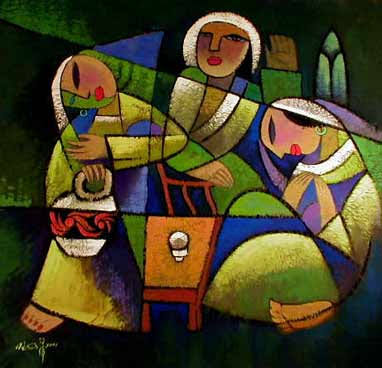
Most of us are familiar with this gospel story about Mary and Martha. In many occasions, we must have read and reflected upon this gospel passage. I bet, many of us have identified ourselves with Martha. Si Martha ang kumakatawan sa mga taong bibong gumawa ng iba’t ibang tungkulin. Parang walang kapaguran. Mga mommy, relate na relate kayo diyan, hindi ba? Lahat kailangan inaasikaso. Those who are still part of the workforce also will know what I refer to. We priests can also be so caught up in administrative duties that we have very little time for doing pastoral work among the faithful.   Whether working from home or some other place of work, our tasks and duties have the tendency to take up all our time, sometimes overwhelming us. We tell ourselves that someone has to do the work. Someone has to do the concrete tasks of hospitality.  Someone has to do the menial tasks, etc.

In truth, there is nothing wrong with work. In fact work is blessed by God. It is a means to grace. It is how we become Jesus to others. The danger is when we lose sight of the reason why we have work, and for whom we work. Do we still take the time to pray? Do we thank the Lord for the blessing of our jobs, considering so many people have become unemployed? Do we thank God that we still have our hands, our feet, our eyes, our mouths and our minds to help us accomplish tasks set before us? Naisip ba natin kung papaano na ang buhay kung tayo’y nagkasakit o nagkaroon ng kapansanan? (This is not to demean those differently-abled, because they are to be praised for hurdling bigger challenges.) Have we ever been so overworked that we no longer have the time to appreciate and enjoy the love and company of our family? Kung lagi na lang tayo pagod at masungit pag-uwi natin sa bahay, hindi nagiging maganda ang samahan ng pamilya.

In contrast, we find Mary to be seemingly doing nothing. We are told that she was “listening to Jesus speak”. Listening to Jesus’ message is an important task of a disciple (a learner) of Jesus. “Listen!” This is what He often tells His disciples and the crowd to be doing all the time. Mary was present.  She was in the moment. She was engaged. She was being, not doing. Here listening goes beyond simply hearing but rather it involves understanding, accepting and assimilating the message so that it becomes part of oneself. Hindi lamang simpleng pakikinig ang ginagawa ni Mary. Ninanamnam niya ang bawat mensahe ni Kristo. At dahil tumatatak sa kanyang puso ang salita ni Hesus, nalalaman niya kung ano ang saloobin ng Diyos para sa kanyang buhay.

Si Mary naman yung nasa paanan ni Kristo na maihahalintulad sa mga kalma lang na nagdarasal o di kaya mahilig magmasid, makinig, mag-aral at matuto. Bilang tagasunod ni Kristo, kabilang sa ating tungkulin ang pag-aralan ang Kanyang tinuturo at mga pamamaraan. We learn from Christ’s teachings. We fill our minds and our hearts with the words of our Lord. Nagagawa natin ito pag nagsisimba tayo, nag-aattend ng bible study, prayer meeting o sumasali tayo sa mga formation talks ng parokya. Importante din naman ito sapagkat ang turo ni Kristo ang daan na dapat natin tahakin. Kung hindi natin alam ang daan, maliligaw tayo, hindi ba?  

One funny thing in our gospel story is that Mary orders Jesus to tell Mary to stop what she is doing and to make Mary help her in the preparations. Pakialamera pa si Martha, ano? Inutusan pa niya si Kristo. Martha’s complaint to Jesus seems to portray Mary as idling and even selfish. Minsan ganyan din tayo, inuutusan natin si Lord pag tayo ay nagdarasal tungkol sa mga kailangan natin sa trabaho natin. “Lord, please do this” , “Lord, give me…”, “Lord, sana madaming bilhin yung customers namin…”, etc. Tayo na ang nagtuturo sa Kanya imbes na tayo ang nakikinig sa Kanya. Wala nang “Thy will be done!” kundi “My will be done!”. In that sense we are lost.  Martha did not realize her error so she was surprised when Jesus said that Mary had “chosen the better part” which would “not be taken from her”. (Luke 10:42) Mary has chosen the better part because listening is essential to be able to do the will of God in our lives. If we do not spend time listening to God, how can we know that our endeavours are properly directed? 

Natatabunan na ba ang Salita ng Diyos dahil sa ating sobrang pagka-busy? Naririnig pa ba natin ang saloobin ng Diyos para sa ating buhay sa ingay ng maraming pinagkaka-abalahan? We can lose sight of God’s will as we get wrapped up in our many tasks, as well meaning as they can be. Last Sunday, we saw how giving loving care to a person in need is more important than fulfilment of one’s responsibilities as in the case of the Levite and the priest. The “better part” then is attentiveness to the other which will eventually express itself in loving service.

Today’s gospel encourages us to strike a balance between the two aspects of our Christian discipleship. If we find ourselves getting overwhelmed, break muna. Balanse ng konti. Humugot muli ng lakas mula sa Salita ng Diyos para magampanan ang mga tungkulin para sa katawan at kaluluwa. Service without love will not do. Prayer without action will be deficient. Finding the happy mean is a challenge and the Lord’s invitation for all of us.

From Religiosi Camelliani

Cultivating Good Samaritan Kindness

HOMILY: Fifteenth Sunday in Ordinary Time

Luke 10:25-37

10 July 2022 

Fr. Ricky Cañet Montañez, AA

Narinig niyo na ba ang kasabihang ang taong mapagkakatiwalaan sa maliit na bagay ay mapagkakatiwalaan sa malalaking bagay? “Whoever can be trusted with very little can also be trusted with much.” (Luke 16:10) The key is consistency. Pag palagi mong ginagawa, nakakasanayan mo na. It becomes a habit. In some instances, you can easily observe the progression.  Winners in competitive sports don’t become successful overnight or simply because of luck. They work hard and train regularly to become the best. Sometimes, it’s less obvious such as when one builds character. Nangyayari ito sa loob ng mahabang panahon. Minsan di na napapansin. If you think about it, your actions throughout your lifetime have molded you into the person you are now. You are actually the sum of your experiences.

Bakit kailangang nating banggitin ang pambungad na iyon? Sapagkat importanteng makita natin na sa kwento ng Mabuting Samaritano, ang bida ay kumilos alinsunod sa kanya nang nakagawian. For us listeners and perhaps the other characters in the story he did something extraordinary. However, for the Samaritan, saving another human being in need was the most natural thing to do. 

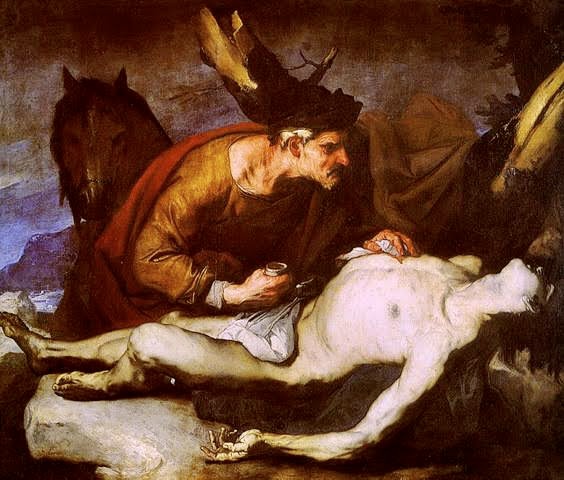
Jesus’ Parable of the Good Samaritan in today’s gospel reading challenges some aspects of our notion of goodness. A commentary I have read on this parable suggests that the act of the Samaritan was good not solely because he attended to the injured man but because what he did was not unusual to what he had been doing all his life. That is to say that this man’s random act of kindness… his attending to the injured man is simply second nature to him. This benevolent gesture however, was just magnified when contrasted to the hesitation, if not the total indifference, of the priest and the Levite. We expect the Jews in the story, by virtue of their race and religion, to rush first to the aid of the injured man; to our surprise, they did not. They avoided him, justifying their actions with their desire to adhere to the Jewish laws for Sabbath and ritual cleanliness. They did not want to be inconvenienced because if they helped him, they would be ritually unclean for the Sabbath and would need to go through the process of purification. Hassle masyado.  

Through this story, Jesus is trying to teach the scholar of the Law (and all of us, His followers) two things. Firstly, we are made to see that goodness is cultivated through the practice of good habits and noble character. Goodness is a habitual discipline that requires practice and often entails readiness to make sacrifices.  The Samaritan did not start out his journey thinking about the good that he can do for others. When the need arose; nevertheless, he was ready to respond in charity and mercy. He may have been immortalised for his charitable act but to a selflessly good man, doing the right thing is a must, an instinct. Secondly, to be humane is more important than following laws. This is the law written within our hearts — not some legalistic keeping of specific commandments, but rather simply an instinctive concern for the other that arises out of genuine love. The Samaritan did not only bandage the wounds of the injured, but he also brought him to the nearest inn and provided for his immediate and subsequent needs. He personally cares for the victim. To spare no expense to help a stranger is an example of how Jesus teaches us to love… personally, extravagantly, continuously.

Every now and then, when we become frustrated and disappointed with our church and civil leaders, we lament the lack of good men and women in society.  They did not become corrupt, greedy, and arrogant overnight. These bad habits and unfortunate characteristics were developed in them over time. Conversely, we need to realise that good men and women come from families where kindness is practiced, respect is fostered, honesty is embraced and integrity is lived. Goodness has to start when we are young.  It has to be nurtured and encouraged from a good home. If you are parents, you need to provide this environment for your children to learn compassion.  Reinforce and validate their good behaviour and kindness so kids learn to make this a habit. 

During the shooting in a school in Uvalde, Texas, a border patrol officer made it to the scene and saved the lives of many frightened school children. He was not there as a trained law enforcer. He was there because he was a good, protective father and a husband. His wife and daughter were trapped in the school and he was there to save them. In the process, he saved dozens of other students. After his family found safety, he continued to risk his own life to save other children. Paano niya kinaya yun? Napagtantong mabuti siyang ama na nagmamalasakit sa anak niya. He saw the other frightened kids and remembered his own children. He could not leave them behind at the mercy of the shooter.  He doesn’t like being called a hero because for him, he only did what he would do for his own children. 

As Christians, may we strive to cultivate kindness in ourselves and extend the same goodness of heart to those in need among us. May we always keep our eyes open to opportunities where we are needed by others and may we strive to be loving persons, good Samaritans to one another, always guided by the law of love and compassion. And in so doing, may we with God’s grace inherit eternal life.