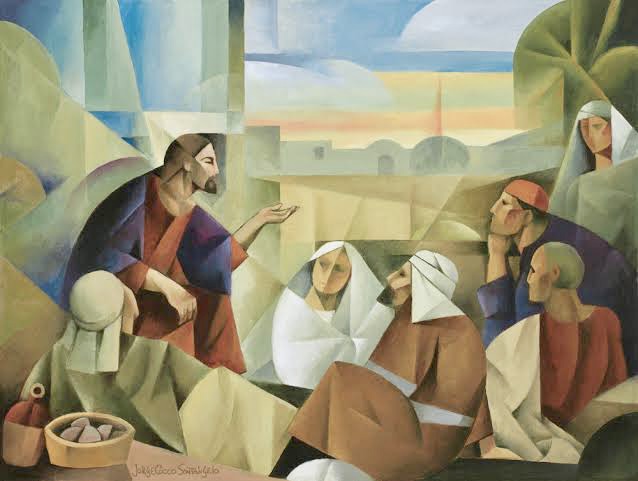
Pointing Others to Jesus

Homily: Second Sunday of Advent (B)

Mark 1:1-8

10 December 2023

Fr. Ricky Cañet Montañez 

In the first few years of my religious formation in Worcester, Massachusetts, I found out the American Assumptionists were amused at how Filipinos sometimes use lips, instead of fingers to point to things. One time, a fellow Filipino in formation was asked by one of the American brothers for the Bible he had borrowed from him. This Filipino brother promptly gestured with his lips to point to a Bible on the table. The American priest jokingly quipped: “Did you want to kiss me?” 

Our readings today highlight the role of John the Baptist as one who points to the coming of the Messiah. The First Reading (Isaiah 40:1-5;9-11) sets the tone for the events in our gospel passage. Remember that as a consequence of their disloyalty to God, Israel had been suffering crushing defeats from their enemies. The land had been pillaged and occupied by foreigners and their people exiled abroad and treated as second class citizens. God comforts His people, through Isaiah, that He has forgiven their sins “[their] service is at an end” and “[their] sins are expiated.”  He promises that He will be reunited with His people. He will rule over them with strength and power to gather them and see to their needs as a shepherd cares for and feeds his flock. Eventually, Babylon was conquered by Persia. A year after Cyrus the Great allowed the Jews to return home. Over 50,000 Jews returned to Jerusalem with the prophet Ezra and rebuilt the city as a province of Persia. Ever since the prophecy of Isaiah, Israel has been waiting about 700 years for the Messiah. 

Seven hundred (700) years is a long time and God made sure that there would be a precursor, someone to prepare His people for the arrival of the Promised One. John knew his place. He knew someone was to come after him who was much greater than himself such that he was not even worthy to untie this person’s sandal straps. By our standards, John was a celebrity, himself. He was no ordinary person. His very name means “God has been gracious.”  He was a miracle baby since his mom, Elizabeth, bore him in her old age, while his father lost his ability to speak for the duration of his wife’s pregnancy. As an adult he lived an extraordinary life in the desert, wearing camel’s hair and a leather belt and eating only locusts and honey. The uniqueness of his lifestyle and his charismatic preaching easily won him a lot of followers. John the Baptist was “trending”, no doubt. He had quite a following already and He could have competed with Jesus with his hefty following. Instead, he promoted the coming of Jesus by preparing the way for His entry into public ministry.  And then, when the time was right, he simply faded into the background to let Jesus’ ministry take centre stage.  

Lately, Edoardo Santini, voted Italy’s most beautiful man in 2019, went viral after he declared he was going to become a priest.  After a lifetime of studying drama and dance to achieve his dream of becoming a star, Santini said on social media he would renounce his career for his faith. At 21 years of age, I find myself on the path towards becoming a priest, God willing,’ Edoardo said. ‘I’ve decided to give up modelling work, acting and dance, but I won’t abandon all my passions, I’ll just live them differently, offering them up to God.’  He claims to have joined a seminary near Florence. In a society that values appearances, he would have been a huge success but he chose to step into the shadows so he could, like John the Baptist, and the priests of today, God’s instrument to call people’s attention to the presence of Jesus and to prepare them for the coming of God’s Kingdom.

Like John the Baptist, we are also invited to point others to Jesus. We accomplish much by simply giving generously of our time, talent and resources to all those around us. In doing these simple, everyday acts of love, mercy, and compassion we make Jesus present for others. We show them He is real and that He speaks only the truth —especially His teachings about love and the Kingdom of God.  Like the Jews of the past, we are also waiting for Jesus. It has been over 2000 years since Jesus ascended to Heaven and promised to return to us. St. Peter tells us that God’s time is never late and a thousand years to Him is like a day. In view of this he reminds us to continue to conduct ourselves with holiness and devotion and be conscious of the kind of persons we ought to be for Jesus’ return. 

Brothers and sisters, as followers of Jesus, we all have the responsibility to continue the work of Jesus. It is for us to endeavour to share Him with others that they may also find their way to Him. St. John Mary Vianney once said to a shepherd who had shown him the way to Ars… “You have shown me the way to Ars. I will show you the way to heaven.” One good turn deserves another. May we all find ourselves in Jesus and continue to lead others to Him.

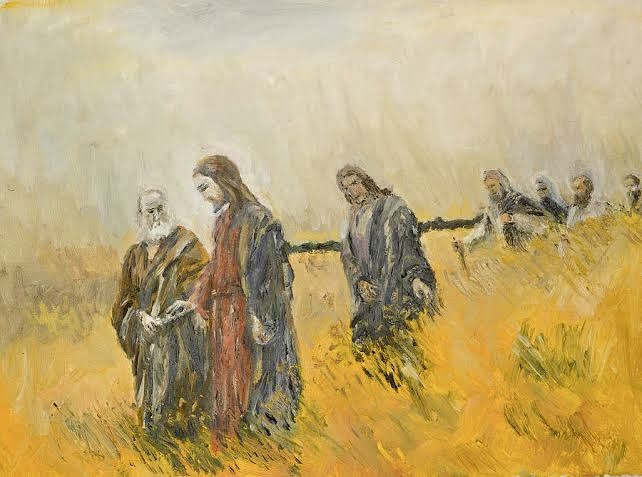
Photo of the Art Work by Art Dela Cruz

Getting Ready for Eternity

Homily: First Sunday of Advent (B)
Mark 13:33-37
3 December 2023
Fr. Ricky Montanez
 
In the recent months, I have been asked by a lot of fresh graduates that I pray over them as they are about to take their respective board exams.  It makes me very happy when I see young people recognise the importance of God in their success. No matter how adept, skilled or intelligent we are, we need the grace of God to be successful in any of our endeavours. As they say, “One simply needs to do one’s part, and leave the rest to God.”  How does one do “one’s part”?  Simple. Preparation!  Someone said that there are three (3) things to remember when preparing for the exam. First of all, study hard to be #1!  Aim for the top. Don’t settle for just a passing mark. (Huwag makuntento sa pasang-awa.) Secondly, take care of yourself holistically. One needs to ensure that he/she is in the best of health to take the board exam. Above all, pray. “Pray not only to pass the exam but pray that God will sustain and strengthen you through your review and give you wisdom while taking the test.”
 
This Sunday, we begin the Season of Advent.  Advent, which in Latin is “adventus” translates in English as “arrival” or “coming”. It is a season of preparation comprised of four (4) Sundays after the Feast of Christ the King and just before the 25th December, Christmas Day. The Church calls on all the faithful to prepare adequately to commemorate the anniversary of the coming of Christ. Just as we find ourselves preparing for the arrival of valued guests in our home, the church deems it necessary to establish a period of preparation among the faithful to properly dispose us to receive Jesus, the Son of God. For us Catholics, Advent is not only remembering and giving thanks for the first coming of Christ as the baby and son of Mary during the first Christmas, but it is also a remembrance of that which we still expect — His return in glory! Hence, we are invited to observe a period of intense preparation during Advent! Remember, there is still something more in store for us!
 
In the passage from the Book of the Prophet Isaiah, we are reminded that like the Chosen People, we must confess that we too are unworthy of God’s love and God’s pardon. We hear about a people in dire need of liberation from their captivity in Babylon. Realising the disastrous consequences of their infidelity, they have acknowledged their sinfulness and their need for a saviour to rescue them from their predicament. This explains the penitential aspect of this joyous Season of Advent. Let us admit that we have many shortcomings making us undeserving of His love for us. We do not deserve (“dasurv”) everything we have. Our life and everything we have, we have received because of God’s mercy. Since we have been blessed, let us do our best to prepare ourselves for the coming of Christ. St. Paul assures the Corinthian Christians in the Second Reading that they have all the gifts and talents they need to live faithfully in this world as they await the coming of Our Lord Jesus Christ.
 
Today’s gospel passage reminds us of the uncertainty that surrounds the time of the master’s return and the vigilance required of the servants as they wait. Until that special event arrives, they are to be conscientious in fulfilling their responsibilities. There should be no room for waiting idly for the owner’s return. Like soldiers standing guard, a follower of Christ must always be on watch and not be caught asleep or caught off guard. The soldier or guard who sleeps or is negligent in his work can easily be outsmarted by the intruder or one with evil intentions, can’t he? He always has to be alert then.
 
As we reflect on the beginning of Advent, let us ask ourselves if we are ready. “How would we fare if we were called from this world today?” I always ask this question myself whenever I preside over the funeral of a person who is younger than I. Would I get a badge of honour, or would I have passed the test of life?  None of us know how and when we are to meet Jesus. Is there anyone us here who hopes to be alive at the Second Coming? Some of us will get to meet Him earlier — when we die. Those who are told the remaining days of their life are even luckier because they can plan ahead what needs to be prepared. They are in a better position than those who die suddenly in an accident. It is always better to be prepared. What else can we fix or correct in our lives? Will we be happy to meet God?

Brothers and sisters, as we begin this season of preparation, let us make the most of this time by keeping our eyes and hearts open and earnestly implore: “Lord, make us turn to you; let us see your face and we shall be saved.” (Psalm 80:3) Let us remember that we shall not be unprepared if we have tried all our lives to be faithful to Christ and to our Christian faith.

Photo from internet sources

The Servant-King, Christ the Lord

HOMILY: Solemnity of Our Lord Christ, King of the Universe (A)

Matthew 25: 31-46

26 November 2023

Fr. Ricky Cañet Montañez

Just recently Miss Nicaragua was crowned Miss Universe. She was the crowd-favourite with her perfect smile, perfect hair, perfect poise. She was a vision of beauty and grace in her glittering gown and her majestic crown of diamonds and sapphires — a real beauty Queen. We expect nothing less of royalty.  When it is royalty, we tend to hold them to an impossible standard of perfection — placing them under tremendous pressure to dress perfectly and act perfectly for their public. Any mistake or imperfection is reason to crucify them in the news. 

The Biblical kings of Israel were hardly perfect. Saul, David and the kings after them were anointed by God to lead His chosen people. They were granted wealth and power for the exercise of their duty. Many of them fell short of this divine commission. These kings had achievements that pleased the Lord, but at some point, they became recalcitrant, self-indulgent and neglectful of the needs of God’s flock. “They fed themselves rather than the flock”. (Ezekiel 34:8) Hence, when power was withdrawn from Israel and handed to foreign nations, the prophets that this divine chastisement was the consequence of failed leadership. They hoped however that God would restore this authority to his people.  

God answers His people, through the Prophet Ezekiel with an image of kingship and authority that is unlike any other. He presents Himself as Shepherd — strong, capable and trustworthy but geared for hard labour, unperturbed by getting His hands dirty to accomplish what must be done to govern and protect His people. God says: “I myself will look after and tend my sheep… The lost I will seek out, the strayed I will bring back, the injured I will bind up, the sick I will heal…” (Ezekiel 34:16) He is a King that restores wholeness, that unifies and that sets things aright. 

In our gospel Jesus speaks to His disciples of a time when He sits as King and judge, enthroned in glory and yet acting as shepherd separating sheep from the goats. We recognise this as the image of the last judgment. However, what is important to note is Jesus’ choice of association. Although He clearly possesses absolute power and authority to pass judgment, He identifies with the weak — the prisoners, the sick, the homeless, the needy.  He is a King with compassion for the marginalised and demands the same of His subjects. If we truly accept Jesus as our King, we will follow His commands and His example of serving and caring for those who are materially, socially, psychologically, morally and spiritually poor. 

Never in the gospels, does Jesus flaunt the authority He has been given by His father with such grandiose displays of power. In fact, in the instances where Jesus reveals His true nature, He asks that they refrain from spreading the word or telling others about His miracles. On one occasion, as He drives out an unclean spirit from a man, Jesus rebukes it for revealing His identity as “The Holy One of God”.  In John 6:15 Jesus withdraws to the mountain by Himself when He learns the people intend to make Him king by force after witnessing Him perform mighty works. The world at the time was not ready for His kingship. Despite this, we know that God the Father has truly granted Him the authority and power of shepherding because He was fulfilling His responsibility every time He cared for the poor, cast out demons, and healed the sick.

Brothers and sisters, there are those among us who have the privilege to hold positions of authority. More often than not, we recognise them by their fine and expensive clothing, their posture, the strength of their voice, the number of their security personnel, the size and number of their vehicles and the left and right attendance at important banquets. Following the example of Jesus’ leadership requires that authority figures become shepherds in their own right — prioritising the care, safety and well-being of those they are responsible for.  Authority is, first and foremost bestowed as a gift for the purpose of service. When this is forgotten and taken for granted one succumbs to the temptations of power and privilege. They discard humble public service as the value and essence of their leadership and instead abuse their authority. As loyal subjects of God’s Kingdom, it is our duty to live our belief and our conviction that Jesus is King over us all. 

We live with the hope that one day we will witness Jesus Christ in all His glory as King of the Universe. The Second Reading tells us this will happen at the end of time. When He returns, He shall vanquish all His enemies and gather all who belong to Him and pledged allegiance to Him by the life they lived. Each time we feed the hungry and the thirsty, welcome strangers, clothe the naked, attend to the sick, and visit prisoners, we not only pay homage and bring honour to Jesus Christ, our King but we also assure our place as subjects in God’s eternal Kingdom. 

In as much as we live in the hope of His return, let us do our best every day to help establish His Kingdom on earth. This is how we prove we choose Him as our King. This is how He will recognise us as His subjects. On this Feast of Christ the King, let us thank the Father, that in His infinite wisdom and love for us, He has appointed His Son to rule over us with mercy, benevolence, justice and peace.

Gifts-Given for the Kingdom

HOMILY: Thirty-Third Sunday in Ordinary Time

Matthew 25: 14-30

19 November 2023

Fr. Ricky Cañet Montañez, AA

Let us do a bit of Q & A here. Let us say you are blessed with P3.6 million pesos! What would you do with that amount of money? If double that amount, P7.2M or five (5) times more, P18.3M is entrusted to you, what will you do with that sum of money? 

This Sunday, we reflect on the Parable of the Talents. We are told that a  nobleman puts a certain amount of money in the hands of his servants as he prepares to go on a trip. A talent amounted to about six thousand denarii and one denarius was equivalent to a day’s wage. That is quite a lot of money! On this detail, we note the great confidence the master has for all of his three servants as he gives each of them a significant amount of money. Upon his return, the master asks for a reckoning of what these men had done with the money he had entrusted to them. The first two show due diligence and responsibility by doubling the amount that was entrusted to them. The third servant claimed that he was intimidated by the demanding character of the master so he just buried the money in the ground. Hence, the master scolds him and takes the sum back. He tells that servant that he should have profited from what he received or at least tried to do something with it. The servant not only has nothing but is thrown out into the darkness to suffer. 

Similarly, we have all been entrusted with gifts. By God’s grace, some of us are gifted with exceptional talent, others are geniuses in math and science, others have wealth, others have charisma, etc. (Pag di kaya ng talent, daanin sa charm!) We also have been given different opportunities and choices in life. Not everyone can study. Not everyone can go abroad. Not everyone has a high-paying job. Not everyone has children. We are all entrusted with different gifts just as the three servants in the gospel were entrusted with gifts according to their ability.  We are equipped differently according to the roles we must play in building up God’s kingdom. We are expected to make a conscious effort to develop what has been given to us. 

We need not compare our gifts with one another. Here in our parish, the good singers are with the choir; the good readers become Lectors or Commentators; the good cooks among us can help in our feasts and the feeding programs. Neither should our differences in gifts become an excuse to avoid using what we have for the good of others. No amount of wealth or status in life should determine our capacity to return the favour.  St. Augustine once said: “You aspire for great things? Begin with little ones.” Sometimes, when there is a project in the parish, when we want to avoid helping, we hear ourselves saying: “Oh, we have to do it. They are already many there who are good at it. They can do that.” Is that so? (“Ganern?”) Definitely there are those who would do an exceptional job, but in that situation, should we not help at all? Where are we good at? Maybe we can contribute to our project! What really matters in the end is that we have tried our utmost best, to maximise the potential of what we have been given. 

Towards the end of the gospel we are told the servant is thrown into the darkness where there is wailing and grinding of teeth. Biblically, God is light, so darkness is a creative way of saying that one is no longer in God’s presence; wailing refers to a place of sadness and suffering; grinding of teeth is the feeling of losing control or direction in life. A bit harsh? But that is the ultimate consequence. To not use our gifts is to insult the Giver. It is proof that we refuse to play our part as a member of God’s family and to cooperate with His grand plan. Essentially our choice to bury our talents is a choice to separate ourselves from God. We must never forget we will be held accountable. Our responsorial psalm says: “Blessed are those who fear the Lord!” (Psalm 128:1) The fear spoken of here is different from the fear of that lazy steward. As children of God, our only fear is that we cannot glorify and honour Him as we should with the grace that also comes from Him.

The faithful wife described in the First Reading is an excellent model of someone who prospers the gifts she is entrusted with. First of all, she has a husband to care for and children to raise. However she does not stop there. She recognises that her immediate community is also a gift to her so she cares for them as well, especially the poor and the needy! With the gift of her femininity and talent for making fabrics, she works lovingly, skilfully and diligently.  Because of her labours and good work, she is to be rewarded!  God is a generous God and He is never outdone in His generosity so we can imagine how He will reward those He considers good stewards of the gifts He has given them!

To be honest, I have a habit of collecting the receipts of all my purchases every month. My other priest-friends do find it amusing and laugh at me from time to time. I learned this from my religious congregation and it has been a habit since then. It is my way of accounting for the gifts I have received. And I am very grateful for those of you whom God continues to send to support my ministry!  I may not be always successful but I make sure that I allocate more to my advocacies/apostolates than my personal expenses. Whatever I receive, I make sure to share it with those I have the capacity to help — those whose lives I can impact in the name of God and for the glory of God. 

Never forget that everything we have and enjoy comes from God. He is the Giver and therefore the Owner. Everything is just on loan to us. We are mere stewards of all that we have. Hence, we are to be accountable for what has been entrusted to us. The more we have, the more we will be held accountable. Let us responsibly make use of all our God-given talents not only for our benefit but for the good of all as we strive to build up God’s Kingdom in the here and now.

Artwork from Altus Fine Art

Having Enough Provisions for Life

HOMILY: Thirty-Second Sunday in Ordinary Time

Matthew 25:1-13

12 November 2023 

Fr. Ricky Cañet Montañez, AA

Today, I am celebrating my 12th Anniversary of Sacerdotal Ordination. They say the 7th to the 10th years are the most crucial. Some priest-friends claim that once a priest goes beyond the 10th year, everything else seems to be manageable. I can say without a doubt that that is not true. 🙂 Every year brings new unique challenges! It is by the grace of God that I am still here and that I have not given up. 

This Sunday’s gospel passage, Jesus uses the parable of the ten virgins to teach people that if we take up the task of building God’s Kingdom, it is important to be ready at all times. In the parable, the ten virgins are tasked to wait attentively for the bridegroom’s arrival. Five of these maidens are identified ‘wise’ while the other five ‘foolish’ in relation to their degree of preparation to the task at hand. Notice that all ten came prepared. I believe the five wise maidens were self-aware, acknowledging that they had to fulfill a responsibility — to meet and welcome this prestigious guest. They recognised that it was the bridegroom’s affair, his honour, and not theirs. It is said that the groom’s arrival was delayed but no explanation is given for his tardiness. His arrival should be celebrated more because no wedding will take place without him, right? One commentary on the text interprets this as the bridegroom asserting his male authority from the onset of the marriage! As a man, he is supposed to be followed at all times! Here in the Philippines, it’s the other way around — the bride is always the one who is late to her own wedding. People say it was her last shot at freedom. As I said earlier, in the Philippines it seems that the women who are the ones often followed more than the husband. Is that right? In any case, the wise maidens thought it best to bring extra provisions to sustain them and to keep their lamps burning should there be delays. They made sure they were ready for some unforeseen circumstances. 

I chanced upon a Tiktok upload of Olaf recounting some valuable life lessons. Do you know Olaf? He is the playful snowman in Frozen. Olaf counsels: “If you focus on the hurt (mistake, the poor choice), you will continue to suffer, but if you focus on the lesson, you will continue to grow. When life brings pain and challenges, remember this: “Where you put your attention makes all the difference. It can keep you trapped in suffering (or you can move forward and grow). If you shift your focus to the lessons hidden within those tough moments, you give yourself the power to grow and become stronger.” Don’t you find the animated snowman quite clever? 🙂 

My twelve years of priestly ministry was never a walk in the park. I have had to deal with many setbacks and challenges through the years. I admit I am partly to blame for some of those situations because I am only human with imperfections and shortcomings. However, I do not let this discourage me! I always believe that as we pick up the broken pieces of a misfortune, we should always focus on the lesson we gained and recommit ourselves to doing things better next time. The wisdom derived from these experiences enables us to be wiser and more discerning in all of our life’s choices. The lessons learned from all of life’s experiences are what make us prepared to meet life’s challenges and direct us to always carry with us our “extra oil” for our lamps to keep burning in the midst of the darkness in our life.   

It is funny sometimes to speak about lessons of the past. Even today, when you look around, it is like we have not learned the lessons from our mistakes. On a large scale, look at Israel and Palestine who are at war with each other. Theirs is a war that has been fought over and over for thousands of years. Every war always brings many casualties among the innocent and yet actions to ensure the safety of the civilians have yet to be pursued.  If we look at our government, would we say we have learned from the mistakes of the past? We have such short-term memories. How have the lessons of life and history prepared us for today. I guess humanity cannot always be expected to make the wise decisions. However, each one of us can still make a difference if we choose the path of wisdom and preparedness. We never know who is watching us and whom we may inspire. 

Like the wise virgins, let us always be prepared for the daily encounters with Jesus. Let us be responsible workers preparing His Kingdom on earth. Let us hold on to the wisdom offered by the various experiences of life and let these lessons guide us to cope with life’s surprises. Lastly, please pray for me that I may continue to serve the Lord well with you. I shall pray for you too, that the wisdom of the past will help us all bear the challenges of the present and allow us to glimpse a future with Jesus in His Kingdom!

Credible Witnesses of Christ

HOMILY: Thirty-First Sunday in Ordinary Time
Matthew 23:1-12
5 November 2023
Fr. Ricky Cañet Montañez, AA
 
How credible is a politician who makes promises but does not keep them? How credible is a father who counsels his children about commitment yet cheats on his wife? How credible is a priest who preaches compassion but treats his own staff very poorly?
 
In the gospel passage this Sunday, Jesus warns against teachers or those in leadership positions and ministries who do not practice what they preach.  The word most often associated with the scribes and Pharisees is “hypocrite”. In the gospel, the scribes and Pharisees are described as those who think highly of themselves. At banquets and synagogues they always choose the front rows or the places of honour. They always consider themselves as VIP. They feel they deserve the special treatment. They feel entitled and righteous because they believe they are the only ones who strictly observe the law.  They wear wide phylacteries and longer fringes on their clothing. What exactly are these phylacteries? These are small black boxes (like matchboxes) that contain several passages from the Torah (first 5 books of the Bible) that are tied to the left arm and forehead with leather straps. The Jews use it in prayer to this day. The tassels are worn at the end of their clothes according to the law of Moses as a reminder to follow the commandments of the Torah. By making each of these items larger they knowingly drew attention to their superior piety and observance of the religious acts over others. What is hypocritical about it is that their observance of the law focused only on the externals. All for a show! No depth whatsoever. Jesus observes that their words are bold but their deeds are few. He says “Do and observe whatever they tell you but do not follow their example.” (Matthew 23:30 Their affliction is superficiality. They say the right words; it is just that the words never penetrate deeply enough to affect their actions.
 
I am sure that we have met people like them. Our culture tends to glamorise titles and positions of power. That is why many people like to run in politics even if they are not qualified or become so viciously manipulative just to get a higher position in the company. Sadly, once they have succeeded, they forget that they have an obligation to lead and govern well. Ano nga ang sabi ni Spiderman? “With great power comes great…? (Responsibility).” Jesus says that the greatest among us is the one who best serves the needs of those around him/her.  We however, think differently. We are more concerned with the perks and prestige of position. We are impressed by impressive titles and those who have the biggest desk, the largest house, the fanciest car or the most expensive bag.  We look up to those who travel first class and eat in the executive dining room, etc. Today’s readings remind us that if we want to be trustworthy and believable, we must live authentic lives. If we are in a position of leadership or authority, people look up to us. Every single one of our words and actions is more noticeable and is scrutinised rather extensively. So, we must be careful not to make our behaviour look “fake” or just a showing off.
 
Unfortunately, priests are not immune to such hypocrisy either. Once I attended a gathering of priests. In keeping with the custom, my priest-friends and I always converse with the other priests in attendance typically addressing them as Father so and so. One elderly priest, stopped us abruptly to make a correction… “It is Monsignor…” We were surprised but we managed to apologise. “Oh, I’m sorry, Monsignor…” This brings to mind St. Augustine who is known as the Doctor of Grace. He warns us of the root of all sin: “Beware, O Christian, beware of pride. You may well be an imitator of the saints, but always put it all down to GRACE; because that you should be something is the work of God’s grace, not your own merits…” Remember that everything we have accomplished and achieved is because of God’s mercy and blessing. As priests, we feel the weight of our responsibility. Just here in our parish, I am alone but there are many of you. In the Philippines, there is 1 priest for 8,000 faithful. Given the challenging times, it seems that no one wants to be a bishop anymore. Even St. Augustine was anxious of the responsibility when he was ordained Bishop. He said: “I am fearful of what I am for you, but I draw strength from what I am with you.”

Jesus’ scathing denunciation of the scribes and the Pharisees in the gospel passage is echoed in the First Reading where the Prophet Malachi has harsh words for the priests who do not speak God’s Word. He says God will send a curse on them and make them contemptible before people because they mislead the people and violate the covenant. God never sleeps. Our actions are not hidden from His knowledge. If we do not change, the Lord’s justice will catch up on us. Let us take heed of the ideal leadership mentioned by St. Paul in the Second Reading. May we be nurturing like a nursing mother who both gives and sustains life. Let us not impose heavy burdens on others, rather, let us always look after the needs of others. Let us draw direction and inspiration from the love we must have for one another.
 
Brothers and sisters, every mass is an opportunity to hear the Word of God. Let us not waste the chance to allow it to penetrate deeply into our hearts. Let us pray then that the Word of God, may not just inform us, but rather change us and transform us into credible witnesses of Christ in the world.

Impelled by LOVE

HOMILY: Thirtieth Sunday in Ordinary Time

Matthew 22:34-40

29 October 2023

Fr. Ricky Cañet Montañez, AA

It is very difficult to speak about love when there is war in various parts of the world. Supposedly there are rules of war that protect civilians, but often these rules are broken.  The 1949 Geneva Convention determined what can and cannot be done during armed conflict. The rules say civilians cannot be targets and should be allowed to safely flee, and yet rockets have hit apartment buildings with residents still inside and there is nowhere for people to go because all the border crossings are blocked. Humanitarian organisations must be allowed to bring food, water, shelter and medicines and yet one of the tactics used is to cut off power and water supply. It is very important that we continue to pray for peace and an end to these wars.  All these humanitarian rules cannot really save the innocent from suffering. 

Rules and regulations are not the bedrock of our Christian Faith. Our compliance to religious laws and regulations does not guarantee that we are following in the footsteps of Christ.  We can be so scrupulous in our observance of religious rules and laws that we evaluate our actions on the basis of guilt feelings. If we have sinned, we are more concerned to ask: “Is it a mortal sin or ‘only’ a venial sin?” As Christians, these are not the questions to ask. Our real concern should rather be: “Is this a loving thing to do?” If it is not a word or an act motivated by love, then it is not Christian at all. A person can attend mass and receive the sacraments regularly and yet be unkind to one’s own children or “house-help”. When other people see this in us, they call us hypocrites and are discouraged from coming to church. It is possible to keep all the laws and rules perfectly and yet be very far from the spirit of Jesus and the Gospel. 

In the gospel reading this Sunday, a scholar of the law tests Jesus by asking Him to identify the greatest commandment from among the over 600 laws of the rabbinical tradition. “Teacher, which commandment in the law is the greatest?” (Matthew 22:36) As it was the case last Sunday, this question was meant as a trap for Jesus. Had Jesus selected one among the over 600 laws, they would have easily argued their way into making Jesus appear, heretical or blasphemous.  Jesus, however, seeing through their intentions, responds by going to the very heart of the matter. Jesus answered by highlighting the LOVE commandment — the love of God and the love of neighbour. Jesus points to this one law which touches the core of every person’s relationship with God. This law written in the hearts of all believers sums up what the other laws are trying to say. The first commandment is lifted from the Book of Deuteronomy 6:5, known as the Shema, which is committed to heart and recited morning and evening by every devout Jew. The second one is a citation from Leviticus 19:18, which is an injunction to love one’s neighbour as oneself.  

The two commandments are inseparable and interrelated. The profound synthesis of these two commandments points out that to love God would mean we ought to love our neighbours as well. In short, love of neighbour is the fruit of one’s love for God. In his letter, St. John writes: “Whoever claims to love God yet hates a brother or sister is a liar. For whoever does not love their brother and sister, whom they have seen, cannot love God, whom they have not seen.” (1 John 4:20)

I chanced upon this post on Facebook which reads… “If your religion requires you to hate someone, you need a new religion.” It is sad because it can be said that one of the reasons for the conflict in the Middle East is rooted in the long-standing enmity between the two religions, Muslims and Jews. As I mentioned earlier, it is difficult to speak of love in a time of war because what prevails are feelings of hatred and anger. It is difficult to reconcile love with having to kill another human being out of revenge or retaliation. The First Reading shows the Israelites how they must demonstrate love and obedience to God. They are reminded to be kind to widows, orphans, and the poor, and to treat aliens and captives with charity and compassion, citing they too were once aliens in Egypt. I honestly do not know how this is being done especially in times of war. For us, this is a reminder to be charitable especially to the weak. Let’s not take advantage and deceive our neighbours, especially the needy. Do we still remember the golden rule? “Do unto others, what you would want them to do to you.” (Matthew 7:12)

Tomorrow, we will be having our Barangay Elections. This is a chance for us to show we love our community. Let us vote because we care about our family, neighbours, and friends in this area. We have the chance to choose people who will be our local leaders — people who will ensure our community is safe, peaceful and that it gets the care and service offered by our government. Let us vote! Before going to the mall, watching movies, or playing video games all day, we head to the precincts to vote. Let us carefully discern whether our candidates have fear of God and show genuine concern for others. Let us choose those who can serve as role models for the youth and our community. Let us choose people who truly love and care for the community.

Brothers and sisters, let us all be lovers! The simplest rule is to love those in our home, workplace, school, church and community.  Let us pray that we may be so taken up by The love of God to become more loving not solely to ourselves but towards one another. This way we will be known as Christians not only in word but also in deed! Let us consistently pray for peace in the world and hope that love will dispel the hatred and suffering of war in our midst.

All Belongs to GOD

HOMILY: Twenty-Ninth Sunday in Ordinary Time

Matthew 22:15-21

22 October 2023

Fr. Ricky Cañet Montañez, AA

The Barangay Elections are happening in a few days. Thankfully, we haven’t been hearing any reports of violence during the campaign period. Nothing beats the drama and chaos of a National Election. Here in the Philippines, the electorate eagerly awaits the endorsement of the various religious sects, believing that by the volume of their membership they can sway an election in a candidate’s favour. The members must defer to the authority of their leader who is telling them this candidate is the most qualified to govern the nation. What if they don’t personally believe in that candidate?  Would they still vote as one with their church? Would they support the authority of someone they don’t believe in?

In today’s gospel reading, we see how the Jews are governed by two (2) authorities — their homegrown religious leaders and the political leaders appointed by the Roman Empire. In the first century AD, Roman-controlled Judea was a politically and philosophically divided place. The Pharisees and Sadducees were among the Jewish leaders. The Sadducees were powerful. They were more traditional aristocrats who criticized the Pharisees who ran the temple and were more concerned with newer scribal law. Both groups had different philosophies and were not always in agreement. Jesus was born in the time of King Herod the Great. When he died, the region was split up supposedly among the sons. Galilee went to Herod Antipas (who killed John the Baptist). Judea should have gone to the other son Archelaus, but he failed to control Jerusalem, so governance was turned over to the Roman Prefect Pontius Pilate. Day-to-day operations were handled by the Roman-approved temple leader — the High Priest. The prefect would only intervene when necessary, to keep order. Tensions were always high and riots broke out every now and then, disrupting the peace.

The society in the time of Jesus was marked by a conflict of civil interests and religious values. Being the foreign and pagan power, Rome was seen as the enemy. For the Jews, faith was more than just a religion. It was their very identity and culture as a people. It is in this context that we understand why Jews detested and resented paying taxes to Ceasar with a Roman coin bearing the emperor’s image. Hence, the question posed to Jesus by the opposing factions of the Pharisees and Herodians was a trap. If Jesus said it was permissible to pay taxes He would offend the observant Jews. On the other hand, if he said it was unlawful, he risked being accused as a revolutionary. The question was a double-edged sword designed to get Jesus into deep trouble, no matter how he answered. 

Now, how did Jesus answer the question? A commentary on this passage points out that “the trick, in this verbal sparring is to pose a counter question — one that contained a Biblical allusion. In this case that allusion was in the word ‘image’.” Jesus asks: “Whose image is this?” Without much difficulty we could tell right away where this allusion was from… The Book of Genesis 1:27 says that we are made in the image and likeness of God. So while the denarius coin bears Caesar’s image, we all bear God’s image and likeness. Jesus made use of this argument to make them realise that ultimately all of us owe allegiance to God alone for everything belongs to God!

Now, we may ask what exactly did Jesus mean when he said: “Render to Caesar what belongs to Caesar”? (Matthew 22:21) What did Jesus mean by it? It is simply a reminder that although our total commitment should be with our Creator alone, we also have a duty to give society what it asks of us — our cooperation to promoting the common good. We have to trust that God uses people to accomplish His plans, even if these people are of another race, religion, or ideology. In the First Reading (Isaiah 45:1,4-6), the prophet declares that the Persian Emperor Cyrus, though pagan, is God’s anointed instrument to liberate the captive people of Israel from the Babylonians and allow them to return from exile! We cannot help but be governed by civil authorities but we can choose to work with them in order to bring about a society where the values of the Kingdom of God are upheld and promoted. 

At the start of the campaign last October 19, Thursday, did you know that all the candidates of the three (3) parties attended our mass and ask for prayers? This is the very essence of the UBAS, Ugnayan ng Barangay at Simbahan.  It was such a moving witness of unity for the good of Barangay Bagumbayan.  We are fortunate because these days, leaders aren’t simply appointed — we have elections to choose by majority vote who has authority over us. Let us take the time to get to know our candidates and let us pray for guidance that we may discern who are those who can help our community best. May God bless us all!

An Invitation We Can’t Pass Up

HOMILY: Twenty-Eighth Sunday in Ordinary Time

Matthew 22:1-14

15 October 2023

Fr. Ricky Cañet Montañez, AA

When I was little, anyone who had a pet dog in my town owned an Aspin. Now there are so many different breeds like the large huskies and Samoyeds to the itty-bitty teacup poodles and pomeranians. Many of you will know I own a beagle, a puggle, and a corgi.  Estancia Mall on a weekend, has all sorts of dogs some parading in fancy clothes and diapers; others being wheeled around in strollers or prams. They are very much like babies. Sadly, some couples choose to care for puppies than raise their own kids. During a general audience at the Vatican, Pope Francis addressed some couples who opted to have pets instead of having babies: “Today … we see a form of selfishness. We see that some people do not want to have a child. Sometimes they have one, and that’s it. They have lots of dogs and cats that take the place of children.” He continues saying… “Pet keeping is a denial of fatherhood and motherhood and [it] diminishes us, [it] takes away our humanity.” Harsh ba?  The consequence is that “civilisation grows old without humanity because we lose the richness of fatherhood and motherhood…”  The Pope is not being mean to those who medically can’t have children. He is pointing out to millennial couples that they are missing out on enjoying the gift of parenthood. Not everyone has the opportunity to be a parent. It is such a waste for married couples to choose to be exclusively fur-parents instead. 

This came to my mind when I was reflecting over today’s gospel reading, because it is about missed opportunities of major significance. In the parable, the invitation to the wedding of the king’s son has been sent to the special guests. Unfortunately, those invited guests refused to come. They have missed the opportunity to enjoy an extraordinary banquet with the king and to deepen their relationship with him. Similarly, Christ preached to various towns, performed miracles, cured the sick, exorcised those possessed by the devil and directed the people to a deeper understanding of God’s plan for them. However, the people, particularly the chief priests and the elders of the people were not open to Jesus’ message of the imminent coming of the Kingdom of God. They missed the opportunity to understand His mission, to change their lives and to be part of the evolving Kingdom of God in their midst. The parable of the Kingdom of God as a wedding banquet is Christ’s attempt to alert them to the importance of recognising His message and accepting His invitation of joining Him in His mission of making God’s Kingdom come among them.

This missed opportunity theme is again highlighted when the king is enraged by just one man who is not dressed in a proper wedding garment. Why is it very important that that man be dressed properly when in fact he is only among the stand-ins? The guests are identified to be street people — good and bad alike who were hastily gathered by the servants to fill the banquet hall.  We then wonder: Why is the king being so picky? Why is he so demanding all of a sudden of his “street guests”? I have read that it was customary in that culture that anyone who is invited to a wedding is given the best garments for the occasion by the couple. Free! Thus, for this man in the story to be dressed inappropriately means he refused to put on what was offered generously to him. He missed the opportunity to win the esteem of the king for his refusal to wear the proper attire for the occasion. 

Sayang. Sayang. Sayang. With missed opportunities come deep regret especially when one realises the consequences of making a foolish choice. Take a few seconds now to recall what opportunities you may have missed lately. Perhaps you missed an opportunity to benefit from the graces dispensed at mass because you allowed yourselves to be distracted in church by the crazy attire of a churchgoer or the noisy child in your pew? Perhaps we missed an opportunity to connect with our children because we chose to be preoccupied with our businesses or personal hobbies? Perhaps we missed an opportunity to cheer up a depressed friend because we forgot to give her a call?  All of us is bound to recall some opportunity they missed. If only every opportunity missed had minor consequences.

In times like these, we must celebrate how blessed we are to have a loving and merciful Father in God. We can be assured that God will provide other opportunities for us whenever we miss opportunities in our life. Not all is lost when we make serious errors of judgment and mistakes. Even if we are not hired by one company, there are other companies that are willing to hire us. We just have to patiently keep applying for work. It is not true that people have only one shot at love. If our relationship fails, let us learn our lesson, better ourselves and open our hearts again to love!  God looks after all of us His children. The tragedy is when we keep refusing God and His standing offer to be a part of His family. He is the King who calls us to His feast and offers “rich abundance, freedom from death, an end to all tears, everlasting joy and salvation.” (Isaiah 25:6-10) May we never miss the opportunity to belong to God’s kingdom. 

Let us pray today that God will open our eyes to recognise opportunities to strengthen our faith and relationship with Him. May we seize chances to become involved in activities that express our faith’s central commitment to serve others. As Catholics we must consciously dress ourselves in accordance with the dignity of our baptism! Let us be inspired by St.  Paul who confidently says, “I can do all things in Him who strengthens me.” (Philippians 4:13) May we always strive to “clothe ourselves with the Lord Jesus Christ” (Romans 13:14) so that we may find ourselves welcomed into the heavenly banquet!

MARY: Our Warrior-Queen

HOMILY: Solemnity of Our Lady of the Rosary of La Naval (Patroness of Quezon City)

Luke 1:26-38

8 October 2023

“Gentle Woman,
Quiet Light,
Morning Star,
So Strong and Bright. Gentle Mother,
Peaceful Dove,
Teach Us Wisdom,
Teach Us Love.”

Are you familiar with this church hymn? It creates such a beautiful, conventional image of Our Blessed Mother Mary that is of a a quiet, delicate, self-effacing young woman.  But somehow it keeps us from remembering that Mary, like all mothers, could be fiercely protective when it came to her Son, our Lord Jesus Christ.

Many years ago, I came across this unusual 15th-century image of Mary as a protective mother, as “Madonna del Soccorso” (Our Lady of Help) in Italy. In this image, a mother is asking for Mary’s help as a demon tries to snatch her child. Mary is depicted as holding the child safely in one arm while raising a stick to threaten the demon. Mary with a stick? I was intrigued by this image because we are definitely not used to seeing a tougher side of Our Blessed Mother.

Yes, Mary may not exactly be a warrior with a sword in hand, but she is known to be a protective mother to Jesus and to all of us her children. Recall that as her heart was breaking as she beheld Jesus dying on the cross, she still managed to receive humanity as Jesus entrusted all of us to her protective care. As she protected Jesus, she also looks after all of us her children and protects us from harm and the forces of evil.  This is probably the reason why there are several Marian feasts celebrating her triumphant intercession for protection in military circumstances. 

One of the most popular Marian feasts is the Feast of Our Lady of the Rosary which we celebrated yesterday, October 7. The feast honours Mary in thanksgiving for the victory at the Battle of Lepanto between the Holy League and the Ottoman Turks. As the battle is being fought on October 7, 1571 in the Ionian Sea, Pope St. Pius V had ordered the people of Rome to pray the rosary on that day. Later, in gratitude for the victory despite overwhelming odds, the pope set up a commemoration feast to be held every First Sunday of October, which was eventually fixed on October 7. Sometimes, Mary is also called as “Our Lady of Victory.”

On September 8 of this year, Bishop Honesto (Nes) Ongtioco declared the Second Sunday of October as the Solemnity of Our Lady of La Naval. It is to be observed in all parishes and chapels starting this year. All communities must observe all norms and guidelines in the exercise of the celebration to encourage the promotion of devotion to the Blessed Mother and put into practice the virtues of Mary that lead us closer to her Son, Jesus Christ. This marks the 50th year of Our Lady of Naval being patronness of Quezon City. Her image which has been canonically crowned can be found in Sto. Domingo Church. 

The feast we celebrate today has a similar background to the Feast of Our Lady of the Holy Rosary as it also acknowledges Mary’s intercession in helping to successfully repel invading forces of the Dutch Republic during the Battles of La Naval de Manila in 1646. The combined Spanish and Filipino forces that fought are said to have prayed for the intercession of Our Lady of the Rosary before the battle. Their win is attributed to the protective intervention of Our Blessed Mother. 

Furthermore, if we look closely at the image of Our Blessed Mother as Our Lady of the Rosary, she is depicted as a queen dressed in royal clothing complete with sceptre and crown. In the Jewish culture, a Davidic King would have his mother as Queen rather than his wife, because he rarely had just one wife. In fact, a king was expected to have many wives and sharing power among them would be problematic, so the title and position of Queen was always given to the King’s mother as he is sure to have only one mother. Bishop Robert Barron once commented that the Feast of the Queenship of Mary is actually not a sentimental feast since “whenever Biblical people spoke of kings or queens, they were actually speaking of warriors.” In Genesis 3:15, we believe that Mary is the woman-warrior who crushed the serpent’s head. Mary is a fighter. She fights alongside God’s messengers against the forces of evil in our midst that threaten to snatch us away from God. 

Whether we think of Mary as a warrior of many battles or not, what is certain is that she protects us as she did her Son. We entrust ourselves to our Blessed Mother and pray that she will lead us to safety through life’s battles and bring us closer to her Son, Jesus, Our Lord.