A Community of Faith

Homily: Second Sunday of Easter/Divine Mercy Sunday (B)

John 20:19-31

7 April 2024

Fr. Ricky Cañet Montañez 

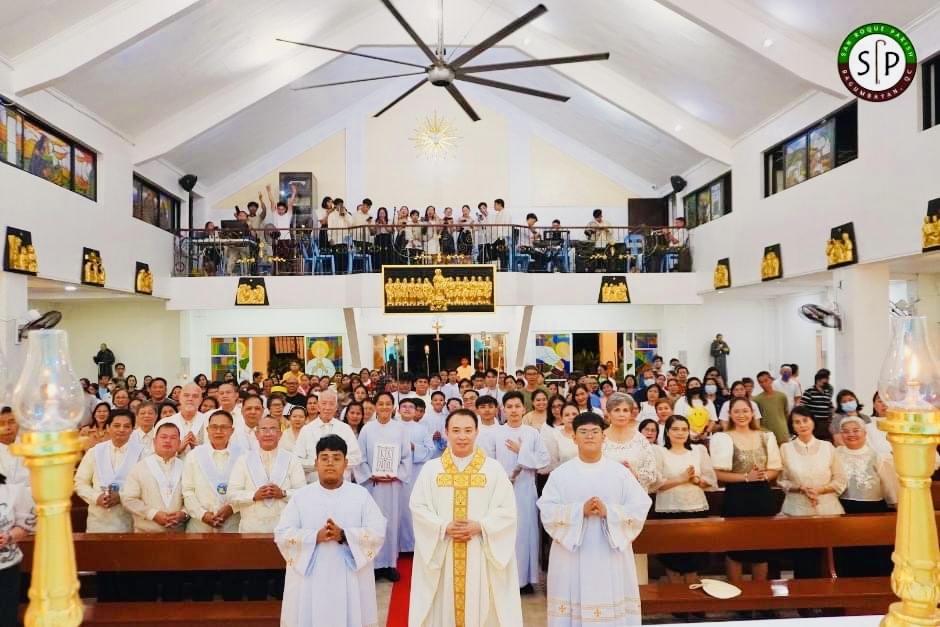
Lately, I have been conducting an evaluation of my three-year ministry here in San Roque Parish – Bagumbayan in preparation for the impending transfers of parish assignments. I have been constantly asking myself if my presence here has helped to create a good parish for all of us. Then it made me wonder what indeed makes a truly good parish? Is it simply a beautiful and clean parish church with well- kept facilities and bright and airy spaces conducive for prayer? Is it having a decent sound system, and the latest digital equipment? We know all these things are essential for a parish to be functional, but I realised that what is more important are aspects of life in the parish community that are difficult to measure because sometimes they only become apparent over time. 

Today’s readings tell us of a progression in how the believers in Jesus conducted themselves. The gospel speaks of the apostles hiding in a room, afraid for themselves and still struggling with the possibility that their Lord was alive. Thomas must have been stunned when Jesus appeared to the group but he believed without question once he had touched the wounds of Christ. In the First Reading from the Acts of the Apostles we see how the disciples have, in faith, been driven to build a life in community. Their way of life is characteristic of what John describes in our Second Reading — how belief that Jesus is the Son of God, leads one to follow Christ’s commandments, which we know from other narratives to be: love of God above all else and love of one’s neighbour as one’s self.  The principal values that define this community were communal harmony, sharing of resources, and faith witnessing. I believe that these are the same things that make a good parish. 

First of all, the early Christians were described as being “of one heart and mind” (Acts 4:32). This is communal harmony.  They believed they were willfully and consciously gathered together, regardless of their differences, by the Lord Jesus to continue His saving mission. They were to rise above the things that separated them from one another and work together towards the fulfilment of their collective mission. We know that unity of heart and soul is extremely difficult! Our society is marked by so much division and segregation, focusing on individualism and what sets us apart from the rest.  I pray that we, in San Roque Parish, will strive to fully achieve communal harmony among parishioners and become instruments of unity and peace in our community. Let us try to be an environment of living communion and participation — a place of welcome and patient nurturing for one another. 

Secondly, the early Christians did not claim anything as one’s own possession. There is a sharing of possessions and each one is given according to one’s need. Hence, no one is left wanting. In the past three years, we experienced a sense of volunteerism from the different groups in the parish. Young and old alike have learned to share their talents and skills for the good of the parish. I have observed how many of our parishioners here came to realise that one’s gifts and talents must be used to minister to others. Each one felt that he/she had something to give and no one hesitated to give of his/her time, talent, and treasure to support the parish’s mission. I pray that everyone will sustain this practice and pursue it further.  

Finally, they bore witness to the resurrection of the Lord. They did so by courageously preaching and teaching others about Jesus, the Messiah and the Son of God who died and rose to life to reconcile humanity back to God. They also bore witness by living lives that are pleasing to God — lives that make love tangible in the world. This love was patterned for them by Jesus Himself in the way he dealt with Thomas’ unbelief and impertinence. We see Jesus who was patient with Thomas. He doesn’t scold Thomas for his lack of faith and his impertinent remark: “Unless I see the nail marks in his hands and put my finger where the nails were, and put my hand into his side, I will not believe.” (John 20:25) Jesus reached out to Him in gentleness and forgiveness. Like Jesus, we are called to be patient and forgiving in how we accompany people as they embark on their journeys to grow in faith. A parish community that has been transformed by their faith in Jesus Christ is characterised by personal care, love and concern for all its faithful. 

What I like about our San Roque parish is that we have a closeness. We know one another. Although we are far from perfect, I can say that we are not just an assembly, but a community!  Perhaps the idyllic apostolic faith community that we heard about today is too high a goal for us to achieve just yet but through the grace of the Risen Lord perhaps one day it will be attainable.  My prayer is that when people see us, they can exclaim… “Wow! Look at how these parishioners of San Roque love each other.” 

In closing, let me share with everyone of us here the lyrics of the church hymn, Welcome and Wanted by Zack Stachowski as my prayer and hope for San Roque Parish and for all parish communities: 

“May this place always be a house for all gathered, a church that is shared; may this place always be our home. 

We gather together from all ways of life: our church universal, united in Christ. Reflections of Jesus in each human face, we’re welcome and wanted, we sing out our faith. 

May this place always be a house for all gathered, a church that is shared; may this place always be our home.”

Press Onwards, Easter People!

Homily: Easter Sunday of the Lord’s Resurrection

John 20:1-9

31 March 2024

Fr. Ricky Cañet Montañez

In 2003, I spent my Holy Week in Chile. You should know that this country in South America is predominantly Catholic like the Philippines. Hence, I really did not feel I was far from home because we practically share a lot in terms of our faith practices. Similar also is their fervour in the observance of Holy Week. What I can never forget from that experience nevertheless, was what my fellow novice, a Colombian, told me on Easter morning. He surprised me by saying he felt a little “let down” or short-changed by Easter. “Para daw siyang nadaya.” Inasmuch as he wants to truly rejoice every Easter morn, he fails to see life thriving and blooming around him. 

In a way, Lent still lingers in the lives of so many in the world. It is hard to imagine parents celebrating the resurrection of Jesus when they’ve lost their only child to dengue? While they may mourn a little less as the months and years go by, they will never truly stop grieving the loss of their child.  What is the impact of the resurrection on people who take care of their ailing parents, witnessing their steady deterioration as the days pass? How can an innocent man, imprisoned on false accusations experience the vindication and freedom that the Easter event brings? These unfortunate situations are akin to the experience of “Lent”.  If you check the news on your phone or check your social media apps frequently, you will inevitably find a lot of bad news, or sad news.  In a world that is constantly hurting and broken, one must wonder how we are to experience the full meaning of the risen life. 

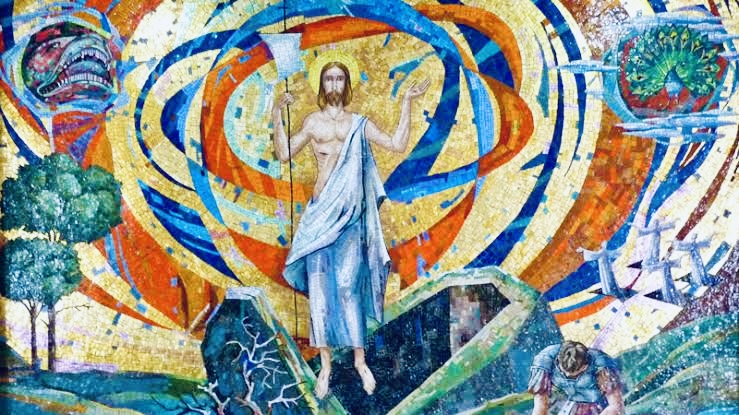
It really got me thinking because if we cannot find vitality and vigour around us, then Christ’s resurrection is pointless.  It was then that I understood that intertwined in these unfortunate circumstances of life are “little risings” — the unexpected moments of respite and of joy that point us to Easter. Jesus’ risen presence can be found everywhere if we open our eyes and hearts. He is there in the helping hand of family and friends, in the unexpected generosity of strangers and even in the gentle encouraging smiles of people who empathise with us. As followers of Jesus, it is our responsibility to make Easter apparent in our lives of our suffering brothers and sisters. In the First Reading from Acts, we hear of Peter’s great sermon, his testimony summarising salvation history. However, what follows this sermon is a commissioning, an invitation to witness to this resurrection faith in the lives of our brothers and sisters lingering in the darkness of this world.

As I have pointed out last Good Friday, our life can never be devoid of suffering, pain and death. We are called to enter into solidarity with those whose tribulations keep them from experiencing the joys of Easter. If we look around, there are still people who need our help in carrying their crosses. “There are still faces covered with blood and sweat that we must wipe clean.” There are those whose hearts are like empty tombs that need to be filled with the promise of new life. There is still work to be done. Moreover, it will take much longer than the 40 days we spent preparing our hearts for the commemoration of this moment. 

Today, we rejoice in the fact that Our Lord lives! We proclaim that Christ is risen to a world that continues to suffer because this Good News of our faith will bring them the comfort and the hope that God will never abandon them. Every time we gaze on the wounds of Christ, we are assured that there are no limits to His love for us. With the crucifix before us, we continue to sing our alleluias, pressing on as an Easter people!

Bearing Our Pains with Dignity and Grace

HOMILY: Friday of the Passion of the Lord / Good Friday

John 18:1-19:42 

29 March 2024

Fr. Ricky Cañet Montañez

I have been following some news in the UK because of the media storm that has been surrounding Prince William and Princess Kate.  What spurred it was the noticeable absence of the Princess of Wales (Kate Middleton) from royal duties and the public eye for a lengthy period. She recently released a video statement on her cancer diagnosis and the treatment she has been receiving. Prior to her revelation, all sorts of conspiracy theories came out to speculate on the whereabouts of the Princess and her real condition. Through all the gossip and fake news, the Prince and Princess remained unperturbed, facing the outrageous accusations, intrigues and persecution with “grace and dignity”. I really admire them for that. 

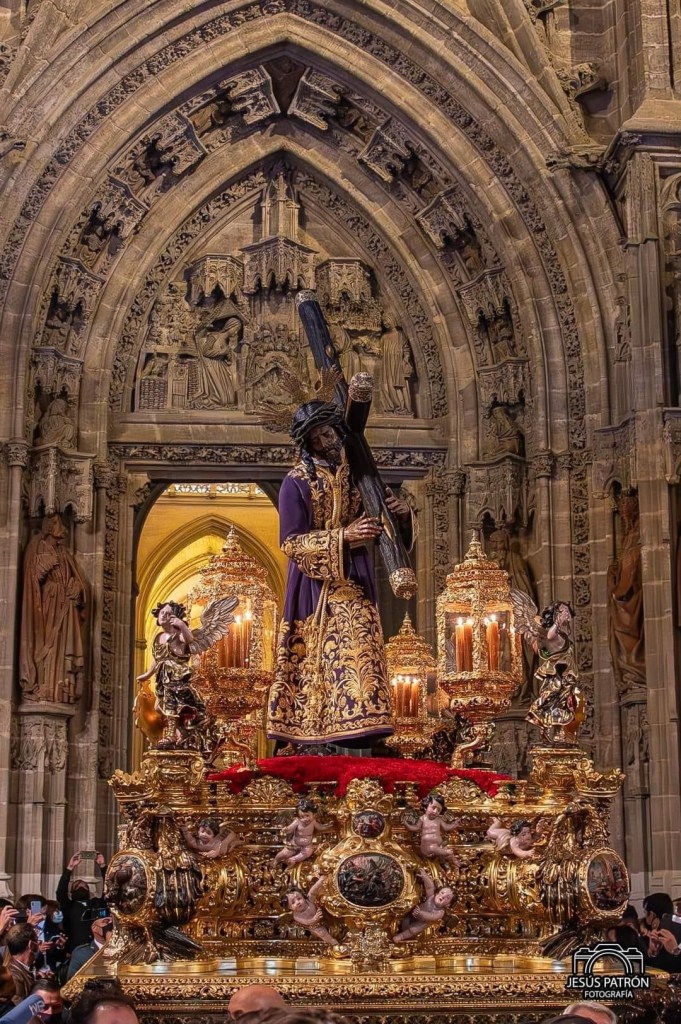
Today we have listened to the Passion of Our Lord Jesus Christ according to John. If we can truly picture what was happening in the story, the faint-hearted will have passed out. Jesus was treated pretty badly, and He suffered not just from the wounds inflicted on Him but from the torment of the mockery, ridicule and betrayal He must have felt. And yet, through it all, He endured this suffering with quiet dignity and grace. He chose not to respond to His attackers with violence. When He was arrested in the Garden, He reprimanded Peter for attacking one of the servants, and He took the time to restore the severed ear before He went with them peacefully. While His accusers were shouting, Jesus stayed silent. I am reminded of the saying that “Confidence is silent; insecurity is loud.” This angered them the more but Jesus did not do it to taunt them or antagonise them. He simply chose not to add to the hatred and evil that was already consuming his detractors. This is what separates Jesus from them. Pope Francis said that Jesus’ dignity shines through this “silence that triumphs over” His attackers. The Pope adds further “the truth is humble and silent, and is not noisy” acknowledging that what Jesus did is not easy. In the Gospel of John, we find Jesus in control of the situation. He knew the truth of Himself, His identity and His mission. Nothing, nor no kind of torture would change that nor deter Him from what He was determined to do for love. He endured His suffering because He loved us and He was confident in the Father’s love for Him. 

Most of the time, we really have to know when we should speak and when we should stay silent. When couples fight, both their emotions are high so it is recommended that they take some time to cool off before attempting to converse and discuss again. In the height of anger, they are more likely to say things they do not mean and are less likely to see clearly how they have both contributed to the misunderstanding or how they have hurt each other. Kung may nasaktan tapos may gaganti, away na. Kaya nagkakasakitan. Wala namang away kung walang pumapatol sa pag-udyok ng isa. Sabi nga nila.. mabuti nang manahimik kaysa pahabain pa ang isyu. (If someone gets hurt and then the other retaliates, definitely a fight ensues. Thus,  they would surely hurt each other. There is no fight if no one responds to the instigation of the other. As they say:  “It is better to remain silent than to complicate and prolong the whole matter.” I imagine this was the strategy of Princess Kate and Prince William. We contrast this with local and international celebrities who air their dirty laundry in public and choose to ensue in word wars with their family members on Twitter (now X) or with vloggers who make such a big deal about small discomforts that normal people deal with every day such as queuing in line, the humid weather, crowded places, etc. A recent video shows a lady asking for a microphone change. Instead of going about it quietly, she announced that she couldn’t stand the foul smell of the microphone. (I do not want to judge her because she could just be joking.) Clearly though, it was not necessary to say it in public.

Our world is so imperfect that it cannot be devoid of suffering. To be silent in times of difficulties and to bear our pains with dignity and grace must be grounded on our desire to emulate Jesus. It is not the same as the silence of denial of what is reality or the silence that allows evil to persist. I have a friend who died of cancer two years ago. No one knew she had cancer. She never went to consult a doctor so no one knew she was in pain. She bore her physical pain silently and eventually died of some cancer that went undiagnosed and untreated. This is not what it means to bear one’s suffering gracefully. Neither is it correct to say, we should be silent when we are eyewitnesses to a wrongdoing. Kapag kitang-kita na nating may dinudukutan ng wallet hindi ito ang panahon para manahimik; o kapag nag-aaway na sa publiko ang ating mga kaibigan, dapat naman awatin natin sa mahinahong paraan. (When we see someone is being robbed, that’s not the time to be silent; or when our friends are fighting in public, we should intervene and break it off in a calm manner.) Silence should not add to the suffering in the world. 

This Good Friday, we are asked to look upon Jesus, crucified on the cross for our sins. He did not deserve to suffer like that but He accepted it for our sake. “He was pierced for our offences, crushed for our sins; upon him was the chastisement that makes us whole, by his stripes we were healed.” (Isaiah 53:5) As the Suffering Servant of the Lord, “[Jesus] “though he was harshly treated, he submitted and opened not his mouth; like a lamb led to the slaughter…” (Isaiah 53:7) As long as we live in the world, we cannot escape from the reality of suffering, persecution and death. Jesus Himself experienced this. However, by His example we know that violence and evil will never have the last say.  In closing, I invite each and everyone of us to reflect on these two questions when we go home:

1. “Can I keep myself from adding to the suffering in the world?” 

2. “Can I bear my own share of suffering as a follower of Christ with the same dignity and grace as Jesus did?”

Faithfully, Gladly, Willingly Serving the Lord

HOMILY: Holy Thursday: Mass of the Lord’s Supper

John 13:1-15

28 March 2024

Fr. Ricky Cañet Montañez

When I was studying Theology in Boston, I used to spend my Saturday mornings with my good friend, Steve, who is now Fr. Steve (not Zabala though). Aside from our usual favourites, we would go around Boston trying out different breakfast places. I remember Steve to be a good tipper. Aside from the expected 20% standard tip in the US, he would leave the server/waiter a bigger amount. Curious I asked him why he did so each time. He told me that his family used to own a restaurant which had to be sold when he entered the seminary. Managing their own restaurant, he learned how to appreciate the work done by these service providers. He knew that waiting tables is a gruelling work.  They are on their feet all day and are expected to multitask and bust tail to keep up with customer demands, which is near impossible during peak dining hours — not to mention that they must do all these tasks with a smile on their faces.

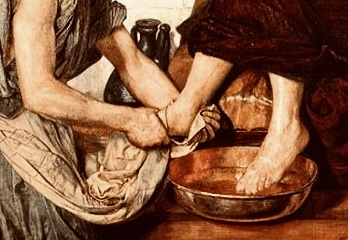
We celebrate this Maundy Thursday in appreciation for what God has done for us in Jesus. In John’s Gospel, we are told that Jesus “loved his own . . . and he loved them to the end” (John 13:1). This line is followed by Jesus’ tender act of humbly washing the feet of His disciples. He gets up from the table, takes off his outer garments, ties a towel around His waist and begins to wash the feet of His friends. The act of kneeling in front of someone to wash that person’s feet is the act of a lowly servant. Jesus was their Lord and Master and it was unbecoming for Him to get down on His knees and wash their feet like a servant. In fact, Peter refused to have Jesus wash his feet. Remember? This was a pivotal moment in Christ’s life with His disciples; this was a moment He wanted His friends to remember for always.  By highlighting the foot washing incident, John points to something vital — Jesus’ sacrificial love on the cross, where He pours Himself out in love “to the end,” that is, to the fullest extent. Jesus allowed   this to happen in order to reveal His and the Father’s love for us, the wondrous love that brings about fullness of life for all believers. After washing the feet of His disciples Jesus asked them, “Do you realise what I have done for you?” (John 13:12). In saying this, He was inviting disciples to enter into the mystery of total love and self-giving. His disciples are called to do the same. As He washed their feet, so must they do the same for others. 

Another special moment we commemorate today is the Institution of the Eucharist which happened at the Last Supper. In giving us the Eucharist, Jesus is giving us His very own Body and Blood. He gives us His total self, holding nothing back. This is what we find in the Second Reading narrated by St. Paul of the first Eucharistic meal: Jesus takes bread in His hands and tells His disciples, “This is my body”; and then, with the cup of wine, “This is my blood.” He shares Himself. He does not say that it is a “symbol” or a “representation” of Him. He says THIS IS ME. I GIVE MYSELF TO YOU.  He gave Himself, Body and Blood, for us on the cross. This is an ultimate act of self-giving, which is more than just mere “sharing” but rather a giving that springs from a tremendous act of love.  In the same way that He gave His own flesh and blood, His disciples are invited to do the same for others. As He loved His own to the end, so must they give their lives in love to those entrusted to their care. All His disciples are called to offer themselves for God’s people. 

Can we give of ourselves completely to the Church? More often we hear people choose to give only up until it is convenient for them. When we realise what God has done for us in Christ, are we not ashamed at our lack of generosity in God’s service? “Bakit ba ako mag-serve sa simbahan?” (“Why should I serve in the church?”) “Tama na na nagsisimba ako.” (“It is enough that I go to church.”) I have more important things to do than to merely serve there.” There are those who render service but are quick to quit when they do not stand to get the credit or if they don’t like their fellow servers or the people in their respective organizations. In two (2) months, my dear brothers and sisters we will have a new Parish Administrator here is San Roque. Everyone will surely have to make necessary adjustments. Thus, let us urge each other to continue supporting this parish and to continue giving our efforts, our talents to serve the Lord. It is important that each and everyone lends a hand to help the new priest grow accustomed to the parish, settle and start serving the community. 

We can expect that when we give of ourselves, it will not be easy. We cannot truly say we have given of ourselves until it hurts because the truth is, when we love, it can be painful! We are broken so that others may benefit, thrive and be built up. In the ancient practices of taking oaths, they did not take this lightly because it involves the spilling of blood. God’s covenant with His people is ratified in the self-offering of Christ on the cross. As we follow Jesus, we are asked to bear the crosses we receive in life.  Parents who have dealt with wayward children or leaders who have dealt with “pasaway” (troublesome) members know this. Many times, I have heard a parent say “Dugo at pawis yan, Father.” (“It is sweat and blood, Father.”) when speaking of their relentless efforts to guide their wayward child. It is not easy, because it is a test of our patience and our trust in God’s providence. It is not easy because it hurts to see a loved one choosing a path that is self-destructive. However, we are invited to imitate Christ to persevere — to keep giving of ourselves for the sake of another, especially for love.

This Holy Thursday, let us continue to reflect on how God loves us. The appreciation of what Christ has done for us should lead us to willingly, gladly and faithfully serve the Lord every moment of our lives. In closing, I too would like to thank you for your support of San Roque and my ministry in our parish. I did my best to serve all of you whom the Lord has entrusted to me. Our journey together is coming to a close, but I will continue to keep you in my prayers. Please do the same for me. San Roque will always have a special place in my heart!

Holy Week: A Journey to Holiness

Homily: Palm Sunday of the Lord’s Passion

Mark 15:1-39

24 March 2024

Fr. Ricky Cañet Montañez

I think it is safe to say that among Catholics in the Philippines no other days in the liturgical calendar are believed to be holier than the days we commemorate the passion of Our Lord Jesus Christ. In fact, Good Friday is observed as a Non-working public holiday. Even the malls that open on Christmas Day and New Year’s Day stay closed on Good Friday. The whole nation acknowledges that day as “banal”. The Paschal Triduum of Holy Thursday, Good Friday and Black Saturday are not just HOLY days but also LOVED or VALUED (CHERISHED) days for all of us, Christians. We become more conscious of the call to holiness and refresh our commitment to strive to live Christ-like lives. 

Let us not deceive ourselves into thinking that because we call ourselves Christian, we are automatically holy.  We are all a work in progress! We have a long way off the road to holiness. Notice that we began today’s liturgy with a procession. This symbolises the gradual process of becoming holy. It is a journey and a pilgrimage of sorts where we experience discomfort, tiredness, discouragement but at the same time find inspiration, learning, courage and strength.  Before Christ’s followers were even known as “Christian” it is documented in The Acts of the Apostles that they were called “Followers of The Way”. (Acts 9:2; Acts 22:4)To this day, we follow the example and teachings of Jesus as we wait with hope and anticipation for the fulfilment of His promise to return. For this reason, we are called “a pilgrim people” bound for the Kingdom of God!  

The practice of holding pilgrimages and processions abound during Lent and this peaks during the Holy Week. This tradition is an expression of the reality of our Christian life and identity. The Visita Iglesia is actually a pilgrimage based on the practice of visiting the seven (7) important Basilicas in Rome to pray and seek penance.  Processions are mini-pilgrimages stemming from the practice of visiting sacred places in the Holy Land associated with the life, ministry, passion, death, and resurrection of Jesus.  Bernhard Raas observes that “processions become a manifestation of the Christian commitment to follow Christ and to live out the values of his message and the kingdom.”  May kasabihan tayong: “Sa hinabahaba ng prusisyon, sa simbahan din ang tuloy.“ (We have a saying: “No matter how long the procession is, it will always lead us back to the church.) It refers to the lengthy and roundabout nature of an experience that essentially ends where it began. It is an apt observation on how “most of our processions are ‘circum-abulatory’, that is, they begin and end in the same church”, reminding us that our origin and destination is the One and the same God.  Our processions should lead us to the Church, to a deeper adoration of God, to a greater love for Him, expressed concretely in our love for others, especially the poor and the powerless.

No procession begins and ends instantaneously. There is a certain passage of time depending on the route you take. There is something about being in the moment of walking together with our brothers and sisters in Christ, toward the Church, that invites reflection. Each year as we journey into the Holy Week, we have the chance to reflect on the extent of God’s love and mercy toward us as we commemorate the passion, death, and resurrection of Jesus. It is the time to look upon ourselves and see how we fail our Lord because of our sinfulness and to recognise how much we are in need of His mercy if we are to be holy. For many of us, holiness is associated with being merciful. We consider ‘awa’ as a very vital concept of holiness because God, who is Holy, has been merciful to us. Our Filipino expressions are proof of this. When consoling one who is exasperated or depressed, we say, “May awa ang Diyos” (God is merciful); when asked how we are doing, we respond “Mabuti naman, sa awa ng Diyos! (By God’s mercy, I’m all right!);  in our local custom of kissing an elderly person’s hand as a sign of respect, a blessing is dispensed, “Ka-awaan ka ng Diyos.” (May God be merciful to you.)

In a talk, Cardinal Chito Tagle once pointed out that the word “UNAWA” (understand) contains the words ‘UNA’ (First) at (and) ‘AWA’ (Mercy)…  Inu-UNA ang AWA. (Mercy comes first.) Unahin ang AWA. (Before all else, Mercy!) Inu-UNA ang iba. (Others come first.) This is the characteristic of a holy person. A holy person sees the value of every neighbour. Who is the best example of this but Jesus Christ Himself? In our First Reading, Isaiah prophesies a suffering servant who shows concern for others, “speaking to the weary a word of comfort” (Isaiah 50:4). We know full well that Jesus was the fulfilment of this prophecy.  In the Second Reading, St. Paul tells us how “Jesus emptied himself and took the form of a slave, coming in human likeness.” (Philippians 2:7) This condescension is the best proof of Christ’s genuine compassion for suffering humanity, having entered into the human experience, Himself. To follow in Christ’s footsteps, we too must review aspects of our life where we need to be less selfish and more attuned to others. We need to show mercy and compassion even if it means stepping out of our comfort zone, or making some personal sacrifice. Acts like these will help us grow in holiness — help us be more like Jesus. 

As we enter Holy Week, let us bear in mind these two (2) concepts to help us have a meaningful experience:  First, let us see all our actions this week as a continuation of today’s procession with palms — joining ourselves with Jesus on His way to the cross as part of the journey to receive new life.  Secondly, let us commit to being especially sensitive and responsive to those around us in need even if our journey leads us to the cross. After all, Jesus was always compassionate toward those around Him even in His darkest hour. May we have truly meaningful and holy days ahead!

Accepting the Inevitable with Faith and Hope

Homily: Fifth Sunday of Lent (B)

John 12:20-33

17 March 2024 

Fr. Ricky Montanez

“God, grant me the serenity to accept the things I cannot change, the courage to change the things I can, and the wisdom to know the difference.” I have always loved these lines from the Prayer for Serenity because they knock some sense into me whenever I find it hard to accept unfortunate situations in my life. These lines also remind me to always pray for wisdom to understand the difference between circumstances (“things”) that can and cannot be changed. It prompts me to ask for the courage to take action in case I am able to do something about pressing matters, as well as to accept calmly those that are beyond my control. 

In the gospel today, Jesus is portrayed as enduring an interior struggle with the prospect of His impending suffering and death in accepting God’s will. Was the prospect of suffering and death easy for the Son of God? If we listened to the passage, Jesus was clearly disturbed by the future He faced. He says: “I am troubled now. Yet what should I say? ‘Father, save me from this hour?’ But it was for this purpose that I came to this hour.”  (John 12:27) He similarly struggled with His fate in the Garden of Gethsemane. In His pleading to the Father, Jesus asked if He could be spared the horrors of His Passion. “Father, if you are willing, take this cup from me; yet not my will, but yours be done.” (Luke 22:42) We know that eventually Jesus would put aside His own fears of suffering and death and voluntarily submit to the Father’s will. However, He was clearly still anxious and distressed knowing the path He must take would mean excruciating torture for any human being. These moments are proof that Jesus was fully human with an understanding of fear and anguish. 

In life, we all have to contend with many challenges and difficulties as well. Suffering is an unavoidable part of life. As disciples of Jesus, life will not be easy either. Of course, we are not seeking out suffering for its own sake. Some would say, suffering finds us even when we try our best to avoid it. The truth is, if we chose to follow Jesus we must expect — even welcome — the struggles and strains of living a life following in His footsteps. “Whoever serves me must follow me, and where I am, there also will my servant be.” (John 12:26) We cannot avoid nor escape our share in the sufferings of Christ in order to share in His glory. The cross is part and parcel of our story of our salvation.  Jesus took on the weight of the sins of all humanity — past, present and future — making for the heaviest cross of all. Yet He bore it with patience and love because He knew the ultimate good His sacrifice would bring. 

Through Jesus’ example, we are shown how we are to accept with serenity the circumstances of life over which we really have no control. Of course, we have free will and to a certain extent we have the power to make choices, to effect change, to affect an outcome and to make a difference. There are some circumstances that we cannot change anymore. One of them is “things” that are already in the past. There is no rewind for these things. No matter what we do, we have to accept that we simply cannot do anything about them anymore. The mistakes we made cannot be undone. We can only make amends for them. That’s why we must choose to hold our tongue when we are angry.  When we say hurtful things, we may not mean, it doesn’t take away the fact that we said them and caused another pain. We can say sorry and hope to be forgiven but we cannot pretend that we never said those hurtful words. Secondly, we cannot change the consequences of decisions other people have made. That is why elections should not be taken lightly. The vote of the majority ultimately decides who leads our nation and the priorities of government. No matter how shocked we were about the unprecedented shortage of rice and onions, or how we are continually upset by the soaring prices of gasoline and basic commodities, this is not something within our control. We just have to ride out these situations as calmly as we can and leave the authorities to solve the problems and pray they do not create bigger ones.  

In the Second Reading from the Letter to the Hebrews, we are told that Jesus, the Son of God, had to struggle to live His vocation. “In the days when Christ Jesus was in the flesh, He offered prayers and supplications with loud cries and tears to the one who was able to save Him from death… Son though He was, He learned obedience from what He suffered.” (Hebrews 5:7-8) We, too, are invited to learn from our Lord Jesus on how to meet life’s challenges with faith and hope in the Father who loves us. It is human to complain and to cry out for help. When we are pained as we journey through life, we need not suffer in silence. Let us ask for help. Let us speak to persons who will understand us. What’s important is that we do not give up. Everyone’s life has value and everyone’s life has a purpose. God in His love and mercy has a beautiful plan for each of us that we may not understand except in retrospect. We just have to trust in God our Father, just as Jesus did. Jeremiah 29:11 says: “For I know the plans I have for you,’ declares the Lord, ‘plans to prosper you and not to harm you, plans to give you a hope and a future.” 

Someone said: “A happy life is not a life without struggle, rather it is a life with manageable struggle.” Life is never going to be without pain and difficulty. It is part of the human experience. It is the consequence of people making mistakes and bad choices. This is quite an unfortunate thought but that is just how things are. In the end it is not about the struggles that matter, it is how we manage or handle them that counts. Let us all pray for the courage to do what is right and the serenity to leave up to God what is beyond our control.

Infinitely LOVED to LOVE

Homily: Fourth Sunday of Lent / Laetare Sunday (B)

John 3:14-21

10 March 2024

Fr. Ricky Cañet Montañez

“For God loved the world so much that he gave his only Son, so that everyone who believes in him may not die but have eternal life.” – John 3:16

I’ve heard it said that if all the Gospels had been lost early on, except the first line of today’s gospel passage, it would be enough for us. Rightly so, this verse most profoundly sums up the entire biblical message. The verse reminds us of the tremendous love of God for each one of us by not sparing His only Son. In Jesus, we are shown how God continuously reaches out to us in love, saving us from evil, failure, ruin and darkness. The verse affirms what God’s plan is for us — to bring us into eternal life. “For God did not send the Son into the world to condemn the world, but that the world might be saved through him.” (John 3:17) 

In his encyclical letter, Evangelii Gaudium (The Joy of the Gospel), Pope Francis says, “When everything is said and done, we are infinitely loved.” Once we are convinced that God truly loves us, we have hope. Infinitely loved. Pagmamahal na walang humpay, walang kapaguran, walang kondisyon, walang hangganan. Wala nang mas radikal pa sa pagmamahal ng Diyos para sa atin. At dahil sa ganyang uri ng pagmamahal, wala ding kawalan ng pag-asa. (Love that is relentless, untiring, unconditional, boundless. There is nothing more radical than God’s love for us. And because of that kind of love, there is always hope.)

Brothers and sisters, the challenge is for us to accept this love. We have to make the choice. We can be confident that God truly loves us! He does not force His love on us. We make the choice whether to accept His love and live in His light or reject His love and persist in darkness. Let us always remember that we are loved. God loves us immeasurably even when we feel unlovable or if we feel we cannot love Him back. He loves us! St. Paul reminds us… “God, who is rich in mercy, because of the great love he had for us, even when we were dead in our transgressions, brought us to life with Christ.” (Ephesians 2:4-5)

In turn, we, too are called to share this love with others. As St. Teresa of Calcutta famously said: “God loves the world through us — through you and me.” Living in and witnessing to God’s love is not easy. It entails sacrifice! St. Marie Eugenie of Jesus, Foundress of the Religious of the Assumption once said: “Love dies without sacrifice?” For some, the concept of love with sacrifice makes true love less appealing. They would rather take pleasure in someone for a while and when the “kilig” fades or the relationship gets rough, they walk away, ghost the person and set their hearts on the next adventure or conquest. These days it is very common to hear people say, “wala na lang label” ang sa atin. (Let us not have any labels in our relationship.) In weddings, I always tell couples that if we try to rephrase their marriage vows, it would simply say… “I am going to faithfully love you because you are worth dying for.” Striving to keep that promise is an example of real love, true love. That is exactly how God loves!  Hence, the act of loving is more difficult, more demanding because it is patterned after the way the Father loves each one of us in Jesus. 

To love as God loves is a tall order! Nevertheless, we need not be discouraged. It is true that some relationships don’t last… friends fight, families break apart and some marriages do end. However, it doesn’t mean it is an impossible task. As God, Jesus could love perfectly, but at the same time, Jesus was also fully human, showing us that the human heart also has the capacity for true and lasting love. Jesus is proof of this. He shows that love survives and blossoms again despite hurt, ugliness, and tragedy through forgiveness. Think of all the times Jesus managed to have love and compassion even for those who hurt Him and misunderstood Him. 

Let us not be afraid then to aim for the ideal in love. Through Jesus Christ, we have all been gifted with the capacity to love as God loves. St. Paul reminds us in the Second Reading: “For we are God’s handiwork, created in Christ Jesus for the good works that God has prepared in advance, that we should live in them.”  (Ephesians 2:10) It is the Holy Spirit that guides and helps us discover the strength of our capability to love as Jesus did! It just takes practice and mindfulness. May our loving God make us steadfast in our love for one another and make us witnesses of His saving love.

Owning Up to Our Mistakes

Homily: Third Sunday of Lent (B)

John 2:13-25

3 March 2024 

Fr. Ricky Cañet Montañez

In the entire Bible, Jesus is only recorded as having completely lost his temper one time. We are definitely not used to hearing about Jesus acting gruffly. The Jesus we come to know in the Gospels is one who is always welcoming, gentle and compassionate towards sinners. As a healer, He ministered to the sick with special attention and care. He fed the hungry crowd upon feeling pity for them who were like sheep without a shepherd. He satisfied their hunger for food and He also fed them spiritually. As a teacher, Jesus rarely lost His patience with His disciples even when they disappointed Him or failed to understand what He was teaching them. Even with His adversaries, Jesus responded calmly especially during their attempts to entrap Him. At the end of His life, as He suffered tremendously on the cross, He still desired forgiveness for all those who wanted Him dead.   

Can you imagine Jesus cracking a whip and overturning tables and ordering them to “Take these out of here and stop making my Father’s house a marketplace.” (John 2:16) Now nobody does this calmly and gently right? They are giving us a clear picture of someone who lost His temper. None of His disciples was recorded as trying to restrain Him or hold Him down to minimise the damage. (Di ba dapat hindi sinasalubong ang taong sobrang init ng ulo?) Anger is not evil per se. It is a human emotion and is understandable when there is a logical reason for it. However, more often than not, when we observe people throwing a fit of anger, it upsets us and we immediately brand the person as crazy, OA (over-reacting) or war-freak. Sometimes we don’t bother to understand why people behave in such a way especially when they are angry. 

Jesus was furious with those conducting business outside the Temple. According to a few commentaries I have read, part of the Temple was really a marketplace. “The transactions were legitimate, they were conducted in the appropriate temple area, and they were essential supports of the temple service.” This is where they changed money and bought animals for sacrifice. The problem was, the money changers were cheaters and the vendors were overpricing their goods. The worst part was that since no one complained, the evil doing became common and accepted. Isn’t this the case also in our lives? Corruption in government or illegally operating institutions cannot be brought to light and apprehended when no one speaks up. It is the same with the way we conduct ourselves. Sometimes, we need others to call our attention, point out our bad behaviour or sometimes even scold us to really drive home the point. 

Do we stop to think about our accountabilities? Why do we think ourselves blameless all the time? Nobody readily admits to being in the wrong or at least no one wants to be held responsible for one’s poor choices. I remember my novice master in Chile saying out of frustration every time something was broken in our community house and no one ever admitted they were at fault, “It was Mama Mary again who did it and she should take the blame.” Everyone just wants to save one’s face all the time. There are always ready excuses offered just to get away with one’s mistakes. How can we ever prosper as persons, (or as a nation) when we do not have the humility to own up to our shortcomings? Sometimes, when things go wrong for us because of our negligence, we even blame God for the consequences. If it floods because we clogged our drains with trash, we blame God for the damage it wreaked on our property. If we are careless with our bodies and we get sick, we blame God for not protecting us or healing us immediately.  We never stop to think about the role we have played in these matters 

This Lenten season, let us reflect on our life and recall how we have angered or saddened people or continue to generate negativity from people around us. Let us ask ourselves how have we wronged others? Perhaps let us recall what they have been trying to tell us and instead of being defensive, learn to accept our mistake, ask for forgiveness and really try to change for the better. Lent is also the perfect time for all of us to receive the sacrament of reconciliation and ask the Lord for mercy for all the times we have deliberately rejected Him by our actions and chosen to turn away from Him. Let us pray that we will receive the gift of humility and discernment to enable us to have a meaningful and fruitful observance of Lent.

Sarah Gonzales for NPR

To LISTEN To be SILENT

Homily: Second Sunday of Lent (B)

Mark 9:2-10

25 February 2024

Fr. Ricky Cañet Montañez

One time, I was trying to prepare my Sunday homily when loud music was blaring from outside the rectory. The dogs were startled and they started barking. I could hear the household staff speaking loudly but I couldn’t make out what they were saying. There was so much noise, I could barely hear myself think! I was so bothered by everything; it was hard for me to be still and to be focused.  Listening is impossible when there is a lot of noise around us. Noise, however can also come from within us, such as the intense beating of an anxious heart, the rumbling of a “hangry” tummy, or fearful thoughts that play a disturbing monologue in our heads over and over. The challenge is to learn how to listen.

For this Sunday’s gospel passage, we are told that Peter, James and John witnessed something so magnificent and mysterious. They were so terrified that they did not know what to say. Despite this, Peter blurts out that they should build three (3) tents for Jesus, Moses and Elijah — a suggestion that would keep them on the mountain suspended in that glorious encounter and away from what scary future awaited them in Jerusalem. Only when they fall silent do they hear the voice of God Himself confirming Jesus is His Son, and that they must listen to Him. We can imagine how these three (3) simple men were so confused and still in shock as they descended Mount Tabor. When Jesus cautions them not to tell others until He arises from the dead, they become confused all the more! Although they obey Him, they cannot help but discuss among themselves what Jesus could have meant. 

The imperative word, “Listen” is one of the most used words in the Bible. There are quite a good number of verses with an invitation to listen to God and heed His message. There are also many stories in scripture of important Biblical characters who failed to listen to God’s counsel either directly or through His prophets. A few weeks ago, our readings featured King Solomon, who, though known for His wisdom, foolishly took on many foreign wives despite warnings he received from the prophets. Solomon ended up worshipping the false gods of his foreign wives. For that, God took away the kingdom and allowed it to be divided up among its enemies. Sometimes, failure to listen could have huge consequences. 😔

Listening is a tricky skill. First of all, you need the gift of discernment. Know whom you should be listening to. Should you listen to your gossiping neighbour? Should you listen to advertisements that try to convince you that you are not pretty enough, not thin enough, not smart enough, not rich enough? Should you listen to podcasts and radio and TV stations that are biased? Listen to those who are trustworthy, whose words mean something. Secondly, we must be prepared to listen. Focus. Clear our head. Face the person speaking to us. If absolute silence is needed, then we go to a quiet place. In fact, when people need guidance from God, they go on retreats in secluded places. Lastly, we need to determine if an aspect of what we listened to needs action. Is something requested of us? Are we commanded to do something? It can be difficult to understand what is being asked of us. Peter, James and John, did not often understand what Jesus told them or asked of them. They only understood in hindsight when all Jesus predicted had come to pass. 

Lent is a privileged time to attentively listen to the voice of God in prayer. Aside from fasting and almsgiving which are part of the Lenten discipline, we must make time to pray. We must bring ourselves to prayer to listen to God without distraction — without the noise of mobile phones, iPads, radios and televisions. “LISTEN!” This is the invitation for Lent! As the Austrian pianist, poet and author Alfred Brendel observes: “The word ‘LISTEN’ contains the same letters as the word ‘SILENT’!” I need to be silent so I can listen to God’s voice. We need to be especially sensitive to the voice of Jesus. More often than not we do not hear the human voice of Jesus in our ears. We hear Him speak to us in our hearts or through the counsel of other people. I believe I once told you of a friend of mine who abstains from social media each Lent. She is incommunicado on online platforms. I admire her for doing this because sometimes, we need to do something drastic in order for us to really listen from and with all our hearts. 

Brothers and sisters, the busyness of life can sometimes prevent us from taking the time to stop and really listen — to each other, to ourselves and to God. During this Lenten Season, we are called not only to listen to God’s voice but to respond to God’s voice wholeheartedly. Let us trust that God’s message for us is always filled with love. And even though His message for us brings change, let us trust that in the end, the transformation that happens within us is always for the better.

The Transfiguration 2023 Printmaking by Chris Brazelton

Deliver Us from Evil, Lord!

Homily: First Sunday of Lent (B)

Mark 1:12-15

18 February 2024

Fr. Ricky Cañet Montañez

One time a little boy sadly told me, “Ang hirap maging mabait, Father.” (It’s hard to be good, Father.) Nananahimik ka minsan pero may mga makukulit ka talagang kaklase na magsisimula ng gulo. (Sometimes you are trying to mind your own business and then a nasty classmate starts the trouble.) Gustong-gusto ko makakuha ng mataas na grades pero napapasarap din ako maglaro ng ML. (I really want to get good marks in school but I also enjoy playing ML.) Alam ko na dapat tumulong ako sa gawaing bahay pero tinatamad ako minsan at gusto ko lang matulog.” (I know I should help with the house chores but I’m lazy sometimes and I just want to sleep.) I can just imagine his mother scolding him for all these transgressions. I am quite certain that if I were his age, I would have similar issues and [in our own time] marks from a vigorous spanking. This little boy’s dilemma actually mirrors our own struggles to resist the presence and attraction of evil in our respective lives.  

In the Gospel, we hear the familiar drama of Jesus being tempted by Satan. Although the temptation account in the Gospel of Mark is quite brief compared to the accounts of Luke and Matthew, it still takes into account this defining moment in the life of Jesus where He experiences spiritual conflict — that all too human struggle between right and wrong, between fidelity and disobedience in our relationship with God. The temptation experience was not a simple one-time invitation that Jesus easily turned down, considering He is God.  It lasted for forty days!  We have to remember that Jesus was also fully human and the struggle to deny His earthly compulsions was real. We can imagine what that must have been like. If that were us, we may have only lasted five (5) minutes before giving in! ☺️

I once read that the temptation of Jesus continued throughout His earthly life and He had to overcome each one as they presented themselves. That is to say that the challenge to be faithful to the Father’s will was a continuing struggle even for Jesus Himself. It would occur again and again at various stages in His life, right up to and especially at those last hours in the Garden of Gethsemane and on the Cross.  In His anguish in the Garden, Jesus cries out to the Father… “Abba, Father, all things are possible for You. Take this cup away from Me; nevertheless, not what I will, but what You will.” (Mark 14:36) 

The fact that Jesus does not fall prey to the lies of Satan is reason for us to rejoice. Fundamentally, it is further proof that Jesus is the real deal — the Messiah, the new Adam the leader of the new creation. The passage says Jesus was in the desert among wild beasts but there is no record that He is hurt by these animals. Bible scholar Brandon Crowe says it is a parallel drawn between Adam in the Garden of Eden who was given dominion over all the creatures. Both were tested and tempted by the devil but unlike Adam, Jesus does not fail the test. In Luke and Matthew, the specifics of Jesus’ temptation were identified as the temptation to power, domination and possessions. After the final temptation Jesus says to the devil, “Go, Satan! For it is written, ‘You shall worship the Lord your God, and serve Him only.’” (Matthew 4:10) Then the devil left Him; and the angels ministered to Him. From this, we see that Jesus was sure of His identity. As the Son of God, He already had dominion over all, in possession of all and even the angels subjected themselves to Him. The devil had no right to offer what did not belong to him. Moreover, we see that Jesus placed the will of His Father above His own. He was not tempted to show off His power or to flaunt His divinity because what mattered was the mission that His Father gave Him. 

Similarly, the struggle to battle against evil for us never stops. We all struggle to say “YES” to God and to remain faithful followers of Jesus. It is so easy to give in to temptations such as when we choose our personal comfort and satisfy our whims while depriving another or when we turn a blind eye to injustices we can rectify or when we choose to be dishonest and greedy for personal gain at the expense of the common good. At each instance, we put ourselves first and diminish others. Temptation is a universal human experience; every person finds himself or herself being lured to turn his or her back on God. We have to contend with the many distractions that keep us from accomplishing the mission God has given us in life. However, Jesus proves that humanity is not doomed to weakness. He is proof that people have the power to resist the devil. 

Indeed, there is no shortcut to heaven. Holiness is not something that happens overnight. It comes after a long struggle with our failures and imperfections. All of us are moving towards maturity and self-actualisation. As long as we live, we cannot simply hang up our bows. The war is not over yet and we could never rest secure. The author of 1 Peter tells us that throughout life we are in the throes of a struggle between right and wrong, between fidelity and disobedience, and only the graciousness of God can deliver us. This is probably the reason why Lent is described in the context of a struggle, where we are invited to recognise that life is very much a spiritual campaign, wrought with battles, and warfare. It is by practicing self-restraint and the discipline of prayer that we can arm ourselves with effective weapons of defence. 

Let us make the most of this Lenten season — a truly sacred time — to nurture our spiritual growth and maturity and remain steadfast in faith despite any of life’s temptations. Like the little boy in my story at the beginning of this reflection, as we struggle to be good and pleasing to God, may we always pray… “Lead us not into temptation but deliver us from evil. Amen.”

From Pininterest