HOMILY: Solemnity of our Lord Jesus Christ, King of the Universe (C)
2 Samuel 5:1–3 | Colossians 1:12–20 | Luke 23:35–43
23 November 2025
Fr. Ricky Cañet Montañez, AA
We Filipinos admire winners. When we are strong, wealthy, or well-connected — we get respect. Many times, our idea of leadership is shaped by loudness and the influence of the crowd that endorses and rallies behind a person. We give them power over us, even if they are not qualified, even if they have pending cases, even if they live questionable lifestyles.
It does not make sense that despite our nation being mostly Catholic, we Filipinos tend to choose leaders who are the exact opposite of Jesus Christ. On this last Sunday of the Church year, the Gospel confronts us with the shocking image of our true King — as one who hangs on a Cross (Luke 23:35–43). No throne. No golden crown. No machinery. No bloc of followers. Just wounds, insults, and two criminals beside Him. And we find ourselves asking: “Lord, why is Your kingship like this?”
In the First Reading, Israel tells David, “You are our bone and flesh” (2 Samuel 5:1–3) — a king close to his people. Jesus fulfills this not by rising far above us, but by entering our deepest suffering. He is the only King who could triumph over everything… but chose not to. He could have come down from the Cross. He could have silenced His enemies. He could have proven His power.
However, Jesus stays — not because He is weak, but because love refuses to abandon the beloved just to look strong. Here is the mystery: Christ wins by losing. He saves not by escaping the Cross, but by remaining on it — for us.
Moreover, if we look closely, this kind of kingship is deeply familiar to the Filipino soul. Every day, we meet people who “lose” something out of love. Think of parents who give up their own dreams so their children can pursue theirs, Overseas Filipino Workers (OFWs) who sacrifice being present in their respective homes so their children can have a future, teachers who are stretched thinly yet still giving their best, jeepney drivers who endure long days just so they have something to bring home for dinner, and young people who choose honesty even when it makes their life harder.
These hidden sacrifices — these quiet losses — are where Christ the King reigns the strongest. As St. Paul says, Christ reconciled all things “through the blood of His Cross” (Colossians 1:12–20) — not through wondrous works, not through displays of domination and power, but through the love revealed in His loss. Christ redefines what winning truly means. In God’s eyes, victory is not about rising higher, but loving deeper. Not about gaining more, but giving more. Not about applause, but compassion. Not about avoiding loss, but allowing love to cost us something.
Which brings us to the question this feast asks us gently but firmly: “What do we need to lose so that love can win?” Do we need to let go of pride so reconciliation can begin? Do we let go of anger so peace can enter? Do we dare to let go of a secret sin so grace can flow freely once more? Do we let go of control so God can finally lead? Do we let go of fear so God can make our life’s purpose larger than our worries? His Kingship is not diminished by difficulty — rather, it is how He manifests His power. When He was on the cross, mocked from every side, seemingly defeated, He gave His royal promise to the repentant sinner who chose to stand with Him: “Today you will be with Me in Paradise” (Luke 23:43).
At the end of the Church year, the message is both simple and stunning: Jesus lost everything so we could gain everything. He chose weakness so we could discover strength. He chose the Cross so we could find life. Christ is not the King who wins by winning. He is the King who wins by loving. And every time we “lose” something for love, He reigns in us all.
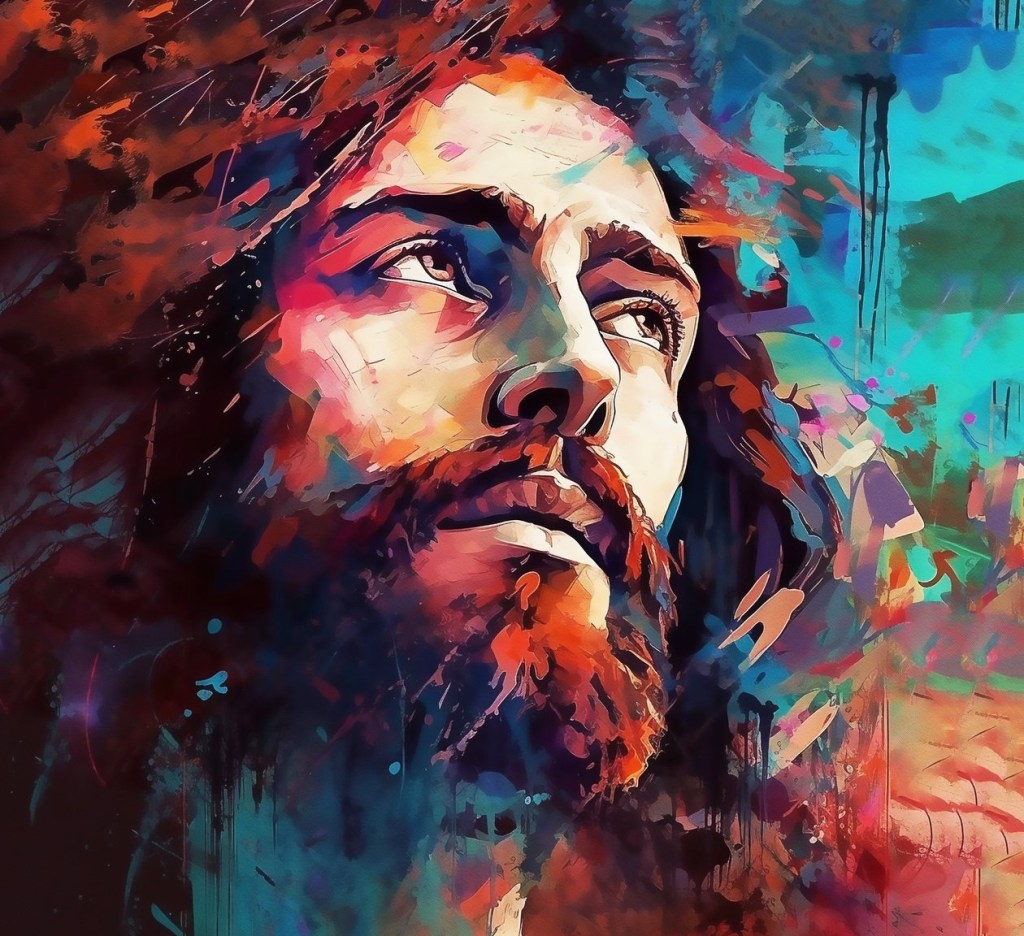
Religious Face of Jesus Christ, Spiritual Christian Canvas Painting by F. Abderrahim
 Sunday Gospel Reflections