Homily: Fifteenth Sunday in Ordinary Time (C)
Deuteronomy 30:10-14; Colossians 1:15-20; Luke 10:25-37
13 July 2025
Fr. Ricky Cañet Montañez, AA
It is not easy to be a Christian. Some people may say that all you have to do is close your eyes and accept Jesus as your Lord and Saviour — and just like that, you’re saved and bound for heaven. However, know that following Christ is more than a one-time prayer. It is a daily journey filled with choices, struggles, and sacrifices. Every day we live, we face trials and temptations that challenge our faith in Christ’s teachings and promises.
In today’s First Reading from Deuteronomy, Moses reminds the people that God is not far from them. He says: “Heed the voice of the Lord your God and keep His commandments… for this word is very near to you, in your mouth and in your heart.” (Deuteronomy 30:10,14) He is telling them — and us — that God is always speaking. His Word is close, not far away. It is already planted in our hearts. For those of us who come to Mass regularly and reflect on the Scriptures, God’s Word is something we’ve already heard and received. The challenge now is to live it out. However, let us be honest — that is not always easy. Living the Word does not mean we are free from stress, pressure, or pain.
Just recently, many of us were deeply saddened by the heart-breaking news of a young Italian priest, only thirty-five (35) years old, who took his own life. It is hard to understand. One would think that a priest — someone who speaks the Word of God daily, who celebrates the sacraments — would somehow be shielded from despair. And yet, he wasn’t. His death is painful and confusing. For many of us priests, it has become a wake-up call: to be more attentive, more compassionate, not just to our parishioners, but also to one another.
In the Gospel, Jesus is asked, “Who is my neighbour?” (Luke 10:29) And in response, He tells the story of a man who was beaten, robbed, and left for dead. Two religious leaders passed by. Nevertheless, it was a Samaritan — someone unexpected — stopped, drew near, and showed mercy. Perhaps the priest who died was like that wounded man. Outwardly joyful, seemingly strong, but silently suffering inside. Those who knew him said he seemed happy. No one really knew he was struggling. No one stopped long enough to notice. This painful story reminds us of something we sometimes forget: Priests are human too. Yes, we are not immune to exhaustion, loneliness, or emotional pain. Like many others, some of us struggle with anxiety, depression, and the quiet pressure of expectations. Our bodies grow tired. Our hearts can grow weary. We, too, are among the wounded.
Moreover, this is not just about priests. This is about all of us. Every person is carrying something. There may be people around us — in our families, in our workplaces, even in this very church — who are suffering silently, putting on a smile while struggling inside. The Good Samaritan reminds us of what we are called to do: to draw near, to care, to listen, to love.
Hence, if you are hurting today, know this: you are not alone. God is near. You do not have to carry your burdens by yourself. Speak to someone. Let someone walk with you. Likewise, if we know someone who seems tired, withdrawn, or struggling — do not wait. Let us reach out. Check in. Pray with them. Be present. Sometimes, all a person needs is someone who cares enough to stop and listen. That small act of presence may not solve everything — but it might save a life.
As Christians, we are called to live out the Gospel not just with our lips, but with our lives. When we care for one another, especially the wounded and weary, we are living the very heart of Christ’s message. Let us be people who notice. Let us be people who draw near. Because God is close to the broken-hearted; so must we be. Amen, let us “Go and do likewise.” (Luke 10:37)
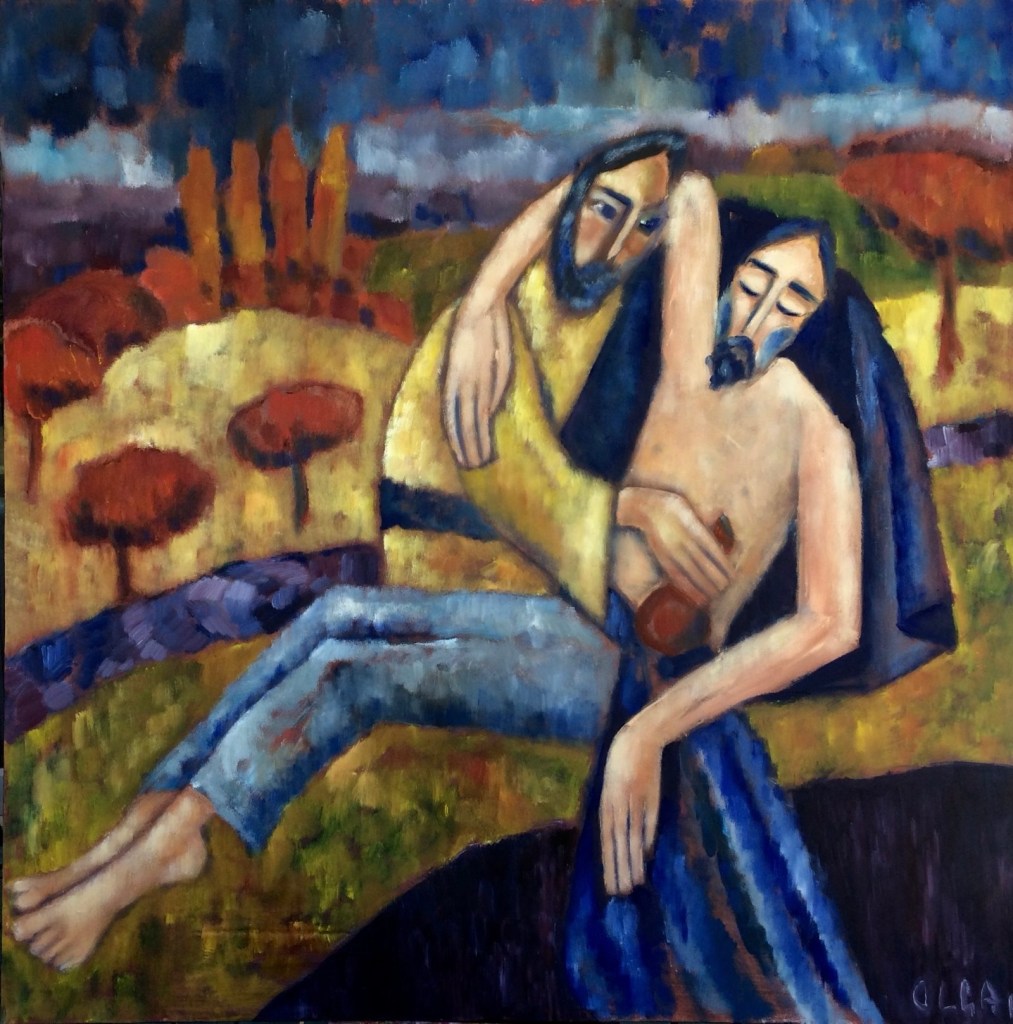
The Good Samaritan by Olga Bakhtina
 Sunday Gospel Reflections