Homily: Third Sunday in Ordinary Time (C)
(Sunday of the Word of God/National Bible Sunday)
Luke 1:1-4; 4:14-21
26 January 2025
“U.S. President Donald Trump took his oath of office on Monday with his right hand raised, but without placing his left hand on the two Bibles that his wife Melania held as she stood by his side. The apparent oversight has no practical impact, academics say, but it roused curiosity online. Despite the inauguration pomp and a bracing speech, the top thing Americans searched for on Google in relation to Trump on Monday afternoon was about him not placing his hand on the Bible.” (From Reuters)
Today, we enthrone the Bible in all our masses to highlight how much we ought to value the written word of God. Sadly, we cannot seem to be consistent in giving this Holy Book the importance it is due. We Catholics are often teased because our Bibles at home seem brand new and yet gather dust on our shelves.
We have a very interesting reading from the prophet Nehemiah 8:2-4; 5-6; 8-10. In the passage, we are told that Ezra, the priest who acted as religious leader of the Jewish community recently returned from the Babylonian Exile is asked by the assembly to read from the Book of the Law. They listen for a long time and they are moved by what they hear from the Law. We take note that the people stood for five or six hours – from dawn until noon, listening with great attention to the reading and explanation of the Scriptures. Imagine standing for five to six hours? Here, we can barely handle a 7–10-minute homily. I look around and some of you are already yawning! My Congolese colleagues in our community used to tell us that Sunday masses in their country can sometimes last up to two (2) hours. It seems like they have more patience and are perhaps more focused compared to many of us these days — when everything needs to be quick, instant and “to go”… and when even the homily, even the liturgy have to be cropped really short.
We are also told that the people would weep at hearing the scripture read. We might ask why they would weep while listening to the Law of Moses? What could have moved them to tears? Obviously, it was not because they were physically tired standing for hours under a very hot sun nor because they were really hungry. Bible commentators suggest three reasons: First, they might have been confronted with the Law’s demands which they had not obeyed and so they had gone into Babylon’s captivity as chastisement. Second, it could also come from sensing the great love that God has had for them in bringing them back and giving them a second chance. Finally, they may have experienced the sadness of their being told that they had responsibilities and had to make sacrifices for the sake of being faithful to God’s Law. They would have to surrender their individuality for the sake of the community. They will have to be accountable for their actions and be true to the covenant they have made with the Lord. Hence, the primary summons of the People of God has always been to “Hear, O Israel.” (Deuteronomy 6:4) “Hear” means to take into oneself God’s law and to allow it to penetrate the deepest parts of one’s being — mind, heart, soul and the whole of one’s being.
Similarly, the Word of God elicits various responses from those who hear it. Are we also moved by God’s Word in such a way that we are resolved to recommit ourselves to God’s ways? Has hearing the Word of God proclaimed every Sunday made any kind of difference in our lives? If we interview our lectors, we are bound to hear testimonies of how proclaiming the word can be affecting. Am I right? Some have been so overcome with emotion at the lectern that they have been moved to tears. Others say they feel the hair on their arms stand on end. God’s word has power, especially when proclaimed. “Your words, Lord, are Spirit and life!” proclaims the responsorial psalm (Psalm 19). I am saddened when people misquote and misunderstand the Word of God and say it is depressing because on the contrary it brings “rejoicing” — offering us fullness of life! At the heart of God’s Word is His desire to share His very life with all of us, His people.
I remember what Scott Hahn once posted which somewhat aligns with what a parishioner told me recently after mass… “Imagine if every single Catholic prioritised Sunday Mass, prayed every day, went to confession once a month, contributed time, talent and treasure to the mission of the Church, served the poor and sick and evangelised others. We would change the course of global history!” God’s word has that power to change us and embolden us so we do what is right. Let us start by listening well to the scriptures proclaimed at Church on Sunday and to read the psalms in the Bible a little each day, allowing it to take root in our lives. From here, we can draw inspiration, find enlightenment, and gain strength to live according to God’s will.
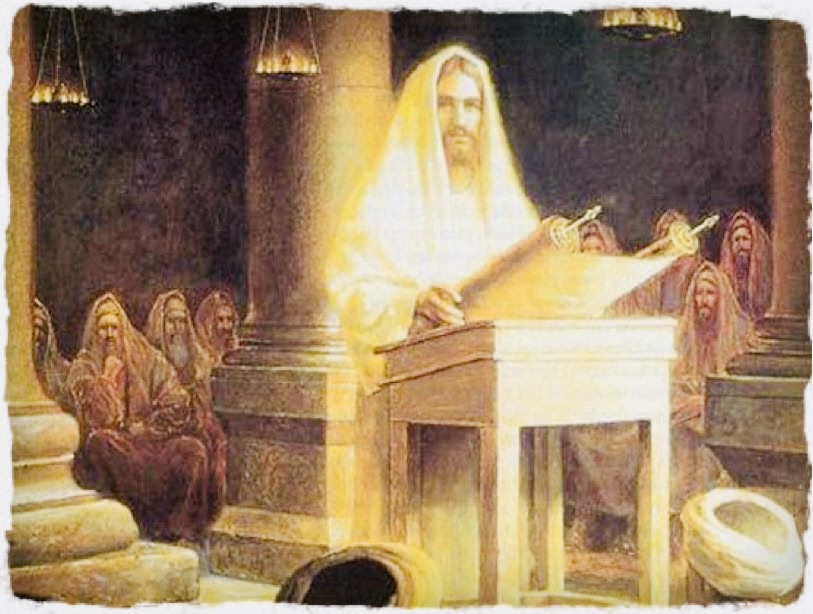
On this Sunday of the Word of God / National Bible Sunday, may we take time to study the Word of God, be challenged by its message and live out its teachings vigorously, passionately in our lives. Like Jesus who boldly declares in the synagogue: “Today this scripture passage is fulfilled in your hearing!” (Luke 4:21), may God’s Word also find its fulfilment in our lives!
 Sunday Gospel Reflections