Homily: Feast of the Sto. Niño (Proper Feast in the Philippines)
19 January 2025
Luke 2:41-52
Fr. Ricky C. Montanez, AA
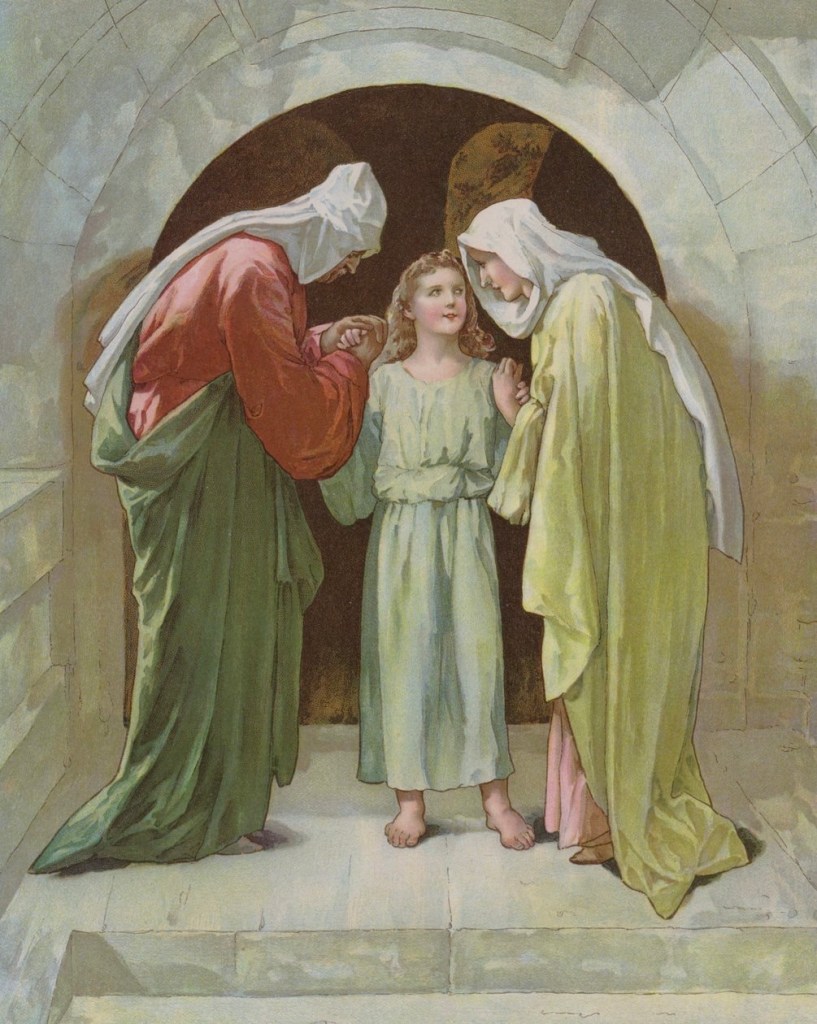
Today, we celebrate the Feast of the Santo Niño, a feast proper to the Philippines. The gospel for this feast relates the Finding of the Child Jesus in the Temple — the 5th Joyful Mystery of the Rosary. In the story, Mary and Joseph unknowingly lost Jesus on their way home from spending the Passover Feast in Jerusalem. They had been journeying for one whole day before they realised He was gone! They went back to Jerusalem and frantically searched for Him and found Him on the third day, still in the temple discussing things of the Law with the “teachers.”
Wow! What a story, right? This is the nightmare of any parent. Have you ever lost sight of your child in a mall for 15 minutes? Isn’t that enough to trigger a panic attack? It will make you question your capacity to be a responsible parent. I am sure once the child is found, the parents will be relieved, but they will also scold the child for having wandered off alone. Am I right? It is typical. And that is exactly what happened to Mary and Joseph! Imagine, having lost your child for three days during a fiesta where people from everywhere converged?
On this feast, all those in positions of authority and influence — most especially parents — are reminded to look to Mary and Joseph on how to be good mothers and fathers, educators, formators and guardians. As parents, Mary and Joseph were very much present in the life of their son, Jesus. They were available to Him for guidance and protection. In today’s gospel passage, we are told how fully the Holy Family entered into the religious practices of ordinary Jews of that time. Like all Jewish families, Mary and Joseph brought their son to the Temple in observance of the religious practices of the Jews. In doing so, Mary and Joseph are fitting role models for parents and guardians today on how they need to be present for their children and accompany them in exercising our faith. There are very few details in the Bible about the childhood and teenage years of Jesus. It is by accounts of people’s encounters with Jesus in His adulthood that tells us Joseph and Mary had raised Him right. As one commentary puts it so beautifully, “The woman who could say, “I am the handmaid of the Lord, may it be done unto me according to your word,” (Luke 1:38) raised a Son who would say, “Father, may your will, not mine, be done.” (Luke 22:42) Similarly, Joseph, the silent, upright man, obedient to God, provided an excellent role model of obedience for Jesus such that He could say with confidence, “My food is to do the will of Him who sent Me and to accomplish His work.” (John 4:34)
Parents and guardians have to personally guide their children through all aspects of their faith formation, particularly in the often-neglected aspect of spiritual formation, which is the education and practice of the faith. Some words for all biological parents and all of us second parents… Let us come to mass with our children. Let us not leave them at home when we come to church on Sundays. Yes, dear parents, please try to come as a family and present yourselves before the Lord. Let us help our children develop the habit of coming to mass with you, with everyone in the family on Sundays. Pray together. Teach them the basics of prayer. Make appointments for the family to receive the Sacrament of Reconciliation. Learn what and how it is to be Catholic together. Refresh your knowledge of our traditions and beliefs. Children these days are adamant that they not be forced into things they do not understand. My friend’s nephew asked her what is more factual — the biblical creation story of Adam and Eve or the Theory of Evolution that says man descended from the apes. Can you answer that question off the top of your head? These are perfect opportunities to begin conversations about our faith. If they have questions about the faith, do not dismiss them but search for answers together. Do not rely on their teachers in Catholic Schools or catechists in the public schools. It is more important that they learn first from you and that they observe you practicing our faith. There are plenty of children these days who do not go to church anymore because some parents do not see faith as an important aspect of the formation of a child. One child even told me, “I cannot go to church because no one will bring me to church.” This is heart-breaking!
Now on the other hand, let us look at the behaviour of Jesus. In this Infancy Narrative of the gospel, we note that even as a child, Jesus seemed to already know quite well what His purpose in life was. His anxious mother reprimands Him for worrying them with His sudden disappearance “Son, why have you done this to us? Your father and I have been looking for you with great anxiety.” (Luke 2:48), to which Jesus responds “Why were you looking for me? Did you not know that I must be in my Father’s house?” (Luke2:49) Clearly, Jesus knew where He needed to be, what He needed to busy himself with. Yet the Gospel ends by telling us that although Jesus seemed really sure of Himself, He humbled Himself and respected the authority of His parents subjecting Himself to their care and guidance. “He went down with them and came to Nazareth, and was obedient to them.” (Luke 2:51)
To all children, please emulate Jesus in being receptive and obedient to your parents and guardians! Be open to their teaching and accompaniment especially concerning faith life. Moreover, to all of us, let us learn to obey people who truly care for us because they only want what is for our own good. Even Jesus, Son of God though He learned obedience, and because of this He was greatly favoured, “He grew in age, wisdom and favour of God and man.” (Luke 2:52)
Lastly, families, on this Feast of the Child Jesus, let us fully entrust our lives into God’s loving hands! Again, to many of us who are first and second parents, let us take on the responsibility of guiding our children in the faith. And to us all children, let us trust our parents and be obedient to them. Kini tanan aton gina-sam-PIT (gina-ampo) kay Señor Santo Niño!
 Sunday Gospel Reflections