Homily: Feast of the Baptism of the Lord (C)
Luke 3:15-16, 21-23
12 January 2025
Fr. Ricky Cañet Montañez, AA
It is always heart-warming to witness parents publicly expressing joy and pride over their child’s achievements. Some parents zealously shout “Anak ko yan!” when their child graduates or has rendered a performance showcasing their talent. It is something a child cherishes. It reinforces their sense of belonging, their identity, and their pride in their efforts.
Affirmation is very important, especially for children. We all benefit from being reminded that goodness exists within us, that we are special because we are unique, and that we all have the potential to be exceptional. Children need to be shown how valuable they are in the eyes of their parents and in the eyes of God. Don’t we all, at some level, no matter what age we are, still try to be “pleasing” in the eyes of the persons we love? Isn’t it reassuring to hear from those we love when they take pride in us; or how happy we have made them? These words not only elicit joy, but also the needed affirmation that sustains us through the ups and downs of life.
In today’s celebration of the Baptism of Jesus, culminating the Christmas Season, our readings speak of God the Father’s affirmation of His Son Jesus. The last words of the narration of Christ’s baptism are “And a voice came from heaven, “You are my beloved Son; with you I am well pleased.” (Luke 3:22) Recall that the Jews study scripture so very closely and they can even quote from the writings of the prophets. It should have been automatic for them to recognise that those words echo the text in Isaiah speaking of God’s “Chosen One” in whom He has put His spirit and in whom He is pleased. At the moment that He begins His public ministry, Jesus receives a solid validation from His Father, that everyone present heard as a voice from the heavens.
The identity and the affirmation which Jesus receives from the Father is the same identity and affirmation which we can claim for ourselves by virtue of our Baptism. By Jesus’ baptism “in the Holy Spirit and fire,” we, too are reborn and made children of God, receiving the same love and delight from the Father. By our Baptism, we become the beloved children of God — beautiful, unique, good, and worthy of love. When we forget this ourselves, or make people feel otherwise, we run the risk of prompting feelings of discontent and unhappiness with who we are, of who they are. To go a step further, persons who cannot see the good within themselves will most likely have a hard time seeing the good in others as well. Hence, we need to be conscious of the image of God within us and help others to discover the same within themselves.
We must take care to remind ourselves to honour the image of God that we bear. Part of this exercise is being mindful of our words. Our words can be a powerful tool for good or they can be an equally powerful tool of destruction. When speaking to others, especially in the most annoying and irritating situations, we should avoid lashing out, saying things in anger, yelling, name-calling, demeaning, putting people down. Hurtful words can create wounds that are far slower to heal than physical wounds and they leave emotional scars that never quite go away.
We should also be mindful of what we tell ourselves. Sometimes we find that we tend to be hard on ourselves. “Ang tanga-tanga ko!” (“I am so stupid!”) “Ang sama-sama ko.” (“I am very bad.”) “Wala talaga akong kuwentang tao.” (“I feel so useless.”) Such words diminish the power and beauty of our Christian identity. So, when we look in the mirror, choose to offer ourselves reassurance and kindness instead of harsh criticism and judgment. After all, no one is perfect. We are all works in progress. Psychologists even advise that repeating positive affirmations to ourselves really help increase our propensity for self-acceptance.
Our baptismal identity, also allows us to share in the mission of Jesus. The challenge for us then is to be true to the call of our own baptism. As St. Paul exhorts Titus: “All we have to do is to give up everything that does not lead to God… with no other ambition except to do good.” (Titus 2:11-14) We too, are called to be the anointed of God, serving others quietly and kindly, accomplishing for Him the task He has for each one of us — tasks vital in establishing His Kingdom here on earth.
On this last day of the Christmas Season, may we take pride in belonging to God’s family. Let us be equally ready and happy to declare our identity before others and to strive to delight our heavenly Father as Christ has done. May God our Father be “well pleased” with us as we continue to be true to who we are and to what we are all called to be — God’s beloved children.
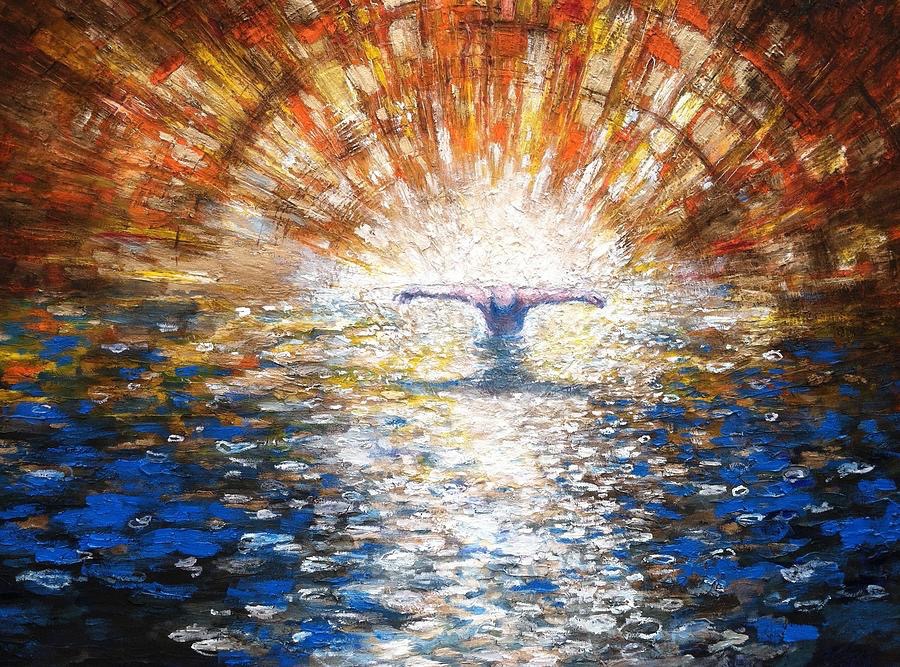
The Baptism of Christ II, a Painting by Daniel Bonnell
 Sunday Gospel Reflections