Homily: First Sunday of Advent (C)
Luke 21:25-28, 34-36
1 December 2024
Fr. Ricky Cañet Montañez
Do you remember the first time you rode an airplane? Were you excited? Anxious? Frightened? Perhaps all three? After all, all these are typical of a new experience. Air travel is much more common these days, than when I was a child. Back then, people dressed up for their flights. Today, I see people onboard planes in sando, shorts and slippers! Flying is now such a casual affair. More so, afor frequent flyers! These people travel by air so much that they are rewarded with points they can exchange for discounts and special benefits. Despite all those perks, the actual experience of flying in a plane becomes more of a chore and a necessary inconvenience than a fun and thrilling ride. Gone is the eager anticipation of coming home to some place familiar or the promise of an adventure in a new destination!
Ganun ba talaga? (Is this how things are?) Bored na kasi sanay na? (Have we become so used to it that we are bored?) Most of us have experienced a good number of Advents already in our lifetime. We have become so used to it that it does not hold any significance to us anymore. Because of our “frequent-flyer” attitude towards Advent, we have become bored, unmoved, uninspired that we tend to just go through the motions. The Season of Advent, which we begin today is oftentimes merely a “liturgical” word for us, with not much meaning in our lived experience, if we are not mindful.
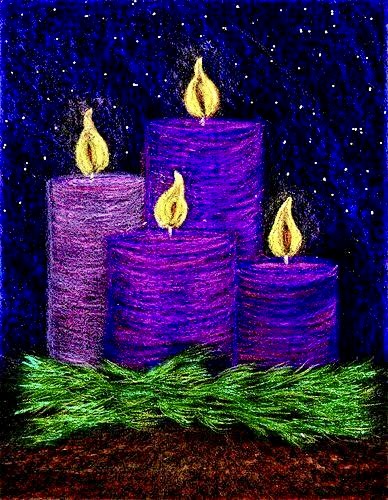
Advent, which in Latin is “adventus” translates in English as “arrival” or “coming”. For us Catholic Christians, it is a season comprised of four (4) Sundays after the Feast of Christ the King and just before the 25th of December, Christmas Day. It is an anticipation of Christ making Himself manifest to us. Just as we find ourselves preparing for the arrival of important guests in our home, the church deems it necessary to establish a period of preparation among the faithful that places them in the proper disposition to receive our God made flesh. First, we celebrate the blessed day when our God, sent His Son to be born as one of us, to save us from the miserable consequence of sin. The first Christmas marks the start of thirty-three (33) blessed years of God literally walking among His people. We are also taught that Advent is intended to be a preparation for more than just Jesus’ coming to us as a baby. It is a foreshadowing of the Parousia or the Second Coming of our Lord, which He divulges to His disciples before His Ascension. It is Christ’s return in glory that we look forward to as Christians, filled with hope that we will be reunited with our King. There have also been others who proposed that there is another instance of Jesus’ arrival that we must learn to anticipate. They refer to this as the Third Coming of Christ! This occurs in the day-to-day life of every believer when Christ makes Himself manifest through the ordinary experiences that reveal His love, providence and mercy to us. The Church’s invitation to observe a period of intense preparation is what characterises the Season of Advent.
During this period of preparation, the church encourages us to cultivate an attitude of vigilance. St. Paul is telling us today what he told the Thessalonians, “to prepare for the Second Coming of Christ — the great day of judgment, by living each day as God wants us to live it, namely by living in love and peace with God and our neighbour. (1 Thessalonians 4:1) In the gospel passage from Luke, Jesus speaks of various cataclysmic and apocalyptic signs to indicate the end. The description is not a pleasant one… “There will be signs in the sun, the moon, and the stars, and on the earth, nations will be in dismay, perplexed by the roaring of the sea and the waves. People will die of fright in anticipation of what is coming upon the world…” (Luke 21:25-26) The fundamental exhortation of the readings is: “Beware! Take Heed! Be Alert! Don’t be caught by surprise!” We cannot remain unmoved by these warnings. The intention is not to paralyze us with fright but rather, the coming of the end-time should be an incentive to righteous living. As always, if we know what is coming, it is our responsibility to prepare so we are not taken by surprise.
In the Gospel, we note a very different ending as Jesus enjoins His followers that “when these signs begin to happen, they are “to stand erect and raise their heads because their redemption is at hand.” (Luke 21:28) In other words, Jesus tells His disciples that even if it seems like the sky is falling, they are not to panic; even if all seems chaotic around them, they are to keep their heads and not cower in fear. The Gospel invites all of us followers of Christ to envision the coming of Christ as a time of expectation, rather than of fear and trembling. Let us remember that God cares for and protects His people. If we continue to cling to Jesus, we have nothing to fear!
For all of us disciples of Jesus who have tried to live by the values of the Gospel, the end times is the time of our final liberation. It is a time when there will be no more sorrows, no more tears, no more hardships, no more disappointments. On this day, may each of us stand with courage and hope to face our end. Despite the difficulties in our effort to be faithful to our Christian life, may we stay the course! May we always perceive God’s bigger plan and dare to hope beyond the scope of our reality.
 Sunday Gospel Reflections