Homily: Eleventh Sunday in Ordinary Time
Mark 4:26-34
16 June 2024
Fr. Ricky Cañet Montañez
Early last year I attended our school’s alumni homecoming as we (our batch) were pearl jubilarians. I had the chance to get together with my former colleagues at Assumption Iloilo (most of them are either retired or have gone abroad for other work opportunities). Our conversation centred on a few of our former students who were real “challenges” to most of us teachers but who have grown to be very successful in life and their respective careers. I remember a particular student who was a sure candidate for expulsion. I am glad that we, her teachers, decided to give her one last chance… Fast forward to today, the girl is now a medical doctor. Her classmates told me she helps a lot of people by giving pro-bono services to poor patients. We felt so proud of her. We also marvelled at how God had worked on each one of those “difficult” students through these years. We realised that in most respects we simply have to patiently trust in God’s plan for each one of us and never give up on people because God’s plans are always for our own good.
Today, Jesus continues teaching by way of parables and offers two images for “how it is” in the Kingdom of God. The seed that grows though the farmer “knows not how” (Mark 4:27) magnifies our confidence in the amazing power of God at work, especially where we mistakenly assume that the burden of responsibility in making the Kingdom of God come is in our own hands. Then, Jesus cites the mustard seed, “smallest of all the seeds on the earth,” (Mark 4:31) as a reminder that, with patience, God can bring about great things from what seems to be insignificant. These parables draw out from us the importance of confidence in God, not in ourselves. They invite us to hope for “great things” from God. They point to the need for patience in all our endeavours.
In the passage from Ezekiel, we are reminded that God has a master plan for all His people. The context of the passage is the captivity of God’s people in Babylon. They most likely struggled, as captives of Babylon, to believe in God’s promise of deliverance. Imagine waking up every morning as a captive in a foreign land hoping and praying that would be the day God fulfils His promise of deliverance only for the sun to set with no change in the situation. It was in their desperation that the prophet Ezekiel was sent to speak to them of God’s promised restoration for His people. Ezekiel uses the metaphor of the tender shoot from which their salvation shall come forth. God Himself will cultivate this chosen sprout until it reaches full growth. “It shall put forth branches and bear fruit, and become a majestic cedar.” (Ezekiel 17:23)
Similarly, in the Second Reading, St. Paul advises the Corinthians to take courage and be steadfast in the midst of their struggles in life. As Christians they are to “walk by faith, not by sight.” (2 Corinthians 5:7) Life for them was not easy and Paul could not physically come to their rescue, or give them the solutions to their problems. Paul was not privy to God’s plan of deliverance for them. He could only advise them to develop eyes of faith to perceive the hand of God helping them through all of life’s adversities.
Through the readings we are invited to see with the eyes of faith various situations in our lives that seem to be apparently without God’s presence. We are also invited to discern how God is powerfully at work in each of our lives, especially in those persons and places where our impatience makes “seeing” and “believing” very difficult and almost impossible. Let us remember that it is not we who are responsible for the growth of God’s Kingdom. God is the one working through us, achieving His saving work, if we only cooperate with Him — getting out of His way and allowing Him to work wonders in our lives and those of our brothers and sisters.
There is a homily by Bishop Ken Untener, which he had written as a priest in 1979, for a cardinal presiding over a special mass. It was inspired by Saint Oscar Romero’s reminder for those who work for the coming of God’s Kingdom that “we cannot do everything”. I would like to read an except to close today’s homily: “We accomplish in our lifetime only a tiny fraction of the magnificent enterprise that is the Lord’s work…. This enables us to do something and to do it very well. It may be incomplete, but it is a beginning, a step along the way, an opportunity for the Lord’s grace to enter and do the rest. We may never see the results, but that is the difference between the master builder and the worker. We are the workers, not the master builders, ministers, not messiahs. We are prophets of a future that is not our own. Nothing we do is complete, which is another way of saying that the Kingdom always lies beyond us.”
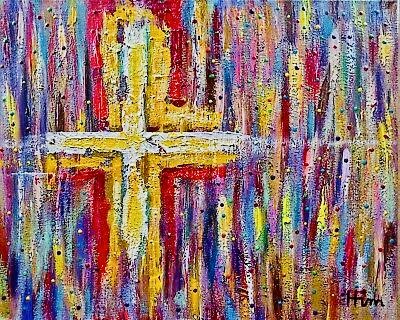
Art Work from sincovaga.com.br
 Sunday Gospel Reflections