HOMILY: Fourth Sunday of Lent (A)
John 9:1-41
19 March 2023
Fr. Ricky Cañet Montañez, AA
“For all the little boys and girls who look like me watching tonight, this is a beacon of hope and possibilities…. This is proof that dreams come true.” This is what Michelle Yeoh said in her acceptance speech as best actress in the recently concluded Academy Awards last Sunday. She adds, “And ladies…never let anybody tell you that you are past your prime.” Michelle Yeoh makes history as the first Asian to win an Oscar for best actress for her role as Evelyn Wang in “Everything Everywhere All at Once.” Her win is ground-breaking because now filmmakers and producers will start seeing Asians, Asian women, and older women as the talented and bankable Hollywood artists that they are. They will no longer be passed up for meaty lead roles in movies.
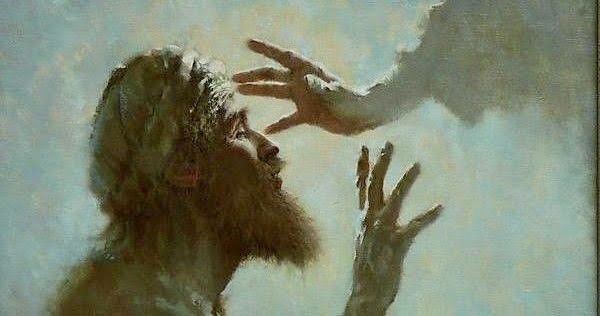
The principal theme of the readings for the Fourth Sunday of Lent centres on seeing. It is not just about physical seeing but rather a much deeper kind of seeing that leads to spiritual insight. Ang kuwento ng ebanghelyo ngayong ikaapat na Linggo ng Kuwaresma ay ang pagpapagaling ni Hesus sa isang taong ipinanganak na bulag. If we look closely, there are more here than meets the eye! It wasn’t just the sight of the blind man’s eyes that was restored. He actually gained in-sight into who Jesus was and the impact He made on his life. Unlike the Pharisees who continue to persist in darkness and acknowledge the truth before them, the once-blind-man can really see who Jesus is — the Messiah.
In the Gospel, ironically everyone who had sight failed to see. Everyone except the blind man. This blindness is prevalent throughout the gospel passage. First the incredulous disciples asked: “Who sinned, this man or his parents, that he was born blind?” (John 9:2) And Jesus responded “Neither he or his parents sinned; it is so that the works of God might be made visible thru him.” (John 9:3) Right there and then, Jesus wanted them to see that it is through human weakness that the power of God is able to enter through and work in someone’s life. Diyan pa lang sa Kanyang salita, ipinakikita na ni Hesus na sa kahinaan ng tao natin maaaninag ang kapangyarihan ng Diyos Ama. Second, you have some of the blind man’s neighbours who only saw him for his disability: “Isn’t this the one who used to sit and beg? Some said, “It is,” but others who refused to recognise the healing said, “No, no he just looks like him.” (John 9:8-9) Thirdly, you have the Pharisees who chose to live in the darkness of their prejudice towards Jesus. Ginawa nilang issue ang pagpapagaling ni Hesus sa Sabbath. They discredit Jesus by focusing on the fact that Jesus has failed to observe Jewish law and even condemn the once-blind-man as a fraud saying he was born in sin. “This man is not from God, because he does not keep the sabbath.” (John 9:16) They were adamant despite the presence of dissenting voices who recognise the truth about Jesus: “How can a sinful man do such signs?” (John 9:16) They were easily drowned out by those who shouted the loudest. As they say, “If we are prejudiced against a person, that person can do nothing right in our eyes. If we are prejudiced in favour of a person, that person can do nothing wrong in our eyes.” Lastly, even the parents of the blind man who should have been the most credible witnesses of such a miracle were afraid to open their eyes to the blessing received, abandoning their son to the cynical crowd. Instead of witnessing for him, say their son is of age and can answer their questions himself.
This theme of seeing is further emphasized in the story of the search for a new king and the eventual choice and anointing of David as King of Israel. Nobody saw anything worthwhile in the youngest child, David; he was considered too young and unimportant to be thought of as a viable contender to become king of Israel. Not even the great prophet Samuel saw in him such a potential. The prophet was reminded, however, that “Not as man sees does God see, because man sees the appearance but the Lord looks into the heart.” (1 Samuel 16:7) God saw David’s heart and was obviously pleased with what is there for him to become God’s anointed one.
The readings this Sunday offer us an opportunity to look carefully at how we perceive others and the situations we find ourselves in. Do we consider some people too insignificant for greatness? Are we so jaded and biased by society’s judgment of people that we cannot see them for who they are? Dati, ang mga pulis ay may reputasyon sa pagiging baluktot. Di na halos makita ang mga magigiting na pulis na kahanga-hanga at may integridad. Pag nakakakita tayo ng “Bumbay” na nakamotor, agad iniisip 5/6 ang negosyo nito, samantalang iba-iba na rin ang trabaho nila. Sometimes, we are so hung up on what is going wrong all around us that we fail to see what is gojng right in our life. Are we too focused on what afflicts us that we fail to see the good God makes out of all of our life’s challenges? Di ba sabi nila “Count your blessings?” There is actually a prayer that goes “Lord, increase my faith that I may see You through my tears.”
St. Paul tells the Ephesians in our Second Reading today: “Live as children of the light, for light produces every kind of goodness and righteousness and truth.” (Ephesians 5:8-9) Let us pray for a deepening of faith. Let us pray that we may be open to receive the light of Christ that illumines the darkness around us. In moments of blindness and doubt, when we are seemingly asked, “Do you believe in the Son of Man?” (John 9:35) we can answer confidently, “Yes, I do believe, Lord!” (John 9:38)
 Sunday Gospel Reflections
Thanks Fr.
LikeLike