HOMILY: Twenty-Fifth Sunday in Ordinary Time
Luke 16:1-13
18 September 2022
Fr. Ricky Cañet Montañez, AA
Sino sa atin dito ang di pa nakakaranas na matuksong gumawa ng mali? Maaaring natukso tayong magsinungaling upang protektahan ang kaibigan o kapamilya o katrabaho. Maaaring tayo ay napilitan na gumawa ng labag sa ating prinsipyo o pananampalataya para maging tagumpay sa trabaho o negosyo. We have to accept that this is the way the world works. This is the consequence of living in an imperfect world with imperfect people. But does this mean that we have no redemption?
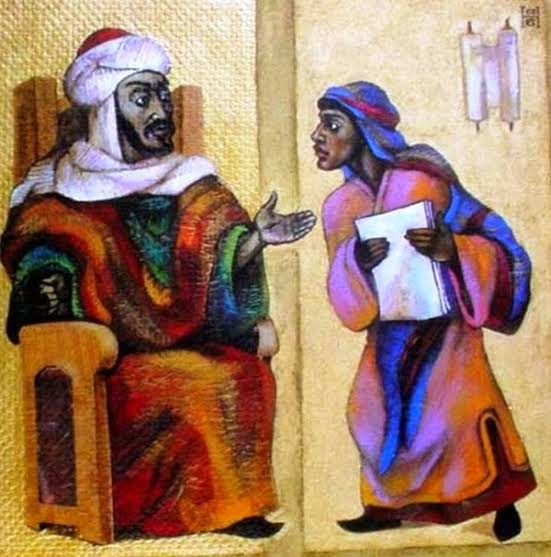
In today’s gospel, we encounter such a man. He was a steward or “katiwala” who allegedly squandered his master’s property. We are not told the reason why he does these things but Jesus gives a twist to the story saying the man had a shrewd plan that was a win-win situation — either he fell into favour with his master or found friends with the debtors. Since the man in the story has a happy ending, does this mean Jesus is glorifying this character? “Why did Jesus praise a crook for being dishonest?” Would Jesus be encouraging dishonesty? Tunay nga bang pinupuri ni Hesus ang kamalian ng katiwala?
A wrong reading… A wrong interpretation of the gospel may lead to some form of confusion, a disconnect in Jesus’ teachings. Many people have indeed a hard time making sense of the gospel passage this Sunday. Let it be clear though that Jesus does not commend the steward’s dishonesty. Di kelan man katanggap-tanggap ang pandaraya. Rather, Jesus gave him due recognition and praise because of his prudence (foresight). Jesus praises the dishonest steward’s astuteness… his sharpness, his perceptiveness in dealing with his immediate situation. Jesus says, “For the children of this world are more prudent in dealing with their own generation than the children of light.” (Luke 16:8) What did Jesus mean by this? What did Jesus want His listeners, all of us to learn from the dishonest steward?
It is suggested that we need to understand the economic reality of the times behind the parable to have a better grasp of its true meaning. “The steward was empowered to make [legal] contracts for his master. [He was also] allowed by the customs of the time to make profit for himself on the deals he made.” In reducing the debtors’ responsibilities through promissory notes, he was in effect giving up his surcharge, his extra profit. Prudently and maybe a little selfishly, this is for him to forge friendship with them for his own long-term interest. Despite the battle between good and bad in the steward, it is also quite clear that the master was not cheated out. The steward gave back everything that was due him. Hence, the enterprising steward himself was not put to shame as (it did appear) that he did not take advantage of his master. Simply put, the steward seemed to have known what was more important given the situation. He also knew that he has to prepare himself for something more. He demonstrated the kind of foresight we should have in dealing with our time, talent and treasure in this life to prepare for the next.
In a way, we are invited to exhibit the same astuteness, the same sharpness, the same foresight in dealing with our worldly affairs. We can learn from the steward especially on how he dealt with his temporal possessions. We have to be shrewd but we must choose the ways of the Lord at all times. We have to see beyond all of our worldly possessions — who we are, what we have become because of our education, money, titles and position. We have to see ourselves in relation to our faith, our quest for the truth and our desire for eternal life. Yes, Jesus calls us to be astute like the steward; to have the wisdom to recognise the value of what has to be valued; and to be able to direct ourselves to God’s path; to our very own heavenly inheritance.
We mentioned in the beginning that it is not easy to live 100% according to the teachings of Jesus. It is possible, but difficult. Even the saints have experienced difficulties. However, what we need to remember are the opportunities we have to do better and to make up for our mistakes and failings. I have a friend who is bothered because she is being asked to work for unscrupulous people in positions of power. She is good at her job and the project will help a lot of people. Her sister told her that she has to look at the greater benefit. If those people had hired a less competent person the project may fail and there would be less of a positive impact on the community. She now tries to see her work as a gift from God to help more of His people rather than to simply help improve the image of the people whom she does not believe in. We all have our unique circumstances. Some of us have positions of influence, positions of power, some are responsible for many (like government officials and leaders of organizations) and some over a few (moms rearing children). Tayo lang ang nakakaintindi sa ating mga kinatatakutan, pinahahalagahan at kung ano ang mga magiging kahihinatnan ng ating mga desisyon. We cannot help but be children of the world but our faith must still guide our decisions. Our choices should always be geared towards making the world a better place and glorifying the Lord!
It is in this context that we can go further and consider the idea of accountability. We understand that everything comes from God. Everything is on loan to us. We are mere stewards of all that we have. Hence, we are to be accountable for what has been entrusted to us. By its very nature stewardship entails accountability. Thus, the more we have, the more we will be held accountable. That is why Jesus talks about the importance of being trustworthy. “The person who is trustworthy in very small matters is also trustworthy in great ones; and the person who is dishonest in very small matters is also dishonest in great ones.” (Luke 16:10)
I remember attending a talk organised by the Citizens TELCO (The East London Citizens Organisation), a citizens’ group which tackles issues on injustice in the local communities in the East London area. After the talk, I overheard the speaker asking for the “receipts” of the token and the bouquet of flowers given to her. She explained that she is required by law to declare them as gifts. That is how meticulous and responsible they are when it comes to public funds. Sana ganun din sa atin! This is perhaps the reason why St. Paul in his Letter to Timothy asked the community of believers to pray for everyone, but more specifically for civic leaders that they may govern in peace.
In summary, the Gospel foremostly teaches us of setting our hearts aright to things eternal. Hence, we are to serve God and God alone. Secondly, we have the duty to give an account of our stewardship. We are to be responsible for our given time, talent and treasure not only for ourselves but for others as well.
 Sunday Gospel Reflections
Thanks Fr.
LikeLike