HOMILY: Twenty-Fourth Sunday in Ordinary Time
Luke 15:1-32
11 September 2022
Fr. Ricky Cañet Montañez, AA
On September 9th (September 8th in the UK), the world was saddened to hear of the passing of Queen Elizabeth, the 96-year-old monarch of the United Kingdom. Her son Charles is becoming King at age 73 whereas she was only 25 years old when she ascended to the throne. In 1957, the Queen’s Christmas broadcast made history as the first to be televised. It was memorable because it was her public declaration of her devotion to the people. “In the old days the monarch led his soldiers on the battlefield and his leadership at all times was close and personal. I cannot lead you into battle, I do not give you laws or administer justice but I can do something else, I can give you my heart and my devotion to these old islands and to all the peoples of our brotherhood of nations.”
This Sunday’s gospel passage is something we all know well. It has to do with three parables about finding what is lost. The lost sheep, the lost coin, and the lost son. Today let us focus on the third parable, specifically, the motivation behind the three characters. Motivation is what drives our actions and behaviors. Ang pinagmumulan nito ay ang ang ating mga minimithi, pangangailangan, at pinahahalagahan. May commercial ng kape na nagtatanong… “Para saan ka bumabangon?” Que pagod ka dahil nag overtime ka sa trabaho, puyat ka sa kaka Netflix lagpas hatinggabi, o di naman ang sarap-sarap ng tulog mo dahil umulan, pero, kapag tumunog ang iyong alarm, pipilitin mo pa ring bumangon. Sa totoo lang, kailangan mo ng tulog. For many of us sleep is both a necessity and a luxury we afford ourselves. Yet we are willing to give it up, if not deprive ourselves of it for something we deem important. Ang iba, babangon dahil papasok sa school para makatapos ng pag-aaral at maabot ang pangarap; ang iba para sa trabaho kasi kailangan buhayin ang pamilya. Ang iba babangon dahil gusto nilang makapiling, mapagsilbihan ang kanilang mahal sa buhay. Hindi ba?
The younger son was motivated by selfishness at first. He chose to shun his duty to his family and satisfy his wanderlust. He prematurely claimed his inheritance to amuse himself with the pleasures of the world. Nang maubos ang yaman niya, umuwi sya sa tatay niya. His return was motivated by need. Nakakararanas na siya ng gutom at kahirapan. He realized he was living so miserably whereas his father’s servants were living and eating well in his father’s employ. He gained an awareness of shame for his folly and he swallowed his pride and returned home.
The older son had a different motivation in life. He serves his father and does what is expected of him out of a sense of duty. Though he never seemed to have complained, we observe that deep down in his heart he feels resentment. Sinumbatan pa niya ang kanyang ama sa handaang inilaan nito para sa kapatid niyang pasaway. “Have I not slaved all these years for you?” His obedience is not motivated by his love for the father but it is rather a manifestation of his own desire to maintain an appearance of being a dutiful son. He does what is right not so much in the pursuit of some higher ideal, like righteousness or love, but rather as a way of holding on to others’ approval, especially that of his father.
Are we bound by duty or devotion? Do we do things because we feel we are obligated to or is it out of love? Mayroong isang kusinera na ang sarap sarap magluto. Hindi naman siya trained chef pero napakalinamnam ng kanyang luto kahit ordinaryo at simple lang ang inihahanda niya, tulad ng adobo, nilaga, menudo o afritada. She is not motivated by a desire to excel or to gain accolades or enrich herself. She is happy to cook and make her employers happy and healthy with her cooking. That is her motivation.
Ngayong medyo bumabalik na sa dati ang ating pamumuhay, nagbabalik na rin sa normal ang buhay sa simbahan. Kataka-taka lang na hanggang ngayon, marami pa din ang pumipiling mag-online mass pa rin. Are you not motivated to come to church by a desire to receive Jesus in communion? We are asked to “take and eat” of His body. We can only do so in person, right? So, kung kaya nating pumunta sa mall, pumunta sa mga handaan ng kamag-anak at kaibigan, bakit hindi tayo makapunta sa simbahan minsan sa isang linggo? Tayo namang nakakapagsimba sa simbahan, tanungin natin ang ating sarili. Bakit tayo nakikipagsapalaran para makapagsimba? Ito ba ay dahil ito’y obligasyon bilang Katoliko o dahil masidhi ang ating pagnanais na maihayag natin ang ating pagmamahal at pagpapasalamat sa Diyos?
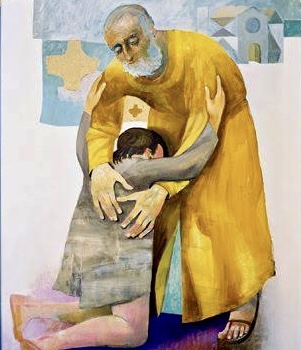
I have not forgotten the third character in the story — the father. The dad is only motivated by love for his children. When the young son asks for his inheritance, it was an insult to him but instead of scolding and disciplining his son, he gave him what he asked for. Nang talunang bumalik ang anak, sa malayo pa lang natanaw na niya at tumakbo siya upang ito ay salubungin ng yakap. Hindi niya ipinagkait ang pagpapatawad, ipinagdiwang pa niya ang pagbabalik ng anak. Would you say, the father was playing favourites? I don’t think so. He says to the older, “My son, you are here with me always. Everything I have is yours.” (Luke 15:31) He has never failed to notice or acknowledge the dutifulness of the older son. In fact, his generosity is complete — “everything I have is yours” (Luke 15:31) not half, not a third, but everything.
The tragedy of the story then is the heartlessness of the older son. His refusal to join in the celebration because of anger, resentment, and jealousy makes him the one who is truly lost. It seems that to have “everything” his father had to offer was not enough. Tila mas sasaya siya kung ipinagtabuyan ng tatay nila ang kapatid niyang nagsisisi. In spite of the younger son’s wastefulness and irresponsibility, his decision to return home and beg his father for forgiveness is what brings him a new lease on life. Perhaps the challenge of the gospel is to recognize how we have strayed from the path, let go of being lost and choose to be found? If we choose to be followers of Jesus, the practice of our faith must not be motivated by mere compliance to a set of religious rules and obligations but rather more of a loving response to a loving God. In His lifetime, Jesus did all things out of love and devotion to the Father. This way He has pleased the Father. Duty can only take us this far. Love brings us to do more and do better for God’s glory. Now, that is pleasing to God.
Jesus ends the story before we hear whether the older son accepts his father’s request for compassion or not. Did he eventually choose life (mercy) over death (condemnation)? This to me signals that maybe there was a chance for the older son to have had a change of heart. We, too, have a chance to re-evaluate our motivations in life in the way we behave towards God and the people God has blessed us with. At the very least, we can be assured that God waits for the lost with mercy, compassion, and forgiveness. He is our loving Father who is ready to embrace those among us who are aching to be found.
 Sunday Gospel Reflections